Della Monroe
BlondeDella Monroe is Norma Jeane Baker’s maternal grandmother: a formidable, sharp-tongued woman whose blunt independence gives way, in the final encounter between them, to a last gesture of love. She is not simply a background relative in Norma Jeane’s childhood. Della shapes its daily rhythms, offers a rare shared pleasure in the birds, and becomes the object of a guilt that survives the circumstances of her death.
Identity and Household Presence
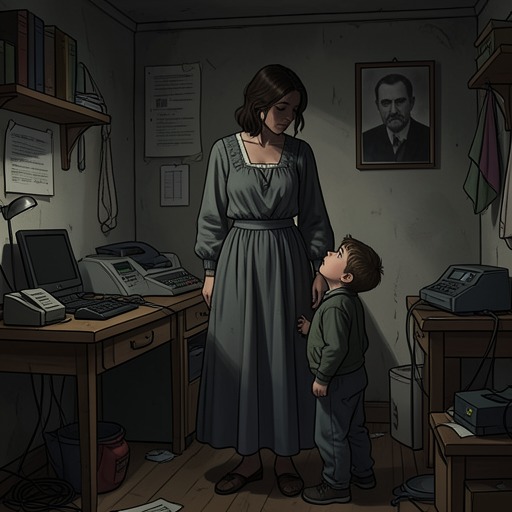
Della is described as a massive woman with olive skin, thick brows, and a faint trace of a mustache. She liked to plant herself outside the apartment building with her fists on her hips, holding a posture as emphatic as her manner. Shopkeepers in the neighborhood feared her fierce looks and cutting tongue. That public severity makes her immediately recognizable, but it does not exhaust her character: her care for Norma Jeane appears less as soft explanation than as work, companionship, and a willingness to take the child along.
Della presented herself as belonging to an old pioneer stock. Born in Kansas, she had moved through Nevada to Southern California, where she met and married the man who became the father of Gladys. Her account of her husband’s wartime experience was marked by rancor: in 1918 he had been gassed in the Argonne, though he had at least come home alive. He lived in the household, but Norma Jeane suspected that he disliked her and experienced him as nearly absent even when he was there. When Della was asked about him, her response returned to the fact that he had survived. The household therefore contains a husband’s physical presence and emotional absence, set against Della’s more forceful occupation of space.
Della’s temperament also had an independent, contradictory edge. She had voted in every election since 1920 and was shrewd, proud, and irascible. In principle she despised the cinema as false, yet admired screen performers including James Cagney and Charlie Chaplin, and especially valued characters who could face an unavoidable death. Her preferences suggest that what she rejected was not spectacle as such, but something she regarded as false; she could admire a screen image when it seemed to embody courage and acceptance of fate.
Work, Companionship, and the Birds
Della and Norma Jeane’s closeness is most clearly shown through an ordinary routine rather than a declaration of affection. After Norma Jeane had spent the morning helping clean the apartment and wash and dry the dishes, Della sometimes took her on a special walk to feed the birds. For the child, it was the best part of the day. They scattered bread crumbs over the sandy soil of an abandoned lot, then stood back to watch the birds descend in a guarded, hungry flurry.
The scene is attentive to variety and movement: pigeons, doves, orioles, noisy jays, flocks of warblers, and hummingbirds among the brush and vines. Norma Jeane is particularly captivated by the hummingbirds’ metallic-looking crimson or green feathers, their rapid wings, and their ability to hover while reaching into tubular flowers with long, fine beaks. Della points out that they can fly backward and sideways, but does not turn the walk into a lesson. When Norma Jeane wonders where they go, Della shrugs and leaves the question open. Her companionship is real, though not sentimentalized: she shares the spectacle without pretending to possess every answer or to be an endlessly patient grandmother.
That shared attention to small, living creatures gives the relationship a distinct kind of tenderness. The birds are not merely a backdrop to a family bond; Norma Jeane watches them closely for their own striking movements and colors. Della makes this looking possible by taking her outside after chores and giving the child time to observe. The memory is especially poignant because the routine offers no preparation for what follows: one moment belongs to the recurring pleasure of the walk, while the next becomes a scene of irreversible loss.
Death and Norma Jeane’s Guilt
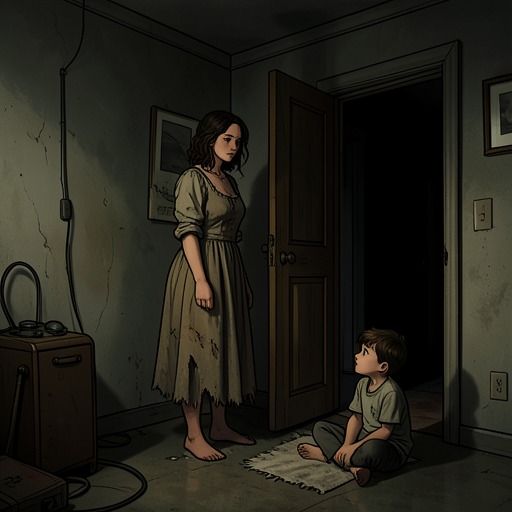
On the day Della dies, Norma Jeane hides after Della calls for her. When she eventually returns, an older woman outside tells her that Della has been calling for half an hour. Norma Jeane runs up to the apartment, senses that the unusual quiet is a bad sign, and finds the door open. She already knows what she is likely to find because Della has fallen before. On previous occasions, Norma Jeane helped her up, brought her pills, and fetched a cloth wrapped around crushed ice; Della would recover enough to laugh. The familiar pattern of collapse and care makes the difference this time more frightening.
Della is on her side on the bathroom floor, wedged between the bathtub and toilet that had been scrubbed clean earlier. Her face is swollen and flushed, her eyes partly closed, and her breathing reduced to a hiss. The ordinary cleanliness of the room becomes a harsh contrast with the body’s failing condition. Norma Jeane calls to her, and Della reaches blindly for the child’s hand. The usual anger and reprimands are absent; only a guttural sound comes from her mouth. Norma Jeane recognizes the scene as more than one of Della’s previous falls and begins to cry.
Della grips Norma Jeane’s hand so tightly that the child’s joints crack, then manages to bless her and say that she loves her. The words arrive at the point when speech has nearly failed. They do not undo the terror of the scene, but they make the final contact unmistakable: Della’s last intelligible act toward her granddaughter is affection, not accusation. The child who had known Della as formidable and often impatient encounters, in that grip and blessing, a tenderness no longer buffered by daily routine.
Narrative Significance
After Della’s death, Norma Jeane insists that it was her fault: Della died because she had hidden instead of answering the call. A voice counters that no one was to blame, but the self-accusation remains the emotional aftershock attached to the scene. The account gives the child a concrete reason for her guilt—she did not come when called—without making that delay the cause of Della’s death. The distinction between the event and Norma Jeane’s interpretation of it is central: an absence of half an hour becomes, in her mind, a moral failure with permanent consequences.
The episode also draws together the book’s recurring interest in scenes that seem cinematic and yet are painfully real. Norma Jeane experiences the opened door and the charged silence as if a film were announcing a surprise, then finds no staged revelation but a dying grandmother on a bathroom floor. The contrast does not make Della’s death theatrical in the sense of unreal; rather, it shows how the child reaches for the visual language available to her while confronting something she cannot control. Della’s place in the story is therefore defined by more than her forceful personality or colorful opinions. She is a source of daily companionship, the partner in a remembered act of attention, and the recipient of a child’s enduring grief and misplaced blame.