Elsie Pirig
BlondeElsie Pirig is Norma Jeane Baker(Marilyn Monroe)’s foster mother, protector, and eventual source of lasting anger. She cares for the girl and takes pride in her promise, yet responds to the dangers and tensions of their household by arranging a marriage while Norma Jeane is only fifteen. The decision is presented both as Elsie’s attempt to keep her safe and as an act that removes her from the home; years later, Norma Jeane remembers it as a jealous effort to get rid of her. Their bond is therefore defined by an unresolved contradiction: intimate tenderness exists alongside a choice Norma Jeane experiences as betrayal.
A Foster Mother Under Pressure
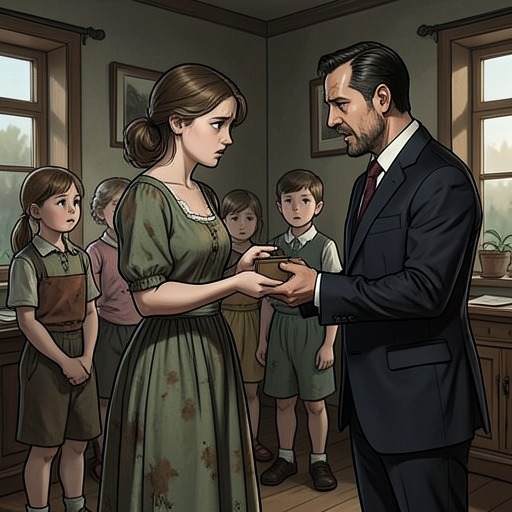
Elsie’s care for Norma Jeane is woven into domestic work and everyday responsibility. One morning, while Norma Jeane is doing the laundry, Elsie sends her to school with a note explaining that she had accompanied her mother to the doctor. The practical kindness does not erase the strain Elsie feels watching her foster daughter among the household’s other relationships. She imagines Warren Pirig approaching the girl while she hangs his clothes and fears that his attraction could lead to harm. Elsie recognizes that this fear is partly bound up with her own marriage and cannot simply blame either Warren or Norma Jeane; nevertheless, she concludes that she must protect herself and her household from a situation she believes could become dangerous.
That combination of attachment and alarm surfaces in Elsie’s private lament that she will never find another girl like Norma Jeane. The girl is not merely a placement to be managed: Elsie values her, and the prospect of losing her hurts. But affection does not settle what Elsie should do. Faced with Warren’s suspicions and the possibility of scandal, she turns toward a solution that will remove Norma Jeane from the home while allowing her to describe the move as protection.
The Marriage Decision
Elsie urges Norma Jeane to marry soon, invoking the war and warning that eligible young men may be sent overseas. Norma Jeane is fifteen and still has two years of high school ahead if she wants to graduate. She asks why she should marry and protests that she is too young. Elsie counters with the example of her own early marriage and insists that a diploma is not necessary. Her argument also draws on the Pirigs’ standing in Van Nuys: Warren has raised concerns that foster children in their care could become involved in trouble and damage the family’s reputation. Elsie repeats his accusation that Norma Jeane has been involved with married men, although she says she had not heard such a thing before he raised it.
Elsie’s stated purpose becomes explicit when she tells Warren that she intends to find Norma Jeane a husband. She does not plan to send the girl back to the orphanage, she says; marriage will let Norma Jeane leave the Pirig home and be safe. The proposal is at once an act of care, a response to Warren’s pressure, and a way of ending a household conflict without confronting its causes directly. Warren turns away and leaves, and later returns to Elsie’s bedroom drunk and attacks her. The sequence makes the danger in the household more than an abstract anxiety, while also showing the cost of Elsie’s strategy: she is trying to preserve Norma Jeane’s safety in a situation where Elsie herself is vulnerable.
A Tender Farewell and a Substitute Mother
Norma Jeane sends Gladys Mortensen an invitation to the wedding, excited by the prospect of seeing the woman who is her mother but also afraid that Gladys might appear. Gladys does not attend, answer the invitation, or send congratulations. Norma Jeane tells Elsie that she already has a mother by marriage in Bess Glazer and needs no other mother, but the title of mother is difficult for her to say aloud. She can sometimes manage a tentative form of address for Bess, whose scrutiny she feels even while recognizing her kindness.
At the wedding farewell, Elsie takes off her shoes, rises onto her toes, and kisses Norma Jeane on the lips with an intensity the girl has never experienced from another woman. Norma Jeane responds by pleading to spend one more night at the Pirig home, suggesting that she could tell Bucky Glazer she has not finished packing. Elsie laughs as if the request were a joke and gently sends her toward her husband. The moment is affectionate but also final: Norma Jeane is leaving the home in which Elsie has cared for her, and Elsie does not accept the appeal to delay the departure. On the drive to the honeymoon, the fog blowing in from the ocean makes the Packard drift into the opposing lane; Norma Jeane rests her head on Bucky’s shoulder while keeping herself ready to grab the steering wheel. Her anxious attention to the road gives the departure a sharper edge than the wedding’s formal celebration.
Pride, Letters, and the Broken Bond
Elsie later encounters Norma Jeane’s public image by chance in a new issue of Parade at Mayer’s Pharmacy. The photograph shows a young woman in clothes made for an appealing magazine feature, smiling against a pastoral background; Elsie notices a tension in that smile. She is so startled that she leaves the store without paying for the magazine and drives to Mission Hills to show it to Bess. There, Bess produces an earlier copy of Stars and Stripes featuring Norma Jeane in work clothes. Elsie is overcome by the sight of the girl she still thinks of as her child, smiling at the camera as though the photographer were a close friend.
When Bess says the family has reason to be ashamed of the photographs, Elsie rejects that judgment. She is proud of Norma Jeane and predicts that she will become a model and a movie star. Bess answers that her son’s wife has duties that come before such ambitions. The exchange exposes a difference in what each woman thinks marriage should demand: Bess treats public work as a threat to a wife’s obligations, while Elsie recognizes the photographs as evidence of a future worth celebrating. Her pride, however, does not undo her earlier decision to arrange the marriage that placed Norma Jeane in the Glazer household.
Elsie writes to Norma Jeane more than once over the following years. One surviving letter asks whether Norma Jeane remembers her and whether she is angry, noting that Elsie still lives at the same address and has the same telephone number. Norma Jeane tears the letters up, then crumples and throws away later ones. Speaking to Dee-Dee, she describes Elsie as the foster mother who tried to ruin her life by marrying her off at fifteen because Warren had fallen in love with her and Elsie was jealous. This is Norma Jeane’s later account of the marriage, not a neutral explanation established by the narrative: earlier, Elsie’s conduct has been shown through a mixture of affection, fear, and concern about Warren and the family’s reputation. Norma Jeane’s certainty about Elsie’s jealousy reveals the depth of the wound even as the earlier scenes leave the motive more complicated.
Memory, Forgiveness, and Retaliation
When Norma Jeane discovers she is pregnant, she thinks of calling Elsie and says she misses her despite believing that Elsie betrayed her. She has forgiven her, she reflects, and imagines that motherhood might make her one of the women who cannot reject her. That impulse sits uneasily beside her later fury: the same person she longs to tell about the pregnancy is also the person whose letters she destroys and whose motives she recasts as deliberate malice. Elsie remains emotionally present even in absence, a measure of how much the foster relationship mattered.
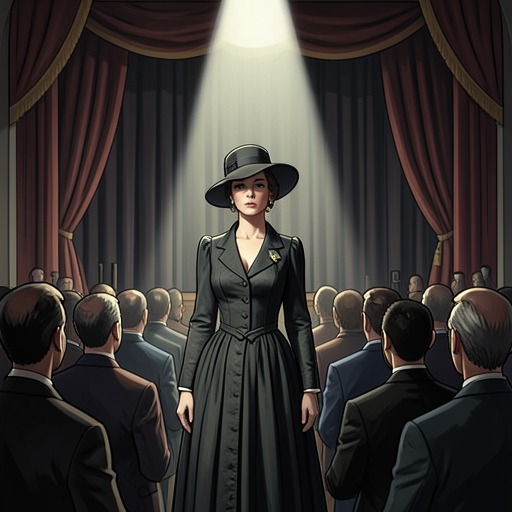
Their shared memories include a happier outing to the Sepulveda Theatre, where Norma Jeane and Elsie win a set of twelve yellow plastic plates and saucers decorated with pink cornflowers. They are called onto the stage to the audience’s applause, and Elsie nearly squeezes Norma Jeane in an excited embrace, leaving a smear of lipstick on her cheek. The book identifies this as their last trip to the theatre together. Much later, in July 1955, Norma Jeane returns to that same cinema without being recognized, disguised in a dark curly wig, red-framed sunglasses, and a plain blue dress. In the lobby, strangers repeat a false story that the Pirigs adopted her, that she ran away, and that Warren must have abused her. She wants to tell them that they know nothing about either her or Mr. Pirig.
She drives past the Pirig house instead of stopping. Elsie had sent her a couple of letters to the studio, which Norma Jeane tore up in anger; now, passing the house, she imagines the visit she will not make. In that imagined encounter she would ask Warren whether he had ever loved her, be courteous to Elsie, and leave after promising invitations to a future Hollywood premiere. She calls the fantasy revenge, but it also stages a wish to be seen with respect by the people from whom she feels discarded. Elsie’s significance lies in that lasting double presence: she is remembered as a loving caregiver, a proud witness to Norma Jeane’s promise, and the woman whose protective decision became, for the girl she sent away, an enduring betrayal.