Warren Pirig
BlondeWarren Pirig is Elsie Pirig’s husband and Norma Jeane Baker’s foster father, a man whose watchful fixation on the girl sharply contradicts his usual disregard for other people. Through Elsie’s observations, he emerges as both a source of danger within the household and a figure whose attention will later cling to Norma Jeane’s public image.
Identity and Background
Warren rarely looked anyone directly in the face. An injury to the retina of his left eye, a reminder of boxing bouts during his Army service in the Philippines, left his right eye with perfect sight; he nevertheless refused to wear glasses, which he believed got in the way. His sideways gaze was not reserved for strangers: even friends he liked and respected received little direct attention. He also paid scant attention to his own appearance. Unless Elsie laid out a clean shirt and removed the dirty one, he might go unshaven and wear an unclean shirt. Though he made a living selling scrap metal, old tires, and sometimes used cars, he took little care to make a good impression. Elsie had met him in San Fernando when she was seventeen, when he was handsome, lean, and in uniform; by the time she watched him in the foster household, he was no longer the young, thin soldier she had known.
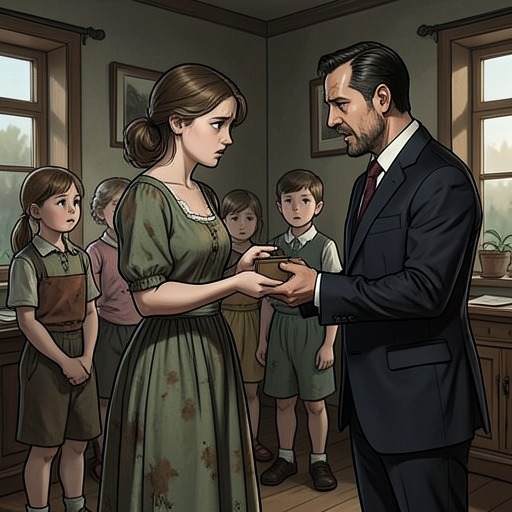
Against this pattern of indifference, Elsie noticed Warren’s eyes following Norma Jeane’s movements. She had watched him for months and saw him look at the fifteen-year-old girl in a way unlike his attention to other children in their care: with Norma Jeane, Elsie thought, he looked at a woman. That difference turned his gaze into a warning sign. Elsie did not claim to know everything it meant, but what she had seen was enough to make continued silence feel incompatible with retaining any self-respect.
Violence and Household Conflict
Warren’s danger was not confined to the way he watched Norma Jeane Baker. Elsie remembered his physical violence toward her: one blow to the right cheek had swollen until it seemed to consume her eye; another punch to the stomach made her vomit on the floor. Children staying in the household fled out the back, laughing, while Warren minimized what he had done by claiming that he could have hurt her more. The recollection makes his domestic authority inseparable from intimidation, even when he insists that his violence has limits.
The violence surfaced again after Elsie told him she intended to find Norma Jeane a husband so the girl could leave their home and be safe. Warren turned away abruptly and drove off without answering. Much later, after Elsie and the others had gone to bed, she woke to his steps on the stairs and the acrid smell of alcohol. He entered the dark bedroom without searching for the light, came down on her, and tore at her nightgown. Elsie was too stunned to protect herself or move aside; their encounter was not an act of mutual intimacy but an assault by her husband. His silence, weight, and force echo the household’s wider imbalance of power, in which Elsie’s effort to protect Norma Jeane did not free her from Warren’s control.
The Magazine and the Afterimage
Warren’s distant attention became fixation when Norma Jeane Baker’s image reached him in print. In the office trailer for his used-car lot, he stared at the March 1945 issue of Swank, where the former foster child appeared on the cover in a wet T-shirt and high heels, with two more pages of photographs inside. The woman in the pictures seemed to return his look knowingly. For Warren, she was at once the girl he had relinquished without touching and an adult whose sexualized image provoked desire and revulsion. He imagined her photographs as a betrayal by Elsie, blamed his wife for breaking up their family, and felt an urge to hurt someone. Yet he hid the issue beneath old receipts in his desk, preserving the very image that disturbed him.
Years later, Norma Jeane Baker drove through Van Nuys and passed the Pirigs’ house on Reseda Street. At a nearby theater, she had overheard strangers speculate that the used-car dealer named Pirig had adopted her, that she had run away, and that he might have assaulted her. She wanted to tell them they knew nothing about either her or Warren, but recognized that their gossip was not hers to control. The distinction matters: the rumor is presented as public speculation, not confirmation of an assault on Norma Jeane.
The house itself remained much as she remembered it, though Warren’s car lot had spread onto the bare ground beside it: rusted wrecks, a van, and three motorcycles marked for sale. Norma Jeane recalled that Elsie had sent two letters to the Studio, which she had torn up in anger, believing the Pirigs had abandoned her. As she drove past without stopping, she imagined a visit in which Warren would offer her a beer and treat her with the respect due an adult and a star; she would ask whether he had ever loved her, then leave Elsie a courteous promise of invitations to a Hollywood premiere. The encounter never takes place. In her imagined departure, celebrity becomes a means of reversing the old household’s imbalance: Warren would have to look at the woman Norma Jeane had become, while she alone would decide whether to stay.
The Missing Place at the Wedding
Warren Pirig’s refusal to attend Norma Jeane Baker’s wedding made his absence part of the ceremony itself. A friend of the Glazers, rather than her foster father, escorted her to the altar. The wedding photographs preserved a radiant bride and a handsome young groom, but not the fear Norma Jeane felt beneath her smile: her too-small shoes hurt, her stomach seemed clenched in a hot vise, and she did not understand what the officiant’s question about taking Bucky Glazer as her husband meant. Her answer came in a whisper; Bucky’s came loudly and confidently. Warren’s empty place thus stands against the public image of an uncomplicated, happy marriage, while the scene offers no explanation for his refusal to attend.
That absence belongs to a broader pattern of looking without acknowledgment. Warren had watched Norma Jeane in the Pirig household, yet the available scenes do not show him offering her the care or recognition that his attention might have implied. Later, when her photographs made her famous, he could preserve an image of her while still blaming Elsie Pirig for the family’s fracture. The novel leaves the meaning of his earlier gaze unsettled; it does not turn the strangers’ later suspicion into proof of an assault on Norma Jeane. Warren’s significance lies instead in the sharp, unresolved contrast between fixation and recognition: he notices the woman she becomes, but the story gives no corresponding act of protection or welcome.