Il Drammaturgo
BlondeIl Drammaturgo is a playwright whose work and private life have become dangerously entangled: a drama he wrote has, in his view, become his life. His return to writing after several years brings him into contact with Marilyn Monroe, whom he recognizes at a reading of his play in New York. The encounter shifts from artistic scrutiny to personal intimacy, but its final gesture leaves desire unresolved by any account of what follows.
Writing and the Play
Il Drammaturgo has written a new text, his first in several years. He describes it as unfinished and says he has good hopes for it, but his measured confidence sits beside a more troubled recognition: the drama has taken on the substance of his life. Writing is not simply a vehicle for words; the text is figured as something wound through his body, lodged among his viscera and arteries. The image makes artistic creation feel physical and intimate, while his recognition that this entanglement is wrong suggests that he has begun to see the cost of letting the play absorb his life.
Recognition at the Reading
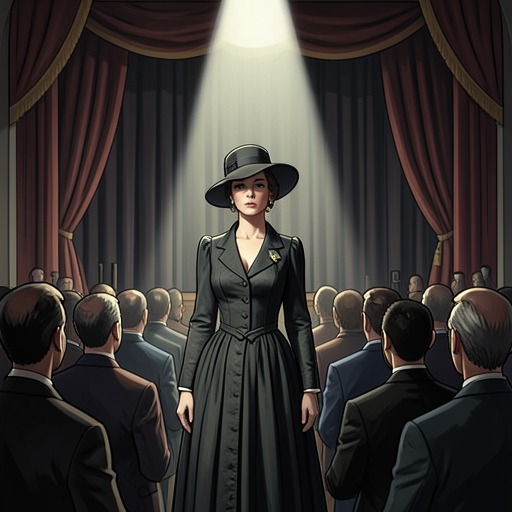
The reading takes place in a cold attic, where six actors sit on folding chairs arranged in a semicircle on a platform beneath a pair of harsh bulbs. Water drips steadily from a bathroom at the back, and cigarette smoke thickens around an audience of about forty. Il Drammaturgo sits in the front row, only a few metres from the actors. Known for his severity and impatience with performers, he has previously warned them not to understand him too quickly.
During the long opening scene, the actress playing Magda has no lines. Il Drammaturgo fixes his attention on her and recognizes Marilyn Monroe. His recognition brings anger as well as surprise: she is appearing with the New York Ensemble of Theatre Artists under Max Pearlman’s direction. The excitement he noticed among the audience before the reading begins to make sense to him; he had not imagined that it might be directed at someone other than himself.
He recalls having skimmed a newspaper item about Monroe’s mysterious disappearance from Hollywood and her breach of a contract to appear in another film. The accompanying photograph, he remembers, reduced her face to a few marketable features. That image contrasts with the silent, present actress before him, who is also the Magda he had created. His response registers both the shock of encountering the star and the difficulty of separating her public image from the role in his play.
From the Play to the Person
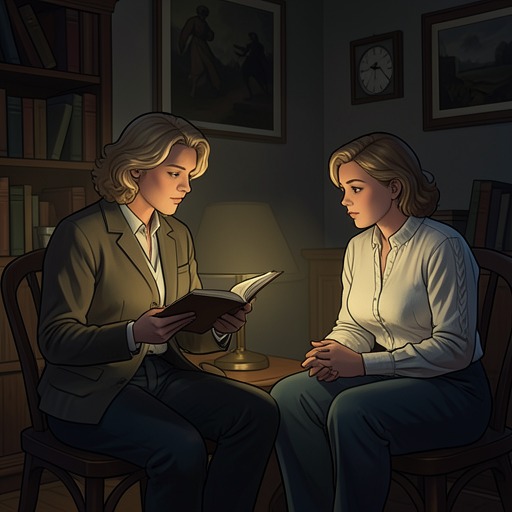
After discussing Magda’s illiteracy, Il Drammaturgo stops the conversation about his drama and asks Marilyn to talk about herself. Her smile is described as confused, as if she were wondering which self he means. He asks whether he may call her Marilyn or whether that is only a stage name. The exchange turns identity into the meeting’s central question: he is no longer addressing only the actress who embodies Magda, but trying to reach the person behind the name, without knowing whether the distinction can be made cleanly.
Desire and Restraint
The encounter ends, in the available account, with Marilyn kissing Il Drammaturgo on the lips, gently but sensually. Desire rises in him as a bodily surge, described as beginning in his groin and flooding his body. Her tender thanks accompanies the kiss, giving the moment a warmth that intensifies rather than resolves its ambiguity.
The narration then names him an adulterous husband and states that he does not want to take advantage of Marilyn. His restraint does not erase the desire the kiss has stirred, but it marks a limit he recognizes. The scene therefore leaves him between the physical force of his response and his awareness of the marital position that makes acting on it a betrayal.