Irina
BlondeIrina is Harriet’s infant daughter and the center of a brief, formative caregiving relationship with Norma Jeane Baker. While Irina’s father is away in the Pacific and officially missing in action, Norma Jeane takes her on daily walks, sings to her, and makes her a cloth tiger. Irina’s disappearance with Harriet in March 1944 abruptly ends this domestic life; the child remains present afterward chiefly as a lost attachment, recalled through a toy, a dream, and Norma Jeane’s later response to another little girl.
Identity and Circumstances
Irina is not Norma Jeane’s daughter: she is the child of Harriet, Norma Jeane’s friend and apartment mate. Yet for a time Norma Jeane performs many of the intimate acts of mothering. Irina is nearly ten months old in the winter described and will turn one in April. Her father, a second lieutenant in the United States Army, is somewhere in New Guinea, but his official status is missing in action since December. Norma Jeane knows the distinction between his being away and his being missing; she manages, for the moment, to keep the latter fact at a distance.
The contrast between Irina’s small world and the war beyond it is sharply drawn. While the Battle of Stalingrad is taking place, Norma Jeane pushes a squeaking stroller through a shabby little park with sparse palms and litter. The setting is no idealized nursery: it is an ordinary, imperfect corner of Southern California. What gives it meaning is the afternoon ritual built there, as Norma Jeane sings to Irina and discovers happiness in the work of caring for her.
Daily Care and the Cloth Tiger
Norma Jeane sings nursery rhymes and songs to Irina as she rides in the stroller. When strangers admire the baby, Norma Jeane answers proudly with Irina’s name and age. If they praise both child and mother, she smiles rather than correcting their assumption. Asked whether her husband is away in the armed forces, she says he is far away in New Guinea. In these brief exchanges, she occupies the public role of a mother even as Irina’s actual parents and their circumstances remain distinct from her own.
That role is made tangible in a handmade toy. Using a pattern from Family Circle, Norma Jeane turns orange cotton socks into a small tiger, adding strips of black cloth, cotton stuffing, a metal hanger covered in fabric for the tail, glossy black buttons for eyes, and pipe cleaners from Woolworth for whiskers. Irina hugs the tiger, then sets it down and crawls after it, babbling as if urging it onward. Norma Jeane laughs at the child’s delight. The care invested in the toy is practical and inventive, but it also gives their bond a durable object: something made by Norma Jeane that Irina can hold and play with.
Harriet watches the scene without joining in, smoking another cigarette. Her sarcastic praise of Norma Jeane as a perfect wife and mother stings, and Norma Jeane answers by rebuking Harriet for being unhappy despite having such a beautiful child. The exchange reveals a tension in the household: Norma Jeane’s happiness in caring for Irina does not erase Harriet’s exhaustion or make the two women’s approaches to motherhood interchangeable. Irina is loved by both, but the work and emotional meaning of her care fall unevenly between them.
Disappearance and Aftermath
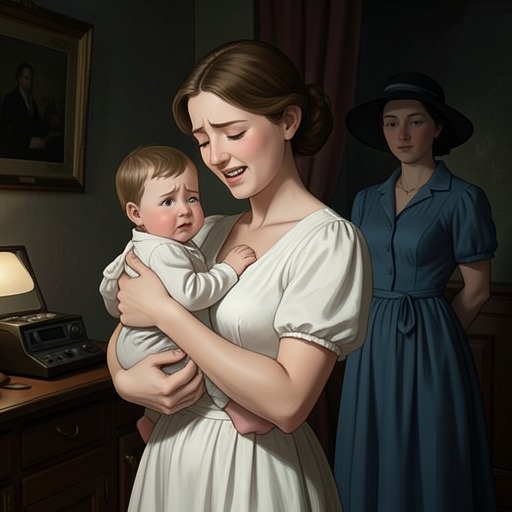
In March 1944, Harriet leaves Verdugo Gardens without warning and takes Irina with her, leaving most of her few belongings behind. Norma Jeane is devastated by the loss of the child she has come to love. She remembers, uncertainly, bringing Irina to Gladys and receiving a blessing, but now Irina is gone and that imagined or remembered blessing offers no comfort.
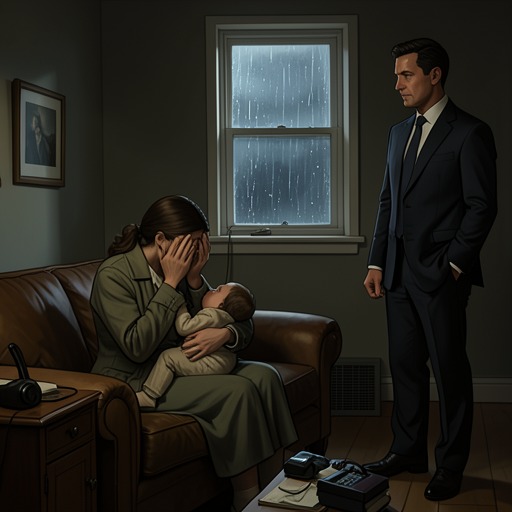
Norma Jeane tries to report the disappearance to the Mission Hills police, but stammers so badly that she has to hang up. She also understands the obstacle: Harriet is an adult and Irina’s mother, and seems to have left voluntarily. Norma Jeane believes that she loves Irina more than Harriet does and that Irina returned her affection, but neither belief gives her a right to intervene. Their separation is therefore not a conventional bereavement with a confirmed death, but an unresolved disappearance that leaves Norma Jeane unable to find or protect the child.
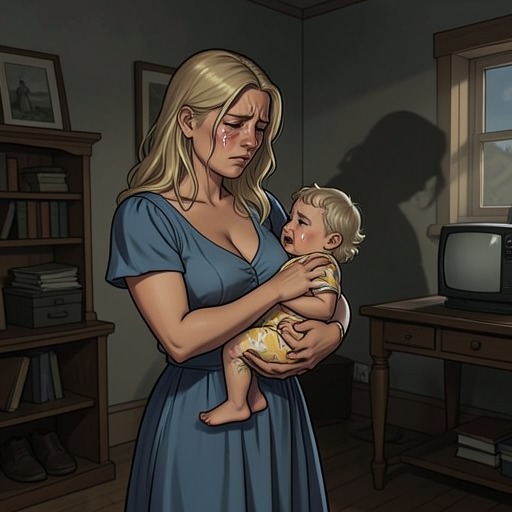
Irina’s father remains officially missing, and his remains are never found. The uncertainty surrounding his fate intensifies the sense of disappearance around the child’s family. The novel does not establish that Irina was harmed; instead, it shows Norma Jeane imagining such harm in a nightmare. In the dream, Harriet bathes Irina in scalding water while the child cries out, and Norma Jeane runs through a steaming corridor with no doors, unable to reach the room or save her. She wakes terrified and climbs into a bathtub full of hot water herself. When Bucky Glazer finds her there at six in the morning, she is so frightened that he recognizes he should not touch her. The nightmare makes the helplessness of Irina’s disappearance bodily and immediate, without converting fear into fact.
Memory and Narrative Significance
Irina’s absence does not end Norma Jeane’s attachment. Later, when Norma Jeane is with another little girl at a Ferris wheel, the child clings to her hand, and the abandoned cloth tiger returns to her thoughts: the tiger she made for Irina, which vanished with her. The scene does not reveal that the girl is Irina; rather, the old loss shapes how Norma Jeane experiences this new child and the danger she associates with vulnerable girls. Her thoughts move from the missing tiger to reports of murdered young women and to the question of why she herself has survived. Irina’s disappearance thus remains part of Norma Jeane’s fear and self-understanding, not merely a closed episode from her youth.
Much later, Norma Jeane recounts the care she gave Irina while explaining to the Playwright why she believes she could be a good mother. She remembers carrying and rocking younger children while in foster care, taking her friend’s daughter for walks, singing her to sleep, and making the cloth tiger. She says she loved Irina very much. This recollection presents her wish for motherhood through specific acts of attention rather than an abstract ideal: a stroller pushed through an unremarkable park, songs repeated for a baby, and a toy patiently assembled from household materials. Irina’s importance lies both in the joy of that temporary closeness and in its abrupt removal. She is the child through whom Norma Jeane briefly lives a maternal role, and whose disappearance makes that role inseparable from longing, uncertainty, and fear.