Fleece
BlondeFleece is Norma Jeane Baker’s first protector in the orphanage and one of the few people who remembers her before she becomes Marilyn Monroe. An eleven-year-old with a scarred lip, long legs, thick black hair, olive skin, and restless green eyes, Fleece combines roughness with an urgently protective attachment. Her later reappearances—some reported, some filtered through Norma Jeane’s uncertain recognition—make her a living link to the childhood identity the star cannot leave behind.
Identity and Background
Fleece is older than Norma Jeane, who is among the youngest and smallest children in their group. Her name may originally have been Felice. She is already shaped by violence: she recounts that her mother’s boyfriend killed her one-year-old sister by smashing the baby against a wall. The brutality of that story is part of the history Fleece carries into the orphanage, and it helps explain why her companionship can feel both protective and frightening to a child who has already been separated from her mother.
Fleece’s manner is deliberately hard to mistake for gentleness. She gives Norma Jeane the nickname Mouse, mocks her, and can switch from coarse language to a pinch or a slap. Yet that same forcefulness makes her an effective defender in the orphanage and at school, where younger girls need help. Norma Jeane never knows whether Fleece’s quick hands will strike or comfort her. Their friendship is therefore not a simple refuge: affection arrives mixed with teasing, intimidation, and the risk of being hurt.
Protector and Companion in the Orphanage
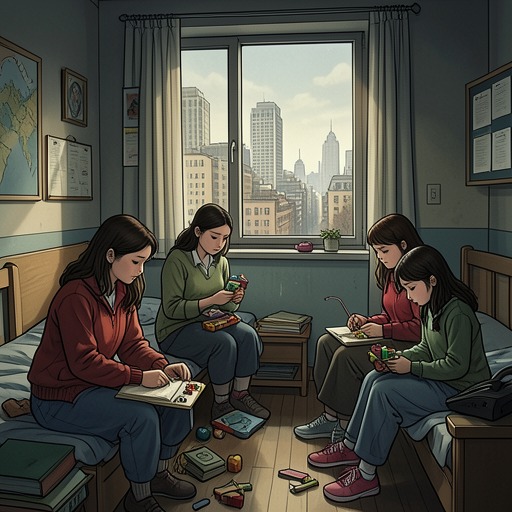
When Norma Jeane first arrives, other children have already learned the institution’s practical rule of self-preservation. Fleece explains that it is every child for herself. Most of Norma Jeane’s unusual clothes, packed by the woman who had asked to be called Aunt Jess, are stolen within days. Her battered, nameless doll is left alone: bald, naked, dirty, blue-eyed, and hidden beneath the mattress like a private remnant of herself. Fleece calls it a monster, but not unkindly. The doll and Fleece’s companionship offer very different kinds of shelter—one silent and possessed, the other rough, social, and unpredictable.
Fleece makes room for Norma Jeane in the group, impatiently urging Mouse along and waiting for her rather than leaving her behind. She may be drawn to the younger girl out of pity or because Norma Jeane recalls the little sister she lost. The protection is real, but it does not erase the power imbalance between them. When Norma Jeane confides that her mother is in hospital and that her father lives in a large house in Beverly Hills, Fleece laughs, pinches her arm hard enough to leave a red mark, and tells her that both parents are dead. The scene turns the child’s hope into humiliation: Fleece is a protector who can also wound precisely where Norma Jeane is most vulnerable.
Fleece and Debra Mae later insist on telling Norma Jeane’s fortune after the dormitory lights have been turned off. Norma Jeane worries that cards might interfere with prayer and would rather not learn bad news before she has to. Fleece shuffles the deck, has Debra Mae cut it, and lays out four red cards, presenting them as good news. Norma Jeane wonders whether Fleece is lying because she wants her friend to remain in the orphanage with her, where nobody will adopt Fleece. The fortune-telling offers hope, but the scene leaves trust unresolved: Norma Jeane loves Fleece and recognizes her protection, yet cannot be sure that Fleece’s reassurance serves Norma Jeane’s future rather than her own fear of being left alone.
Shared Grief and the Roof
After another disappointment involving the mother Norma Jeane calls Mamita, the ten-year-old retreats to a secret route through the girls’ bathroom and onto the orphanage roof. Behind a soot-black chimney, the blinking RKO neon sign throws intermittent light across her hands and closed eyelids. Fleece follows her there and pulls her into a strong, awkward embrace. Norma Jeane breaks down, hating the woman who has kept her from having a real mother and family; Fleece confirms the anger rather than correcting or soothing it away. The moment gives their bond a different form: Fleece’s comfort is bodily and blunt, and her own loss enables her to stand beside Norma Jeane without asking her to make grief more acceptable.
Their later recollections preserve the closeness as something mutual, not merely an older girl’s charity toward a younger one. Norma Jeane remembers that they wanted to run away together and that she was frightened but trusted Fleece. Fleece calls her Mouse and recalls her as a sad child who cried at night and wet the bed, even remembering the oilcloth placed beneath her sheets and its smell. The teasing is still present, but now it carries the intimacy of shared knowledge: Fleece can recall details that belong to the Norma Jeane who existed before the public image.
Separation and Reappearances
Years later, during a visit to the orphanage to distribute gifts, the adult Norma Jeane searches the children for familiar faces. She wonders whether a thin, sullen boy might be Fleece, then realizes the child is male. She also looks for Debra Mae and Norma Jeane herself as though the adult star could somehow still be among the residents. An elderly assistant later says that Fleece had enlisted in the Army auxiliary corps; the assistant’s suggestion that she must by then have become at least a sergeant is conjectural, not a confirmed account of Fleece’s later life. The report gives Fleece a possible path beyond the orphanage while leaving her whereabouts and circumstances largely unknown.
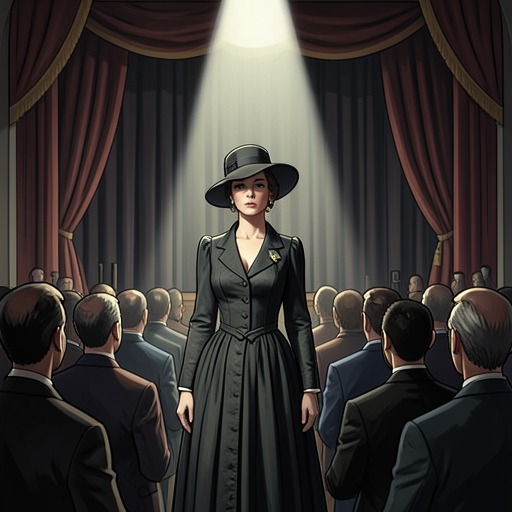
At a later premiere, Norma Jeane sees figures among the crowd who resemble the damaged, marginal children she remembers. One is a slender woman in men’s clothes, with brown hair beneath a cowboy hat; Norma Jeane thinks it may be Fleece and tries to call her from the departing limousine. The crowd and the brief glimpse do not establish an unambiguous reunion. The episode instead makes recognition itself precarious: the celebrity looks out at spectators, but what she sees is entangled with memory, and the person she most wants to reach disappears as the car moves on.
Later Bond and Narrative Significance
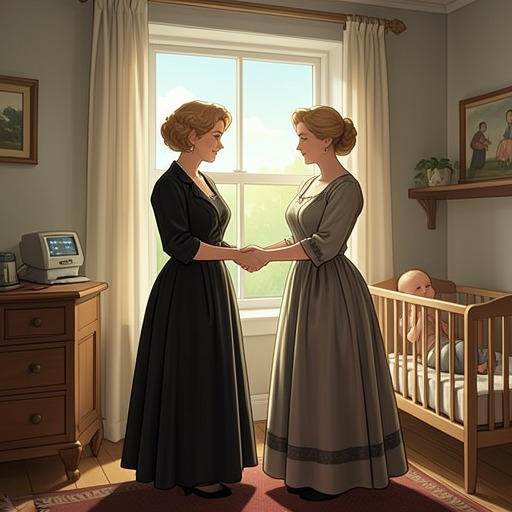
Fleece eventually comes back into Norma Jeane’s life directly enough to travel to Reno. Norma Jeane pays for her plane ticket and a week at the Zephyr Hotel so Fleece can keep her company when she is low and watch the filming of The Misfits. The visit is also an opportunity for Fleece to meet Clark Gable and Montgomery Clift. Norma Jeane’s husband objects, describing Fleece as unstable; Norma Jeane answers by questioning whether Marilyn is stable, and insists that Fleece is the only person who truly knows her because she remembers the child from the orphanage. The disagreement exposes the divide between a husband who sees Fleece as a troubling presence and Norma Jeane, for whom that history is a form of recognition no celebrity audience can provide.
Fleece matters not because she resolves Norma Jeane’s loneliness, but because the friendship keeps its contradictions intact. She is protective and cruel, funny and painful, a source of comfort who can also intensify abandonment. Her return reconnects the adult star to a past others may regard as shameful or disqualifying, while her uncertain appearances preserve the distance between being remembered and being securely reunited. In Fleece, Norma Jeane encounters someone who knew Mouse before the world learned to look for Marilyn Monroe.