Debra Mae
BlondeDebra Mae is a fellow orphan and childhood companion of Norma Jeane Baker whose life is marked by vulnerability and blunt self-reliance. First introduced as a ten-year-old sharing Norma Jeane’s dormitory, she reappears years later as a model at the Preene Agency under the name Lizbeth Short, a name she says she did not choose. Their reunion exposes both the intimacy of their shared institutional past and the precarious terms on which young women seek work and security.
Identity and Background
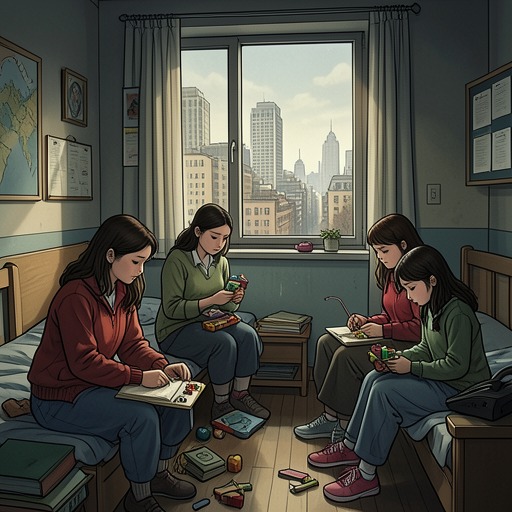
At the orphanage, Debra Mae sleeps on the bunk beside Norma Jeane’s in the girls’ third-floor dormitory. She is ten and, as the narrative explains, has been abused and beaten. The account places her among children carrying varied and serious hardships, including disability, illness, and difficult circumstances. Norma Jeane recognizes that other children have suffered profoundly; through tears, she acknowledges that nobody has hurt her. Debra’s past is thus established not through an extended account of what happened to her, but through the stark contrast it creates in Norma Jeane’s understanding of their shared surroundings.
The narrative also connects the girls through a nightly pattern of crying. When they meet again as adults, the text recalls that Debra Mae used to fall asleep in tears, while allowing that the memory may belong to Norma Jeane instead. The uncertainty makes their childhood distress feel shared rather than neatly attributable: the girls occupied adjacent beds, but their grief cannot be cleanly separated. Debra is not simply a figure from Norma Jeane’s past; she is one of the few people who knew her in the orphanage before the later public identity and career took shape.
Life at the Orphanage
Debra Mae appears beside Norma Jeane in a small episode of fortune-telling. Fleece insists on a card reading, and Debra cuts the deck before Fleece lays the cards out one by one. The cards are all red, which Fleece interprets as good news for Norma. The scene gives Debra a part in a private, improvised ritual among the girls: their hopes are placed in playing cards, which seem to offer a kind of reassurance beyond the authority of the institution around them. Debra participates, but the evidence does not assign her a particular belief or explain what she hopes the reading will bring.
In another moment, Debra notices that Norma Jeane is unwell and persistently tries to get her attention. Norma has slumped over a scarred writing desk and appears to have briefly fainted; Debra shakes her shoulders and points out that she is bleeding and that the chair has been stained. Norma weakly pushes Debra’s hand away, but Debra does not give up. The episode gives their relationship a practical dimension: Debra is the one who recognizes the immediate danger and insists that Norma look at what has happened. Her response is direct, not sentimental, and contrasts with Norma’s impaired awareness and withdrawal.
Reunion at the Preene Agency
During Norma Jeane’s first week at the Preene Agency, she encounters a red-haired young woman coming down the stairs as she arrives. The woman is Debra Mae, whom Norma Jeane remembers as the girl from the neighboring bunk. The change in appearance and circumstance is striking: Debra is now working as a model, but the agency has given her the name Lizbeth Short, which she says she hates and did not choose. She has been suspended, or possibly dismissed; Norma Jeane cannot determine exactly what has happened, and Debra’s account does not settle the point.
Debra explains that she was trying to model seriously and wanted an audition with a production company. Her trouble, as she describes it, began with taking money from clients. The agency formally forbids this, she says, yet when it discovers such payments, it keeps the money. Her warning to Norma Jeane therefore exposes an imbalance: the agency claims authority over what its models may do, while Debra believes it also profits from enforcing that rule. Her account is personal testimony, not an independent explanation of the agency’s policy, and the uncertainty surrounding her departure remains part of the scene.
Conflict, Relationships, and Narrative Role
The reunion turns tense when Norma Jeane asks whether Debra accepted money from clients in return for going out with them. Debra reads disapproval in Norma Jeane’s expression and challenges the judgment. She asks why the choice should seem disgusting or absurd, and points to the double standard she perceives: Norma Jeane is married, while Debra is not, yet both women need money and depend on work in a system that judges them by their sexual respectability. The scene does not resolve their disagreement. Debra pushes Norma Jeane away and continues down the stairs, leaving their old closeness unable to overcome the immediate shame and anger between them.
The encounter also makes the girls’ changed circumstances visible. Norma Jeane has entered agency work after her earlier marriage has ended and no longer wears a wedding ring; Debra has returned to modeling under a name imposed by the agency and believes it has taken money from her. Their paths meet inside the same employment system, but the meeting does not produce solidarity. Instead, Debra’s warning and accusation show how economic insecurity can turn an old friendship into a confrontation over survival, respectability, and who benefits from the rules.
As Debra leaves, Norma Jeane asks whether she has heard from Fleece. Debra answers that Fleece is dead, then continues down the stairs without turning back. The statement is presented as Debra’s report, with no confirmation in the episode; its abruptness nevertheless closes the reunion on a note of loss. Debra’s role is brief but consequential: she links Norma Jeane’s orphanage years to her precarious adult pursuit of work, and her return reveals that survival has not brought either woman clear protection from exploitation or judgment.