Baby
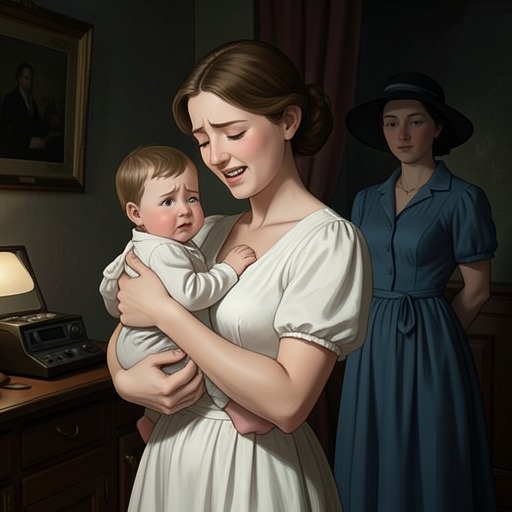
BlondeBaby is Norma Jeane Baker’s name for the child she carries during her relationship with Cass Chaplin and Eddy G. The pregnancy briefly opens the possibility of a shared future, but ends in an abortion that Norma Jeane experiences as a profound loss. Baby never becomes a living character in the story; instead, the child’s absence gathers force through dreams, recurring guilt, and a cloth tiger preserved as a memorial. These returns make Baby central to Norma Jeane’s private understanding of love and responsibility, even as the public sees only the actress and her screen roles.
Identity and the Secret Pregnancy
Norma Jeane learns that she is pregnant after consulting an obstetrician in a remote part of Los Angeles under the name Gladys Pirig. The confirmation brings her to tears: she had suspected the truth, but the doctor’s answer turns an uneasy possibility into a fact. The pregnancy is estimated at five weeks, and the doctor expects the child in mid-April. He considers her generally healthy, and she understands that her usual menstrual pain and heavy bleeding will temporarily cease. The immediate medical news therefore carries both practical reassurance and the sudden prospect of a child.
Baby’s parentage is not settled in the story as an objective fact. Norma Jeane shares the secret with Cass Chaplin and Eddy G, and the three imagine the approaching birth together. Much later, however, she recognizes that she had privately believed Cass was the father. Her conviction is tied to the order and depth of her attachments: Cass entered her life before the Marilyn Monroe persona became famous, and she believes she loved him more than Eddy G. The distinction between what she knew, what she suspected, and what she felt becomes part of Baby’s continuing significance.
Anticipation and the Three-Person Bond
For a time, the pregnancy gives the relationship among Norma Jeane, Cass Chaplin, and Eddy G a shared secret and a future to imagine. They take a late-summer drive in a light-green Cadillac, sitting together in a private, dreamlike happiness. The narration presents their excitement as mutual, but also stresses that the decision to reveal the pregnancy belongs to Norma Jeane. Their secrecy is not simply concealment: it marks a fragile space in which they can picture themselves as a family before the world intervenes.
The news also brings the men’s habits into view. Eddy G has joined Alcoholics Anonymous and thinks it may be time for Cass to stop drinking as well. He argues that the coming child makes the moment especially important; Cass considers whether he should follow, while wondering whether he could still use drugs. Their conversation makes the pregnancy a possible turning point in their lives, though not a guarantee that either man will change. Baby’s anticipated arrival briefly gives the trio a reason to consider sobriety and responsibility, while leaving the future uncertain.
Norma Jeane’s feelings about motherhood also surface in a dream in which she tries to nurse Baby, but the infant will not suckle. The child has no face; in its place is a shining halo of light. She wonders whether instinct is what people call God, comparing the knowledge that guides unfamiliar actions to animals’ ability to swim or build nests. The dream does not resolve her questions about motherhood. Instead, it gives Baby an elusive presence: at once an infant she wants to care for and an image through which she tries to understand nature, instinct, and what sustains life.
Loss and Its Public Aftermath
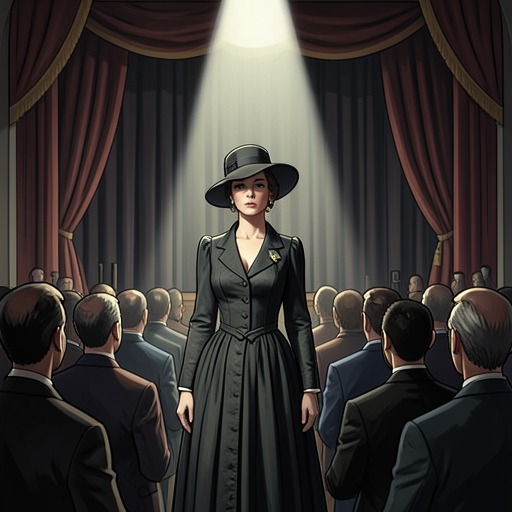
The pregnancy ends in an abortion. The novel later places the loss beside the public success of Marilyn Monroe in Gentlemen Prefer Blondes: the audience applauds the film and sees a star moved by the reception, while Norma Jeane privately connects that performance to the child she has lost. Her grief is not visible to the spectators, and the acclaim does not cancel it. Rather, the contrast sharpens the division between the public image and the person who carries the memory of Baby.
The aftermath includes physical suffering and fear, but Norma Jeane also turns the loss into a private moral sentence. She believes she has been punished and imagines that the pain is deserved. When she cannot cry, she is frightened by the apparent exhaustion of her tears; grief becomes an absence she experiences as evidence against herself. The story does not present this self-accusation as a settled judgment about what happened. It shows how she interprets the loss, and how that interpretation intensifies her distress.
At another point, severe pain causes her to think that she may finally be giving birth. She fears that her husband is not the child’s father and that discovery will bring violence, but the Ex-Atleta recognizes the symptoms as appendicitis and calls an ambulance. At Cedars of Lebanon Hospital, she undergoes emergency surgery. The episode places her fear about Baby beside an unrelated medical crisis: her mind gives pain the shape of the child she lost, while the actual cause is an inflamed appendix. Her husband’s lack of knowledge is also consequential. Norma Jeane later understands that he never knew about Baby, despite having comforted her when she cried in her sleep and heard her call him Daddy.
Dreams, Guilt, and Recurrence
Baby returns in Norma Jeane’s dreams and visions as a child she cannot protect. In one dream she remembers trying to nurse the infant; in another, the child’s face is absent, replaced by light. These images preserve a bond without supplying the ordinary details of a child’s life. Baby is at once intimate and unknowable, present as a need for care but unavailable to be held or recognized.
On a beach, Norma Jeane sees a vulnerable child in the waves and feels compelled to save it. She partly recognizes that the scene may be a dream, hallucination, or spell, but cannot make that recognition stop her from acting. She wonders whether the child is Baby or another mother’s infant and runs into the surf. The waves knock her down, and she is rescued by surfers before she drowns. The episode turns the wish to recover Baby into a dangerous attempt to save a child who may not be there. It also shows how the loss persists not only as recollection but as an urgent, bodily demand for rescue.
Cass Chaplin and the Cloth Tiger
After Cass Chaplin dies, Eddy G tells Norma Jeane that he was the first of their circle to die. She has been waiting for news that one of the two men has died, and Cass’s death reopens the secret of the pregnancy. Her private belief that Cass fathered Baby is inseparable from her greater love for him and from the fact that he knew her before Marilyn Monroe became a public figure. She also wonders whether she is to blame, recalling that all three had wanted Baby to die. The thought does not settle responsibility; it shows how grief makes the decision feel shared and personal at once.
A cloth tiger then arrives, linked to the child the men had imagined. Eddy G had stolen the toy for Baby, and Cass had kept it for years. No child had worn it down or made it shabby; it remained an untouched object, held like a keepsake of Norma Jeane and the unborn child. Its return gives material form to a relationship and a future that never came to pass. Norma Jeane recognizes that Cass had not forgotten, but the gift cannot tell her exactly what he intended or what he wanted her to understand. Baby’s story therefore ends not with resolution, but with an object that carries both care and accusation: the evidence of a remembered hope, and a reminder that the adults who loved the child had also accepted its loss.