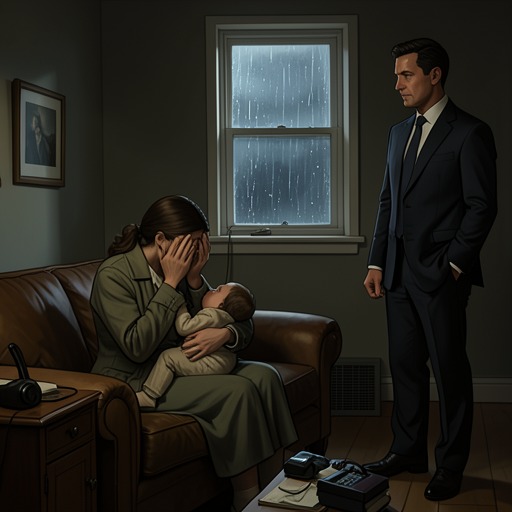
Arthur Miller
BlondeArthur Miller, the playwright and Marilyn Monroe’s husband, is depicted as both the maker of The Misfits and a man who gradually loses his place in the life he hoped the film would preserve. He shapes his wife’s private experience into Roslyn Tabor, a role that gives her some of her most searching screen work, but his artistic gift cannot repair their marriage. The novel’s portrait is built around that contradiction: creation brings them into a shared work even as the work becomes the setting of their separation.
Identity and Artistic Life
Miller’s identity is tied to the theater and to a demanding, inward method of composition. In the West, he recognizes Director H’s genius as different from his own: H draws energy from aggressive stimulation, while Miller needs solitude, introspection, and the methodical exploration of his imagination. The contrast clarifies what he has left behind. He misses New York, his apartment on 72nd Street, its books, his daily walks in Central Park, and the argumentative company of Max Pearlman.
His absence from the theater is not simply geographic. Although theaters around the country continue to stage his work, those productions are of plays written years earlier, and he has neither the time nor the opportunity to participate in them. He has become a living classic, a status the narrative presents as disquieting: public recognition persists while an artist’s active connection to his work and former life recedes. In Hollywood, he tells himself that his new employment is temporary and that The Misfits will redeem the sacrifice.
Marriage and the Making of Roslyn
Miller writes Roslyn from material that crosses the boundary between dramatic invention and private life. Her dialogue imitates the conversations of Marilyn Monroe; when she speaks of absent parents, longing for her mother, and having no children, the narrative makes the actress’s own losses audible through the character. It suggests that Miller has drawn on his wife’s life for the screenplay, even on painful events. Yet Monroe does not blame him for this appropriation. The novel presents their artistic intimacy as reciprocal: Roslyn is his gift to her, while the character is also a gift she gives him.
That reciprocity has limits. By the time the film is taking shape, Miller no longer loves Monroe as he once did, and poetry is described as the principal bond remaining between them. He believes she has been unfaithful, though he does not want to know with whom, how often, or under what circumstances. Rather than press for an accounting, he becomes a patient, stoical husband and caretaker. His attachment endures even as the marriage changes: he regards their intimate history, including the child she carried, as a bond too profound to name, and intends to love and forgive her even when he knows he is no longer her first love or her imagined ideal.
The Film Set and the Caretaker’s Position
During the production of The Misfits, Miller’s devotion does not give him authority over Monroe’s work or her health. When he gently asks whether she feels strong enough to make the film, he is asking whether she can endure it without drugs destroying her. Her angry response that she is always strong enough does not resolve his fear. On set, she is increasingly abrupt with him, while her work with Clark Gable intensifies; Miller wonders whether his distress is only jealousy, but the narrative also shows him watching her take more and more medication and lie about what and how much she uses.
His position becomes painfully literal in the label of the ignored husband. While others find Monroe lively and funny in public, Miller sees the danger behind that performance: she has developed enough tolerance to chew and swallow codeine while talking or laughing. He stands apart, watching. At home, her distress is no less difficult to approach. When she vomits in the bathroom with the door left open, he is made to hear it but does not ask questions. His care is real, yet it has become a form of helpless witnessing.
Artistic Achievement and Personal Loss
Miller’s screenplay does achieve something the marriage cannot. In the daily footage, Roslyn emerges as a performance of unusual sensitivity, complexity, and brilliance. Even people who dislike Monroe are won over by the character. The narrative compares the achievement to a shattered vase painstakingly restored: the finished image appears whole and beautiful, concealing the labor and damage involved in making it so. Roslyn is therefore both an artistic success and an uneasy emblem of repair. The apparent integrity of the performance does not mean that the people around it have been restored.
For Miller, The Misfits was supposed to be an act of marital love and a masterpiece that would redeem his move into the studio’s employ. Instead, he recognizes that the film is becoming the tomb of his marriage. He has not only left his New York theatrical world; he has also made himself a servant to Monroe’s demands and to the studio that pays him. His fear that he is losing her turns into a determination to save her, but the film cannot make him equal to that task.
Ending and Narrative Significance
In the couple’s final week in Reno, Miller expresses his grief plainly: he gave Monroe The Misfits, she left him anyway, and he cannot understand why. The admission condenses his central miscalculation. He had imagined that artistic work could operate as a gift strong enough to secure love, even as the story shows that the film draws on a relationship already marked by distance, suspicion, and care that cannot control its object.
The novel also places Miller’s private experience beside the public romance audiences can make of the film. Its account falls in love with the fictional pairing of Monroe and Gable, imagining them as a princess and a mysterious prince walking through the desert together. That screen-facing fairy tale contrasts with Miller’s position outside the image: the husband who wrote the work, watches its star, and cannot keep the marriage it was meant to redeem. His narrative role is consequently double. He is the artist whose writing helps Monroe produce a defining performance, and the intimate witness whose devotion cannot turn performance into a happy ending.