Principe Misterioso
BlondePrincipe Misterioso is the imagined rescuer who recurs in Norma Jeane Baker’s memories and fantasies, a figure through whom the hope of being claimed becomes entangled with exposure and control. He first seems to wait at the edge of a childhood memory, then takes the role of an elegant romantic partner, and finally appears at the threshold with a camera. The narrative never supplies a settled identity for him; his significance lies in the unstable passage between remembered abandonment, adult vulnerability, and the image-making world around Norma Jeane Baker.
Identity and First Appearances
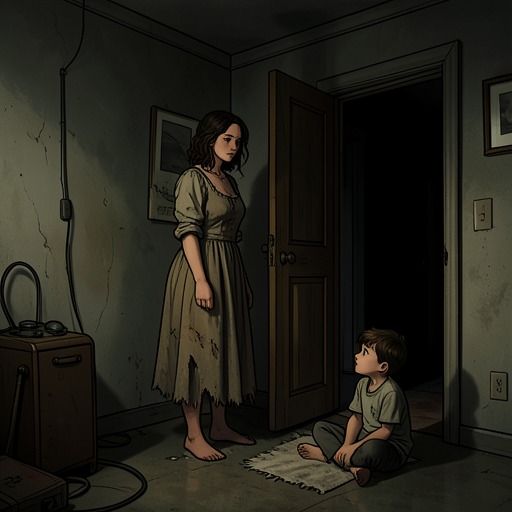
Principe Misterioso enters a memory of Norma Jeane Baker wandering through the orphanage’s long corridors and recalling its sandy yard and swing. Beyond the wire fence, she notices a familiar presence and wonders whether it is the prince who has come to take her away. The question remains uncertain even within the recollection: she may not have noticed him at the time, or may simply have forgotten. He is less a securely remembered person than a possibility attached to the childhood expectation that someone will arrive and claim her.
That expectation reaches back to another scene of waiting. At the funeral of a great Hollywood producer on Wilshire Boulevard, Norma Jeane Baker had stood with her heart beating fast, expecting her father to come forward. He did not; years would pass before that hope could be resolved. The prince and the absent father are not declared to be the same person, but their places in the narrative touch: both belong to the possibility of a man appearing to recognize and choose her. Even Nonna Della may have believed the story of Gladys Mortensen’s marriages, leaving Norma Jeane Baker to suspect that the names Baker and Mortensen were inventions meant to spare her shame. Against that uncertainty about family and legitimacy, the prince offers an imagined answer to the question of who might come for her.
The Rescuer in the Dream
The figure returns in a nightmare that moves between childhood and adulthood. Norma Jeane Baker finds herself nearly naked on La Mesa Street, searching for the building where she and her mother lived but unable to locate it or summon the words that would lead her to The Hacienda. She is at once the lost child seeking her mother and someone who knows she has married. In the dream’s disturbing bodily imagery, her private place has been rented, bloodied, and acquired by Principe Misterioso. The prince’s rescue is therefore not simply comforting: the language of being acquired makes the desired protector inseparable from possession and injury.
A contrasting vision unfolds while Norma Jeane Baker is spray-painting at work on a November morning, fighting nausea and trying not to faint. The prince appears in a tuxedo; she becomes the Good Princess in a long, shining white dress. They walk hand in hand along a beach at sunset, and he wraps his jacket around her shoulders before kissing her gently. The scene supplies the fairy-tale tenderness missing from the nightmare, but it is also a fantasy imagined amid physical strain, not an event presented as having happened in ordinary life.
Escape and Reversal
In the beach vision, Norma Jeane Baker surprises her companion by kicking off her shoes and dancing barefoot where the waves touch her feet. Then her arms become wings and she turns into a splendid white bird, flying higher until the prince is only a figure on the shore, looking up in dismay at his loss. The reversal matters: the imagined rescuer does not complete a rescue by carrying her away. Instead, she escapes by transforming herself, leaving him behind. His astonishment marks the moment when the princess exceeds the part the fantasy first assigned her.
The transformation also throws the prince’s other appearances into sharper relief. At the orphanage fence, he is a maybe-rescuer; in the nightmare, a figure bound to bodily vulnerability; on the beach, the partner who watches her become unreachable. Across these scenes, his role changes with Norma Jeane Baker’s position: lost child, exposed young woman, and self-liberating figure. The text sustains the contradictions rather than explaining them away.
The Camera and the Image
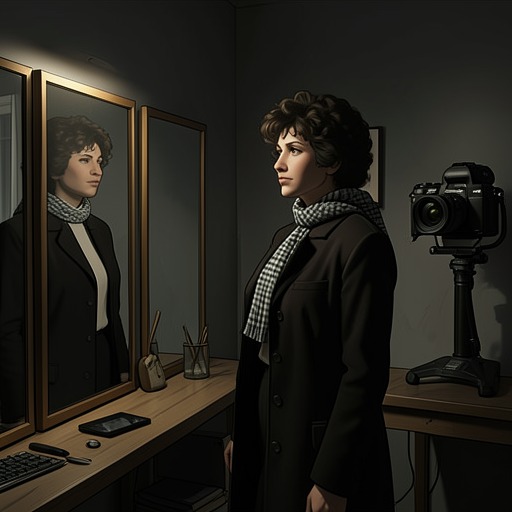
The vision breaks when Norma Jeane Baker looks up from the gloved hands holding the paint can. A man is watching from the doorway, and the narration identifies him as Principe Misterioso, now carrying a camera. The shift from dream to workplace is abrupt. The same figure who had looked up from the beach at the bird flying away now stands at the threshold and looks at her through the prospect of a photograph. His camera makes being seen concrete, turning the fantasy of romantic attention toward the capture of an image.
The words “Pin-up 1945” follow the encounter. Placed beside the camera-bearing figure, the caption connects the private vision to the public image that Norma Jeane Baker is becoming, without establishing who the man is or what photograph he takes. The prince’s final appearance thus preserves the passage’s central uncertainty: the person who might rescue her may also be the one who watches and frames her. As a recurring figure, Principe Misterioso gives that uncertainty a shape, joining the longing to be found with the danger of being possessed or made into an image.