Bess Glazer
BlondeBess Glazer, Bucky Glazer’s mother and Norma Jeane Baker’s mother-in-law, helps draw the young couple together and later offers Norma Jeane a place in the Glazer family. Her care is real, but it comes with a prescribed role: she praises Norma Jeane as a good Christian and a devoted wife, while insisting that a wife’s obligations outrank her ambitions. That combination of welcome and constraint makes Bess both a source of shelter and a representative of the domestic expectations Norma Jeane struggles to inhabit.
Identity and Expectations
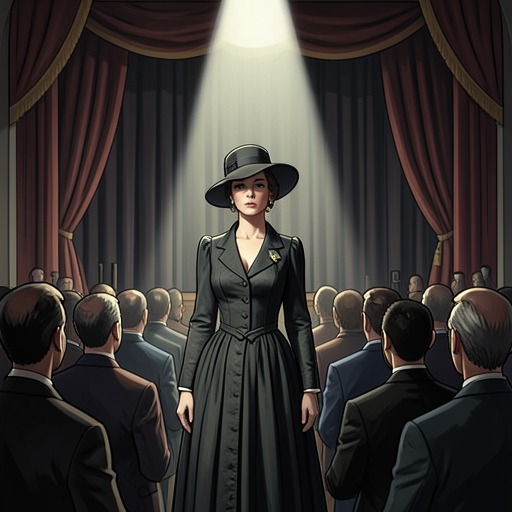
Bess’s first sustained view of Norma Jeane is shaped by her hopes for Bucky. After Norma Jeane appears onstage at the Sepulveda Theatre, Bess expects her son to meet Elsie Pirig and the girl. Bess and Bucky are not there when Elsie waits with Norma Jeane in the crowded lobby; the crowd gradually disperses, and the two leave without knowing why the pair failed to arrive. Bess’s absence is initially unexplained, but the later account of Bucky’s reluctance shows the strain beneath what might otherwise look like a simple matchmaking arrangement.
Bess wants Bucky to settle down with a respectable woman. She describes Norma Jeane to him as religious, a Bible reader, a non-smoker and non-drinker, a potential homemaker, and not excessively flirtatious. Her reasoning is practical as well as moral: if Bucky is sent to the front, he should have a home to return to and a woman who will write to him while he is away. In Bess’s imagined future, marriage offers her son both domestic stability and a dependable bond during wartime separation.
Her ideal of respectability also includes sexual purity. In front of relatives gathered at home, Bess laments that her son deserves a virgin. Bucky punctures the solemnity by asking how anyone could recognize one, then leaves whistling. The exchange reveals the distance between Bess’s earnest standards and her son’s irreverent response; it also shows how Norma Jeane is being assessed as a prospective wife before the relationship has become her own choice.
Matchmaking and Bucky’s Marriage
Bucky does not initially share his mother’s enthusiasm. Seeing Norma Jeane at the theatre with Elsie, he judges her as one of the high-school girls he already dismisses, and considers her too young. He leaves the cinema and waits outside by the car, smoking and adopting a casual, movie-like pose. His refusal to meet the pair enrages Bess, who rebukes him for embarrassing her and asks why he cannot appreciate the girl Elsie has recommended.
Eventually Bucky agrees to meet Norma Jeane, largely because it is easier than enduring his mother’s complaints and disapproving looks. Bess’s influence therefore helps bring about the encounter, though the attraction that follows is Bucky’s own: when he realizes Norma Jeane is only fifteen, he is startled by her youth, yet becomes intensely interested in her. The distinction matters to Bess’s place in the story. She presses for the match, but she does not control what it becomes; Bucky’s desire, and Norma Jeane’s subsequent marriage to him, take the arrangement beyond a mother’s plan.
Bess continues to regard the marriage through her expectations of a proper household. The Glazers like Norma Jeane greatly, and their approval matters to Bucky. During the couple’s first year together, Norma Jeane diligently plans weekly menus for his approval, copies recipes Bess recommends, and clips additional ones from women’s magazines Bess passes on. She prepares meals and keeps house even when tired after washing and other chores. Bess’s influence is present in these ordinary routines: she supplies recipes and magazines, and Norma Jeane works to perform the domestic role that her mother-in-law values.
Mother-in-Law and Daughter
Before the wedding, Bess asks Norma Jeane to call her Mom. The request signals affection and an offer of family belonging, but the word catches in Norma Jeane’s throat. She can sometimes manage Mamma Glazer, in a voice so faint it is nearly inaudible. Norma Jeane recognizes Bess as a good Christian woman and does not simply condemn her scrutiny; at the same time, her inward plea for help in becoming Bucky’s wife conveys how much the marriage and its expectations weigh on her. Bess can be kind, but closeness does not come easily to Norma Jeane, whose difficulty accepting a new mother is sharper than Bess’s willingness to claim her.
When Bucky privately complains that Norma Jeane is too dependent on him, Bess rebukes him rather than joining in. She calls Norma Jeane a good Christian and an adorable girl, and explains her neediness by her youth. Bucky counters that he is young too and that Norma Jeane needs an older man, even a father; he describes the marriage as draining him. Bess’s response defends the younger woman from her husband’s impatience, but it does not dissolve their conflict. Instead, the episode exposes two competing interpretations of Norma Jeane: to Bess, she is a worthy, inexperienced wife who deserves patience; to Bucky, her need for constant reassurance has become suffocating.
Separation and Limits of Belonging
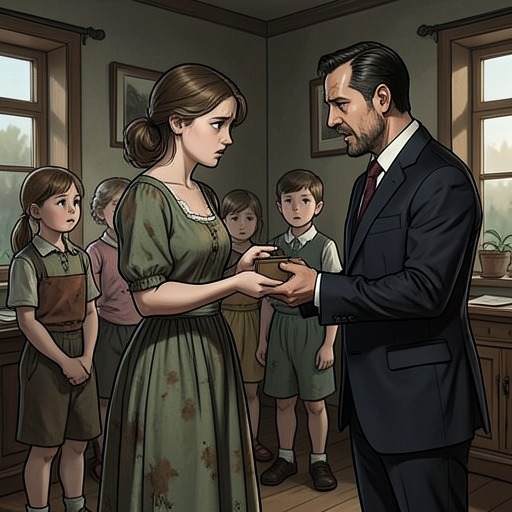
When Bucky leaves with the merchant convoy for Australia in April 1944, Bess sees Norma Jeane in shock. On the drive back toward Mission Hills, she takes Norma Jeane’s cold fingers in her hands and tells her she can come live with the Glazers because she is now their daughter. This is Bess’s clearest act of direct comfort: she offers a home at the moment of separation and tries to replace the security Norma Jeane has lost.
Norma Jeane rejects the offer’s premise, insisting that she is no longer anybody’s daughter. Her answer exposes the limit of Bess’s welcome. Bess can name her a daughter and make room for her in the family, but she cannot make Norma Jeane feel that she belongs. The exchange also gives the relationship its central contradiction: Bess offers kinship, while Norma Jeane’s sense of abandonment prevents her from accepting it as a settled fact.
Marriage, Work, and the Final Rupture
That contradiction becomes explicit when Norma Jeane’s modeling work prompts a dispute between the two women. Elsie celebrates the prospect that Norma Jeane might become a model and a film star, while Bess insists that her first duty is to be her son’s wife. The contrast is not simply between a supportive older woman and an obstructive one. Bess has welcomed Norma Jeane into the family and defended her against Bucky’s complaints, yet she still places marital duty above the work that might open a different life for her daughter-in-law.
After the disagreement, Bess does not end the friendship with Elsie in anger. She stays, makes coffee, and cries with her as they remember Norma Jeane, whom they describe as lost to them. The grief marks a change in the story’s domestic bonds: the girl Bess once hoped to install in her son’s home has become difficult to reach, and the two older women share a sense of loss without being able to restore her. Bess’s arc thus holds together genuine tenderness and restrictive convention. She offers Norma Jeane food, family, protection, and a daughter’s place, but imagines that place chiefly through the duties of a wife.