Clive Pearce
BlondeClive Pearce is a British supporting actor, stand-in, and occasional piano teacher whose place in Norma Jeane Baker’s life is marked by a sharp contradiction: he helps her find safety when her mother is ill, but also participates in the separation that leaves her feeling abandoned. Years later, a screen role brings him back to her not as himself but as the actor she once knew, giving her a chance to turn an old wound into a scene of forgiveness. Their eventual reunion over Beethoven’s Für Elise connects that emotional return to the white Steinway that first joined them.
Identity and Early Role
Clive Pearce lives in the bungalow with Gladys Mortensen and Norma Jeane. A tall, handsome man with a thin moustache, he works as a stand-in for celebrated actors including Charles Boyer and Clark Gable. In the hierarchy of the screen, however, he lacks the presence to become a star. His own acting work is largely confined to small roles, often seen in profile with an enigmatic, distinctly British smile. He has received classical training at London’s Royal Academy, but that education has not prepared him for the demands of improvisation or for taking charge in an emotionally urgent moment.
Pearce becomes Norma Jeane’s informal piano teacher because Gladys cannot afford regular lessons. The lessons are sporadic, and the child tries hard to please him, even though his sighs and grimaces unsettle her. The piano itself is a white Steinway spinet Gladys says once belonged to Fredric March. She gives different accounts of how she acquired it: March either sold it to her at a notably reduced price or gave it to her as a mark of esteem. What remains consistent is the importance Gladys attaches to the instrument and to the lessons she hopes it will make possible for her daughter.
Lessons, Affection, and Uneasy Boundaries
Pearce’s manner changes from one lesson to another. Norma Jeane learns to anticipate whether he will be silent and impatient or funny and companionable from the smell of his breath, which sometimes carries whiskey. When he is in a playful mood, he taps out a steady beat with a pencil, sometimes on the piano and sometimes on the child’s head, and sings close to her ear in a low buzzing voice. He tickles her and puts his tongue in her ear, treating her attempts to pull away as foolishness. Norma Jeane laughs and says she likes the tickling, although it sometimes hurts. Her account keeps the childhood mixture of delight, discomfort, and uncertainty intact rather than presenting their closeness as uncomplicated affection.
At other times, Pearce abruptly shuts the piano and ends the lesson. Gladys’s own efforts to teach Norma Jeane are no gentler: she becomes exasperated when the child cannot distinguish a sharp from a flat or hear a wrong note. Yet the lessons continue, and the piano becomes a place where Norma Jeane can practise alone as well as a setting for adult attention that she does not know how to interpret. Much later, she remembers Pearce as both adored and feared, the teacher who placed her fingers on the keys and guided them firmly.
The relationship’s ambiguity becomes especially visible one summer evening when Pearce visits Gladys for a drink after Norma Jeane should be in bed. The child presses between the adults on the sofa and tries to curl into Pearce’s lap like a puppy. Gladys rebukes her sharply, calling her disgusting. The scene reveals how the adults’ responses, and Norma Jeane’s own bids for closeness, complicate any simple division between safe care and rejection.
The Orphanage and the Abandonment
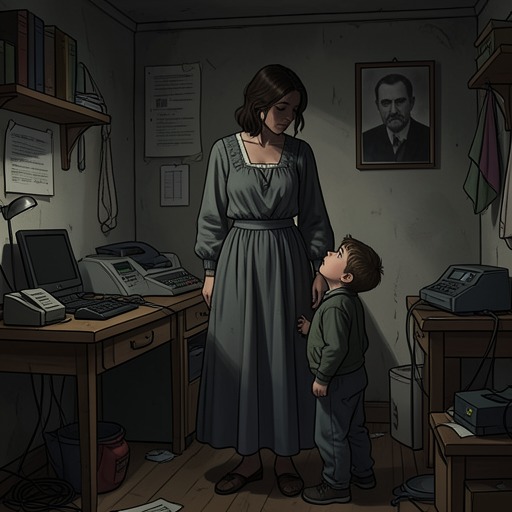
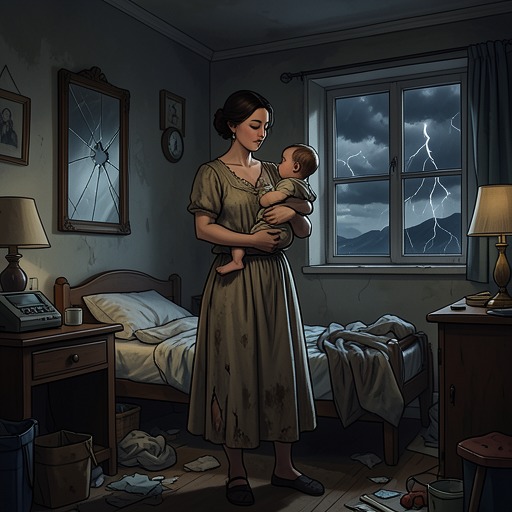
When Gladys becomes seriously ill, Pearce sometimes comes to the door and speaks with her or Norma Jeane from outside. Unlike Jess Flynn, he does not enter. He calls the situation a tragedy, while adding that it could have been worse. The other bungalow residents, all connected to The Studio in different jobs, know that Gladys is mentally unstable and discuss what should be done. Their concern becomes immediate when Norma Jeane runs naked into the corridor, crying for help. At one door there is no answer; at another, again, no answer. At the third, a young man covers her with his shirt and asks what has happened to her mother. Pearce is associated with this hurried effort to respond, but his subsequent conduct carries the lasting weight of the episode.
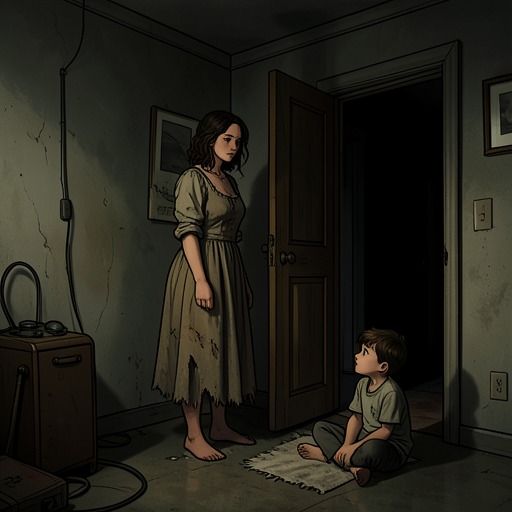
The day Norma Jeane is told she will visit her mother at Norwalk turns out to be the day she is taken instead to the Los Angeles Orphanage on El Centro Avenue. In the car, Jess Flynn struggles to pull the child from the back seat while pleading with her to stop kicking. Pearce turns away from the struggle and goes off to smoke. Flynn calls for him to bring the luggage inside; after depositing Gladys’s bags in the entrance, he leaves almost at a run. Norma Jeane is left crying before Edith Mittelstadt, insisting that she is not an orphan because she has a mother. Pearce’s departure, without a goodbye to the child, becomes the betrayal that shadows the tenderness of the piano lessons.
The separation is not erased by the fact that Pearce had once been a source of playfulness or that he was present during the crisis. The narrative holds these facts together: he is involved in getting help when Gladys is unwell, yet he does not remain beside Norma Jeane as she is taken into institutional care. In later memory, this departure becomes something she must forgive, not because it did not hurt, but because she continues to invest the figure of Clive Pearce with affection.
Return as a Screen Character
As an adult actress, Norma Jeane encounters Pearce again through a performance before she recognizes the connection. During rehearsals with Louis Calhern, who plays her uncle, Alonzo Emmerich, she is stiff and frightened. Then, on set, she realizes that Calhern’s character has become Pearce in her imagination. The resemblance is not merely a matter of age and build: Calhern’s evasive gaze, nervous mouth, remnant of pride, and refined, ironic voice recall the teacher from the bungalow.
The recognition changes her performance. Norma Jeane becomes soft, seductive, languid, and trusting as Angela, responding to the man playing her uncle as if Pearce had been returned to her. Calhern notices the shift, as does the director, who asks whether something has happened to her. She cannot explain it. The scene makes acting a means of emotional transformation: the adult performer does not simply reproduce a childhood memory but enters it through the nested identities of Norma Jeane, Marilyn, and Angela. The fiction allows her to meet Pearce again in a form where the old separation can be answered.
The encounter culminates in what the narrative presents as Norma Jeane and Pearce’s only kiss. She forgives him for taking her to the orphanage and leaving without a word, while Calhern, still in character as Alonzo Emmerich or Uncle Leon, stands astonished by the force of her response. The scene does not establish that the childhood betrayal has become harmless. Instead, it shows how completely the remembered relationship can enter her acting: the emotional truth of the performance exceeds a simple imitation of the role.
The Reunion at Bullock’s
Years after their childhood lessons, Norma Jeane hears Für Elise coming from between the floors at Bullock’s. The classical melody cuts through the musical noise in her head and recalls the delicate, melancholy version Pearce played for her before taking her to the orphanage. She approaches the pianist cautiously from behind and recognizes him at an elegant Steinway grand, playing from memory while shoppers carry on around him.
Pearce has aged markedly in the eighteen years since she was nine. His hair is completely gray, he is thinner, and his once handsome face is lined and sagging. Norma Jeane nevertheless sees beauty in the sight of him playing: the music is ignored amid the chatter of customers, but to her it restores the artist she remembers. When she tells him that he taught her Für Elise as a child, he does not recognize her and doubts that a child could have played the piece. She is trying not to cry as she insists that she was nine and that he was her teacher.
The reunion makes practical as well as emotional repair possible. Pearce agrees to make a small effort for Norma Jeane, and she arranges for him to appear as an extra in Gentlemen Prefer Blondes, playing piano in a scene set in the salon of a luxurious cruise ship. She also buys the old Steinway spinet, paying $1,600 borrowed from the Ex-Athlete. The instrument that Gladys once struggled to fit into the family’s small sitting room thus returns to Norma Jeane through Pearce, joining her childhood lessons to her adult career. For Pearce, the film offers another screen appearance; for Norma Jeane, it is a way to recognize both the affection and the abandonment bound up in the same man and melody.
Narrative Significance
Pearce’s importance lies in the way the story refuses to make memory settle into a single judgment. He is a teacher whose lessons give Norma Jeane a lasting musical memory, a playful adult whose touch crosses boundaries, and a participant in the abandonment that shapes her sense of being left behind. The later scenes do not cancel those contradictions. Instead, they show the adult Norma Jeane using performance to approach the past from within it, first by recognizing Pearce in Calhern’s role and later by speaking directly to the old man at Bullock’s.
The white spinet and Für Elise carry this return across time. The piano begins as Gladys’s costly expression of belief in her daughter’s future, becomes the setting of Pearce’s inconsistent lessons, and is finally reclaimed by Norma Jeane with borrowed money. The melody that once accompanied her departure from home becomes the sound by which she finds Pearce again. Their reunion offers neither a complete undoing of the orphanage nor proof that Pearce remembers what she meant to him; he does not. Its resolution is narrower and more concrete: Norma Jeane recognizes him, gives him work, and brings the piano back into her possession.