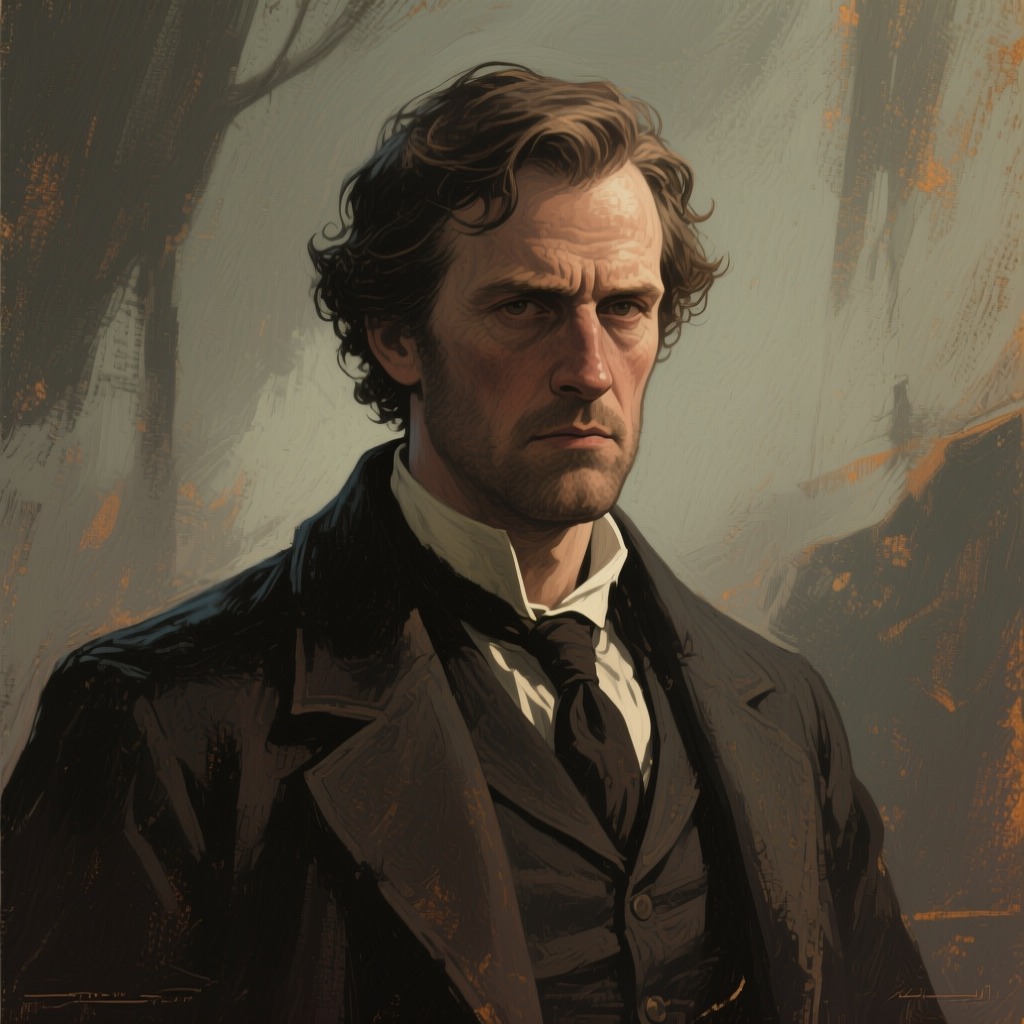
The Action Board
The Action Board is the military tribunal in Joseph Heller's Catch-22 that prosecutes Clevinger for insubordination, embodying the novel's critique of institutional absurdity and the perversion of justice by those in power. Its proceedings, presided over by a bloated colonel with a big fat mustache, Lieutenant Scheisskopf, and Major Metcalf, transform a routine charge into a nightmarish exercise in circular logic and personal vendetta, revealing the hatred that masquerades as military discipline.
Composition and Authority
The Action Board consists of three members: the bloated colonel with a big fat mustache, who serves as chairman; Lieutenant Scheisskopf, who is both the prosecutor and a judge; and Major Metcalf, who is trying to develop a steely gaze. The colonel beats his fist down upon the table and hurts his hand, becoming so enraged with Clevinger that he beats his fist down again and hurts his hand some more. The colonel threatens to rip Clevinger's "stinking, cowardly body apart limb from limb." Major Metcalf, eager to please, repeatedly interrupts and is told by the colonel to "keep your goddam mouth shut." The colonel also threatens the corporal who can take shorthand, Popinjay, telling him, "as soon as his trial ends, your trial begins." The board's authority is absolute and arbitrary; they are not bound by any discernible legal code but by their own whims and prejudices.
The Trial of Clevinger
Clevinger is charged with "breaking ranks while in formation, felonious assault, indiscriminate behavior, mopery, high treason, provoking, being a smart guy, listening to classical music and so on." The charges are a collection of absurdities, but the board treats them with deadly seriousness. The interrogation is a masterpiece of logical entrapment. The colonel asks Clevinger, "Just what the hell did you mean, you bastard, when you said we couldn't punish you?" When Clevinger denies ever making such a statement, the colonel demands to know when he didn't say it. Clevinger, trapped, replies, "I always didn't say you couldn't punish me, sir." The colonel accepts this as a confession. The board's goal is not to determine guilt or innocence but to confirm a predetermined verdict. Clevinger is found guilty and sentenced to walk fifty-seven punishment tours, each consisting of fifty minutes of pacing before the provost marshal's building with an unloaded rifle on his shoulder.
The Hatred of the Board
The most shocking aspect of the trial for Clevinger is not the verdict but the raw, personal hatred directed at him. Yossarian had warned him, "They hate Jews," and when Clevinger protests he is not Jewish, Yossarian replies, "It will make no difference. They're after everybody." Clevinger recoils from their hatred "as though from a blinding light." He sees their "loveless faces set immutably into cramped, mean lines of hostility" and understands that nowhere in the world, not even among the enemy, are there men who hate him more. This hatred is not a byproduct of the proceedings but their driving force. The three men "would have lynched him if they could." They carry their hatred for him away "malignantly like some pampered treasure." The board's function is not to administer justice but to provide a sanctioned outlet for the sadism and resentment of its members.
Consequences and Significance
The trial has consequences beyond Clevinger's punishment. Popinjay is locked up to be taught a lesson, and Major Metcalf is shipped to the Solomon Islands to bury bodies. The board's actions demonstrate that in the world of the novel, the military justice system is a tool for persecution, not protection. The trial is a microcosm of the larger war, where men in power use institutional authority to destroy those who question them. The board's methods—circular logic, manufactured charges, and personal animosity—prefigure the Catch-22 that traps Yossarian. The Action Board is not an anomaly but a logical expression of the system's values, where the only crime is being a threat to the comfort and ambition of one's superiors.