Alagaësia
EragonAlagaësia is the world whose history and geography contain the rise and fall of the Dragon Riders, the rule of Galbatorix, the resistance of the Varden, and Eragon’s emergence into a war that reaches from isolated villages to hidden kingdoms. Merchants describe a land destabilized by illness, attacks, Urgal migrations, starvation, and rumors of a Shade, while whole villages are forced to abandon their fields. The resulting disorder makes Alagaësia feel politically fractured and physically unsafe: imperial pressure at the borders, rebel raids, displaced communities, and unexplained movements of armed peoples all signal a realm approaching open catastrophe.
A World Shaped by Ancient Peoples
Alagaësia is presented as ancient beyond reliable human memory. Brom explains that Dragons, the Dwarves, and a few other peoples lived there before the arrival of the Elves, and that Dragons have no known beginning unless they originated with the creation of the world itself. Their existence is therefore treated as elemental and foundational rather than as one later chapter in human history. The Elves arrived from Alalea on silver ships, bringing a civilization that initially misunderstood the Dragons and regarded them as mere animals.
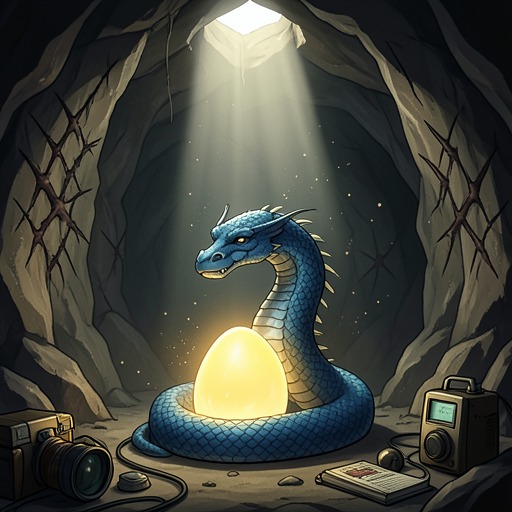
That misunderstanding produced the War Between Elves and Dragons. After an elven youth killed a dragon while hunting, the Dragons retaliated against the Elves as a whole. The conflict lasted five years and became a long, bloody struggle in which both sides eventually regretted the violence. The war ended only after an elf called Eragon found a dragon egg, an act that made his name part of the world’s older history and unexpectedly linked it to the young Eragon living in the present.
The Riders, Empire, and Resistance
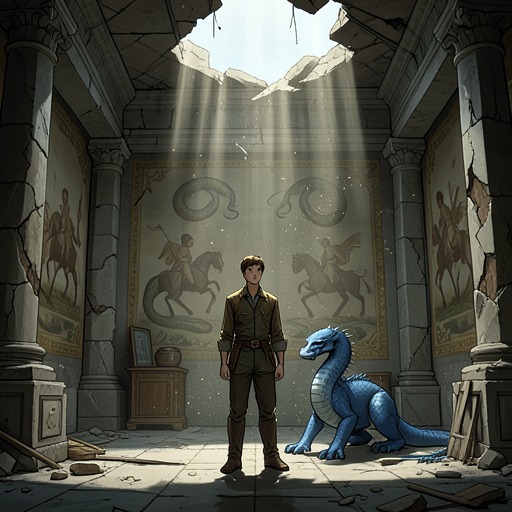
The Dragon Riders once served as Alagaësia’s protectors. At the height of their power they controlled lands extending across twice the Empire’s later territory, possessed unmatched martial strength, and used their abilities for the good of the land. Their rule is remembered as a golden age: cities and towers were built from living stone, peace was maintained, the Elves were allies, the Dwarves were friends, and prosperity spread among human communities.
That order collapsed through internal betrayal rather than conquest by an outside enemy. Galbatorix, born in Inzilbêth, entered the Riders after testing revealed his unusual power. After his first dragon died, he blamed the Riders, recruited a sympathetic Rider, and used dark knowledge learned from a Shade to turn that ally against the elders. He and the ally lured and killed an elder, after which Galbatorix murdered his accomplice and disappeared. He later persuaded Morzan to leave a gate unbolted at Ilirea, now called Urû’baen, stole a dragon hatchling, and returned with the black dragon Shruikan. Twelve Riders joined him, forming the Thirteen Forsworn with Morzan, and together they destroyed the Riders’ order. The Elves fought against Galbatorix but were defeated and driven into secret places.
The Varden emerged in the years after Galbatorix’s rise and became the principal organized opposition to imperial rule. Their leader and founders remain obscure in the account available to Eragon, but their continuing raids and attacks have won them sympathy because Galbatorix has repeatedly failed to eradicate them. They accept fugitives and people who hate the Empire, although their hidden location makes them difficult to reach. Their struggle also has direct effects on ordinary life: increased Varden attacks lead Galbatorix to force cities to send more soldiers to the borders, weakening the response to migrating Urgals and contributing to instability throughout the land.
Geography of a Divided Realm
The map of Alagaësia reveals a world of enormous distances and substantial unknown territory. The ocean stretches into an unexplored west, while the Spine follows the coast as an immense mountain chain. The Hadarac Desert occupies the center of the map, with its eastern end left blank and suspected to conceal the Varden. To the south lies Surda, a small country that seceded from the Empire after the fall of the Riders and is believed to support the Varden secretly.
The Beor Mountains rise near Surda’s eastern border and are reputed to be ten times the height of the Spine, although Eragon doubts that claim. Beyond them the map is empty. Du Weldenvarden extends across the plains near Carvahall; its settled western edge gives way to a mysterious interior where travelers may return raving mad or fail to return at all. These unmapped regions preserve uncertainty within the setting, preventing imperial geography from becoming a complete geography of knowledge or control.
The islands around Surda further extend the world beyond the main continental routes. Nía, Parlim, Uden, Illium, and Beirland lie offshore, with Beirland containing a small town. Near Teirm stands the jagged island of Sharktooth. Far to the north is Vroengard, the ancestral home of the Riders, now a looted and empty shell haunted by strange beasts. Its abandoned city, Dorú Areaba, embodies the physical ruin of the former order: the place that once represented Rider glory has become a remnant marked by absence.
Landscapes of Violence and Passage
The violence destabilizing Alagaësia appears not only in political explanations but in the landscapes through which its characters travel. Yazuac is found with its streets empty, houses broken, and doors hanging from shattered hinges. In the center of the town lies a mountain of bodies that includes men, women, children, mothers, and lovers, with black arrows embedded among them and a barbed spear impaling a baby at the top of the pile. The massacre transforms a settlement into evidence of the wider war and gives Eragon a direct encounter with the human cost of forces he had previously known mainly through rumor.
Travel also reveals how terrain dictates strategy and danger. At Kóstha-mérna, the Beartooth River enters a deep lake that blocks the travelers’ route. Mountain walls narrow both shores to strips only a few steps wide, while a broad waterfall plunges from a black cliff at the lake’s far end. The geography leaves little room for horses or Saphira, forcing her to walk with two feet in the water and turning passage itself into a tactical problem while enemies pursue them.
The same land conceals threats beneath its visible surface. Near Tronjheim, a wounded Dwarf reports that an army of Urgals is approaching through abandoned tunnels rather than across the open ground. The underground route places the Varden’s stronghold at risk from below and demonstrates that Alagaësia’s natural and constructed spaces can be used against the powers that occupy them. When the chamber floor of Tronjheim explodes upward, Urgals emerge through the breach, converting the city’s interior into a battlefield and allowing Durza to appear at the center of the assault.
Narrative and Historical Significance
Alagaësia’s history is structured by recurrence and inheritance. The ancient War Between Elves and Dragons, the golden age and fall of the Riders, Galbatorix’s imperial reign, the Varden’s rebellion, and the present movement of Urgals are separate crises, yet each is connected to the question of who will protect the land and who will claim the right to rule it. The world’s current danger is therefore not an isolated emergency; it is the latest expression of old failures, betrayals, and unfinished resistance.
Its geography reinforces that historical pattern. Urû’baen stands at the Empire’s center under Galbatorix and Shruikan, while Vroengard preserves the ruined memory of the Riders, Surda shelters opposition, the Hadarac Desert hides routes and enemies, and Du Weldenvarden withholds an older civilization from ordinary access. At the end of the present crisis, Eragon is told to trust Arya and go to Ellesméra, where Osthato Chetowä, also called Togira Ikonoka, awaits him. The instruction places his future within another of Alagaësia’s concealed regions and suggests that the world’s remaining answers lie not in the imperial center but among the ancient peoples and hidden places that have survived its upheavals.