Utgard
EragonUtgard is both a formidable mountain and a historical wound in the landscape. Rising above the route out of Palancar Valley, it guards the only practical passage through the surrounding range; on its summit stands the decaying outpost where Vrael took refuge before Galbatorix found and defeated him through treachery. Its geography makes it a threshold, while its ruins preserve the memory of the Dragon Riders’ lost power.
Mountain and Gateway
Utgard looms over the road as a mass of craggy precipices furrowed by snowy canyons. Its black rock seems to absorb the light around it, dimming the country beneath. Between Utgard and the mountains forming the eastern side of Palancar Valley lies a deep cleft, the only practical route out of the valley. The road narrows to a trail as it skirts the mountain’s base and enters that breach, following the Anora River toward the wider world.
The mountain is therefore more than scenery. For Eragon, who has grown up in the secluded settlement of Carvahall, Utgard marks the edge of the known world and the beginning of departure. Its physical prominence gives the journey outward a sense of resistance: the valley is enclosed by harsh terrain, and escape requires passing beneath a height that dominates the road and darkens the surrounding land.
The Riders’ Outpost
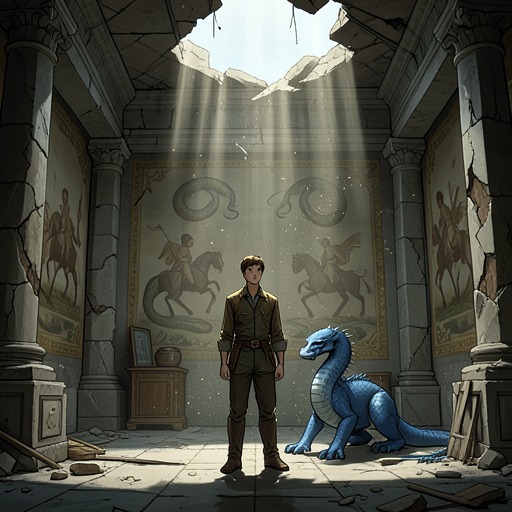
Perched on Utgard’s summit is a steepled tower, crumbling and in disrepair but still standing like a stern sentinel over Palancar Valley. Brom identifies it as an outpost of the Dragon Riders that has endured since the order’s founding. Because the mountain is so steep that no one can reach the top without flying, the fortress was once called Edoc’sil, meaning “Unconquerable.” Its height and isolation express the confidence of an order whose power once seemed beyond ordinary challenge.
The tower’s survival gives Eragon a tangible remnant of the Riders’ glory. Their history has otherwise been transmitted through stories of cities, towers, battle, and a vanished golden age; here, the past is embodied in stone. Yet the structure is no longer secure or triumphant. Its decay makes the ruin’s endurance inseparable from its defeat, turning a monument of protection into evidence of how completely the old order has fallen.
Vrael and the Place of Sorrow
Utgard is bound most directly to the final catastrophe of the Riders through Vrael. Brom says that Vrael sought refuge in the mountain’s outpost, only to be discovered and defeated by Galbatorix through treachery. After Vrael’s death, the area was considered tainted. Commoners called the mountain Utgard, but its other name was Ristvak’baen, the “Place of Sorrow,” a name known to the last Dragon Riders before Galbatorix’s forces killed them.
That naming history turns geography into moral memory. Edoc’sil records the mountain’s former invulnerability; Ristvak’baen records the grief that followed its violation. The contrast between the two names compresses the Riders’ entire historical arc: confidence gives way to betrayal, refuge to defeat, and an apparently unconquerable bastion to a place associated with mourning.
History Held in the Landscape
The significance of Utgard expands through Brom’s account of the Dragon Riders. The order was formed to protect and guard, and for thousands of years its members maintained peace while the land flourished. Their powers helped produce prosperous cities and towers built from living stone, in alliance with the elves and friendship with the dwarves. Their fall began not because an outside enemy could simply overpower them, but because internal ambition and betrayal opened the way for Galbatorix and the Thirteen Forsworn.
Utgard gives that historical explanation a precise location. Galbatorix’s rise involved the seduction of Morzan, the theft of a dragon hatchling, forbidden instruction, and the destruction of Rider after Rider; at Utgard, the broad collapse of the order becomes the defeat of one of its greatest leaders in a particular stronghold. The ruined tower thus stands at the meeting point of legendary history and immediate travel, allowing Eragon to encounter the consequences of an ancient political disaster before he fully understands the inheritance placed upon him.
A Threshold of Inheritance
Eragon’s response to Utgard is marked by awe. Seeing the battered outpost, he recognizes how old the Dragon Riders are and how far their tradition of heroism reaches into antiquity. The realization deepens the burden of his emerging identity: he is not merely leaving Palancar Valley but entering the aftermath of a vanished civilization whose customs, weapons, dragons, and enemies now shape his life.
The wider map later confirms the scale of that inheritance. Vroengard, the ancestral home of the Riders, has become a looted and empty shell, with the abandoned city of Dorú Areaba at its center. Against that distant ruin, Utgard is a nearer and more intimate relic: a single tower encountered on the road, carrying the memory of Vrael and the order’s last resistance. Its position at the valley’s exit makes it a literal threshold, while its history makes it a warning that greatness can be undone from within.
Utgard also acquires a quiet symbolic resonance from the revelations that follow elsewhere in the journey. The Dragon Riders’ golden age, the war between elves and dragons, and Galbatorix’s betrayal all show a world repeatedly shaped by the recovery and misuse of ancient power. Even the later revelation of Osthato Chetowä, the Mourning Sage, and his summons to Eragon in Ellesméra echoes Utgard’s fusion of wisdom, loss, and hidden continuity. The mountain is not presented as an active supernatural agent, but as a place where the past remains materially present and where the road forward passes beneath the shadow of what was lost.