Ellesméra
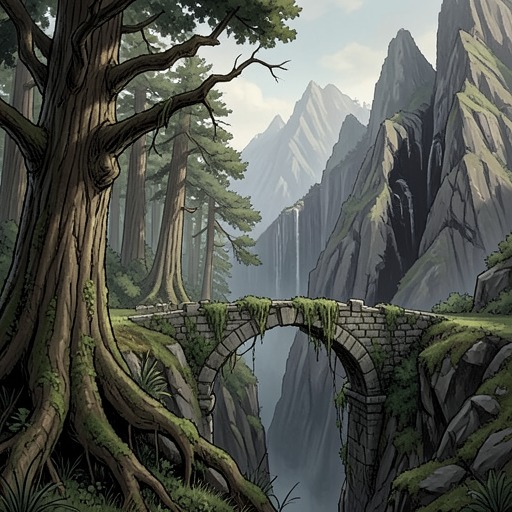
EragonEllesméra is the concealed capital of the elves, situated far to the north in the deepest reaches of Du Weldenvarden. Its decisive importance lies in its isolation: the city is protected by secrecy and magical barriers, yet it is also the place where Eragon is expected to complete the training that will determine his future as a Dragon Rider.
Hidden Capital and Elven Secrecy
Ajihad explains that the elven cities lie in the deepest parts of the endless forest Du Weldenvarden and that knowledge of them is guarded jealously. He does not even know how to find Ellesméra, a striking limitation for the leader of the Varden and a measure of the distance separating the elves from the other peoples of Alagaësia. Since the time of the Riders, no human or dwarf has been elf-friend enough to walk through the elves’ leafy halls. Ellesméra’s concealment is reinforced by more than geography. The elven realm is surrounded by arcane barriers that prevent anything from entering its borders through magical means. These wards explain why Arya could not simply send the dragon egg back to the elves after she was attacked. The city therefore functions as both a political refuge and a protected sphere of knowledge, inaccessible to ordinary travel and resistant even to magical intrusion.
Connection to Arya and the Dragon Egg
Ellesméra enters the immediate plot through the crisis surrounding Arya and the egg. Arya was returning from Tronjheim to the elven city of Osilon when she disappeared. Her steed and guards were found slain in Du Weldenvarden, along with a group of slaughtered Urgals, but neither Arya nor the egg was present. Ajihad initially feared that the Urgals had captured them and might discover the locations of Farthen Dûr and Ellesméra, where the elven queen Islanzadi lives. After hearing what Eragon has learned, Ajihad reconstructs the attack differently. He concludes that the assault was swift, leaving Arya no time to escape or prepare a secure destination. Unable to return the egg to the elves because she was too far away, and unable to send it into the warded elven realm, Arya used magic to propel it toward Carvahall. Her aim was imprecise because she acted in desperation, but the attempt ultimately brought the egg into Eragon’s path and changed the balance of the conflict. The connection between Ellesméra and the Varden is also political. When Arya vanished, the elves withdrew their support from the Varden, and Islanzadi refused further contact with Ajihad. The loss of elven supplies damaged the Varden’s position in its skirmishes with the Empire. Ajihad therefore expects Arya’s return, together with Eragon and Saphira’s arrival, to soften the queen’s hostility; Eragon’s role in rescuing Arya may help restore relations with the city and its rulers.
The Destination of Eragon’s Training
Although Arya remains in Farthen Dûr to help the Varden, she tells Eragon that she will not yet return to Ellesméra because much remains to be done. She has seen him tested in arms and magic and judges that Brom taught him well enough for him to proceed. Her conclusion is direct: Eragon must go to Ellesméra. The city thus becomes the next threshold in his development, not a place of retreat from the war but the institution that can provide knowledge and training unavailable elsewhere. This destination also exposes the limits of Eragon’s preparation. Earlier, he admits that he cannot read, and Brom reacts with disbelief that Garrow never taught him. Later, Brom identifies The Domia abr Wyrda as a rare history of Alagaësia and explains that its surviving lettering includes the Ancient Language. The contrast between Eragon’s illiteracy and the vast written traditions preserved by older peoples clarifies why further instruction is necessary. Ellesméra represents access to the elven knowledge that Eragon lacks, just as the Varden represents the political cause for which that knowledge must eventually be used.
Historical and Narrative Significance
Ellesméra belongs to a larger geography of memory and power shaped by the history of the Dragon Riders. Brom’s account describes the Riders as guardians whose powers helped bring about a golden age in which cities and towers were raised from living stone, elves were allies, dwarves were friends, and the land flourished. Their fall began when Galbatorix turned against them, making the survival of their knowledge a matter of political as well as cultural importance. A journey to Ellesméra therefore points toward the recovery of a broken inheritance. The city also stands in contrast with the institutions surrounding Eragon. The Varden are a hidden rebel group whose leader and location are difficult to discover; Tronjheim is the stronghold where Ajihad commands a desperate resistance; and the dwarven library preserves the writings, songs, and histories of its people in a monumental archive. Ellesméra is more remote than all of them. Its secrecy is not merely the concealment of a military base but a guarded cultural world whose rulers control access to their history and instruction. As a narrative destination, Ellesméra converts the consequences of Arya’s ambush into a future obligation. The egg’s accidental arrival in Palancar Valley led to Eragon’s transformation; Arya’s survival restores a connection with the elves; and her judgment sends Eragon toward the hidden city. Yet the journey cannot be separated from the approaching war. Ajihad warns that the Urgals will soon attack Farthen Dûr and that defeat would mean death for the Varden, the downfall of the dwarves, and eventual defeat for Surda and the elves. Ellesméra consequently embodies both promise and urgency: it is the place where Eragon may become capable of meeting the wider conflict, while the Varden must first survive long enough for that training to matter.