The Spine
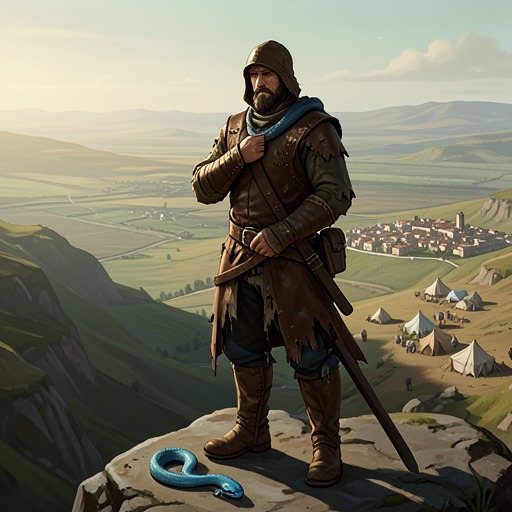
EragonThe Spine is an untamed mountain range extending through Alagaësia and standing apart from ordinary settlement, authority, and expectation. Its immediate significance is twofold: it is the dangerous wilderness where Eragon has developed his identity as an exceptionally capable hunter, and it is the setting in which the mysterious stone that becomes Saphira is first found and later hatches into a dragon. The mountains therefore function not merely as scenery but as a threshold between Eragon’s difficult rural life and the larger history into which he is drawn.
Setting and Reputation
The Spine is a craggy, ancient range associated with strange tales and ill omens. Men and stories emerge from it, usually with troubling implications, and a persistent sense of misfortune seems to cling to the mountains. The danger is not presented as a single identifiable enemy. Accidents occur even when the trees are tall and the sky is bright, making the landscape itself seem hostile and resistant to human mastery.
The range also has political importance. The Spine is one of the few places that King Galbatorix cannot claim as his own, and stories tell of half his army disappearing after marching into its ancient forest. Its independence from the king’s authority is therefore inseparable from its physical inaccessibility. The mountains form a natural limit to imperial power: a region that cannot easily be occupied, supplied, or made legible to the state.
Eragon’s Hunting Ground
Eragon is the only hunter near Carvahall willing to track game deep into the Spine. At fifteen, still less than a year from manhood, he enters the range because his family needs meat for the approaching winter and cannot afford to buy it in Carvahall. The hunt has already lasted three nights, and half of his food is gone; failure to kill the doe will send him home empty-handed.
His confidence in the mountains is practical rather than romantic. He carries a hunting knife, a yew bow protected in a buckskin tube, and a wood-frame pack, and he follows the deer through mist, forest, and difficult terrain with quiet assurance. He knows the animal trails well enough to need only occasional glances at the tracks. Yet his competence does not cancel the Spine’s danger. He has hiked there for years and survives through vigilance and sharp reflexes, not because he believes he possesses any special gift.
The landscape repeatedly unsettles his knowledge. Even after years of experience, each apparent surrender of the mountains’ secrets is followed by something that overturns his understanding of them. The Spine consequently becomes a testing ground for Eragon’s self-reliance while also warning him that skill cannot make the unknown fully safe.
The Stone and Saphira’s Hatching
The Spine is the place where Eragon encounters the stone that initiates the central transformation of his life. After the strange object comes into his possession, its behavior becomes increasingly alarming. At night it rocks on the shelf, knocks against the wall, squeaks, and finally rolls toward him across the floor. Eragon initially treats it as a valuable but dangerous object and decides to carry it away and bury it.
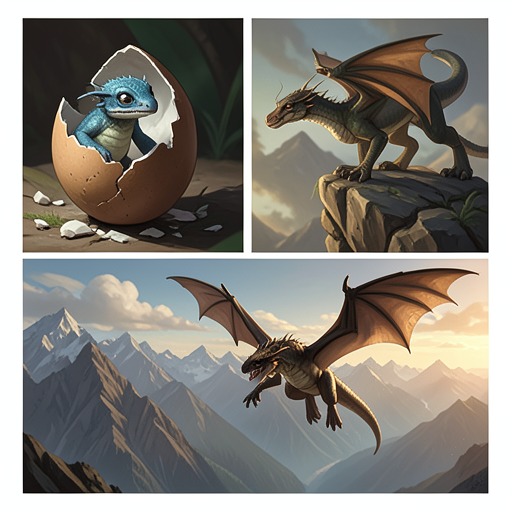
The apparent stone then reveals its true nature. Cracks spread across its surface, a piece breaks away from the top, and a small dark head emerges, followed by an oddly angled body. The creature works its way out and moves into the moonlight while Eragon stands frozen with his knife in hand. Only then does he understand that the object is not mineral at all but a dragon. The Spine’s reputation for concealing forces beyond ordinary explanation is thus embodied in the most consequential discovery of Eragon’s early life.
The scene also reverses the meaning of the landscape. The mountains had seemed to contain only danger, scarcity, and ominous legend; they now become the hidden source of a new bond between a human and a dragon. The discovery does not make the Spine less threatening, but it reveals that its isolation has preserved possibilities unavailable elsewhere.
Rivers, Routes, and Boundaries
The Spine is connected to the routes by which Eragon later measures distance and danger. The Anora River rushes far below one of its precipitous ravines, carrying water toward Palancar Valley after gathering streams from the surrounding mountains. Its force, amplified by countless smaller streams, makes the river both a geographic landmark and a reminder that movement through this region is governed by terrain and water.
The same environmental pressures recur beyond the range. When Eragon, Saphira, and his companions prepare to cross toward the Hadarac Desert, water must be collected before they leave the Anora because no other pool or stream will be available across the plains. Saphira and the horses consume more water at one time than the travelers do in a week, making the mountain river an essential logistical resource rather than a decorative feature. The Spine therefore stands at the beginning of a chain of environments in which survival depends on reading nonhuman systems accurately.
Narrative Significance
The Spine occupies the boundary between the familiar world around Carvahall and the wider, more dangerous world of dragons, magic, and political conflict. It is feared by the community, avoided by Galbatorix’s forces, and yet entered by Eragon because necessity has taught him to work within its hazards. That combination of exclusion and opportunity makes it an ideal threshold setting: the place is isolated from settled authority, but precisely for that reason it becomes the site of discovery.
Its narrative power comes from the tension between Eragon’s confidence and the mountains’ capacity to defeat confidence. He can track a deer, find a route home, and survive conditions that frighten others, but he cannot predict the appearance of a dragon from what seems to be a stone. The Spine gives material form to the limits of his existing identity. Within it, the capable hunter remains capable, yet the meaning of his life changes beyond anything his previous experience could prepare him to understand.