
The Art of the Ghost
No Longer HumanTraces Yozo's development as a painter, from his early discovery of van Gogh's 'ghost pictures' to his eventual abandonment of authentic art.
increasing Bearing strength in each event
 decreasing
Bearing strength in each eventdecreasingDiscovery of van Gogh
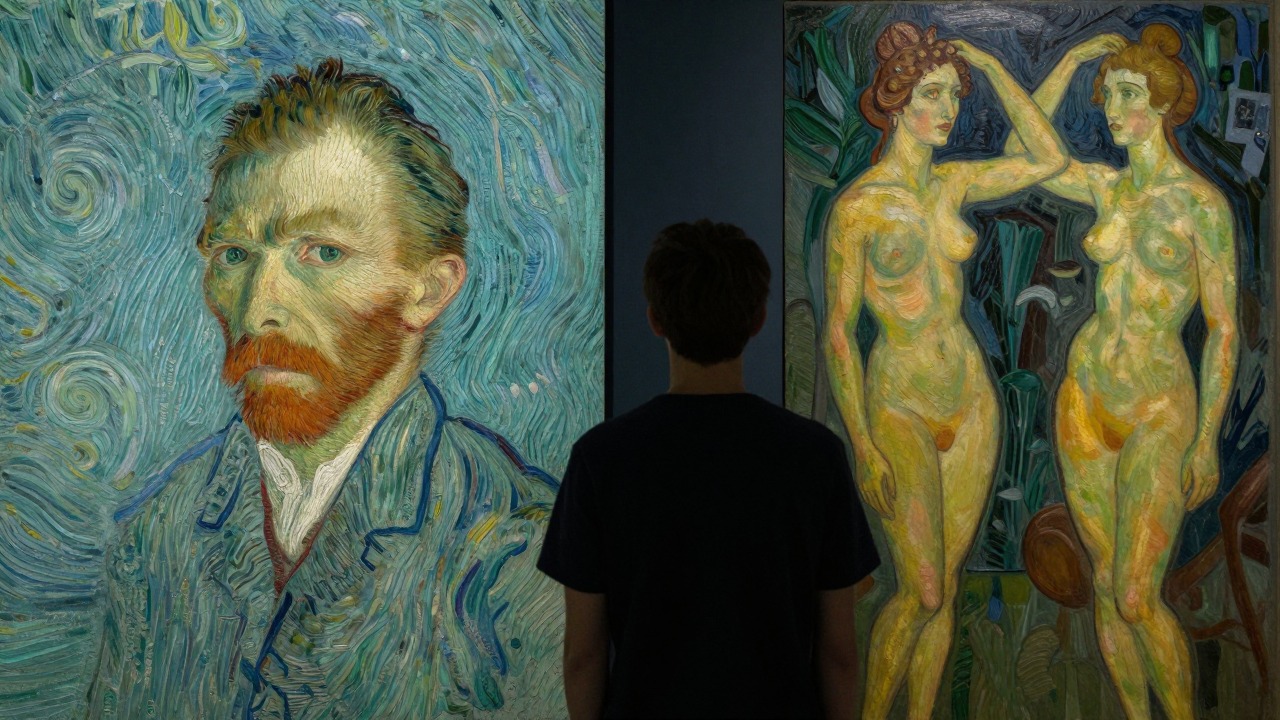
The Ghost Revelation
Takeichi's Picture
Takeichi showed Yozo a reproduction of van Gogh's self-portrait, calling it a ghost. Yozo was electrified; he realized that art could be a vehicle for the monsters he saw in human beings.
The Modigliani Nudes
Yozo showed Takeichi Modigliani's nudes, and Takeichi admired them as "horses out of hell." This exchange confirmed Yozo's new direction.
The Birth of a New Style
Yozo began to paint in a "ghost style," attempting to capture the terrifying reality beneath the surface of daily life.
Secret Self-Portraits
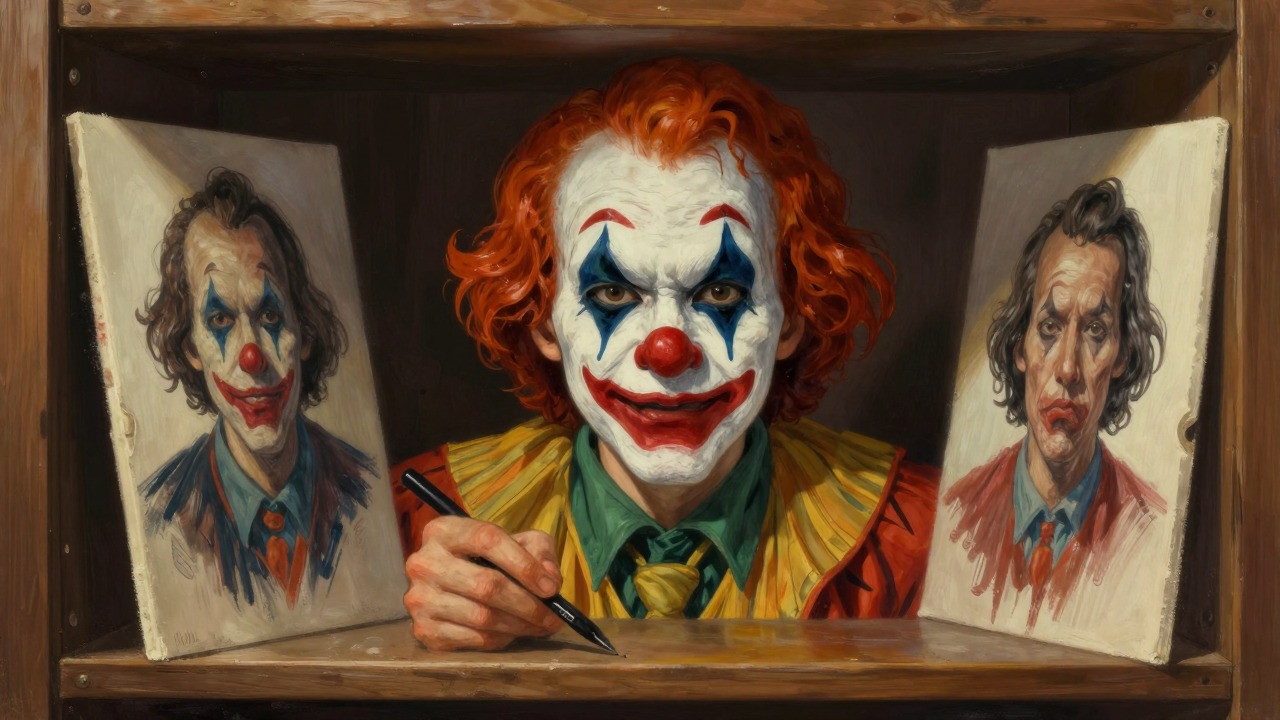
The True Self Revealed
The Hidden Pictures
Yozo painted self-portraits that were so truthful they shocked even him. They showed the harrowing reality behind his clowning. He hid them in the cupboard.
The Fear of Exposure
He was afraid that if others saw them, they would either recognize his true nature or laugh at them as another joke. Neither possibility was bearable.
The Only Witness
Only Takeichi saw these pictures and praised them. Yozo clung to that validation, but it was not enough to sustain his artistic ambition.
The Lost Masterpieces
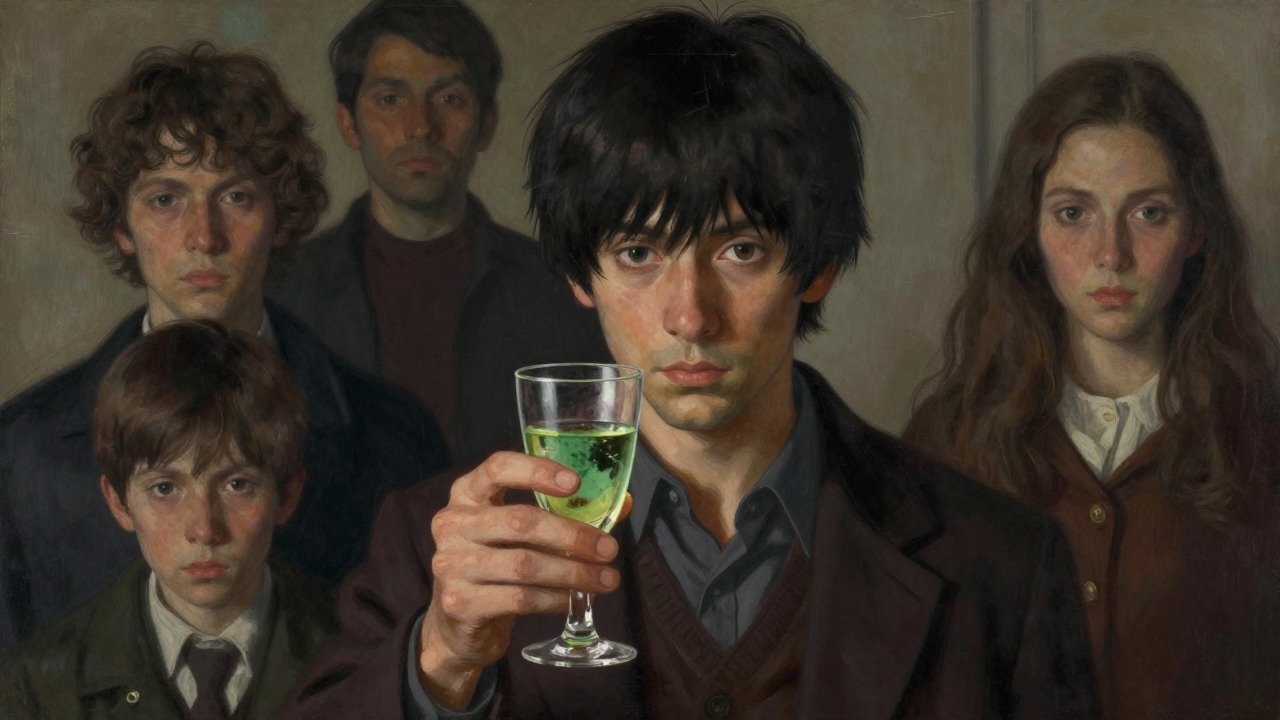
The Disappearance
The Chaos of Moving
Yozo's self-portraits were lost during one of his frequent changes of address. He never saw them again. This loss felt like the death of a part of himself.
The Undrunk Glass of Absinthe
He later referred to these lost paintings as "the undrunk glass of absinthe"—a symbol of unfulfilled potential. They represented the only works he was truly proud of.
The Decline of His Art
After losing them, Yozo's subsequent paintings never matched that intensity. He became a cartoonist, producing work he despised, and the ghost style was abandoned.
Cartoonist for Hire
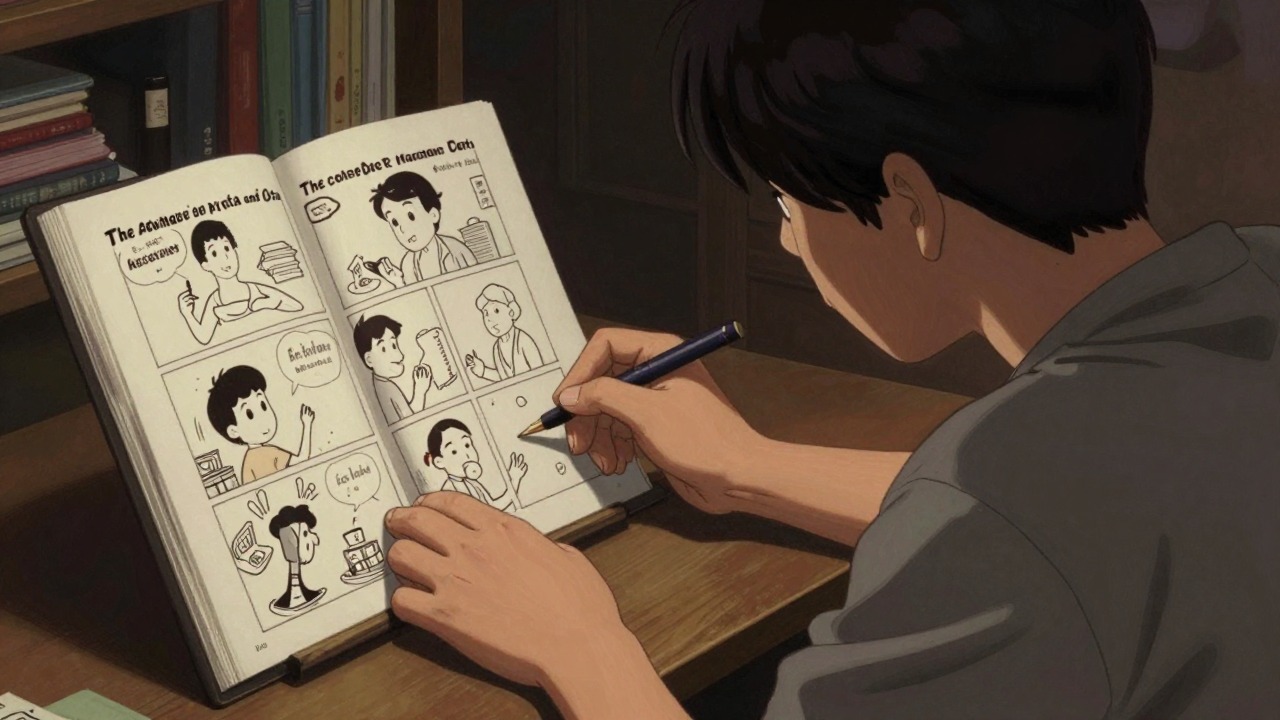
The Commercial Art
The Children's Magazine
Shizuko helped Yozo get work drawing cartoons for her magazine. He produced "The Adventures of Kinta and Ota," a childish comic strip that brought in money but no satisfaction.
The Pornographic Turn
Later, he drew dirty pictures for cheap magazines, sometimes with verses from the Rubaiyat. He felt a deep shame, but he needed the money for drink and drugs.
The Ghost of the Artist
Yozo never forgot his ghost style, but he no longer believed he could create such work. He was a professional, not a true artist.
The Final Abandonment
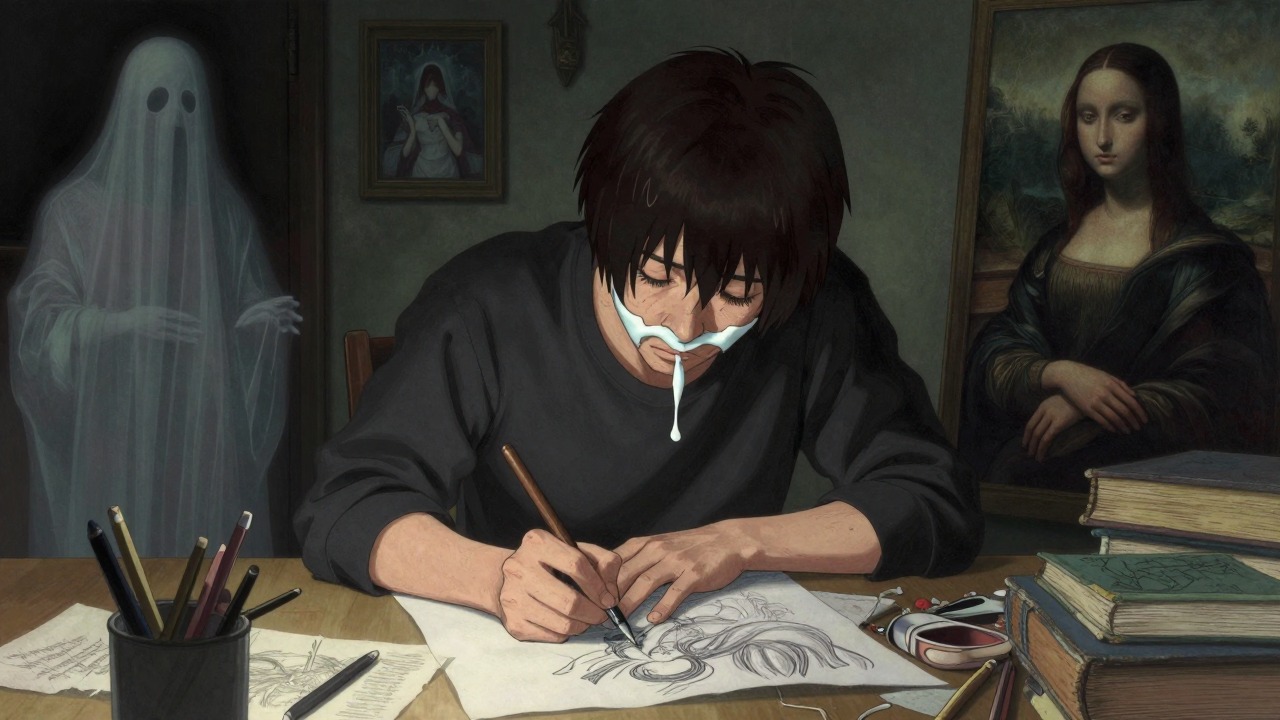
The Artist's Death
The Drug's Effect
Morphine gave Yozo a false sense of creativity and energy. He drew feverishly, but the work was mediocre. He no longer cared about quality.
The Loss of Vision
His dream of becoming a great painter faded. The ghost pictures were a distant memory. He was now a slave to addiction and commerce.
The End of Art
When Yozo was taken to the mental hospital, his art died with him. He never painted again. The prophecy of becoming a great artist was finally buried.
high school
high school
during college, after moving
after the suicide attempt, living with Shizuko
during morphine addiction
