Event 1
Cleo's Pregnancy Revelation

[Cleo's Pregnancy Revelation](entity:event-recall-event-4c85920a095d) is the turning point at which [Darius](entity:character-recall-character-darius-e45e3fd80377) and Cleo's intimate marriage acquires an imminent dynastic and emotional consequence. During a sensual feeding, Darius detects that Cleo's blood tastes unusually acidic and unlike what he expects. Her explanation—that prenatal vitamins account for the difference—leads to the disclosure that she is three months pregnant. The revelation interrupts desire, redirects Darius's attention toward the future, and places Cleo's body and their unborn child inside the pressures of war, succession, and vampire marital expectations.
## Causes and Immediate Circumstances
The revelation occurs while Darius is preparing to leave Cleo and continue hunting the [Rebeluna](entity:character-recall-character-rebeluna-bef565b2c76a). Cleo is already thinking in terms of danger and aftermath: she fears that an ambush could make her a widow, and she links widowhood to vampire marriage customs. Her concern is not merely romantic. A possible attack threatens the life of her husband, her plans for their marriage, and the stability represented by Darius's return. Her decision to tell him is therefore made within a conversation about military risk, not in a protected domestic setting.
Darius's feeding creates the immediate trigger. He pulls Cleo close, bites her, and drinks while both experience the act as physically intimate and sexually charged. The bodily intensity is important because the scene initially moves toward pleasure and possession rather than disclosure. Darius wants more, but the unfamiliar taste of her blood makes him stop. He identifies changes in calcium and iron levels and describes her as slightly acidic, telling her to see a doctor. Cleo answers matter-of-factly that she already has—and that the prenatal vitamins are the explanation. The medical clue becomes the hinge between erotic intimacy and pregnancy knowledge.
## What the Revelation Discloses
Cleo then states plainly that she is pregnant and three months along. The timing makes the news more consequential than a distant possibility: the pregnancy is already established, yet Darius has not been told, and Cleo has not told anyone else. She explains that Darius has had more important matters to handle while pursuing the Rebeluna and that the birth is still six months away. Her concealment is presented as an attempt to protect his concentration during a critical stage of his career, not as an absence of concern for him or the child.
The scene also reveals how supernatural physiology and ordinary medical care coexist in the narrative. Darius can taste bodily changes through vampiric feeding, but he does not immediately interpret them correctly. Prenatal vitamins, calcium, iron, and a doctor's consultation provide the practical explanation for what his supernatural senses detect. [Pregnancy](entity:state-recall-state-pregnancy-cdafbf158725) is therefore not treated only as a dynastic symbol or miraculous condition; it is also a physical state legible through medical monitoring and altered blood chemistry.
## Darius's Reaction and the Marital Conflict
Darius's first response is stunned disbelief. His jaw hangs slack as he asks why Cleo did not tell him. The question identifies the revelation's central wound: the pregnancy is joyful or significant in itself, but the immediate conflict concerns trust. Cleo has withheld information about a child that belongs to both of them, even while believing that silence would serve his interests. Darius understands the logic behind her choice, yet he does not accept the decision as harmless.
His response contains two simultaneous judgments. He recognizes that he cannot afford distractions while pursuing the Rebeluna and advancing his career, which gives Cleo's reasoning a measure of validity. At the same time, he insists that she should have told him because the pregnancy is too important to be treated as a secondary concern. Their prior agreement allowed each spouse to keep certain secrets, but Darius draws a boundary around pregnancy: this is not an ordinary secret and cannot be absorbed into their existing arrangement without consequence.
Darius postpones the full argument until his return, telling Cleo that they will discuss the matter later and making clear that he is unhappy with her. The delay preserves the immediate military objective while leaving the marital dispute unresolved. The event consequently ends not with reconciliation or celebration, but with a promise of future confrontation. Cleo has succeeded in making the pregnancy known before Darius departs, while Darius has acknowledged the information without yet resolving what her secrecy means for their relationship.
## Consequences and Narrative Significance
The revelation changes the stakes of Darius's mission. Before Cleo speaks, the danger is framed chiefly through the possibility that Darius may be killed in a Rebeluna ambush. Afterward, his death would also leave behind a pregnant wife and an unborn child. Cleo's fear of widowhood becomes materially grounded, and Darius's military choices acquire consequences that extend beyond his own body and career. The Rebeluna conflict now shadows a family future that neither spouse can treat as abstract.
The scene also exposes a tension between protection and control. Cleo withholds the pregnancy to prevent Darius from being distracted, but the same concealment deprives him of knowledge about his own child. Darius's anger is therefore not simply possessive outrage; it is a demand to be included in a decision whose physical burden falls most directly on Cleo but whose emotional and dynastic consequences belong to both. The event makes visible the unequal distribution of pregnancy and the competing claims of bodily privacy, marital trust, and political duty.
Finally, the revelation establishes pregnancy as a recurring instrument of disclosure and power across the wider narrative. Other strands likewise connect reproduction to scientific research, royal succession, coercion, or the survival of a species: [Gemma](entity:character-recall-character-gemma-b1c21c6b476b)'s child is described as the possible key to curing the [Stlozyn disease](entity:state-recall-state-stlozyn-disease-66cf1a5638e9), while a Science Board demands access to research involving that pregnancy; elsewhere, pregnancy is treated as a reason for abduction or as the purpose of a royal mate. Against those more overtly exploitative situations, Cleo's disclosure is intimate and self-directed, but it still reveals how quickly a private pregnancy becomes a matter of public, military, and institutional consequence. Her unborn child turns a moment of feeding into a reckoning over secrecy, responsibility, and the future Darius is fighting to preserve.
Event 2
Assassination of Camlo
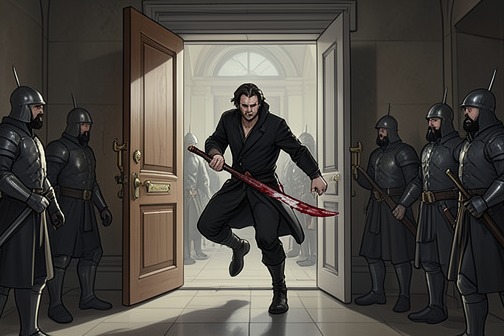
The [Assassination of Camlo](entity:event-recall-event-f66f2bdc3b36) is a palace murder that transforms a distant insurgency into an immediate threat to the vampire kingdom. [Camlo](entity:character-recall-character-camlo-14474ed209f3), the king’s heir, is killed by a cheetah shifter who infiltrates the palace during a coordinated attack on [Lord Virgil](entity:character-recall-character-lord-virgil-24669f8dfc60)’s estates. The death removes the expected successor, exposes the vulnerability of the royal stronghold, and places [Darius](entity:character-recall-character-darius-e45e3fd80377)’s recent promotion—and his responsibility for suppressing the [Rebeluna](entity:character-recall-character-rebeluna-bef565b2c76a)—under sudden suspicion.
## Causes and Political Background
The assassination occurs several days after Darius receives his promotion, while he is taking a private night with his wife, Cleo. That domestic interlude is violently interrupted when the door bursts open and [Gordon](entity:character-recall-character-gordon-2c4ce0d1e3ff) arrives with grim news. The contrast is decisive: Darius has just been elevated within the military hierarchy, yet the kingdom’s most protected space has been breached at the moment when his authority should be proving its value.
The attack is linked to a broader assault rather than treated as an isolated killing. Gordon reports that Rebeluna forces—or at least forces suspected of being connected to Rebeluna—have launched a full-scale attack on Lord Virgil’s estates. The king sends troops to assist Lord Virgil, creating the opening through which the cheetah shifter enters the palace. The deployment therefore functions as a distraction: the kingdom’s defenses are drawn outward while the true target remains inside the royal seat.
## The Palace Infiltration and Killing
The immediate report is stark: a cheetah shifter breaks into the palace and assassinates Camlo. The intruder is caught while attempting to reach the queen’s chambers, but Camlo has already been killed. The sequence makes the palace breach especially alarming. The assassin is not merely attacking a battlefield position or an exposed estate; she penetrates the royal compound, kills the king’s heir, and continues toward the queen’s rooms before being intercepted.
Darius’s first response is disbelief and alarm. He questions how a shifter could enter the palace despite its heavy fortifications and guards, then demands to know what happened. The limited information makes the danger harder to contain. The assassin has been captured, but the attack’s organizers, purpose, and full extent remain unclear, while the attempted movement toward the queen’s chambers suggests that Camlo may not have been the only intended target.
## Darius’s Crisis of Responsibility
Camlo’s death immediately becomes a test of Darius’s legitimacy. Darius recognizes that the killing may destroy his promotion because the king will ask why the military commander responsible for stopping the rebels did not know about the plot. The question is not only whether Darius personally ordered adequate defenses; it is whether his failure to anticipate the attack amounts to negligence at the highest level of government.
The uncertainty briefly produces a morally uncomfortable possibility. Camlo’s death opens Darius’s prospects in the succession because the king’s heir is gone, and Darius understands that the tragedy could improve his own position. Yet that potential advantage is inseparable from culpability. If Rebeluna arranged the assassination, then Darius has failed in the very duty for which he was promoted. His private admission that the event could ruin him broadens the consequence beyond personal grief: the assassination threatens the stability of the royal family, the credibility of the military, and Darius’s future within the kingdom.
## Military Response and Aftermath
Although the evidence is incomplete, Darius decides that he must assume Rebeluna is directly responsible. He rejects the safer strategy of trying to prove that he was innocent of negligence. Instead, he resolves to intensify the campaign, avenge Camlo, and drive Rebeluna out of the vampire kingdom. The assassination thus converts uncertainty into policy: suspicion becomes the basis for open retaliation.
Darius orders three squads to prepare for an immediate operation against Rebeluna. His response is both strategic and personal. He wants to identify or punish the force behind the palace attack, but he also needs to recover the authority endangered by the killing. The command to bring Rebeluna down “once and for all” marks a sharp escalation from containment toward decisive suppression.
## Narrative Significance
The event is presented through ordinary chronological narration, but its dramatic structure depends on a sudden value shift. Darius and Cleo begin in a moment of marital intimacy and apparent safety; the bursting door changes that security into vulnerability, while the news of Camlo’s death changes Darius’s promotion from an achievement into a liability. The scene’s interruption is therefore not decorative. It exposes how quickly private stability can be overturned by political violence.
The assassination also establishes a recurring pattern in the wider narrative: ceremonies and institutions promise order, yet hidden breaches reveal how fragile that order is. Elsewhere, a hovering temple platform carries [Cheryl](entity:character-recall-character-cheryl-af54b6410705) from sacred grounds toward a palace where she discovers two prospective kings rather than one; at the [Kinai](entity:location-recall-location-kinai-8c60014d50cf) [Rookery](entity:location-recall-location-rookery-9e0fa67f09fd), Kenner discloses that Joining occurs every twenty-five years for Unjoined people between twenty and thirty while beastlings hatch; and Harrod’s final night at the den places a full-moon trial before the entire wolf community. Against those scenes of public succession, initiation, and recognition, Camlo’s death is an anti-ceremony—a transfer of power made possible not by ritual but by murder. Its immediate result is Darius’s mobilization, while its deeper effect is to make succession, security, and loyalty inseparable from the continuing war with Rebeluna.
Event 3
Darius Named Heir
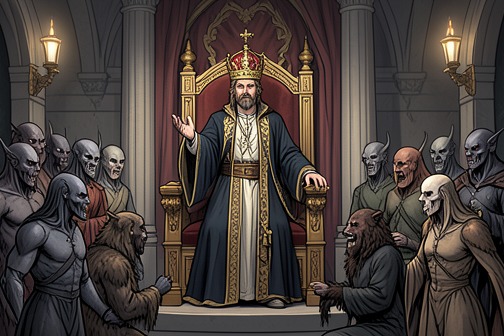
[Darius Named Heir](entity:event-recall-event-33a2dac4092b) is the political culmination of [Darius](entity:character-recall-character-darius-e45e3fd80377)’s confrontation with the [Rebeluna](entity:character-recall-character-rebeluna-bef565b2c76a) shifters and the clearest turning point in his relationship with King [Iosif](entity:character-recall-character-iosif-21786f5e41c2). The event converts a dangerous wartime gamble into recognized succession: Darius is no longer merely the vampire who risked his life against the shifter armies, but the adopted prince expected to become king.
## Causes and Political Background
The succession follows the terms imposed after Darius’s fight with the Thunder. The Rebeluna pack honored those terms by retreating from vampire territory, taking with them the shifters who had been fighting against the vampire armies. Once the withdrawal was complete, shifter incidents virtually stopped. The immediate military crisis therefore became the foundation for a new political order rather than merely a temporary battlefield victory.
King Iosif made the outcome public. He praised Darius for staking his life on the chance of driving the shifters out, presenting Darius’s personal risk as a service to the kingdom. The praise gave the military result an official interpretation: Darius had not simply survived a dangerous conflict; he had acted as a defender of the vampire realm and earned the king’s trust.
## Adoption and Declaration
The formal change in status occurred after a three-day-and-three-night celebration held the previous week. At its conclusion, Iosif declared Darius his new heir. Cleo later explained the dynastic fact to Ed in deliberately simplified terms, saying that Darius had been adopted by the king, was now a prince, and would one day become king. The explanation leaves aside the complicated politics, but it preserves the event’s essential consequence: adoption creates the familial and legal bridge by which Darius enters the royal succession.
The declaration also fulfills what Darius and Iosif had hoped for. The wording presents the succession as the realization of an existing shared ambition, not an accidental reward granted after the war. Darius’s elevation therefore joins personal loyalty, military service, and royal continuity in a single political act.
## Immediate Consequences for Cleo and the Court
Darius’s new title changes Cleo’s position as well. When Ed recognizes that Darius’s princely status makes Cleo a princess, Cleo confirms it. Her relationship with Darius is consequently recast within the royal hierarchy: the woman who had been waiting for him is now connected to the future king and publicly implicated in the dynasty he is expected to continue.
The new status is already visible in the family’s altered routine. Darius is expected to visit Cleo and Ed for the afternoon, while [Gordon](entity:character-recall-character-gordon-2c4ce0d1e3ff) arrives with him, suggesting that the private household has become part of a more formal circle surrounding the newly named heir. The scene balances domestic intimacy with political transformation: Cleo is holding her little son, Tobar, while explaining that the man coming to see them will someday rule the kingdom.
## Ritual, Recognition, and Contrast
The event is framed through celebration and public acknowledgment rather than through a battlefield scene. The three-day festival provides the ceremonial threshold between Darius’s former identity and his princely future. Military danger recedes; communal recognition takes its place. In that sense, the event’s value shift is from insecurity to legitimacy: the kingdom that had faced shifter attacks now celebrates the warrior credited with ending them, and Iosif converts gratitude into succession.
The broader book repeatedly links status to public ritual, contested authority, and bodily or familial bonds. [Cheryl](entity:character-recall-character-cheryl-af54b6410705)’s elevation to queen is presented through a public procession from the temple to the palace, while Darius’s rise is secured through adoption, celebration, and royal proclamation. These parallels show that power becomes durable only when private transformation is made visible to a community. Darius’s achievement matters because it is witnessed, named, and incorporated into the kingdom’s future.
## Consequences and Narrative Significance
Darius Named Heir closes the immediate political loop opened by the conflict with Rebeluna. The shifters’ withdrawal removes the active threat, Iosif’s praise confirms Darius’s service, and the succession declaration supplies a stable endpoint to the crisis. The event also establishes a new expectation: Darius is not simply a victorious commander but the person around whom the next reign will be organized.
Its significance is therefore both personal and institutional. For Darius, adoption grants the recognition and future authority toward which he and Iosif had been working. For Iosif, naming an heir turns confidence in Darius into a plan for royal continuity. For Cleo, the same act produces a new identity as princess. The battlefield victory ends the immediate violence, but the adoption gives that victory lasting political meaning by placing Darius inside the throne’s succession.
Event 4
Cleo Reveals Ed to Darius
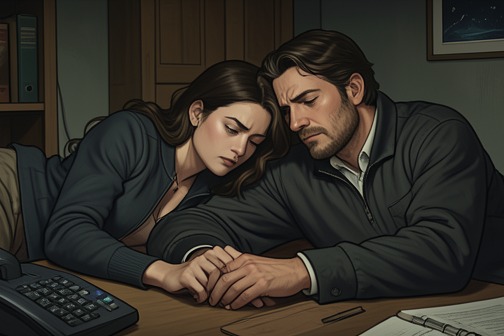
[Cleo Reveals Ed to Darius](entity:event-recall-event-ed-a2afd2343b08) is a private turning point in which Cleo abandons the protective secrecy that has shaped her life and tells her husband, [Darius](entity:character-recall-character-darius-e45e3fd80377), that she has a sister. The revelation is small in outward action but decisive in emotional consequence: their marriage moves from negotiated concealment toward mutual trust, while the surrounding danger makes that new openness feel both hopeful and precarious.
## The Confession and Its Immediate Circumstances
Cleo makes the disclosure after an intimate night with Darius. When the two are resting together, she reflects that the experience was among the few genuinely good moments in her life and admits that she no longer wants secrets between them. Their prior agreement had allowed each of them to keep parts of the past private, but Cleo now treats that arrangement as an obstacle rather than a safeguard. The confession therefore begins not with a demand for information but with a change in her understanding of what their marriage requires.
Cleo then states plainly that she has a sister. Darius reacts with widened eyes and a dropped jaw, recognizing at once that this is not a minor omission. Cleo identifies the sister as [Edyta](entity:character-recall-character-edyta-c953ce388446) and explains that she prefers the name Ed. She settles back into Darius's arms and begins, for the first time, to tell him her life story. The sequence makes the identity disclosure inseparable from the larger act of testimony: Ed is the first concrete secret named, but the deeper revelation is Cleo's willingness to let Darius see the life that preceded their relationship.
## A Reciprocal Exchange of Secrets
The event changes because Darius does not answer Cleo's disclosure with suspicion or reproach. He acknowledges that the secret is substantial, and he agrees that neither of them should continue withholding their histories. Later, he thanks her for the previous night, carefully distinguishing the physical intimacy from what followed it: their decision to tell each other everything. In his view, the lasting consequence is not merely sexual closeness but a stronger relationship built through mutual exposure.
That reciprocity is essential to the event's structure. Cleo does not become vulnerable before a detached interrogator; she speaks to a husband who has also told her about himself. Darius's acceptance turns the confession from an admission that could have destabilized the marriage into a shared exchange. The value shift is from guarded intimacy to deliberate trust. Edyta, or Ed, consequently becomes more than a newly named relative: she marks the boundary between the life Cleo concealed and the life she is now prepared to share.
## Hope Under Threat
The confession occurs while Darius and Cleo are still separated from the safety of home and surrounded by the consequences of the conflict with shifters. Darius feels unusually powerful after the night they have shared and after drinking Cleo's blood, but he recognizes that confidence could become overconfidence because The Thunder is a formidable opponent. Their conversation therefore carries an unresolved condition: the marriage may be emotionally strengthened without yet being physically secure.
Cleo's thoughts remain fixed on several possible failures. She wonders whether they will return home, whether Darius will survive the Alpha, and whether the shifters will release them afterward. Her support for him is direct, but it does not erase the danger. The disclosure thus creates intimacy at the edge of separation and possible death. The couple can imagine a future in which Cleo introduces Darius to Ed, yet that ordinary domestic prospect depends on surviving the immediate crisis.
## Consequences for the Marriage
Darius explicitly looks ahead to meeting Ed when they get home, converting the newly revealed sister from a secret of the past into a person who may enter their shared future. The promise matters because it gives the confession a practical consequence: Cleo's family history is no longer cordoned off from Darius's life. Their relationship now includes the possibility of integrating her sister into their household world rather than treating her as forbidden knowledge.
The event also establishes a pattern of truth-telling that contrasts with the secrecy surrounding them. Elsewhere, identities and communal practices are guarded carefully: Kenner explains that [Kinai](entity:location-recall-location-kinai-8c60014d50cf)'s Joining is normally restricted to those who undergo it, and Harrod's account of the full-moon trial places private identity within the scrutiny of an entire wolf den. Against those public or institutional forms of secrecy, Cleo's confession is deliberately personal. It does not resolve the external conflict, but it gives the marriage an internal alliance strong enough to face uncertainty together.
## Narrative Significance
Cleo Reveals Ed to Darius functions as a discovery event and as a miniature marriage renewal. The action is not a battle, escape, or public declaration; it is a change in what the spouses are willing to know and be known by one another. The narrative treats disclosure itself as consequential action, showing that trust can alter a relationship even when circumstances remain unchanged.
Its significance is intensified by the timing. Cleo speaks after intimacy, when defenses have lowered, but before the couple knows whether they will survive to return home. Her secret arrives alongside the possibility of loss, so the scene refuses to separate emotional fulfillment from danger. Darius's response and his hope of meeting Ed give the moment forward motion, while Cleo's fears keep that future conditional. The result is a quiet but decisive transition: a marriage that began with secrets now claims mutual honesty as part of its strength.
Event 5
Ed's Visits to the Estate
[Ed's Visits to the Estate](entity:event-recall-event-ed-2c8b726c33af) is the arrangement through which [Darius](entity:character-recall-character-darius-e45e3fd80377) enables Ed to spend short vacations at the estate rather than remaining confined to visits made entirely outside the institution. The event is decisive because it joins family intimacy to medical responsibility: Ed is welcomed into Cleo and Darius's household without abandoning the professional care, medication, and routine on which her stability depends.
## Family Context and Emotional Stakes
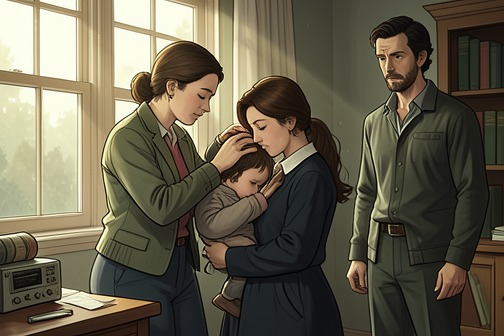
Cleo and Ed are sisters, and their relationship is marked by both affection and distance. When Darius and [Gordon](entity:character-recall-character-gordon-2c4ce0d1e3ff) approach, Cleo remains with her husband while Ed cradles Tobar's head, fidgeting as she tries to smooth her hair with one hand. Ed's eyes glow with excitement at Gordon's arrival, while Cleo's own smile widens. The scene makes clear that the sisters have been visiting Ed often because Cleo and Darius share all their secrets and have maintained regular contact with her.
The visits also reveal a gradual widening of the family circle. Gordon accompanies Darius frequently, and Ed has developed a crush on him. Cleo's relationship with Gordon is improving as well, although she does not yet call him a friend. The estate arrangement therefore grows out of an already changing network of attachment: Ed is not being introduced to strangers, but being given more sustained access to people who are becoming familiar and emotionally important to her.
## Darius's Arrangement
Darius presents the plan as a surprise. After researching the matter and asking around, he arranges for Ed to visit regularly, with the crucial difference that she will not merely be driven to the estate and returned afterward. A room is to be prepared for her there, giving her a temporary place within the household rather than treating each visit as a brief excursion.
Cleo is stunned by the possibility and immediately asks whether it can really be done, explaining that Ed does not do well outside the hospital. Darius's response is deliberately concrete. He has consulted all of Ed's doctors and other professionals, and none of them sees a problem with short vacations. He has hired specialized staff to care for her both at the estate and elsewhere, reducing disruption to her routine, and he intends to ensure that her medication does not run out.
The arrangement is thus neither an impulsive rescue nor an attempt to replace institutional treatment with family affection. Darius creates a controlled bridge between the hospital and the estate. The room, staff, medical consultations, and medication plan turn hospitality into a form of supported care, allowing Ed to enter family space without making her responsible for managing the risks of the transition.
## Cleo's Response and the Value Shift
Cleo's reaction gives the event its emotional force. She asks about the plan from a position of uncertainty, but Darius answers the practical objection before it can become a reason for continued separation. He also recognizes Cleo's guilt, telling her that she feels she has not done enough even though there was nothing more she could do. His solution does not deny Ed's need for professional care; instead, it makes that care compatible with more direct family contact.
Cleo responds with a warm rush of love and kisses Darius, tears pricking her eyes as she thanks him. The tears become part of the couple's playful intimacy when Darius teases her about pregnancy hormones, and Cleo laughs while wiping her face. She then jokes that he got her pregnant deliberately so he could tease her about her emotions. The exchange places Ed's planned visits inside a larger domestic world of marriage, pregnancy, humor, and shared responsibility.
The value shift is from helplessness to practical hope. Cleo begins from the fear that Ed cannot safely leave the hospital, while Darius's preparation makes limited residence at the estate possible. The event does not erase Ed's vulnerability or promise unrestricted independence. Its achievement is more precise: it converts family longing into an organized, repeatable form of care.
## Broader Social Context
The event sits within a book that repeatedly examines how vulnerable bodies are managed by institutions, households, and economic systems. Elsewhere, Senator [Seth Fischer](entity:character-recall-character-seth-fischer-9257c41e7291)'s aide [Ana Medina](entity:character-recall-character-ana-medina-58a684367f1b) helps refine a speech opposing the proposed Shifter Registry because she sees it as a step toward detention and the stripping of citizens' rights. Her insistence that “[People are people](entity:expression-recall-expression-people-are-people-de44035b0f4e)” supplies a broader ethical contrast to systems that reduce individuals to categories requiring control.
Other evidence shows more coercive forms of bodily management. Maribel considers becoming a human blood donor because eviction, unemployment, identity theft, and half a million dollars of debt have left her with few options; the proposed arrangement offers ten thousand dollars a month, payment per ounce of blood consumed, and additional compensation if drinking becomes sexual. Oliver, by contrast, asks [Mack](entity:character-recall-character-mack-132f1b9991de) to care for him by imposing a strict schedule around food, bathing, calls, company obligations, and professional appointments. These examples clarify what distinguishes Darius's plan: it is built around Ed's medical needs and continued protection rather than treating her body as a commodity or abandoning her to unstructured dependence.
The vampire household described by [Valnoir](entity:character-recall-character-valnoir-18546c75dafd) offers an even darker counterpoint. He admits that humans may be kidnapped and brought to the Fort under a policy of maintaining a normal appearance, while others enter willingly and are encouraged to remain. His justification blurs consent, captivity, sexuality, and institutional custom. Against that background, Ed's Visits to the Estate derives its significance from the presence of consultation, safeguards, routine, and family acknowledgment. Care remains structured, but the structure is presented as a means of preserving Ed's participation in family life rather than as a pretext for possession.
## Consequences and Significance
The immediate consequence is that Ed gains regular access to Darius and Cleo's estate, including a prepared room and dedicated staff. Cleo gains a way to see her sister more fully without pretending that love alone can replace psychiatric expertise. Darius's role also expands from husband and protector into organizer of a care network capable of crossing the boundary between hospital and home.
The event leaves an important limit intact. Ed's visits are short vacations, not a permanent discharge, and the plan depends on professional approval, supervision, routine, and medication. That limitation prevents the scene from becoming a simple cure narrative. Ed's condition still shapes the terms of belonging, but those terms become more generous: the estate can accommodate her without demanding that she become someone who no longer needs care.
In narrative terms, the arrangement turns domestic space into an instrument of inclusion. The estate is not only Darius's residence or the setting of Cleo's marriage; it becomes a place where Ed can be present, cared for, and emotionally connected. Darius's practical preparation answers Cleo's guilt with action, while Cleo's tears and laughter reveal the human cost and relief behind that action. The event's lasting importance lies in this union of logistics and tenderness: family love becomes credible not because it ignores vulnerability, but because it plans around it.
Event 6
Parker's Attack
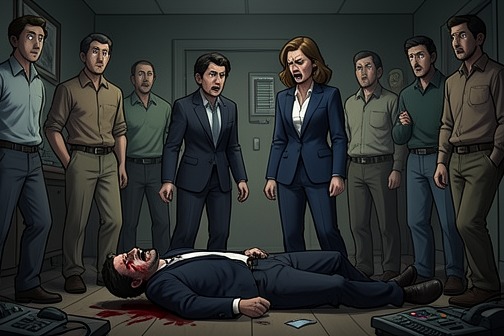
[Parker's Attack](entity:event-recall-event-parker-s-attack-741fa6d0a149) is the assault on [Parker](entity:character-recall-character-parker-e302c8f4e3c8) by [Michelle](entity:character-recall-character-michelle-246b9eb4f39d)’s husband, an incident whose consequences reach beyond physical harm. It reveals that the hostility surrounding Parker was not merely abstract workplace prejudice: a person connected to the office directly attacked him. Parker’s recovery, the office’s belated response, and the offer of free legal representation transform the attack into a test of whether shifter rights can be defended in practice.
## Causes and Context
The attack occurs within a workplace culture where specist remarks had been allowed to circulate. [Joshua](entity:character-recall-character-joshua-3816a503f6f7) later apologizes for both his own behavior and Caleb’s, acknowledging that the office had failed not by carrying out the assault itself but by doing nothing to stop the comments around Parker. That distinction matters: the event is presented as the violent culmination of an atmosphere that had normalized discrimination. The revelation that the attacker was Michelle’s husband also changes the meaning of the incident for the people who had previously encountered Parker through that hostile environment.
The surrounding political narrative places Parker’s experience inside a broader struggle over shifter citizenship and public recognition. [Ana Medina](entity:character-recall-character-ana-medina-58a684367f1b) helps Senator [Seth Fischer](entity:character-recall-character-seth-fischer-9257c41e7291) prepare a speech opposing the proposed Shifter Registry, which he regards as unconstitutional and dangerous because it could lead to a Shifter Detainment Act. Ana is not a shifter, but she rejects the logic that makes species an excuse for unequal treatment. Her principle is that people are people, and Parker’s attack supplies a personal, bodily counterpart to the legal threat represented by the registry.
## What Happens and What Is Revealed
The available aftermath records that Parker is healing well and is expected to return to fighting soon. His recovery therefore does not erase the seriousness of the assault; instead, it establishes that the attack temporarily removed him from the activity that defines his physical and public presence. When Joshua comes to the reception area, he identifies the attacker as Michelle’s husband and apologizes for the office’s conduct. The disclosure forces the institution to connect its earlier remarks with a concrete act of violence rather than treating them as harmless speech.
Joshua reports that Michelle has been fired and that the staff has undergone sensitivity training. The new standard is explicit: specist remarks will no longer be tolerated any more than racist or sexist remarks. The response is significant because it names species prejudice alongside other recognized forms of discrimination, even though it arrives only after Parker has already been harmed. The event thus produces a limited institutional correction while also exposing the cost of waiting for violence before enforcing equality.
## Consequences and Aftermath
The office offers Parker free legal services, with Joshua admitting that he and Caleb feel at least partly responsible. Their responsibility is indirect but institutional: they did not stop the comments that helped create the hostile setting. The offer gives Parker access to representation without requiring him to bear another financial burden after the attack, and it converts apology into a practical commitment.
When the good news reaches Parker, he responds by pulling his partner into a fervent hug and kissing her. He sees their shared position as potentially world-changing, linking his individual recovery to a larger project of social transformation. The aftermath therefore moves through three stages: bodily injury, institutional acknowledgment, and renewed collective purpose. Parker’s return to fighting suggests physical resilience, while the legal offer and policy change suggest that the attack has also altered the structures around him.
## Narrative Significance
The event’s central value shift is from vulnerability to conditional protection. Before the assault, prejudice could remain diffuse, embedded in remarks and omissions; afterward, the office must identify a perpetrator, remove an employee, train its staff, and offer legal assistance. Yet the correction remains reactive, so the narrative preserves a tension between progress and damage. Equality is recognized only after Parker has paid the price of discrimination becoming violence.
Parker’s Attack also connects intimate danger with public law. The same story that follows Ana Medina and Seth Fischer confronting the proposed Shifter Registry asks what happens when a society classifies shifters as a problem to be monitored, detained, or mocked. Parker’s wound makes that political question immediate. His recovery and his partner’s determination do not turn the attack into a simple victory; they show how survival can become evidence, advocacy, and pressure for institutions to change.
Event 7
McGrath's Debt Threat Against Danita
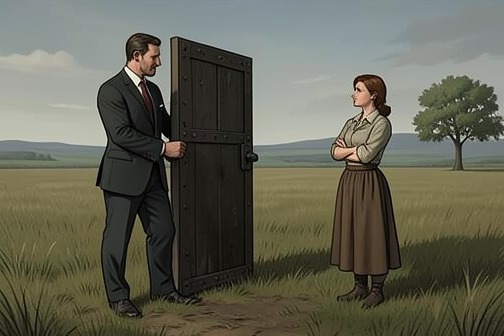
[McGrath's Debt Threat Against Danita](entity:event-recall-event-mcgrath-s-debt-threat-a-a8877fcdab15) is the confrontation in which [Dean McGrath](entity:character-recall-character-dean-mcgrath-865d912032c3) turns a financial claim against Danita Valdez's late uncle into a threat to auction Danita's virginity. The encounter begins as an apparent debt dispute over her newly inherited farm and ends with Danita refusing to surrender her body, creating the central coercive premise for the ransom arrangement that follows.
## The Debt Claim and the Farm
Dean McGrath arrives at Danita's farm presenting himself as the person entitled to collect the dead man's obligations. He identifies himself directly and offers condolences for her uncle's death, but the sympathy is immediately revealed as an opening move in a financial assault. Danita explains that the inheritance gave her what she had always wanted: land on which to establish herself as a farmer. McGrath then claims that her uncle owed him approximately five hundred thousand dollars and argues that, because of that debt, the farm technically belongs to him.
Danita has already reviewed her uncle's finances with a lawyer and rejects the legitimacy of McGrath's claim. His response is not a legal argument. He warns her against involving lawyers and exposes distinctive fangs when he smiles, making the encounter unmistakably supernatural as well as criminal. The farm therefore becomes more than inherited property: it is the material foundation of Danita's independence, and McGrath uses the alleged debt to threaten both her livelihood and her security.
## The Threat of Sexual Sale
When Danita insists that she has no money and points to the farm's poor condition and need for investment, McGrath offers a deadline rather than a solution. He demands a fifty-thousand-dollar payment within three months as a show of good faith, promising to discuss monthly payments later. His language frames extortion as a repayment schedule, while his scrutiny of Danita's body reveals the alternative he is already considering.
McGrath invokes her uncle's suicide as a warning, repeating the implication that Danita could suffer the same fate if she resists. He then describes her physical features, singles out her ethnicity, and asks whether she is a virgin. His statement that Hispanic virgins fetch a high price at auction makes the intended violence explicit: he is not merely threatening foreclosure, but the commercial sale of Danita's sexual status and body. The card he places in her hand, bearing his name and business number, functions as both contact information and a tangible token of control.
The scene's value shift is severe. Danita enters it as a grieving heir imagining a future on her own land; she leaves it facing the possible loss of the farm, coercive debt, sexual commodification, and physical danger. McGrath's power depends on presenting these outcomes as alternatives within a transaction, but the scene exposes the transaction as forced rather than reciprocal.
## Danita's Resistance and the Ransom Arrangement
Danita is frightened, and her body registers the threat through shivering, trembling, and the urge to retreat into the house. Nevertheless, she refuses the solution McGrath offers. After he leaves, she recognizes the encounter as a nightmare-like assault but rejects the idea that he will take her dreams from her. Her stated determination is specific: she will find a way out, and that way will not involve selling her body.
The threat produces an urgent practical problem for [Killian Flanagan](entity:character-recall-character-killian-flanagan-eec0e3e5b663) and [Ryan Higgins](entity:character-recall-character-ryan-higgins-3e5ea9f7fe42). Killian refuses Ryan's suggestion that they kill McGrath, explaining that killing him would require them to pay double Danita's ransom to the Lion to keep their own heads. Instead, Killian has made an agreement to buy Danita from McGrath. The arrangement requires paying Danita's debt plus an additional two hundred and fifty thousand dollars within a month, after which McGrath will leave her alone permanently. The proposed rescue therefore mirrors the coercive economy that created the danger: Danita's safety is negotiated through money, even though Killian's purpose is to end McGrath's claim rather than profit from her.
## Wider Patterns of Exchange and Control
The event belongs to a larger pattern in which bodies, relationships, fertility, and freedom are treated as negotiable assets. McGrath converts inherited debt into a claim over Danita's virginity; Killian counters with a ransom agreement intended to remove that claim. Elsewhere, the narrative presents sharply different forms of exchange: [Maskin](entity:character-recall-character-maskin-5df12ba18891) gives [Cheryl](entity:character-recall-character-cheryl-af54b6410705) a grass necklace as a personal gesture, while Cheryl establishes the condition that any intimacy with one man must include the other and threatens to reject both if they fight. Sheridan tells Maribel that he sought her to bear him a child, making reproductive expectation the basis of a royal relationship. These contrasts distinguish gifts and chosen bonds from transactions enforced through fear.
The same tension appears in other social and ritual settings. At the palace, Cheryl is carried from the temple on a hovering stone platform while crowds chant her name, yet her anticipated role is still defined by producing royal children. In [Kinai](entity:location-recall-location-kinai-8c60014d50cf) society, Kenner explains that every twenty-five years, unjoined men and women between twenty and thirty spend the winter at the [Rookery](entity:location-recall-location-rookery-9e0fa67f09fd) when the beastlings hatch; secrecy and communal ritual govern reproduction there rather than a lender's private threat. McGrath's scheme is consequently not presented as an ordinary debt collection. It is the most predatory version of a recurring narrative concern: who has the authority to decide what a body, a future, or a child may be exchanged for.
## Consequences and Narrative Significance
McGrath's visit establishes the immediate antagonist and the financial stakes that propel Danita's plot forward. His five-hundred-thousand-dollar claim, three-month deadline, fifty-thousand-dollar initial demand, and later ransom agreement give the conflict measurable terms, while the additional two hundred and fifty thousand dollars makes clear how difficult it will be to secure Danita's freedom. The threat also explains why Killian and Ryan become involved without reducing Danita to a passive prize: her own refusal is the moral center of the event, and the rescue effort answers a danger she has already identified and rejected.
The encounter's lasting significance lies in the collision between economic language and bodily autonomy. McGrath speaks of ownership, payment, good faith, and auction value, attempting to make coercion sound contractual. Danita's final resolve breaks that logic. She does not accept the premise that poverty, inheritance, or debt can make her body available for sale, and the subsequent ransom plan becomes an attempt to dismantle McGrath's power over her rather than an endorsement of his terms. In that sense, the event is both a threat and a declaration: McGrath defines the system through which Danita is endangered, while Danita's refusal defines the freedom the rest of the storyline must fight to preserve.
Event 8
Killian and Ryan Move Into Danita's Farm
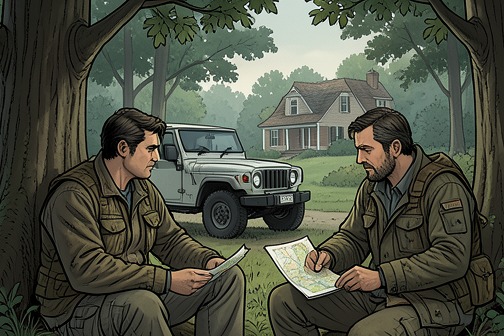
Killian and Ryan’s move into Danita Valdez’s farm is the turning point at which a criminal surveillance assignment begins to fracture into protection, attachment, and resistance. Ordered by [Dean McGrath](entity:character-recall-character-dean-mcgrath-865d912032c3) to watch a debtor who lives miles from her nearest neighbors, the two [Bear shifters](entity:creature-recall-creature-bear-shifters-0f85423f0b92) are meant to pressure Danita into submission and eventually secure her as part of a ransom arrangement. Instead, the ruined farm, Danita’s visible fear, and the men’s own history with McGrath make the assignment expose the coercive system that has trapped all three of them.
## Causes and Assignment
[Killian Flanagan](entity:character-recall-character-killian-flanagan-eec0e3e5b663) and [Ryan Higgins](entity:character-recall-character-ryan-higgins-3e5ea9f7fe42) arrive because McGrath commands them to remain near Danita’s isolated property and keep an eye on her. They use a logging road to approach the [Valdez Farm](entity:location-recall-location-valdez-farm-189b219e374e), park their four-by-four truck, and establish a camp near the tree line. Their surveillance is intended to be continuous: normally, one of them watches Danita while the other handles the camp. The remoteness of the farm is therefore not merely a rural setting but a practical condition of control, limiting Danita’s access to witnesses and making the two men’s presence difficult to escape.
The assignment also carries a sexual objective. Killian understands that Ryan has shifted from Bear to human in an attempt to impress Danita, and he shifts himself as well. The men are expected to seduce her, but Killian recognizes that seduction will not be simple once he sees the condition of the property and the distress on Danita’s face. Their orders reduce her to a debt, a body, and a potential acquisition; Killian’s response begins when he notices the person obscured by that calculation.
## Arrival at the Farm
When the pair return to the farm, Danita has already left the truck. Killian studies the property as they cross the field and immediately questions how she could possibly repay McGrath when the farm is in such poor condition. The cedar siding is peeling, boards are missing, and the buildings appear close to collapse. The physical deterioration gives material form to Danita’s inherited financial pressure: the debt is not an abstract accusation but a burden attached to failing structures, neglected work, and a livelihood that cannot generate the money demanded from it.
Danita answers the door with red, puffy eyes. The sight of Killian and Ryan makes her widen her eyes and blush, but the faint color drains from her face as soon as Killian identifies McGrath as the person who sent them. The immediate change from embarrassment to sickness tells the men that their presence is not being experienced as help. Ryan’s scowl confirms that he understands the same danger. The expected seduction collapses before it begins, replaced by the knowledge that Danita may agree to anything because she is afraid.
Inside the house, the men encounter an alpaca that Danita has allowed indoors. When Killian asks whether she has let livestock into the house, Danita explains that the animal is house-trained and pleads with them not to hurt it. Ryan responds by patting the alpaca’s furry head and assuring Danita that neither man is there to harm her or her pet. He reframes their presence as practical assistance, explaining that the farm needs extensive work if she is to repay McGrath. Danita’s shoulders relax and a hesitant smile appears, marking the scene’s first value shift: the men remain agents of the threat, but their immediate conduct creates a fragile possibility of trust.
## The Assignment Becomes Assistance
Killian decides that working around the farm may serve two purposes. It can help repair the property, making repayment more plausible, and it can give the men time to understand what is upsetting Danita rather than attempting to force intimacy immediately. He also sees qualities in her beyond physical attraction: she is optimistic, hardworking, and full of dreams. His desire to help her achieve those dreams marks a growing conflict between his personal perception of Danita and McGrath’s treatment of her as property.
That conflict deepens when Killian remembers how he and Ryan entered McGrath’s organization. They had been teenage runaways in a world that did not understand shifters or their wish to share a woman between them. McGrath, a Leopard, promised them belonging and a permanent family. Killian now recognizes those promises as lies that drew them into the [Four Clovers](entity:character-recall-character-four-clovers-8cbfece9528b). The farm assignment therefore mirrors their own history: Danita is being offered apparent protection through a structure that actually creates dependence, while Killian and Ryan were recruited through the same language of refuge and family.
Killian’s sympathy does not erase the danger. The men still operate under McGrath’s orders, and Danita still knows that refusing them could have consequences. Their assistance is consequently compromised from the beginning. Repair work can become care, but it can also become another means of gaining access to her home and weakening her resistance. The scene’s tension comes from that double function: every helpful gesture exists inside a coercive arrangement.
## The Ransom Decision
The surveillance develops into open negotiation when Killian learns that McGrath intends to pursue Danita’s debt. Ryan asks whether they should flee or kill him. Killian rejects murder, explaining that killing McGrath would require them to pay double Danita’s ransom to the Lion if they wanted to keep their own heads. Instead, Killian says he has made an agreement to buy Danita from McGrath.
The proposed purchase gives the story’s economic violence its clearest form. Danita’s freedom is treated as a sum that can be transferred between men, and Killian’s attempt to protect her initially adopts the same vocabulary of ownership. He has one month to raise the debt plus an additional two hundred and fifty thousand dollars; if he can deliver the money, McGrath will leave Danita alone forever. The bargain is protective in its intended consequence but morally unstable in its structure, because it seeks to defeat one claim over Danita by substituting another.
Killian’s refusal to kill McGrath also reveals the limits of his rebellion. He understands the organization’s penalties and knows that violence against its leader would endanger both himself and Ryan. His chosen strategy is therefore improvised resistance from within the criminal system rather than a clean escape from it. The farm becomes the place where that resistance acquires a human face, but the terms of the struggle remain debt, threat, and ransom.
## Significance and Aftermath
The move into Danita’s farm establishes the central contradiction of Killian and Ryan’s relationship with her. They arrive as watchers and prospective seducers, carrying McGrath’s authority into an isolated household. They remain connected to the Four Clovers and are initially prepared to use Danita’s vulnerability for their own purposes. Yet Danita’s fear, the failing farm, and the simple plea to protect her alpaca force them to confront the difference between their assignment and the woman standing before them.
For Killian especially, the event converts surveillance into an ethical crisis. He begins by judging the farm’s condition as evidence that repayment is impossible, then turns toward helping Danita restore it. He sees her hopes, remembers the false promises that trapped him and Ryan, and finally risks a financial arrangement designed to remove McGrath’s power over her. The episode does not make the coercive system disappear; it shows how care can emerge inside it while still bearing the marks of ownership and danger.
The farm thus serves as both workplace and refuge, prison and possible beginning. Its broken boards and neglected buildings register the slow pressure of debt, while the men’s labor creates a tentative alternative to the violence McGrath expects. The decisive change is not that Danita becomes safe at once, but that Killian and Ryan stop being able to treat her fear as a mere obstacle to seduction. Their assignment gives them access to her life; her vulnerability gives that access moral weight, and Killian’s decision to buy her freedom begins the larger transformation of the three-way conflict.
Event 9
Danita's Farm Turnaround
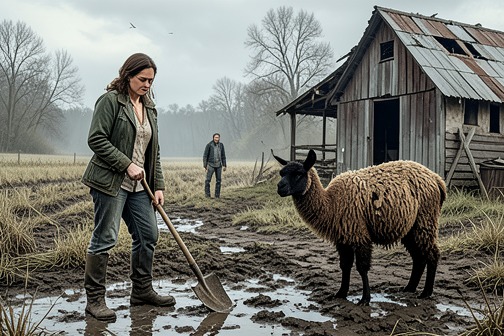
[Danita's Farm Turnaround](entity:event-recall-event-danita-s-farm-turnaroun-7c3735f4ac9c) marks the decisive reversal from inherited debt and agricultural ruin toward solvency, productive work, and temporary personal independence. When Danita explains that her uncle's debt has been imposed on her, Ryan and Killian respond not by demanding her body as payment but by giving her the resources to confront McGrath and restore the farm. The event therefore changes more than the farm's finances: it briefly replaces coercive dependency with practical agency, while revealing that money can function both as a liberating gift and as part of a wider economy of control.
## Causes and Financial Crisis
Danita's crisis begins with an obligation she did not create. She owes McGrath's Leopard-connected operation a total of five hundred thousand dollars, including a fifty-thousand-dollar down payment due within three months, even though the debt originally belonged to her uncle. The farm itself is not valuable enough to cover that demand, and Danita has already investigated whether oil or another hidden resource might make the land profitable. Her mortgage application has also failed, a result Killian attributes to McGrath's influence over the bank. The apparent offer of a way forward is therefore shadowed by the possibility that McGrath wants the land rather than merely repayment.
Ryan and Killian recognize that the debt is not an ordinary financial liability. It is a mechanism by which McGrath can dictate Danita's future, and Danita fears that the promised help may be another trick that increases what she owes. The two [Bears](entity:creature-recall-creature-bears-1413ab78a9a7) reject that interpretation. Ryan asks for the exact amount and deadline, while Killian assures Danita that she need not worry about the money. Their intervention begins as a response to a specific figure and a specific deadline, not as an abstract promise of protection.
## The Gift and the Farm's Reconstruction
Ryan gives Danita one hundred thousand dollars in cash on the same day she discloses the debt. He presents it as a gift, and the gesture is reinforced by Ryan and Killian's evident hostility toward McGrath; they do not appear to be secretly cooperating with the man who has trapped her. The money gives Danita immediate room to act. She pays McGrath half of the cash at once, then adds another ten thousand dollars to purchase two additional months before monthly repayments begin. The payment does not erase the larger debt, but it converts an immediate threat into a longer interval in which the farm can produce income.
Danita invests the remaining money directly in the property instead of treating the gift as temporary relief. She seeds hay in the flat fields beside the tree line and buys six alpacas—five females and one male—creating the beginnings of a viable herd. She also plants a vegetable garden. These choices make the turnaround material and specific: the rescue is expressed through fields, livestock, and food production rather than through an ungrounded promise that the farm will somehow recover.
The physical condition of the property improves in less than a week. The barn is patched, the house becomes livable, and Danita is positioned to start earning returns from the land. The narrative presents this as a genuine change in value: the farm moves from an inherited burden that cannot support repayment to an enterprise with the possibility of sustaining its owner. Danita's life appears to have turned around because the gift has been converted into labor, infrastructure, and future income.
## Relief Under Continued Coercion
The turnaround does not end McGrath's power. Just when Danita's circumstances seem secure enough to support optimism, a package arrives from him. Inside is a pomegranate-red corset with a short, lacy skirt, accompanied by a note. The clothing makes the unresolved nature of the rescue visible: although Danita now has money and a functioning farm, McGrath continues to frame her body as an asset within the debt relationship. Her fear and sickness at the package show that the financial problem has been separated from, but not eliminated by, the threat of sexual coercion.
Killian's response confirms how dangerous the remaining obligation is. When Ryan suggests fleeing or killing McGrath, Killian refuses assassination because doing so would require paying double Danita's ransom to the Leopard to keep them alive. Instead, he says he has made an agreement to buy Danita from McGrath. McGrath gives them a month to produce Danita's debt plus an additional two hundred and fifty thousand dollars, promising to leave her alone forever if they succeed. The farm's recovery thus becomes part of a second, larger struggle: Danita and the Bears must use the new livelihood to resist a system that treats debt as ownership.
## Exchange, Agency, and Narrative Significance
The event's central exchange is deliberately ambiguous. Ryan's one hundred thousand dollars is called a gift, unlike McGrath's demand, which is an inherited debt enforced through threats and bodily implication. Yet the gift also binds Danita to a plan involving repayment, land, and protection. Its moral force comes from the difference between consent and coercion: Ryan and Killian offer resources and care, while McGrath converts financial vulnerability into a claim over Danita's person.
The farm's reconstruction also changes Danita's position in her relationships with the two Bears. Their attraction is apparent, but their conduct consists of soft caresses, foot rubs, cooking, and other forms of courtship rather than threats. As the farm improves, Danita becomes less afraid that they will demand her body as payment. The distinction matters because the turnaround gives her time to recognize desire without confusing it with forced repayment. She remains inexperienced and frightened by the possibility of acting on her fantasies, but the restored farm gives her a material foundation from which choice can exist.
The event is therefore a temporary victory rather than a final emancipation. Danita pays McGrath, plants the fields, acquires alpacas, repairs the barn, and makes the house livable; each action pushes the story toward self-sufficiency. But the corset and the later ransom agreement expose the limit of that success. Economic recovery can make resistance possible, yet it cannot by itself dissolve a power structure that claims the land, the debt, and the woman attached to it. Danita's farm turns around, but the struggle over who controls Danita remains active.
Event 10
McGrath's Lingerie Deception
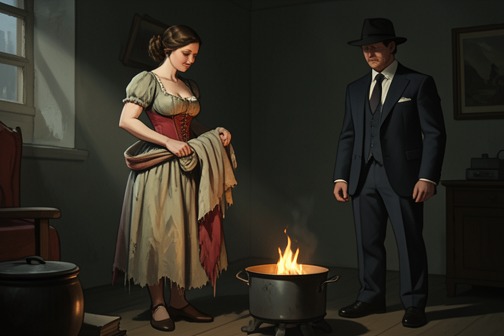
[McGrath's Lingerie Deception](entity:event-recall-event-mcgrath-s-lingerie-dece-243db9e64f50) is the moment when [Dean McGrath](entity:character-recall-character-dean-mcgrath-865d912032c3) turns a piece of lingerie into a weapon of psychological control. The pomegranate-red corset and tiny skirt are presented as an apparent demand for Danita Valdez's body, making her mistake [Killian Flanagan](entity:character-recall-character-killian-flanagan-eec0e3e5b663) and [Ryan Higgins](entity:character-recall-character-ryan-higgins-3e5ea9f7fe42)'s financial help for a covert purchase of her virginity. Her decision to burn the package converts humiliation into open resistance, while the later revelation that McGrath acted alone restores Danita's faith in the two men and pushes Killian into a dangerous ransom agreement.
## The Package and the False Meaning
Until the package arrives, Danita Valdez has reason to believe that her farm is recovering. She has paid Dean McGrath half the cash he demanded, added ten thousand dollars to postpone her monthly payments for two months, seeded hay, bought six alpacas—five females and one male—and planted a vegetable garden. The barn has been repaired, the house made livable, and the farm appears capable of producing income. McGrath's parcel abruptly interrupts that recovery and turns ordinary material assistance into a threatening message.
Inside the package is a pomegranate-red corset fastened to a small lacy skirt that barely reaches Danita's thighs. The clothing is conspicuous because it cannot be mistaken for farm equipment or a neutral gift: it makes the body itself the object of the transaction. Danita remembers that she still has four and a half months before repayment begins and wonders why McGrath would send it so early. She considers whether he has changed his mind, whether he wants her personally rather than merely her money, and then sees the note: "For your shifters." That short message supplies the deception's decisive false interpretation.
## Danita's Confrontation and the Burning Corset
Danita concludes that the two men have bought her after all. The practical help that had allowed her farm to recover is reclassified in her mind as pretense, and the emotional intimacy she had begun to imagine collapses into the belief that Killian Flanagan and Ryan Higgins see her only as a sexual commodity. Her despair becomes anger because she feels that they have occupied her farm, worked without being asked, supplied money she never requested, and concealed the supposed price of those favors.
She carries the lingerie outside while the two men are preparing a fire for a wiener roast. Their smiles intensify her fury rather than calming it. Danita throws the box and its contents into the flames, puts her hands on her hips, and declares, "My virginity is not for sale!" The act gives the event its alternative title, The Burning of the Corset. The garment ceases to function as a silent instrument of McGrath's insinuation and becomes visible evidence of the insult she believes has been directed at her.
## The Deception Exposed
Ryan Higgins reacts with sudden tension, while Killian Flanagan looks from the burning lingerie back to Danita in shock. When she asks what they are talking about, Ryan's anger rises, but Killian tries to keep the confrontation from escalating. He tells Danita that neither man is angry with her, apologizes for Dean McGrath's conduct, and points out that they had nothing to do with the package. Killian explains that they did not buy her and did not even think McGrath knew Ryan had emptied their savings to help her.
The clarification reverses the scene's emotional value. Danita's certainty that she has been bought gives way to relief when she recognizes another of McGrath's tricks. The same financial assistance that had appeared to prove a hidden sexual bargain is restored as evidence that the two men genuinely care about her. The corset therefore works as a deceptive object twice over: first it makes trust look like exploitation, and then its denial reveals how easily McGrath can turn generosity into suspicion.
## From Misunderstanding to Ransom Agreement
The package does not end McGrath's power over Danita. Once the deception has been exposed, Killian Flanagan tells Ryan Higgins that killing McGrath is not an option. McGrath's organization would require them to pay double Danita's ransom to the Lion if they killed him, leaving them exposed as well as unable to secure her freedom. Instead, Killian has made an agreement to buy Danita from McGrath.
The terms make the coercive economy explicit. McGrath gives Killian one month to pay Danita's debt plus an additional two hundred and fifty thousand dollars; if the money is delivered in time, McGrath will leave Danita alone forever. The earlier accusation that Danita has been purchased is thus false in its immediate target but brutally close to the larger reality surrounding her. She has not been secretly bought by the men who love her, yet her freedom is still being priced by McGrath, and Killian must enter that system to obtain her permanent release.
## Narrative and Thematic Significance
The event's central value shift moves from trust to betrayal, then from betrayal to renewed trust, without eliminating the material danger that caused the fear. McGrath's note compresses an entire structure of debt, ransom, sexuality, and ownership into two words. Danita's response refuses that structure at the level of her body: the lingerie is burned, and her virginity is explicitly removed from the marketplace. Killian's later agreement shows the limit of that refusal, because emotional loyalty cannot by itself erase the debt system McGrath controls.
The corset also exposes the instability of objects that appear to carry obvious meanings. In McGrath's hands, it is a calculated message; in Danita's reading, it is proof of betrayal; in the fire, it becomes a declaration of autonomy; after Killian's explanation, it remains the physical trace of a manipulation that nearly destroys trust. The incident consequently advances both the personal relationship among Danita Valdez, Killian Flanagan, and Ryan Higgins and the wider conflict with Dean McGrath: Danita rejects commodification, the two men reaffirm their intentions, and Killian commits himself to a costly plan to end McGrath's claim over her.
Event 11
Killian's Ransom Agreement for Danita
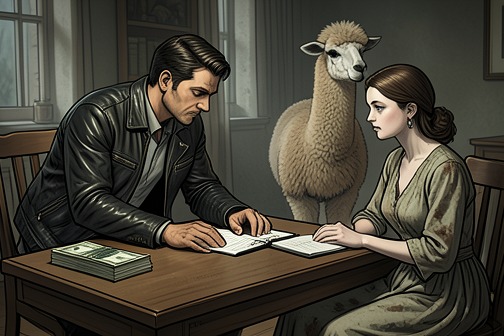
[Killian's Ransom Agreement for Danita](entity:event-recall-event-killian-s-ransom-agreem-f669d28c5c8d) is a coercive bargain disguised as a financial solution. [Killian Flanagan](entity:character-recall-character-killian-flanagan-eec0e3e5b663) refuses to let Danita Valdez remain a commodity in [Dean McGrath](entity:character-recall-character-dean-mcgrath-865d912032c3)'s debt scheme, but his attempt to buy her freedom exposes the limits of money when the captor's real objective is control rather than repayment.
## Causes and Background
Killian and [Ryan Higgins](entity:character-recall-character-ryan-higgins-3e5ea9f7fe42) have been watching over Danita Valdez while trying to protect her from Dean McGrath, whose claim over her is rooted in debt and exploitation. When the possibility of killing McGrath is raised, Killian immediately rejects it. He explains that McGrath's death would force them to pay the Lion twice Danita's ransom merely to keep themselves alive, making violence both morally unacceptable and strategically disastrous. Instead, Killian says that he has already reached an agreement to buy Danita from McGrath.
The arrangement gives Killian one month to pay Danita's debt plus an additional two hundred and fifty thousand dollars. McGrath presents the demand as a transaction with a fixed deadline: if the money arrives in time, he will leave Danita alone forever. The apparent terms convert Danita's safety into a price, but Killian's response shows that he understands the transaction as a rescue rather than a legitimate sale. Danita is far more than a marketable asset, even though McGrath's language insists on treating her as one.
## The Bargain and Its Stakes
The agreement becomes possible because Killian possesses seven hundred thousand dollars in a family trust fund, a fact Ryan had never known. Killian tells Ryan that the money is enough to free Danita and leave a little extra to give [Valdez Farm](entity:location-recall-location-valdez-farm-189b219e374e) a better foothold. He has already contacted his family's lawyers and arranged for the transfer, turning private wealth into an emergency instrument of protection and agricultural survival.
The revelation changes Ryan's understanding of their predicament. The money might have prevented the crisis from beginning, yet Killian refuses to explain why he could not access it earlier. His request that Ryan not ask about it, combined with the pain visible in his eyes, makes the fund more than a convenient plot device: it carries an undisclosed personal burden. The ransom agreement therefore joins two kinds of debt. Danita is trapped by McGrath's imposed debt, while Killian is forced to draw on a family resource whose history he cannot or will not discuss.
The bargain also binds Killian and Ryan to a strict deadline. They do not merely need to raise money; they must satisfy McGrath before the end of the month. Killian's plan depends on the belief that a sufficiently large payment can create a boundary around Danita's life. McGrath's later conduct destroys that belief.
## McGrath Raises the Price
When McGrath learns that Danita is pregnant, he treats the pregnancy as an increase in her market value rather than as a human emergency. Killian is summoned and challenged over the fact that he and Ryan were supposed to keep watch over Danita but allowed her to become pregnant. The news shocks Killian because Danita has shown no morning sickness and none of them had suspected that she was carrying a child. He must also consider whether McGrath is telling the truth merely to manipulate him.
McGrath then announces that the original agreement no longer applies. He doubles the price to demonstrate his displeasure and repeats the deadline: the new amount must be paid by the end of the month, or he will take Danita away permanently. The change is not presented as a negotiation. It is an arbitrary repricing imposed by someone who has physical and social power over Danita, converting her pregnancy into additional leverage.
Killian restrains himself because moving against McGrath would mean killing the Leopard and destroying the narrow opportunity to save Danita. His stillness is therefore an act of controlled resistance rather than acceptance. After McGrath leaves, Killian remains seated and seethes, recognizing that the demand was never fundamentally about money. McGrath continues to pretend that it is, however, and that pretense gives Killian and Ryan time to act.
## Consequences and Narrative Significance
The agreement shifts the story from a rescue financed by sacrifice to a confrontation with a system that continually turns vulnerability into debt. Killian offers seven hundred thousand dollars, Ryan offers partnership, and Danita's safety is supposed to be secured through payment. McGrath answers by changing the price as soon as pregnancy gives him a stronger claim over the situation. The exchange reveals that money can buy time, but not necessarily freedom, when the creditor's true aim is possession.
The event also clarifies Killian's priorities. He refuses murder even under extreme pressure, accepts personal financial exposure, and continues negotiating while recognizing the brutality beneath McGrath's commercial language. His objective is not simply to erase Danita's debt; it is to prevent her from being transferred, reclaimed, or permanently separated from the people trying to protect her. The pregnancy makes the stakes larger still, because Danita's body and unborn child are both drawn into McGrath's economy of control.
As a narrative turning point, the ransom agreement begins as a possible solution and ends as proof that the solution cannot remain purely financial. Killian's promise to pay creates a temporary opening, but McGrath's doubled demand exposes the bargain's instability. The event leaves Killian and Ryan with time but no security, money but no guarantee, and a rescue plan whose success depends on confronting a captor who has already shown that every promise can be rewritten.
Event 12
Danita's Pregnancy Revelation
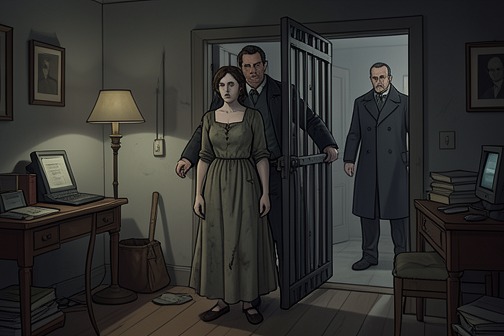
[Danita's Pregnancy Revelation](entity:event-recall-event-danita-s-pregnancy-reve-86f7507154d0) is the turning point at which Danita Valdez's financial captivity becomes inseparable from her body and future. [Dean McGrath](entity:character-recall-character-dean-mcgrath-865d912032c3) announces that she is pregnant while threatening to sell her to settle an inherited debt, and the news shocks [Killian Flanagan](entity:character-recall-character-killian-flanagan-eec0e3e5b663) and [Ryan Higgins](entity:character-recall-character-ryan-higgins-3e5ea9f7fe42) into recognizing both the urgency of protecting her and the emotional reality of their relationship. Danita, however, refuses to be reduced either to a commodity or to a helpless captive: she proposes securing a loan, preserving her farm, and ending McGrath's control on her own terms.
## Causes and Background
The revelation occurs within McGrath's coercive debt scheme. Killian and Ryan had been instructed to keep an eye on Danita, but they had also tried to help repair her farm and raise money to pay what McGrath demanded. McGrath distinguishes between those interventions, which he grudgingly tolerates because he believes Danita has no realistic way to make her dreams succeed, and the pregnancy, which he treats as an economic offense. His language reduces Danita to a marketable asset: he claims that Killian has lowered her “market value” by getting her pregnant.
That framing makes the pregnancy more than a private medical fact. It reveals the structure of the threat surrounding Danita: McGrath believes he can dictate whether her farm survives, whether her body may be sold, and what effect pregnancy has on her supposed worth. Killian's reaction rejects that logic. He clenches his jaw and fists at the description of Danita as a commodity, understanding that the pregnancy exposes the violence hidden inside McGrath's apparently contractual demands.
## What Happens
McGrath tells Killian that Danita is pregnant because her doctor, who owes him favors, informed him immediately. The information is delivered as an accusation rather than as care. Killian experiences the news as a physical shock and initially questions whether McGrath is manipulating him, since Danita has shown no morning sickness and none of them had suspected a pregnancy. The absence of visible symptoms makes the revelation sudden, while McGrath's access to confidential medical information demonstrates how extensively his power reaches into Danita's life.
Killian argues that the money being raised to pay the debt should compensate for any supposed loss in value. The argument is deliberately practical, but his anger shows that the real issue is dignity rather than arithmetic. McGrath's treatment of pregnancy as something that can be priced collides with Killian's recognition that Danita is a person whose body and future cannot legitimately be assessed as merchandise.
Danita answers the crisis with defiance. She insists that the debt is a quarter of a million dollars and proposes calling her foster-sister [Amelia Fernandez](entity:character-recall-character-amelia-fernandez-5d4c3353a848), who had previously offered to lend her money before Danita applied for her first mortgage. Her plan is direct: obtain the money, remove McGrath from her life, and prevent him from forcing her to sell either her farm or her body. She refuses Killian's suggestion that she simply run, explaining that she cannot abandon the farm while Maria and her other alpacas depend on her.
Her resolve changes Killian's understanding of the relationship. Danita's clenched hands, raised chin, and challenging stare make clear that she will not back down. Killian feels love surge through him, while Ryan recognizes aloud that their mate is “the feisty one.” Killian agrees and admits, at least to himself, that Danita is their mate and the perfect third piece of their bond. The pregnancy therefore reveals not only a threat but also a relationship that the two men can no longer keep treating as temporary or undefined.
## Immediate Consequences
The revelation creates two simultaneous imperatives. Killian and Ryan want Danita to escape before McGrath can seize control of her or exploit the pregnancy, while Danita insists that escape would abandon the animals and the livelihood she has struggled to preserve. Her refusal prevents the men from turning protection into another form of control. She accepts their concern but retains command of the next step, choosing to telephone Amelia and pursue the money herself.
The moment also intensifies the emotional stakes between the three partners. Danita brushes her lips against Killian's, and his gaze drops to her stomach. The gesture makes the pregnancy physically present even before the full consequences are spoken. Killian is both thrilled and terrified by what he has realized, and he begins to tell Danita that there is something else she needs to know. The scene ends at that threshold, with the pregnancy having already altered their understanding of love, danger, and responsibility.
## Narrative Significance
The event converts an external debt plot into a conflict over who has the right to name Danita's value. McGrath's vocabulary of “market value” represents a system in which debt turns a woman into property; Danita's response restores agency through work, friendship, family-like support, and an insistence on remaining with the farm and its animals. Her pregnancy is not presented as a passive condition that merely happens to her. It becomes the fact around which she makes a plan and asserts a future.
The revelation also follows a recurring pattern in the wider narrative, in which pregnancy exposes hidden power relations and tests the ethics of bodily autonomy. Elsewhere, [Gemma](entity:character-recall-character-gemma-b1c21c6b476b)'s pregnancy is treated by the Science Board as a potential source of fetal research, while [Shay](entity:character-recall-character-shay-5a5fab224960) defends the child against experimentation without informed consent. Sara's military identity and fear of being treated as a human commodity likewise show how reproductive vulnerability can be weaponized by institutions and traffickers. Against those coercive models, Danita's scene gives particular weight to her own decision-making: she is endangered, but she is not silent, compliant, or interchangeable.
Finally, the event marks a transition from surveillance to mutual recognition. Killian and Ryan were initially assigned to watch Danita, a role shaped by McGrath's authority. Once the pregnancy is disclosed, their position changes as they acknowledge Danita as their mate and respond to her as an equal participant in their shared future. The danger remains unresolved when the scene closes, but the revelation has already broken McGrath's preferred interpretation of the situation. Danita is no longer merely a debtor whose value can be calculated; she is the center of a bond, the protector of a living household, and the person determined to decide what happens next.
Event 13
McGrath's Death
[McGrath's Death](entity:event-recall-event-mcgrath-s-death-acc3bf8bfc0e) is the climactic rescue in Danita Valdez's confrontation with [Dean McGrath](entity:character-recall-character-dean-mcgrath-865d912032c3). The event transforms Danita's situation from hostage-like danger into immediate safety, while revealing the physical cost [Ryan Higgins](entity:character-recall-character-ryan-higgins-3e5ea9f7fe42) and [Killian Flanagan](entity:character-recall-character-killian-flanagan-eec0e3e5b663) accept to bring her home. Its emotional resolution is deliberately intimate rather than triumphant: death ends McGrath's power, but Danita's relief arrives through tears, trembling, embraces, and the simple demand that her two protectors take her away.
## Causes and Stakes
Danita had been taken to a place associated with what she believed was about to happen to her, and she had tried to leave no obvious trail. Her slippers, however, became the first clue. She had considered bringing her favorite pair but rejected the idea because she did not want them contaminated by memories of the ordeal. That decision inadvertently helped Ryan and Killian: the abandoned slippers, together with a torn note Ryan found in the trash, enabled them to locate her.
The stakes were therefore not merely punitive. McGrath's continued existence represented the continuation of Danita's immediate danger, while Ryan and Killian's search required them to enter that danger themselves. The later condition of their bodies shows that the rescue was not effortless. Ryan is stiffly drying himself and has suffered broken ribs, while Killian is helping support him and is also described as injured. The killing of McGrath closes the threat, but it does not erase the violence required to close it.
## The Killing and Rescue
When Danita finally reaches the bathroom, she finds Ryan and Killian alive and apparently without visible scratches. Her response is instantaneous: she runs to them, throws herself into their embrace, and begins crying before she fully understands that she is doing so. The scene places bodily contact at the center of the event. The men do not merely announce that McGrath is dead; they hold Danita gently while the shock leaves her body.
Danita eventually asks how they found her, and Ryan explains that the slippers and torn note led them to her. The detail gives the rescue a material chain of cause and effect rather than treating it as an unexplained deliverance. Her seemingly small earlier choice becomes the instrument of survival. The revelation also intensifies her delayed fear: once she understands how close the danger was, she begins shaking under the weight of what might have happened.
Ryan then gives the essential confirmation that the rescue has succeeded: McGrath is dead, and both rescuers are safe. Killian immediately qualifies that reassurance by pointing out Ryan's broken ribs, while Ryan insists that the injuries will heal by the end of the day. Their brief disagreement exposes the danger without displacing Danita's emotional needs. Even in the aftermath, they are still trying to protect her from the full burden of what they endured.
## Immediate Aftermath
Danita interrupts their argument by covering both their mouths and refusing to let the moment become another fight. Her laughter is a release of pressure, but it is also an assertion of control after a period in which control was taken from her. She tells them to stop fighting, take her home, and leave the place behind. The request gives the event its final direction: the objective is not vengeance, explanation, or further confrontation, but return.
Ryan and Killian respond together, embracing her. Ryan dampens her shirt with his tears, and Danita does not complain. That small physical detail reverses the emotional geometry of the captivity scene. She is no longer isolated and exposed; all three are holding one another, and the men’s injuries become part of a shared aftermath rather than evidence that the rescue has failed. Danita's final recognition is unequivocal: she is safe, healthy, and truly safe.
## Consequences and Resolution
McGrath's death removes the antagonist who had threatened Danita and permits the relationship among Danita, Ryan, and Killian to move from emergency intervention into domestic continuation. The epilogue places that continuation in a king-sized bed that replaced their earlier air mattresses. Danita is pregnant, awakened by the baby's feet kicking her ribs, and physically positioned between her two partners. Even the bed is scarcely large enough for the three bodies, turning the domestic scene into a concrete image of their expanded family and shared life.
The aftermath is not presented as a clean erasure of trauma. Danita still wakes uncomfortable, must negotiate space around Ryan and Killian, and carries the memory of how close the crisis came. Yet the narrative marks a decisive value shift from threatened captivity to protected belonging. McGrath's death supplies the external resolution; the embraces, the journey home, and the later pregnancy supply the continuing relational resolution.
## Narrative Significance
The event's central contrast is between the violence needed to secure freedom and the tenderness that makes freedom meaningful. Ryan and Killian kill McGrath, sustain broken ribs, and return to Danita as rescuers, but the scene's defining image is not the act of killing. It is Danita laughing through fear, silencing their quarrel with her hands, and asking to go home. The story treats survival as something recognized through contact and mutual care.
The event also completes the rescue logic established by the discarded slippers. An object Danita rejected to protect it from traumatic association becomes the trace that saves her. The irony is quiet but consequential: an attempt to keep the coming ordeal from touching an ordinary possession instead leaves behind the evidence that allows her lovers to find her. McGrath's death therefore functions as both an action climax and a threshold. Beyond it, Danita is no longer waiting to discover whether she will be rescued; she is returning to a life in which safety, partnership, and a child have become the visible consequences of her survival.
Event 14
Amelia's Shifter Dating-Site Meeting
[Amelia's Shifter Dating-Site Meeting](entity:event-recall-event-amelia-s-shifter-dating-b4d1b48b1c5a) is the first decisive step in [Amelia Fernandez](entity:character-recall-character-amelia-fernandez-5d4c3353a848)'s relationship with [Timothy Pond](entity:character-recall-character-timothy-pond-35849ed0974c) and [Xavier Knight](entity:character-recall-character-xavier-knight-a08a82843789). What begins as a cautious phone call after an unexpected online message becomes a meeting arranged with two werewolf Alphas, establishing the unusual three-person bond that will shape Amelia's romantic and social trajectory.
## Amelia's Disappointment and the Search for a Mate
Amelia enters the event in a mood of frustration. After years of choosing unsuitable men, she has just argued with her brother Adrian, who tells her to stop being so demanding and learn to compromise. His criticism does not persuade her; instead, she ends the call, silences her cell phone, sends her work phone to voicemail, and turns to the shifter dating website where she created a profile three days earlier.
The website's promise, “[Meet your one true mate](entity:expression-recall-expression-meet-your-one-true-cfccfed190de),” appeals to Amelia because it offers an alternative to the exhausting human dating process. She has reached thirty and feels the pressure of birthdays passing without a successful relationship. [Shifters](entity:creature-recall-creature-shifters-eed847fffffa), in her understanding, do not flirt indiscriminately or exchange hundreds of casual contacts. They wait for the woman they believe is their mate. That contrast makes the site attractive not merely as a novelty, but as a possible escape from the repeated failures of ordinary romance.
## The Unexpected Message
The event's first reversal is Amelia's discovery that she has received not one shifter contact but two. The message comes from a single profile showing two men in clean but inexpensive suits, each holding a red rose. The image is carefully conventional and unmistakably strange at the same time: the roses signal courtship, while the shared profile announces that Amelia is not being approached by one potential partner but by a pair.
The profile identifies the men as Timothy Pond and Xavier Knight. Timothy is pale, brown-haired, green-eyed, and confidently smiling with an edge of arrogance. Xavier has bronzed skin, short tight curls, black eyes, and a cheeky smile that suggests concealed knowledge. Amelia cannot immediately decide which man she finds more attractive. The profile explains that they are the Alphas of the joint Rocky Ridge and Lakeland werewolf packs and are seeking a female to complete their triad. Their likes and dislikes are left empty, and the profile was created only two hours earlier, making Amelia suspect that they saw her profile and created theirs specifically to contact her.
The invitation unsettles Amelia because it occupies an uncertain space between romance and deception. The message contains only a phone number, so she has no detailed explanation of the arrangement or reassurance that it is genuine. She knows that shifters may practice ménage à trois relationships, but she has never imagined being invited into one. Her previous experience has involved men bringing another woman home and expecting instant compliance; Amelia rejected those assumptions and expelled the men from her life. The new proposal therefore resembles an old threat—being treated as an accessory to someone else's desire—while also promising the committed mate-bond she has been seeking.
## The Phone Call and the Threshold of Meeting
Amelia initially treats the message as a possible joke. Even so, she decides that calling cannot make her Friday night worse, particularly when the alternative is remaining alone. She ignores Adrian's latest attempt to reach her, takes up her cell phone, and dials the number. The call rings three times before Xavier answers.
Xavier identifies himself, and his deep, velvety voice intensifies Amelia's nervousness. His physical attractiveness and voice seem so far beyond what she expects from a man interested in her that she again suspects a cruel prank. Amelia introduces herself, then confirms that the second man is Timothy. When Timothy acknowledges his identity, she explains that she is calling about the email and says she hopes they can meet in person. Her hesitation, fiddling with her hair, and decision to proceed despite uncertainty mark the event as a threshold: she has not accepted the triad, but she has moved from passive profile browsing to active contact.
The call also changes the balance between the three participants. Amelia is no longer merely the woman being evaluated by a mysterious couple. She makes the request to meet, choosing to test the proposal on her own terms. At the other end of the call, Xavier is so absorbed by the appealing tone of Amelia's voice that he nearly forgets to confirm the date before saying goodbye. Afterward, he looks at Timothy and grins, indicating that the attraction is already reciprocal from the men's side.
## Courtship, Triad, and Social Difference
The meeting is significant because it introduces a courtship structure that differs from both Amelia's past relationships and conventional human dating. Timothy and Xavier do not approach her separately as competing suitors. They present themselves as a unit: one profile, one message, one telephone number, and a stated desire for a woman to complete their existing partnership. Their relationship is therefore part of the offer rather than an obstacle to it.
Their status as Alpha leaders gives the invitation additional weight. They are not anonymous users experimenting with a fantasy; they lead the joint Rocky Ridge and Lakeland werewolf packs. The profile's emptiness—no listed likes and no listed dislikes—contrasts with the certainty implied by their newly created account and their immediate contact. The men offer little biographical information, yet their shifter identity and Alpha position carry a complete social framework that Amelia does not yet understand.
Amelia's response combines suspicion, attraction, and self-protection. She refuses to surrender judgment simply because the men are handsome or because shifter devotion sounds ideal. At the same time, she does not allow previous bad experiences to close the possibility of a new relationship. Her choice to call them is a small but consequential act of agency: she acknowledges the risk while retaining the power to investigate it.
## Narrative Function and Consequences
As an event, Amelia's Shifter Dating-Site Meeting functions as a romance plot's encounter beat and as an initiation into a supernatural social world. The ordinary world is Amelia's unhappy human dating history, her age-related anxiety, and the conflict with Adrian. The call from Timothy and Xavier supplies the disruptive invitation. Her suspicion resembles a brief refusal, but curiosity and loneliness lead her across the threshold toward an in-person meeting.
The event also establishes the central value shift of the sequence. Amelia begins with romance associated with disappointment, criticism, and isolation. She ends with a concrete possibility: two werewolf Alphas have selected her as a potential third partner, and she has agreed to meet them. Nothing has yet guaranteed love or compatibility, but the emotional direction changes from resignation to charged uncertainty.
The meeting's lasting consequence is structural as well as romantic. Timothy and Xavier's approach inaugurates the [Amelia Fernandez–Xavier Knight–Timothy Pond triad](entity:relation-recall-relation-amelia-fernandez-xav-f7b9da1a2798) and frames later conflict around whether a shared mate can be accepted by the men, the packs, and Amelia herself. The scene does not resolve those questions. Its importance lies in making them unavoidable: a dating profile becomes a doorway, and a single phone call begins the process by which Amelia's private wish for a true mate enters the public, hierarchical world of werewolf pack life.
Event 15
The Broodmare Deception Revealed
[The Broodmare Deception Revealed](entity:event-recall-event-the-broodmare-deception-7d385c523065) is the turning point that strips the romance from [Amelia Fernandez](entity:character-recall-character-amelia-fernandez-5d4c3353a848)’s welcome into the werewolf community. What initially appears to be an unusually intense courtship by [Xavier Knight](entity:character-recall-character-xavier-knight-a08a82843789) and [Timothy Pond](entity:character-recall-character-timothy-pond-35849ed0974c) is exposed as a reproductive arrangement: the Alphas already regard [Lucinda](entity:character-recall-character-lucinda-c88a24a487be) as the female of their alpha triad and have selected Amelia not as their mate, but as a broodmare and nanny. The discovery converts communal affection into evidence of instrumental deception and sends Amelia home heartbroken, questioning both the men and her own judgment.
## The Welcome That Conceals the Arrangement
Amelia arrives at the packlands expecting the speed and intensity of werewolf courtship to carry her toward a mate bond rather than an ordinary dating experience. Her anxiety is sharpened by the warning that some werewolves disapprove of the Alphas choosing a human. Instead of hostility, she encounters an overwhelming welcome: dozens of werewolves hug her, kiss her cheeks, ask when the mating will occur, pluck at her hair, and sniff it. They explain that they are trying to determine whether she is already pregnant. Xavier and Timothy remain pressed against her sides, visibly proud but also protective, attempting to shield her from the pack’s intrusive attention.
The welcome briefly makes Amelia feel that she has entered a community preparing to receive her as a genuine partner. Xavier and Timothy load plates of cookies for her at the potluck table, and their attentiveness reinforces the impression that the relationship is personal rather than administrative. Yet the pack’s focus on pregnancy already reveals a different social logic. Amelia is being evaluated through her reproductive potential before her place beside the Alphas has been honestly defined.
## Lucinda’s Disclosure
The deception surfaces through Lucinda, who treats Amelia with enough familiarity to make the truth unavoidable. Lucinda says that she is glad Amelia is comfortable with her and remarks that humans can be skittish with multiple partners. Amelia answers that she and the Alphas are taking the relationship slowly, but Lucinda’s surprise signals that Amelia has misunderstood the arrangement. When Lucinda realizes that no one has explained the situation, Amelia’s unease turns into dread.
Lucinda’s disclosure is not framed as a challenge or a public confrontation. It is a private correction of the story Amelia has been told, and that quietness makes the revelation more devastating. Amelia leaves before Xavier and Timothy can drive her home and asks Lucinda to take her instead. The change in transport marks the emotional break: the men who seemed to be escorting her into a new life are no longer trusted to accompany her out of it.
## The Intended Role of the Human Woman
At home, Amelia phones her brother Adrian because she is too heartbroken to keep the discovery to herself, even though she expects him to lecture her about dating men he had not vetted. The facts are stark. Xavier and Timothy are not searching for a woman to complete their alpha triad. They have already found that woman in Lucinda. Amelia’s assigned function is to bear children and care for them afterward.
The explanation rests on the werewolf conception of alpha duty. An Alpha is expected to have as many children as possible, while Lucinda supposedly has too many other responsibilities to spend her time giving birth and raising babies. Amelia is therefore treated as a solution to the Alphas’ reproductive workload: her body would produce the children, and her labor would help raise them. The proposed role combines reproduction and childcare, but excludes the recognition, intimacy, and authority associated with being a mate.
The contrast between the pack’s excitement and Amelia’s actual status clarifies the purpose of the earlier attention. The questions about pregnancy, the touching and sniffing of her hair, and the eagerness to know when mating would occur were not proof that the community already accepted her as a beloved partner. They were signs that the pack viewed her arrival through the demands of alpha succession and reproduction.
## Amelia’s Emotional Reversal
Amelia is especially wounded because she had believed she had found two men who did not put themselves first. Her disappointment reaches beyond this particular deception and activates an older pattern of romantic heartbreak. She had imagined that Xavier and Timothy might be the two perfect men with whom she could spend the rest of her life; the revelation destroys that fantasy at once. Her bitter conclusion is that the men lied because no one would willingly agree to the role they had chosen for her, and that the fact that they are shifters does not make them morally different from the men who had hurt her before.
Adrian responds in anger when he asks why she became involved with werewolves in the first place. Amelia answers through a choked-back sob that the promise of true love had sounded appealing and that she is tired of the losers she keeps dating. Her admission that she does not know how to choose partners turns the event inward. The deception is not merely a secret about werewolf society; it becomes a crisis in Amelia’s confidence that she can recognize care, commitment, and respect.
## Significance Within the Wider Story
The event exposes a recurring conflict between relationship language and social function. Elsewhere, the book presents mating, pregnancy, succession, and communal ritual as institutions that can determine identity: [Cheryl](entity:character-recall-character-cheryl-af54b6410705) is publicly carried from the temple toward a king, only to discover that two men await her; she later insists that any relationship with one must include the other and rejects violence between them. [Darilth Rothgar](entity:character-recall-character-darilth-rothgar-f32d2ef9ddcb) identifies Ella as his destined mate through the Draco’s Eye, whose blue stone marks her within a royal inheritance system. [Kinai Joining](entity:state-recall-state-kinai-joining-dbc13549c076) similarly links adulthood, secrecy, reproduction, and communal belonging through a cycle held every twenty-five years for eligible Unjoined people at the [Rookery](entity:location-recall-location-rookery-9e0fa67f09fd).
Against those systems, Amelia’s revelation demonstrates the danger of being admitted into a supernatural community without being told the terms of admission. Her human identity makes her appear desirable as a bridge between worlds, but the Alphas’ plan reduces that difference to biological utility. The resulting break is the event’s decisive consequence: Amelia does not simply learn that the courtship has been misunderstood; she learns that the romantic narrative was built around withholding the one fact that would have allowed her meaningful consent. The book thereby turns the apparent promise of a human–werewolf mating into a question of agency, truth, and whether a body can be welcomed by a community without being claimed by it.
Event 16
Daniel's Assault and Timothy's Misunderstanding

[Daniel's Assault and Timothy's Misunderstanding](entity:event-recall-event-daniel-s-assault-and-ti-a5bb9d5fdc0f) is a pivotal porch confrontation built on coercion, interrupted intimacy, and catastrophic misreading. Amelia expects Timothy to arrive for a difficult but potentially conciliatory meeting; instead, Daniel appears, forces a kiss on her, and is then seen by Timothy in a posture that makes Amelia look unfaithful. Timothy's intervention removes Daniel physically but deepens the emotional danger, turning an act of assault into evidence against Amelia in Timothy's eyes.
## Causes and Setup
Amelia prepares for Timothy's arrival with conspicuous nervousness. After making the living room presentable, she changes from comfortable clothes into shorts and a revealing V-neck tank top, then worries that the outfit might make Timothy think she is trying to seduce him into forgiving her. Her uncertainty is already tied to the fragile state of their relationship: the meeting is not casual, and she is concerned with whether Timothy will interpret every gesture as manipulation. The possibility that he may want to go for a walk further emphasizes her attempt to anticipate his needs while remaining unsure of her own position.
The expected visitor does not appear at the door. When Amelia opens it, she finds Daniel instead and immediately covers her cleavage. Daniel is the man she associates with unwanted familiarity, including his habit of calling her “babe.” His arrival therefore turns the carefully prepared reconciliation scene into an intrusion. Amelia asks what he is doing there, but the confrontation quickly moves beyond verbal harassment.
## Daniel's Assault
Daniel frames his presence as a response to Amelia's supposed feeling that he has neglected her, but his explanation does not establish consent. He grabs her and kisses her full on the mouth, his unpleasant sardine breath making the assault physically repulsive as well as unwanted. Amelia does not invite the contact; she is preparing to knee him between the legs when the interruption comes.
The scene's bodily action is crucial because Daniel's conduct is concealed by its outward appearance. From a distance, a forced kiss can look like mutual passion, especially when the observer already fears betrayal. The porch thus becomes a place where the difference between assault and romance is visible only to the person being held. Amelia's immediate intention to strike Daniel shows her resistance, but Timothy reaches the scene before she can complete it.
## Timothy's Misunderstanding
Timothy has not lied about being close to Amelia's house, but he has approached on foot rather than by car. During his usual afternoon run, he decides to cut through the woods from the packlands, reducing what would be a two-hour drive to roughly an hour through the forest. This route brings him to the house at precisely the moment when Daniel is gripping Amelia and kissing her.
Timothy sees Amelia against the porch wall in skimpy clothing, Daniel pressed body to body against her, and what appears from a distance to be an openly passionate kiss. He interprets the image as confirmation that Amelia left him and Xavier because she had someone else. His hurt rapidly becomes anger. He wonders whether she has been using both Alphas for money or some other advantage, and the imagined betrayal changes his approach from hopeful arrival to physical confrontation.
Timothy yanks Daniel away from Amelia and throws him down the steps. The rescue is immediate, but it is also dangerous: because Timothy has misread the situation, his protective action becomes an accusation enacted through violence. Amelia gasps for him not to hurt Daniel, partly because Daniel does not deserve injury and partly because Timothy could be arrested for assault. Her attempt to restrain the consequences is itself misread as concern for Daniel.
## The Break in Trust
When Amelia reaches for Timothy, he tears his arm from her grasp so quickly that her palms sting. His anger exposes the wolf beneath his human consciousness. Amelia has not yet seen the Alphas in Wolf form, but she recognizes the Beast hovering under Timothy's control, hears the low growl in his throat, and steps backward under the pressure of his feral presence. The growl stops when she withdraws, showing that Timothy still restrains himself around her even while his trust collapses.
Daniel then tries to exploit the confusion. He presents the encounter as a date that suddenly went wrong because Amelia supposedly needed more affection, using the situation to reinforce Timothy's suspicion. Amelia calls him disgusting and tries to contradict him, but Timothy refuses to hear her explanation. His response, “Save it,” is not merely a dismissal of her words; it closes the scene's remaining route toward clarification.
Timothy says that the council was right about humans and asks what Amelia had hoped to get from him and Xavier. The statement expands a private misunderstanding into a judgment about an entire species. Amelia's personal crisis is absorbed into the council's prejudice, so her inability to explain herself now confirms a social belief that was already waiting to be activated. The value of the scene shifts from possible reconciliation to abandonment: the expected meeting ends not in forgiveness, but in the apparent proof of betrayal.
## Departure and Consequences
Timothy turns away before Amelia can establish that Daniel attacked her. He leaps toward the trees, his clothes bursting from him as he shifts in midair. Amelia runs after him and calls his name, but he is gone before she reaches the bottom of the steps. His transformation gives physical form to the emotional rupture: the human partner who might have listened disappears into the Wolf, leaving no opportunity for dialogue.
Amelia remains on the porch clutching her tank top closed, with her lungs feeling as though they are collapsing. Her reaction combines shame, panic, and self-reproach; she blames herself for having left the two Alphas even though the immediate trigger was Daniel's assault. The scene therefore produces a cruel displacement of responsibility. Daniel creates the crisis, Timothy's misperception intensifies it, and Amelia is left carrying the emotional aftermath.
Daniel immediately attempts to resume his harassment after Timothy has gone, placing a hand on Amelia's butt and squeezing it. His persistence confirms that the earlier kiss was not a romantic misunderstanding but part of an ongoing pattern of entitlement and boundary violation. It also makes the final image especially bitter: Timothy's departure leaves Amelia exposed to the same man whose assault caused the misunderstanding, while the person she wanted to reconcile with has vanished into the woods believing her guilty.
## Narrative Significance
The event functions as a romance rupture driven by the gap between intention and appearance. Amelia's intention is to prepare for Timothy and possibly repair their relationship; Daniel's action interrupts that purpose; Timothy's perception converts coercion into apparent infidelity. The resulting reversal depends less on a hidden fact than on the speed with which bodies are interpreted from a distance. A hand gripping, a mouth pressed to another mouth, and revealing clothing become a false narrative that overwhelms Amelia's actual experience.
The confrontation also binds emotional intensity to physical transformation. Amelia's nervous preparation, Daniel's invasive kiss, Timothy's trembling fists and low growl, and the sudden mid-air shift all show feeling moving through bodies before it can be organized into reliable knowledge. Timothy's anger is powerful enough to drive him toward violence, yet the halted growl and his departure keep the scene from becoming a direct attack on Amelia. The restraint does not repair the damage; it only prevents a further injury while preserving the misunderstanding.
As a plot event, Daniel's assault and Timothy's misunderstanding combines the romance motifs of interrupted reconciliation, jealousy, and mistaken betrayal with the supernatural motif of the Wolf breaking through human control. Its decisive consequence is not Daniel's removal from the porch but Timothy's loss of trust. Because he leaves before Amelia can speak, the event postpones clarification and turns a moment that might have restored the relationship into a dark emotional break.
Event 17
Amelia Confronts Timothy
[Amelia Confronts Timothy](entity:event-recall-event-amelia-confronts-timoth-e41812ffe1c8) is the decisive rupture in [Amelia Fernandez](entity:character-recall-character-amelia-fernandez-5d4c3353a848)’s relationship with [Timothy Pond](entity:character-recall-character-timothy-pond-35849ed0974c). What begins as an attempt to repair a misunderstanding becomes a collision between Amelia’s demand to be heard and Timothy’s fear of repeating the betrayal that shaped his childhood. He ends the relationship before trust can be rebuilt, while Amelia leaves insisting that she deserves better even as her breakdown reveals the truth she has been trying not to face: she is already in love with him.
## Causes and Background
Amelia refuses to settle the crisis over the telephone. After [Xavier Knight](entity:character-recall-character-xavier-knight-a08a82843789) tells her that Timothy has heard her explanation, she drives to see both Alphas in person because the relationship has become too important to abandon. Her decision is presented as deliberate rather than impulsive: she watches the speedometer and keeps to the legal limit, unwilling to add a traffic stop to an already unstable journey. The controlled drive contrasts with the emotional disorder waiting at the end of it.
The immediate cause is Timothy’s belief that Amelia’s account of the previous day is an excuse rather than the truth. She tries to explain that [Daniel Thompson](entity:character-recall-character-daniel-thompson-522234e0d2b2) kissed her against her will and that the encounter did not mean what Timothy believes it meant. Timothy, however, hears the familiar language of concealment. His suspicion is not created solely by Amelia’s actions; it is filtered through memories of his mother repeatedly making him lie to his father whenever another man appeared in the house or bedroom. The present misunderstanding therefore carries the force of an older family wound.
## The Confrontation
Amelia approaches Timothy directly and tells him that she needed to see him and explain what happened. When he turns away, she follows rather than accepting his withdrawal. She reminds him that he once walked away from her and that he had said he wanted a woman who would call him out. Her physical insistence on facing him gives the scene its central shape: Timothy tries to leave the conversation, while Amelia blocks the escape and demands that he listen.
Timothy answers that Xavier has already told him what Amelia said, but that he has heard such explanations before and does not believe her. His distrust is specific. He recalls his mother’s claims that a man had kissed her unwillingly, that another man was only a friend, or that an affair happened only once—claims she used to make him protect her. He tells Amelia that he would go back and tell his father the truth if he could, because separating his mother from the household would have been easier for everyone. The confession clarifies why Amelia’s explanation seems, to him, less like evidence than a repetition of a family script.
Amelia rejects the logic that one woman’s dishonesty makes every woman dishonest. She counters that, by the same reasoning, Timothy’s interest in her could be reduced to the exploitative men she has known: men who wanted a woman to serve them in bed or in the kitchen. The argument exposes the symmetry of their fear. Timothy generalizes from his mother’s betrayal; Amelia generalizes from her experiences with men. Neither can persuade the other because each is defending against a history that predates the immediate dispute.
## The Breakup and Its Immediate Aftermath
Timothy tells Amelia to leave, and she answers that she is leaving because she deserves a better man—one who will listen rather than believe only what he wants to believe. Her declaration is both an act of anger and an attempt to recover dignity. She accuses him of tearing out her heart without considering that she may be suffering as intensely as he is.
Timothy’s response reveals that the separation is not indifference. He shouts that he wants to believe her so badly that disbelief is killing him, but he would rather endure the pain immediately than risk facing the same conflict after they had children, with those children caught between them. His imagined future turns the present breakup into a preventative act. He is not merely ending a romance; he is trying to stop the repetition of his parents’ household before it can acquire a new generation.
Amelia leaves and drives for half an hour before pulling onto the highway shoulder. There, the discipline of the journey collapses into uncontrollable sobbing. She concludes that Timothy will never forgive her and refuses to grovel or beg for reconciliation. She tells herself that the fight has exposed their ugliness while they are not yet too emotionally attached, making an early ending preferable to discovering deeper incompatibility after falling in love.
That conclusion immediately fails. Amelia breaks into fresh sobs and recognizes that the claim that she has not yet fallen in love is a lie. The event therefore ends without reconciliation, but not without revelation: the breakup has made her emotional commitment undeniable to herself.
## Narrative Function and Significance
The event operates as a misunderstanding-driven lovers’ conflict and as a dark-moment beat in Amelia’s romance with Timothy and Xavier. Amelia’s journey toward the Alphas promises explanation, yet the face-to-face meeting produces the opposite result because Timothy’s past transforms testimony into a threat. The scene turns private history into present action: his mother’s repeated deception becomes the pattern he is determined not to reproduce, while Amelia’s experience of being dismissed becomes the standard by which she judges Timothy.
The confrontation also gives the first Alpha relationship breakup an unusual double movement. Publicly, Amelia chooses departure and declares that she deserves a better partner. Privately, she discovers that separation has not protected her from attachment; it has exposed its depth. Timothy likewise speaks as someone devastated by the choice he makes. The ending is thus a genuine rupture rather than a clean emotional resolution, leaving the relationship suspended between distrust, love, and the possibility that both characters have mistaken self-protection for certainty.
Event 18
The Alpha Dominance Fight
[The Alpha Dominance Fight](entity:event-recall-event-the-alpha-dominance-fig-95bd799718df) is the decisive confrontation in which Timothy and Xavier’s long friendship collapses into a werewolf dominance battle over Amelia and over the future of their shared Alpha partnership. What begins as Timothy’s fear of betrayal becomes a physical contest, while Amelia’s intervention turns the fight into a demand that both men recognize her agency rather than treating her as a prize to be won.
## Causes and Background
Timothy’s anger grows from a pattern he already recognizes in himself. He makes snap judgments, listens poorly, and does not forgive easily; while waiting for Xavier, he tries to restrain those habits and remember to hear his partner before reaching a conclusion. That effort fails when Xavier enters the room carrying Amelia’s scent. Timothy immediately understands that the two have had sex, and [Lucinda](entity:character-recall-character-lucinda-c88a24a487be)’s earlier warning returns with terrifying force: Xavier and Amelia intend to mate and force Timothy out.
The betrayal is especially devastating because Xavier is not merely a rival but the person Timothy has trusted for years. When Timothy asks whether Xavier slept with Amelia, Xavier does not deny it. The absence of denial releases years of frustration, jealousy, and fear at once. Timothy has not physically lashed out in years, but his rage overwhelms his judgment, and he attacks Xavier with his fists. The fight therefore arises from both an immediate sexual disclosure and a deeper fear that the bond between the two Alphas is being replaced rather than expanded.
## What Happens
Lucinda recognizes that the violence may become fatal and rushes to Amelia’s home. She admits that she made a terrible mistake and warns Amelia that Timothy and Xavier may kill each other. Amelia initially distrusts her because Lucinda has lied before, and she suspects that the apparent rescue could be a lure into the forest. Only after hearing the fighting does Amelia follow Lucinda toward the Alphas’ house.
At the house, Amelia sees Timothy and Xavier in their wolf forms: two enormous coal-black wolves tearing into one another, snarling as fur flies and teeth sink into flesh. The combat briefly pauses, but the hostility remains. Lucinda identifies the stakes plainly: the wolves are fighting for dominance, for the right to be Alpha, and for the right to mate Amelia. The physical struggle makes the social structure visible. Their dispute is not only about wounded intimacy; it is also an attempt to decide which man will hold authority and whether Amelia will be assigned through that contest.
The wolves resume their attack. One seizes the other by the scruff and flips him onto his back; the fallen wolf kicks his opponent in the stomach and presses his forepaws against the attacker’s neck until the hold breaks. Amelia recognizes Timothy by his green eyes and sees hurt beneath the aggression. Xavier’s growl provokes Timothy’s glare, and the two prepare to fight again because Amelia has become the acknowledged cause of their conflict.
Amelia refuses to remain outside the struggle. Ignoring Lucinda’s alarm, she runs between the two wolves, and the growling stops immediately. She orders them to stop fighting and explain what happened. Her demand is also an ultimatum: she wants Timothy, but she will not accept him unless he learns to trust her. She declares that either all three of them will be together or she will leave both men permanently. The scene thus changes the terms of the dominance fight. Amelia’s body interrupts the violence, and her voice replaces the wolves’ contest as the force that determines what can happen next.
## Participants and Stakes
Timothy enters the fight as the injured partner whose fear of exclusion turns into violence. Xavier enters it as the partner whose intimacy with Amelia appears to confirm Lucinda’s warning, even though the evidence does not establish that Xavier intended to expel Timothy. Amelia is the disputed mate, but the conclusion of the scene shows that she is not passive property. Lucinda functions as the messenger who exposes the danger and brings Amelia to the confrontation, while her previous deception means that even her warning must be tested before it can be trusted.
The fight’s stakes are consequently layered. At the personal level, Timothy and Xavier risk destroying a friendship that has endured for years. At the hierarchical level, they risk determining which man will be recognized as Alpha. At the relational level, they risk losing Amelia altogether, because her willingness to join both men depends on trust rather than on dominance. Amelia’s ultimatum makes clear that victory by one wolf would not constitute a successful resolution: if the men cannot accept a shared relationship, neither will receive her.
## Consequences and Significance
The immediate consequence is a suspension of violence rather than a conventional victor. Amelia’s intervention stops the wolves, but the underlying issues remain exposed: Timothy’s reflexive suspicion, Xavier’s failure to deny the accusation, Lucinda’s manipulative misinformation, and the men’s assumption that dominance can settle a question of love. The fight brings these hidden pressures into the open in a single bodily crisis.
The event is also a recognition scene for the relationship’s true structure. Timothy’s instinct is to protect his place by attacking the person he trusts most, while Amelia insists that the relationship can survive only through mutual trust and shared choice. Her declaration refuses both the exclusion of Timothy and the reduction of Amelia to a reward for Alpha strength. In that sense, the fight begins as an old-fashioned dominance contest but ends by challenging the authority of the contest itself.
Its emotional force depends on the contrast between friendship and animal violence. Years of loyalty are compressed into the sight of two black wolves tearing at one another, while Amelia’s tears and direct command restore language to a scene governed by growls, scent, teeth, and hierarchy. The confrontation therefore serves as both a rupture and a possible foundation for the triad later accepted by the narrative: the three can only remain together if the men abandon possession as the measure of partnership and acknowledge Amelia as an equal decision-maker.
The broader story repeatedly places intimate decisions under systems of power, expertise, inheritance, and social judgment. Other conflicts show people disputing whether ethics can be suspended for collective survival, whether a parent’s prediction excuses emotional abandonment, or whether love can be separated from violence and obligation. Against those pressures, Amelia’s intervention supplies the clearest governing principle of this event: no hierarchy, prophecy, fear, or biological impulse can substitute for consent and trust. The Alpha Dominance Fight matters because it makes that principle necessary at the exact moment when the characters are most tempted to forget it.
Event 19
Lucinda's Confession

[Lucinda's Confession](entity:event-recall-event-lucinda-s-confession-3deefd7d7c8c) is the revelation that breaks open the conflict between Amelia, Xavier, and Timothy. Arriving in visible distress, [Lucinda](entity:character-recall-character-lucinda-c88a24a487be) admits that she manipulated the situation because she wanted the two Alphas to choose her rather than Amelia. Her disclosure changes the immediate crisis from a suspected ambush into an act of desperate repentance, while leaving the damage to trust—and the danger created by her lies—unresolved.
## The Crisis Before the Confession
Amelia's fear begins with Xavier's silence. He had said that he would try to speak with Timothy as soon as he returned home, but the drive from Amelia's house to the packlands took two hours, and another hour passed without any word from either Alpha. Amelia carried her phone in her hand with Xavier's number ready to call, imagining a fiery car crash or some other disaster. The silence therefore carries both emotional and physical danger: she does not know whether the men are arguing, injured, or unreachable for a more terrible reason.
The interruption is deliberately startling. Frantic knocking brings Lucinda to Amelia's door, where she appears naked, panting, and crying. Her condition makes the scene look alarming before her explanation is understood. Lucinda identifies the emergency as Xavier and Timothy's conflict and says that she has made a terrible mistake, warning that the two men may kill each other. The confession begins not as a calm explanation but as a plea forced out by the consequences of her own scheme.
## Admission of Deception and Motive
Amelia does not accept Lucinda's appeal immediately. When Lucinda tries to seize her wrist and pull her toward the forest, Amelia breaks free and challenges the werewolf's credibility, pointing to the lies she has already told. The forest intensifies the uncertainty: Lucinda may be telling the truth, or she may be trying to lure Amelia somewhere isolated. Amelia's suspicion protects her from responding blindly even while the threatened violence demands immediate action.
Lucinda then gives the motive behind her betrayal. She says that she never intended for the situation to reach this point, but that she had been taught from childhood by her grandfather that she should become the Alpha female. Her anger grew when Xavier and Timothy preferred a human over her. The confession therefore reveals more than a single falsehood; it exposes ambition shaped into expectation, jealousy directed at Amelia, and a belief that Lucinda was entitled to the position she wanted. Her actions are presented as an attempt to prevent the Alphas from choosing Amelia, but the attempt has instead placed the two men in mortal conflict.
Amelia remains aware that Lucinda's admission cannot erase the earlier deception. Even so, something in Lucinda's manner convinces her that the warning is genuine. Amelia agrees to help, but insists on taking her car rather than surrendering control of the journey. That decision preserves both urgency and caution: she accepts the possibility that only she can stop the Alphas, while refusing to treat Lucinda as trustworthy simply because she is now crying and confessing.
## Recognition and Immediate Consequences
The confession reaches its fullest form before the two Alphas. Amelia forces herself not to interrupt while Lucinda explains what she did and why she did it. Xavier and Timothy listen grimly, then postpone deciding Lucinda's punishment and send her away. Their response recognizes the seriousness of the betrayal without allowing the immediate emotional scene to become a substitute for judgment. Lucinda is neither instantly forgiven nor formally punished in that moment; the consequences remain open because the more urgent task is repairing the relationship she damaged.
The disclosure also clarifies the source of the Alphas' conflict. Their hostility was not simply an inevitable rivalry over Amelia, nor a transparent expression of romantic choice. It was intensified by information Lucinda controlled and distorted. Once her manipulation is acknowledged, the apparent triangle acquires a different shape: Amelia was the target of exclusion, Xavier and Timothy were driven toward one another by suspicion and anger, and Lucinda's ambition became the hidden mechanism connecting all three positions.
## Forgiveness, Boundaries, and Reconciliation
Lucinda's confession does not produce instant emotional restoration. Timothy apologizes with his head lowered, and Amelia tells him that she cannot forget what happened so easily or promise that she can forgive him immediately. His response accepts the moral weight of his behavior: he acknowledges that, had their positions been reversed, he might never again want contact with someone who had acted as he did. The exchange gives Amelia's anger legitimacy instead of requiring her to suppress it for the sake of the relationship.
At the same time, Amelia decides not to leave. Her choice is conditional rather than absolute. She tells Timothy that, in the future, he must hear her out regardless of what he thinks, and that there can be no more leaping to conclusions and attacking someone. She also admits her own part in the breakdown, apologizing for having jumped to conclusions. The pair can try to begin again, but only after naming the rules that must govern that new beginning: listening before accusation, restraint before violence, and accountability on both sides.
The physical staging reinforces this fragile repair. Amelia leans against Timothy while remaining angry, and Timothy holds her hand. Xavier is still present, and when a light knock interrupts the conversation, he leaves Timothy's side to answer the door while Timothy stays with Amelia. The scene closes not with a complete resolution but with continued contact: the relationship has survived the confession, yet the new arrival and the unresolved question of Lucinda's fate keep the future open.
## Narrative Significance
As a dramatic revelation, Lucinda's Confession combines discovery with reversal. Amelia's first interpretation is that Lucinda may be setting another trap; the disclosed truth instead makes Lucinda the source of the danger and the reluctant witness to its consequences. The value at stake shifts from immediate safety to damaged trust, then toward a guarded possibility of reconciliation. The confession also turns jealousy into a concrete plot force: Lucinda's inherited expectation of becoming Alpha female becomes the motive that converts romantic competition into attempted violence.
The event's importance lies in what it refuses to simplify. Lucinda is responsible for deception and manipulation, but her confession also presents her as frightened by the catastrophe she created. Amelia is compassionate enough to respond, yet careful enough to demand her car and question the story. Timothy is ashamed and apologetic, but apology does not cancel the harm. By preserving anger alongside renewed commitment, the aftermath makes reconciliation an active, negotiated choice rather than an automatic reward for telling the truth.
Event 20
The Council Accepts Amelia as Alpha Female
[The Council Accepts Amelia as Alpha Female](entity:event-recall-event-the-council-accepts-ame-75d1484e76ec) is the decisive public recognition of Amelia as the human Alpha female and the completion of the triad formed with [Xavier Knight](entity:character-recall-character-xavier-knight-a08a82843789) and [Timothy Pond](entity:character-recall-character-timothy-pond-35849ed0974c). The council initially approaches her as a troubling exception to werewolf expectations, but Amelia turns the encounter into a test of whether pack unity can include a human woman as an equal participant rather than merely tolerate her as a substitute.
## Causes and Background
Xavier Knight returns to the room with about a dozen old werewolves behind him, all visibly uneasy. Timothy Pond immediately tenses and rises, while Xavier and Timothy stand together as the two Alphas. Amelia does not remain at the edge of the confrontation. She takes her place beside them with her shoulders back and her head held high, physically presenting herself as part of their leadership before the council has granted that status.
The council’s spokesman explains that the elders have discussed whether to accept the two Alphas’ leadership or challenge it. Their central concern is not personal approval but the solidarity of the packs. The old man admits that the elders are unhappy about their Alphas mating with a human, yet they recognize that the alternative—allowing the packs to be torn apart—could be disastrous. He also acknowledges that his granddaughter [Lucinda](entity:character-recall-character-lucinda-c88a24a487be)’s efforts to separate Amelia from the two Alphas threatened that wider unity. The political calculation is therefore clear: Amelia’s acceptance is initially framed as a compromise made to prevent division.
## Amelia’s Challenge to the Council
The old man declares that a human female Alpha is preferable to destroying the alliance between the packs. Amelia rejects the condescending terms of that declaration. She objects to being discussed as though she were merely an object exchanged in a dispute between werewolves, and the council’s surprise shows how little it expects her to challenge its authority directly.
Amelia identifies the elders’ responsibility for Lucinda’s conduct. Lucinda did not invent her expectation of becoming Alpha female independently; the elders had told her since childhood that the position belonged to her. Amelia therefore refuses to let the council treat Lucinda’s actions as an isolated personal error while ignoring the tradition that produced them.
She then defines her own status. Amelia insists that she is not simply a human whom the Alphas have chosen instead of a werewolf. She is the completion of their [Alpha triad](entity:concept-recall-concept-alpha-triad-b47dad974e48), and she demands that the council stop speaking about her as though she were a temporary patch applied to a political problem. When the old man falls silent, Amelia adds a demand for an apology and establishes a continuing rule: from that day forward, the council must address her as a person present in the room rather than speaking over her.
## Recognition and Admission
The confrontation changes when the old man asks whether Amelia is truly human. She confirms that she is, but makes the point that her humanity does not make her less worthy of being mated to the Alphas. The statement turns the council’s supposed objection into the basis of Amelia’s claim: she does not seek acceptance by denying her human identity, but by insisting that humanity cannot disqualify her from authority or partnership.
The old man finally says that he now understands and welcomes Amelia to the pack. The council’s decision is therefore both political and personal. It preserves the solidarity the elders value, but it also follows Amelia’s insistence that recognition must be extended to her as an equal Alpha rather than granted as reluctant mercy. Amelia responds graciously, privately judging that the Alphas’ earlier fight was enough to force the elders to reconsider the consequences of their position.
## Consequences and Aftermath
The acceptance stabilizes the relationship between the two packs and confirms the Alpha triad as a legitimate leadership structure. Amelia’s role is no longer merely romantic or private; it becomes communal and political. The council must now account for a human woman within the pack hierarchy, while Xavier Knight and Timothy Pond stand beside her as joint Alphas rather than as men whose authority depends on excluding her.
The scene also prepares the next domestic and social negotiation. Once the council has accepted Amelia, the immediate remaining task is to introduce her two mates to her brother. The event consequently closes one dispute while opening the question of how Amelia’s human family will encounter the supernatural structure into which she has entered.
## Narrative Significance
The council’s acceptance is a compact example of the book’s recurring movement from prescribed identity toward chosen belonging. Amelia is admitted because pack unity requires it, but the scene refuses to leave the matter at institutional convenience. Her speech forces the elders to confront the gendered and species-based assumptions behind their decision, and her insistence on being heard converts formal inclusion into an assertion of agency.
The event also places human and werewolf categories in productive tension. Amelia remains explicitly human; her authority does not depend on biological transformation. What changes is the community’s definition of who may occupy Alpha status and participate fully in a werewolf leadership bond. The council’s final welcome is therefore more than an acceptance of a mate. It is recognition that the pack’s future can be organized around solidarity across species boundaries, provided that the supposedly exceptional member is allowed to speak, negotiate, and claim her place herself.
Event 21
Xavier and Timothy's Marriage Proposal
Xavier and Timothy’s Marriage Proposal is the decisive domestic culmination of Amelia’s relationship with the two Alphas. Their werewolf bond already recognizes them as mates, but the proposal gives that existing union a human form: Xavier and Timothy kneel together, offer Amelia two interlocking rings, and ask her to marry both of them. Her immediate, tearful acceptance turns a private triad into an openly affirmed future.
## Context and Threshold
The proposal comes after the three partners have been intimate on the mountain and are preparing to descend before dark. Xavier agrees that they must leave, even though he has been watching Amelia and Timothy kiss and would gladly continue. Amelia, meanwhile, is exhilarated enough to dress before Xavier can blink, while Timothy promises that the three of them will continue their intimacy in a bed. The scene therefore begins in physical closeness but shifts toward a more public and enduring form of commitment.
The immediate setting also gives the proposal a threshold quality. The lovers are leaving the mountain, where their intimacy has just deepened, and returning to ordinary social space. Xavier recognizes that Amelia is already planning a wedding while trying to conceal it from them. The proposal answers a desire she has not openly voiced and converts the private knowledge of their mating into a deliberate promise. Its emotional force rests on the contrast between what the werewolf world already considers binding and what Amelia still deserves according to human custom.
## The Proposal and Its Symbols
Timothy initiates the formal moment by telling Amelia that the two men have something to ask her. Xavier understands the look between them, swallows, and joins Timothy as they kneel. Each man removes a small velvet box from his pack. The gesture is coordinated rather than competitive: neither Alpha proposes separately, and neither asks Amelia to choose between them.
Inside the boxes are two thin rings, one gold and one silver. They are designed to interlock once placed on Amelia’s fingers, making the object itself a compact image of the triad’s structure. The rings do not erase the distinction between Xavier and Timothy; their different metals remain visible. Yet they are made to function together, expressing a union in which both men are connected to Amelia and to the shared relationship rather than arranged as rivals around her.
Xavier and Timothy ask the question in unison: "[Will](entity:character-recall-character-will-17d4ceb7f768) you marry us?" Their shared wording matters as much as the kneeling posture. The proposal is presented as a joint decision and a joint responsibility, consistent with the [Alpha triad](entity:concept-recall-concept-alpha-triad-b47dad974e48)’s ideal of mutual partnership. Amelia is not treated as an addition to an already complete pair; she is the person whose answer completes the requested marriage.
## Amelia’s Acceptance
Amelia answers without hesitation. Her eyes fill with tears, and she tackles both men, moving between them to exchange kisses before crying, "Yes!" The response is bodily, immediate, and expansive: she does not simply accept a ring or acknowledge a verbal promise, but embraces both proposers at once. Her repeated acceptance confirms that the proposed marriage is wanted by all three partners.
The moment also resolves the tension between concealed expectation and explicit recognition. Amelia had been planning the wedding while attempting to hide that hope, suggesting that she wanted the human ceremony even though the mate bond already gave the relationship social and supernatural legitimacy. Xavier and Timothy’s surprise proposal meets that unspoken wish. The emotional reversal is from anticipation kept private to joy made unmistakably public within the relationship.
## Consequences and Significance
The proposal establishes the Alpha triad as both a werewolf mating bond and a human marriage. That combination is important because the scene does not present human tradition as a replacement for supernatural commitment. Instead, it adds a second language of belonging. The mates are already joined according to werewolf standards, yet they choose to honor Amelia’s human expectation of a wedding, giving her the ceremony and symbols she had imagined.
The event also completes the romantic movement of the mountain sequence. Physical intimacy leads to emotional certainty; emotional certainty leads to a shared question; the question receives an unambiguous answer. The descent from the mountain is no longer merely a return before nightfall. It follows a new agreement that changes the future each partner can expect, including the prospect of a household and marriage organized around all three rather than around a conventional couple.
Within the wider pattern of the story, the proposal contrasts with other relationship structures in which love is threatened by rivalry or divided loyalty. [Cheryl](entity:character-recall-character-cheryl-af54b6410705) ultimately insists that if one of her two kings has her, the other must have her as well, and that any renewed fight between Bjorn and [Maskin](entity:character-recall-character-maskin-5df12ba18891) will end the relationship. Amelia’s proposal scene reaches a parallel principle through tenderness rather than ultimatum: Xavier and Timothy kneel together, ask together, and receive her answer together. The shared rings embody the same refusal to make a three-person bond depend on one partner’s exclusion.
The event is therefore not only an engagement but a declaration of relational equality. Xavier and Timothy’s united action recognizes Amelia’s desires, while Amelia’s unreserved acceptance confirms the triad as a chosen future rather than an arrangement imposed by custom. The two rings, linked on her fingers, leave the scene with a precise emblem of that promise: separate identities made durable through connection.
Event 22
Piper对Wragge施放紫疹诅咒并被捕
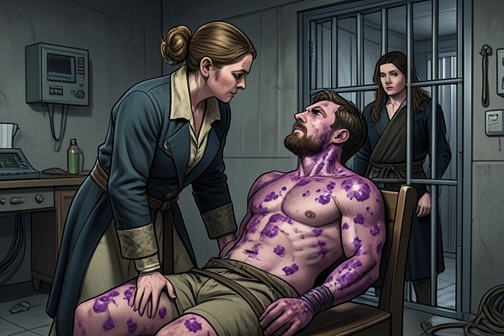
[Piper Diamond](entity:character-recall-character-piper-diamond-8e298fd1784d)’s Purpura Informos curse against [Thor Wragge](entity:character-recall-character-thor-wragge-2acc28ec5174) is both an act of anger and a desperate attempt to recover her mother’s painting. When Wragge insults the painting and denies its worth, Piper answers with magic, covering him in purple pustules and then using the hex as leverage to demand information about the artwork. The retaliation gives her immediate power over the man she suspects, but it also places her in a community jail cell and leaves the gallery’s break-in unresolved.
## Causes and Immediate Conflict
The confrontation grows out of the theft and destruction surrounding Piper’s gallery. The disputed painting is not merely merchandise: it depicts the view of an apple tree seen from Piper’s mother’s hospital bed while cancer slowly drained her life. Wragge dismisses it as worthless and amateurish, making his contempt inseparable from an attack on Piper’s grief and family memory. Piper believes that Wragge either broke into the gallery himself or hired someone to do it, although the evidence available to the authorities does not establish that accusation.
Piper’s objective is therefore narrower and more urgent than simple revenge. She wants Wragge to reveal what happened to her mother’s painting. Her suspicion supplies the motive for the confrontation, while the painting supplies the emotional stakes: recovering it would mean recovering an object bound to her mother’s final days. The conflict follows a clear structure of aggressor, target, and objective. Piper is the magical aggressor, Wragge the punished target, and the painting the object she is trying to locate.
## The Curse and Its Effect
Piper turns sharply on Wragge, throws out both hands, and casts the spell "Purpura informos!" The short spoken formula marks the instant at which verbal insult becomes bodily consequence. Purple pustules break out across Wragge’s skin. He yelps, waves his hands, and attempts several anti-hex wards, while Piper laughs at his distress. The scene makes her magic visibly physical: the curse is not an abstract threat but an affliction that spreads over the body and disrupts the victim’s ability to respond normally.
Piper claims that the spell is her own design and offers to remove it if Wragge tells her what he did with the painting. Her explanation gives the curse a dual function. It is punishment for his contempt, but it is also coercion, a means of forcing information from someone she believes is connected to the gallery break-in. The action consequently exposes Piper’s confidence as a witch and her willingness to use that power outside any lawful process when personal loss and suspicion overwhelm restraint.
## Arrest and the Unresolved Mystery
The immediate reversal comes when Officer Johnson releases Piper from the community jail cell. Wragge has agreed not to press charges, but the decision does not vindicate Piper’s accusation. Officer Johnson explicitly warns that Piper cannot go around hexing people merely because they are rude. The official response separates two questions that Piper has fused together: Wragge may have behaved cruelly and may remain suspicious, but Piper’s magical assault is still an offense.
Piper continues to insist that Wragge was responsible for the gallery break-in. The authorities, however, have witnesses placing him at home celebrating the [Wolf League](entity:organization-recall-organization-wolf-league-700a0143f60c)’s successful run of luck. Their testimony gives him an alibi strong enough to prevent charges, while leaving open Piper’s belief that he may have hired someone else. The event therefore ends without solving the theft. The curse produces a consequence for Piper, but not the confirmation she sought, and the central suspicion survives the arrest rather than being settled by it.
## Aftermath and Repair
Piper leaves the station scowling and collects her belongings, still convinced that Wragge’s innocence has not been established. Her emotional position is marked by persistence rather than recognition: she does not abandon the accusation, but she also does not obtain evidence that can convert it into a proven fact. The unresolved painting becomes the lingering consequence of the encounter, binding the personal wound to the continuing gallery mystery.
Baxter meets Piper outside and gives her a relieved hug. His response contrasts with the confrontation’s escalation. Rather than pressing the investigation through further retaliation, he tells her that he has repaired the damage at the gallery and purchased a new security system combining magical and non-magical protection. The practical detail matters because it answers the vulnerability exposed by the break-in: Piper’s skill as a witch is not enough to protect the store, and the replacement system is designed to defend it across both supernatural and ordinary forms of attack.
Piper thanks Baxter quietly and slumps into the passenger seat, unwilling to talk. The closing gesture moves the event away from spectacle and back toward exhaustion. Her laughter at Wragge’s suffering has given way to silence, while Baxter’s hug, repairs, and security purchase provide care without resolving the accusation. The episode consequently closes on containment rather than triumph: the immediate threat of arrest has passed, the gallery has been reinforced, but the stolen painting and Wragge’s possible involvement remain unsettled.
## Narrative Significance
The event crystallizes Piper’s position between legitimate grievance and reckless retaliation. Her suspicion may be grounded in a real break-in, and her attachment to the painting is grounded in her mother’s illness and death, yet the text distinguishes emotional truth from legal proof. Piper’s curse makes her anger effective for a moment, but it weakens her standing by transforming a possible investigation into a documented assault.
The scene also places magical power inside an ordinary civic framework. Anti-hex wards, a community jail cell, an officer’s warning, witnesses, and a commercial security system all coexist in the same chain of consequences. Magic can produce the purple pustules, but it cannot by itself establish Wragge’s guilt. In that tension, the episode defines Piper’s conflict: she can act with extraordinary force, yet recovering what matters to her still requires evidence, protection, and the help of people such as Baxter.
Event 23
Michelle拒绝Cain并与Brock约会
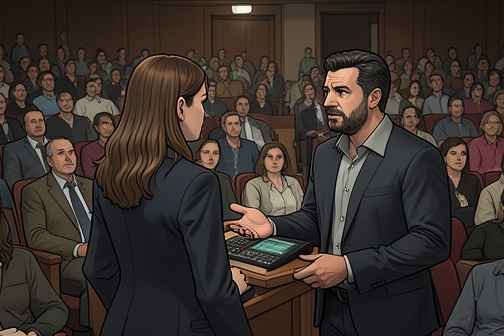
[Michelle](entity:character-recall-character-michelle-246b9eb4f39d) rejects Cain’s attempts to date her while accepting Brock’s invitation, a choice that turns flirtation into an emotionally serious conflict and redirects her romantic attention toward a man she believes can offer a simpler life. The event takes place against the public spectacle of Cain’s new contract with the [Chicago Black Hawks](entity:organization-recall-organization-chicago-black-ha-7022a3b516c5), where Michelle attends as his lawyer but gradually becomes the audience for a private confrontation about love, professional ethics, and supernatural identity.
## Causes and Background
Three days after Michelle had been considering Brock as a possible partner, she returned to work in a business suit with her briefcase in hand. Cain was holding a press conference in a large auditorium at the [United Center](entity:location-recall-location-united-center-9eb2fd994b99) to announce the signing of his new Chicago Black Hawks contract. A long table had been arranged for Cain, Liz, and the coach, while reporters waited around the room. Michelle had come in case anyone asked questions about the contract, although she suspected Cain had invited her partly so he could display his success before her. The occasion was designed as a celebration of Cain, with the hockey star at its center and Michelle positioned as both legal representative and witness.
Michelle waited alone at an empty bar while the stadium remained closed to the public. There were no bartenders, waitresses, or patrons; only the rustle of her papers disturbed the room as she reviewed a thick contract for another client. The setting separates the public triumph Cain wants to display from the private emotional issue he is carrying toward her. His professional success is visible everywhere, yet the decisive question is whether Michelle will accept him personally.
## Cain’s Confession and Michelle’s Refusal
Cain approached without his usual charm. Michelle noticed his aura before she saw his expression, and his hard frown and missing flirtatious banter made her stomach tighten. Instead of speaking immediately, he sat beside her and traced a finger around a circular water stain on the bar. His hesitation signals that the scene is not another playful exchange. Cain finally asked, “You’re going out with Brock?”
Michelle answered that Brock was an eligible bachelor and that she was a single woman; Brock had asked her out, she had considered it, and she had said yes. She emphasized that it was only a date, not a marriage proposal. Cain then asked why she had said yes to Brock but no to him. His anger gave way to misery, and the defeated expression unsettled Michelle because it revealed that his repeated invitations had never been merely teasing.
Michelle had been accustomed to seeing Cain as a Hockey God with a confident smile, not as a man capable of being visibly hurt. His sadness changes her understanding of their earlier banter: what had looked like casual flirting contained serious feeling. The event therefore produces a knowledge shift before it produces a romantic resolution. Michelle discovers that Cain’s desire is genuine, while Cain discovers that sincerity cannot erase the boundary she has drawn.
Michelle explains that Cain is her client and that dating him would violate the professional obligations of their relationship. Personal feelings could interfere with her duty to examine his contracts and protect his financial interests objectively. She regards the prohibition against lawyers dating clients as necessary because a romance could end badly and leave the client harmed. Her refusal is not framed as contempt for Cain; it is an ethical decision made in what she describes as his own interest.
Cain answers that he knows what is good for him and insists that he had not been joking when he asked her out. He wants to be with her. Michelle apologizes, calls him a great man, and tells him that he will find someone perfect for him, but she does not withdraw the refusal. Cain’s magic remains present as subdued lights and a burning smell, yet Michelle also thinks of the complication of his being [Magical](entity:state-recall-state-magical-215ffddeb1af). She wants Brock’s human simplicity rather than a relationship entangled with a client, magic, and the danger of divided loyalties.
## Brock’s Date and Romantic Advance
The contrast with Brock begins immediately in the event’s emotional structure. Michelle sees Brock as successful but self-possessed, confident without being threatened by her career. She imagines that even if he were only a bartender, he would remain comfortable with her professional authority. That imagined ease matters because it defines what she is choosing: not simply one man over another, but apparent simplicity over a relationship burdened by professional rules and supernatural secrecy.
Brock’s date with Michelle goes exceptionally well. He finds her charming, smart, and funny, and he is impressed by her knowledge of hockey and sports. At his favorite sushi restaurant, they share the chef’s tasting menu of sushi and sashimi, while Brock asks whether she had researched him online. The meal establishes mutual interest through conversation rather than through Cain’s public status or magical aura. Brock is drawn to Michelle as a person, and Michelle remains unafraid and engaged in his company.
Afterward, Brock and Michelle move closer outside the restaurant. When he steps toward her, she does not retreat; instead, she looks up at him through her lashes. He places a hand gently against her cheek, and she closes her eyes and leans into the touch. Their kiss becomes openly mutual: Michelle’s hand comes around his waist, Brock pulls her close, and she melts into his embrace as his tongue enters her mouth. The physical response confirms that her decision to accept Brock is not merely strategic or defensive; attraction is present on both sides.
A car horn and the shouted encouragement of teenagers interrupt the kiss. Michelle laughs, and Brock experiences the moment as confirmation that everything about her is perfect, although he remains aware that she had specifically requested no funny business. The interruption preserves the date’s playful public-romance tone while also marking a limit Michelle has already stated. Brock wants greater intimacy, but her condition remains part of the relationship’s terms.
## Consequences and Relationship Tension
Michelle’s rejection leaves Cain emotionally exposed. He rises abruptly, breathing deeply and shaking his head as though arguing with himself, but she is not afraid of him. Cain is larger and carries powerful magic, yet she trusts that he will not hurt her. This restraint is important to the event’s consequence: romantic refusal becomes painful without becoming physically threatening. Cain’s power does not cancel Michelle’s autonomy, and his disappointment does not turn into retaliation.
The event also creates a triangular tension without reducing the participants to a simple rivalry. Cain represents a sincere but ethically prohibited attachment complicated by his status as Michelle’s client and by his Magical identity. Brock represents an attractive alternative whom Michelle believes will not be threatened by her success and whose relationship with her can remain outside the lawyer-client prohibition. Her choice therefore responds to both desire and risk. She is not merely rewarding Brock or punishing Cain; she is attempting to control the conditions under which intimacy can safely exist.
At the same time, the date proves that the emotional problem cannot be solved by principle alone. Michelle can state the professional rule clearly, but Cain’s grief forces her to recognize the depth of what she is refusing. Brock’s successful date then gives the alternative real emotional weight rather than leaving it as a convenient excuse. The contrast between Cain’s subdued magical aura and Brock’s relaxed confidence becomes the event’s central pattern: one relationship is intense and forbidden, while the other appears human, manageable, and freely chosen.
## Narrative Significance
The event functions as a romance beat built from resistance, revelation, and approach. Michelle’s refusal supplies the obstacle, Cain’s confession provides the midpoint change in meaning, and Brock’s kiss converts the abstract possibility of another relationship into a lived romantic development. The sequence does not resolve the larger emotional tension; instead, it makes the competing claims more concrete. Cain’s feelings are now undeniable, while Michelle and Brock have begun a relationship with mutual attraction but explicit limits.
Its deeper tension lies in the irony that Michelle’s most principled choice is also emotionally disruptive. She invokes objectivity to protect Cain from the risks of romance with his lawyer, yet Cain’s visible pain makes the supposedly clean boundary difficult to maintain internally. Her preference for Brock’s human simplicity similarly carries an unresolved assumption: that identity and circumstance can be kept uncomplicated merely by choosing a different partner. The event consequently establishes not a final answer but a fault line between professional duty, personal desire, and the supernatural world Cain embodies.
Event 24
Michelle预见龙灾
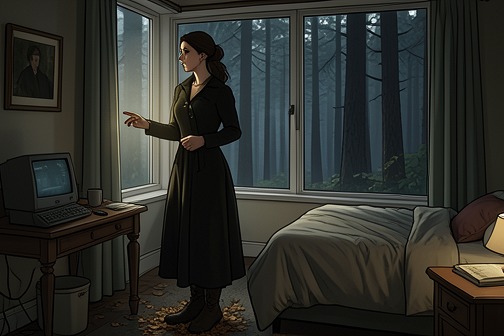
[Michelle](entity:character-recall-character-michelle-246b9eb4f39d)’s dragon vision is the decisive moment when an ordinary night of anticipation becomes a supernatural warning. What begins with her excitement about a date with [Brock Thaddeus](entity:character-recall-character-brock-thaddeus-f01f297ac553) ends with the terrifying possibility that dragons have returned and that a disaster powerful enough to destroy a city is approaching. The vision does not give Michelle a complete explanation, but it changes her position from a woman preparing for romance into a witch compelled to investigate an unknown threat.
## The Dream’s Forest and the Unseen Threat
Michelle falls asleep after preparing herself carefully for her date. She has done her nails, toenails, and hair, and plans to choose a dress and apply her makeup the next day. That domestic, romantic preparation creates a sharp contrast with the dream that follows. She finds herself lost in a deep, dark forest where tall trees stretch endlessly around her and fallen leaves make her footfalls the only sound. The landscape offers no clear destination and no reliable sign that she is progressing, establishing confusion before the danger is visible.
The first warning arrives as sound rather than sight. A soft, steady rhythm surrounds Michelle like a heartbeat, growing louder and closer while the trees reveal nothing. She looks upward only after recognizing that the threat is above her, seeing a small circle of pale light through the branches. The sequence delays the monster’s appearance and makes anticipation itself the first form of terror: Michelle knows that something is near before she can identify it.
## The Dragon’s Appearance and the Vision of Destruction
When the creature finally passes overhead, Michelle sees a huge dragon covered in green and yellow scales. It has long, bat-like brown wings, heavy hind legs, and two smaller forelegs; the beating of its wings explains the ominous thumping that had filled the forest. Its size evokes an ancient monster surviving into the modern world, and Michelle’s immediate bodily response is panic. She wants to retreat and hide in a hollow tree, yet she continues in the dragon’s direction without understanding why, as though the vision has taken control of her movement.
The dragon leads her toward a distant clearing and then to a lake, where it drinks while keeping its eyes open for danger. Its physical scale is matched by startling speed: within seconds, it rises from the water to hundreds of feet above it. The dream’s world then loses stability. Michelle stumbles while holding a tree, but darkness overtakes her and the tree dissolves, leaving her unable to determine which way is up or down.
The next image is no longer an isolated wilderness but a city street consumed by fire. Michelle smells smoke, feels the heat, and hears a woman screaming repeatedly. Buildings burn, poisonous smoke thickens the air, and blood-covered people lie in the street reaching toward her for help. Their helplessness gives the vision a collective scale; the danger is not merely directed at Michelle but threatens an entire human population.
The dragon crosses above the burning street, its brown wings stirring ash. It releases an otherworldly cry, then flies directly toward Michelle and opens its enormous jaws. Fire bursts from its throat and engulfs her while she can do nothing except scream. The scene converts uncertainty into apparent death: the threat first hides, then displays its monstrous body, and finally becomes an inescapable force of destruction.
## From Nightmare to Prophetic Knowledge
Michelle wakes gasping and searches her body for signs of fire before realizing that she is safe in her bedroom. The physical aftermath is extreme: she is exhausted, shaking, and spent by the experience. She rejects the idea that it was an ordinary dream because its realism and emotional intensity exceed what she associates with sleep. Michelle identifies it as a vision, and that classification changes the meaning of every preceding image.
The interpretation she draws is direct but incomplete. The vision signals danger surrounding her and warns that something very bad and very dangerous is about to happen. [Dragons](entity:creature-recall-creature-dragons-02985b7cc848) are magical, exceptionally powerful beings, yet no one has seen one for a very long time. The contradiction becomes the central mystery: if dragons are effectively absent from the known world, why has Michelle been shown one now? The vision therefore reveals catastrophe without explaining its timing, cause, or target.
Michelle understands that visions arrive for a reason and function as warnings that must be taken seriously. Her fear becomes an obligation to act. At the same time, the vision exposes the limits of her knowledge. She knows that dragons possess extraordinary power, but she knows nothing about them and cannot immediately devise a way to resist one. The value shift is from domestic safety to imminent peril, followed by a smaller reversal in which helpless terror becomes purposeful vigilance.
## Magic, Animals, and the Uncertain Response
Unable to fight a dragon directly, Michelle turns to the magic she does understand. In her walk-in closet, beneath a floral tablecloth, she keeps an altar containing crystals, herbs, bones, tea leaves, and fire starters. This hidden collection makes the warning concrete: Michelle is not merely frightened by supernatural forces; she possesses a practiced magical identity and a private means of responding to them.
Her first magical manifestations involved control over animals, and she has long been able to see people’s auras. As a child, she spoke about those perceptions constantly before learning by the age of ten that most people could not see what she saw and that her abilities had to remain secret. Her history with animals gives her one possible strategy. Dolly, the stray puppy she once rescued after finding him frightened, hungry, and thirsty, was the first animal she charmed. The dog eventually became the loving family pet Dolly had wanted to be, and Michelle went on to charm crickets, fish, and even a lion at the zoo.
That record provides confidence but no guarantee. Michelle has not encountered an animal immune to her charms, yet a dragon is not simply another creature in her experience. She can only hope that dragons are susceptible as well. The ending thus leaves her between preparation and uncertainty: the vision has supplied a warning, her altar supplies tools, and her past success supplies a tentative method, but the scale and nature of the coming danger remain unresolved.
## Narrative Function and Significance
The event operates as a vision embedded in the main chronology rather than as a confirmed public disaster. It uses dream imagery to reveal information before ordinary plot events can verify it, making Michelle the first witness to a threat that has not yet entered waking life. The forest, lake, burning city, and dragon form a progression from disorientation to revelation to destruction, while the return to her bedroom restores physical safety without restoring emotional security.
Its strongest narrative effect lies in the tension between hidden knowledge and public ignorance. Michelle recognizes the dragon as a magical being and understands that the vision demands a response, but the surrounding world has apparently gone a very long time without seeing one. That gap makes her knowledge isolating. She has learned to conceal her aura-sight and magical abilities, yet the warning may require her to use precisely those secret capacities openly or decisively.
The vision also binds romance to impending conflict. Michelle had spent the evening preparing for chemistry and passion with Brock Thaddeus, but sleep interrupts that expectation with an image of fire, blood, screaming, and helplessness. The juxtaposition does not erase the date; it places personal desire beside a threat that may overwhelm private plans. By the time Michelle opens her altar, the dream has become a summons. She is no longer waiting only for tomorrow’s encounter with Brock Thaddeus; she is waiting for the meaning of the dragon to become real.
Event 25
Ronan's Attack on Michael and Sloan's Home
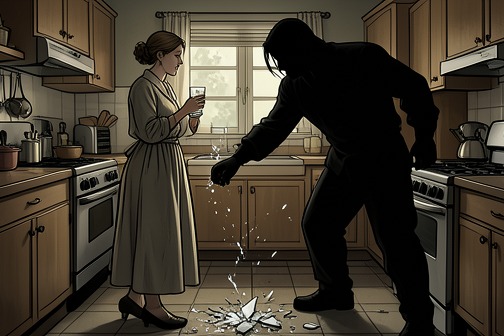
[Ronan's Attack on Michael and Sloan's Home](entity:event-recall-event-ronan-s-attack-on-micha-a090a5055d05) is a sudden abduction attempt that transforms an intimate domestic space into a site of supernatural danger. [Ronan](entity:character-recall-character-ronan-34fbf5f2b2b7) enters the home, discovers Rachel alone in the kitchen, and carries her away as a hostage, forcing Michael and Sloan to choose between immediate violence and the protection of a human caught inside their hidden world.
## The Intrusion and Rachel's Discovery
Rachel encounters Ronan while exploring Michael and Sloan's house after leaving their bedroom. Expecting ordinary domestic privacy, she searches the kitchen for something to eat and finds only beer and energy drinks before settling for water. The mundane act of opening the refrigerator makes her feel temporarily at home, but that feeling collapses when a deep, raspy voice asks who she is from the shadows. She drops the glass, and its shattering becomes the first audible sign of the attack.
Ronan is physically imposing, as large as Michael and Sloan, and his presence immediately carries a sinister threat. Rachel initially wonders whether he is another housemate, but Ronan identifies himself and describes her as the men's new “playmate,” revealing both his contempt for her and his awareness of her relationship with them. His language reduces Rachel to an instrument through which he can reach Michael and Sloan, while her fear registers the danger before she understands the supernatural identities surrounding her.
## The Abduction Attempt
Ronan does not allow Rachel time to flee. He reaches her almost instantly, seizes her arm, spins her around, wraps his arms around her waist, and lifts her from the floor. When she tries to scream, he covers her mouth and orders her to be quiet while she kicks and struggles without effect. The attack therefore moves directly from surprise to physical domination: Rachel is not persuaded, threatened from a distance, or given a choice, but converted into a captive in the space of a few seconds.
Michael and Sloan hear the glass break and wake in alarm. Michael immediately recognizes Ronan's presence by scent, while Sloan notices that Rachel is missing. Their response establishes the domestic bond at stake: the two men do not treat Rachel as an incidental guest but react as protectors whose shared home has been breached. They reach the kitchen as Ronan is moving toward the door, and Rachel's visible relief when she sees them marks the first reversal in the scene.
## Hostage Leverage and Confrontation
Michael orders Ronan to put Rachel down, and his eyes flash peridot green. The moment forces Rachel to confront evidence that Michael and Sloan are not ordinary human men. When Sloan warns that she is an innocent human and that Ronan does not want to hurt her, Rachel realizes that the word “human” is being used to distinguish her from the men defending her. The attack is therefore also a revelation scene: her personal relationship with Michael and Sloan is inseparable from a concealed nonhuman identity.
Ronan makes the coercive structure explicit. He says he can smell both men on Rachel, declares that she belongs to them both, and threatens to use her to obtain their allegiance. His terms are stark: if Michael and Sloan fight with him, Rachel lives; if they refuse, he will burn her to ash. The threat turns Rachel's body into the battlefield and places the men in a tactical bind. Sloan is ready to attack and bite Ronan's head off, but he holds back because a direct assault could injure Rachel. Michael, recognized by Sloan as the better speaker, attempts to move the conflict outside and insists that Ronan's grievance is with them rather than with the human hostage.
## Stakes and Narrative Function
The scene's central value shift is from domestic safety to hostage captivity. Rachel begins as someone exploring a household she believes she can revisit, even imagining that the men should stock ice cream, cake, and wine for her future visits. Within moments, the same house becomes a trap, and the broken drinking glass remains the concrete trace of that change. Ronan's attack also converts intimacy into evidence: the scent of Michael and Sloan on Rachel tells their enemy that the relationship is real and gives him a method of control.
The assault establishes Ronan as an enemy who combines speed, physical force, and strategic manipulation. He does not merely invade the home to fight Michael and Sloan; he selects the person least able to defend herself and uses her innocence to restrain the others. In this respect, the event belongs to the broader pattern of supernatural conflict in which hidden identities expose humans to danger, while protective relationships create both emotional strength and tactical vulnerability.
The immediate confrontation leaves Michael and Sloan facing an ethical and practical choice rather than a simple contest of strength. They can attack a powerful dragon-shifter and risk Rachel's life, or negotiate with the man holding her. Rachel's presence prevents them from responding according to instinct alone, and Ronan's threat makes clear that his objective is not only violence but allegiance. The attack's lasting significance lies in that coercive inversion: the home that shelters the relationship becomes the place where the relationship can be weaponized against its protectors.
Event 26
Rachel's Revelation of the Dragon Shifters
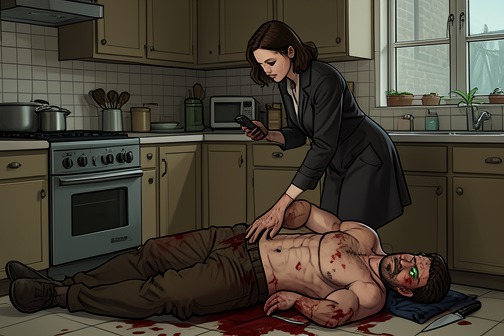
[Rachel's Revelation of the Dragon Shifters](entity:event-recall-event-rachel-s-revelation-of-90c0a55af79c) marks the collapse of her ordinary understanding of Michael and Sloan. After a violent attack in which Michael is wounded and the assailant is killed, Rachel confronts the impossible evidence before her: creatures in the kitchen, Michael's changed eye color, and the knowledge that the men she has welcomed into her life are not entirely human. The revelation transforms a private romantic arrangement into a choice involving secrecy, ancient identities, physical danger, and the possibility of leaving the human world behind.
## The Revelation in the Aftermath of Violence
Rachel's discovery occurs immediately after Michael returns injured. She is relieved that he is alive, but his wounds make the situation impossible to dismiss as a misunderstanding. When Michael confirms that the man who tried to take her is dead, Rachel begins demanding an explanation. Her questions move from the concrete evidence around her to the identity of the attacker and the nature of the beings she witnessed. The scene therefore presents supernatural knowledge not as distant mythology but as the answer to a recent threat against her body and freedom.
Michael identifies [Ronan](entity:character-recall-character-ronan-34fbf5f2b2b7) as, or formerly as, one of their kind: a dragon shifter. Rachel has already seen two creatures with her own eyes, so the confession cannot be reduced to an injured man's delusion. Her next question tests the most immediate implication of his statement—whether Michael himself can become one of those creatures—and he confirms that he can. The exchange gives the revelation a stark structure: first the existence of the hidden species, then Michael's membership in it, and finally the recognition that the extraordinary beings Rachel saw are connected to the men she knows.
## Ancient Identities and a Hidden Society
The disclosure expands when Michael explains that his apparent age is a disguise. He admits that he is two thousand years old, an age he cannot reveal openly because ordinary humans would not accept it. Sloan's claim that he is fifteen hundred years old reinforces that their secret is not a single man's anomaly but part of a much older shared existence. Their exaggerated-seeming ages make Rachel's former assumptions about time, maturity, and human identity unusable.
Michael also explains the social condition governing their lives: humans are not told what they are, and the dragon shifters move frequently to preserve that secret. Concealment is therefore not merely personal evasiveness. It is a collective survival practice, maintained through changing locations and the separation of supernatural identity from human society. Rachel's revelation exposes the cost of the relationship as well as its wonder: loving Michael and Sloan means entering a world whose safety depends on silence and mobility.
## Love, Departure, and the Choice to Stay
The revelation immediately threatens Rachel with separation. Since Michael and Sloan must eventually leave, she asks whether they will soon go. Her response shows that the truth has not erased her attachment; instead, the possibility of losing them becomes more painful because she now understands how precarious their presence is. She has already accepted their proposal to make their nights together long-term, so the supernatural disclosure arrives after emotional commitment rather than before it.
Sloan answers that they will not leave without her. Michael adds that they intend to remain until Rachel is persuaded that the three of them belong together and that she may be willing to go with them. Their decision changes the value of the revelation from simple exposure to an offer. The secret threatens Rachel's familiar life, but the men answer that threat by offering continued presence and a shared future rather than abandoning her to the consequences of what she has learned. Her calm reaction, despite the fact that she should be frightened, shows that emotional trust has begun to compete successfully with her fear of the unknown.
## Parallel Thresholds in the Wider Story
Rachel's revelation belongs to a larger pattern in which hidden identities are disclosed at moments when ordinary social arrangements can no longer contain them. Elsewhere, [Cheryl](entity:character-recall-character-cheryl-af54b6410705) is carried from the temple to the palace on a hovering stone platform while crowds chant her name, expecting her to receive one king; at the palace steps, she instead sees two men waiting. Her later decision establishes that neither man may have her without the other and that any further fight between them will end her participation. Like Rachel's scene, Cheryl's transition makes a private or bodily choice the condition for a new social order.
The same threshold structure appears in Teresa's conversation with Kenner, when he reveals that Joining defines what the [Kinai](entity:location-recall-location-kinai-8c60014d50cf) are. Every twenty-five years, unjoined Kinai men and women between twenty and thirty spend the winter at the [Rookery](entity:location-recall-location-rookery-9e0fa67f09fd), where the beastlings hatch. Kenner's disclosure is dangerous because it violates the secrecy that protects Kinai society, yet he chooses to trust Teresa because she has trusted him. Rachel's discovery similarly converts forbidden knowledge into a test of intimacy: once the secret is spoken, the relationship must be renegotiated around it.
Harrod's account of his final night before the [True Alpha](entity:expression-recall-expression-true-alpha-18dda9f4df57) trial provides a darker counterpart. Under the bright full moon and shifting fog, he waits at the edge of the pit while Harrison stands opposite him, with his father, Grandpa, the wolves of the den, and [Siobhan](entity:character-recall-character-siobhan-f4d21c07c592) watching. The entire community gathers for the public transformation of status. Rachel's revelation is quieter and more domestic, but it also marks a passage across a boundary: she moves from uninformed human outsider to someone invited to understand the hidden world of dragon shifters.
## Consequences and Narrative Significance
The immediate consequence is not that Rachel rejects Michael and Sloan, but that she must reinterpret everything about them—their ages, their movements, their secrecy, their violence, and their desire to remain with her. The event confirms that their relationship is a triad rather than a conventional pairing and places Rachel at the center of a conflict between human normality and supernatural belonging. Their promise to stay gives the revelation an affirmative ending, but it does not remove the dangers created by their enemies or by the need to conceal their identities.
The event's decisive value shift is from apparent security to dangerous knowledge, followed by a second movement from threatened separation to chosen solidarity. Before the confession, Rachel can imagine a future with two unusual but still ostensibly human men. After it, she understands that the future depends on ancient dragon identities and a society organized around secrecy. Yet the truth also makes the men's commitment more concrete: they are willing to delay their departure, remain exposed to the complications of human contact, and ask Rachel to join them. The revelation therefore functions less as an ending than as a threshold, turning romance into an ethically and physically consequential decision about what kind of life Rachel is willing to share.
Event 27
The Demante Coronation Selection

[The Demante Coronation Selection](entity:event-recall-event-the-demante-coronation-0f9b3322b438) is the royal ritual through which [Cheryl](entity:character-recall-character-cheryl-af54b6410705), a human temple slave, is expected to become queen and provide the Demante System with its next king. What begins as a ceremonial transfer of power becomes a crisis of choice when two men, [Bjorn of the House of Leshire](entity:character-recall-character-bjorn-of-the-house-98402d722196) and [Maskin](entity:character-recall-character-maskin-5df12ba18891), are presented as equally worthy. Cheryl’s decision ultimately rejects the assumption that a queen must select only one husband: she chooses both kings, binding the royal future to a shared partnership and establishing the foundation for Demante’s later recognition of two kings.
## Causes and Sacred Setting
The selection follows the death of the previous king. The widow-queen is ready to surrender her crown to the next temple slave chosen as queen, and Cheryl is prepared for that transition under the strict authority of [Priest Quincy](entity:character-recall-character-priest-quincy-e154103641f2). The temple controls even the details of her appearance and daily life: acolytes paint her lips, braid her golden hair into a crown, and dress her in a constricting black gown. Quincy’s criticism of her body makes the ceremony’s coercive structure explicit, since her value is measured against an imposed image of regal femininity and her anticipated reproductive duty.
Cheryl nevertheless approaches the day with excitement. She understands that queenship promises luxury, but also a lifetime devoted to giving her king children, specifically beautiful, dark-blue babies. Her movement from temple to palace therefore combines elevation and confinement. She leaves the institution that has governed her while entering another role whose expectations have already been fixed for her.
## The Public Coronation and the Two Candidates
Priest Quincy leads Cheryl onto a hovering stone platform at the top of the temple steps. Its engines hum as it rises over a cheering crowd, carrying her toward the palace while the people chant her name. The spectacle presents her transformation as a public, almost sacred elevation: the temple slave is being displayed as queen before the entire system. Yet the ceremony’s apparent certainty collapses when she looks down and sees two men waiting below rather than one.
Quincy introduces Bjorn of the House of Leshire first. Bjorn wears the ruby-red [nanite armor](entity:object-recall-object-aade1b41cba6) of the noble houses, designed to detect pressure and thicken at points of impact. His midnight-blue skin marks him as a pureblooded Temadian, and his controlled appearance, noble lineage, and ceremonial armor associate him with established aristocratic power. The crowd responds to him with a chant, reinforcing his public legitimacy.
The second candidate is Maskin, identified as the hero of the [Apdratee](entity:creature-recall-creature-ab97986bf612) invasion. He is larger than Bjorn and wears black, studded battle armor intended for heavy combat rather than ceremony. Scars from blades and blasters mark his bare arms, while dark diamonds tattooed beneath his eyes and his sky-blue skin identify a warrior-slave background. Unlike Bjorn, Maskin does not bow. The crowd answers him with a mixture of insults and cheers, revealing that his claim is both celebrated and contested.
Quincy explains that the two men fought each other for a day and a night until both collapsed from blood loss. The gods have declared them equally worthy of the crown, but the question of which man is more worthy of the queen is assigned to Cheryl. The ritual therefore places the final authority in her hands only after every earlier part of her life has been decided for her.
## Cheryl’s Choice and the Value Shift
The sudden demand overwhelms Cheryl. She had expected to be presented to a king, not forced to choose between two men. Her breathing becomes difficult, her chest heaves, and her hands shake as the public ceremony falls silent around her. The selection exposes the contradiction at the center of her new status: she is elevated as queen, yet the institution has prepared her to obey rather than deliberate.
Cheryl does not resolve the dilemma by accepting the terms as given. After the two men are healed, she takes both their hands and walks with them toward her cabin. At the threshold, she withdraws her hands and states the condition of her choice. If one of the men has her, the other must have her as well; they must remain together, neither may be alone with her, and any renewed fight between them will end the relationship entirely.
Her ultimatum changes the meaning of the ceremony. The question is no longer which candidate deserves exclusive possession of the queen. Cheryl makes shared kingship the price of being chosen. Her trembling and pallor show the personal risk of asserting that condition, but her resolve prevents Bjorn and Maskin from returning to the violent competition that had defined their eligibility. Bjorn wants to strike Maskin, and Maskin responds with a growl, yet both restrain themselves because Cheryl has made continued rivalry incompatible with their future.
## Consequences and Political Meaning
The immediate result is the formation of a three-person royal bond between Cheryl, Bjorn, and Maskin. The decision gives Cheryl agency within a system that had treated her as a temple-controlled reproductive instrument, while also compelling the two candidates to abandon the notion that kingship can be secured through solitary victory. Their shared future is not presented as a sentimental compromise; it is a rule Cheryl imposes to prevent the violence between them from consuming the relationship and the succession.
The selection also establishes the narrative basis for the later recognition of two kings in Demante. Bjorn represents noble status and disciplined ceremonial power, while Maskin embodies military achievement and the history of the warrior-slave caste. Their equal standing, confirmed through mutual combat and divine judgment, makes Cheryl’s decision politically consequential: the new order does not erase the difference between them, but incorporates both forms of legitimacy into the crown.
## Ritual Pattern and Narrative Significance
The event follows a recognizable transformation from separation to threshold to reintegration. Cheryl is separated from the temple through an elaborate procession, enters a liminal space in which the expected single king is replaced by an impossible choice, and returns from that threshold with a newly defined social order. The hovering platform, the chanting crowd, the palace steps, and the silent pause before her decision make the coronation a public ritual, but the decisive act occurs privately at the cabin door, where Cheryl converts ceremonial pressure into a condition of consent.
The event’s central reversal is a shift from imposed destiny to negotiated partnership. Cheryl is meant to receive a husband and serve the continuation of royal bloodlines; instead, she selects both candidates and makes their mutual conduct part of the succession’s terms. The ceremony therefore does more than identify rulers. It tests whether royal authority will reproduce the old pattern of possession and rivalry or accept a structure based on shared choice, restraint, and a three-way bond.
Event 28
The Nethja Fertility Trial
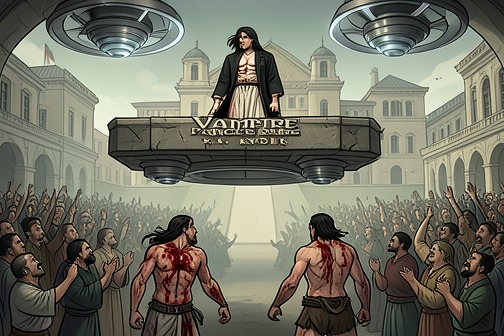
[The Nethja Fertility Trial](entity:event-recall-event-the-nethja-fertility-tr-e7b76af14887) is the decisive succession ordeal in which [Cheryl](entity:character-recall-character-cheryl-af54b6410705), instead of being presented to a single king, is sent to the [Shrine of Nethja](entity:location-recall-location-shrine-of-nethja-dcdadc947e0c) with Bjorn and [Maskin](entity:character-recall-character-maskin-5df12ba18891) so that pregnancy will determine Demante’s next ruler. What appears to be a sacred judgment is also a system of coercion: Cheryl’s body becomes the legal test of kingship, while the two men must suspend their rivalry long enough to compete for her consent and conceive an heir.
## Causes and Sacred Setting
The trial begins when Cheryl reaches the end of her temple upbringing and is publicly transferred toward the palace. [Priest Quincy](entity:character-recall-character-priest-quincy-e154103641f2) leads her from the temple onto a stone platform fitted with hover engines. The platform rises above the chanting crowd and carries her from the temple steps to the palace, turning her departure into a spectacle of religious and political continuity. Cheryl expects to see one king waiting below, but two warriors stand there instead.
Quincy explains that the men fought each other for a day and a night until both collapsed from blood loss. The Gods have declared them equally worthy of the crown, so the unresolved question is not which warrior deserves kingship but which deserves the queen. Cheryl is commanded to choose, even though the temple has previously chosen everything for her, including what she wears and eats. The public ritual therefore exposes the contradiction at the center of her position: she is called a queen, yet she has been denied the practice of choosing.
## The Two-Month Ordeal
Cheryl cannot immediately select either man. Her breathing becomes strained, her hands shake, and she tells Quincy that she cannot choose because the Gods, not she, decide who the king will be. Quincy converts that refusal into a new religious ruling. Cheryl and the two Kings Presumptive will be sent to the Shrine of Nethja, the Goddess of fertility, where they will remain until the alignment of the four moons.
The terms are absolute. If Cheryl becomes pregnant, the child’s father will become king. If she does not conceive, both men will be executed and a new king will be chosen. The announced test thus makes fertility a public instrument of succession and places Cheryl under an impossible burden: her survival, the men’s lives, and the kingdom’s political future are all made dependent on a pregnancy imposed by law and ritual.
The platform carries the three of them onward toward the shipyard. Cheryl understands that there will be no ordinary wedding night. Instead, she faces two months in a moon shrine with rival warriors whose formal objective is to impregnate her. The trial’s deadline also gives the contest a stark fatality: by its end, one or both men may be dead. The shrine is presented as sacred space, but its promised outcome is inseparable from sexual compulsion, political violence, and execution.
## Bjorn, Maskin, and the Contest for Choice
For Maskin, the fertility trial is not merely a royal competition. Bjorn’s presence represents the final obstacle to his hopes for social change. Maskin believes that if Bjorn becomes king, warrior-slaves will continue to be taken from their mothers as infants and forced to live and die without beauty or choice. His urgency to impregnate Cheryl therefore joins personal ambition to opposition against the warrior-slave order.
Maskin tries to compete through a small handmade gift rather than through rank or spectacle. He braids Cheryl a grass necklace, one of the few crafts warrior-slaves know because rare periods of downtime allow them to make objects from available materials. Such necklaces express affection among the enslaved, although they are considered simple beside the sapphires given to higher ranks. Maskin hopes Cheryl will value the handmade necklace and the world it represents. He knows that if she does not, he has little with which to compete against Bjorn, and failure is not an option.
The trial temporarily places the rivals inside the same sacred and reproductive structure, but it does not erase their antagonism. Their struggle is measured not only by strength or royal legitimacy but by Cheryl’s response to each of them. This makes her attraction, trust, or refusal politically consequential even within a system that claims to let the Gods decide.
## Cheryl’s Decision and the New Arrangement
After the men are healed and Cheryl has recovered enough to walk, she takes both of their hands and leads them silently toward her cabin. At the threshold, she stops the arrangement from becoming another decision made entirely over her head. Cheryl declares that she has made a choice: if one man has her, the other must have her as well, always together, and neither will be alone with her.
Her condition is also a prohibition against renewed violence. If Bjorn and Maskin fight each other again, they may as well kill one another, because Cheryl will reject both of them. Her hands tremble and her face is pale, but she straightens her shoulders, raises her chin, and delivers the rule with resolve before entering the cabin and shutting the door.
The two men remain rivals, yet Cheryl’s ultimatum changes the structure of the trial. Bjorn wants to strike Maskin but restrains himself because he understands the consequence of violating her terms. Maskin growls and follows when Bjorn walks away. Their immediate obedience does not abolish the contest, but it establishes Cheryl’s shared-partnership demand as the condition under which either man can remain a possible king and mate.
## Consequences and Narrative Significance
The Nethja Fertility Trial converts a succession ceremony into a liminal passage between identities. Cheryl leaves the temple as a woman trained to obey, is displayed before a crowd as a queen, and then enters a shrine where her pregnancy will determine political legitimacy. The hover platform marks her physical separation from the temple, while the Shrine of Nethja becomes the threshold at which queen, prospective wife, and dynastic instrument are forced into the same role.
Its logic also exposes the instability of the old order. The Gods’ judgment produces two equally worthy kings rather than one unquestioned monarch; Quincy responds by transferring the unresolved political conflict into Cheryl’s body. Yet Cheryl’s refusal to select one warrior and her insistence that neither man be alone with her create a third possibility: the kingship and the intimate bond may be shared rather than resolved through the death of a rival.
The trial’s background is illuminated by the separate [Kinai Joining](entity:state-recall-state-kinai-joining-dbc13549c076) tradition, in which every twenty-five years unmarried [Kinai](entity:location-recall-location-kinai-8c60014d50cf) men and women between twenty and thirty spend the winter at the [Rookery](entity:location-recall-location-rookery-9e0fa67f09fd) while beastlings hatch. Both practices connect adulthood, communal identity, reproduction, and controlled access to sacred knowledge, but the Nethja ordeal is distinguished by its immediate political stakes and its threat of execution. It is not simply a fertility rite; it is the mechanism through which Demante’s succession, Cheryl’s agency, Maskin’s reformist hopes, and Bjorn’s claim to the crown are forced into one dangerous test.
Event 29
Cheryl Chooses Both Kings
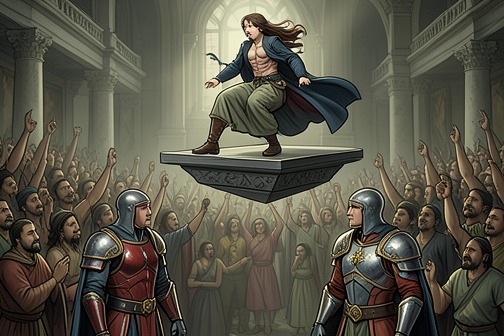
[Cheryl Chooses Both Kings](entity:event-recall-event-cheryl-chooses-both-kin-d78906ece1c9) marks the moment when [Cheryl](entity:character-recall-character-cheryl-af54b6410705) converts an apparent royal succession into a three-person union. After being publicly escorted from the temple toward the palace, she discovers that two men—not one—are waiting to receive her. The resulting choice rejects the expectation that she must belong exclusively to a single king and instead makes both Bjorn and [Maskin](entity:character-recall-character-maskin-5df12ba18891) responsible for honoring her will.
## Causes and Background
Cheryl’s choice emerges from a political and ceremonial system that treats her as a queen whose future is bound to royal reproduction. [Priest Quincy](entity:character-recall-character-priest-quincy-e154103641f2) frames her departure in terms of her duty to provide her king with children, describing a future of producing “beautiful, dark blue babies.” The ceremony therefore presents marriage not simply as a private attachment but as the completion of a public succession arrangement. Cheryl is taken from the temple amid cheers, carried on a hovering stone platform from the temple steps to the palace, and displayed before a crowd that chants her name.
The ceremony prepares Cheryl to meet a single king at the bottom of the palace steps. Instead, she sees two men. That visual contradiction turns the procession into a crisis of expectation: the public ritual promises one royal partner, while the reality before her offers two competing candidates. The surprise does not erase the political stakes. Cheryl remains the queen, and her decision will determine how royal authority, partnership, and future offspring are organized.
## The Choice at the Cabin
The immediate decision occurs after the conflict between Bjorn and Maskin has apparently been contained. Both men have been healed, and Cheryl is well enough to walk with them to her cabin. She takes each of their hands, making the movement itself a visible sign that neither man has been excluded. Their silent walk carries the tension of the earlier rivalry, especially in Maskin’s rigid arms, but Cheryl refuses to let that rivalry decide her future.
At the cabin step, Cheryl pulls her hands away and states the condition of their relationship. She declares that if one of them has her, the other must have her as well, and that they will always be together rather than meeting her separately. The choice is explicitly conditional: if either man fights the other again, both will lose her. Her trembling hands and pale face show the cost of making the declaration, but her resolve is unmistakable. She enters the cabin and shuts the door, leaving the terms with the two men rather than asking them to negotiate them for her.
## From Rivalry to Agreement
Bjorn and Maskin initially remain opponents. After Cheryl leaves, Bjorn wants to strike Maskin, but Cheryl’s warning restrains him. Maskin follows as Bjorn walks away, and the two men confront the new reality outside the cabin. Maskin acknowledges that Cheryl has made her choice, while Bjorn answers that he will claim his queen and is willing to share her if that is what she wants.
Their agreement does not dissolve their rivalry. Maskin immediately preserves a private claim, insisting that Cheryl’s “rose” belongs to him, while Bjorn counters that he may reach her first. The exchange keeps competition alive even after the larger conflict has been redirected into cooperation. Cheryl’s decision has therefore changed the value at stake: the men can no longer pursue victory by eliminating one another, but they still compete within the framework she has imposed.
## Ritual, Authority, and Social Order
The event is structured as a threshold between identities. Cheryl leaves the temple as an institutionally assigned queen, crosses a public ceremonial space on a hovering platform, and reaches the palace expecting the completion of a single-king succession. Instead, the discovery of two waiting men places her in a liminal position where the established arrangement no longer provides an answer. She then creates the answer herself at the cabin, converting uncertainty into a new social rule.
Her decision also reverses the usual direction of royal power. The ceremony appears to deliver Cheryl to a king, but Cheryl ultimately determines the conditions under which either man may have royal access to her. The men may be warriors and potential kings, yet her acceptance is the organizing principle of the union. The prohibition against fighting is equally important: Cheryl links intimacy, political legitimacy, and peace, making continued partnership dependent on the end of male rivalry.
## Consequences and Significance
The immediate consequence is the formation of a shared relationship among Cheryl, Bjorn, and Maskin. Cheryl chooses both men rather than allowing one to defeat or replace the other, and both men accept that her preference governs the arrangement. Their agreement creates the basis for a dual-kingship order in which the two rivals must coexist as partners rather than treating one another as obstacles.
The choice is significant because it challenges the single-king model already embedded in the ceremony and in the expectations surrounding Cheryl’s reproductive role. It also makes consent and conditions part of the political structure: Cheryl is not merely selected for a royal future; she selects the form that future will take. The public procession begins with an inherited institution and an unexpected pair of candidates, while the private confrontation ends with a new arrangement defined by Cheryl’s refusal to surrender either relationship or tolerate renewed violence.
Event 30
The Shrine Sabotage and Ambush
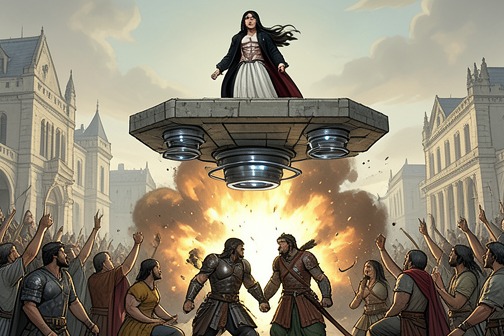
[The Shrine Sabotage and Ambush](entity:event-recall-event-the-shrine-sabotage-and-972525f810d4) is the crisis that converts [Cheryl](entity:character-recall-character-cheryl-af54b6410705)’s royal selection from a controlled fertility ritual into an armed struggle over succession, legitimacy, and survival. Its decisive reversal comes when the queen’s ceremonial departure is followed by the destruction of the kings’ transport and a coordinated attack, leaving Cheryl, Bjorn, and [Maskin](entity:character-recall-character-maskin-5df12ba18891) dependent on one another and exposing how vulnerable the political order remains beneath its sacred rules.
## Ceremonial Transfer and a Double Kingship
Cheryl’s ordeal begins as a public spectacle of royal incorporation. [Priest Quincy](entity:character-recall-character-priest-quincy-e154103641f2) leads her from the Shrine onto a stone platform whose hidden hover engines lift it above the steps. A crowd surrounding the temple chants her name as the platform carries her toward the palace, where she expects to meet the single king who will govern her future. Instead, she sees two men waiting below. The image makes the political anomaly visible before Cheryl has been given any chance to understand it: the ceremony presumes one queen and one king, while the succession crisis has produced two competing royal partners.
The public ceremony also exposes the burden imposed on Cheryl. She leaves the temple knowing that her new position promises luxury only in exchange for a lifetime of royal reproduction, specifically the production of the dark blue children expected of her dynasty. The transfer therefore functions as both coronation and confinement. Her body is treated as a guarantee of governmental continuity, while the two men at the palace steps make that continuity uncertain from the moment she arrives.
## The Sabotage and the Threat Behind It
The immediate danger emerges when Maskin bursts into Cheryl’s cabin after discovering that the ship has been sabotaged. Its communications and navigation systems have both been destroyed, which means the damage is not a simple mechanical failure: the kings are stranded, cut off, and unable to determine who has acted against them. Maskin orders Bjorn to put his [nanite armor](entity:object-recall-object-aade1b41cba6) on Cheryl, making protection an urgent practical measure rather than a ceremonial display.
Maskin identifies several possible motives without being able to confirm any of them. The attacker might be a Temadian enemy, another species attempting to kill Cheryl and destabilize the government, or an enemy determined to prevent either Bjorn or Maskin from impregnating her. The uncertainty is central to the event’s tension. The Shrine’s sacred rules forbid blasters, but the men cannot safely assume that every person present obeys those rules or even belongs to the same species. Cheryl’s belief in the protection offered by the Shrine is thus overturned by a threat that may have entered from outside its religious and political system.
Bjorn’s armor can resist blades, but it is ceremonial and cannot protect against blasters. The distinction between symbolic authority and actual security becomes literal: the ruby-red armor marks Cheryl as royal, yet it cannot guarantee her survival. Maskin accepts responsibility for failing to inspect the ship every day, while Bjorn and Maskin place themselves between Cheryl and the doorway. Their first response to the sabotage is not agreement about its cause but a shared defensive posture around the queen.
## The Forest Ambush
The escape becomes a direct battle when a dozen warriors spring from bushes along the route. Maskin shoves Cheryl to the ground, tearing her palms on the rough stones, and intercepts an attacker’s sword before it can reach him. He fights with a sword and dagger, holding the line at close range, while Bjorn moves through the opposing group with such speed that Cheryl can barely distinguish his hands from his weapons. The attackers are cut across the eyes and throats as the two men defend her from opposite sides.
The ambush changes the relationship between the kings. Their rivalry had already threatened Cheryl’s safety, and she had warned them that any renewed fight between them would end her acceptance of both. Faced with external attackers, however, Bjorn and Maskin trust each other’s backs and form a single defensive barrier over her. The political arrangement that had seemed impossible in the palace courtyard becomes, under pressure, a practical alliance. Cheryl contributes what she can by throwing rocks whenever an opening appears, but the battle makes clear that her survival depends on the combined protection of both men rather than on either king acting alone.
After the attack, they abandon the more exposed path and move through the dense forest. Maskin leads with his sword strapped to his back and a dagger in hand, while the group advances quickly and quietly without encountering another enemy. The retreat is not a triumphant return. It is a withdrawal into a Shrine that has become fortified, emptied, and suspiciously silent.
## Fortification and Cheryl’s Choice
Back at the Shrine, Maskin retrieves his armor and takes Cheryl and Bjorn to the acolyte kitchen. The acolytes appear to have disappeared. Every open space has been boarded over and fortified, leaving only a narrow slot by the door where Maskin can stand guard. Bjorn finds food and urges Cheryl to eat, but fear has unsettled her stomach so deeply that she cannot swallow. Her question about why they are being attacked remains unanswered, preserving the mystery while confirming that the Shrine itself is no longer a secure sanctuary.
The danger intensifies the personal conflict between the kings. After Cheryl has been healed, she takes both their hands and walks with them to her cabin. At the threshold, she withdraws her hands and issues the condition that reorganizes their relationship: if one king has her, the other must have her as well; neither may be alone with her; and if they fight again, she will reject them both. Her trembling and pallor show the cost of making the declaration, but her resolve turns her from the object of a royal arrangement into its governing authority.
This ultimatum is the event’s most important political consequence. The attack does not merely force Bjorn and Maskin to cooperate temporarily against anonymous warriors. It gives Cheryl the leverage to define a permanent form of shared rule and shared partnership. The kings leave her cabin without fighting, each aware that their access to her and their future as rulers now depend on obeying her condition.
## Consequences and Narrative Significance
The sabotage leaves the kings without reliable communication or navigation, while the ambush proves that the threat can reach them inside the Shrine’s protected territory. The disappearance of the acolytes and the boarded entrances suggest a wider collapse of ordinary institutional order, even though the available evidence does not identify the saboteur or establish whether the attackers belong to the local population. The event therefore closes with danger unresolved rather than with the restoration of safety.
Its deeper significance lies in the contrast between ritual continuity and political instability. Cheryl is publicly carried from temple to palace as though succession were a graceful, predetermined ceremony, but the sight of two kings immediately disrupts that script. The ruined ship then strips away the appearance of control, and the forest attack turns the queen’s reproductive role into a battlefield objective. The same event that threatens the royal future also produces the conditions for a new alliance: Bjorn and Maskin survive because they fight together, and Cheryl’s command transforms that battlefield cooperation into the rule governing their shared life.
The surrounding world reinforces the importance of secrecy and guarded transition. Elsewhere, the Joining defines [Kinai](entity:location-recall-location-kinai-8c60014d50cf) identity through a recurring cycle in which unmarried people between twenty and thirty spend the winter at the [Rookery](entity:location-recall-location-rookery-9e0fa67f09fd) when the beastlings hatch. Against that background, the Shrine crisis shows a different kind of initiation: Cheryl is separated from the temple, carried toward royal status, exposed to a lethal threshold, and returned to the Shrine with greater authority over the kings who claim her. The ceremony begins by making her a queen; the sabotage and ambush force her to become the person who determines how the kings may stand beside her.
Event 31
The Recognition of Two Kings
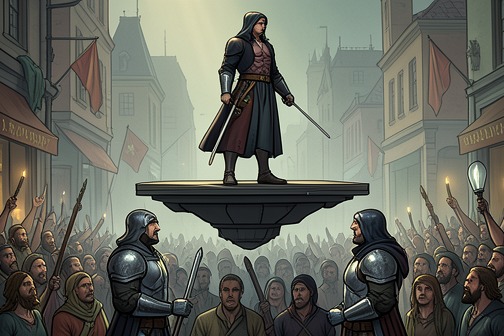
[The Recognition of Two Kings](entity:event-recall-event-the-recognition-of-two-8f2820c33e65) is the turning point at which [Cheryl](entity:character-recall-character-cheryl-af54b6410705)’s accession ceases to be a conventional transfer of a woman from temple authority to a single king and becomes the foundation of a dual-kings settlement. What begins as a public royal ceremony, complete with a cheering crowd and a hover platform carrying her from the temple to the palace, ends with Cheryl choosing both Bjorn and [Maskin](entity:character-recall-character-maskin-5df12ba18891) and imposing a new political rule: neither king may possess her apart from the other, and neither may destroy the other without losing her.
## Causes and Background
Cheryl’s expected future had been defined for her by the temple. [Priest Quincy](entity:character-recall-character-priest-quincy-e154103641f2) treated her body and royal function as matters of institutional judgment, telling her that a queen had to be “regal” rather than “round” and presenting her destiny as a lifetime devoted to giving her king beautiful, dark blue children. Cheryl therefore left the temple under a system that recognized her as queen while denying her meaningful control over what that queenship would entail.
The public ceremony reinforced that old order. Quincy led Cheryl outside to a platform at the top of the temple steps, where hover engines lifted the stone slab above a crowd chanting her name. After the platform carried her to the palace, Cheryl looked down toward the courtyard expecting to see her king waiting at the bottom step. Instead, she saw two men. The visual surprise exposes the conflict at the center of the event: Demante’s established expectation of one queen and one king cannot contain the reality of Cheryl’s bond with both Bjorn and Maskin.
## The Choice and the Settlement
The settlement becomes explicit when Cheryl returns with both men after they have been healed. She takes Bjorn’s and Maskin’s hands, but at the cabin she pulls away and sets the terms of their future. If one of them has her, she declares, the other has her as well; they must always remain together, and neither man may be alone with her. More importantly, she makes their continued relationship conditional on peace. If they fight again, they may as well kill each other, because she will have neither of them.
This is not merely a romantic preference. Cheryl converts her personal choice into a governing principle. Bjorn and Maskin have been rivals whose conflict threatens both their lives and the stability of the emerging monarchy. Cheryl refuses to reward that rivalry with exclusive possession. Her rule binds intimacy, succession, and political cooperation together: access to the queen depends on accepting the other king, while violence between the kings becomes a direct forfeiture of both their relationships and their royal future.
## Confrontation with Priest Quincy
The new order is tested in Cheryl’s confrontation with Quincy. She approaches him with a dagger, explaining that she came intending to kill him so he could not force her to become his queen. Yet she also recognizes that choice includes the power to change one’s mind. Instead of carrying out an execution, she offers Quincy a choice of his own: he may live to serve her and her kings, or he may die.
Quincy kneels and swears obedience, invoking the Gods against himself if he ever raises a hand in rebellion. His submission does not erase the coercion that shaped Cheryl’s earlier life, nor does it make his promise automatically trustworthy. Bjorn understands that Quincy will remain under constant surveillance. Even so, the exchange reverses the direction of authority. The priest who once defined Cheryl’s body, future, and royal duty is no longer the person who assigns her fate. He survives only by accepting service to Cheryl and to the two-kings structure she has chosen.
## Political Consequences
For Bjorn, the settlement transforms kingship from an individual burden into a shared possibility. He had believed that becoming king meant changing the world by himself; the recognition of two kings allows him to imagine that responsibility carried collectively, with Cheryl as queen and Maskin as fellow king. The event therefore changes more than the composition of the royal household. It gives the new regime a practical structure in which authority, protection, and succession are distributed among three people rather than concentrated in one male ruler.
The immediate aftermath also shows the arrangement operating under pressure. Maskin is badly injured and must be returned to [Thoutle](entity:location-recall-location-thoutle-87ea89a44ebe) before he dies, so Bjorn turns from political triumph to urgent logistics, asking whether the warriors possess a ship and directing them toward the Hero. The dual-kings settlement is consequently tied to mutual preservation: recognition has meaning only if the three rulers can keep one another alive and return safely.
## Narrative Significance
The event’s decisive value shift is from imposed destiny to chosen legitimacy. Cheryl begins as a queen being ceremonially delivered from one institution to another, with her future described as reproductive service. She ends as the person who defines the conditions of royal partnership, determines the fate of the priest who constrained her, and makes the rival kings accept a common rule.
The recognition also presents political reform through intimate negotiation rather than through a formal decree. The cheering crowd and hovering ceremonial platform suggest the spectacle of traditional monarchy, but the true constitutional change occurs privately at the cabin and in the confrontation with Quincy. Cheryl’s firm ultimatum prevents the kings’ rivalry from reproducing the violence of the old order. By insisting that choice belongs to everyone—including herself, Bjorn, Maskin, and even Quincy—the event establishes the new royal order as one founded on consent, interdependence, and enforced accountability rather than on inherited ritual alone.
Event 32
The Three-Parent Pregnancy
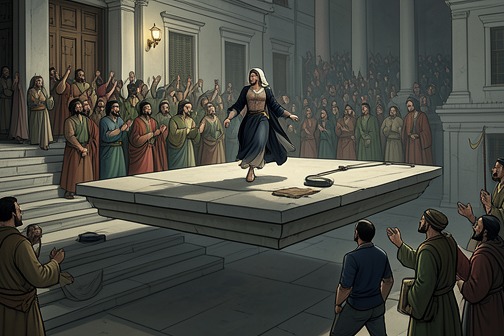
[The Three-Parent Pregnancy](entity:event-recall-event-the-three-parent-pregna-b63f938149f0) marks the moment when [Cheryl](entity:character-recall-character-cheryl-af54b6410705)’s unusual three-person royal relationship becomes biologically and socially irreversible. Her pregnancy is not presented as an ordinary conception but as the successful result of a cloning-based experiment involving Cheryl, Bjorn, and [Maskin](entity:character-recall-character-maskin-5df12ba18891). The child therefore embodies a new family structure that had previously existed only as a fragile promise, while also challenging the tradition that expected Cheryl to belong to one king alone.
## Causes and Royal Context
The pregnancy follows Cheryl’s public transfer from the temple to the palace. [Priest Quincy](entity:character-recall-character-priest-quincy-e154103641f2) leads her onto a hovering stone platform, and a crowd chants her name as she is carried from the temple steps to the palace steps. The ceremonial movement presents Cheryl as a queen being delivered into a predetermined royal future, one supposedly centered on serving a single king and producing his children. Her arrival immediately unsettles that expectation when she sees two men waiting below rather than one.
The two men are Bjorn and Maskin, whose rivalry initially threatens to make Cheryl’s position impossible. Cheryl ultimately establishes the condition under which she will remain with them: if one king has her, the other must have her as well, and they must always be together. She explicitly warns that another fight between them will end her relationship with both. Her declaration converts the relationship from a competition for exclusive possession into a shared arrangement governed by her choice. The later pregnancy gives that arrangement a material future.
## Discovery of the [Pregnancy](entity:state-recall-state-pregnancy-cdafbf158725)
Cheryl reveals the pregnancy while Bjorn and Maskin are with her. She explains that she went to the fertility temple to be examined, separating the medical confirmation from the earlier palace ceremony that had defined her as a queen. The examination does more than establish that she is pregnant: the DNA scans show that the cloning idea worked and that the baby will be formed from the DNA of all three of them.
The discovery produces an immediate reversal in the men’s behavior. Bjorn hurries to untie Cheryl and worries that they have been too rough with her, while Maskin lifts her into bed and tends to her. Bjorn fetches water; Maskin pulls the blankets up to her chin and strokes her hair, both men asking whether she needs food or a foot rub. Their attention shifts from rivalry and sexual possession to coordinated care for Cheryl and the unborn child.
Cheryl’s announcement therefore confirms two facts at once: she is carrying a child, and the experiment has created a genuine three-parent genetic conception. The pregnancy is not merely a personal development. It validates the possibility of a child belonging equally to Cheryl, Bjorn, and Maskin, making their shared claim to family and royalty concrete.
## Consent, Agency, and Bodily Risk
The event also carries an important contrast between Cheryl’s earlier vulnerability and her later authority. The temple system defines her primarily through reproductive duty, imagining her future as a lifetime of giving her king children. Yet Cheryl is the person who chooses the terms of her union with Bjorn and Maskin, and she is the one who announces the pregnancy and the genetic result. Her body remains central to royal succession, but the pregnancy is attached to a decision she has made rather than simply to an order imposed by the temple.
The surrounding evidence places this pregnancy within a wider world where reproduction is repeatedly monitored, classified, and contested. Fertility temples, DNA scans, and scientific boards treat pregnancy as a matter of institutional knowledge, while other reproductive cases involve medical uncertainty, genetic difference, or attempts to use a fetus for research. Against that background, Cheryl’s pregnancy is distinctive because the scan confirms a shared genetic origin instead of reducing the child to a specimen or political resource.
Her agency is nevertheless surrounded by pressure. Cheryl’s queenly identity is tied to the expectation that she will produce royal children, and her body is publicly displayed during the transfer from temple to palace. The three-parent conception both fulfills and disrupts that system: it satisfies the demand for a royal heir while refusing the assumption that the heir must belong to only one king.
## Consequences for the Three-Person Union
The pregnancy settles the immediate emotional question between Bjorn and Maskin. Their rivalry had made Cheryl fear that one of them might be left alone with her or that their conflict would destroy the relationship altogether. Her rule that they must share her equally creates a precarious peace; the child strengthens that peace by giving them a common future that neither man can claim as his alone.
The men’s response shows the relationship changing in practice. They do not respond by disputing paternity or demanding that the child be assigned to one king. Instead, both focus on Cheryl’s wellbeing, crowding around her with anxious questions and practical care. The scene turns their previously competitive bond into a cooperative household before the child is even born.
The pregnancy also alters Cheryl’s position within the royal order. She is no longer simply the queen being delivered from temple to palace for a king’s reproductive benefit. She becomes the mother of a child who joins three lines of identity and makes a dual-kingship arrangement impossible to ignore. The reproductive result functions as a political fact: the court must confront a family structure that the earlier ceremonial tradition did not anticipate.
## Ending and Narrative Significance
The story ends immediately after the pregnancy revelation, with Cheryl smiling at her two kings as they fuss over her. Her conclusion that the next nine months will be great gives the ending a deliberately hopeful tone. The book does not depict the birth or explain the later political status of the child; what it confirms is the successful conception and the couple’s—or rather, the triad’s—shared commitment to the pregnancy.
As a narrative event, The Three-Parent Pregnancy completes Cheryl’s movement from institutional possession to chosen relational authority. The hovering platform carries her from the temple to the palace as though her future has already been decided, but the pregnancy rewrites that future from within. The child is the visible consequence of Cheryl’s insistence that neither Bjorn nor Maskin can be separated from the other, and the successful three-way DNA conception turns that insistence into a lasting family structure. It is therefore both a reproductive revelation and the final confirmation that their unconventional union has survived rivalry, ritual expectation, and royal pressure.
Event 33
The Drakonaar Crash Landing on Earth

[The Drakonaar Crash Landing on Earth](entity:event-recall-event-the-drakonaar-crash-lan-6510855cf049) is the decisive interruption that brings [Darilth](entity:character-recall-character-darilth-6b2d2503203a)’s interstellar search into contact with [Earth](entity:location-recall-location-earth-a6b883af9147) and initiates the chain of events surrounding his prophesied true mate. What begins as a mechanical failure becomes a threshold crossing: a prince who has spent years pursuing an almost unbelievable prediction is forced onto an unfamiliar planet, where physical hardship and an uncanny first sight begin to confirm what he had learned to doubt.
## Causes and Background
Darilth’s journey to Earth follows a long period of failure. A witch had once foreseen that his true mate would come from another world and would be unlike even the people of her own kind. The prophecy placed the burden of finding her on the prince, but years of searching across the [Delta Quadrant](entity:location-recall-location-delta-quadrant-9c35a570a640) produced nothing. The men traveling under his command searched widely, yet every effort proved futile, and the continued absence of the promised woman made Darilth cynical about the vision he had once trusted.
His commander eventually suggested that a distant space station, [Andromeda 13](entity:location-recall-location-andromeda-13-8ea4dba16414), might offer a better chance of locating the missing mate. Darilth agreed reluctantly, not because his confidence had returned, but because the search had become an obligation he could no longer abandon. The voyage therefore begins under the sign of exhausted hope: the destination is chosen as one more possible answer to a prophecy that has repeatedly failed to deliver one.
## The Crash and Immediate Conditions
The crisis occurs while Darilth and his crew are crossing a galaxy they have never visited. One of the ship’s engines fails, removing their ability to continue safely toward Andromeda 13. With no practical alternative, they crash-land on the nearest planet, Earth. The landing is not a planned expedition or a deliberate act of exploration; it is an externally imposed displacement that abruptly changes the location, conditions, and priorities of the search.
The crash leaves the crew on Earth for several Earth days. Darilth experiences the planet as physically hostile even though it is warm: its air is thick, its gravity is heavy, and ordinary walking is difficult. The breathing pills carried by the crew help him endure the atmosphere and remain active. These details make the landing more than a change of scenery. Earth demands adaptation from the [Drakonaar](entity:creature-recall-creature-drakonaar-1c57a362ba2a), exposing the bodily cost of their isolation and turning survival into the immediate condition of any further search.
## First Contact with the Prophecy
While stranded, Darilth sees a woman outside a stone-and-brick building tending her garden. Her stark white skin and long, ice-blonde hair distinguish her from the other humans around her. He is fascinated by her appearance and watches her as she works through the late afternoon, recognizing that she possesses ordinary human features while seeming markedly unlike the humans he has encountered.
The woman’s difference is what arrests him. Darilth thinks that she appears unusual and almost like one of his own kind, despite belonging to another species and another world. His reaction turns the crash from a purely logistical disaster into a possible revelation. The woman’s unusual appearance echoes the witch’s description of a mate who would be from another world and different even among her own kind, causing the old prophecy to return to his mind with renewed force.
## Narrative Consequences
The crash changes the value at stake from a distant, increasingly doubtful quest into an immediate encounter with possibility. Before the engine failure, Darilth is moving toward Andromeda 13 under the weight of obligation and skepticism. After the landing, the search acquires a concrete setting and a visible figure whose difference appears to match the terms of the prophecy. The interruption therefore reverses the emotional direction of his journey: what seemed like another failed mission places the answer unexpectedly within his reach.
Earth also becomes the setting in which Darilth’s alien identity is placed against human normality. Heavy gravity, difficult breathing, and the need for pills mark him as an outsider, while the woman’s white skin and ice-blonde hair make her an outsider within her own species. Their apparent resemblance across difference gives the encounter its central tension. The crash strands Darilth in an environment where neither he nor the woman fits comfortably into the category assigned to them.
## Significance
As a plot event, the crash landing functions as the threshold between Darilth’s old search and the story’s central encounter. It is caused by a failed engine, but its narrative effect is discovery: the forced detour to Earth places him before the woman who may fulfill the witch’s vision. The event also embodies the contrast between prophecy and accident. Darilth has searched deliberately across the Delta Quadrant and planned a new mission to Andromeda 13, yet the possible answer appears only after mechanical failure carries him somewhere he never intended to go.
The landing’s significance lies in how it makes doubt vulnerable to recognition. Darilth had become cynical because the prophecy seemed unsupported by experience. On Earth, the unfamiliar world and the woman in the garden provide the first concrete signs that the vision may not have been mistaken after all. The crash does not complete the search or settle every question, but it decisively redirects the story from pursuit toward encounter.
Event 34
Darilth Finds and Abducts Ella
[Darilth Finds and Abducts Ella](entity:event-recall-event-darilth-finds-and-abduc-10ce3d935ccf) is the turning point at which Prince [Darilth](entity:character-recall-character-darilth-6b2d2503203a)’s search for a true mate ends on [Earth](entity:location-recall-location-earth-a6b883af9147) and Ella’s ordinary human life is violently interrupted. He sees her as radically unusual, recognizes her through the voice of his inner dragon, [Mekarth](entity:character-recall-character-mekarth-9436589943ec), and then carries her into an interstellar future without giving her a meaningful opportunity to consent. The encounter therefore functions both as a romance discovery and as an abduction: a moment of destiny for Darilth that is experienced as danger and captivity by Ella.
## Causes and Background
Darilth reaches Earth only because a search mission has gone wrong. After failing to find his true mate, he reluctantly accepts his commander’s suggestion that he search on [Andromeda 13](entity:location-recall-location-andromeda-13-8ea4dba16414). During the journey, one of the ship’s engines fails, forcing the crew to crash-land on Earth, a warm and physically demanding planet whose thick air and heavy gravity make movement difficult for him. Breathing pills help him endure the environment while his men work to repair the ship.
The crash leaves Darilth hidden and watchful rather than openly involved with the planet’s inhabitants. He regards humans as violent and avoids direct contact, concealing himself among trees roughly a hundred yards from the stone-and-brick building where Ella tends her garden. This distance is important: the event begins not with a mutual meeting but with surveillance from concealment, placing Darilth’s certainty about destiny against Ella’s complete ignorance of the alien presence nearby.
## Recognition in the Earth Garden
Darilth becomes fascinated by Ella because her appearance separates her from the humans around her. Her stark white skin makes her seem almost ghostlike, while her long ice-blonde hair glistens in the sunlight. Although she has the same basic features as other humans, the unusual combination of skin and hair makes her appear almost like one of Darilth’s own kind. His attention is drawn to difference before he understands its meaning.
That meaning arrives through Mekarth, Darilth’s inner dragon. The dragon identifies Ella as Darilth’s true mate, converting an unexplained fascination into a species-level revelation. The recognition fulfills the earlier prophecy that Darilth’s mate would come from another world and would be different from her own kind. Earth is not merely the place where the damaged ship lands; it becomes the threshold between Darilth’s failed search and the discovery he had been waiting for.
The recognition does not immediately produce a tender approach. Darilth watches Ella enter the building and briefly feels the urge to follow, but restrains himself and returns to the ship. His caution suggests that he understands the practical danger of exposing himself, yet it does not prevent the later decision that transforms observation into possession.
## The Force Field and the Abduction
Ella’s encounter with Darilth begins on her twenty-third birthday, when the absence of a call from her aunt leaves her alone in her room. After seeing Sister Margaret move toward a strange light beyond the garden, Ella follows her through an open door in the wall and into the thicket. A full moon provides enough light for her to proceed without using her flashlight. At the clearing, she finds Sister Margaret lying in the trees, her white habit marked with blood.
The discovery is disturbing even though Ella has never liked the older woman. Before Ella can retreat, two strong hands seize her from behind. Her scream is suppressed, and the captor drags her toward the trees before pinning her against one. The man’s height, chalk-white face, hood, and piercing sapphire eyes make him visibly unlike the people Ella knows. The scene turns the moonlit garden from a familiar domestic edge into a zone of alien danger.
Darilth explains the immediate cause of Sister Margaret’s death only to himself. He had placed a force field around the area, and Sister Margaret crossed it, suffering an injury so severe that he could not heal her. He therefore killed her rather than leave the consequences of the intrusion unresolved. Ella witnesses the aftermath without knowing this explanation, while Darilth’s private account reveals that the violence around her is connected to his technology and his decision to protect the landing site.
Darilth places a translator in Ella’s ear and orders her not to make a sound. He pulls back his hood, allowing her to see him, but their contact remains controlled by him. When Ella asks who he is, he does not answer. Instead, he presses a small cylindrical device against her neck. Heat sears her skin, her vision blurs, and she falls into a deep sleep against his chest. The decisive value shift is from curiosity and possible recognition to the loss of Ella’s freedom and consciousness.
## Passage from Earth to [Iovis](entity:location-recall-location-iovis-7562e9e7989d)
Once Ella is unconscious, Darilth carries her into the clearing and activates the panel on his wrist, unlocking the cloaking field. The spacecraft that had been invisible to human eyes appears as a hulking vessel beyond the trees. This technological revelation changes the scale of the event: Ella has not been seized by an unusual human stranger but by a prince and his crew from another world.
Darilth secures Ella in a sleep capsule, intending for her to remain in hyper-sleep throughout the journey. His men finish repairing the ship, and the vessel leaves Earth’s atmosphere within hours. After reaching deep space, Darilth sets a course for Iovis and engages warp speed. Ella’s abduction thus becomes an irreversible interplanetary departure, while the cloaked ship and sleep capsule erase the possibility that anyone on Earth can intervene before the journey is complete.
## Consequences and Narrative Significance
The event establishes the central contradiction of Darilth and Ella’s bond. For Darilth, the encounter confirms the true-mate prophecy and gives his long, cynical search a purpose. For Ella, the same revelation is withheld behind sedation, physical restraint, and displacement from her home. The story presents destiny as powerful enough to explain Darilth’s certainty, but not as a substitute for Ella’s consent.
The scene also uses sacred and profane spaces in sharp succession. Ella’s birthday, the full moon, the garden, and the thicket begin within the rhythms of ordinary Earth life, but the hidden force field, the dead Sister Margaret, the translator, and the cloaked spacecraft rupture that familiarity. The moonlit clearing becomes a threshold where human domestic time gives way to alien history, royal lineage, and the interstellar journey toward Iovis.
Darilth’s decision to act despite his initial restraint drives the larger Rothgar story. He does not merely find Ella; he removes her from Earth and places her inside the political and biological world that will later involve her rejection by King Rezelith, her secret marriage to Darilth, her hybrid pregnancy, her rescue from the Dark Moon, and the restoration of Darilth’s throne. Those later developments give the Earth encounter its full consequence: the abduction is the first rupture through which Ella enters the Rothgar succession crisis and through which Darilth’s private mate-bond becomes a public dynastic force.
Event 35
The Draco's Eye Awakening
[The Draco's Eye Awakening](entity:event-recall-event-the-draco-s-eye-awakeni-c30c05df223f) transforms a dangerous encounter into a dynastic and supernatural turning point. When [Darilth](entity:character-recall-character-darilth-6b2d2503203a) first confronts Ella, the silver band bearing the large blue stone responds to her presence: the dormant Draco’s Eye glows, Darilth feels a pull in his heart, and [the dragon within](entity:expression-recall-expression-the-dragon-within-fef1516fb0c5) him, [Mekarth](entity:character-recall-character-mekarth-9436589943ec), identifies Ella as the one destined to be his mate. The awakening does not merely confirm a romance. It reveals Ella’s importance to the Rothgar succession, makes Darilth’s forbidden marriage politically consequential, and gives the exiled heir a possible route back to power while war threatens [Iovis](entity:location-recall-location-iovis-7562e9e7989d).
## Causes and Sacred Inheritance
The Eye has been dormant for centuries. Darilth explains that, as heir to the Rothgar throne, he is its bearer, but the stone has not responded to many of his ancestors’ mates. Its awakening therefore depends on more than possession or royal blood: it requires the Crown Prince to marry his true mate. Ella’s response marks her as the person capable of completing that condition, turning an apparently private bond into a requirement embedded in the dynasty’s sacred inheritance.
The object itself functions as an active agent in the event. The blue stone does not remain a passive emblem of rank; it glows, exerts a force that Darilth experiences in his heart, and later identifies the legitimacy of the union. Mekarth’s recognition reinforces the judgment of the Eye, joining dragon instinct, magical materiality, and royal law in a single revelation. Darilth’s personal certainty and the artifact’s visible reaction arrive together, converting uncertainty into knowledge.
The awakening also occurs against a military crisis. Neighboring planets have been attacked, Iovis is threatened, and Darilth understands that the Eye’s full power could provide ultimate healing abilities and make its bearer the most powerful ruler in the galaxy. He regards recovering that power as a duty rather than a private advantage, because he believes it could help end the war. Ella consequently becomes tied not only to Darilth’s identity as a mate but to the survival and political future of his world.
## The Awakening Ritual
After the first recognition, Darilth removes the band and slides it across Ella’s wrist. It shrinks to fit her perfectly, and the blue stone shines brightly. The change in size makes the object’s choice tangible: the Eye does not merely sit upon Ella as borrowed royal jewelry; it adapts itself to her body and accepts her as its bearer’s mate.
Darilth then tells Ella that he needs her to awaken the Eye. He takes her hand, entwines his fingers with hers, and recites an incantation while looking directly into her eyes. The stone grows brighter, and fluorescent vines of light emerge from it, winding around their joined hands and binding them together. Ella feels the energy passing through her and senses the strength of her bond with Darilth. The ritual therefore makes their connection visible and physical, presenting marriage, magic, and embodied sensation as parts of the same transformation.
The scene has the structure of a threshold rite. Ella is drawn out of an ordinary human position and into the hidden order of Rothgar royalty, dragon power, and destined mating. The light-vines temporarily join the couple before fading, but the bond they disclose remains decisive. The sacred act does not erase danger; instead, it carries Ella across a boundary into a world in which her body and choice now affect succession, warfare, and royal legitimacy.
## Marriage, Legitimacy, and Immediate Danger
The Eye’s awakening confirms the validity of Darilth and Ella’s secret marriage. Darilth insists that the union cannot be dismissed because the Eye can be awakened only after the Crown Prince has married his true mate. The supernatural response thus operates as evidence of legitimacy, even though the marriage violates the King’s orders and Darilth remains in exile.
That legitimacy places both spouses in mortal danger. Darilth tells Ella that they must leave the castle that night and travel to [R13](entity:location-recall-location-r13-72113ffa7d46), the moon closest to Iovis. During the journey, outsiders will believe Ella is his slave, allowing them to conceal the marriage. If the truth becomes known, Darilth explains, both of them could be killed. The awakening therefore produces a sharp value reversal: love and recognition move from uncertainty to certainty, but safety moves in the opposite direction, from precarious to immediately threatened.
Darilth’s response is concealment rather than open declaration. He cannot simply announce the awakening to the King because his exile and disobedience are punishable by death. His plan is to persuade the King to allow his return while protecting Ella in the meantime. The Eye gives him a claim to restoration, but it does not automatically restore his status. Its power must be carried through secrecy, flight, and political negotiation.
## Flight, War, and the Event’s Aftermath
The awakening is followed by a brief vision of what dragon power makes possible. Darilth’s inner dragon, Mekarth, appears before Ella, and she climbs onto his back. Mekarth dives from the terrace, then rises over ice-covered land and mountain peaks. Ella experiences the flight as frightening and exhilarating, holding tightly to the dragon’s neck while the cold wind and high landscape reveal the scale of the world into which the Eye has brought her.
The exhilaration is interrupted when Darilth is summoned by the King after their return. An enemy has attacked another neighboring planet, and the King orders Darilth to join the battle because he is still present. Darilth arranges transport, a maid, and a guard to take Ella to his home, while [Keralth](entity:character-recall-character-keralth-e70c7e3955e7) prepares the army for an expected terrestrial attack on Iovis. The event’s consequence is therefore divided between intimate union and public crisis: Ella gains a confirmed place beside Darilth, yet the newly awakened power is immediately surrounded by war and separation.
The broader narrative repeatedly places ritual recognition beside political reordering. [Cheryl](entity:character-recall-character-cheryl-af54b6410705) is carried from the temple on a hovering platform amid a crowd chanting her name, only to discover two men waiting below and later declare that Bjorn and [Maskin](entity:character-recall-character-maskin-5df12ba18891) must share her together. In another culture, Kenner explains that [Kinai Joining](entity:state-recall-state-kinai-joining-dbc13549c076) occurs every twenty-five years for unmarried [Kinai](entity:location-recall-location-kinai-8c60014d50cf) between twenty and thirty, when the beastlings hatch and communal identity is renewed. Harrod’s account of his final night before the Alpha fight likewise places a full moon, the den, wolves, and a public challenge within a ceremonial threshold. Against these parallel rites, the Draco’s Eye Awakening stands out as a private-seeming ceremony whose consequences are equally communal: it changes a marriage into a dynastic fact, a woman into the key to royal power, and an exiled heir into a potential force in the war threatening Iovis.
Event 36
The Rejection of Ella by King Rezelith
[The Rejection of Ella by King Rezelith](entity:event-recall-event-the-rejection-of-ella-b-c9ce08f257a1) is the confrontation in which a private revelation of true-mate destiny collides with the dynastic logic of the Rothgar throne. [Darilth](entity:character-recall-character-darilth-6b2d2503203a) brings Ella before his father expecting recognition of the woman chosen by ancient magic, but King Rezelith refuses even to acknowledge her as a legitimate bride. His verdict places Ella’s humanity, albinism, and presumed infertility beneath the demands of succession, while forcing Darilth to choose between obedience to the crown and protection of his mate.
## Setting and Circumstances
The encounter takes place in [Rothgar Castle](entity:location-recall-location-rothgar-castle-cf57b9cbdc77)’s throne room, a vast, severe space of dark stone, heavy wooden doors, huge columns, and arched windows opening onto an ice-covered world. The physical coldness of the planet and the hall’s harsh architecture reinforce the emotional atmosphere of the royal court. King Rezelith sits on a dark-stone throne with guards arranged on both sides, making the meeting less a family conversation than a formal judgment before the machinery of power.
Darilth enters with Ella behind him and bows before his father, [Lord Rezelith](entity:character-recall-character-lord-rezelith-dde7732a1f86), the Elder of the [Drakonaar](entity:creature-recall-creature-drakonaar-1c57a362ba2a). Beside the king stands [Keralth](entity:character-recall-character-keralth-e70c7e3955e7), a younger man dressed in dark clothing resembling Darilth’s, accompanied by a beautiful but visibly drained woman. The arrangement places Darilth and Ella before an already established royal hierarchy and suggests that marriage, fertility, and dynastic presentation are matters watched by the court rather than private choices.
Darilth identifies Ella formally as the woman destined to be his bride and names her his true mate. His claim is not merely romantic. He explains that the Draco’s Eye responded to her, linking Ella to an ancient power that the royal family has awaited for centuries. The moment therefore carries two competing forms of legitimacy: Darilth invokes supernatural recognition, while Rezelith measures legitimacy through the court’s expectations of bloodline and heirs.
## Rezelith’s Refusal
Rezelith responds to Ella’s presence with contempt. He reduces her first to her status as a human brought into the royal castle and then treats her visible difference as evidence of weakness. Darilth explains that a genetic condition makes Ella appear different from others of her kind, but the explanation does not soften the king’s judgment. Rezelith’s attention remains fixed on what Ella can supposedly provide the dynasty rather than on the bond Darilth has recognized.
The king states that Darilth needs a woman capable of giving him an heir and declares that Ella cannot fulfill that purpose. He calls her weak and says that he would prefer to see her work as a slave rather than accept her as Darilth’s bride. In this formulation, Ella is not treated as a person whose consent, identity, or relationship matters; she is classified according to usefulness to royal reproduction. The rejection thus exposes the court’s underlying equation of female worth with dynastic fertility.
Darilth tries to answer the accusation by insisting that Ella is his true mate and that the Draco’s Eye has responded to her. Rezelith cuts him off and refuses to treat the magical sign as decisive. He gives Darilth an ultimatum: keep Ella as a slave or kill her, return only after finding a suitable woman, and remain in exile until then. The order converts a father’s disapproval into a threat against Ella’s life and freedom, while making Darilth’s exile conditional on submission to the royal marriage system.
## Conflict and Immediate Consequences
The central conflict is between Darilth’s recognition of a sacred or supernatural bond and Rezelith’s enforcement of political order. Darilth believes the Draco’s Eye has confirmed an ancient destiny that the royal house has awaited for centuries. Rezelith treats that confirmation as irrelevant when it conflicts with his standards for a suitable royal woman. The scene therefore produces a sharp value reversal: the revelation that should have elevated Ella instead exposes her to enslavement and death.
Darilth’s response is physical before it becomes openly revolutionary. His jaw clenches, his hands close into fists, and his knuckles turn white as he struggles against the humiliation inflicted on Ella. He knows his father is being unreasonable, but the king’s authority still controls the room. Darilth had brought Ella to be presented as his destined bride; she is instead publicly degraded and threatened with forced servitude.
Ella trembles and cries silently, her breathing becoming staggered. Her distress gives the royal dispute a direct human cost. The throne room is not only deciding a succession problem; it is subjecting a vulnerable outsider to a judgment she cannot control. Darilth sees her fear and understands that bringing her to the castle has exposed her to a cruelty he had underestimated. The scene’s decisive consequence is therefore both political and intimate: the royal family rejects the bond, and Darilth is forced to confront the danger of leaving Ella within his father’s power.
## Role in the Larger Arc
The rejection establishes the conflict between Darilth and Rezelith as a struggle over who has the authority to define the future of Rothgar. Rezelith claims that royal continuity depends on a suitable woman who can produce an heir. Darilth’s experience suggests that continuity may instead depend on an older and less controllable form of legitimacy, one represented by the Draco’s Eye and the true-mate bond. The king’s refusal is therefore an attempt to preserve institutional control against a sign that could reorder the dynasty.
The event also places Ella in a threshold position. She has been brought from the human world into the Drakonaar royal sphere, but the court refuses to incorporate her. Rather than completing a passage into royal life, the presentation becomes a failed rite of admission: Darilth publicly names her as his bride, while Rezelith declares her unworthy of that identity and assigns her the status of a possible slave. The ceremony meant to secure belonging instead produces exclusion.
That contradiction gives the event its lasting narrative force. Ella’s difference is treated by Rezelith as a defect, while Darilth’s recognition of her treats it as compatible with, and perhaps bound to, the ancient magic of the royal line. The king’s rejection cannot erase the Draco’s Eye’s response, so it creates an unresolved opposition between official law and supernatural evidence. Darilth’s loyalty is consequently tested not by uncertainty about Ella, but by the demand that he deny what he knows.
## Significance
The rejection dramatizes how royal systems convert bodies into political instruments. Rezelith’s concern with heirs makes Ella’s perceived inability to bear children more important to him than her relationship with Darilth or the ancient sign that identifies her as his mate. His judgment also shows how xenophobia and ableist contempt reinforce dynastic power: Ella is dismissed because she is human, visibly different, and presumed reproductively inadequate.
At the same time, the event distinguishes true recognition from institutional approval. Darilth’s declaration and the Draco’s Eye establish one kind of truth, but Rezelith’s throne can still deny its social consequences. The resulting fracture is the scene’s decisive significance: Ella may be Darilth’s true mate in the realm of destiny, yet the king’s refusal prevents that bond from being accepted in the realm of law. The royal dispute begins when those two realities cease to coincide.
Event 37
Darilth and Ella's Secret Marriage
[Darilth and Ella's Secret Marriage](entity:event-recall-event-darilth-and-ella-s-secr-b9d721459f93) is the decisive threshold at which Ella leaves behind the social condition imposed on her and becomes [Darilth](entity:character-recall-character-darilth-6b2d2503203a)'s wife and lifelong mate. The ceremony is secret because Darilth is still in exile and expects to leave [Iovis](entity:location-recall-location-iovis-7562e9e7989d) by the following night, while the king's authority stands against their union. Yet the marriage is not presented as a casual escape: it joins personal protection, political defiance, sacred ritual, and the recognition of a bond Darilth already understands as destined.
## Causes and Background
Darilth's proposal follows Ella's refusal to accept the only roles his society appears to permit women. He explains that in his world women are either warriors married to men or slaves employed as concubines, and Ella responds that she would rather die than become a slave. Her resistance is intensified by the fact that she has no home or family to return to; the convent was no better than slavery in her experience. Darilth therefore offers her a genuine alternative, promising that he can make an exception for her and set her free if she wishes to go home.
Freedom, however, does not mean returning Ella to a secure life. Darilth tells her that he must leave Iovis by the next night because he remains in exile, then asks whether she would prefer to become his wife. The question converts their immediate danger into a choice about identity and belonging. Ella initially objects that the king would not permit such a marriage, but Darilth rejects that limitation. He declares that he will make her his queen regardless of what the king says or thinks, grounding the decision in his conviction that she is his true mate.
## Secret Departure and Ceremony
Darilth acts quickly rather than waiting for official approval. He gives Ella a hooded cloak, puts on his own dark cloak, straps on the sword [Lazarus](entity:object-recall-object-lazarus-315be5c06667), and leads her through the basement tunnels. Lazarus is not an ordinary weapon: its blade is forged from steel native to Iovis, it is sharp enough to split a feather, and only the heir to the throne may wield it. Its presence makes the journey both intimate and politically charged, marking Darilth as a royal heir even while exile prevents him from exercising ordinary royal authority.
The tunnels are illuminated by blue light and end at sliding metal doors that conceal a vehicle. Darilth straps Ella into a seat before sitting beside her, and the car travels through the complex in every direction—left, right, up, and down. When Ella asks where they are going, Darilth answers that they are getting married. His amused certainty contrasts with her astonishment that the wedding will happen immediately. He tells her they will reach the Rothgar temple within minutes, turning the subterranean escape into a direct passage from secrecy to sacred public form.
## The Rothgar Temple Wedding
The Rothgar temple is simple but grand: pristine white columns, white marble floors, a domed ceiling, and unexpected warmth within. At the center of the hall, beside a huge fountain, Ella stands with Darilth while an old man recites incantations she cannot understand even with the translator she is wearing. The setting separates the marriage from the political world that would forbid it. The tunnels belong to concealment and flight; the temple provides a sacred space in which their decision can be recognized.
The ritual asks Darilth whether he will take Ella as his mate for life, and he answers yes. Ella gives the same answer when asked, and her response resolves the uncertainty that surrounded the proposal. She knows in her heart that she has made the right choice. The old man fills a silver cup with water from the sacred fountain. Darilth drinks first, then offers the cup to Ella; the water tastes sweet. He kisses her afterward, and the kiss seals their bond for life.
The ceremony therefore performs several changes at once. Ella is no longer merely a woman being transported away from an institution or a potential concubine resisting enslavement. She becomes Darilth's chosen mate and future queen. Darilth, meanwhile, does not wait for his father's recognition or for the restoration of his political position. He creates a marital bond in the sacred temple while still excluded from legitimate power, making the secret wedding an act of personal sovereignty.
## Consequences and Aftermath
The marriage establishes Darilth and Ella's Secret Marriage as more than an elopement. It binds Ella to Darilth for life and gives their relationship a formal sacred foundation before later political struggles can test it. Darilth's promise to make Ella his queen is no longer only a declaration made in private; the temple ritual has enacted the union that his father's authority refuses to acknowledge.
The marriage also reverses the value structure surrounding Ella. Before the ceremony, her future is narrowed to servitude, concubinage, or a return to the convent. Darilth's proposal introduces choice, but the ritual makes that choice durable through the mate-for-life vow, shared sacred water, and sealing kiss. The event consequently links freedom with belonging rather than treating them as opposites: Ella escapes the institutions that controlled her by entering a bond she actively accepts.
## Narrative Significance
The event follows a clear separation, threshold, and reintegration pattern. Ella separates from the convent and from the social categories imposed on women; she passes through the hidden tunnels and the uncertainty of an immediate proposal; then she re-enters society under a transformed identity as Darilth's wife and lifelong mate. The temple is a sacred interruption of ordinary political time, allowing the couple to establish a lasting order before the surrounding kingdom is prepared to accept it.
The secret wedding also anticipates the story's later conflict over recognition. [Cheryl](entity:character-recall-character-cheryl-af54b6410705)'s public arrival at the palace reveals how royal marriage can be displayed before crowds, with a hovering stone platform carrying her from the temple to the palace and a sea of people chanting her name. Darilth and Ella's union is the opposite image: it is conducted privately, during exile, in a warm white temple reached through underground tunnels. One marriage is ceremonially exposed to the kingdom; the other must first exist beyond the kingdom's permission. Both nevertheless treat marriage as a transfer into a royal role, showing how sacred union can challenge the political structures that claim the right to define it.
The broader narrative repeatedly uses ritual to determine identity and belonging. The [Kinai Joining](entity:state-recall-state-kinai-joining-dbc13549c076), for example, occurs every twenty-five years for unjoined [Kinai](entity:location-recall-location-kinai-8c60014d50cf) men and women older than twenty and younger than thirty, during the winter when the beastlings hatch. Against that communal and cyclical rite, Darilth and Ella's wedding is urgent, clandestine, and individually chosen. Its power comes from taking place outside the approved timetable while still using sacred ceremony to make the bond permanent. In that contrast, the event presents marriage as both an escape from inherited social roles and a claim to a new place within the royal order.
Event 38
Discovery of Ella’s Hybrid Pregnancy
The discovery of Ella’s hybrid pregnancy is the revelation that transforms a hidden marriage and a royal succession struggle into a medical, political, and dynastic emergency. Held in an isolated cell after being abducted from the aircraft, Ella gradually realizes that she is pregnant with Prince [Darilth](entity:character-recall-character-darilth-6b2d2503203a)’s child. The pregnancy is not merely unexpected: the fetus is a human–[Drakonaar](entity:creature-recall-creature-drakonaar-1c57a362ba2a) hybrid developing faster than a normal human pregnancy and placing Ella’s life at severe risk. Her body becomes the contested ground on which the future of the Rothgar throne, Darilth’s legitimacy, and [Keralth](entity:character-recall-character-keralth-e70c7e3955e7)’s attempted seizure of power converge.
## Circumstances of the Discovery
Ella awakens in darkness, cold, nauseated, and disoriented after being taken from the aircraft. A tray of stale bread, water, and red breathing pills is left inside her cell, but no attendant answers her questions or explains her situation. She fears that the royal authorities have learned of her marriage to Darilth and that both of them will be executed. Several days pass without her being able to distinguish day from night; food arrives twice daily, yet the silence around her deepens her isolation and despair.
Her physical symptoms eventually force the revelation. Ella suffers daily nausea, cramps in her lower abdomen, abdominal swelling, and painful breasts. When she remembers that her last period occurred on [Earth](entity:location-recall-location-earth-a6b883af9147), shortly before Darilth took her away, she understands that she may be pregnant. The realization does not arrive as a moment of uncomplicated joy. It is accompanied by fear for the child, fear that nobody will rescue either of them, and longing for Darilth. Overwhelmed, Ella stops eating and eventually collapses unconscious onto the cold floor of the cell.
## The Hybrid [Pregnancy](entity:state-recall-state-pregnancy-cdafbf158725) Confirmed
A guard notices that Ella has not touched her food and finds her unconscious, prompting an immediate call for medical assistance. The report reaches Keralth while he is occupying his father’s throne in a temporary position at court. After the King’s funeral, Keralth has persuaded council members that Prince Darilth was involved in the assassination and has summoned Darilth from the battlefield. Ella’s pregnancy therefore arrives at precisely the moment when Keralth is trying to consolidate authority against Darilth.
[Dr. Wyern](entity:character-recall-character-dr-wyern-e3345237d12f) confirms that Ella is pregnant. When Keralth asks whether the pregnancy can be terminated, the doctor explains that the child is a hybrid, half human and half Drakonaar, and that the pregnancy has progressed too far for an abortion without endangering Ella’s life. The father is identified as Prince Darilth. The doctor further warns that Ella’s anatomy is not built to carry a Drakonaar fetus, that the pregnancy is advancing faster than ordinary human gestation, and that she may not survive delivery. Keralth orders the doctor to do whatever is necessary to keep her alive, but the instruction is pragmatic rather than protective: the pregnancy is a serious problem because it binds Ella’s survival to the future of Darilth’s child.
## Dynastic and Biological Stakes
The unborn child destabilizes Keralth’s position because it provides Darilth with a direct heir and gives Ella a significance that cannot be reduced to that of a prisoner or foreign woman. Darilth’s claim is already linked to the Draco’s Eye, the blue-stoned band that identified Ella as his destined mate when he first saw her on Earth. The pregnancy makes that bond materially consequential. It joins the human world Ella came from to the Drakonaar royal line through a child whose existence challenges the boundaries separating species, citizenship, and inheritance.
The pregnancy also exposes the violence hidden within the royal succession conflict. Ella has no access to reliable information, medical choice, or companionship while her body changes inside confinement. Her prayers for mercy and her fear that she has sinned by marrying an alien man show how completely she interprets the crisis through guilt and isolation, while the court interprets it through dynastic danger and biological utility. Keralth’s question about terminating the pregnancy and Dr. Wyern’s warning about the risks place the reader before an ethical conflict in which the mother, the fetus, and the competing royal claims are treated as inseparable but not equally empowered.
## Cross-Species Identity and Reproduction
The event belongs to a wider pattern in which the book repeatedly unsettles the category of the human body. Sara’s [bionic eyes](entity:object-recall-object-bbb6fc48b2ef) can be used as concealed stun grenades, while [Lisa](entity:character-recall-character-lisa-f8f8fe21b70f)’s medical scans initially distinguish a parasite from a developing embryo and then reveal an embryo with an appearance that seems part tadpole and part dinosaur. [Shay](entity:character-recall-character-shay-5a5fab224960) later explains that the [Stlozyn](entity:creature-recall-creature-stlozyn-25c0edab8dc8) are descended from humans taken from Earth, with altered genes and added DNA that enable shape-shifting. Against this background, Ella’s pregnancy is another instance in which reproduction becomes the mechanism through which species boundaries are rewritten.
Yet the novel gives this cross-species possibility a sharply unequal emotional texture. Darilth’s blue stone recognizes Ella as a destined mate, suggesting intimacy and chosen connection; the pregnancy that follows creates a child linking their lineages. Ella’s confinement, by contrast, makes the same biological connection frightening and coercive. Her body is at once the site of love, captivity, political succession, and medical danger. The hybrid fetus is therefore not treated as an abstract marvel. Its development produces immediate consequences for who may rule, who may survive, and who has the authority to decide what happens next.
## Consequences and Narrative Significance
The discovery changes the meaning of Ella’s imprisonment. Before the symptoms are understood, she believes she is awaiting judgment for the secret marriage and may soon be killed. After the diagnosis, she becomes indispensable to the court because she carries Darilth’s child, but that new importance does not restore her freedom. Instead, it increases the pressure placed on her, since the royal authorities must preserve her life while controlling the pregnancy and preventing the child from strengthening Darilth’s claim.
The event also converts private revelation into public succession crisis. Ella’s marriage to Darilth had been concealed; her pregnancy makes concealment difficult and gives Keralth a reason to manage her medically while continuing to oppose Darilth politically. The doctor’s warning that the fetus is developing rapidly establishes a countdown governed by biology rather than by the court’s preferred timetable. Ella’s future, Darilth’s fate, and the Rothgar succession are consequently tied to a pregnancy that neither royal ambition nor imprisonment can make safe.
In thematic terms, the discovery is a threshold event. Ella has been removed from Earth, separated from Darilth, and stripped of ordinary control over time and movement. The pregnancy marks her passage into a new identity as the carrier of a hybrid royal heir, but the transition is not completed through a protective ceremony or willing public recognition. It occurs in darkness, through bodily symptoms, hunger, fear, and medical intervention. That contrast gives the event its decisive force: a pregnancy that could unite species and secure a dynasty first appears as a source of captivity, uncertainty, and mortal danger.
Event 39
Merelith’s Prison Break
[Merelith’s Prison Break](entity:event-recall-event-merelith-s-prison-break-eb1285b74896) is the turning point that converts [Darilth](entity:character-recall-character-darilth-6b2d2503203a)’s imprisonment from a condition of helpless suffering into the beginning of a rescue campaign. Darilth is restrained, badly tortured, and grieving for Ella, yet a concealed ring gives him one remaining avenue of action. [Merelith](entity:character-recall-character-merelith-2610bca0174e) answers that message, penetrates the guarded dungeon, and extracts him alive. The escape restores movement to Darilth’s story: he is no longer merely a prisoner awaiting death, but a damaged royal figure determined to find his wife and save the throne.
## Causes and Background
Darilth reaches the breaking point after being held in a dark dungeon and subjected to torture. Grief initially overwhelms him; he cries out for Ella and tries to reach her telepathically, but the effort appears useless. His inner dragon, [Mekarth](entity:character-recall-character-mekarth-9436589943ec), forces him to recover his discipline by reminding him that clear thinking is necessary if he intends to save both Ella and the Rothgar throne. That intervention produces the event’s first reversal: Darilth’s emotional collapse becomes strategic awareness.
The captors have also created the condition that makes his escape possible. Darilth still wears a ring they have failed to recognize as a secret communicator. Because the device is undetectable by demons, it offers a way to summon help without alerting the guard. Darilth activates its hidden core, brings up a holographic screen above his hand, writes a message, and sends it to Merelith. The gesture is small compared with the violence of his confinement, but it changes the balance of power. His body remains restrained while his mind finds a route beyond the cell.
## Merelith’s Rescue Operation
Merelith is an old friend of the royal Rothgar family, a tall red-haired shifter with bright green eyes and years of experience as a witch. When she receives Darilth’s message, she immediately understands that the situation is grave and sets out to rescue him. Her role combines personal loyalty, magical competence, and covert movement: she is not a passive ally waiting for the royal family to recover, but the person who crosses the threshold into the prison and makes recovery possible.
The approach is conducted at night, in cold silence. Merelith enters the dungeons in the form of a sleek panther and moves through the shadows while sensing the demon guard’s presence. She has cloaked her scent, but the demon is perceptive enough to detect that something is nearby. Merelith therefore relies on timing and magic rather than assuming that concealment alone will protect her. Remaining in the shadows, she whispers an incantation and blows shadow dust from her palm toward the guard. The spell puts the demon to sleep; the narration emphasizes that only powerful magic could have achieved this, establishing that Merelith’s experience is central to the success of the operation.
Once the guard is neutralized, Merelith finds Darilth half-conscious. Removing the restraints does not instantly restore him: he staggers and collapses onto the floor, evidence of the physical cost of his captivity. She covers him with a cloak, helps him stand, and urges him to leave immediately. The rescue is therefore practical rather than triumphant. Merelith must support a severely weakened prisoner while preserving the secrecy of their escape.
## Escape and Immediate Stakes
Merelith and Darilth cautiously pass the sleeping guard and hurry back up the stone steps. Their movement out of the dungeon marks the event’s clearest value shift. At the beginning, Darilth’s freedom, bodily safety, and political future are all in the negative: he is restrained, tortured, and separated from Ella. By the end, freedom has been recovered, although only provisionally. He is injured, exhausted, and still far from the woman he wants to save, but the dungeon no longer contains him.
On the way out, Merelith asks whether Darilth is all right and recognizes how badly he has been beaten. She also understands that the Draco’s Eye has kept him alive, since no ordinary person could have survived the torture he endured. The Eye’s sustaining power does not erase the suffering; instead, it explains why the rescue remains possible at all. Darilth’s survival is both physical and political, because his continued life preserves a claim connected to the Rothgar throne.
Darilth’s first priority after liberation is not recovery or revenge. Gasping for breath, he tells Merelith that he has had a vision and that they must find Ella, his wife. This declaration gives the escape its immediate objective. Merelith has freed him from the dark cell, but the larger rescue remains unfinished: Ella is still missing, and Darilth’s throne is still threatened. The prison break is thus an escape plot that opens directly into a quest.
## Consequences and Narrative Significance
The event establishes Merelith as a decisive ally and a capable threshold-crosser. She belongs to the royal family’s circle through longstanding friendship, yet she is also a shifter of a different kind and an experienced witch. Her panther form, scent-cloaking, shadow dust, and disciplined stealth allow her to move between categories that the prison’s defenses are designed to control. The rescue reveals not merely that she cares about Darilth, but that she possesses the precise skills required when royal authority and conventional force have failed.
For Darilth, the escape is a movement from passive endurance to purposeful action. Mekarth’s intervention helps him master grief; the secret ring lets him communicate; Merelith’s arrival gives that communication material consequence. Each stage depends on the preceding one. Without mental recovery, he cannot devise a plan; without the communicator, Merelith cannot know where he is; without Merelith’s magic, the knowledge cannot become liberation. The sequence therefore presents survival as collaborative rather than solitary.
The prison break also sharpens the contrast between institutional power and personal loyalty. The dungeon, its restraints, its demon guard, and its torture represent a system capable of reducing a royal heir to near unconsciousness. Yet that system is defeated by a hidden object, an old friendship, a transformed body, and a spell cast in the shadows. The escape does not end the danger or guarantee the restoration of the throne. Its decisive significance lies in reopening possibility: Darilth can once again seek Ella, oppose those who imprisoned him, and continue the struggle for Rothgar’s future.
## Narrative Form and Thematic Meaning
The scene is presented through close third-person attention to Darilth’s mental and bodily state, then widens to follow Merelith’s covert rescue. Its suspense depends on delayed recognition: the captors overlook the ring, the demon senses a presence before Merelith is fully revealed, and Darilth is found alive but barely conscious. The sequence moves from darkness and apparent futility toward controlled action without pretending that liberation is painless.
Merelith’s Prison Break is also a threshold event in the strongest literal sense. Darilth crosses from the dungeon into the outside world, but he does not return to his former condition. He leaves wounded, dependent on assistance, and newly focused on Ella and the throne. Merelith, meanwhile, crosses into the role of rescuer whose intervention changes the political story. The escape’s meaning is therefore larger than the opening of a cell: it restores agency to a captive prince while converting loyalty into an organized act of resistance.
Event 40
Rescue of Ella from the Dark Moon
[Rescue of Ella from the Dark Moon](entity:event-recall-event-rescue-of-ella-from-the-38acfe0cc228) is a clandestine medical extraction from a prison beneath the frozen Dark Moon. The event matters because it turns Prince [Darilth](entity:character-recall-character-darilth-6b2d2503203a)’s fear that Ella has been lost into immediate action: her pregnancy, physical collapse, and captivity make survival uncertain, while the rescue gives Darilth a concrete chance to preserve both Ella and the unborn heir whose existence has intensified the dynastic conflict.
## Causes and Stakes
[Merelith](entity:character-recall-character-merelith-2610bca0174e)’s vision provides the warning that sets the rescue in motion. Darilth sees Ella in darkness, cold and shivering, in a place resembling the prison on the Dark Moon; the vision also reveals that she is pregnant. Merelith interprets the image as an approaching death: Ella is in grave danger and might not survive after the child is born. The danger is therefore not limited to imprisonment. The pregnancy is consuming her strength, and the brutal cold threatens to kill her before the birth.
Merelith identifies a possible long-term solution but makes clear that it cannot be used immediately. Ella could be turned into Darilth’s kind only after the baby was born, leaving the rescue and medical intervention as the urgent means of keeping her alive. Merelith orders Darilth to hurry, call the doctor, and take medical supplies with them. Darilth uses his ring to summon [Dr. Wyern](entity:character-recall-character-dr-wyern-e3345237d12f), who brings fresh clothes and medicine, converting a desperate vision into a coordinated extraction plan.
## Journey to the Dark Moon
The route itself emphasizes the remoteness and hostility of Ella’s prison. Dr. Wyern emerges through a concealed passage in the castle wall, and the party crosses snow-covered ground to a cave-like tunnel containing a cloaked spacecraft. Merelith remains behind in the craft while Prince Darilth and Dr. Wyern proceed to the prison. The ship rises beyond [Iovis](entity:location-recall-location-iovis-7562e9e7989d)’s atmosphere and travels toward the Dark Moon, requiring almost four days to reach a moon far from its sun, where only a small portion receives daylight and unpredictable snowstorms are the only apparent sign of life.
At the destination, the rescue becomes an incursion into a buried institution. Darilth and Dr. Wyern enter through a large iron gate using the doctor’s entry pass. Inside, a circular elevator descends hundreds of feet beneath the surface, carrying them away from the exposed moon and into its hidden prison architecture. Dr. Wyern leads Darilth through a blue-white-lit tunnel and a dim hallway, where a guard sleeps outside the first cell. The doctor silently injects the guard with a sedative, removing the immediate obstacle without raising an alarm.
## Ella’s Extraction
When the cell opens, Darilth rushes inside and finds Ella unconscious in the corner. Her condition confirms the severity of Merelith’s warning: her chalk-white skin has turned pale gray, her body is cold and damp, her hair is matted to her face, and her breathing is erratic and shallow. Her enlarged belly makes the pregnancy unmistakable. Dr. Wyern checks her pulse and concludes that she is weak and going into shock.
The first treatment is Merelith’s potion, chosen because it will work faster than any other medicine. Darilth pours the vial into Ella’s mouth while lifting her from the cell, wraps her in warm robes, and carries her outside. The physical act of carrying her is the event’s central image: Ella leaves the prison not under her own power but in Darilth’s arms, while he suppresses tears over the suffering she endured because she chose to be with him.
The rescue does not end at the cell door. Back aboard the ship, Dr. Wyern injects Ella with additional medicines and transfers her into the [healing capsule](entity:object-recall-object-8faebb390323). Darilth sets a course for his home on [R13](entity:location-recall-location-r13-72113ffa7d46), then returns to the healing chamber to remain beside her. Ella stays unconscious and unaware of the world, but the capsule stabilizes the rescue as continuing care rather than a single dramatic escape.
## Consequences and Aftermath
Ella’s pregnancy gives the rescue a dynastic consequence as well as a personal one. Through the glass of the healing capsule, Darilth watches the large bump her frail body must support and sees the baby move. He understands that the growing life is taking nearly all her remaining strength and may eventually kill her, even though she has endured the ordeal and continued fighting. The unborn child is an heir, but the scene refuses to treat Ella as expendable: Darilth would choose the mother’s life over the baby’s if forced to choose, because he sees his own existence as meaningless without her.
The rescue also redirects Darilth’s emotional trajectory. His grief over Ella’s condition becomes rage toward [Keralth](entity:character-recall-character-keralth-e70c7e3955e7), whom he holds responsible for what she suffered. Vengeance begins to drive his movements, but it is not separated from his determination to save her. The plan to destroy his enemy grows out of the immediate promise to restore Ella’s life, making political retaliation the consequence of intimate injury rather than an unrelated ambition.
## Narrative Significance
The event crosses several thresholds at once. The Dark Moon functions as a sealed, nearly sacred space of suffering, cut off from ordinary life by distance, darkness, snow, iron gates, subterranean machinery, and guarded cells. Darilth’s descent beneath its surface resembles a passage into a hidden underworld, but the rescue reverses the expected movement: he returns with Ella toward light, warmth, medical care, and the possibility of a future child.
The episode also sharply contrasts institutional power with personal loyalty. Elsewhere, reproductive and royal systems reduce women to instruments of succession: [Cheryl](entity:character-recall-character-cheryl-af54b6410705) is sent to the shrine of Nethja with two Kings Presumptive and told that pregnancy will determine the king, while the [Fifth Cycle Festival](entity:event-recall-event-fifth-cycle-festival-ede47c4975b3) treats a chosen Goddess as a body men may fight over and even kill. Ella’s rescue emerges against that logic. Her unborn child remains politically important, yet Darilth’s decisive preference is for Ella herself, the person whose life cannot be exchanged for dynastic continuity.
Its final value shift is from presumed death to precarious survival. Merelith’s vision presents Ella as cold, weak, and close to dying; the prison scene confirms that she is already unconscious and entering shock. The potion, the warm robes, Dr. Wyern’s injections, and the healing capsule do not guarantee recovery, but they move her from abandonment toward treatment. Darilth leaves the Dark Moon with Ella alive, an heir still growing inside her, and a new resolve to confront the force that placed both lives in peril.
Event 41
Birth of Prince Zoralth Rothgar
The [Birth of Prince Zoralth Rothgar](entity:event-recall-event-birth-of-prince-zoralth-da6a75ef5bb4) is the perilous delivery of [Darilth](entity:character-recall-character-darilth-6b2d2503203a) and Ella’s son, a child whose body embodies the union of human and [Drakonaar](entity:creature-recall-creature-drakonaar-1c57a362ba2a) blood. The birth is decisive because it creates a living half-blood prince while bringing Ella to the edge of death, making the child’s survival inseparable from the survival of his mother and from the future of the Rothgar dynasty.
## Causes and Background
The event occurs within Darilth and Ella’s established marriage and true-mate bond. Darilth had already identified Ella as his destined mate through the Draco’s Eye, the silver band with the large blue stone that he placed on her wrist. The stone’s recognition of her had given their relationship a dynastic and supernatural importance beyond personal attraction: Darilth, heir to the Rothgar throne, understood Ella as the woman linked to his succession and future family.
The pregnancy is extraordinary because Ella is human while Darilth belongs to the Drakonaar people. The resulting child is therefore not simply a royal newborn but a cross-species descendant. Later discussion of related mixed identities establishes that human and altered or nonhuman lineages can share deep biological connections despite visible differences. In the delivery scene, however, that possibility is tested through physical danger rather than abstract theory. The baby has grown too large for Ella to deliver safely, and the pregnancy becomes a direct threat to her bones, strength, and life.
## The Difficult Delivery
Ella labors while Darilth stands beside her holding her hand, unable to relieve the danger himself. [Dr. Wyern](entity:character-recall-character-dr-wyern-e3345237d12f) struggles to monitor the contractions and recognizes that the baby’s size may break Ella’s bones. A Caesarean section becomes necessary. The medical crisis is intensified by Ella’s condition: she is pale and gray, her skin is clammy, her hands are becoming cold, and her breathing has weakened to shallow gasps.
[Merelith](entity:character-recall-character-merelith-2610bca0174e) remains present, using incantations to lessen Ella’s pain, but magic cannot remove the central danger. Ella is sufficiently conscious to understand that she may die. She asks Darilth to care for the baby if she does not survive, while Darilth refuses to accept her impending death and holds her hand tighter. His response makes the birth an emotional ordeal as well as a surgical one: the child’s arrival is accompanied by the possibility that Darilth will lose the woman he considers his destined mate.
Dr. Wyern cannot give Ella general anesthesia because she must remain conscious. Instead, he uses a spinal epidural before making the first incision. The procedure marks the boundary between royal and intimate life and the controlled intervention of medical expertise. Darilth’s helplessness, Merelith’s pain-relieving spells, and Dr. Wyern’s surgery all operate together, but none of them guarantees that Ella will live.
## The Half-Blood Prince
The tension breaks when the baby cries. The newborn is a boy with a visibly mixed inheritance: subtle scales appear on his temples, while human eyebrows remain on his face. His body makes the human-Drakonaar union immediately visible, presenting hybridity not as a distant possibility but as a living royal identity.
The child is named Prince Zoralth Rothgar. Darilth explains that the name means “brave warrior,” linking the infant’s identity to the martial and dynastic expectations of the Rothgar house. His title also establishes the political consequence of the delivery. He is not merely Ella’s and Darilth’s son; he is a prince and a true half-blood heir whose existence changes what the Rothgar succession can contain.
Ella survives the operation, though she initially feels herself slipping away. When she later wakes, Darilth leads her to the crib where their son sleeps peacefully. The scene reverses the terror of the delivery: the woman who had been cold, weak, and close to death is reunited with the child whose birth nearly cost her life. Ella lifts Zoralth and holds him against her heart, while Darilth thanks her for giving him a reason to live. Their physical arrangement—Ella, Darilth, and the baby together—presents the family as both intimate household and dynastic unit.
## Consequences and Aftermath
The birth confirms that a human woman can bear a child fathered by a Drakonaar royal, but it does not make cross-species pregnancy safe. Zoralth’s oversized body has already demonstrated the medical risk, and Ella’s near-fatal condition leaves the achievement marked by cost. The event therefore carries a double meaning: it is a triumph of lineage and a warning about the bodily danger imposed on the person who must carry that lineage.
Zoralth’s appearance also challenges any simple division between human and Drakonaar identity. His scales and human features are not hidden or treated as mutually exclusive; they coexist as the visible signs of a new royal category. The title “half-blood prince” turns biological mixture into political fact. His birth gives the Rothgar line a successor whose legitimacy rests precisely on the combination that older social boundaries might have treated as anomalous.
The scene also completes a ritual passage for Ella. She enters it as a pregnant human woman whose future is threatened by royal and biological demands, passes through surgery, pain, and possible death, and emerges as the mother of a prince. Darilth’s role changes alongside hers: he begins as a helpless partner at the bedside and ends as a father naming and receiving his heir. The event’s return is therefore not a simple restoration of the old order. The family returns to life with a child who makes that order more hybrid, more visibly cross-species, and more politically consequential.
## Narrative Significance
The birth condenses several of the book’s recurring concerns into one crisis: mate bonds, royal succession, medical vulnerability, magical assistance, and the instability of species boundaries. The Draco’s Eye had recognized Ella as Darilth’s destined mate through a supernatural sign; the delivery tests that bond through the material realities of blood, surgery, pain, and fear. Destiny may identify the partners, but it does not protect Ella from the physical consequences of fulfilling the dynastic future attached to that destiny.
The episode is also a recognition scene. The newborn’s body makes the meaning of the union undeniable, and the name Prince Zoralth Rothgar publicly converts private parenthood into dynastic succession. His human eyebrows and Drakonaar scales function as visible evidence that neither side has erased the other. The prince’s existence instead creates a third possibility: a royal future shaped by mixed inheritance.
For Darilth and Ella, the immediate ending is domestic and tender, but its implications are political. Ella welcomes the child as his mother, Darilth names him as his father and heir, and the two place the baby between them. That arrangement gives the event its final significance. The birth does not merely add a new character to the Rothgar family; it establishes a living bridge between human and Drakonaar worlds and makes the continuation of the throne depend on a child born from their union.
Event 42
Ella’s Drakonaar Transformation

[Ella’s Drakonaar Transformation](entity:event-recall-event-ella-s-drakonaar-transf-a9680a2d61b0) is both an emergency act of survival and a radical change of identity. It occurs immediately after the difficult birth of her half-human, half-[Drakonaar](entity:creature-recall-creature-drakonaar-1c57a362ba2a) son, when Ella is exhausted, close to death, and unable to recover through ordinary medical treatment. [Darilth](entity:character-recall-character-darilth-6b2d2503203a)’s dragon blood saves her life, but it also carries her across the boundary between human and Drakonaar. When she awakens, she discovers that the woman she was has not vanished, yet her body, status, and future have all been remade.
## Causes and Crisis
Ella’s transformation begins in a childbirth crisis. The baby is too large for her to deliver safely, and [Dr. Wyern](entity:character-recall-character-dr-wyern-e3345237d12f) concludes that the child may break her bones. Ella is pale, clammy, weak, and breathing in shallow gasps while Darilth can only hold her hand and watch her condition worsen. Before the operation, Ella asks Darilth to care for the baby if she dies, making the danger explicit and placing the child’s future in his hands.
A spinal epidural allows Ella to remain conscious while Dr. Wyern performs a Caesarean section. The operation succeeds: a beautiful boy is born, visibly combining human and Drakonaar traits. His subtle temple scales and human eyebrows identify him as a true half-blood prince. The birth brings immediate relief, but it does not resolve Ella’s peril. She remains physically depleted and feels herself slipping away, so the child’s safe arrival becomes the beginning of a second emergency rather than the end of the first.
## The Blood Transformation
[Merelith](entity:character-recall-character-merelith-2610bca0174e) recognizes that Darilth must act before Ella dies. Darilth cuts his wrist with a knife, fills his mouth with his own blood, and transfers the dragon blood into Ella through a deliberate mouth-to-mouth act while Merelith recites incantations. He makes Ella drink until she falls into a deep sleep. The procedure is presented as a fusion of medicine, blood inheritance, and magic: Dr. Wyern’s surgery delivers the child, while Darilth’s blood restores the mother and changes her species.
The transformation saves Ella, but it is not a neutral cure. Darilth understands that she will awaken as a Drakonaar and will need time to adapt. He also believes that her essential self will remain intact: the woman he loves will retain the same soul and innocence, even as her body becomes much stronger. His vision of the result is simultaneously intimate and political, because he sees the transformed Ella as his queen forever rather than merely as a patient who has survived childbirth.
## Awakening and New Body
When Ella wakes at the castle, she first experiences renewed energy rather than continuing weakness. Her head spins when she tries to sit up, but otherwise she feels rejuvenated. The unfamiliarity comes from within: her hands look the same, yet she senses that she is different before she understands why. Her first concern is her baby, showing that motherhood remains the immediate emotional center of her consciousness even after the transformation.
The mirror supplies the recognition scene. Ella is dressed in an ivory-and-gold chiffon gown whose intricate gold motif rises from her neck toward her breasts, giving her an almost otherworldly appearance. More decisive than the clothing, however, is the face reflected back at her. She is no longer an albino and no longer human. Her hair has become silver-white, her eyes are deep sapphire blue, and her pale skin has changed in tone. Subtle scales mark her temples and forehead, while a pronounced brow-line gives her face new Drakonaar structure. Ella finds the reflection strange but beautiful, and the image makes the transformation visible as an altered form of self-recognition rather than a simple physical recovery.
Darilth embraces her from behind when she is still studying the mirror. His presence connects the new body to the relationship that preceded it: the transformed Ella is not introduced as a replacement, but as the same beloved woman entering a new physical and dynastic condition. Her scent is described as more exotic and intense, reinforcing that the change affects sensory identity as well as appearance.
## Political and Relational Consequences
Ella’s transformation has consequences beyond survival and romance. Her son is a half-blood prince, and Ella becomes a Drakonaar queen, linking human ancestry, Drakonaar identity, and royal succession in one family. Darilth’s belief that she will be his queen permanently frames the conversion as part of the restoration of his household and throne, not merely as a private rescue.
The transformation follows Darilth’s own political recovery. After the Council meeting, [Keralth](entity:character-recall-character-keralth-e70c7e3955e7) has been sentenced to death for murdering his father, and the dagger used in the attack has been found. An accomplice involved in killing a guard and maid dies by suicide before confessing. Darilth feels peace after the judgment, but also regrets that his father will not live to see the grandson or witness Darilth’s worthiness to rule. Ella’s awakening therefore occurs against the background of a royal transition: the birth of the prince and the conversion of the prince’s mother help define what the restored dynasty will become.
The event also contrasts with other threshold ceremonies in the wider narrative. [Cheryl](entity:character-recall-character-cheryl-af54b6410705)’s public transfer from the temple to the palace is staged through a hovering platform and a chanting crowd, while Ella’s change occurs in an intimate medical chamber through surgery, blood, and incantation. Teresa’s Joining is reserved for eligible [Kinai](entity:location-recall-location-kinai-8c60014d50cf) adults at the [Rookery](entity:location-recall-location-rookery-9e0fa67f09fd) every twenty-five years, and Harrod’s full-moon trial takes place before the entire wolf den; Ella’s transformation is instead a singular crisis performed for one endangered woman and one unborn royal future. Across these different scenes, species and social identities are not treated as merely biological facts. They are conferred, tested, inherited, or publicly recognized through threshold acts.
## Significance and Aftermath
The decisive value shift is from imminent death to renewed life, but the recovery carries a second shift from human belonging to Drakonaar belonging. Ella loses the identity she has known—an albino human body—and gains strength, altered beauty, royal permanence, and membership in Darilth’s people. The event therefore refuses a simple cure narrative. Survival requires transformation, and transformation demands psychological adjustment.
Ella’s first awakening leaves the future open: she must cope with her new appearance and bodily nature while remaining a mother, Darilth’s partner, and the queen of a royal line. Yet the scene gives the change a clear emotional resolution. The child survives, Ella survives, and Darilth’s blood preserves the person he loves while altering the form in which that person will continue. Her transformation is consequently the hinge between a dangerous birth and a new Drakonaar dynasty, binding bodily vulnerability, cross-species inheritance, intimate devotion, and political succession into one irreversible event.
Event 43
Darilth and Ella’s Coronation
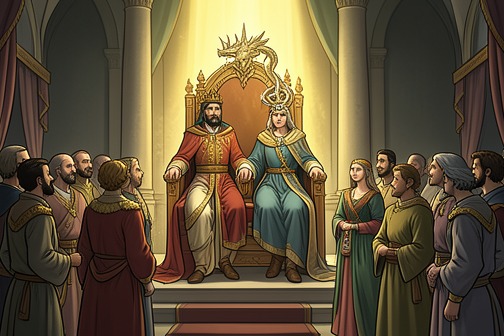
[Darilth and Ella’s Coronation](entity:event-recall-event-darilth-and-ella-s-coro-309323e798b2) is the public culmination of the Rothgar succession struggle: Prince [Darilth Rothgar](entity:character-recall-character-darilth-rothgar-f32d2ef9ddcb) becomes king, [Ella Darilth Rothgar](entity:character-recall-character-ella-darilth-rothga-9d4272b0e0ed) becomes queen, and their family is presented as the future of [Iovis](entity:location-recall-location-iovis-7562e9e7989d). The coronation does more than transfer a crown. It reunites political authority, [Drakonaar](entity:creature-recall-creature-drakonaar-1c57a362ba2a) identity, marriage, and inheritance in one settlement, turning the couple’s private survival into a publicly celebrated royal order.
## Causes and Background
The ceremony follows the restoration of the Rothgar throne by [Darilth](entity:character-recall-character-darilth-6b2d2503203a) and Ella. Their path to rule has been shaped by exile, royal conflict, Ella’s abduction and captivity, the awakening of Draco’s Eye, Darilth’s imprisonment and torture, and the struggle against [Keralth](entity:character-recall-character-keralth-e70c7e3955e7). By the time the coronation occurs, the question is no longer simply whether Darilth can reclaim his inheritance. The ceremony must also establish Ella’s place beside him and make their household legible as the new center of the kingdom.
Ella’s position is especially significant because her identity has crossed several boundaries. She began as a human woman from [Earth](entity:location-recall-location-earth-a6b883af9147) and was later drawn into the Rothgar royal crisis, became Darilth’s true mate and wife, carried their child, and underwent Drakonaar transformation. Her accession therefore joins personal devotion to dynastic legitimacy: she is not merely accompanying the restored king but is crowned as Queen of Rothgar in her own right.
## The Coronation and Public Restoration
Six months later, Prince Darilth Rothgar was crowned King of the Rothgar throne, and Ella Darilth Rothgar was crowned his Queen. The ceremony was grand, and the people of Iovis celebrated the new King and Queen. Its public scale gives the event a decisive value shift. The couple’s earlier precariousness is replaced by recognition, and the uncertainty surrounding the Rothgar succession is answered through ritualized acclamation.
The ceremony also contrasts with [Cheryl](entity:character-recall-character-cheryl-af54b6410705)’s earlier transfer from the temple to the palace. Cheryl had been carried on a hovering stone platform above a crowd chanting her name, only to discover two men waiting below as possible kings. Darilth and Ella’s coronation, by contrast, is presented in the epilogue as the completed result of a succession crisis: the new royal pairing is no longer a troubling choice awaiting resolution but an established order celebrated by the people.
## Ella’s Transformation and Royal Identity
The coronation is followed by Ella’s adjustment to her new form. For several months she suffers dizziness and headaches, which eventually disappear. Darilth teaches her to summon her inner dragon, making the transformation not only a bodily change but also a process of instruction and self-recognition.
When Ella first shifts, the experience is strange and thrilling. She feels as though she is discovering a new side of her inner self, and her dragon is described as pure and graceful, a manifestation of her soul. Darilth names it Saphira the Magnificent. The naming gives form to an identity Ella had previously been unable to inhabit fully, while also linking her transformed self to Darilth’s intimate recognition of her. Her queenship thus coincides with a deeper acceptance of her Drakonaar nature rather than requiring her to abandon the human self from which she came.
## Dynastic Consequences
The coronation confirms not only the rule of Darilth and Ella but also the survival of their line. Their son grows much faster than a human child: at six months, he appears to be two years old. His accelerated development marks him as an unusual product of the worlds and species joined through his parents.
The child has bright blue eyes and dark hair, and [Merelith](entity:character-recall-character-merelith-2610bca0174e) predicts that he will become a strong warrior, stronger than other Drakonaars because he is a half-blood prince. His future therefore carries both promise and pressure. He is treated as an heir whose mixed heritage may become a source of exceptional strength, while the rapid pace of his childhood compresses the time available for the royal family to settle into ordinary domestic life.
## Meaning and Ending
For Ella, the coronation and its aftermath finally resolve the question of home. After the violence, displacement, and uncertainty surrounding her arrival in the Rothgar world, she knows that she is at last home and feels eternally grateful. That conclusion gives the public ceremony its emotional center: the restored throne matters because it provides a place where Ella’s marriage, transformation, motherhood, and political identity can coexist.
The event closes the Rothgar arc with continuity rather than another reversal. Darilth and Ella rule together, their son grows toward a warrior’s future, and Iovis celebrates the royal couple. The coronation therefore functions as both a political settlement and a ritual reintegration. Characters who had been separated from their rightful places are returned to a kingdom, a lineage, and a shared identity, while Ella’s dragon and her son’s mixed blood suggest that the restored Rothgar future will not simply reproduce the past but will carry its legacy into a changed form.
Event 44
Fifth Cycle Festival
The [Fifth Cycle Festival](entity:event-recall-event-fifth-cycle-festival-ede47c4975b3) is an ancient religious tradition that turns female captivity and male violence into a public rite of succession. A woman is chosen to embody the Goddess, bound to a physical form, and displayed while men compete in a lethal contest. The last surviving competitor becomes the God, and the designated Goddess is treated as his possession. The ritual’s decisive function is therefore not merely ceremonial: it converts murder into authority and makes the woman’s body the prize through which male status is established.
## Ritual Structure and Prohibition
The festival belongs to several ancient cultures and follows a brutally direct sequence. Men enter a competition in which they kill one another until only one remains. That survivor receives the title of God, while the Goddess is placed under his control. The tradition is especially dangerous because the Goddess is commonly killed and eaten by the victor. The [United Species](entity:organization-recall-organization-united-species-447267b485c5) banned the festival years before Sara encounters it, but the ban has not erased the practice. Its survival demonstrates the gap between technological development and social development in the wider galaxy: advanced societies may possess extraordinary ships and medical systems while still preserving ritualized slavery, spectacle, and cannibalistic violence.
The festival is also organized as a public performance. A [Trioeil](entity:creature-recall-creature-trioeil-b5dad4d1d222) officiates the proceedings, collects donations for the Church, and presents the event as entertainment. He boasts that there is a “good crop of men wishing to be the God this year,” making clear that the contest is treated as sport rather than condemned as a crime. When Sara asks to be released, her status as a [United Species Corps](entity:organization-recall-organization-united-species-c-07a9e5a41ace) member does not move him. He assumes that he can finish the ceremony and leave before the Corps arrives, reducing the law to an inconvenience of timing rather than a moral or political boundary.
## Sara as the Unwilling Goddess
Sara becomes the Goddess after she is abducted from [Earth](entity:location-recall-location-earth-a6b883af9147) and wakes aboard a ship hundreds of thousands of years later. By the time she is confronted with the festival, she understands that the galaxy can be violently inhospitable to humans. Humans have been appearing across the galaxy in light-speed ships, preserved in stasis pods and affected by temporal distortion. Many are placed in private collections or dissected by research companies, and few receive a peaceful welcome. Sara is particularly vulnerable because humans are rare and expensive commodities.
Her immediate problem is compounded by concealment. She is not [Aphrosian](entity:creature-recall-creature-aphrosian-c1883a52ad13), despite her full-skin deep-blue tattoo and golden [bionic eyes](entity:object-recall-object-bbb6fc48b2ef), which deceive most observers. A deep scan would reveal her human DNA. The festival therefore threatens her in two connected ways: she is being forced into a ritual designed to place a woman under a victor’s control, and exposure of her species could make her valuable to researchers or collectors. The religious performance becomes an extension of the broader market in human bodies.
The Trioeil tells Sara that the festival is about to begin and calls her arrival divine intervention because no suitable woman had appeared before she fell from the sky. His language turns her abduction into providence. Sara recognizes the danger but refuses to surrender to panic. As a trained soldier, she believes she can defend herself against one man, though she expects the eventual winner to be a large, exhausted, muscle-bound fighter. Her emergency plan is to escape before the contest starts; if that fails, she intends to challenge the winner herself and exploit his exhaustion after the battle.
## The Arena and the Contest
The contest takes place in a makeshift square marked by small silver disks, creating a confined fighting area. Men of different species enter, including lean-figured Loeas and hulking green-skinned Faners. The required entry payment is two helix quarks, another detail that exposes the festival’s commercial side: participants do not merely join a sacred ordeal, but pay to become part of a spectacle managed by an officiant.
A gong announces the beginning. Sara stands beside the Trioeil on a platform, bound at her wrists and ankles with golden chains. [Tom](entity:character-recall-character-tom-268ddde4835d) sees her there and notices the scars on her lower lip, above her left eye, and above her collarbone—marks that an edited picture had concealed. Rather than making her appear diminished, the scars identify her as someone who has survived violence. Tom reads them as evidence that she is a warrior like himself, and his recognition transforms the festival’s supposed prize into a person whose strength and history he can perceive.
The officiant raises his arms and calls for the Goddess. The crowd answers with the ritual cry, “The Goddess!” The ceremony’s intended solemnity is immediately disrupted when Sara spits at the square and tells the gathered men that, if they truly care about the Goddess, they should go home and reconsider their life choices. Her refusal to perform gratitude exposes the contradiction at the heart of the rite: she is expected to symbolize divinity while being restrained, displayed, and assigned to whichever man survives.
The officiant then orders the men to fight for their Goddess. An energy cage rises around the competitors, sealing them into the arena. Knives, bare fists, and several swords are used, although the cramped quarters make the swords difficult to wield. Tom leaves his sword sheathed and draws the daggers bound to his thighs. When three competitors rush him together, he cuts their throats in a single motion, then kills two more who move toward him and a sixth man who tries to flee. His entrance changes the contest from a general melee into a rapid elimination centered on a fighter who is already prepared for close combat.
## Tom’s Intervention and the Festival’s Reversal
Tom enters the contest specifically after seeing Sara, and his response to her defiance confirms his immediate recognition of her as his [Starmate](entity:expression-recall-expression-starmate-81f30c00a389). He is the only competitor who laughs when she rejects the crowd’s religious performance. In the middle of a ritual that claims to define her as the Goddess’s property, Tom’s laughter and combat effectiveness redirect the scene toward mutual recognition rather than obedient possession.
The festival’s rules still impose the language of conquest. Tom must become the last surviving competitor if he is to reach Sara through the ritual’s own structure, and the arena’s energy cage forces him to participate in the violence he opposes. Yet his perception of Sara’s scars and his reaction to her refusal distinguish his objective from the other men’s apparent pursuit of the title. The contest thus contains a reversal: a ceremony designed to grant one man ownership over a woman becomes the setting in which Tom identifies her as a fellow warrior and acts to reach her.
The available account does not establish the complete final outcome of the battle or describe the festival’s formal abolition at this location. It does establish that the ritual is illegal under United Species authority, that the local officiant intends to proceed, that Sara plans to resist, and that Tom has entered the caged arena after recognizing her. Those facts leave the event poised between institutional violence and individual defiance, with the festival’s sacred claims already undermined by its commercial administration, its chains, and the Goddess’s open rejection of the crowd.
Event 45
Sara’s Human Identity and Pregnancy Disclosure
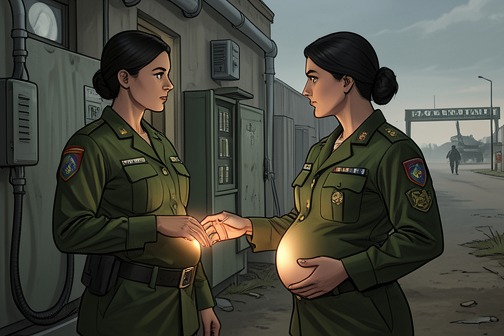
[Sara’s Human Identity and Pregnancy Disclosure](entity:event-recall-event-sara-s-human-identity-a-767eaac01bc9) is a decisive rupture in Sara’s life as a [United Species Corps](entity:organization-recall-organization-united-species-c-07a9e5a41ace) officer. While arguing that humans must be protected rather than treated as laboratory material, she reveals that she is human; [Colonel Flanard](entity:character-recall-character-colonel-flanard-754e1750427b) immediately connects that identity to her pregnancy with a T’shav child. The discovery exposes how little control Sara has over her own body within the Corps, but it also gives her knowledge that becomes the basis for her most consequential act of resistance: abandoning her career to rescue human captives.
## Causes and Hidden Conditions
Sara has concealed her human identity because discovery could lead to imprisonment in a laboratory. When she wakes after being detained, she first checks that she is still wearing her uniform, taking it as evidence that she has not been stripped and prepared for a slave auction. Her body is unusual in the wider interstellar society: her muscular, curvy build and thick waist are considered attractive there, even though the prevailing masculine ideal is extreme thinness. Yet Sara does not understand herself through those possibilities of civilian celebrity or modeling. She is a military woman, and military service is the life she knows.
Her fear is grounded in a larger historical truth. Sara argues that the alien species of the present descended from humans and that some of the beings found in light-speed containers may come from civilizations that existed before space travel. She insists that difference in appearance does not erase government, law, social boundaries, or culture. This argument becomes personal when she states that she knows the value of human life because she is human herself. Her disclosure is therefore not a casual confession but a challenge to the Corps’ assumption that humans are an object of study rather than a protected people.
The pregnancy has remained outside Sara’s conscious knowledge until the examination. Flanard tells her that Corps scans indicate a pregnancy of three standard weeks. The child is identified as a T’shav hybrid, a fact that strikes Sara with the force of an accusation because she had recognized a risk but had not considered that conception was still possible after the lengthening of her cycle. Her shock is intensified by the fact that the institution knows the condition before she does.
## The Disclosure and Institutional Threat
Sara’s statement that she is human changes the conversation with Flanard immediately. Instead of merely being an officer discussing the rights of unknown captives, she becomes a member of the very population the Corps has only recently recognized. She pleads for a human sanctuary where humans can live without constant fear of discovery, laboratories, and forced scientific attention. Her demand joins personal survival to collective political responsibility: protecting the humans aboard the ship becomes inseparable from protecting herself.
Flanard responds by treating the pregnancy as a regulatory problem. He explains that humans are the only species capable of carrying hybrid children to term safely. Mixed-species pregnancies among other peoples usually end in miscarriage, stillbirth, severe deformity, or the mother’s death. The Corps therefore requires that a hybrid pregnancy discovered within its ranks be terminated or that the mother be expelled from the Corps, ostensibly for her own safety.
The policy leaves Sara with a choice that is formally hers but institutionally constrained. Because humans have only recently come to the Corps’ attention, there is no exception for them. Sara asks for time to decide whether to end the pregnancy or tender her resignation. She is not yet ready to tell [Tom](entity:character-recall-character-tom-268ddde4835d), and she worries about whether she wants the responsibility of a child, whether she can continue a career she has built her entire identity around, and whether she could survive outside military life. The scene makes the pregnancy both intimate and political: her reproductive decision is treated as a matter of Corps policy, while the risks and consequences remain hers to bear.
## From Revelation to Rebellion
The disclosure does not end with Sara being escorted quietly to her quarters. The knowledge that human captives need someone to guarantee their safety becomes the one certainty amid her confusion. Before the thought has fully settled, Sara attacks the petty officer escorting her, placing him in a chokehold until he loses consciousness. She takes his weapons and runs toward the brig, recognizing that her career is effectively over once she chooses the jailbreak.
Her escape also displays the technological hybridity of her body. During the rescue, Sara removes one of her [bionic eyes](entity:object-recall-object-bbb6fc48b2ef) and sends it down the corridor as a stun grenade. She shields her and Tom’s ears before the device flashes and emits a high-pitched sound, leaving the pursuing forces incapacitated. The improvised weapon is not separate from her identity; her prosthetic eyes are simultaneously medical technology, concealed military equipment, and instruments of liberation. Her body, already scrutinized by the Corps, becomes the means by which she rejects its authority.
The pregnancy thus redirects Sara’s priorities rather than simply weakening her position. She does not know what motherhood will mean, but she knows that the humans in captivity cannot wait for her personal uncertainty to resolve. Her decision to act first and confront the consequences later turns the disclosure into a cause of direct political resistance. Rescue, bodily autonomy, and human sanctuary become one connected objective.
## Wider Biological and Political Context
Sara’s pregnancy belongs to a recurring pattern in which human bodies cross boundaries that established institutions treat as dangerous. Elsewhere, a medical scan distinguishes [Lisa](entity:character-recall-character-lisa-f8f8fe21b70f)’s pregnancy from a parasite by constructing a three-dimensional image of an embryo, while [Shay](entity:character-recall-character-shay-5a5fab224960) explains that [Stlozyn](entity:creature-recall-creature-stlozyn-25c0edab8dc8) ancestors were human and that their visible differences emerged through intensified genes and additional DNA strands. These parallels place Sara’s condition within a wider history of altered bodies, inherited human origins, and cross-species reproduction rather than presenting it as an isolated anomaly.
The pregnancy also anticipates the conflict surrounding [Gemma](entity:character-recall-character-gemma-b1c21c6b476b) and Shay. The Science Board describes Gemma’s child as impossible and potentially the key to curing a disease that devastates the Stlozyn people. Its demand for research converts pregnancy into a resource for collective survival, while the danger to Gemma and her unborn child is treated as an acceptable scientific cost. Sara’s situation follows the same logic in a different institutional form: the Corps claims to protect mothers by reserving the power to terminate pregnancies or expel pregnant officers. In both cases, technical language masks a struggle over who may decide what happens to a pregnant body.
Sara’s hybrid child also challenges the boundaries used to classify species. Shay later explains that Stlozyn and humans share human ancestry and that their distinctions arise from genetic changes enabling shape-shifting. Sara’s disclosure similarly unsettles the Corps’ separation between human and alien, soldier and civilian, officer and subject. Her pregnancy makes those categories physically inseparable, and the institution’s inability to accommodate that mixture reveals the limits of its supposedly universal policy.
## Consequences and Narrative Significance
The immediate consequence is Sara’s loss of institutional safety. She is no longer simply an officer awaiting orders; she is a human fugitive, a pregnant carrier of a T’shav hybrid, and an opponent of the Corps’ treatment of humans. Her decision to resign or terminate the pregnancy remains unresolved at the moment of disclosure, but the jailbreak makes the practical direction of her life unmistakable. She chooses action on behalf of the captives before she has reached emotional certainty about motherhood.
The event also redefines pregnancy as a source of agency as well as vulnerability. Sara’s condition exposes her to policy, surveillance, and possible forced termination, yet it sharpens her recognition that human lives require protection. The Corps’ attempt to place her within an administrative category produces the opposite result: she acts outside its jurisdiction and turns her military training and bionic equipment against it.
In the broader narrative, Sara’s revelation links several recurring concerns: the transformation of humans into a nearly mythical or endangered population, the use of scientific institutions to regulate reproduction, the instability of species boundaries, and the demand that those most affected by policy possess the right to decide their own futures. Her pregnancy is not merely a private plot development. It is the fact that makes the institutional violence around human identity impossible for her to ignore, and the fact that propels her from concealed survivor to active rescuer.
Event 46
Sara’s Jailbreak from the USC Ship
[Sara’s Jailbreak from the USC Ship](entity:event-recall-event-sara-s-jailbreak-from-t-f13904f1eaad) is the turning point that converts Sara’s private alarm into open rebellion. After being abducted from [Earth](entity:location-recall-location-earth-a6b883af9147) and awakening hundreds of thousands of years later in a galaxy whose technological sophistication has not produced moral progress, Sara finds herself inside the machinery of the [United Species Corps](entity:organization-recall-organization-united-species-c-07a9e5a41ace). The discovery that [Tom](entity:character-recall-character-tom-268ddde4835d) has been placed in the brig forces a choice between institutional obedience and the safety of vulnerable humans. Sara chooses rescue, knowing that the decision will almost certainly end her military career.
## Causes and Background
Sara enters the crisis carrying several layers of danger. She is a trained soldier, but she is also concealing that she is human rather than [Aphrosian](entity:creature-recall-creature-aphrosian-c1883a52ad13). Her deep-blue tattoo and golden [bionic eyes](entity:object-recall-object-bbb6fc48b2ef) can deceive ordinary observers, yet a DNA scan would expose her identity as a rare and valuable human. That vulnerability places her among the very people the authorities may treat as cargo, evidence, or property rather than as persons entitled to safety.
The wider setting has already taught Sara that advanced technology does not guarantee humane institutions. The [Fifth Cycle Festival](entity:event-recall-event-fifth-cycle-festival-ede47c4975b3), an ancient practice in which men kill one another to claim a woman cast as a Goddess, was banned by the [United Species](entity:organization-recall-organization-united-species-447267b485c5) because the victor often killed and ate her. The tradition’s survival as an object of fear gives Sara a political context for the ship’s brig: official systems may present themselves as orderly while preserving coercive practices beneath that order. Her own confinement and Tom’s imprisonment therefore become part of a larger conflict over who receives protection and who is placed outside it.
Sara’s relationship with Tom also changes the stakes. During their encounter, he reveals that his real name is Tom, replacing the name Bond with a human identity that makes their connection more intimate and consequential. Once Sara learns that he is in the brig, the question is no longer merely whether an officer should obey orders. It becomes whether she will leave someone whose identity and mission she knows to the custody of a system she no longer trusts.
## The Discovery and Decision
The immediate trigger comes when Sara’s escort casually mentions that the brig is only one floor below her quarters. The word jolts her into recognition: Tom is there. The knowledge that the humans aboard the ship need someone who will ensure their safety solidifies before she has time to deliberate fully. Her response is physical and immediate. She seizes the petty officer escorting her in a chokehold, cuts off his air until he becomes limp, lays him down, and takes his weapons.
This act marks the first irreversible value shift of the event. Sara begins as a detained or supervised officer whose career and institutional status remain imaginable; she becomes a fugitive who has assaulted a superior system’s representative and taken the means to continue. Freedom is not granted to her. She creates a narrow passage toward it through force, and she understands the cost at once: after the jailbreak, her career is effectively over.
The escape also exposes the contradiction at the center of Sara’s situation. The United Species Corps may describe its custody as necessary, yet the people who need protection are confined behind an energy barrier. Sara’s action rejects the idea that legality alone proves justice. Her rescue is not a rejection of discipline in general—she acts with the speed and practical competence of a trained soldier—but a refusal to let discipline become an excuse for abandoning human lives.
## The Jailbreak and Escape
Tom is already expecting uncertainty. He knows Sara possesses information about his mission and fears that she might disclose it to [Colonel Flanard](entity:character-recall-character-colonel-flanard-754e1750427b). At the same time, he understands that her own career may survive only if the authorities continue to believe she was acting under the appearance of hostage pressure. He therefore keeps silent when they are separated, preserving the possibility that Sara can maintain that explanation.
The prison break begins when the energy barrier forming Tom’s cell door blinks out. Tom rises, initially expecting to confront Flanard or determine how to handle the officer in charge, but Sara enters instead. She tells him that this is a jailbreak, not an authorized visit. She has manipulated the internal sensors so that they report wildly abnormal readings and has started a fire on the floor above the brig. The distractions are deliberately temporary: Flanard will eventually understand what has happened, and the pair has only a short interval in which to move.
Sara takes Tom by the hand and leads him into the corridor. Her palm is sweaty, evidence of the pressure of a decision that cannot be undone, but her actions remain focused. She gives Tom a weapon, and the two proceed toward the docking bays. They avoid most personnel but stun several workers when necessary, then reach Tom’s ship. Tom immediately takes the pilot’s chair and guides the vessel through the barrier that keeps the cold of space outside.
The escape’s apparent ease produces a final note of tension. Everything goes too smoothly, and Flanard’s ship does not pursue them. The absence of pursuit does not erase the danger; instead, it leaves the escape suspended between success and an unresolved threat. Sara and Tom have crossed the physical boundary of the vessel, but the consequences of her betrayal of the Corps remain active.
## Consequences and Aftermath
The most direct consequence is the destruction of Sara’s former professional future. She knows that the jailbreak ends her career, yet the recognition does not weaken her resolve. The loss is presented as the price of making a choice on behalf of people who cannot safely make it for themselves. Her military identity is not discarded because she has ceased to value courage or duty; it is sacrificed because those values have moved beyond the chain of command.
For Tom, Sara’s action changes her from a guarded source of risk into an ally who has demonstrated commitment through danger. She does not merely promise to help him. She incapacitates an escort, steals weapons, falsifies ship sensors, creates a diversion, enters the brig, and helps him reach his ship. Their connection, already altered when Tom reveals his human name, is therefore confirmed by action rather than sentiment.
The jailbreak also opens the possibility of safety for the humans aboard the ship. Sara’s stated priority is that they be brought to someone who will allow them to live their lives safely. The event consequently reaches beyond a prison escape or romantic rescue: it becomes a refusal of human trafficking, coercive custody, and the reduction of rare humans to commodities. Her own hidden identity makes that refusal personal, while her training gives her the means to act on it.
## Narrative Significance
As a scene, the event is built around a sharp reversal from supervision to insurgency. The escort’s casual reference to the brig supplies the revelation; Sara’s recognition that Tom is confined supplies the emotional pressure; the chokehold, stolen weapons, sensor sabotage, and fire supply the escalating action. The expected result of institutional custody is compliance, but the actual result is a coordinated escape. The gap between what the authorities think they control and what Sara is willing to risk generates the event’s momentum.
The episode also uses threshold imagery in concrete form. Sara moves from quarters to brig, from monitored corridors to docking bays, and finally through the ship’s external barrier into space. Each boundary corresponds to a change in status. She begins under supervision, becomes a lawbreaker, reaches Tom as a rescuer, and exits as a fugitive whose future is no longer defined by the United Species Corps.
Its ethical force lies in the contrast between official protection and lived vulnerability. The galaxy contains banned rites that expose women to ritualized violence, institutions that confine humans, and authorities who can define custody as something other than imprisonment. Sara responds not with abstract protest but with a sequence of concrete interventions. She sees the brig, understands what it means, and acts before hesitation can restore the old order. The jailbreak thus establishes her decisive significance: Sara protects freedom by accepting its personal cost, and the rescue of Tom becomes the first visible proof that her loyalty has shifted from the institution that commands her to the people endangered by it.
Event 47
Ruziers Corporation’s Human Trafficking Plot
[Ruziers Corporation’s Human Trafficking Plot](entity:event-recall-event-ruziers-corporation-s-h-65caeeb7d4bb) is the decisive exposure of a commercial scheme disguised as humanitarian protection. What appears to be a plan to move endangered humans toward a sanctuary is revealed as a shipment whose value rests on the bodies, reproductive capacity, and legal vulnerability of its passengers. The revelation transforms the surrounding escape narrative from a question of safe transport into a confrontation with institutionalized human commodification.
## Causes and Background
The plot develops around a shipment of humans whose destination is initially presented as a possible sanctuary. [Tom](entity:character-recall-character-tom-268ddde4835d) has spoken of establishing protection for them, but the arrival of a tracker and the sudden change in [Ruziers Corporation](entity:organization-recall-organization-ruziers-corporat-b2c36bc492ae)’s security arrangements unsettle that account. [Rayo](entity:character-recall-character-rayo-96b8db8394ac) explains that [Zon](entity:character-recall-character-zon-8ed3fa7590ba) has learned of the shipment and is sending someone to collect it. Because Zon commands a large fleet, protects colonies, and is known as an advocate of human rights, Ruziers abandons stealth and assigns an escort to accompany Tom to the shipment site and back. The corporation also triples Tom’s retainer, making the increased payment a material sign that the cargo is more valuable and more dangerous than previously admitted.
Sara recognizes the contradiction before the corporation states it openly. If Ruziers fears that Zon will take the humans, and if Zon’s intervention is associated with human rights, then Ruziers is unlikely to be preparing the sanctuary Tom described. The supposed rescue has therefore been structured around concealment: the corporation uses the language of transport and protection while withholding the purpose that gives the shipment its extraordinary value.
## What the Plot Reveals
Rayo identifies the humans’ commercial value in explicitly classificatory terms. They are not recognized as a sentient species, and they possess universal DNA, making them useful to buyers interested in biological experimentation and reproduction. The males are described as having value primarily for laboratories or private collections. The females can be sold under the [Population Trade Act](entity:rule-recall-rule-2607c1253e41), a legal framework that gives trafficking the appearance of regulated commerce while enabling women to be treated as reproductive assets.
Sara immediately understands the practical meaning of that language. The law is not a neutral protection for a vulnerable population but a thin disguise for sexual enslavement. The women are reduced to breeding bodies, described in economic terms as if their ability to bear children were a product available for purchase. The plot’s central horror lies in this conversion of violence into paperwork: the corporation does not need to call the women slaves if legislation can authorize their sale.
The revelation also explains why the shipment commands such a high price and why Ruziers is willing to risk confrontation with Zon. The humans are not merely passengers requiring transport. They are inventory whose value is divided by sex, assigned to different markets, and protected by a legal structure that denies their personhood. Their universal DNA makes their bodies a resource, while their exclusion from sentient-species classification makes resistance easier to suppress.
## Systems of Exchange and Control
The trafficking plot belongs to a wider pattern in which bodies, freedom, debt, and intimacy are treated as negotiable commodities. Elsewhere in the book, Killian attempts to save Danita by agreeing to buy her from the Lion, accepting a deadline of one month and an additional payment of two hundred and fifty thousand dollars. The arrangement is framed as protection, but its logic remains ownership: Danita’s safety depends on whether another man can pay the price assigned to her. Ruziers’ shipment enlarges the same structure from an individual ransom to an organized market.
The book repeatedly places bodily service inside financial calculations. Maribel accepts work as a vampire blood donor because she is being evicted, has lost her job, has had her car repossessed, and carries half a million dollars in debt after her boyfriend stole her identity. Her compensation is specified as ten thousand dollars per month, plus one hundred dollars per ounce of blood consumed, with further payment if feeding becomes sexual. This arrangement is not identical to Ruziers’ trafficking operation, but it clarifies the economic vocabulary through which the novel represents vulnerable bodies: need produces consent under pressure, and institutions turn intimate acts into priced services.
A similar logic appears in Sheridan’s intention to find a human woman to bear his child. His desire is expressed as a reproductive objective rather than as a mutual relationship, reinforcing the book’s recurring connection between human women and the biological continuation of powerful nonhuman societies. Ruziers’ plan makes that connection openly commercial. The corporation does not merely exploit individual desire; it organizes reproduction as a supply chain.
## Labor, Administration, and Disguised Protection
Ruziers’ operation depends on layers of managed labor. Rayo and the other T’shav are assigned to escort Tom and the shipment after stealth is deemed impossible, while the increased retainer makes security itself part of the trafficking budget. The organization therefore presents exploitation through ordinary administrative forms: contracts, assignments, classifications, escorts, and statutory language. The appearance of procedure obscures the coercive destination of the process.
The contrast with other forms of assigned service in the book sharpens this point. [Mack](entity:character-recall-character-mack-132f1b9991de) is recruited to care for Oliver, whose chaotic life requires a strict schedule covering food, bathing, calls to company boards, meals, snacks, and appointments with financial advisers and lawyers. That arrangement is demanding but legible as caretaking. Ruziers’ human shipment reveals the darker version of organized service, in which bodies are scheduled, transported, and allocated without the autonomy granted to persons.
The corporation’s secrecy is consequently not incidental. It is an operating method. Sara must perform boredom and flirtation while trying to learn what the shipment contains, because openly challenging the explanation would expose her before she knows the scale of the threat. Rayo’s casual assurance that the humans are worth more than Sara can imagine makes the cruelty more disturbing: the language of profit is delivered as routine business, not as an aberration.
## Consequences and Narrative Significance
The revelation changes the meaning of Zon’s intervention. He is not simply a rival commander attempting to steal valuable cargo; his forces represent the possibility that the humans might be treated as people rather than as merchandise. Ruziers’ fear of him confirms that the corporation’s interests are incompatible with a genuine sanctuary. The conflict therefore becomes a contest between two forms of custody: corporate possession justified by law and military protection associated with human rights.
Sara’s response marks the moral turning point of the plot. Her anger rises as she realizes that the women are intended to become sex slaves and reproductive machines. She begins looking for a weapon, but Tom restrains her with a kiss before she can act. The scene juxtaposes political rage with involuntary physical desire, showing how quickly bodily intensity can interrupt deliberate resistance. That interruption does not erase the trafficking revelation; instead, it leaves the danger unresolved beneath the immediate intimacy.
The event also links the book’s supernatural romance economy to its broader critique of ownership. Grass necklaces, ransom payments, blood contracts, reproductive demands, and human shipments all place affection or survival beside exchange. The decisive difference is whether the body retains the power to choose. Ruziers’ plot is the clearest case in which that choice is systematically removed, and its supposed legal legitimacy exposes the political foundation of the world’s species hierarchy: humans can be exploited because the system first declares them less than fully sentient.
The plot’s significance extends beyond the individual shipment. It establishes why rescue, sanctuary, and human rights cannot be separated from economic power. A corporation can call trafficking protection, a law can call reproductive enslavement trade, and a payment can make captivity look like employment. By exposing those substitutions, Ruziers Corporation’s Human Trafficking Plot turns a hidden transport arrangement into a central indictment of a society that converts vulnerable people into inventory.
Event 48
Rescue of the Human Colony Ship
The [Rescue of the Human Colony Ship](entity:event-recall-event-rescue-of-the-human-col-b4fe304815c2) is a decisive humanitarian and political operation in which [Tom](entity:character-recall-character-tom-268ddde4835d) and [Sara O’Neill](entity:character-recall-character-sara-o-neill-3908749b2853) recover a cargo ship containing hundreds of humans preserved in stasis. What begins as a dangerous boarding mission becomes an act of historical recovery: the rescued people are not merely evidence of old abductions but the first population of a renewed human sanctuary. The operation also changes Sara’s understanding of Tom, revealing that his hidden identity as [Zon](entity:character-recall-character-zon-8ed3fa7590ba)’s son is connected to protection rather than exploitation.
## Causes and Background
The mission arises from the discovery of a human cargo vessel whose technology resembles that of other ships associated with the abduction of humans from [Earth](entity:location-recall-location-earth-a6b883af9147). Tom and Sara infer that the occupants may have been seized for slave labor or another unknown purpose, but the ship itself offers no immediate explanation. Its cargo is instead presented through the silent bodies in its stasis pods, turning a historical crime into a physical and morally urgent scene.
Tom estimates that the vessel holds at least six hundred humans. The corridor is unusually wide and constructed from sharp, crystalline angles resembling stained glass, while dim blue light shines from pods positioned along its length. In the nearest pod, Tom sees a human woman with closed eyes, overgrown matted hair, and skin the same hue as his mother’s. The resemblance links the anonymous captives to the personal history of abduction that shaped Tom’s family, while the scale of the cargo makes the rescue larger than any single recovery.
The humans have been kept in conditions where life and death cannot immediately be distinguished. The corridor is cold enough for breath to crystallize, and the pods prevent decomposition, meaning that some occupants may already be dead while others remain alive in suspension. This uncertainty gives the mission a stark value shift: the ship is first an artifact of captivity, then a fragile repository of lives that must be extracted before its fate is decided.
## Boarding and Discovery
Tom docks his ship directly onto the cargo vessel’s hull, clamping it over a weapons port. He cuts through the port to gain entry, bringing Sara into the crystalline corridor. Their immediate objective is not to awaken the captives one by one but to secure the entire vessel for transport. Twelve anchors must be placed at strategic points so the ship can be dragged without being torn apart.
They work quickly and initially without speaking. Tom plants the anchors while Sara moves through the corridor of sleeping faces. The rescue therefore combines technical precision with human recognition: every anchor serves the mechanical survival of the vessel, while every stasis pod represents a person whose fate remains unresolved. The work is interrupted when footsteps echo through the corridor and an armed patrol announces that it has detected movement.
Tom and Sara hide on opposite sides of the passage behind the pods. Sara then abandons concealment and steps into the open with her hands raised. She identifies herself as Lieutenant Sara O’Neill of the [United Species](entity:organization-recall-organization-united-species-447267b485c5) and demands that the approaching personnel identify themselves. The voice that answers belongs to [Colonel Flanard](entity:character-recall-character-colonel-flanard-754e1750427b), a hostile figure from Sara’s past who mocks her survival and indicates that the patrol has arrived to stop the operation.
## Confrontation and Escape
Flanard’s forces claim that Tom and Sara have no chance of succeeding. Sara answers through action rather than surrender. She reaches into the corner of her eye socket and removes a small round device, then pulls Tom back and covers his ears. Tom instinctively protects her as well. The device produces a flash and a high-pitched grating sound, stunning the patrol.
The revelation that Sara’s bionic eye can function as a concealed stun grenade changes the balance of the encounter. She explains that such a use is precisely why covert explosives can be carried inside a bionic eye, although the grenades are powerful enough only to stun. Sara binds the disabled soldiers and secures them while Tom finishes placing the anchors. He encounters two further patrols, but both are dispatched without preventing completion of the rescue preparations.
Once the anchors are settled, Tom returns to his ship with Sara. She takes the co-pilot’s chair while he assumes the pilot’s seat and asks how they can escape without allowing Flanard’s ship to destroy them. Tom answers by broadcasting his lineage and political protection. He identifies himself as Tom, son of Zon, warlord protector of the [Rouge Systems](entity:location-recall-location-rouge-systems-cef1ed437989), and warns the United Species soldiers that half of Zon’s fleet is already approaching.
The threat succeeds immediately. Flanard’s ship leaves within seconds rather than risk an attack connected to Zon’s family. Tom activates the anchors, and the net catches the cargo vessel without an interruption in power. The ship is then set on course for the sanctuary. The operation’s external danger ends not through superior firepower but through the combination of Sara’s tactical ingenuity, Tom’s technical work, and the deterrent authority attached to his family name.
## Consequences and Aftermath
The rescued humans are eventually awakened in batches. The final count is five hundred and seventy-two survivors, fewer than Tom’s initial estimate of at least six hundred but still large enough to establish a functioning community. They begin constructing infrastructure in the sanctuary, converting rescue into resettlement and survival into collective rebuilding.
The survivors do not remember being abducted. Reports place their disappearances within a period between 2000 and 2100, making Sara and Tom’s mother among the first humans taken from Earth. Their amnesia preserves the violence of the event while removing the personal testimony that might explain who organized it or why. The sanctuary consequently begins with a population whose history is real but only partially recoverable.
For Sara, the mission confirms that Tom was genuinely attempting to help the humans rather than using them for an undisclosed purpose. It also confirms that he really is Zon’s agent and son. Their relationship develops from a tentative arrangement intended to allow mutual trust into a settled mating bond. Tom explains that T’shav tradition recognizes mates rather than requiring marriage, and Sara accepts that tradition while remaining free to marry if she wishes.
The rescue therefore produces two forms of refuge. The first is material: five hundred and seventy-two humans receive a place where they can awaken and build infrastructure after generations of forced displacement. The second is relational and political: Sara gains a clearer understanding of Tom’s loyalties, while Tom’s concealed ancestry becomes a source of protection for the very people whose vulnerability might otherwise make them easy targets.
## Narrative Significance
The event turns the book’s scattered references to human abduction into a mass consequence. The cargo ship’s rows of silent pods, the uncertainty over which occupants are alive, and the later count of 572 survivors create a contrast between impersonal technology and individual human endurance. The rescue is not complete simply because the ship reaches safety; its deeper completion lies in waking the captives and giving them the means to organize a future.
The mission also reverses the meaning of the ship itself. To its captors, the vessel appears to have been a container for hidden human bodies. To Tom and Sara, it becomes a collective lifeboat. The same technology that enabled concealment and exploitation is repurposed as the mechanism of recovery. Sara’s bionic eye similarly embodies this reversal: a device associated with bodily alteration becomes an instrument of resistance rather than a sign of helplessness.
As a narrative sequence, the rescue follows a compressed separation, ordeal, and return. Tom and Sara cross from their own ship into an enclosed zone of captivity, confront an armed authority in the presence of the sleeping humans, and return by towing the entire vessel to sanctuary. The return is not a restoration of the old world, since the survivors cannot recover their memories of abduction. It is instead the creation of a new social beginning, grounded in incomplete history, mutual protection, and the insistence that displaced humans remain worth rescuing.
Event 49
Tom and Sara’s Mating and Reconciliation
[Tom and Sara’s Mating and Reconciliation](entity:event-recall-event-tom-and-sara-s-mating-a-f95a9eda937a) is the emotional and narrative resolution of their separation, mistrust, and conflicting obligations. During the rescue of a human cargo ship, [Tom](entity:character-recall-character-tom-268ddde4835d) establishes that he truly intended to help the captives and that he is the son of [Zon](entity:character-recall-character-zon-8ed3fa7590ba), warlord protector of the [Rouge Systems](entity:location-recall-location-rouge-systems-cef1ed437989). Sara accepts both revelations, discloses her pregnancy, and joins Tom as his [Starmate](entity:expression-recall-expression-starmate-81f30c00a389). Their reconciliation turns a relationship shadowed by secrecy into a shared future involving love, an unborn child, and an official bridge between the [United Species](entity:organization-recall-organization-united-species-447267b485c5) and Zon's fleet.
## Causes and Background
Tom and Sara’s union emerges from a crisis of trust. Tom has been trying to help the humans, but Sara has had reason to doubt his motives and identity. The turning point comes after Tom uses his connection to Zon to protect the rescued cargo ship. He warns the United Species soldiers that the ship belongs under his protection and identifies himself as Zon's son, adding that half of his father's fleet is approaching. The threat works: the colonel's ship withdraws, allowing Tom to activate the cargo ship's anchors and carry the humans to safety.
The rescue gives Sara visible proof that Tom's actions have not been a deception. She acknowledges that he really was trying to help the humans and that he really is Zon's agent and son. Her admission does not erase the earlier secrecy, but it changes the value of that secrecy: suspicion becomes an issue that can be addressed later rather than an immediate barrier between them. Tom, for his part, does not condemn Sara for having mistrusted him. He recognizes that his own concealment made distrust understandable, and the scene allows both characters to move from accusation toward mutual recognition.
## The Revelation and Reconciliation
Sara's most consequential disclosure follows almost immediately after the rescue. She stops Tom before he can finish apologizing and tells him that she is pregnant with his child. She also admits that she should not have kept the pregnancy secret, making the revelation both a statement of fact and an acknowledgment of the breach between them. The child gives their conflict a concrete future stake: their relationship is no longer only about whether they can trust one another, but also about whether they will face parenthood together.
Tom responds with wonder rather than rejection. His surprise is unmistakable, but he does not retreat from Sara or treat the pregnancy as a burden imposed upon him. Instead, he echoes her assurance that there will be time to deal with the past and kisses her, answering the possibility of abandonment with commitment. Their physical reconciliation follows this exchange. Sara takes the initiative, drawing Tom toward her, while Tom responds with equal desire and tenderness. The scene presents intimacy as the bodily completion of a conversation that words alone could not settle: the withheld truth has been spoken, forgiveness has become possible, and both characters actively choose closeness.
The sexual encounter is also framed by the pregnancy rather than separated from it. Tom sees Sara not only as his lover but as his Starmate and the mother of his unborn child. Their mating therefore combines erotic union, emotional reconciliation, and the formation of a family bond. The scene's movement from defensive uncertainty to mutual surrender marks a clear value shift from distrust to trust, and from threatened separation to chosen permanence.
## Starmate Bond and New Status
Afterward, Sara rests against Tom while he holds her, and the narration identifies the central achievement of the event: Tom knows that he has found his Starmate, and that Sara has found hers. The bond is reciprocal rather than merely claimed by one partner. This matters because the reconciliation does not leave Sara as a rescued human dependent on Tom or on Zon’s authority; it gives her an acknowledged place within the relationship and its wider social world.
The event also joins private desire to cross-species and cross-political connection. Sara is human, while Tom belongs to the wider interspecies society organized around Zon’s fleet. Their pregnancy makes that connection biological as well as emotional, and their Starmate status turns it into a recognized partnership. The relationship consequently links human survival, alien power, and personal choice without reducing Sara’s decision to simple submission. Her disclosure is made on her own terms, and her initiative in the reconciliation helps establish her agency within the new union.
## Consequences and Aftermath
The reconciliation has immediate consequences beyond the intimate scene. The later epilogue states that [Colonel Flanard](entity:character-recall-character-colonel-flanard-754e1750427b)’s testimony against Sara is considered deeply compromised, so Sara is not expelled from the [United Species Corps](entity:organization-recall-organization-united-species-c-07a9e5a41ace). The organization is eager to demonstrate that humans will be treated with dignity and respect. Her survival within the Corps transforms the rescue from a private escape into a public test of institutional policy.
Within a few months, Sara is assigned to serve as an ambassador between the United Species and Zon's fleet. This appointment formalizes the connection created by her relationship with Tom. She is no longer merely a human involved in an interstellar crisis; she becomes an official intermediary between the institution that once threatened the rescued humans and the fleet that protected them. Her personal reconciliation thus produces diplomatic consequences, while the political role also validates her capacity to act in public life rather than confining her to romance or pregnancy.
The epilogue continues to present Sara and Tom as Starmates while Sara adjusts to the relationship and to her new role. Her pregnancy has advanced enough for her to complain about swollen ankles, and Tom responds by offering to rub her feet. The small domestic exchange gives the event a lasting rather than merely dramatic consequence: the mating becomes an ongoing partnership expressed through care, shared anticipation, and ordinary bodily vulnerability. What begins amid weapons, ships, anchors, and a threatened human cargo vessel ends in a settled family future that remains connected to larger political change.
## Narrative Significance
As an event, Tom and Sara’s Mating and Reconciliation performs several transformations at once. It resolves the immediate conflict over Tom’s identity and motives, reveals the pregnancy that makes their future unavoidable, establishes the reciprocal [Starmate bond](entity:state-recall-state-starmate-bond-d6ac52f6908a), and redirects Sara’s trajectory toward diplomacy. The rescue supplies the external proof of loyalty; Sara’s confession supplies the intimate truth; their mating supplies the emotional and bodily confirmation; and the epilogue supplies the social consequence.
The sequence also treats reconciliation as an exchange of vulnerability rather than a simple victory by one partner. Tom risks accepting Sara’s distrust without retaliation, while Sara risks revealing a pregnancy that might have exposed her to rejection. Their union becomes possible because each responds to the other’s withheld truth with continued presence. The decisive result is not only that Tom and Sara become lovers again, but that they become recognized partners whose connection can mediate between humans and Zon's fleet. Their Starmate bond therefore functions as both romantic resolution and a new form of social belonging.
Event 50
Lisa被外星人绑架并送往未来
[Lisa](entity:character-recall-character-lisa-f8f8fe21b70f)’s abduction from [Earth](entity:location-recall-location-earth-a6b883af9147) is the event that transforms a scientific mystery into a personal displacement across thousands of years. While working late on research into geo-nuclear radiation and its effects on human DNA, Lisa is seized by aliens, removed from Earth, and transported in a primitive vessel traveling at lightspeed. When she next becomes conscious, she is naked, freezing, confined in a cage, and being prepared for sale. The journey does not merely remove her from her home; through cryostasis and temporal distortion, it places a [2016](entity:time-recall-time-2016-4d53ff3da4fe) human woman in a future where humanity has become a myth and her body is treated as a valuable cross-species commodity.
## Causes and Circumstances
Lisa’s abduction occurs while her professional and financial future is already precarious. Her grants depend on obtaining results from her research into newly discovered geo-nuclear radiation deep inside Earth’s core and the possible changes it could produce in human DNA. A rumbling sound interrupts that work, after which she remembers being lifted naked and freezing from a box by green, winged aliens. They examine her, inject her, attach cuffs and a collar, and place her in a cage. The transition from laboratory researcher to captive specimen is therefore abrupt: scientific inquiry into human evolution is followed by involuntary exposure to the consequences of that same evolutionary question.
At the auction, Lisa is described as a specimen from an undiscovered species found aboard a primitive vessel moving at lightspeed. Genetic tests identify a possible universal DNA, suggesting compatibility with most species, while her intelligence and presumed usefulness increase her value. A translation chip and inoculations have been provided so that she can be used either as a companion or for consumption. The language of the auction reduces a living scientist to biological potential, making the event simultaneously an abduction, a technological experiment, and a form of interspecies trafficking.
## The Auction and Immediate Consequences
Lisa experiences the aftermath of the abduction through bodily terror and radical defamiliarization. She initially understands only that she is being sold like an animal. Chained in an unfamiliar environment, she watches other creatures pass through the auction before her turn arrives. The creature inspecting her resembles a human toad, and its reaction to her fear intensifies the humiliation of being displayed as an object rather than recognized as a person.
The restraints also make resistance physically dangerous. Each attempt to pull against the chains sends a stronger jolt through her body, producing white spots in her vision and preventing even an outcry. Her fear is sharpened by the auctioneer’s uncertainty about her future: companionship and consumption are presented as equally ordinary uses for her body. The scene establishes the material stakes of the abduction before Lisa understands its historical meaning. She has not simply been lost; she has been classified, processed, and offered for ownership.
## Discovery of the Future
Lisa’s understanding changes when [Zon](entity:character-recall-character-zon-8ed3fa7590ba) explains the origin myth shared across many planets. According to that account, a great war released geo-nuclear radiation, altered the ancestral population, and drove hundreds of ships away from a single original planet. Those ships became separated and founded populations on different worlds. The original species is remembered under a word that translates as “human,” but it is treated as mythical rather than historical.
The explanation connects directly to Lisa’s research. She realizes that the geo-nuclear radiation discussed by Zon is the same phenomenon she had been studying on Earth. Her lightspeed journey and cryostasis provide a possible explanation for the enormous gap between her experienced age and the outside chronology. Lisa remembers that humanity had only recently reached the Moon in [1969](entity:time-recall-time-1969-f27378d404c4), that she was born in [1987](entity:time-recall-time-1987-0da5bb436088), and that she was twenty-nine when she was taken in 2016. If the ship’s journey and cryostasis lasted thousands of years by external time, then the civilization surrounding her may genuinely have developed from human ancestors while she remained biologically displaced from her own era.
Lisa therefore identifies herself as human and recognizes the possibility that the supposedly alien species around her are descendants of people who left Earth. The abduction becomes a revelation about origin, not merely an episode of captivity. Her personal chronology remains intact, but the historical world to which it belonged has disappeared.
## Technology, [Pregnancy](entity:state-recall-state-pregnancy-cdafbf158725), and Bodily Knowledge
The event also leads into Lisa’s encounter with future medical technology. On Zon’s ship, she sees holographic tablets, scanning goggles, and molecule breakdown stations that separate waste into atoms and reform them into needed materials. Her scientific curiosity survives the trauma: she is fascinated by the technology even while being required to remain still for medical examination.
A detailed scan of her abdomen produces a three-dimensional holographic image of her uterus and confirms an embryo. The projected form looks unlike a human baby, resembling a mixture of a tadpole and a dinosaur, yet Lisa recognizes that it will develop into a child. The scene places her body at the intersection of scientific evidence, alien interpretation, and human knowledge. Zon is concerned that she might be carrying a parasite, while Lisa identifies the image as an embryo through her own medical understanding. Her body is repeatedly treated as an object to classify, but her expertise allows her to interpret what the instruments display.
The later account of [Stlozyn](entity:creature-recall-creature-stlozyn-25c0edab8dc8) ancestry extends this biological revelation. [Shay](entity:character-recall-character-shay-5a5fab224960) explains that Stlozyn ancestors were taken from Earth centuries earlier and altered through emphasized genes and additional DNA strands, producing traits such as scales and the ability to shift shape. This explanation supports the possibility that human history did not end on Earth but diversified into multiple species. Lisa’s abduction thus exposes a future in which distinctions between human, alien, animal, and engineered body have become unstable.
## Narrative Significance
Lisa’s abduction is the novel’s clearest expression of temporal displacement as a crisis of identity. The event begins with an ordinary research problem—funding depends on scientific results—and ends with Lisa confronting the possibility that her species created the civilizations that now deny its existence. The gap between 2016 and the future is not represented as a simple passage of time; lightspeed travel and cryostasis make chronology uneven, preserving Lisa’s age while allowing the outside world to undergo millennia of change.
The event also makes translation politically significant. A translation chip allows Lisa to be auctioned across species, but linguistic access does not grant social recognition. She can understand the auctioneer’s words while remaining exposed to a system that calls her a specimen and weighs her for companionship or consumption. Later, the word “human” functions as a disputed translation of an ancestral identity. Communication is therefore technically easy but historically incomplete: the future can translate Lisa’s language before it can accept the truth of what she is.
Finally, the abduction converts environmental and genetic change into lived history. [Geo-nuclear radiation](entity:concept-recall-concept-geo-nuclear-radiation-871f3ccf5c7e) appears first as Lisa’s research subject, then as a possible force behind the transformation of humanity, and finally as part of a civilization-wide origin story. Its consequences are delayed across generations and planets, so that Lisa encounters the aftermath rather than the original catastrophe. Her forced journey gives that distant history a human witness: the mythical ancestor returns in person, carrying the scientific knowledge and embodied continuity that the future has forgotten.
Event 51
Senett奴隶拍卖与Zon救出Lisa
[Senett](entity:location-recall-location-senett-fbb651f3055a)’s slave auction and [Zon](entity:character-recall-character-zon-8ed3fa7590ba)’s rescue of [Lisa](entity:character-recall-character-lisa-f8f8fe21b70f) is the decisive turning point in Lisa’s first encounter with the alien future. Abducted from a primitive light-speed vessel and displayed as an “undiscovered species,” Lisa is classified through genetic usefulness, bodily compatibility, and market value before Zon kills the buyer who intends to possess her. The rescue saves her from immediate sale to a predatory creature, but its form remains coercive: Zon purchases her himself, carries her away, and declares that he will not return her.
## Causes and Background
Lisa arrives at the auction after working late in a laboratory researching how newly discovered geo-nuclear radiation from deep inside [Earth](entity:location-recall-location-earth-a6b883af9147)’s core might alter the human DNA sequence. Her research funding was at risk if she failed to produce results. A rumbling sound interrupts her work, after which she remembers being removed from a freezing box, naked and surrounded by green, winged aliens. They examine her, inject her, attach chains and a collar, and place her in a cage. The sequence makes the auction an extension of her abduction rather than a voluntary transaction: Lisa has not entered the market as a participant, but has been converted into cargo.
The auctioneer presents Lisa as a specimen from an undiscovered species found aboard a primitive vessel traveling at light speed. Genetic tests reportedly suggest that she possesses possible universal DNA, making her compatible with most species. She is also described as highly intelligent, equipped with a translation chip, and inoculated for either companionship or consumption. The language collapses personhood into utility. Intelligence becomes a saleable attribute, while the same body is evaluated as a companion, sexual possession, or food. Lisa’s horror at the phrase “companionship or consumption” reveals the full stakes of the classification: the auction does not merely threaten imprisonment, but gives buyers permission to define her body’s purpose.
## The Auction and Its Stakes
Lisa is restrained inside an energy-bar cage while the bidders assess her. A toad-like creature, licking its lidless eyes and rubbing its slimy hands together, watches her with obvious appetite. Lisa recognizes it as the likely winning bidder even before the final price is announced. The auction proceeds in hadron particles, beginning at three quarks and rising through increasingly higher bids. The method makes slavery appear orderly and commercial, but the precision of the bidding only sharpens its violence: a living woman is reduced to a number in a market whose rules she cannot contest.
At the back of the crowd, Lisa notices a huge red-skinned man with black hair, dark eyes, extensive muscles, and dark tattoos spiraling along one arm and across his chest. She does not know him, yet his presence becomes associated with the possibility of interruption. When the toad calls “Three hundred!” and the auctioneer prepares to declare Lisa sold, the red-skinned man has disappeared from her view. Her disappointment and despair are not based on any promise he has made; they arise from the desperate hope that someone powerful might refuse to let the transaction reach its conclusion.
The toad climbs onto the stage and calls Lisa a tasty pet. She reacts physically before anyone else intervenes, kicking through the energy bars and striking its face. The movement is small compared with the machinery surrounding her, but it is the first clear act by which Lisa refuses the role assigned to her. Her resistance destabilizes the auction at the exact moment the market is about to complete its claim.
## Zon’s Intervention and Purchase
The red-skinned man reappears beside the stage with a sword driven through the toad’s chest. He twists the blade until the creature goes limp, then withdraws it and climbs onto the platform. The act is not a negotiation or an appeal to the auction house’s rules. Zon answers the attempted purchase with lethal force, making the buyer’s intended possession impossible and terrifying the crowd into silence and retreat.
Zon cuts through the top of Lisa’s cage, extinguishes the energy bars, severs the chain connecting her to the stage, and lifts her out. Lisa is too shocked to fight, even though she understands that she should resist being carried away by another unknown alien. Zon throws her over his shoulder and announces a bid of six hundred, tossing a silver orb to the auctioneer. The auctioneer accepts the payment and declares her sold, even though the sale has followed murder and forced removal rather than a conventional exchange.
The transaction’s contradiction is central to the event. Zon rescues Lisa from the toad by becoming her purchaser. He tells the auctioneer that he will not return his new pet, turning protection into a claim of ownership. The aliens in the crowd recoil from him in fear and horror as he carries Lisa away over his shoulder. For Lisa, the immediate value shift is from imminent consumption or sexual enslavement by the toad to survival under Zon’s control. Her life is preserved, but her freedom remains unresolved.
## Consequences and Aftermath
The rescue establishes Zon as the force capable of breaking the auction’s system, but it does not present him as an uncomplicated liberator. He kills the bidder, destroys the cage, pays the auction price, and publicly names Lisa as his possession. The scene therefore separates rescue from emancipation. Lisa escapes one form of objectification only to enter a new relationship structured by unequal power, alien law, and Zon’s unilateral decision.
The event also changes the narrative meaning of Lisa’s humanity. Before the auction, human beings are treated as unknown or possibly extinct, and Lisa’s body is valuable because its DNA may be universal. The auction makes that supposed biological uniqueness economically dangerous: compatibility becomes a reason to sell her to almost any species. Zon’s intervention begins a different trajectory in which Lisa is no longer merely a specimen on display, but a person whose fate becomes tied to his violence, protection, and later decisions.
The scene foreshadows the recurring tension between bodily autonomy and relationships formed through possession, reproduction, or exchange. Elsewhere in the book, marriage, ransom, gifts, royal fertility, and biological compatibility are repeatedly used to bind people to institutions or powerful partners. Lisa’s auction is the starkest version of that pattern because every aspect of her body is priced in public. Zon’s sword interrupts the market, but his silver payment demonstrates that the market’s language has not vanished; it has been redirected around him.
## Narrative Significance
As an event, the auction and rescue combines abduction, commerce, species hierarchy, and first contact. Lisa’s scientific identity cannot protect her because the aliens do not recognize her as a researcher with rights; they see an intelligent specimen with useful DNA. Her translation chip allows communication, but it does not give her the power to refuse the categories imposed on her. Technology facilitates the auction’s efficiency while leaving its moral structure untouched.
The event’s strongest contrast lies between the cage and Zon’s body. The cage is an impersonal system of energy bars, chains, medical preparation, and bidding rules. Zon is a singular, frightening presence whose sword changes the outcome through direct physical force. Yet neither side initially treats Lisa as an autonomous decision-maker. The auction makes her a commodity through classification and price; Zon removes her through strength and purchase. The narrative thus makes survival the first victory, not the final resolution.
Lisa’s kick, Zon’s killing stroke, the severed chain, and the auctioneer’s trembling acceptance of the silver orb form the event’s progression from helpless display to violent removal. By the time Zon carries Lisa out, the auction has ended, but the larger question has only begun: whether Lisa can become more than the “universal DNA” that made her valuable, and whether Zon’s protection will eventually permit choice rather than merely replace one claimant with another.
Event 52
Lisa发现人类起源真相
[Lisa](entity:character-recall-character-lisa-f8f8fe21b70f)’s discovery of the human origin truth is the revelation that collapses the distance between scientific hypothesis, cultural myth, and personal catastrophe. After learning that her universal DNA resembles the genetic foundation shared by many humanoid species, she recognizes that the mythical ancestral species called “human” was not mythical at all: it was her own species, and [Earth](entity:location-recall-location-earth-a6b883af9147) was its original world. The revelation gives a cosmic explanation for her displacement while making her grief immediate and irreversible, because the home she remembers belongs to a vanished age.
## The Biological Clue
Lisa reaches the truth through an argument about genetics rather than through a recovered historical record. She insists that universal DNA is biologically impossible under ordinary assumptions: one species cannot share all its DNA with another while possessing only a small additional difference. Yet the many species around her are humanoid and mammalian, and they share portions of their genetic inheritance. Their similarities therefore imply a common source rather than unrelated evolution.
[Zon](entity:character-recall-character-zon-8ed3fa7590ba) initially treats the idea of humanity as absurd because humans have become a nonexistent or legendary species in his culture. He laughs when Lisa says that she has been told she is “like” a human, then tells her that humans do not exist. His reaction exposes the historical gulf between them: Lisa is speaking from lived identity, while Zon is speaking from a civilization that has reduced her people to an origin story. The disagreement makes the revelation more destabilizing than a simple discovery of ancestry, because Lisa must prove that the category others regard as myth describes her own body.
## From Myth to Earth
Zon describes the shared origin tradition as a story in which all the humanoid species came from one planet. A great war allegedly released geo-nuclear radiation, after which hundreds of ships carried the ancestors away; the ships became separated, and their populations settled on different planets and rebuilt themselves. The name of the original species, Zon explains, translates across languages as “human.”
Lisa supplies the missing place-name before Zon can finish the thought: Earth. The word is not an abstract historical label for her. It is the world where she was born, where she conducted scientific research, and where her life had existed within a recognizable human chronology. When Zon suggests that the planet might not have been her Earth, Lisa answers through the accumulated evidence of universal DNA, shared body plans, and the humanoid structure of the descendant species.
The discovery therefore works on two levels. It confirms that the different species are related, but it also reverses the direction of the story’s categories. Lisa is not an outsider who happens to resemble the inhabitants of the future; the inhabitants of the future are descendants of the same human source from which she came. Their apparent otherness becomes evidence of a common past shaped by migration, radiation, separation, and biological divergence.
## The Time-Displaced Survivor
Lisa connects the ancestral-world theory to the circumstances of her abduction. She had been found aboard a ship traveling at light speed and held in cryostatus. Relativity could have allowed only years to pass for her while thousands of years elapsed elsewhere, and the unknown duration of her cryostatic storage makes the gap even harder to measure. Her memories remain anchored to [2016](entity:time-recall-time-2016-4d53ff3da4fe), but the surrounding universe has moved far beyond the period in which Earth was still inhabited by recognizable humans.
She explains that she was born in [1987](entity:time-recall-time-1987-0da5bb436088) and taken in 2016, when humanity had only recently reached the Moon in the historical scale she knew. Those dates give the revelation a precise human frame while emphasizing its enormous temporal displacement. Lisa is not merely separated from her birthplace by distance. She has been carried out of her species’ history, preserved biologically while the society that gave her language, science, and belonging disappeared into the deep past.
Her conclusion is devastatingly simple: Earth is gone, and her home is gone. The scientific chain that proves her ancestry simultaneously removes any possibility of ordinary return. The revelation provides an origin without restoring a home, leaving Lisa as a human survivor whose identity is authenticated by a civilization that can no longer receive her.
## Technology, Body, and New Kinship
The event is surrounded by technologies that make the boundary between the human body and external machinery unstable. Lisa encounters holographic tablets, scanning goggles, and molecule breakdown stations capable of reducing waste to atoms and reforming those atoms into useful objects. Her own situation is inseparable from such systems: cryostatus preserved her across an unknown span of time, and relativistic travel carried her into a distant future.
The same world also contains bodies that turn technology into part of their anatomy. Sara uses [bionic eyes](entity:object-recall-object-bbb6fc48b2ef) as concealed stun grenades, removing one eye and deploying it as an explosive device before shielding [Tom](entity:character-recall-character-tom-268ddde4835d) from the blast. The incident shocks Tom, but Sara treats the modification as practical equipment rather than a contradiction of personhood. In the broader context of Lisa’s revelation, the scene helps establish a universe in which identity cannot be defined by an untouched biological body. Human ancestry, mechanical enhancement, and species difference overlap.
Lisa’s pregnancy intensifies that instability. A medical scan produces a three-dimensional holographic image of her uterus and reveals an embryo that looks like a disturbing mixture of a tadpole and a dinosaur rather than a familiar human infant. The image initially appears alien, yet Lisa recognizes it as a developing baby. Her body becomes a meeting point between human ancestry, future medical technology, and cross-species reproduction, demonstrating that biological difference does not necessarily erase continuity.
## Broader Species History and Significance
Later, [Shay](entity:character-recall-character-shay-5a5fab224960) explains that the [Stlozyn](entity:creature-recall-creature-stlozyn-25c0edab8dc8) ancestors were humans taken from Earth a few hundred years earlier. Their descendants were not completely redesigned; certain genes were made more pronounced, additional DNA was added, and those changes enabled shape-shifting. Shay compares the process to the mimic octopus changing its coloration, while acknowledging that changing an entire body is a greater transformation. This account gives Lisa’s intuition a wider scientific framework: the species of the present are modified, diverged descendants of an ancestral human population rather than unrelated creations.
The revelation consequently changes the meaning of difference throughout the interstellar society. Scales and skin, shape-shifting and fixed form, biological inheritance and technological intervention become variations within a connected history. The event does not restore a pure or stable definition of “human”; instead, it shows that humanity itself was dispersed, altered, and multiplied into many forms. Lisa’s identity is preserved not by separation from those forms but by her place at the beginning of their shared genealogy.
Narratively, the event converts Lisa’s abduction from an isolated personal crime into a temporal and civilizational displacement. The cryostatus, the light-speed journey, the universal DNA, the ancestral myths, and the lost Earth converge in one explanation. Yet the explanation offers no uncomplicated comfort. Lisa gains the truth about where she came from at the exact moment she understands that she can never return to the world that made that truth meaningful.
Event 53
Lisa获得联合物种公民身份
[Lisa](entity:character-recall-character-lisa-f8f8fe21b70f)’s [United Species](entity:organization-recall-organization-united-species-447267b485c5) citizenship is the legal turning point that converts her from a vulnerable human captive into a recognized member of an interspecies political community. After being abducted from [Earth](entity:location-recall-location-earth-a6b883af9147) and exposed to an interstellar economy in which humans are rare and expensive commodities, Lisa’s status had been defined by ownership and danger. Citizenship does not erase that history, but it gives her a formal protection that neither private affection nor [Zon](entity:character-recall-character-zon-8ed3fa7590ba)’s military power could provide on its own.
## Causes and Legal Stakes
Lisa’s claim to citizenship arises from the contradiction between her personal relationship with Zon and the legal condition imposed on her by the wider galaxy. Zon is confident that his fleet can defend her against anyone who might try to take her, yet he deliberately seeks a more durable solution. His objective is to make the sale of Lisa illegal and to secure rights that cannot depend solely on his ability to repel attackers. The United Species is presented as the institution capable of granting that protection, making citizenship a political safeguard rather than merely a romantic gesture.
The urgency of the application is intensified by Lisa’s pregnancy. She is carrying Zon’s child, but her position remains precarious until the United Species recognizes her as a citizen. The surrounding worlds have repeatedly shown that technological advancement does not guarantee social progress: the [Fifth Cycle Festival](entity:event-recall-event-fifth-cycle-festival-ede47c4975b3), for example, preserves an ancient spectacle in which a woman is selected as a Goddess, while male competitors kill one another for possession of her, despite the practice having been banned by the United Species. Against that background, Lisa’s natural body, human origin, and reproductive capacity are all vulnerable to institutional exploitation.
## The Transition from Commodity to Citizen
The citizenship process takes several standard months. That delay is significant because Lisa is almost ready to give birth by the time the status is granted. Her legal transformation therefore unfolds alongside a physical transformation into motherhood, linking political belonging to the protection of a family that could otherwise be exposed to the same systems of trade and coercion that endangered her.
Once Lisa is officially a citizen, Zon’s first act is to take her to a memorial museum orbiting the ruined Earth. The institution was established after religious archaeologists identified the planet through its geo-nuclear radiation and DNA extracted from fossils. Its memorial wing contains bones behind glass, genetic reconstructions, rare skulls, and occasional names recovered from ancient records. Lisa’s arrival there carries a double meaning: citizenship gives her a place in the living legal order, while the museum places her before the remains of the human world from which she was taken.
## Zon, Protection, and Agency
Zon’s role in the event is protective but not purely possessive. He is an alien warlord with the military resources to defend Lisa, yet he recognizes that force alone cannot make her free. His desire to obtain citizenship for her acknowledges the difference between being guarded by a powerful companion and possessing rights that restrain other people and institutions. The event thus strengthens the relationship between Lisa and Zon while also exposing its political limits: private devotion must be translated into public law before it can reliably secure her safety.
The legal change also gives Lisa a position from which her human identity can be acknowledged rather than concealed. Sara, another human woman displaced into the future, has had to disguise her origin because human DNA makes her a rare and valuable target. Lisa’s citizenship does not make humanity ordinary in the galaxy, but it offers a counter to the idea that rarity authorizes ownership. Her body, pregnancy, and ancestry remain objects of interest, yet the citizenship decision establishes that those facts do not cancel her personhood.
## Consequences and Narrative Significance
Citizenship changes the meaning of Lisa’s subsequent movement through the story. Before it, rescue and protection are unstable conditions: she has been found at an auction, removed from immediate danger, and carried aboard Zon’s ship, but the possibility of being seized or sold remains structurally present. After it, she can travel with a recognized legal identity, and Zon can bring her to the orbital memorial without presenting her merely as property under his protection.
The event also contrasts with other societies in the narrative where women’s status is assigned through reproductive or ceremonial systems. [Cheryl](entity:character-recall-character-cheryl-af54b6410705) is sent to the [Shrine of Nethja](entity:location-recall-location-shrine-of-nethja-dcdadc947e0c), where pregnancy determines which of two kings will live and rule; Sara confronts a banned festival that turns a woman into the prize of a lethal contest; and Lisa’s citizenship offers a different model in which her future is not decided by a king, a victor, or a purchaser. Its decisive value shift is from exclusion to political inclusion: Lisa remains vulnerable to the consequences of her history, but she is no longer legally reduced to that vulnerability.
Event 54
Lisa在地球纪念馆发现Tom的遗影

[Lisa](entity:character-recall-character-lisa-f8f8fe21b70f)’s discovery of [Tom](entity:character-recall-character-tom-268ddde4835d)’s memorial is a quiet but decisive turning point in her life after [Earth](entity:location-recall-location-earth-a6b883af9147). Near the end of her pregnancy, after receiving [United Species](entity:organization-recall-organization-united-species-447267b485c5) citizenship, she is brought by [Zon](entity:character-recall-character-zon-8ed3fa7590ba) to a museum orbiting the ruined remains of Earth. There, amid bones, reconstructed faces, and fragments of lost records, Lisa unexpectedly finds a memorial projection of her brother Tom. The exhibit confirms that Tom continued living after her disappearance and that his work helped make humanity’s escape from Earth possible, giving Lisa both the pain of renewed loss and the strength to continue her own life.
## Setting and Circumstances
Lisa reaches the museum only after waiting several standard months for United Species citizenship, by which time she is almost ready to give birth. Zon brings her there as soon as her status is formally recognized, making the visit part of her new legal and social belonging among the United Species. The destination is not Earth itself but a museum orbiting the planet, whose existence preserves a civilization that has become distant enough to be treated as history.
The museum was established by religious archaeologists who claimed to have located Earth through its high levels of geo-nuclear radiation and DNA extracted from fossils scattered across the planet. Its memorial wing is arranged as a crypt. Bone fragments are displayed behind glass beside genetic reconstructions proposing what the dead may have looked like. Complete skulls are rare, and identified individuals are rarer still; names and biographical details survive only when ancient computers and records have yielded enough information. This setting makes the memorial both archaeological and intimate: Lisa enters a place built to classify humanity’s remains, only to encounter someone whose identity is personally known to her.
## The Discovery of Tom
As Lisa walks through the silent, dim halls with one hand resting on the swell of her belly, she discusses human physical variation with Zon. Her words stop when she reaches the end of the hallway and sees, in a position of honor, a projection of Tom. The recognition is immediate and overwhelming. Her heart seems to stop, tears blur her vision, and she runs toward the image without attending to the faces around her. She had not dared to hope that she would ever find him.
The memorial’s accuracy intensifies the shock. Tom’s projected skin, eyes, and hair have been reproduced perfectly, as has the familiar posture that Lisa remembers: hands in his pockets, a slightly sheepish grin, and shoulders bent forward. The exhibit does not offer an abstract symbol of a lost brother; it restores the recognizable physical details through which Lisa knows him. Yet the image remains separated from her by glass, turning recognition into both reunion and enforced distance.
Lisa confirms to Zon that she knew the man and leans back against him for support. She reads the accompanying explanation greedily in translation, absorbing the limited information that has survived about Tom. The museum identifies him as an unnamed man whose image was recreated from ancient digital recordings. The public record has preserved his face while losing his name, but Lisa supplies the missing identity: he is Tom, her brother.
## Tom’s Historical Legacy
The memorial reveals that Tom was credited with being the first person to correctly theorize how to avoid the temporal distortions caused by faster-than-light travel. His work allowed humanity’s ancestors to leave their planet without suffering the effects that had harmed other primitive space travelers. The revelation changes the meaning of Lisa’s family history. Tom was not merely someone who remained behind after Lisa was taken from Earth; he became part of the technological breakthrough that enabled the human diaspora and, indirectly, the interstellar world in which Lisa now lives.
Zon expresses doubt about the museum’s claim, while Lisa focuses on the promise behind it. She wishes the exhibit had preserved a date because Tom had promised to solve the problem before her thirtieth birthday. The missing date becomes a small but meaningful absence within the larger discovery: history has retained the consequence of Tom’s work but not every detail of the life surrounding it. Lisa nevertheless takes comfort in knowing that he did not give up after she was taken from Earth. The memorial therefore joins two timelines—the intimate chronology of a brother’s promise and the vast historical chronology of humanity’s departure from its home planet.
## Emotional Resolution and Aftermath
The encounter carries two opposite effects at once. Seeing Tom’s face hurts Lisa, because the image makes his absence newly present, but it also relieves her. She learns that he continued his life rather than being erased by her disappearance, and that his persistence left a legacy long enough to survive in a museum orbiting the remains of Earth. His life has become public history, yet Lisa’s private recognition restores the familial meaning that the archive cannot provide.
Lisa places her hand against the glass, speaks to Tom with pride, and kisses the barrier before saying goodbye. The gesture does not erase the separation between the living woman and the preserved projection, nor does it return her brother to her. Instead, it gives the loss a witness and a completed farewell. Supported by Zon and carrying a child who represents her continuing future, Lisa leaves the memorial with renewed strength to continue her own life.
## Narrative Significance
The event brings together the book’s recurring concerns with displacement, ancestry, scientific progress, and the unstable survival of identity across time. Lisa is a human being living in a society for which humanity has become an ancient, partly reconstructed species. The museum’s fossils, genetic hypotheses, digital recordings, and translated explanations all show how civilizations preserve the past through fragments. Tom’s memorial makes that historical problem personal: the archive can reproduce his appearance and honor his achievement, but only Lisa can say who he was.
The scene also reverses the usual direction of Lisa’s loss. Her abduction removed her from Earth and separated her from Tom, but the technology associated with Tom’s theory ultimately permits a form of return—not bodily return to the old world, but historical return through preserved evidence. Lisa cannot recover the life she lost, yet she can place her own memory beside the civilization’s record. Her final goodbye is therefore not surrender to disappearance. It is an acknowledgment that Tom’s life continued beyond her sight, that his work helped shape the future, and that her own future can continue without abandoning him.
Event 55
Brask与Libba安排人工受孕
Brask and [Libba](entity:character-recall-character-libba-35dfe73fe44c)’s artificial insemination is the turning point at which Libba chooses a future with Brask by accepting pregnancy through a synthetic reproductive procedure rather than sexual coercion. The arrangement is presented as her choice, but that choice is made under abduction, legal exclusion, and the threat of being returned to [Din](entity:character-recall-character-din-18938ccce7b2) or transferred to the Science Board. Its consequence is immediate: once Libba is pregnant with Brask’s child, Brask can legally keep her, and the two begin constructing a shared life whose foundation is both intimate and institutional.
## Causes and Legal Pressure
Libba’s decision grows out of an impossible alternative. Brask explains that he cannot simply keep a human woman with him, because humans taken from [Earth](entity:location-recall-location-earth-a6b883af9147) are not legally his to retain. The exception concerns pregnancy: if Libba is pregnant, the authorities cannot treat her case in the same way. Brask therefore proposes that she claim they knew each other on Earth, but the lie would require proof. He tells her that she would have to be pregnant with his child.
The proposal initially strikes Libba as an extension of her captivity. She has already been abducted, and the prospect of being handed back to Din carries the possibility that she could be placed among other humans taken from Earth and subjected to the Science Board’s control. Her anger is directed not only at the pregnancy itself but at the way her legal status has made reproduction appear to be the only route to safety. She rejects the idea of being told that she cannot return home and then being expected to have sex with Brask.
Brask distinguishes the proposed arrangement from a sexual encounter. He says that humans possess synthetic means of combining genetic material and implanting an embryo, and that his people have an equivalent procedure. The distinction matters because he frames the medical process as a way to avoid demanding physical intimacy from Libba. He also insists that she may change her mind, promising to help her settle on his moon, integrate into society, and go to [Bronæl](entity:location-recall-location-bron-l-929a4ea959d7) if she later chooses to approach the Science Board. His assurances do not erase the pressure surrounding the decision, but they give Libba a form of agency within circumstances that have otherwise stripped it away.
## The Decision and Procedure
Libba does not accept immediately. She weighs the prospect of remaining with Brask against the danger of being returned to Din, and she imagines herself pregnant with a child covered in silver-blue scales. The imagined child transforms the proposal from an abstract legal maneuver into a possible future she can picture. Her response is self-aware and unsettled: she recognizes that agreeing to have a child with an alien she has only recently met is bizarre, yet she also concludes that becoming a mother may be a way to begin determining what to do with her life.
She finally consents to the plan, declaring that she might as well become a mother and that they should make babies. The language is abrupt, but the narrative immediately complicates any appearance of effortless romance. Brask remains uncertain and tries repeatedly to change her mind because he fears that she is accepting pregnancy only because the alternatives are worse. Libba responds with enough force to make clear that she does not want him to veto her decision; she threatens him if he refuses to accept it and even says that she could choose one of the dragons on his crew instead.
[Biryl](entity:character-recall-character-biryl-2c4e6f61839b) is the only practical alternative available while the group remains in space, and Brask’s reaction exposes how quickly the proposed pregnancy has become emotionally charged for him. The thought of Libba carrying Biryl’s child makes him jealous enough to want to strike his best friend. He therefore relents, although his willingness is mixed with shame. [Trafin](entity:character-recall-character-trafin-0a8389e826af) performs the actual artificial insemination procedure. When Brask sees Libba afterward, she appears happy and relaxed, which helps him accept that the procedure has not visibly harmed her. The confirmation that she is pregnant nonetheless leaves him ashamed, because he continues to fear that his role in the arrangement has exploited her vulnerability.
## Legal Protection and New Kinship
After the procedure, Brask tells Libba that he is no longer legally required to turn her over to the Science Board. He will send a message presenting them as a couple who became involved on Earth, and he hopes the Board will not insist on questioning her. If it does, Libba agrees to maintain the story. Her answer is not merely a cover story: she says she will also tell the truth about what she has given up in order to remain with Brask, insisting that she has given up absolutely nothing.
That claim marks a psychological reversal. Before the arrangement, Libba’s future is defined by the possibility of return, reassignment, or scientific custody. Afterward, she describes herself not as someone who has been deprived of a life but as someone who has selected another one. The pregnancy gives her a legal status Brask can defend, yet her response insists that the arrangement must not be understood only as a transaction in which she exchanges fertility for protection. She treats motherhood, residence with Brask, and entry into his society as a future she has actively chosen.
The relationship therefore develops through several overlapping systems of value. The embryo is genetic material, medical evidence, and a legal shield; pregnancy is at once bodily condition, social qualification, and proof of a relationship. Brask’s promise of housing and integration turns the procedure into a pathway toward belonging, while Libba’s insistence on her freedom keeps that pathway from becoming an openly declared ownership claim.
## Cross-Species Bodies and Institutional Science
The event belongs to a wider pattern in which technology makes biological boundaries unstable. Elsewhere, a silver-banded artifact called the Draco’s Eye identifies a destined mate; Sara uses [bionic eyes](entity:object-recall-object-bbb6fc48b2ef) as concealed stun grenades; and [Lisa](entity:character-recall-character-lisa-f8f8fe21b70f)’s pregnancy is first mistaken for a parasite before medical imaging reveals an embryo. These episodes establish that bodies in the narrative are technologically examined, modified, weaponized, or translated, rather than treated as fixed natural objects.
Libba’s pregnancy extends that pattern into kinship. Artificial insemination allows human and alien genetic material to be joined without the sexual act that Libba rejects. The procedure makes reproduction visibly technological while leaving its emotional consequences entirely personal. The child is neither simply a biological accident nor merely a bureaucratic credential. It becomes the material point at which human and alien histories, legal systems, and futures intersect.
The arrangement also anticipates the conflict surrounding [Gemma](entity:character-recall-character-gemma-b1c21c6b476b)’s pregnancy with [Shay](entity:character-recall-character-shay-5a5fab224960)’s child. Shay explains that the [Stlozyn](entity:creature-recall-creature-stlozyn-25c0edab8dc8) descend from humans taken from Earth and that their differences arise from emphasized genes and additional DNA enabling shape-shifting. Their child demonstrates that the apparent separation between humans and Stlozyn is historically produced rather than absolute. Yet the Science Board treats such a child as potentially valuable research material and calls it the key to curing a disease ravaging its people. In both cases, reproduction is pulled into institutional power: pregnancy can secure protection for one woman while making another woman and her fetus targets of scientific extraction.
## Consequences and Significance
The immediate result of Brask and Libba’s arrangement is that Libba remains with Brask, becomes pregnant, and gains protection from compulsory transfer to the Science Board. Brask promises to help her establish a home on his moon and integrate into the surrounding society. Their future is not presented as uncomplicated, because Brask’s guilt and Libba’s awareness of the coercive circumstances remain present even after the procedure succeeds.
The event’s deeper significance lies in its refusal to make consent either wholly absent or perfectly free. Libba says yes, imagines the child, and defends her decision against Brask’s hesitation. At the same time, the legal system has engineered the conditions under which pregnancy becomes her safest means of remaining with him. Her agency is real, but it operates inside an exception created by alien law. The narrative consequently treats artificial conception as both liberation from sexual pressure and evidence of reproductive governance.
By the end of the episode, Libba is no longer only a human captive trying to avoid Din and the Science Board. She is a prospective mother, Brask’s claimed legal partner, and a future participant in an alien community. The procedure does not simply create a child; it reorganizes the terms on which Libba may exist, belong, and be protected. It also establishes one of the book’s recurring tensions: the same cross-species pregnancy that can enable chosen kinship can be converted by institutions into proof, property, or research material.
Event 56
Brask被悬赏者捕获
Brask's capture is the decisive reversal in his flight from the bounty hunters: a public warrant becomes a lethal pursuit, his attempt to protect [Libba](entity:character-recall-character-libba-35dfe73fe44c) forces him to surrender his immediate escape, and Nylæq's private vengeance replaces any possibility of lawful custody. The event leaves Brask unconscious, restrained on an unfamiliar ship, and confronted by the dragoness who intends to make him suffer for the death of her son.
## Causes and Background
The capture follows a political and military crisis on the moon. A news broadcast reports that Brask is being blamed for the moon's events and accused of killing [Din](entity:character-recall-character-din-18938ccce7b2) himself. His refusal to hand Libba over to the Science Board has already been publicized, and the deaths connected with the crisis have been attributed to him. [Biryl](entity:character-recall-character-biryl-2c4e6f61839b) tells him that a warrant has been issued for his arrest; when Brask asks whether the order is for capture alive or dead, Biryl initially answers that he is wanted alive. That distinction soon disappears, however, when the hunters announce that the warrant has been upgraded to “dead or alive.”
The warrant is therefore more than a legal consequence. It turns Brask into a target whose body has become valuable to competing powers. He is a Justice Warrior who has defied the Science Board, protected Libba, and been associated with a lethal confrontation on the moon. The public account reduces those connected events to a single accusation against him, while the bounty hunters convert the accusation into a commercial hunt. The later revelation that Nylæq commissioned them adds a personal motive beneath the official one.
## The Hunt and Brask's Choice
The immediate attack begins while Brask is hunting on a planet where the crew has landed to replenish water, oxygen, and food. Libba is seven months pregnant, her morning sickness has returned, and the hostile swamp environment has already driven her back to the ship. Brask remains outside because the crew needs protein as well as the supplies being gathered. In the thick forest, he detects the smell of [Stlozyn](entity:creature-recall-creature-stlozyn-25c0edab8dc8) and realizes that the presence does not belong to his crew. When blaster fire erupts, he rolls clear of the first shot and returns fire as six Stlozyn emerge from the bushes.
The hunters possess a cannon designed to bring down a person in beast form. A nearby tree is struck, sending flaming splinters across the clearing, and Brask recognizes that he cannot survive a prolonged fight against so many attackers. His predicament is sharpened by the danger to Libba: if he is captured, the hunters may pursue her next, especially if Nylæq has placed a separate bounty on her. The event's central value shift occurs here. Brask's freedom becomes less important than Libba's safety, and escape becomes a means of protecting her rather than preserving himself.
Brask orders [Trafin](entity:character-recall-character-trafin-0a8389e826af) to get Libba off the ship and abandons any attempt to wait for assistance. He fires over his shoulder while running through the swamp, shuts off his comm unit so Trafin cannot argue, and heads toward open ground. The hunters call after him that they no longer need him alive. At the clearing, Brask begins shifting into his beast form as the crew's ship rises into the sky. His wings emerge just as a projectile strikes him hard in the back. He loses consciousness before reaching the ground, while the departing ship confirms that Trafin obeyed his final order and removed Libba from the immediate danger.
## Nylæq's Custody and Revenge
When Brask wakes, he is on a ship that does not belong to his crew. He lies on an operating table in a stark white room, with restraints around his ankles, wrists, shoulders, and waist. The equipment is not government issue, which immediately tells him that the hunters have delivered him to a private captor rather than to an official detention facility. The restraint of his body also reverses the power implied by his attempted transformation: the wings and weaponry that might have made him dangerous have been neutralized before he can use them.
Nylæq enters the room as an orange-scaled dragoness with contrasting black hair. She presents herself with a pleasant smile and mocks the bounty hunters for being so incompetent that they nearly damaged the prisoner she intended to collect. Her concern is not justice in an institutional sense but possession of Brask alive long enough to punish him. The bounty is valuable precisely because the captive survives.
Nylæq explains that she had considered doing the same to Libba instead. She wanted Brask to watch Libba suffer, but decided that the human woman did not understand what she was being drawn into and should not pay for Brask's actions. This threat exposes the logic of Brask's earlier decision to order Libba's escape: Nylæq's revenge is aimed at the relationship itself, and Libba can be used as an instrument of pain even when she is not the principal prisoner.
The personal grievance is finally stated plainly. Nylæq says that she has tried for years to make Brask see reason, yet he still killed her son. Brask rejects the accusation and begins to insist that he did not kill Din, but Nylæq reframes responsibility rather than accepting his denial: whether or not Brask delivered the fatal act, she considers him the reason her son is dead. His legal status as a wanted fugitive and his moral status in Nylæq's eyes consequently merge into one punishment narrative.
## Consequences and Narrative Significance
The capture ends Brask's immediate flight but does not resolve the accusation surrounding the moon. Instead, it transfers the conflict from public broadcast and bounty notices into an enclosed chamber where Nylæq can impose her own interpretation of events. The warrant, the hunters' changed instructions, and the restraints establish a progression from state-backed pursuit to private torture. Brask has moved from armed defender to captive subject without receiving a public hearing or a chance to correct the account that blamed him for every death.
The scene also makes protection inseparable from sacrifice. Brask cannot save himself and Libba through the same action: he chooses to send her away, then draws the hunters after him and attempts to transform only after she is safely leaving. His capture is therefore the cost of preserving her escape. The outcome is tragic but purposeful, because the hunters' success is measured against Brask's success in keeping Libba out of their hands.
As a pursuit-and-revenge sequence, the event combines an external hunt with a family grievance. The bounty hunters supply the physical mechanism of capture, while Nylæq supplies the emotional and ideological motive. Her accusation also preserves uncertainty around Din's death: the broadcast presents Brask as the killer, Brask denies it, and Nylæq insists that responsibility extends beyond the literal act. That unresolved distinction gives the capture its larger narrative force. Brask is not merely imprisoned; he is trapped inside competing versions of what he has done, with Libba's safety and his own survival placed on opposite sides of the same decision.
Event 57
Libba and Biryl's Mission to Rescue Brask
[Libba and Biryl's Mission to Rescue Brask](entity:event-recall-event-libba-biryl-brask-317754c3772b) is the decisive rescue sequence in which [Libba](entity:character-recall-character-libba-35dfe73fe44c) rejects surrender as the price of survival and launches an improvised assault on Nylæq's fleet. Brask's capture transforms Libba's pregnancy, her fugitive circumstances, and her attachment to him into immediate stakes: the child she carries is endangered by the same authorities and forces that have placed Brask in captivity, yet she refuses to treat his disappearance as an unavoidable loss.
## Causes and Background
The mission begins with news that Brask has been captured by bounty hunters. Libba's reaction is physical before it becomes strategic. She screams at the [Stlozyn](entity:creature-recall-creature-stlozyn-25c0edab8dc8) who tell her to remain calm, paces in desperation, and struggles with violent nausea while the baby kicks against her ribs, pelvis, and spine. The distress is not presented as abstract grief; pregnancy makes the crisis bodily and continuous, leaving her unable to separate fear for Brask from fear for the child inside her.
The situation worsens when Libba learns that the bounty hunters have not returned Brask to [Bronæl](entity:location-recall-location-bron-l-929a4ea959d7). They have turned him over to Nylæq, who refuses to surrender him even after the Science Board demands his release. Nylæq's fleet and resources are so extensive that [Trafin](entity:character-recall-character-trafin-0a8389e826af) believes an army would be required to free him. Brask is therefore caught in a political and military power structure rather than ordinary custody, and the prospect of a legal hearing is especially dangerous because he is believed to have killed [Din](entity:character-recall-character-din-18938ccce7b2).
Trafin urges Libba to accept that Brask is gone and continue toward Bronæl, where the human sanctuary may protect her right to carry his child to term. That proposal offers physical safety while requiring emotional and moral retreat. Libba refuses both parts of it. She will not hide, fall apart, or allow the child to become the reason she abandons Brask. Her challenge is framed through a reversal of the earlier rescue from Din: if she could be taken from Din's moon base, she argues, then Brask can also be taken from Nylæq.
## Decision and Participants
Libba's decision is a rejection of passive protection. Trafin warns that the proposed mission could become a suicide mission and refuses to authorize the ship's participation. Libba answers that the relevant question is not what Brask would want for his own safety, but what he would do for the people he loves. In her judgment, Brask would not leave either of them behind; therefore, she will not leave him behind.
[Biryl](entity:character-recall-character-biryl-2c4e6f61839b) converts Libba's solitary resolve into a workable operation. He acknowledges that charging into the enemy's defenses is dangerous, but volunteers to go with her because she needs a pilot. He will not compel any member of the crew to join them, making his participation a personal choice rather than a command. His willingness changes the mission from an impossible declaration into a two-person undertaking: Libba supplies the objective and determination, while Biryl supplies the flight skill and operational support.
Libba's statement that she believes in herself, followed by her private recognition that she believes in Brask, gives the mission its emotional center. She does not appeal to gods or accept fate as an adequate explanation for captivity. Her resistance is grounded in chosen loyalty, and that loyalty extends beyond romance to the unborn child whose future depends on Brask's survival and her own refusal to submit.
## Infiltration Plan
Libba and Biryl locate Nylæq's fleet several days before the attempt. Libba initially wants to rush directly inside, but Biryl insists on reconnaissance and planning. He scans the target vessel, identifies Brask's location, and determines the most promising route for extraction. The sequence therefore places urgency against competence: Libba's desperation drives the mission forward, while Biryl's experience prevents desperation from becoming immediate recklessness.
Because Libba is human, Biryl cannot safely use the infolink with her. She must instead strap a small holographic projector to her wrist and use it as a map through the ship. This technological limitation makes her infiltration more difficult and keeps her dependent on a visible, hand-operated guide rather than a seamless communication system. At the same time, the projector becomes a concrete instrument of agency, translating Biryl's scan into a route Libba can follow herself.
Libba carries a weapon and secures the equipment needed to break Brask out of whatever prison Nylæq has prepared. The division of labor is precise. Biryl will fly the small stealth ship directly into the docking bay, disembark, and draw the attention of the defense forces. Libba will wait five minutes, then leave the vessel and move through the fleet according to the holographic map. The timing gives the plan its narrow chance of success, although Libba herself doubts that the deception will work.
## Stakes and Narrative Significance
The mission's central value shift runs from apparent loss toward active hope. At first, Brask's capture seems to have made him unreachable, while Libba is being urged to preserve only her own life and pregnancy. Her refusal changes the meaning of pregnancy from a reason for retreat into a reason to act. The unborn child is both vulnerable and motivating, binding personal love to a larger refusal of state control over human reproduction and family survival.
The rescue also follows a classic pursuit-and-rescue structure while complicating it through unequal power. Libba is not a detached rescuer entering a neutral prison; she is pregnant, physically ill from stress, and threatened by institutions that already regard her child as disposable. The mission's danger therefore comes from several directions at once: Nylæq's fleet, Brask's suspected crime, the Science Board's authority, and the practical limits imposed by Libba's human biology.
The plan remains unresolved at the point of departure, and that incompleteness is part of its force. Biryl asks whether Libba is ready, while the operation still depends on stealth, timing, and hope. Yet the decision itself is a victory over the surrender that others have prescribed. Libba does not accept that Brask is dead, does not abandon the child by abandoning its father, and does not confuse sanctuary with freedom. Together with Biryl, she turns grief into movement and makes rescue an act of chosen responsibility rather than an impossible wish.
Event 58
The Founding of the Bronæl Colony
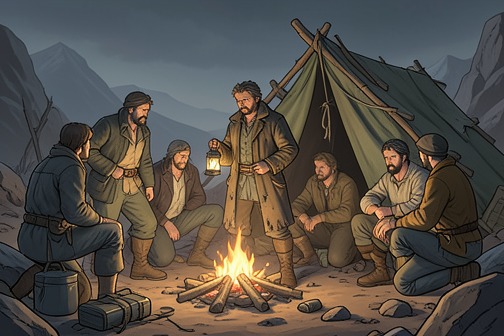
[The Founding of the Bronæl Colony](entity:event-recall-event-the-founding-of-the-bro-b761a4b032a0) is the political and communal turning point that converts Brask’s fugitive survival into a collective experiment in freedom. What begins as a desperate attempt to escape imprisonment and execution develops into a settlement for people who want to practice their religion without interference, even though the colony remains exposed to the possibility of pursuit by the Science Board.
## Causes and Background
Brask’s colony exists because ordinary legal survival has become impossible. After Brask killed Nylæq, there was no realistic prospect of a pardon, regardless of the circumstances surrounding the killing. For Brask and those who stood with him against [Din](entity:character-recall-character-din-18938ccce7b2), death had to be faked because only the appearance of death could keep them from a [Stlozyn](entity:creature-recall-creature-stlozyn-25c0edab8dc8) prison or something worse. [Biryl](entity:character-recall-character-biryl-2c4e6f61839b)’s decision to falsify their deaths therefore functions as the practical precondition of the colony: concealment is not incidental to its founding but the means by which its inhabitants remain alive and free.
The settlement was not formed by Brask alone. A substantial part of the crew that had supported him against Din followed him to the planet where the colony was established. The planet was not especially welcoming, but it was survivable, and that limited safety was enough to make it preferable to capture. The founding thus carries a double character. It is an act of resistance and a retreat, built not from victory over Stlozyn power but from the fugitives’ ability to disappear beyond its immediate reach.
## The Refuge Takes Shape
The colony’s earliest arrivals included farmers sent by [Trafin](entity:character-recall-character-trafin-0a8389e826af). They were seeking the same freedom of religious practice that had drawn Brask and his companions away from Stlozyn control. Their arrival widened the settlement’s purpose beyond the refuge of a single rebel crew: [Bronæl](entity:location-recall-location-bron-l-929a4ea959d7) became a destination for people whose convictions made conventional life dangerous or intolerable.
The next group consisted of low-ranking scientists who likewise wanted to practice their religion freely. Their presence makes the colony unusually heterogeneous, bringing agricultural workers and scientific personnel into the same precarious community. The shared principle is not profession but religious liberty. Bronæl is held together by a common refusal to accept the Science Board’s authority over belief, rather than by a single occupation, ancestry, or military structure.
The colony’s social reality is also domestic and immediate. Brask is recovering from his injuries and cannot safely carry the triplets, while [Libba](entity:character-recall-character-libba-35dfe73fe44c) manages the crying infants and the demands of daily care. Biryl complains about parenthood and the exhaustion of helping, yet Brask understands that Biryl will not abandon them. The babies, the nursery, and the labor of keeping the household functioning place the colony’s political founding beside the ordinary work of sustaining life.
## Government and Danger
Bronæl’s freedom is conditional. Every new arrival increases the possibility that the Science Board will locate the settlement. The colony therefore faces a contradiction at its center: it must accept people fleeing the same oppressive conditions that created it, but each act of welcome may make concealment more difficult. Brask recognizes the danger without treating it as sufficient reason to close the settlement. He cannot turn away people who want the same form of life he does.
That tension leads directly to the need for government. The community cannot remain only a hidden refuge organized around personal loyalty to Brask and the memory of Din’s defeat. Elections are being planned, and Brask expects to be chosen. His expectation is not presented merely as a claim to authority; he is already thinking about what the colony should become if the inhabitants place responsibility in his hands. The founding therefore includes an unfinished constitutional moment: Bronæl has achieved escape, but it has not yet completed the transition from fugitives gathered together to a political community.
## Consequences and Significance
The colony’s immediate achievement is survival with a purpose. Its residents are not simply hiding; they are attempting to build a place where religion can be practiced freely, where newcomers can be received, and where collective decisions can eventually be made through elections. The settlement’s political promise remains fragile because it depends on secrecy, but its existence demonstrates that the fugitives’ resistance has produced more than continued flight.
Brask’s position within this new community also changes. He remains physically weakened and dependent on others while recovering, yet he is already imagining himself as a future elected leader. The contrast between his inability to lift the infants and his readiness to plan the colony’s government gives the founding its distinctive scale: political authority grows out of wounded bodies, childcare, forged deaths, and improvised refuge rather than from an established state apparatus.
Bronæl’s founding also belongs to a broader pattern in which restrictive institutions attempt to regulate identity, belief, and communal knowledge. Elsewhere, sacred or social membership is controlled through public ceremony, guarded secrets, and formal tests. The colony answers that logic through voluntary assembly. Its inhabitants choose one another as fellow refugees, and its projected government is electoral rather than imposed by a priesthood or scientific authority. The result is not a secure utopia—the threat of discovery remains explicit—but a community whose founding principle is that freedom is worth the risk of extending shelter to others.
Event 59
The Darkwing Flight to Kinai

[The Darkwing Flight to Kinai](entity:event-recall-event-the-darkwing-flight-to-20632a8e82f0) marks the first day of Teresa’s life after captivity and the moment when her escape from one society becomes an entrance into another. Transported from Wallaria by Kenner and the Darkwing Squadron, she discovers that the [Kinai](entity:location-recall-location-kinai-8c60014d50cf) are dragons, travels across a vast stretch of ocean to their volcanic homeland, and arrives with the possibility of making Kinai her new home. The flight therefore functions not merely as transportation but as a threshold: Teresa leaves behind the identities imposed on her and begins confronting a future whose freedom is real but conditional.
## Departure from Wallaria
Teresa begins the journey after a night of emotional exhaustion in which Kenner has provided her with suitable travel clothing and a proper bed. She sleeps almost immediately, treating the rest as her first opportunity to recover since her abduction. In the morning, she dresses in a thick woolen coat and trousers, fur-lined boots, and a hat, without yet understanding why such heavy protection will be necessary. Her discarded garments represent the life she rejects, while the unfamiliar clothing prepares her for a climate and mode of travel she cannot imagine.
The departure takes place in the [Central Square](entity:location-recall-location-central-square-5e9ed97b74ce), where the Darkwing Squadron gathers alongside the Emperor of Skatia and his entourage. Lady Esplyn is present, and Teresa feels the force of her former mistress’s anger, as well as the hostility of a Kinai woman nearby. The difference is that Teresa no longer accepts concealment as her proper position. She straightens her back, lifts her chin, and recognizes that she is a free woman, or as free as circumstances currently permit. That change in self-perception precedes the physical departure: she is already beginning to move away from the status of property before the squadron leaves Wallaria.
Kenner assigns [Arul](entity:character-recall-character-arul-abb35db883ff) to look after her while he completes the diplomatic formalities. Arul places her in what is unmistakably a wooden crate, though it is padded with woolen blankets and large enough for her to sit or lie down. The crate contains water, bread, and cured meat, and its panels can be secured against the cold. Teresa initially finds the arrangement absurd because there are no visible vehicles in the square, but she has chosen to trust Kenner. She enters the crate, and leather straps fasten the panels around her, turning an object associated with confinement into the vessel of her escape.
## The Dragon Revelation
The meaning of the promised “flight” becomes clear when the squadron lines up at the far edge of the Central Square. One by one, the members run across the stone and change shape while moving. Tails and wings emerge; hands and feet become powerful clawed limbs; their necks and heads lengthen; their armored bodies expand until they take to the air with roars that shake the roofs of Wallaria. Teresa’s bewilderment becomes astonishment as the concealed nature of the Kinai is exposed before her.
She realizes that the Kinai are dragons. The revelation changes the journey’s stakes because Teresa is no longer traveling with an ordinary military escort or merely entering an unfamiliar human territory. She is being carried into the homeland of a secret nonhuman people whose identity is powerful enough to require protection. Kenner does not conceal the truth at the crucial moment. Instead, he kneels to meet Teresa’s eyes, takes pride in the squadron above them, and assures her that he will carry her crate himself.
Kenner’s transformation is more intimate and more frightening than the squadron’s collective display. In dragon form, he is covered in large dark scales, with leathery wings occupying much of his size. Crests run from his brow along his head and spine to the tip of his tail, and his eyes remain recognizably the same as in his humanoid form, though vastly larger and brilliantly vivid. His claws scrape across the paving stones, and his mouth contains serrated teeth. Teresa’s sudden fear is physical and immediate: she wonders whether the creature approaching her might treat her as food. Kenner answers that fear without violence. He blinks at her as if to reassure her, then lifts himself into the air and takes the crate with the claws of his hind legs.
The flight creates a sharp reversal in Teresa’s understanding of danger. The dragon is terrifying, yet he is also the protector carrying her away from captivity. Once airborne, the buildings shrink into toys and the people into ants. Terror gives way to wonder when Teresa recognizes the extraordinary position into which her circumstances have placed her: she is the only human being in existence to have received a lift from a real dragon. The scene turns the monstrous into a means of rescue without erasing its strangeness.
## The Endurance Voyage
Kenner has warned Teresa that the journey will take time, and the voyage proves to be an endurance flight designed for safe arrival rather than speed. The squadron travels west for nearly all the daylight hours. Teresa estimates that [Elamaren](entity:location-recall-location-elamaren-178fead50e30) may be larger in surface area than [Earth](entity:location-recall-location-earth-a6b883af9147), because the crossing remains so extensive even while the dragons maintain their course. Her calculation emphasizes the scale of the world she is entering and the distance separating Kinai from the places that defined her captivity.
Teresa refuses to sleep through the central stretch of the voyage. Wrapped in blankets inside the crate, she watches through its small window and remains absorbed even while the squadron crosses an immense expanse of water. The crate’s enclosure still recalls confinement, but the window transforms it into a viewing place. She is no longer being hidden from the world; she is studying a world that has opened beneath her.
The landscape gradually reveals Kinai as a volcanic archipelago. The islands have black sands and are joined by bridges of dark stone, while a belt of dangerously sharp obsidian rocks cuts around them. The largest southern island bears a tall volcano. Another appears almost entirely covered by thick forest and contains azure pools whose warm water sends wisps of steam into the air. The obsidian ring recalls the teeth of Kenner’s dragon form, linking the geography of Kinai to the bodies of its inhabitants. Teresa finds the islands beautiful and looks forward to making them her new home.
## Arrival in Kinai
The squadron lands on a large central island in a clearing spacious enough to accommodate all of the dragons. The landing brings Teresa back from the open sky into a community organized around the [Long House](entity:location-recall-location-long-house-3483df2cc7cb), whose wooden walls are decorated with intricate swirling patterns burned into the surface. Ten elderly men and women wait for the returning squadron. Their lack of visible surprise at Teresa suggests that her arrival has been anticipated or accepted as a matter requiring no public spectacle.
The welcome is practical rather than ceremonial. One of the older women helps Teresa, stiff and strained after the long trip, into the Long House, feeds her warm stew, and settles her by the fire. After the cold air and prolonged confinement of the flight, food and warmth provide the first tangible signs that Teresa is being received as a person rather than transported as an object. Her journey ends not with immediate freedom from all restrictions, but with physical care and the prospect of belonging.
Kenner also begins disclosing the rules governing that possible belonging. Teresa asks about Joining, expecting him to refuse, yet he explains that Joining is what makes the Kinai who and what they are. Every twenty-five years, all Unjoined Kinai men and women older than twenty and younger than thirty spend the winter at the [Rookery](entity:location-recall-location-rookery-9e0fa67f09fd), when the beastlings hatch. The information is secret, and Teresa immediately recognizes that Kenner should not have told her. His decision to trust her mirrors her decision to trust him, creating a reciprocal bond that has carried her from Wallaria to Kinai.
## Narrative Significance
The Darkwing Flight to Kinai combines escape, discovery, metamorphosis, and initiation. Teresa’s movement begins in an object that resembles a prison but ends in a homeland whose landscape, species, and customs are entirely new to her. The same journey that exposes the danger of the Kinai also reveals their capacity for protection: Kenner’s claws, wings, and teeth are frightening, but they are placed between Teresa and the vulnerability of the open world rather than against her.
The event also establishes a pattern of conditional freedom. Teresa is no longer under Lady Esplyn’s control, and she openly carries herself as a free woman, but access to Kinai society depends on secrecy and on the possibility of Joining. Her arrival is thus a threshold rather than a conclusion. The flight removes her from captivity, grants her a new view of the world, and brings her to the edge of a community that may accept her only through rules she has just begun to learn.
Event 60
Teresa's Initiation into Kinai Society
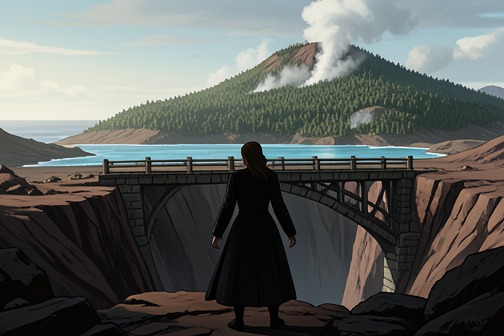
[Teresa's Initiation into Kinai Society](entity:event-recall-event-teresa-s-initiation-int-2176201bd472) is the threshold event through which Teresa begins a new life among the [Kinai](entity:location-recall-location-kinai-8c60014d50cf) after leaving Skatia. Her arrival is not a simple welcome or a completed transformation into Kinai society. It is a negotiated admission shaped by the community's memory of conflict, the secrecy of Kinai culture, and Kenner's personal willingness to stake his authority and safety on her good faith. Teresa enters a beautiful island world as both a guest and a suspected enemy, and her integration proceeds through labor, language, daily contact, and the slow earning of trust.
## Arrival in Kinai
Teresa reaches the Kinai islands after a voyage that carries her across open water and past volcanic landscapes, black sands, dark-stone bridges, and sharp obsidian rocks rising from the sea. She is especially struck by the islands' contrasts: one bears a tall volcano, while another appears to consist of dense forest and warm azure pools veiled by steam. The beauty of the territory makes her eager to claim it as a home, but the landing immediately places her within a formal communal structure rather than granting her private freedom.
The squadron lands near the center of the islands in a clearing large enough for the entire force. Ten elders wait outside the [Long House](entity:location-recall-location-long-house-3483df2cc7cb), whose wood is marked with intricate swirling patterns. An elderly woman helps Teresa, stiff and exhausted from the journey, into the building, gives her warm stew, and seats her by the fire. This is the first visible gesture of welcome, yet it is accompanied by uncertainty. While Teresa receives food and care, Kenner, [Arul](entity:character-recall-character-arul-abb35db883ff), and another squadron member speak with the elders in Kinai. Teresa cannot understand the discussion, although the language's sweetness and musical quality strengthen her determination to learn it.
The scene therefore establishes initiation as a divided experience. Teresa is physically brought inside and cared for, but socially she remains outside the conversation that will determine her future. The elders' restraint gives nothing away, and Teresa must wait for Kenner to explain that the meeting concerns the squadron's visit to Skatia and the reasons for bringing her back with them. Her first entry into Kinai society is thus marked by hospitality without full inclusion and proximity without authority.
## Conditional Acceptance and Surveillance
Kenner later tells Teresa that some Kinai fear she is a Skatian spy. Their suspicion is grounded in prior experiences with the Empire and in recent Skatian actions that suggest another confrontation may be approaching. Teresa is not judged solely as an individual; she is also treated as a possible representative or instrument of a hostile power. Her status as a former slave does not erase the political danger attached to her origin.
The elders offer two possible arrangements. Teresa may be confined to non-critical areas, or she may receive access to the entire territory under two non-negotiable conditions. First, she may enter certain areas only when Kenner accompanies her. Second, if any Kinai proves beyond reasonable doubt that she is working against them, her life will be forfeit and she will be executed immediately. The terms turn citizenship or residence into a continuing test. Teresa is not merely asked to behave well; she is required to demonstrate that her presence does not endanger the community's territory and secrets.
Kenner gives Teresa the decisive choice over which arrangement she will accept. He has managed to preserve that much autonomy for her, even while acknowledging that the restrictions are unjustly limiting. Teresa recognizes that the narrower option is wiser, and Kenner agrees, while insisting that the permitted areas are still extensive enough for her to build a life and prove the elders wrong. This exchange makes the event a conditional initiation rather than an act of passive rescue. Teresa's future is constrained, but she is allowed to select the form of constraint under which she will live.
## Learning a New Home
Teresa's integration develops through ordinary routines rather than a single public ceremony. Kenner prepares temporary lodging for her in his home, making a makeshift dais from blocks and planks and placing a thick straw mattress on top. The humble arrangement reflects both the unsettled nature of her position and the practical care through which Kinai belonging begins. She is not yet fully established, but she has a place to sleep and a domestic setting from which to encounter the community.
The next morning, Teresa and Kenner fall into an easy routine. They eat breakfast together; Kenner then leaves for training, reconnaissance flights, or other work with the Darkwings, while Teresa cleans up and attends [Elder Fanag](entity:character-recall-character-elder-fanag-5448430acd43). The elder takes a liking to her and introduces her to Kinai language, history, and customs, although the restrictions imposed on Teresa limit how completely that education can be put into practice. Teresa also helps people who need an extra pair of hands. When no work is available, she travels among the islands in the areas where she is free to move, learning the territory and allowing its inhabitants to become accustomed to her presence.
This pattern gives Teresa a form of agency that is different from the formal freedom she lacked as a slave. She contributes through domestic work, service, study, and movement within defined boundaries. Kenner is pleased by her activity and independence, but he also values the moments when she seeks him out. His role is not to isolate her; he tries to remain close enough to help if she falters while allowing her to find her own way. The relationship becomes part of the bridge between Teresa and the society she is entering, but the bridge does not replace Teresa's own work of adaptation.
## Trust, Cultural Secrecy, and Joining
As days pass, spring becomes summer. Reports of Skatian ships circling the [Obsidian Ridge](entity:location-recall-location-obsidian-ridge-15c40b6492a3) continue, though they become less frequent, and the Darkwings remain vigilant. Against this background of external danger, Teresa's social position gradually improves. She is still treated as a stranger, but she becomes increasingly welcome and makes several friends. Her effort to prove herself worthy of trust is visible to the Kinai, as is the speed with which she masters their language, even though her accent remains imperfect.
Acceptance never becomes unanimous. Kenner's Second Lieutenant, [Mara](entity:character-recall-character-mara-ec562f2ea236), remains the main force behind the belief that Teresa is a viper within the community. Her hostility began with comments about the slave girl Kenner purchased with nearly half of his assets, a decision that had already made the entire squadron question his judgment. Teresa's presence therefore continues to expose divisions within the Kinai: some people respond to her labor and openness, while others interpret the same foreignness as evidence of danger.
Kenner nevertheless begins to disclose cultural knowledge that he should arguably keep secret. He explains that a Joining is what makes the Kinai who and what they are. Every twenty-five years, all Unjoined Kinai men and women older than twenty and younger than thirty spend the winter at the [Rookery](entity:location-recall-location-rookery-9e0fa67f09fd), where the beastlings hatch. Teresa immediately understands that she should not have been told this, and Kenner answers by asking her to keep the secret as he will. The disclosure deepens her intimacy with Kinai society while also making the boundary around that society unmistakable. She is being taught the meaning of belonging before she has been formally granted it.
The Joining thus becomes the future horizon of Teresa's initiation. The evidence does not show her completing the rite, and her integration remains conditional, but Kenner's explanation reveals that Kinai identity is tied to guarded communal knowledge and a recurring generational practice. Teresa's potential acceptance depends not only on living among the Kinai but on respecting the secrets through which they define themselves.
## Significance and Limits of the Event
Teresa's initiation dramatizes the difference between physical escape and social freedom. She has left the slave system behind, yet she enters Kinai under surveillance, with restricted access and a death sentence attached to proven betrayal. At the same time, the Kinai do not reduce her entirely to her past. An elder feeds her, teaches her, and introduces her to the islands; Kenner protects her choice and dignity; ordinary residents gradually respond to her effort; and Teresa actively learns the language, history, customs, and work of her new surroundings.
The event's central movement is therefore neither rejection nor complete assimilation, but earned and reversible belonging. Teresa crosses the geographic threshold into Kinai territory, passes through a period of political and cultural uncertainty, and begins to re-enter communal life through service and knowledge. Her arrival beside the Long House, her confinement to approved areas, her daily work with Elder Fanag, and her glimpse of the secret Joining system all belong to the same process: an outsider is permitted to approach the center of a society whose trust must be proved rather than assumed.
By the end of the initiation sequence, Teresa has not become unconditionally Kinai, but the balance has shifted. The community's suspicion remains, especially through Mara, and Skatian ships continue to make the islands uneasy. Yet Teresa has a home, a routine, friends, growing linguistic command, and Kenner's confidence. Her integration is presented as a sustained ethical practice: she must keep showing what kind of person she is, while the Kinai must decide whether their fear of history will prevent them from recognizing the individual standing before them.
Event 61
The Skatian Attempted Invasion of the Rookery
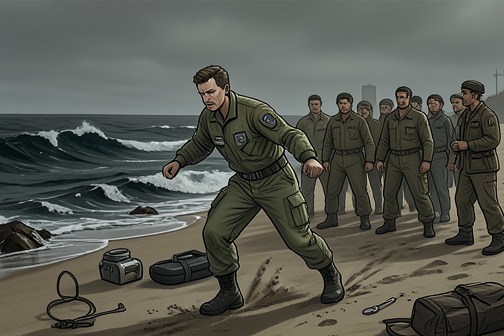
[The Skatian Attempted Invasion of the Rookery](entity:event-recall-event-the-skatian-attempted-i-32289935d08e) is the sudden military threat that shatters the fragile peace surrounding the [Rookery](entity:location-recall-location-rookery-9e0fa67f09fd). After only three days of lovers’ bliss, Kenner’s private happiness is interrupted by the premature return of [Arul](entity:character-recall-character-arul-abb35db883ff) and [Mara](entity:character-recall-character-mara-ec562f2ea236), whose frightened appearance signals that the sanctuary’s secrecy has failed and that Lady Esplyn’s House may be involved.
## Causes and Background
The crisis begins with the discovery that outsiders have learned of the Rookery, a place whose existence is treated as highly confidential. Arul and Mara return from a reconnaissance flight far earlier than expected, making their fear and panic immediately visible. Their return is not a routine report but an emergency warning: hostile forces are already probing the sanctuary’s defenses.
Mara attributes the breach directly to Teresa, the woman Kenner brought to the Rookery. She accuses Teresa of telling the [Skatians](entity:creature-recall-creature-skatians-8699dd6257b2) about the sanctuary loudly enough for passersby to hear, turning a military emergency into a personal accusation. Her anger makes the charge difficult to evaluate, and Kenner decides that she is too unstable at that moment to provide a coherent account. The accusation nevertheless establishes the central suspicion surrounding the invasion: whether Teresa’s presence has unintentionally endangered the entire community.
## Discovery of the Threat
Arul provides the concrete evidence that changes the situation from rumor to imminent invasion. He reports seeing a pair of kayaks attempting to reach the Rookery from the Ridgeside. Mara remained behind to fight them off while Arul flew ahead to determine whether additional attackers were concealed nearby. The attackers are therefore not merely gathering information from a distance; they are attempting to approach the sanctuary directly and testing its defenders.
Arul has also seen a Skatian ship. Its main sail carries symbols woven into it that identify Lady Esplyn’s House, linking the expedition to a specific political faction rather than to unidentified trespassers. This detail gives the threat a recognizable source and raises the stakes for Kenner and the Rookery. The ship’s markings suggest that the attempted incursion is organized, deliberate, and connected to the same House associated with Esplyn.
## Participants and Immediate Stakes
Kenner receives the report with terror and recognizes that the news is disastrous for more than one reason. His first response is defensive of Teresa: he insists that she could not have revealed the Rookery’s location. His claim is not based on a newly produced explanation but on his conviction that Teresa is innocent, creating a sharp contrast between his loyalty to her and Mara’s certainty that she is responsible.
Arul, acting as the reporting second and as a participant in the reconnaissance, cannot offer Kenner reassurance. He accepts that Teresa might not be guilty only conditionally, saying that he wants to believe Kenner for Kenner’s sake, then immediately asks who else could have told the Skatians. His response keeps the question open while showing how quickly the invasion has begun to corrode trust within the Rookery.
Mara’s role is more active and confrontational. She fights the kayaks at the Ridgeside while Arul advances to search for further enemies, placing both defenders directly between the Skatian expedition and the sanctuary. [Elder Fanag](entity:character-recall-character-elder-fanag-5448430acd43) then enters the gathering crowd and rejects the accusation against Teresa on factual grounds: Teresa does not even know that the Rookery exists, and Fanag has never mentioned it to her. Fanag’s intervention supplies the strongest immediate challenge to the theory of Teresa’s betrayal.
## Reversal and Consequences
The attempted invasion produces a decisive reversal in the emotional movement of the chapter. Kenner and Teresa’s period of lovers’ bliss lasts only three days before fear, military danger, and public suspicion replace intimacy. The threat is therefore both external and internal. Skatian forces approach the Rookery from outside, while accusations divide the people who must defend it from within.
The sight of Lady Esplyn’s House symbols also changes the meaning of the earlier secrecy. The Rookery is no longer merely a protected place whose location must be concealed; it has become a strategic target. Arul’s report of the ship, combined with the attempted approach by kayak, indicates that the enemy may possess enough information to locate the sanctuary and enough determination to reach it. Mara’s fight prevents the first approach from succeeding, but the presence of a ship suggests that the danger has not ended with the intercepted kayaks.
The event leaves the question of Teresa’s innocence unresolved rather than proving either side correct. Kenner’s defense, Mara’s accusation, Arul’s doubt, and Fanag’s testimony create competing interpretations at the exact moment when the community needs unity. That unresolved suspicion becomes part of the invasion’s damage: even before a larger battle occurs, the Skatian expedition has forced the Rookery to confront the possibility of infiltration, betrayal, and compromised security.
## Narrative Significance
As a plot event, the Skatian Attempted Invasion of the Rookery functions as a sudden incursion and a test of communal trust. Its most important movement is from private happiness to public danger, with the lovers’ brief peace serving as a measure of how abruptly the sanctuary’s isolation collapses. The event also turns knowledge into a weapon: the decisive question is not simply whether the Skatians are attacking, but how they discovered a place Teresa allegedly did not know existed.
The scene’s tension comes from the gap between what the characters know and what they fear. Arul has seen the kayaks and the marked ship, but no one yet knows who disclosed the Rookery or whether the expedition represents a larger force. Kenner’s insistence that Teresa is innocent provides emotional resistance to the accusation, while Elder Fanag’s statement gives that resistance a practical foundation. The invasion thus begins not with a settled betrayal but with a community forced to defend both its sanctuary and its understanding of whom it can trust.
Event 62
The Rookery Betrayal Accusation
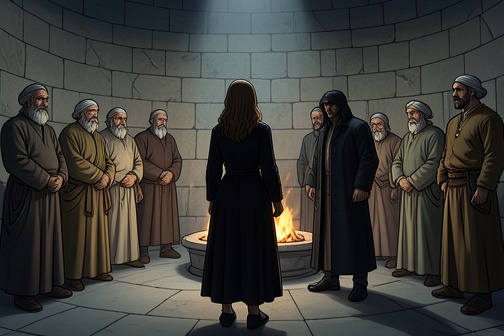
[The Rookery Betrayal Accusation](entity:event-recall-event-the-rookery-betrayal-ac-6ec0a2286a1b) is a turning-point event in the [Kinai](entity:location-recall-location-kinai-8c60014d50cf) storyline: an allegation of treason transforms Teresa from a tolerated outsider into the target of a potential mob execution. The charge is not supported by proof that she betrayed the [Rookery](entity:location-recall-location-rookery-9e0fa67f09fd), but by a chain of circumstances Kenner helped create. His decision to reveal forbidden information to Teresa, combined with [Mara](entity:character-recall-character-mara-ec562f2ea236)’s jealousy and the testimony of a witness, makes innocence appear indistinguishable from guilt until Kenner acts decisively to remove Teresa from danger.
## Causes and Background
The Rookery is a secret and strategically important place whose existence is protected by Kinai rules. When [Skatians](entity:creature-recall-creature-skatians-8699dd6257b2) are discovered attempting to infiltrate it, the community immediately searches for someone who could have disclosed its location and the route through the surrounding Ridge. [Elder Fanag](entity:character-recall-character-elder-fanag-5448430acd43) insists that Teresa could not be responsible because Teresa does not even know the Rookery exists and Fanag never told her about it. That defense establishes the central contradiction of the accusation: the elders regard Teresa as ignorant of the secret, while Mara claims that Kenner personally gave her the necessary knowledge.
Kenner did, in fact, violate the community’s restrictions. Three nights earlier, he took Teresa to the [Isle of Ponds](entity:location-recall-location-isle-of-ponds-5d7eba489782) and told her everything, including information about how the Ridge could be navigated to reach the Rookery. The disclosure occurred during a private encounter that Kenner believed belonged only to the two of them. It was not private, however. Mara and the youngest member of the Squadron were concealed in the woods while sharing an intimate moment of their own, and they overheard Kenner’s conversation with Teresa. The witness confirms that Kenner brought Teresa to the perches and that the pair discussed the route. The scene therefore supplies a genuine clue, but not the conclusion Mara draws from it: it proves that Teresa received sensitive information, not that she passed it to the Skatians.
Mara’s personal history with Kenner intensifies the institutional dispute. Kenner admits that he and Mara were once involved, but he believed the relationship had ended. He describes her passions as excessive and acknowledges that [Arul](entity:character-recall-character-arul-abb35db883ff) had warned him about her, yet he continued to dismiss the danger because Mara was one of the Squadron’s two best fliers and he did not want to send her away. Her accusation is thus embedded in a conflict between military responsibility, wounded attachment, and the community’s fear of infiltration.
## The Accusation and Mob Threat
When Mara reveals that Kenner told Teresa about the Rookery, the gathering crowd falls silent in shock. She does not merely suggest that Teresa might be involved; she presents Kenner’s breach as proof that Teresa must be the traitor. The youngest Squadron member reluctantly corroborates the factual portion of her claim, saying that he and Mara saw Kenner land with Teresa and heard the conversation. His testimony gives Mara’s accusation public legitimacy even though he does not establish Teresa’s guilt.
The community’s response escalates immediately. Mara rallies supporters to form a mob and find Teresa, calling for Teresa to be burned as a witch. Elder Fanag tries to calm the crowd but fails. The accusation therefore changes value from suspicion to imminent mortal danger: Teresa’s status, safety, and life are all threatened at once. Kenner stands between the two sides, convinced in his heart that Teresa is innocent but unable to prove it. His private certainty has no institutional force against a public story built from accurate observations, incomplete knowledge, and Mara’s venom.
Kenner recognizes his own responsibility. If he had obeyed the rules and waited for Teresa to learn the Rookery’s secrets through the proper process, Mara would not have possessed such a persuasive narrative. He regards the disclosure as an act of foolishness committed for the pleasure of an evening with Teresa, and now understands that his personal disobedience may cost her life. The event’s irony lies in the fact that Kenner’s intimacy with Teresa creates the appearance of betrayal even as his knowledge of her character tells him she did not commit it.
## Kenner’s Intervention
Kenner decides that reaching Teresa before the mob is the only immediate way to save her. He takes to the sky in front of the astonished gathering, making his choice public before he has secured a defense. Mara shapeshifts and pursues him, but Kenner uses his flying advantage to open enough distance to lose her halfway to his destination. His knowledge of Teresa’s whereabouts gives him another advantage: she is helping a local farmer gather fruit on one of the Eastern isles.
He does not stop to explain the situation or negotiate with the people searching for her. He swoops down, carefully snatches Teresa from the ground, and flies with her out of Kinai territory. He carries her to a small, uninhabited atoll roughly one-third of the distance toward the [Firuzian Kingdom](entity:location-recall-location-firuzian-kingdom-b37329a6f751). The rescue is physically protective but emotionally shocking. Teresa is terrified, furious, and demands to know why he has treated her like an animal. Kenner’s action saves her from the immediate mob, yet it also makes the accusation appear stronger to anyone who already suspects her: the accused foreigner has been seized and removed by the very man who disclosed the secret to her.
Once they are isolated, Kenner tells Teresa that Skatians were seen attempting to enter the Rookery and that Mara has convinced everyone Teresa gave them the information and taught them how to use it. Teresa immediately denies the charge and reminds him that she spent virtually every moment outside work in bed with him during the preceding three days. Her statement is both an alibi and an accusation against the logic of the case: even if she had wanted to betray Kinai, the timeline leaves no plausible opportunity for her to have coordinated the infiltration.
Teresa begins to shake uncontrollably, and Kenner holds her tightly while assuring her that he believes her. He explains that Mara and the Squadron member overheard the conversation on the Isle of Ponds and that Mara is using the overheard material as proof. The embrace provides temporary physical security, but it does not resolve the political danger. Teresa understands that Kenner’s intervention may have confirmed the crowd’s suspicion, because a rescue that looks like concealment can be read as evidence of guilt.
## Investigation and Aftermath
Teresa refuses to remain passive after reaching safety. She asks what they should do next and argues that the situation cannot be left unchanged. She correctly predicts that the community will be even more convinced of her guilt after Kenner prevents them from reaching her. Her past as an investigator resurfaces as she begins asking structured questions about what is known, who witnessed what, and how the accusation might be tested.
Kenner identifies the only viable path forward: they must find the real culprit. This changes the event from an escape into an investigation. The immediate objective is no longer merely to hide Teresa from Mara’s mob, but to reconstruct the infiltration and locate the person who actually enabled the Skatians to approach the Rookery. Teresa’s questions and Kenner’s knowledge form a prospective partnership, joining her investigative discipline to his familiarity with Kinai’s territory, rules, and Squadron.
The accusation also permanently alters the relationship between Kenner and Teresa. Their intimacy had previously been a private source of pleasure and trust; after Mara’s disclosure, it becomes evidence with public consequences. Kenner’s breach of secrecy places Teresa in danger, while Teresa’s innocence forces him to confront the cost of protecting personal desire inside a rigid collective order. The event leaves them separated from Kinai, hunted by the community they hoped to navigate, and dependent on uncovering the truth before suspicion hardens into punishment.
## Narrative Significance
The event is built around an information imbalance. Mara knows that Kenner disclosed the Rookery’s route, the Squadron witness knows that the conversation occurred, Kenner knows Teresa is innocent, and the crowd knows only the most incriminating fragments. The reader is positioned to distinguish fact from interpretation: the text presents the overheard conversation and the accusation openly, while showing that the inference from disclosure to treason is unsupported. This creates a mystery whose central question is not whether Teresa received secret information, but who converted that information into an attempted attack on the Rookery.
The accusation also exposes how quickly communal security can become collective violence. The Rookery’s secrecy is treated as a matter of survival, but the response to the breach threatens an innocent person before any investigation is completed. Mara’s call to burn Teresa turns fear into spectacle, while Kenner’s flight turns personal loyalty into open defiance. Teresa’s threatened death, Kenner’s guilt, and the community’s panic all converge in one reversal: the rules meant to protect Kinai become the mechanism through which an outsider can be condemned. The event’s unresolved demand for a real culprit keeps the plot moving beyond the false accusation and makes truth-seeking the condition of Teresa’s survival.
Event 63
Kenner's Capture of Esplyn and the Kinai Trial
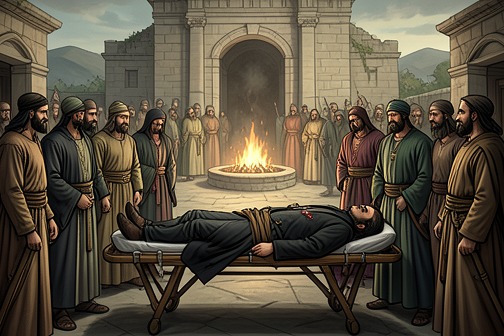
[Kenner's Capture of Esplyn and the Kinai Trial](entity:event-recall-event-kenner-s-capture-of-esp-115e689d2e44) is the turning point that rescues Teresa from a hidden execution and turns a private act of loyalty into a public reckoning with [Kinai](entity:location-recall-location-kinai-8c60014d50cf)'s governing institutions. Kenner returns to the [Central Isle of Kinai](entity:location-recall-location-central-isle-of-kina-d1c62367079a) exhausted but carrying the person who can connect [Mara](entity:character-recall-character-mara-ec562f2ea236) to the betrayal of the [Rookery](entity:location-recall-location-rookery-9e0fa67f09fd). The resulting trial establishes that Teresa was not merely a condemned outsider: she was the victim of a political scheme, and her survival depends on whether the community is willing to hear evidence that challenges its own verdict.
## Causes and Background
Kenner's intervention grows out of the secrecy surrounding the Rookery and the danger created when that secret is manipulated. He had previously trusted Teresa with forbidden knowledge of Kinai's Joining, the defining rite through which Kinai identity and communal belonging are produced. He explained that every twenty-five years, all Unjoined Kinai men and women between twenty and thirty spend the winter at the Rookery, when the beastlings hatch. The information was not casual lore: revealing it to an outsider could endanger the Kinai's most closely guarded institution. Kenner nevertheless chose to trust Teresa because she had trusted him, making their bond itself part of the event's political stakes.
The immediate crisis followed Teresa's disappearance and the discovery that she had apparently been imprisoned by Kinai authorities. Kenner's return therefore carries two demands at once. He must account for his own conduct, and he must establish what happened to Teresa before the sentence against her is carried out. [Elder Fanag](entity:character-recall-character-elder-fanag-5448430acd43) confirms the severity of the situation: Teresa has already been convicted and is awaiting execution. Yet Fanag also leaves a narrow legal opening, stating that new proof of Teresa's innocence, if verifiable, could still save her life. The trial begins inside that contradiction, with the Council claiming authority over Teresa while being forced to acknowledge that its judgment may be wrong.
## Kenner Returns with Esplyn
At sunset, Kenner reaches the Central Isle and hovers above the [Long House](entity:location-recall-location-long-house-3483df2cc7cb) until the Elders, the Darkwing Squadron led by Mara, and the gathered spectators are present. Still in his massive beastly form, he opens the paw of his left hind leg and drops an unconscious Skatian woman in tattered clothing onto the ground. Only then does he land. He is too exhausted to shift in the air, and the fatigue remains visible even after he resumes human form, giving the scene the quality of a hard-won return rather than a triumphant entrance.
Kenner identifies the prisoner as Esplyn of [House Rida](entity:organization-recall-organization-house-rida-3bac89596a86), the Skatian noble who once owned Teresa. He asks that Esplyn be kept in the cages of the Long House until she is strong enough to testify against the person who disclosed the Rookery's secret and location. His language is formally respectful, but the substance is unmistakably confrontational: he has brought evidence into a system that has already condemned Teresa. When Mara insists that Kenner no longer gives orders, he does not lose control or turn the confrontation into a physical struggle. Instead, he addresses the Elder and reminds the Council that he, too, is owed a fair trial, adding that Teresa deserves one as well.
Elder Fanag's response preserves the legal framework while intensifying the danger. She acknowledges that Teresa is imprisoned and awaiting execution, but declares that a verified witness could reopen the case. [The Council](entity:organization-recall-organization-the-council-0fbd30111435) postpones the testimonials until the following day so Kenner and Esplyn can rest. At the same time, Fanag orders that Esplyn be hosted under her protection and that the Darkwing Squadron guard Kenner. The arrangement is both hospitality and surveillance: Kenner may sleep at home, but the Squadron will not allow him to become a flight risk. The event thus places personal loyalty, military authority, and judicial procedure in the same confined space.
## The Trial and Mara's Exposure
During the hearing, the accusers speak first. Mara attacks Kenner's credibility, while her lover and [Arul](entity:character-recall-character-arul-abb35db883ff) repeat their earlier statements with little emotion. Kenner's defense strategy is procedural rather than impulsive. He asks for Esplyn to be brought before the court only after she has been kept separate, so that nothing could influence her testimony and so that she would not overhear information about the Rookery's true nature. The separation protects both the witness and the secret the Council is trying to defend.
Kenner then has Arul and other members of the Squadron who encountered Esplyn during the mission to Wallaria confirm her identity. Esplyn enters under guard, retaining her pride and elegance despite her captivity, and provides the missing account. She testifies that Mara appeared on the roof of her mansion and offered a bargain: Esplyn could recover Hele while also obtaining a free Kinai slave. Mara instructed her to send the best oarsmen in several kayaks to a designated place and time at the base of the volcano, where Mara promised to bring Hele and a bound, gagged Kinai boy.
According to Esplyn, Mara then abandoned the agreement, arrived with another associate, killed the men Esplyn had sent, and sank their kayaks. Esplyn's testimony also supplies a physical corroboration of the scheme: her ship remains in Kinai waters after Kenner dragged it onto the [Obsidian Ridge](entity:location-recall-location-obsidian-ridge-15c40b6492a3), and its crew can be questioned. The testimony is damaging because it does more than accuse Mara. It connects her to the attempted extraction of a Kinai captive, the attack on the Rookery's security, and the material evidence left behind by the operation.
Mara responds with a direct denial, calling Esplyn's account lies and claiming that Kenner paid her to commit perjury. Esplyn dismisses the accusation by pointing out that Kenner could not afford such a payment, then directs the Council toward the ship and its crew. The contrast between Mara's emotional protest and Esplyn's corroborating details shifts the trial's value from suspicion to proof. Once Mara realizes that her scheme has collapsed, she attempts to flee, but the Darkwings stop her before she can escape.
## Consequences and Aftermath
The immediate human consequence is Kenner's reunion with Teresa. While the crowd alternately congratulates the pair and jeers at Mara, Kenner runs to Teresa's side rather than remaining at the center of the courtroom spectacle. Mara is taken to the cages to await trial, while the Elders struggle unsuccessfully to restore order. Elder Fanag alone appears openly pleased, praises Kenner, and treats the result as the success she had expected from him, even though Kenner wisely avoids pointing out that her current position contradicts some of her earlier statements.
The legal aftermath extends beyond the initial confrontation. Esplyn is questioned further, and the Council determines that she was Mara's dupe and knew nothing consequential about the Kinai. Arul escorts her back to her home in Wallaria, while he also carries a chest of gifts from Kinai craftsmen to the Skatian Emperor as preemptive diplomatic damage control. The Council therefore separates the guilty plot from the manipulated witness: Esplyn is not treated as the central enemy, but as a person whose testimony exposed the person who used her.
Mara's own fate is tied to Kinai's understanding of the Joining. The Council concludes that her increasingly unstable behavior resulted from a Joining that had not gone exactly right, although it had initially functioned well enough for its fractures to remain hidden. She is sentenced to death, but hangs herself in her own home before the execution can occur, refusing to submit to anyone even at the end. Her death closes the judicial process through self-destruction, while also revealing that the institution that shapes Kinai identity can produce hidden damage as well as communal belonging.
For Kenner and Teresa, the trial ends not merely in survival but in restored intimacy and a new domestic future. They spend the first ten days of their reunion together, and the people of Kinai allow them that private time because the pair has paid a public price for the community's safety. Their reunion later results in twin children, a boy and a girl, born in the spring of the following year. As a further acknowledgment of Teresa's position, the Elders permanently lift the restrictions governing her life in Kinai and permit her to seek a Joining in the winter.
## Narrative Significance
The event is structured as a movement through separation, threshold, judgment, and reintegration. Teresa has been removed from ordinary communal protection and placed in the cages, while Kenner returns from outside the island carrying a witness who can challenge the official story. Esplyn occupies the threshold between enemy and evidence: she is a Skatian noble who once owned Teresa, yet her testimony becomes the instrument through which Kinai can correct its own judgment. The trial restores Teresa not by sentiment alone, but by forcing private loyalty to pass through public verification.
The event also makes secrecy morally unstable. Kenner's earlier decision to reveal the nature of the Joining to Teresa is technically a breach of Kinai's rule, but the later conspiracy shows that secrecy can be weaponized by those inside the community. His trial strategy does not ask the Council to abandon its guarded traditions; it asks the Council to apply its own standards of identity, testimony, and fair trial honestly. In that sense, the event contains both institutional preservation and institutional correction.
Its final movement joins legal vindication to social transformation. Kenner and Teresa emerge as a reunited couple, the twins mark the continuation of their family, and Teresa receives the right to pursue the Joining that had once been inaccessible to her. Mara's death, by contrast, leaves the damaged form of Joining as a warning about the costs of concealed fracture. The trial therefore resolves the immediate threat while broadening the meaning of Kinai belonging: it is no longer defined only by birth, secrecy, or ritual eligibility, but also by whether the community can recognize injustice and make room for someone it had nearly condemned.
Event 64
Teresa's Joining
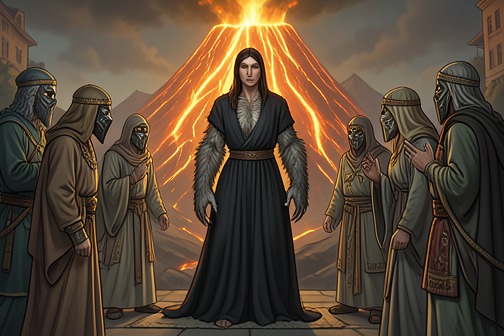
[Teresa's Joining](entity:event-recall-event-teresa-s-joining-5981308eec93) is the decisive rite through which Teresa ceases to be merely a human woman from [Earth](entity:location-recall-location-earth-a6b883af9147) and becomes [Kinai](entity:location-recall-location-kinai-8c60014d50cf) in body, allegiance, and social identity. It completes her integration into the society she first entered as an outsider, while also fulfilling the trust Kenner placed in her and giving their family a future within the Kinai community.
## Meaning and Preparation
Joining is presented as the central institution of Kinai identity rather than a private ceremony or a simple change of status. Kenner explains that every twenty-five years, all unjoined Kinai men and women older than twenty and younger than thirty spend the winter at the [Rookery](entity:location-recall-location-rookery-9e0fa67f09fd), where the beastlings hatch. The secrecy surrounding the practice reflects its political and biological importance: Joining is what makes the Kinai who and what they are, and successful candidates become bound to a nonhuman power that defines their place among the people.
Teresa learns about the rite only because Kenner chooses to break the silence surrounding it. He points toward the distant volcano while explaining the age requirements, the recurring twenty-five-year cycle, the winter gathering, and the hatching of the beastlings. Teresa immediately recognizes that he should not be telling an outsider such information, but Kenner accepts the risk because he trusts her as unconditionally as she trusts him. Their exchange makes knowledge itself part of the threshold: before Teresa can become Kinai, she must first be admitted into a secret that the community guards as fiercely as the rite.
## Delay, Marriage, and Family
Teresa's Joining does not occur immediately after her arrival in Kinai. Her story first passes through danger, separation, and reunion. After the crisis surrounding [Mara](entity:character-recall-character-mara-ec562f2ea236) and Lady Esplyn, Kenner and Teresa spend the first ten days of their reunion absorbed in one another, while the Blackwings govern themselves in their absence. Their renewed relationship leads to marriage, and their marriage soon produces twin children, a boy and a girl, born in the spring of the following year.
The children's birth changes the conditions of Teresa's life. As a gift to the new parents, the Elders permanently lift the restrictions that had governed Teresa's existence in Kinai and allow her to seek a Joining in the coming winter. The decision links private domestic happiness with public acceptance: Teresa is no longer treated simply as a tolerated human visitor, but as Kenner's wife and the mother of children whose future is tied to the Kinai community.
## The Rite and Transformation
Teresa initially intends to refuse the opportunity. She fears that the Joining may fail, and she does not want to risk leaving Kenner a widower or her children without their mother. Her hesitation gives the rite its real stakes. Joining is not a decorative initiation; it can determine whether a person survives, whether a family remains intact, and whether the candidate can bear the power being offered.
Kenner persuades her to proceed by asking her to have as much faith in herself as he has in her. With that encouragement, Teresa enters the process as a human woman from Earth and returns as a true Kinai. The transformation is described as a complete bodily and spiritual incorporation: she becomes Joined to the core of her being with a majestic beast, whose extraordinary power infuses every molecule of her body. The result is therefore neither assimilation by costume nor a ceremonial title. Teresa's physical substance, inherited identity, and relationship to the beast are remade together.
The transformation also makes Teresa a hybrid figure in the larger logic of the book. Elsewhere, bodies cross boundaries through the Draco's Eye, [bionic eyes](entity:object-recall-object-bbb6fc48b2ef), medical scanning, and inherited or engineered DNA. Teresa's Joining belongs to the same broad imaginative world of mixed human, animal, and technological possibilities, but its governing force is communal ritual rather than laboratory procedure. Her new identity is not described as a corruption of humanity; it is the means by which a former outsider gains a viable place in another species' society.
## Mastery and Recognition
The Joining itself is not the end of Teresa's ordeal. It takes her months to master the beast's power. This period preserves the difference between receiving a new body and learning to inhabit it. Teresa must develop control sufficient for the Squadron Commander and the lieutenants of the Darkwings to accept her ability, and her final recognition depends on demonstrated competence rather than sentiment alone.
Once she satisfies the military leadership, Teresa becomes the newest recruit of the Darkwings. Her acceptance into the squadron completes the social side of the transformation. The rite gives her the power, but disciplined mastery gives that power a public function. Teresa can now serve the community that once treated her as an outsider, and her belonging is confirmed through work as well as through marriage and motherhood.
## Consequences and Significance
After Teresa's recruitment, life continues through family, duty, and shared plans for the future. She and Kenner find fulfillment in their children, their work, and one another, while resolving present problems and preparing for what lies ahead. The emotional culmination is not a return to Teresa's former human identity but a life in which her two histories have been joined: Earth remains her origin, while Kinai becomes the society in which she lives, serves, loves, and raises her children.
The ending returns to flight as the image of completed belonging. When the twins are asleep and the world is peaceful beneath the stars, Teresa and Kenner take flight together, wing by wing. Their shared movement turns the Joining's initial danger into intimacy and freedom. The rite therefore changes the value at stake from fear of failed transformation to an embodied future: Teresa survives, gains command of the beast, joins the Darkwings, and participates fully in Kinai life. Her love with Kenner is no longer divided between human origin and Kinai destiny; it becomes the relationship through which both identities can move together.
Event 65
Gemma's Abduction and Shay's Revelation
[Gemma's Abduction and Shay's Revelation](entity:event-recall-event-gemma-s-abduction-and-s-5f6cd13e8ccb) marks the rupture between [Gemma](entity:character-recall-character-gemma-b1c21c6b476b)'s familiar life and the interspecies reality concealed inside her relationship with [Shay](entity:character-recall-character-shay-5a5fab224960). She is not merely told that her boyfriend has a secret past: she is removed from [Earth](entity:location-recall-location-earth-a6b883af9147), awakened on an alien ship, confronted with his nonhuman body, and informed that her pregnancy may be connected to a biological crisis affecting his people. The event therefore changes the meaning of both the romance and the pregnancy, while making Gemma's lack of consent central to the scene's moral and emotional force.
## Abduction and the Broken Ordinary World
Gemma's ordinary world is defined by intimacy with Shay and by the expectation that he is a human boyfriend. She has been with him for a year, is pregnant, and believes that his attentiveness distinguishes him from the failed relationships that came before. That confidence collapses when she reaches across the bed and finds only empty air. The absence is initially small and physical, but it becomes the first sign that the entire setting has changed around her.
She wakes in a room that is unmistakably not her apartment. A narrow cot juts from a wall, a single thick blanket covers her, and gleaming white walls surround a space otherwise stripped of furniture. She is still wearing flannel pajamas, a detail that makes the abduction more intrusive: she has not chosen to leave, prepared to travel, or even been allowed to understand that movement has taken place. When the wall opens and Shay appears, Gemma runs to him and embraces him, hoping his presence will restore the logic of home. Instead, he confirms that the experience is real and that they are no longer on Earth.
The event's first decisive value shift is from presumed safety to captivity. Gemma identifies what has happened with direct clarity: she has been kidnapped. Shay admits that he should have told her the truth before taking her, but his regret does not undo the structural fact that she has been transported without permission. His affection and his apology coexist with the violation, preventing the abduction from being absorbed into a simple romantic rescue or a harmless revelation.
## Shay's Alien Identity
Shay begins the revelation by withdrawing the identity he had performed for Gemma. He tells her that he is not from Europe, as he had claimed, and is not human. He identifies himself as a member of the [Stlozyn](entity:creature-recall-creature-stlozyn-25c0edab8dc8) species from [Bronæl](entity:location-recall-location-bron-l-929a4ea959d7). Gemma initially treats the disclosure as either a bizarre joke, a drug-induced delusion, or evidence that one of them has lost touch with reality. Her disbelief is not abstract; the physical room, the ship, and the pregnancy all resist her attempts to reinterpret the scene as a dream.
The proof is embodied in Shay's transformation. The fire-red dragon tattoo over his heart, which he had explained as a memorial to his grandfather, is actually an implant that produces a shimmering cloak and hides his true appearance. When Shay presses the implant, it detaches from his skin and his form blurs before settling into another configuration. His height, muscular build, facial features, and dark hair remain recognizable, preserving the lover Gemma knows within the body she does not know. Yet his skin becomes glittering emerald green, covered in tiny scales, and his eyes turn blood red. The revelation is consequently both continuous and alien: Shay has not become a different person in every visible respect, but the human surface that made his relationship legible has been exposed as technologically constructed.
Gemma's body registers the truth before her understanding can accommodate it. Her heart races, her breath fails, her head spins, and her legs give way beneath her. She collapses onto the cot while clutching the blanket, returning physically to the object that had seemed to be the only stable part of the room. The scene makes identity material rather than merely verbal. Shay's confession matters because the body, the implant, and the ship make concealment impossible.
## The Biological Stakes
Shay explains that his people face a disease causing infertility by infecting their genetic material. He presents himself as a scientist and says he believes human DNA contains the key to a cure. This explanation immediately recasts Gemma's pregnancy. She is not only a woman whose boyfriend has lied about his origin; she is carrying a child whose existence may be scientifically important to a population facing reproductive collapse.
The later explanation complicates the boundary between human and Stlozyn. Shay says that Stlozyn ancestors were humans taken from Earth centuries earlier. Their bodies were not simply remade from nothing: certain genes were made more pronounced, additional strands of DNA were inserted, and the resulting inheritance enabled shape-shifting. Shay's scales and Gemma's skin therefore represent divergent biological histories rather than an absolute separation between unrelated species. Their pregnancy becomes evidence that the two populations remain genetically connected, even as the differences between them have been made socially and physically consequential.
The scene also places reproduction inside a political and scientific framework. Gemma's pregnancy is personal to her, but Shay's people interpret human DNA as a possible communal resource. That collision creates the event's central ethical pressure: the same child can be understood as Gemma's pregnancy, Shay's hope for a cure, and a biological bridge between populations. The narrative does not allow those meanings to cancel one another. Instead, it makes the promise of healing inseparable from the coercion by which Gemma is brought to the ship.
## Technology, Concealment, and Embodied Difference
Technology governs the event at every level. It moves Gemma from Earth, enables Shay to pass as human, and reveals the distinction between his apparent and actual body. His shimmering cloak is not a metaphorical disguise but an implant with a practical research purpose: he needed to blend in. The device therefore connects scientific work to social concealment. Shay's human identity is not simply a false name; it is a technological condition maintained for access to a human environment.
The broader world surrounding Gemma confirms that the ship's technology is advanced enough to make her abduction seem almost seamless. Elsewhere in the narrative, medical scanning can construct a three-dimensional holographic image of a pregnant uterus and distinguish an embryo before it resembles a recognizable human baby. Such technology makes pregnancy newly visible while also making the pregnant body available for inspection. Gemma's experience is shaped by that same tension between knowledge and control: the ship can reveal what is inside her, but revelation does not automatically grant her authority over what happens next.
This technological setting also unsettles the boundary between natural and artificial bodies. Shay's alien appearance is concealed by an implant; his species carries added DNA that permits shape-shifting; and the pregnancy joins human and Stlozyn biological histories. The event treats identity as relational and layered rather than pure. Human appearance, alien ancestry, engineered genes, scientific purpose, and reproductive possibility all occupy the same body and cannot be separated without distortion.
## Consequences and Narrative Significance
The immediate consequence is Gemma's displacement from the world in which she believed she understood Shay. Her trust is damaged not only because he concealed his species, but because he acted on her body and movement without informed agreement. His admission that he was not thinking clearly explains his conduct without making it acceptable. The emotional structure remains deliberately unstable: Shay is the caring partner Gemma thought she had found, yet he is also the person responsible for taking her to a distant ship and withholding the truth.
The event reveals that Gemma's pregnancy is likely to have consequences beyond the couple. Shay's people face Stlozyn infertility, and the apparent compatibility of their bodies offers a possible route toward a cure. The child thus becomes a point where love, science, lineage, and collective survival converge. Gemma's initial horror at the idea of an alien child is matched by the later biological explanation that Stlozyn ancestors came from Earth, turning the revelation from a simple human-versus-alien divide into a history of separation and altered inheritance.
As a narrative threshold, the abduction has a pattern that recurs across the wider book: characters are removed from ordinary settings and placed inside institutions, ships, temples, laboratories, or supernatural communities where hidden rules become visible. Unlike a voluntary initiation, however, Gemma's threshold crossing begins in coercion. The contrast with rituals such as the [Kinai Joining](entity:state-recall-state-kinai-joining-dbc13549c076), which occurs among adults within a guarded communal tradition, is instructive: Joining marks formal entry into a society, while Gemma's arrival exposes how little power she has over entry into Shay's. Her story therefore turns the threshold motif into a question of consent and the right to define one's own identity.
The event's lasting significance lies in the way it makes disclosure irreversible. Once Shay's emerald scales, red eyes, alien origin, and scientific purpose are visible, the relationship cannot return to its earlier human disguise. Gemma must now understand herself as a pregnant human on a Stlozyn ship, linked to an alien population whose future may depend on the biology she carries. The revelation does not resolve the conflict; it establishes the terms on which every later decision about trust, pregnancy, species, and belonging will be made.
Event 66
The Science Board's Demand for Fetal Research
[The Science Board's Demand for Fetal Research](entity:event-recall-event-the-science-board-s-dem-34cb15498ac9) marks the moment when [Shay](entity:character-recall-character-shay-5a5fab224960)'s discovery of [Gemma](entity:character-recall-character-gemma-b1c21c6b476b)'s pregnancy ceases to be a private medical and emotional revelation and becomes a public crisis for [Stlozyn](entity:creature-recall-creature-stlozyn-25c0edab8dc8) society. The pregnancy appears to offer a possible answer to the infertility disease ravaging Shay's people, but the Board's proposed solution would place Gemma and her unborn child under coercive scientific control. Shay must therefore choose between institutional advancement and the protection of his family, and his refusal turns him from a celebrated researcher into an opponent of the authority that once defined his future.
## Causes and Scientific Stakes
Shay returned to [Bronæl](entity:location-recall-location-bron-l-929a4ea959d7) expecting the news of Gemma's pregnancy to be celebrated and broadcast through the information channels. He even imagined that it might lead to a human–Stlozyn breeding program. Instead, the Science Board ordered him to keep the pregnancy secret and reprimanded him. The reversal reveals how quickly wonder becomes containment when an institution encounters a biological possibility it cannot regulate.
The Board's interest is driven by the infertility disease devastating the Stlozyn population. [Niqæsh](entity:character-recall-character-niq-sh-19bed4453644), a bronze-scaled dragoness and member of the Board, tells Shay that his research may provide a cure, yet accuses him of refusing to take the necessary steps. Her charge is based on information supplied by [Wynon](entity:character-recall-character-wynon-bd18d58f4533), Shay's second, who proposed extracting DNA from the fetus developing inside Gemma. The Board considers fetal tissue especially valuable because DNA from a forming fetus would be more potent than material taken later. The language of research converts a developing child into a scarce resource, while the urgency of a population-wide crisis is used to justify removing the mother's power to refuse.
## The Board's Demand
When Shay enters the Board's throne room, the members sit high above him in blue, the color of discipline. Niqæsh presses him to acknowledge that he knows exactly what she means: Wynon reported that he rejected the fetal-extraction proposal and threatened her. The Board treats his emotional response as professional misconduct, even though the conflict concerns his own child and the human woman he brought back to Bronæl.
Shay answers that the fetus is his child and insists on naming Gemma rather than allowing her to remain merely the human carrying a specimen. He argues that his findings on [Earth](entity:location-recall-location-earth-a6b883af9147) already indicate that synthesized human DNA could be used to vaccinate uninfected Stlozyn against the disease. He further maintains that, after the child is born, DNA might be extracted without placing the baby at risk, and that continued research could eventually reverse the infertility crisis. His position does not reject science; it rejects the Board's demand that scientific usefulness outrank bodily safety and consent.
The Board rejects that distinction. Niqæsh concedes that fetal DNA would be more potent, then frames the refusal as a failure of duty. When Shay suggests a breeding program as an alternative way of addressing the population's need for children, she reveals that Wynon has formally requested custody of Gemma. The Board has agreed that giving the pregnant human to Wynon is in the best interests of Stlozyn society. Shay is told that he must comply or lose his position.
## Consent, Power, and Defiance
The confrontation makes the medical ethics of the pregnancy explicit. Gemma is not consulted by the Board before custody is demanded, and the proposed research would expose both her body and the fetus to risks chosen by others. Wynon's description of her as a specimen, together with the Board's insistence that her pregnancy is the key to curing Stlozyn infertility, shows how technical vocabulary can obscure the person who bears the danger. The promised benefit belongs to an entire population, but the immediate physical risk is imposed on one human woman and one unborn child.
Shay's objection is grounded in informed consent. He argues that experimenting on a fetus unable to give meaningful consent violates the very ethics that science claims to uphold. Niqæsh answers that ethics have little use if Stlozyn people are dying childless. Her response turns demographic fear into a political weapon: because the crisis is collective, individual refusal is portrayed as selfishness. The Board's reasoning also exposes a hierarchy of personhood in which Gemma's status as an outsider makes her easier to seize and the child becomes valuable chiefly as a cure.
Shay refuses to surrender either of them. His anger is so intense that a flicker of flame escapes his mouth, and he struggles to prevent his dragon from taking control. Yet the scene presents his restraint as deliberate rather than weak. He does not answer institutional violence with an uncontrolled attack; he makes a decision. He will take Gemma away from Bronæl, keep her safe, continue his research, and seek a cure before the baby is born. The order therefore produces the opposite of its intended obedience: the Board's attempt to monopolize the pregnancy drives its most promising scientist beyond its authority.
## Consequences and Narrative Significance
The immediate consequence is Shay's break with the official scientific structure. He is dismissed from the encounter under threat of losing his position, but his internal decision makes clear that professional status, his ship, and the prospect of a place on the Board are secondary to Gemma's safety. He intends to preserve the pregnancy and pursue the cure through methods that do not sacrifice the child. The event thus establishes the conflict that leads to the Science Board's later seizure of Gemma and its fetal-research program: the demand is not an isolated disagreement but the institutional premise for her abduction and experimentation.
The event also changes the meaning of Shay's discovery. At first, the pregnancy seems to promise celebration, public recognition, and perhaps a new reproductive future for two species. After the Board's intervention, the same pregnancy becomes a site of secrecy, surveillance, and threatened custody. Its scientific value increases the danger surrounding it. The child is simultaneously imagined as Shay's family, Gemma's pregnancy, and a possible biological instrument for saving an endangered people; the Board insists on the third definition, while Shay fights to preserve the first two.
Across the wider narrative, this confrontation echoes other scenes in which institutions regulate bodies through ritual, law, or custom. [Cheryl](entity:character-recall-character-cheryl-af54b6410705) is carried from the temple toward a royal future defined by reproductive duty before choosing a shared bond with Bjorn and [Maskin](entity:character-recall-character-maskin-5df12ba18891). [Kinai](entity:location-recall-location-kinai-8c60014d50cf) society restricts knowledge of Joining to preserve communal secrecy, while Harrod's transformation is witnessed as a den-wide rite of succession. Against those systems, the Science Board's order is notable for presenting coercion as rational administration. It claims to protect the species, yet its first practical act is to deny Gemma a choice.
The event's decisive value shift is from anticipated celebration to threatened captivity, and from scientific promise to moral resistance. Shay entered expecting recognition and left prepared to become a fugitive protector. The Board believes that the fetus may cure [Stlozyn disease](entity:state-recall-state-stlozyn-disease-66cf1a5638e9); Shay believes that a cure obtained by violating Gemma and the child would destroy the ethical foundation of the science meant to save them. His final resolve gives the pregnancy its larger significance: it is not merely evidence of cross-species fertility, but a test of whether a civilization facing extinction will preserve consent when survival appears to demand its abandonment.
Event 67
Wynon's Abduction and Accelerated Pregnancy Experiment
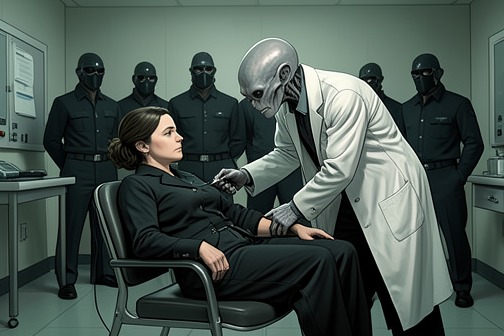
[Wynon's Abduction and Accelerated Pregnancy Experiment](entity:event-recall-event-wynon-s-abduction-and-a-cef5ebaedca0) transforms [Gemma](entity:character-recall-character-gemma-b1c21c6b476b) from a pregnant woman awaiting ordinary medical care into a captive biological specimen. The event begins with deception and sudden physical force, continues through an unauthorized experiment that accelerates the visible progress of her pregnancy, and exposes a society willing to suspend an individual's bodily autonomy in the name of collective survival. Its decisive horror lies in the contrast between the experimenters' public commitment to scientific knowledge and the secrecy, restraint, drugs, and coercion used against Gemma.
## Abduction from [Shay](entity:character-recall-character-shay-5a5fab224960)'s Apartment
Gemma is at Shay's apartment when the danger arrives through duplication. After Shay leaves, promising that he will return shortly because they must escape, Gemma turns and sees another version of herself lying on the bed, apparently asleep. The imitation creates a moment of impossible uncertainty before a hard, scaly hand covers Gemma's mouth and a sharp prick enters the back of her neck. A group of captors immobilizes her, and a feminine voice orders that she be taken away before Shay can use the tesseract drive. The abduction therefore depends on both technological or physical impersonation and precise timing: the captors exploit Shay's absence and expect his attempt to rescue Gemma to come almost immediately.
Gemma loses consciousness while trying to resist. When she wakes, restraints hold her in place, and she understands that the dragoness who took her has removed her from Shay's protection. She remains frightened but deliberately refuses to display that fear, clenching her hands and demanding to know what the captors want. Her first explanation is that they are attempting to steal Shay's research, but the dragoness rejects that assumption. In the [Stlozyn](entity:creature-recall-creature-stlozyn-25c0edab8dc8) system, science is public record, and hiding research is described as blasphemous. The contradiction is central to the event: knowledge is supposedly shared openly, yet Gemma herself is treated as secret property and denied any meaningful choice.
## The Experiment and Its Justification
The dragoness reveals the actual reason for the abduction. Gemma carries a child that the Stlozyn believe should not be possible, and the fetus is considered the key to curing their people. The experiment is thus framed as emergency research into cross-species reproduction and infertility, not as a personal act of revenge. That justification does not lessen the violence. The dragoness explicitly acknowledges that the procedure may kill or irreparably damage Gemma or the fetus, then argues that hundreds of future children outweigh one mother and one unborn child.
The language of necessity turns Gemma into an instrument. The dragoness evaluates her body according to its usefulness during the procedure, even commenting on her muscle and fat reserves as resources that might keep her from starving. Gemma's ordinary self-image and private concern about her weight are abruptly displaced by a medicalized assessment of her body as experimental material. Her pregnancy is no longer treated as an intimate condition requiring care; it becomes a source of samples, with her consent erased by the larger claim of species survival.
The procedure begins after the dragoness warns Gemma that it will be painful. Gemma experiences the experiment as bodily disintegration: a drip fills her blood with poison, her body shakes, her stomach cramps and churns, and she repeatedly vomits. She moves in and out of consciousness and loses any reliable sense of location or elapsed time. The narration makes the pregnancy's acceleration perceptible as a distortion of lived time. Gemma feels as if her body is being turned inside out, while her abdomen seems to expand so quickly that one part of her mind imagines she has been imprisoned for months. The experiment's violence is therefore both physical and temporal: it takes control of the developing pregnancy and of Gemma's ability to know what is happening to her.
## Discovery of the Accelerated [Pregnancy](entity:state-recall-state-pregnancy-cdafbf158725)
When Gemma regains enough awareness to answer questions, she identifies herself as being from Calgary, Alberta, [Earth](entity:location-recall-location-earth-a6b883af9147). The alien examiner notes that some memory loss is expected but that Gemma has retained her faculties. Gemma then sees the altered shape of her body and realizes the scale of what has happened. Her stomach is twice its former size and covered with bruises, making the experiment's effects visible before anyone explains them.
The dragoness confirms that the fetus is alive. She also discloses that she was not authorized to remove it and use its tender DNA, but that repeated samples taken as it grows will still be valuable. This distinction reveals a limited institutional boundary without restoring Gemma's rights: the fetus cannot be removed, yet the pregnancy may continue to be manipulated, sampled, and accelerated. The experiment has not been presented as a legitimate treatment for Gemma, and she is not told how long she has been held or where Shay is. Her body supplies the evidence of elapsed time that her memory cannot provide.
The captors continue to control her through intravenous drugs. When Gemma insists that Shay will find her and prevent the experiment, the dragoness answers that Shay has no say in the matter and adjusts the IVs. The drugs pull Gemma back into unconsciousness. Her final thought is directed toward Shay and toward the hope that he is coming to save her; the scene closes with the painful recognition that she has never told him she loves him. The event therefore ends not with a completed cure or a resolved medical finding, but with Gemma suspended between captivity, altered pregnancy, and uncertain rescue.
## Consequences and Narrative Significance
The experiment exposes the Stlozyn infertility crisis as a political and ethical pressure capable of converting scientific openness into coercive practice. The dragoness invokes the survival of an entire people, but the immediate method is the isolation of one human woman, the restriction of her movement, the administration of poison-like drugs, and the extraction of fetal material without consent. Gemma's condition demonstrates that advanced technology does not guarantee humane institutions; scientific development and social development remain sharply separated.
The event also raises the stakes of Shay's relationship with Gemma. Before the abduction, Gemma is anxious about her pregnancy and imagines that Shay may take her back to Earth, while Shay is already trying to move them out of danger. After the abduction, his role is no longer simply that of a romantic partner or scientist who can explain the alien world. He becomes the person Gemma expects to cross the boundaries of the Stlozyn scientific order and recover her. Her repeated conviction that he will find and save her supplies the emotional counterforce to the experimenters' claim that scientific duty must override personal attachment.
In the broader pattern of the book, the event belongs to a recurring conflict between ritualized or institutional authority and individual choice. [Cheryl](entity:character-recall-character-cheryl-af54b6410705) is transported from the temple into a fertility trial in which her body determines royal succession; the [Fifth Cycle Festival](entity:event-recall-event-fifth-cycle-festival-ede47c4975b3) turns a chosen Goddess into the property of a victor; and the Joining makes reproductive secrecy and communal identity part of [Kinai](entity:location-recall-location-kinai-8c60014d50cf) life. Gemma's case is more overtly medical and technologically controlled, but it follows the same structure: a community defines a woman's body as the mechanism through which collective continuity will be secured. Her resistance, fear, memory, and attachment to Shay keep the experiment from reducing her entirely to the specimen the captors claim to see.
Event 68
Shay's Raid on the Research Facility
[Shay's Raid on the Research Facility](entity:event-recall-event-shay-s-raid-on-the-rese-2e8c03eddbaa) is a rescue mission and a public reckoning. After the Science Board places [Gemma](entity:character-recall-character-gemma-b1c21c6b476b) in [Wynon](entity:character-recall-character-wynon-bd18d58f4533)'s custody and accelerates her pregnancy, [Shay](entity:character-recall-character-shay-5a5fab224960) refuses to wait for official action. He returns to [Bronæl](entity:location-recall-location-bron-l-929a4ea959d7) space, broadcasts what has been done to him and Gemma, assembles six intelligent fighters, and attacks the facility where Gemma is being held. The operation changes the immediate value at stake from captivity and imminent medical danger to liberation, while also turning concealed abuse into a matter the wider population can judge.
## Causes and Background
Shay launches the raid because Gemma remains in danger even after his broadcast has bought him time. He knows that public outrage may restrain the authorities, but he does not trust delay while Wynon controls Gemma and the pregnancy. The mission therefore begins as a calculated risk: Shay must estimate where Gemma is imprisoned, select capable fighters, and act before the Science Board can determine its next move.
The target is [Niqæsh](entity:character-recall-character-niq-sh-19bed4453644)'s research facility, one of the most recognizable buildings in the city. It is shaped like a crashing ocean wave, but its opaque green windows distinguish it from ordinary science buildings, whose transparent yellow windows signify the culture's expectation of research transparency. The building's concealment makes it an apt site for unethical experimentation: those outside cannot see what Niqæsh is doing inside. That contrast between public scientific ideals and sealed-off practice gives the raid a political dimension beyond the rescue itself.
## The Assault
Shay and his team approach after sunset in a small ship-to-planet transport vessel. The city is almost dark except for the Eternal Flame at its heart, while the [Stlozyn](entity:creature-recall-creature-stlozyn-25c0edab8dc8) dragons' enhanced night vision allows the attackers to operate with little illumination. A thermal scan registers only one non-Stlozyn lifeform inside: Gemma. Shay confirms that the lifeform is his human, then uses the wrist-mounted [Infolink](entity:object-recall-object-infolink-daf971b6eee7) by plunging it into the base of his skull. The device transmits the facility's internal schematics directly into his mind and gives him the route to Gemma.
The attack depends on division of purpose. Shay orders his companions to fight as a distraction while he reaches the hostage. Before the assault, the dragons shift: smoke rises from their bodies, wings expand, blood-red eyes turn golden, teeth sharpen, hands become claws, and their forms glow in the darkness. Shay attaches a [Sonic charge](entity:object-recall-object-sonic-charge-106e2f886dad) to the window and detonates it. The glass explodes, one dragon catches his arm long enough to slow his fall, and the rest of the crew dives toward the scientists with fire streaming from their mouths.
Shay avoids becoming trapped in the larger battle. He rolls to absorb his landing, slips among fleeing scientists, abandons them near his first turn, and moves through the facility by scent and instinct. Warning lights flicker pinkish-purple as the building signals that it is under attack. He twice hides from Stlozyn patrols, but continues until he reaches the room where Gemma is being held.
## Gemma, Wynon, and the Ethical Crisis
Wynon is beside Gemma when Shay forces open the door. Gemma is awake and alive, but her arms are cuffed to the bed. Wynon holds a needle inserted into an IV connected to Gemma's arm, making direct violence too dangerous for Shay to attempt. The apparent medical procedure also reveals the primitive brutality of the experiment: Wynon is using an IV, a technique regarded as belonging to an earlier age of science, in a program that has advanced Gemma's pregnancy by four months in a single day.
Shay responds by converting his advantage in force into a controlled threat. He tells Wynon that she may leave unharmed if she puts down the needle, but otherwise he will kill her. Wynon challenges the contradiction between Shay's violence and his claim to deserve a place on the Science Board. Shay answers that knowledge cannot justify experimentation on unborn young and argues that a body devoted entirely to logic may need more emotion, not less. His position makes the raid an explicit confrontation between scientific authority and ethical responsibility.
Wynon asks for a guarantee. Shay swears by the atoms of the universe that she will come to no harm by his hand or orders if she leaves immediately. She disconnects the needle and departs, explaining that it contains only saline solution. Her final admission is more consequential than the threat itself: she now knows that Gemma contains the cure for the Stlozyn species and will not sacrifice that possibility for her own life. The rescue thus exposes both the Board's instrumental treatment of Gemma and the biological value that has made her vulnerable.
## Escape and Public Exposure
Once Wynon leaves, Shay frees Gemma from the restraints. She throws her arms around him and sobs that she thought she was going to die; Shay answers by stroking her hair and reassuring her that she is safe. The emotional release does not end the danger. Energy fields drop in front of Shay, blocking his route, and Niqæsh arrives with Wynon and a dozen security guards.
Shay refuses to let the facility's officials control the account of what happened. While carrying Gemma, he orders a member of his crew to hack the cameras and obtain all footage of the attack. He then forces Niqæsh into an audible acknowledgment that Gemma's pregnancy has been accelerated. His declaration identifies the scale of the abuse: her pregnancy has advanced by four months in one day. When his communications officer confirms that the exchange was recorded, Shay orders the footage broadcast. The raid therefore becomes evidence, not merely a clandestine extraction; the hidden green windows can no longer keep the experiment hidden from the public.
## Consequences and Significance
The immediate outcome is Gemma's recovery from the research room and the collapse of Wynon's ability to use the needle as a shield. Shay's promise not to harm Wynon also marks a change in the rescue's moral structure. He enters prepared for combat, but he chooses a limit when Gemma's life is at stake and keeps that promise even while his anger urges him toward violence.
The broader consequence is political. Shay's first broadcast already prevents his ship from being destroyed as it approaches Bronæl, because public opinion demands that the blasphemous experiment end. The raid strengthens that pressure by broadcasting the facility's own evidence of accelerated pregnancy. A private assault becomes a public indictment of Niqæsh, Wynon, and the Science Board's research culture. Gemma is no longer only a captive in a sealed laboratory; her treatment becomes proof that the institutions claiming to protect knowledge have endangered both a pregnant human and her child.
In narrative terms, the event combines a heroic threshold crossing with a reversal of authority. Shay enters the facility as an outlaw acting outside official procedure, yet the information he releases makes the official scientists answerable to the public. The facility's technology—thermal scanners, internal schematics, energy fields, cameras, and the Infolink—does not resolve the crisis by itself. Instead, Shay redirects those tools from surveillance and control toward rescue and testimony. The decisive victory is therefore double: Gemma is physically released, and the concealed experiment is made visible enough to threaten the system that authorized it.
Event 69
The Justice Board Trial of Shay and Gemma
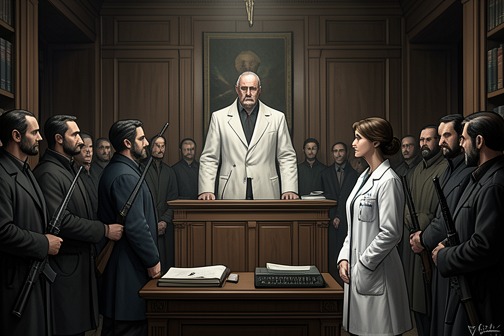
[The Justice Board Trial of Shay and Gemma](entity:event-recall-event-the-justice-board-trial-e082b4d44612) is the formal judgment of [Shay](entity:character-recall-character-shay-5a5fab224960) and [Niqæsh](entity:character-recall-character-niq-sh-19bed4453644) after the struggle over [Gemma](entity:character-recall-character-gemma-b1c21c6b476b)’s forcibly accelerated pregnancy and the Science Board’s demand that Gemma and her unborn child be surrendered for experimentation. The trial matters because it does more than assign punishment: it tests whether scientific law can recognize coercion as a moral emergency, whether Gemma can speak as a victim rather than merely appear as a subject of research, and whether public outrage can force an institution to confront the violence concealed inside its own procedures.
## Causes and Institutional Conflict
The trial grows out of Niqæsh’s order that Shay hand over Gemma and their unborn child for fetal experimentation. Shay refused, attacked fellow scientists, and encouraged his crew to use violence during the rescue. His actions therefore carried two opposing meanings. To the Science Board, he had disobeyed a direct order and violated the laws governing scientific authority. To the public, and to Shay himself, the order represented an intolerable seizure of Gemma’s body and the life developing inside it. His justification was inseparable from the danger he believed obedience would have created: without resistance, he might have lost both Gemma and their child.
Public outrage prevented the matter from becoming a private proceeding, which would have placed Shay in an even more precarious position. Some Science Board members who had stayed silent when Niqæsh demanded the child publicly declared their support for Shay once the case became visible. The shift exposed a central contradiction in the institution: officials could defend procedure while the public forced them to acknowledge the ethical meaning of the procedure’s intended result.
Niqæsh was tried at the same time and suspended from the Science Board. Petitions circulated demanding that her authority be removed entirely. Her punishment made the case broader than Shay’s disobedience. The proceedings examined not only whether Shay had broken rules, but also whether Niqæsh had abused scientific power by treating Gemma’s pregnancy and unborn child as research material without meaningful consent.
## The Trial and the Two Defenses
Shay and Gemma were under house arrest while the trial was pending. Two months had already passed since the explosive acceleration of Gemma’s pregnancy was stopped, but the medical damage could not yet be fully measured. Shay scanned her enlarged belly and back and could confirm only that the baby appeared healthy. He warned that the full extent of the harm would remain unknown until after birth, when more powerful scans could be performed. The uncertainty preserved the trial’s central stakes: the experiment had ended, but its consequences were still unfolding inside Gemma’s body.
Shay was required to give the formal justification for his actions. Under ordinary procedure, a justification would be heard only after four months of evidence had been delivered to the [Justice Board](entity:organization-recall-organization-justice-board-0d6ca52c06ef). Because Gemma could enter labor at any time, the Board made an exception and allowed him to speak first. The altered timetable reveals how pregnancy transformed an administrative case into an urgent contest against time. Shay did not want to defend himself after the child was born; he wanted the Board to hear why he acted before the birth made the consequences irreversible.
Gemma insisted on speaking as well. Shay initially argued that she was not strong enough, but she rejected the idea that physical weakness should remove her from the proceedings. She prepared her speech as a lawyer who had spent two months studying [Stlozyn](entity:creature-recall-creature-stlozyn-25c0edab8dc8) law, and she demanded the opportunity to explain in her own words what imprisonment and experimentation had felt like. Her participation changed the structure of the trial. She was not simply evidence of Shay’s motives or the site of Niqæsh’s alleged misconduct; she became a legal witness to the lived reality that technical language could otherwise conceal.
Gemma’s testimony was delivered from a hover chair, which allowed her to move in every direction, after Shay had given his justification. The narration presents her speech as less conventionally inspiring than a human courtroom address might be because Stlozyn culture privileges logic and regards emotion as close to the root of evil. That contrast gives her testimony its force. She does not win by abandoning the society’s intellectual standards; she makes an experience of confinement legible within a system that habitually discounts feeling.
## Judgment and Consequences
The Justice Board found Shay’s justification worthy of his actions, even while acknowledging that he had violated direct orders and helped provoke violence against scientists. He was ordered to provide remuneration to crew members who had broken laws while following him. The sentence therefore recognized both sides of his conduct: the rescue had ethical legitimacy, but the method still produced legal liabilities for everyone involved.
After the sentence, Shay was reinstated as Science Alpha on his ship. His restoration was not unconditional praise. He was warned not to become so emotional in the future, a reprimand that preserves the cultural hierarchy between rational control and passionate action. Yet the warning also confirms that emotion had not invalidated his judgment. The Board accepted the substance of his defense while attempting to discipline the form in which he had acted.
Niqæsh suffered the more decisive institutional reversal. She was suspended, stripped of her position, and ultimately lost her research buildings. Her personal wealth was assigned to a fund for ethical research. The redistribution transformed the aftermath from a private punishment into a public repair effort: the resources associated with coercive research were redirected toward preventing similar abuses.
## [Pregnancy](entity:state-recall-state-pregnancy-cdafbf158725), Damage, and Aftermath
The trial could not restore the pregnancy Gemma should have experienced. Although the acceleration had been stopped and Shay believed the child was healthy, Gemma remained in pain, with an aching back and weakened legs. She was furious that [Wynon](entity:character-recall-character-wynon-bd18d58f4533) had stolen half of her pregnancy from her, and she never truly felt the baby kicking. This aftermath gives the legal victory a physical limit. Recognition by the Board did not return the time, sensations, or bodily control taken from her.
The case also remained open in a medical sense. Shay could not know the full extent of the experiment’s damage until after the birth. The child’s apparent health was reassuring but not conclusive, and the uncertainty kept the consequences of Niqæsh’s actions active beyond the courtroom. The verdict ended the immediate institutional dispute while leaving Gemma and Shay to confront the delayed results of scientific interference.
The final institutional consequence was an offer to Shay. After Niqæsh was removed, a Science Board representative offered him her vacant position on the Board. The offer marked a dramatic change in his status: the scientist who had been placed under arrest for defiance was invited to help govern the institution whose authority he had challenged. It also placed him inside the structure he had resisted, suggesting that reform would not occur only through punishment but through the redistribution of decision-making power.
## Narrative Significance
The trial’s decisive value shift runs from criminal jeopardy toward qualified vindication. Shay begins under house arrest, facing discipline for disobedience and violence; he ends reinstated as Science Alpha and considered justified, though still censured for emotional excess. Gemma begins as the person whose body and pregnancy have been controlled by others; she ends as an articulate participant whose testimony helps define the ethical meaning of the case.
The proceedings also expose the limits of law when law is built around institutional obedience. Niqæsh’s demand was authorized by scientific hierarchy, but the trial makes clear that authorization alone cannot settle whether an act is just. Shay’s rescue violates procedure because procedure has failed to protect Gemma. Gemma’s speech then supplies what laboratory records and legal evidence cannot: an account of imprisonment as an experience of bodily dispossession.
The event therefore joins personal survival to institutional reform. Shay and Gemma protect their family, Niqæsh loses power, ethical research receives her seized resources, and Shay is drawn into the Science Board as a possible corrective from within. The trial does not erase the violence that preceded it, but it changes who is allowed to define that violence and what consequences the scientific order must bear.
Event 70
The Birth of Ishoel
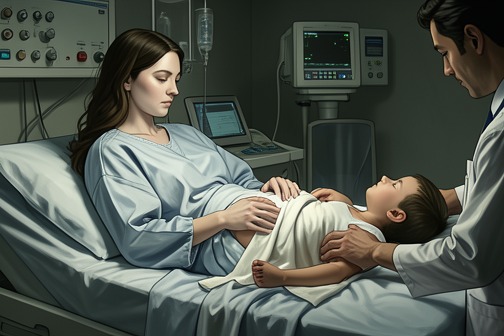
[The Birth of Ishoel](entity:event-recall-event-the-birth-of-ishoel-13c8e3ee1e9f) is the decisive arrival of [Gemma](entity:character-recall-character-gemma-b1c21c6b476b) and [Shay](entity:character-recall-character-shay-5a5fab224960)’s daughter, a child whose existence changes the meaning of the pregnancy that has driven the surrounding conflict. Gemma’s cross-species pregnancy had been treated by the Science Board as a possible cure for the disease ravaging the [Stlozyn](entity:creature-recall-creature-stlozyn-25c0edab8dc8) people, while Shay refused to expose Gemma and the fetus to dangerous research. Ishoel’s birth therefore does more than complete a family event: it brings an ethically contested scientific possibility into the world as a living person.
## Causes and Background
The labor follows the intervention of [Wynon](entity:character-recall-character-wynon-bd18d58f4533), whose accelerated-pregnancy experiment continues to affect Gemma even after her rescue. Shay recognizes that the pregnancy has not proceeded normally when Gemma wakes him in pain and says, "Shay, I think I’m going into labor." He checks her dilation and finds that she is already ten centimeters dilated, leading him to conclude that Wynon’s actions have left residual effects. The delivery is thus both a natural culmination of pregnancy and a consequence of coercive experimentation performed without the safety that Gemma and the unborn child should have been guaranteed.
The birth also answers the Science Board’s demand for fetal research. [Niqæsh](entity:character-recall-character-niq-sh-19bed4453644) had accused Shay of refusing to take the steps necessary to develop a cure for the [Stlozyn disease](entity:state-recall-state-stlozyn-disease-66cf1a5638e9), while another dragoness told Gemma that the child "is the key to curing my people." Those claims define the stakes around the delivery: the unborn child is valued by institutional science for potential biological utility, but Gemma and Shay understand the child as their daughter. The event makes that conflict concrete by forcing the scientific question to confront a newborn’s individuality.
## Labor and Delivery
Shay is startled awake by Gemma’s shaking and the spasms in her stomach. Although he has scientific training and experience as a midwife, adrenaline initially scatters his thoughts. He quickly regains control, checks her condition, and assures her that they will be fine. He carries her to the birthing stool prepared aboard the ship, then calls the ship’s doctor. The preparation matters because the birth takes place under pressure: the labor is unexpectedly advanced, but the necessary equipment and medical support are already in place.
The delivery is narrated through fragmented, sharply observed images. Gemma squeezes Shay’s hand while the doctor assures them that the birth is proceeding well. A fly lands on Gemma’s nose and licks the sweat there; Shay wants to brush it away but cannot release her because she is leaning heavily on him. The scene’s ordinary irritation sits beside medical urgency, giving the labor a physical immediacy rather than reducing it to a scientific procedure. Gemma’s final cry is answered by the baby’s cry, and the long-threatened pregnancy becomes a completed birth.
## The Child and Her Name
The newborn is a little dragoness with soft scales scattered over her body, colored blue and green in the way common to Stlozyn babies. Yet her eyes, ears, and small bow-shaped mouth resemble Gemma. Her mixed appearance makes her parentage visible at once: she carries Stlozyn traits while unmistakably inheriting features from her human mother. Gemma laughs and cries when the doctor places the infant in her arms, and Shay smiles as he touches the baby’s feet. His immediate concern that the room is too cold further shifts his attention from abstract research to the practical care of a vulnerable child.
Shay explains the Stlozyn ancestral naming tradition after the delivery. The tradition holds that Stlozyn are reborn every fifth generation, so families look back five generations and name a child after an ancestor. At the age of ten, the child chooses a true name that is shared only with those who matter most. The practice gives the newborn a place within both time and family memory, connecting her arrival to an ancestral cycle rather than treating her as a disposable research specimen.
Shay’s grandfather had wanted his first daughter to be named Ishoel, after his great-grandmother; the name means beautiful star. Gemma accepts the name, and Shay’s relief shows how personally the choice matters to him. Naming Ishoel is a second form of birth: the child receives not only a body but also an inherited story, a family claim, and a future in which she will eventually possess a private true name of her own.
## Consequences and Significance
Ishoel’s birth establishes the possibility of reconciliation between Gemma’s human identity and Shay’s Stlozyn heritage without making either one disappear. The child’s body is hybrid, but the scene does not present hybridity only as a medical anomaly. Ishoel is welcomed by both parents, recognized through family tradition, and immediately placed within an ethical relationship of care. Her existence challenges the Science Board’s attempt to convert pregnancy into public property and research material.
The event also changes Shay’s position in the larger conflict. Before the delivery, he must defend Gemma and the fetus against demands for DNA extraction and fetal experimentation. Afterward, the supposed key to a cure is no longer an inaccessible possibility inside Gemma’s body; it is Ishoel, a child whose safety and personhood create a stronger moral boundary around any future research. The birth therefore intensifies rather than resolves the scientific dilemma, because the cure’s potential now has a face, a name, and parents who can refuse to surrender her autonomy.
As a narrative threshold, the event moves the family from danger into responsibility. The preceding pregnancy is marked by abduction, experimentation, and institutional pressure; the ending centers on Gemma holding Ishoel, Shay kissing Gemma’s temple, and the parents choosing the child’s name together. The story’s emphasis falls not on whether Ishoel can be used to save a population, but on the moment when she becomes someone to be protected, loved, and remembered. The Birth of Ishoel consequently serves as both a biological culmination and a moral redefinition of the conflict surrounding her conception.
Event 71
Gemma and Shay Choose Bronæl
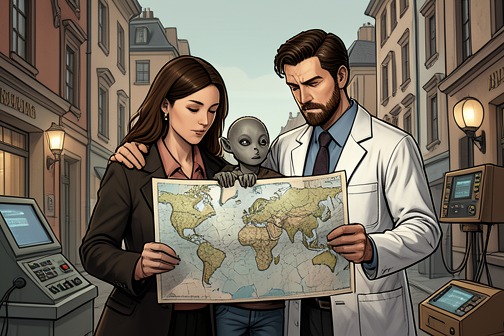
[Gemma and Shay Choose Bronæl](entity:event-recall-event-gemma-and-shay-choose-b-4caeee471c22) is the turning point at which an interspecies family converts displacement into belonging. Faced with [Shay](entity:character-recall-character-shay-5a5fab224960)’s possible appointment to the Science Board, the demands of his research, the danger that had already surrounded [Gemma](entity:character-recall-character-gemma-b1c21c6b476b) and her pregnancy, and the practical problem of raising their visibly nonhuman child, Gemma chooses [Bronæl](entity:location-recall-location-bron-l-929a4ea959d7) as home. The decision gives their relationship a durable geographical and emotional future: [Earth](entity:location-recall-location-earth-a6b883af9147) becomes a destination for occasional visits, while Shay, Gemma, and Ishoel become the household that defines home wherever they are together.
## Causes and Pressures
The choice emerges from a conflict between promise and responsibility. Shay had promised Gemma that they would return to Earth and that he would live there with her while continuing his research. That promise had represented a future in which Gemma’s original world remained the destination and Bronæl remained temporary. The possibility of Shay accepting a position on the Science Board changes the terms. He explains that the position would not end his research, but it would force him to conduct it differently: others would be sent in his place according to his research parameters, while his duties on Bronæl would prevent him from being absent for long periods.
The practical consequence is explicit. If Shay accepts the position, the family would have to stay on Bronæl and could return to Earth only for visits. Gemma therefore has to decide not merely where she prefers to live, but which world can accommodate the family they have become. Their circumstances are shaped by the larger dangers surrounding human and nonhuman bodies. Gemma’s pregnancy has already been misread as a parasite when [Zon](entity:character-recall-character-zon-8ed3fa7590ba)’s equipment detects a lifeform attached to her uterine wall, and the medical scan later confirms an embryo. The embryo’s strange tadpole-and-dinosaur appearance makes the child’s difference visible even before birth. Gemma’s future cannot be separated from the scientific and social systems that regard cross-species pregnancy as a source of knowledge, danger, or institutional value.
That pressure becomes coercive when the Science Board declares that Gemma carries a child that should not be possible and that the child is the key to curing the disease ravaging the [Stlozyn](entity:creature-recall-creature-stlozyn-25c0edab8dc8) people. Shay understands that the Board’s demand for fetal research would place Gemma and the unborn child at risk, and he treats the proposed extraction of DNA as unethical. The decision to remain on Bronæl therefore follows not a peaceful domestic calculation alone, but a crisis over who controls Gemma’s body, the fetus’s biological value, and the family’s future.
## The Decision to Stay
Gemma’s reasoning is direct and material. She tells Shay that Earth no longer holds much for her: she has no family there, few friends, and has just lost her job. Against those absences, Bronæl offers two powerful attachments, one of them Shay and the other their child. Her choice is not presented as an abstract rejection of Earth or as surrender to Shay’s career. It is a judgment about where her actual relationships and responsibilities now exist.
The family’s visibility also makes a return to ordinary human life difficult. Ishoel would not blend into human society, and Gemma recognizes that concealment would be necessary. Shay suggests using a shimmering cloak once the child is older, describing it as harmless. Gemma accepts the practical measure, but only after testing the promise that the earlier danger will not happen again. Shay assures her that it will not. The cloak thus becomes more than a technological solution: it represents the continuing need to negotiate public identity while protecting a child whose body crosses the boundaries that Bronæl’s science has made newly legible.
Gemma then settles the question. She decides that they will stay on Bronæl and take vacations to Earth once Ishoel is old enough to understand why visits from another planet must remain secret. Her use of the shorter name “Izzy” adds a small human intimacy to the decision, even as Shay finds the human habit of shortening perfectly good names difficult to understand. The family’s future will be built through compromise: Bronæl as permanent home, Earth as a concealed and occasional destination, and Ishoel’s identity protected through both technology and parental explanation.
## Home, Kinship, and Belonging
The emotional center of the event is Gemma’s redefinition of home. When Shay asks whether she is certain she can be happy on Bronæl, he reminds her that Earth is her home. Gemma rejects that assumption. Earth is described as the place where she lived, but no longer as the place that possesses her deepest belonging. Shay and Ishoel now constitute home for her, and home becomes relational rather than territorial: wherever Shay is, she will be, because the family itself is the place to which she belongs.
This declaration completes a movement from being displaced into being self-determining. Gemma is not simply a human visitor absorbed into a Stlozyn society, nor is she reduced to the biological significance of her pregnancy. The Science Board sees her child as research material and a possible cure; Gemma’s decision answers that instrumental view by placing the child within a chosen family and a chosen future. Her body remains part of a larger scientific and political conflict, but the event gives her a clear act of agency: she chooses the conditions under which she and Ishoel will live.
The choice also transforms Shay’s role. He had imagined that the couple would return to Earth, and he must now confront a future in which professional duty, research, and family life are concentrated on Bronæl. His promise to Gemma is not erased; it is revised. Earth remains available through visits, while his commitment to Gemma and Ishoel determines the family’s permanent direction. Their decision turns an institutional appointment from a possible source of separation into a condition they can incorporate into their shared life.
## Consequences and Aftermath
The immediate consequence is that Gemma and Shay remain on Bronæl rather than returning to Earth. Shay can accept the possibility of greater responsibility without abandoning his research, although his work will be delegated and his freedom to travel will be reduced. Gemma accepts that limitation because she sees little remaining attachment to Earth and because Bronæl contains the family she wants to preserve. Their future is therefore neither a complete retreat from Earth nor an uncomplicated assimilation into Bronæl. It is a negotiated arrangement involving research, secrecy, travel, and the protection of Ishoel.
The event also follows the birth of Ishoel and gives the child a stable social future. Gemma and Shay first have to decide whether Bronæl is safe enough after the attempt to use the pregnancy for research; once Shay assures her that the danger will not recur, she chooses to trust that future. The decision carries a promise of protection, but it does not make their difference disappear. Ishoel’s body will still require concealment during visits to Earth, and the family’s interspecies identity will remain something they must manage carefully.
In narrative terms, the value shift is from uncertainty to chosen commitment. The family begins with a threatened future: Gemma’s pregnancy is medically misunderstood, the child is coveted by researchers, and Shay’s career could determine where everyone must live. It ends with a deliberate alignment of love, parenthood, and place. Gemma no longer measures home by origin or by the location of her former life. She measures it by the people with whom she has chosen to remain.
## Thematic Significance
Gemma and Shay Choose Bronæl gives the book’s recurring human-versus-nonhuman boundary a domestic and ethical resolution. Elsewhere, bodies are scanned, altered, disguised, or treated as evidence: Sara’s [bionic eyes](entity:object-recall-object-bbb6fc48b2ef) can conceal stun grenades; technology builds holographic images inside Gemma’s body; a supposed parasite is distinguished from an embryo; and Stlozyn ancestry is explained through human origins, intensified genes, added DNA strands, and shape-shifting capacity. Against this background, Gemma’s decision insists that biological difference does not determine the meaning of a family.
The event also contrasts two uses of knowledge. Shay’s science seeks understanding, but he resists the Science Board when research threatens to override consent and endanger Gemma and the child. The Board’s language turns the pregnancy into a specimen and a cure; Gemma’s choice restores the pregnancy to the realm of kinship, responsibility, and future life. Bronæl is not chosen because it is free of institutions or danger. It is chosen because Gemma, Shay, and Ishoel can make a life there without allowing those institutions to define what the child means.
The final declaration that Shay and Ishoel are Gemma’s home gives the event its lasting significance. It completes the passage from survival to belonging and from imposed displacement to conscious self-location. Gemma does not return to the world she once inhabited simply because it was her birthplace. She remains where her chosen family can exist, accepts the consequences of that decision, and transforms Bronæl from an alien setting into the place from which their future can begin.
Event 72
The Stlozyn Vaccine and Cure Succeed
The success of the [Stlozyn disease](entity:state-recall-state-stlozyn-disease-66cf1a5638e9) vaccine and cure is the decisive scientific and ethical turning point in [Shay](entity:character-recall-character-shay-5a5fab224960) and [Gemma](entity:character-recall-character-gemma-b1c21c6b476b)’s storyline. What begins as a contested attempt to save the [Stlozyn](entity:creature-recall-creature-stlozyn-25c0edab8dc8) people without violating Gemma’s bodily autonomy ends with a treatment that reverses the disease’s effects, eliminates the need to harvest human DNA from [Earth](entity:location-recall-location-earth-a6b883af9147), and allows Shay to accept a position on the Science Board on his own achievement rather than through coercion.
## Causes and Background
The Stlozyn disease has become a crisis severe enough for the Science Board to discipline Shay. When he is summoned before the Board, [Niqæsh](entity:character-recall-character-niq-sh-19bed4453644) accuses him of possessing a potential cure while refusing to take the steps required to develop it. The demand carries a sharp ethical conflict: Shay’s research has identified Gemma’s pregnancy as scientifically significant, but Gemma and the developing child are not simply experimental material. Shay understands that extracting DNA at such an early stage could endanger both of them, and he regards that risk as unethical even though the Board treats the concealment of scientific knowledge as blasphemy.
The Board’s pressure is intensified by its belief that Gemma’s pregnancy should not be possible. When Gemma is taken, a dragoness explains that the child she carries may be the key to curing the Stlozyn people. The language of research turns Gemma into a “specimen,” reducing her physical body to a resource whose value is measured by its usefulness to a population. This threat clarifies what Shay is resisting: not science itself, but a system willing to place a pregnant woman and her unborn child in danger for an allegedly collective benefit.
## The Scientific Breakthrough
Shay ultimately develops an infusion of human DNA into Stlozyn DNA as a possible vaccine against the disease. The breakthrough exceeds its original purpose. Rather than merely preventing infection, the treatment reverses the disease’s effects. Its success also removes the immediate justification for taking DNA from humans on Earth, because simulated DNA works just as well as biological human material.
That detail changes the moral and political meaning of the discovery. The cure does not require a new extraction of vulnerable bodies, a renewed assault on Gemma, or the continuation of a research program founded on coercion. The method instead converts the boundary between human and Stlozyn biology into a source of treatment without making human beings into a permanent medical supply. In practical terms, Shay has found a way to save his people while protecting the person whose pregnancy first exposed the possibilities of cross-species biology.
## What Happens
Shay brings Gemma the news with unmistakable excitement. He tells her that the infusion works and then corrects himself: it is better than a vaccine because it reverses the disease’s effects. He also tells her that simulated DNA is sufficient, so no human DNA needs to be harvested from Earth. Gemma responds with confidence in him and recognizes that he has cured his people.
The scene gives the scientific result an intimate dimension. Gemma is not a silent source of biological material or a passive beneficiary of Shay’s work; she is the person to whom he chooses to bring the result, and her recognition completes the emotional movement of the discovery. The achievement belongs to Shay’s research, but it is inseparable from the ethical choice to protect Gemma and their child rather than sacrifice them to the Science Board’s demand.
## Consequences and Aftermath
The cure resolves the immediate scientific crisis and changes Shay’s institutional standing. Having achieved a result capable of reversing the disease, he decides to accept a position on the Science Board, declaring that he has earned it. The appointment therefore functions as recognition after resistance: the same institution that reprimanded him for refusing dangerous fetal research must now receive him as a scientist whose alternative method has succeeded.
The breakthrough also secures a future in which Stlozyn survival need not depend on extracting human DNA from Earth. It answers the Board’s claim that hidden knowledge is intolerable without endorsing the Board’s willingness to compel experimentation. The cure preserves the value of universal scientific knowledge while exposing the difference between openly shared research and forced access to another person’s body.
## Narrative Significance
The event brings together the book’s recurring oppositions between scientific progress and bodily consent, collective survival and individual dignity, and biological difference and cooperation. The cure succeeds not by confirming that Gemma must be used, but by proving that the scientific problem can be solved without treating her pregnancy as public property. Cross-species biology becomes a possibility for healing rather than a pretext for capture.
Its emotional conclusion is deliberately personal. Shay’s success leads directly to his decision to join the Science Board, but the scene ends in gratitude toward Gemma and in the couple’s physical reunion. Scientific authority, public recognition, and private love converge: Shay saves the Stlozyn people, Gemma’s body is spared further exploitation, and the research that once placed them in danger becomes the foundation of a shared future.
Event 73
Erdal Is Captured and Enslaved as a Gladiator
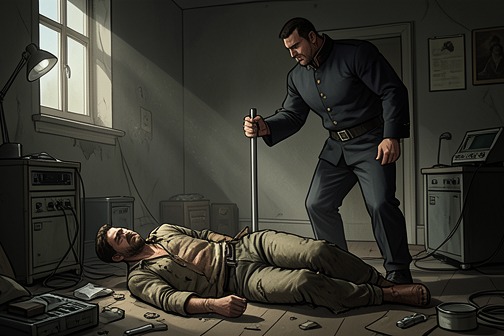
Erdal’s enslavement is the formative catastrophe that separates him from his birthright and recasts him as property, gladiator, and soldier. Found unconscious after the destruction of his royal family, stripped of his memories, and sold into combat, he survives by mastering violence while unknowingly walking the palace halls that once belonged to him. His rise from an arena captive to the head of the Royal Guard gives the event its decisive irony: the kingdom’s most capable defender is the dispossessed heir of the dynasty that was believed extinct.
## Capture and Loss of Identity
Erdal’s enslavement began after the Rok invasion of the planet and the assassination of the Urquiorra royal household. He remembered nothing of the night his parents died. His only clear recollection was waking shackled in a small room with a headache, while everything before that had vanished. The slave master claimed to have found him unconscious in a crashed aircraft outside the city, but offered no explanation for how a royal heir had become an unidentified captive.
Even Erdal’s name had to be recovered from the half-damaged record chip in his armband. He knew neither his lineage nor his former position, and he was told that the Rok had killed the king, queen, and entire Urquiorra household, ending the bloodline. In that version of history, Erdal was not a survivor with a claim to the throne but an anonymous slave whose former life had been erased along with his memory.
## The Gladiator’s Career
The slave system converted Erdal’s disorientation into a career of forced combat. He was taught to sword fight and sent into the gladiator’s arena on the [Andromeda 13](entity:location-recall-location-andromeda-13-8ea4dba16414) space station, where survival depended on agility, endurance, and the ability to kill despite his reluctance to do so. His katana, Light-Shard, became his loyal companion after he found it in a bazaar selling the spoils of war. The weapon’s deathly sharpness gave him a practical advantage, but it also became a material link to the violent identity imposed upon him.
Two decades before the later royal events, [King Zutaar](entity:character-recall-character-king-zutaar-5ab17a9e87bb)’s advisor [Gezek](entity:character-recall-character-gezek-ef863e5d94e5) saw Erdal fighting in the arena. Impressed by his agile movements and finesse with Light-Shard, Gezek bribed Erdal’s owner and bought him. The purchase did not immediately make Erdal free; it transferred him into another form of service. He was taken into the king’s ranks and steadily advanced, with his talent for combat functioning as the only currency the authorities recognized.
When King Zutaar evaluated him, Erdal was given a chance to demonstrate his abilities on the training ground. His fighting skill pleased the king, and he was assigned the lowest rank in the Royal Guard. The appointment marked a limited improvement in status, but not a restoration of personhood. Erdal remained a former slave whose value was measured through military usefulness, even as the institution that owned and deployed him brought him closer to the royal spaces connected to his forgotten past.
## The Royal Irony
Nearly a century after the Rok invasion, Erdal walked the palace halls as head of the Royal Guard and the king’s mercenary without knowing that he had once lived there as Lord Erdal, heir to the ancient Urquiorra throne. His enslavement therefore produced a cruel reversal of political visibility. He was close to power but excluded from it, charged with defending a royal order that had replaced his own family, and honored for skills acquired under coercion rather than recognized for the identity stolen from him.
The nightmares surrounding his amnesia preserve fragments of the truth. He sometimes saw a man and woman in royal robes lying in a pool of blood, followed by an old man trying to tell him something important before darkness returned. These visions did not yet restore his history, but they kept the murdered household present beneath the official story that the bloodline had ended. His headaches and recurring dreams make memory loss a bodily consequence rather than a simple absence of information.
## Survival, Grief, and Narrative Significance
Erdal’s guiding lesson was survival. He did not like killing, but slavery and the arena taught him that refusal could mean death. His transformation into a skilled fighter is consequently neither a conventional heroic ascent nor a freely chosen military vocation. It is an adaptation to an exception in which ordinary rights have disappeared and a captive body can be bought, trained, and expended by those who possess authority.
His enslavement also shaped his emotional isolation. The loss of his wife, [Kira](entity:character-recall-character-kira-7e700e580167), in a space battle with humans intensified the pain already buried beneath his lost identity. They had been married for only a month, and she had been a brave [Darrenkar](entity:creature-recall-creature-darrenkar-f12a6eda81e3) warrior like him. Erdal could not accept her death and wanted to become numb to the torment, while no one around him recognized how deeply he suffered.
The event’s lasting significance lies in the collision between imposed identity and concealed origin. Erdal is simultaneously a royal heir, an amnesiac survivor, a former gladiator, a slave elevated into military service, and a defender of the palace that should have been his inheritance. His enslavement does not merely delay a revelation about his past; it determines the habits, grief, loyalties, and violence through which that revelation must eventually be understood.
Event 74
Natalie Becomes Pregnant with Erdal's Child
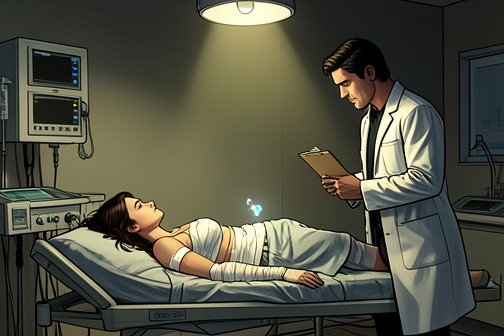
Natalie’s pregnancy with Erdal’s human–[Darrenkar](entity:creature-recall-creature-darrenkar-f12a6eda81e3) hybrid child is the decisive reversal in the Estion storyline. What first appears to be a temporary illness becomes proof of a forbidden cross-species conception, a secret that threatens Natalie’s life, exposes Erdal’s attachment to her, and places an unborn child at the center of the struggle over royal authority, species prejudice, and succession.
## Discovery on the Eve of the Wedding
Natalie becomes pregnant shortly before her wedding. On the day before the ceremony, she wakes shivering with a high fever, body aches, and persistent vomiting. Erdal, who normally visits her each day, finds her half-conscious in her chambers and immediately takes her to the palace infirmary. [Dr. Barca](entity:character-recall-character-dr-barca-ec7cba716b2b) examines her, draws blood, and runs a series of tests, initially reporting that the fever is viral and should pass within a day or two.
The medical examination reveals a far more consequential condition. Dr. Barca tells Erdal that Natalie is almost six weeks pregnant. The pregnancy is not merely an unexpected human pregnancy: the fetus is a human–Darrenkar hybrid, and fetal DNA testing matches Erdal’s own genetic profile. The result establishes both the child’s mixed species identity and Erdal’s paternity, converting what might have remained a private relationship into evidence with direct political implications.
## A Secret That Cannot Remain Private
Erdal attempts to contain the discovery by ordering Dr. Barca to keep the DNA result secret. His command shows that the pregnancy is dangerous not because of medical uncertainty, but because of the authorities who may act on the information. The doctor’s loyalty is compromised by fear, and the king learns of the pregnancy sooner than Erdal expects.
The king responds with immediate punishment. Erdal is demoted by almost three levels, demonstrating that the pregnancy is treated as a violation of royal command rather than as a family matter. The king then orders Erdal to kill Natalie. The order makes the pregnancy the direct cause of a life-or-death conflict: protecting Natalie also means defying the ruler and preserving a hybrid child that the court does not accept.
## Natalie Learns the Truth
Erdal tells Natalie that she is pregnant and that the baby is his. Her reaction is panic rather than celebration. She cries, rocks back and forth, and asks what she can do, immediately recognizing that the king may already know. Her fear places the pregnancy in the realm of captivity and coercion; Natalie is not free to treat the child as a private choice because the palace can determine whether she lives, whether the pregnancy continues, and whether Erdal is permitted to acknowledge his own child.
Erdal’s position is equally divided. He is drawn to Natalie and watches over her after the fever subsides, but a hostile inner voice reminds him that she is human and invokes the death of [Kira](entity:character-recall-character-kira-7e700e580167) as a reason to obey the king. The pregnancy therefore exposes a conflict within Erdal before it becomes an open rebellion: his inherited hostility toward humans confronts his protective response to Natalie and the child whose DNA matches his own.
## Cross-Species Kinship and Political Stakes
The hybrid fetus challenges the Darrenkar boundary between human and nonhuman identity. Elsewhere in the book, [Shay](entity:character-recall-character-shay-5a5fab224960) explains that the [Stlozyn](entity:creature-recall-creature-stlozyn-25c0edab8dc8) ancestors were humans taken from [Earth](entity:location-recall-location-earth-a6b883af9147) and that genetic changes produced visible differences such as scales, skin, and the ability to shift shapes. That explanation supplies a broader biological context for Natalie’s pregnancy: the novel repeatedly treats species categories as historically produced and genetically permeable rather than absolutely fixed.
At the same time, the pregnancy is embedded in systems that regulate bodies and reproduction. [Cheryl](entity:character-recall-character-cheryl-af54b6410705)’s transfer from the temple to the palace is framed around her duty to produce royal children, while Erdal’s pregnancy is treated by the king as a threat requiring punishment and murder. The contrast reveals two sides of reproductive power: court institutions can make pregnancy a public obligation when it serves succession, yet condemn the same biological event when it crosses a forbidden species or political boundary.
The pregnancy also belongs to the novel’s recurring pattern of bodies becoming sites of law, exchange, and control. Other storylines involve ransom agreements, mate claims, fertility trials, artificial conception, medical scanning, and demands for fetal research. Natalie’s case combines these pressures in concentrated form: her body carries a child whose parentage is scientifically confirmed, whose existence is politically unacceptable, and whose survival depends on whether Erdal accepts the consequences of opposing the king.
## Narrative Consequences and Significance
The event changes Erdal’s relationship to Natalie from a concealed attachment into an acknowledged family bond. Once he tells her that the child is his, denial is no longer possible between them. The pregnancy also gives Erdal a personal reason to resist the king’s order, while giving the king a specific reason to treat Erdal as disloyal and Natalie as expendable.
Because the discovery occurs immediately before the wedding, it destabilizes the expected social order at the moment when that order is supposed to be publicly confirmed. The ceremony would have formalized Natalie’s place within the palace, but the pregnancy reveals that her future has already been shaped by a hidden relationship and a child of mixed ancestry. The fever that first brings her to the infirmary thus functions as the threshold between an arranged public future and a dangerous private truth.
Natalie’s pregnancy is significant not only because it reveals the existence of a hybrid child, but because it makes biological kinship politically legible. The fetal DNA confirms Erdal’s fatherhood, the palace turns that fact into a capital offense, and Natalie’s frightened response shows the human cost of a regime that treats reproduction as royal property. The unborn child becomes a challenge to the court’s species hierarchy before it is even born, while Erdal’s decision about whether to obey or protect becomes the moral hinge of the surrounding narrative.
Event 75
Dr. Barca Discovers the Healing Value of Natalie's Blood
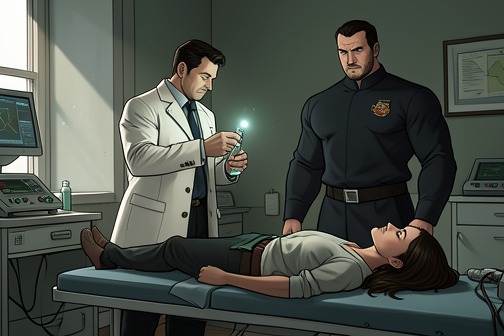
Barca’s cure discovery is the decisive medical and political revelation in Natalie’s captivity arc: [Dr. Barca](entity:character-recall-character-dr-barca-ec7cba716b2b) learns that Natalie’s rare blood can cure the bone disease devastating [Darrenkar](entity:creature-recall-creature-darrenkar-f12a6eda81e3) children. The discovery gives her life a value the palace cannot ignore, yet it also makes her more vulnerable, because [King Zutaar](entity:character-recall-character-king-zutaar-5ab17a9e87bb) is prepared to kill her if the cure threatens his control. The event therefore turns medicine into both a route to liberation and a new reason for persecution.
## Discovery in Captivity
Dr. Barca’s discovery emerges after Erdal wakes in a small prison chamber, still suffering from flogging wounds and pain in his injured eye. He remembers Natalie being taken away while he was dragged back to his cell, and Barca arrives with an urgent plan to free him. The doctor explains that Natalie’s blood is rare and that he has found a cure for the bone disease. His immediate purpose is personal as well as humanitarian: Natalie’s blood could cure his daughter and all the other children affected by the illness.
The revelation changes the meaning of Natalie’s presence in the palace. She is not merely a captive, a member of the harem, or a human resource controlled by King Zutaar. Her body contains a treatment capable of addressing a disease that has resisted ordinary remedies. The evidence does not present this as a speculative theory; Barca states that he has already taken enough samples to last a lifetime. The cure is therefore medically actionable, while Natalie herself remains in immediate danger.
## From Medical Value to Political Leverage
Barca has to persuade King Zutaar that Natalie is more valuable alive than imprisoned or discarded. He tells Erdal that he persuaded the king that the woman is needed, turning the discovery into a temporary argument against her execution or further mistreatment. This negotiation reveals the structure of power around the cure: Natalie’s safety depends not on an inherent right to medical protection but on whether the king recognizes her usefulness.
That protection is unstable. Barca warns that Natalie cannot remain in the palace because her life is in danger. She is pregnant with Erdal’s child, and Barca believes that Zutaar would kill her the moment he learned that a cure had been found. Natalie’s blood thus produces a contradiction. It makes her indispensable to the state’s medical future while making her a target for a ruler who may fear the consequences of the discovery. The body that promises healing is also the body placed under the greatest threat.
## The Escape Plan
Because Barca has collected sufficient blood samples, he can attempt to remove Natalie from the palace without destroying the cure. He tells Erdal that there is no time to wait and that he will get Natalie out while Erdal takes her away. The plan depends on secrecy, speed, and a precise route: a car is waiting at the far back, and the fugitives must use the back gate of the fifth garden, which opens into the Clapwood forest.
The escape plan links the discovery directly to the movement of the plot. A scientific finding becomes an operational crisis, and medical knowledge dictates the geography of flight. Barca leads Erdal from the dim hallway into the moonless night, leaving the palace behind as the site where Natalie was simultaneously exploited, medically investigated, and endangered. His decision to intervene also places his own life at risk, since he is violating the interests of the king he has served.
## Consequences for Natalie and Erdal
For Natalie, the discovery intensifies rather than resolves captivity. Her blood may save Barca’s daughter and other children, but the palace’s recognition of that value does not grant her freedom. She remains subject to the harem’s authority, and the threat against her is compounded by her pregnancy. The cure makes her a person whom the regime needs, but not necessarily a person it will protect.
For Erdal, Barca’s explanation supplies a reason for the doctor’s intervention and a basis for trust. Barca is not freeing him only out of sympathy; he needs Erdal to help remove Natalie from danger, and he understands that Natalie’s continued imprisonment places both her and her unborn child at risk. The discovery therefore aligns three interests that had previously been divided: Barca’s desire to save his daughter, Erdal’s determination to protect Natalie, and Natalie’s need to escape Zutaar’s authority.
## Narrative Significance
The event exposes the lethal logic of a system in which a captive’s biological usefulness can determine whether she is spared. It also reverses the expected direction of power. The palace possesses guards, prisons, a harem, and royal authority, yet the decisive resource is carried in Natalie’s blood, and the doctor’s knowledge allows that resource to be moved beyond the king’s control. The cure is not only a scientific breakthrough; it is the material basis for resistance.
The discovery also foreshadows the wider consequences of Natalie and Erdal’s escape. A remedy capable of curing [Darrenkar bone disease](entity:state-recall-state-darrenkar-bone-disease-05005b1418b7) can protect a generation of children, while Natalie’s pregnancy preserves the connection between human and Darrenkar futures. Barca’s act consequently joins healing, forbidden pregnancy, royal violence, and flight into one turning point: the palace’s attempt to possess Natalie produces the knowledge that makes her rescue necessary and possible.
Event 76
Erdal and Natalie Escape the Royal Palace
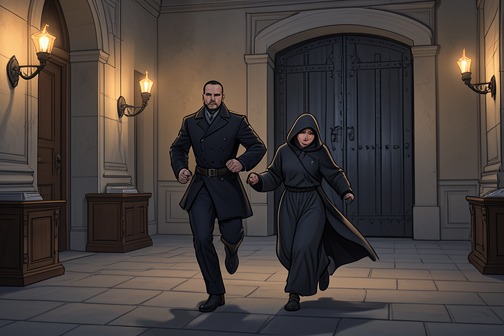
Erdal and Natalie’s escape from the royal palace marks the point at which their private flight becomes an open act of treason against [King Zutaar](entity:character-recall-character-king-zutaar-5ab17a9e87bb). Natalie is not merely a companion seeking freedom: she is pregnant with Erdal’s child, and her blood has become medically valuable. Their attempt to leave therefore threatens the king’s control over both a royal guard who has disobeyed him and a human woman whose body is being treated as a resource.
## Causes and Stakes
Erdal rushes back toward the palace with Natalie at his side, already aware that what he is doing can be punished by death. Natalie conceals her face beneath a hooded robe, while Erdal tries to move quickly without attracting attention. The urgency is sharpened by the danger surrounding her pregnancy. He believes that, if King Zutaar learns that [Dr. Barca](entity:character-recall-character-dr-barca-ec7cba716b2b) has discovered a cure connected to Natalie’s blood, the king will kill her rather than allow that knowledge to escape his control.
The escape also exposes the difference between Erdal’s official identity and his moral choice. As a royal guard, he is expected to enforce the palace order; as Natalie’s ally and the father of her unborn child, he chooses to violate it. His decision is not presented as a safe rebellion. He knows the legal consequence in advance, yet continues because remaining inside the palace would leave Natalie and the child at the king’s mercy.
## The First Attempt and Capture
Erdal guides Natalie across the palace gardens, keeping away from guards who patrol the broad lawns. Still holding her hand, he circles the outer wall and reaches doors leading to the basement parking area. He enters the elevator, checks his Light-Shard, and prepares to move through the concealed route. The escape collapses as soon as the elevator doors open.
[Gezek](entity:character-recall-character-gezek-ef863e5d94e5) is waiting with a sinister smile, accompanied by armed guards. One guard holds a crossbow ready to fire, while another seizes Natalie, twists her arms behind her back, and covers her mouth before she can scream. Erdal demands that Gezek release her, but Gezek calls him a traitor for defying the king’s orders and commands that both of them be taken away.
The guards drag Erdal and Natalie back toward the elevators and imprison Erdal in the Dark Cells. These dungeons hold death-row prisoners who are tortured before execution, and the setting makes the political meaning of the failed escape unmistakable: Erdal has been stripped of his royal guard uniform and reduced, in the palace’s judgment, to a condemned traitor. Shackled by the wrists and ankles, with rusty metal cutting into his skin, he fears not only for himself but also for Natalie and their unborn child. His regret that he brought her into danger does not erase the decision that caused it; it confirms the personal cost of his defiance.
## Barca’s Intervention and the Mountain Flight
The escape succeeds only after Dr. Barca intervenes. Barca explains that Natalie cannot remain in the palace because her life is in danger, and that King Zutaar would kill her if he discovered both the cure and the doctor’s knowledge of it. Barca has already taken enough samples of Natalie’s blood to last a lifetime, removing the immediate need to keep her as a captive medical source. He therefore orders Erdal to get her out at once.
Barca supplies a precise route rather than a vague promise of rescue. Erdal and Natalie must use the back gate of the fifth garden, which opens into the Clapwood forest, where a car is waiting. Natalie runs after the doctor, trusting the man who earlier saved her life. His explanation that her blood saved his daughter’s life alters her understanding of her own vulnerability: although she considers herself an ordinary human, her blood has extraordinary value in this alien society.
Once reunited with Erdal, Natalie sits beside him as the vehicle silently levitates and moves through the forest toward the mountains. The image reverses the earlier elevator scene. The elevator had carried them deeper into the palace’s machinery of surveillance and punishment; the levitating car carries them outward, past the trees and into uncertain freedom. Erdal knows of a cabin high in the mountains where they can remain safe for a while, making the destination a temporary refuge rather than a final deliverance.
## Consequences and Significance
The flight changes Erdal and Natalie’s status from palace subjects to fugitives. Erdal’s capture proves that the royal system can close its corridors and weaponize its guards against one of its own officers. Barca’s assistance demonstrates a competing network of care, in which medical knowledge and personal loyalty can interrupt royal power, although even that rescue depends on secrecy, speed, and the knowledge that the palace is searching for them.
The event also links bodily autonomy to political rebellion. Natalie’s pregnancy makes her a target, while her blood makes her valuable; neither fact protects her. The king’s authority reaches into reproduction, medicine, and movement, so escaping the palace is simultaneously an attempt to protect a relationship, an unborn child, and the possibility that Natalie’s body will no longer be controlled by the crown.
As the car carries them toward the mountain cabin, the escape remains incomplete. The pair have left the palace, but mercenaries are searching for them, and the cabin offers safety only temporarily. Its importance lies in the transition it permits: Erdal is no longer merely a guard who has broken an order, and Natalie is no longer simply a hidden captive within the palace. Together they become fugitives whose survival depends on mutual trust, Barca’s sacrifice of official safety, and their ability to remain beyond Zutaar’s reach.
Event 77
Erdal Recognizes Natalie as His True Mate
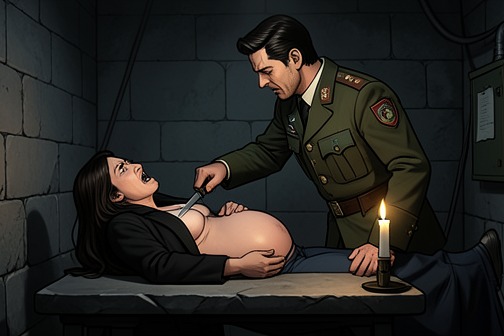
Erdal’s confirmation that Natalie is his true mate is the emotional and ethical reversal at the center of their captivity arc. Ordered by the king to kill a pregnant prisoner, Erdal confronts Natalie’s suffering, refuses to carry out the execution, and recognizes that the woman he was meant to destroy is the one woman his species can truly impregnate. The revelation changes the scene from an act of royal violence into a declaration of loyalty, and it gives Erdal a personal reason to oppose the power that commanded her death.
## Causes and Background
Erdal enters the scene under an explicit order: [King Zutaar](entity:character-recall-character-king-zutaar-5ab17a9e87bb) wants Natalie dead. The command places him between military obedience and his own moral revulsion. He has killed before, but only in battle, and he regards killing a helpless woman as dishonorable. Natalie is already physically and emotionally overwhelmed by her pregnancy; she tells him that she cannot have the baby and does not want it. Her distress makes the order more than a political execution. It becomes an immediate test of whether Erdal will treat her as a disposable subject of the king’s will or as a person whose life demands protection.
The circumstances also expose the contradiction in Erdal’s position. He has been sent to kill Natalie, yet he cannot bring himself to harm her even before he understands why. He sees her pain, sits beside her, and takes her hand rather than drawing the weapon against her. His conduct shows that the bond precedes its explanation: his body and conscience resist the royal command before his mind can name the force directing them.
## The Revelation
Erdal tells Natalie plainly that the king wants her dead, but the admission does not lead to violence. When she bitterly asks why he does not kill her and challenges him over whether he would have done so had she not been pregnant, Erdal moves closer, wipes away her tears, and tells her that she is his true mate. He says that he could never kill her and that, even before the present crisis, something in him had prevented the act.
He then explains the biological and cultural meaning of the discovery: Erdal’s race can impregnate only the woman destined to be its true mate. The belief has faded into something treated as myth, although ancient elders once accepted it. Natalie’s pregnancy therefore becomes evidence of a relationship that neither the king’s decree nor Erdal’s previous understanding can erase. The revelation does not merely identify a romantic partner. It reclassifies Natalie from condemned captive to the person uniquely connected to Erdal’s lineage and future.
The scene’s physical movement reinforces the change in status. Erdal pulls Natalie onto his thighs and kisses her with urgent intensity; she returns the kiss. Afterward, he holds her and assures her that she no longer needs to be afraid because he will remain at her side. The intimacy is not presented as a detached romantic interlude. It follows the disclosure of the death order and functions as the first embodied expression of his refusal to let royal power define Natalie’s fate.
## Conflict and Decision
The true-mate revelation creates a direct conflict between Erdal’s assigned duty and his chosen responsibility. King Zutaar’s command represents the authority of the [Darrenkar](entity:creature-recall-creature-darrenkar-f12a6eda81e3) court, while Erdal’s recognition of Natalie establishes an older, more intimate obligation. Because Natalie is carrying his child, the threat against her also threatens the continuation of the bond and the possibility of a new family. The scene therefore concentrates life, love, bodily autonomy, and political violence in a single decision.
Erdal does not answer the conflict with an abstract argument. He answers it through refusal. He sits beside Natalie, touches her gently, admits the danger, and then promises action. His final assurance is concrete rather than ceremonial: he will get both of them out. That promise turns the revelation into an objective. Erdal is no longer merely discovering what Natalie means to him; he is committing himself to escape and to resistance against the king who ordered her death.
Natalie’s response also matters to the event’s transformation. She begins in hysteria, convinced that the pregnancy has made her more vulnerable and that Erdal may kill her anyway. His explanation gives her a new interpretation of the pregnancy and of his behavior. Her incredulity yields to mutual physical response when she kisses him back. The value of the scene shifts from death toward guarded hope, although the danger remains unresolved.
## Consequences and Aftermath
The immediate consequence is Erdal’s new protective allegiance to Natalie. He tells her to trust him and promises to stand at her side, making the true-mate bond the basis for an escape plan. The event also reframes the pregnancy. What Natalie experiences as a terrifying condition becomes, in Erdal’s explanation, proof of an ancient and nearly forgotten biological connection. The child is no longer only a reason for the king’s hostility; it is also the sign that the pair’s union is recognized by the deepest laws of Erdal’s species.
The revelation prepares the later movement of their story away from Zutaar’s control. Erdal and Natalie eventually escape the king, and Erdal’s recovery of his royal memories leads him to challenge Zutaar and reclaim his throne. The true-mate scene supplies the personal foundation for those political developments. His opposition to Zutaar is not simply a contest for power: it grows from the moment when he rejects an order to kill Natalie and chooses her survival instead.
## Narrative Significance
The event is a romance turning point built out of a death sentence. Its force comes from the reversal between what Erdal is commanded to do and what he discovers he cannot do. Natalie’s face and suffering interrupt the impersonality of royal authority, while the true-mate revelation gives that ethical refusal a name recognized by Erdal’s culture. The scene links the intimate and the dynastic: a kiss becomes a promise of escape, a pregnancy becomes evidence of destiny, and the threatened prisoner becomes the future queen’s counterpart in a new political order.
The event also contrasts inherited belief with present skepticism. The true-mate tradition is regarded as myth, yet Natalie’s pregnancy makes the supposedly obsolete belief materially undeniable to Erdal. In that sense, the revelation does not restore an old doctrine merely as folklore. It gives forgotten knowledge practical force at the moment when Erdal must decide whether to obey the king or protect the woman whose existence proves the bond. The decisive significance of the event lies in that convergence of body, memory, love, and political rebellion: Erdal’s recognition turns an execution into the first act of their shared escape and future resistance.
Event 78
埃尔达尔恢复王室记忆
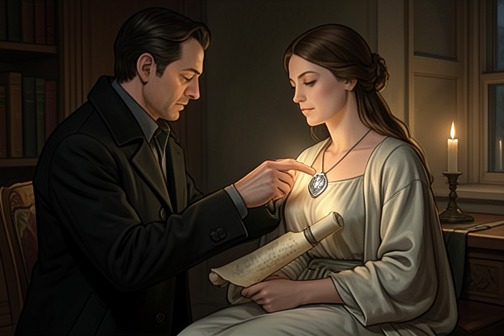
Erdal’s memory recovery is the decisive revelation that restores his erased identity, explains the violence behind his childhood displacement, and gives his struggle against [King Zutaar](entity:character-recall-character-king-zutaar-5ab17a9e87bb) a dynastic and personal purpose. Triggered by the [Erasmeth](entity:object-recall-object-erasmeth-3860ab6c87cd), an heirloom passed to him by his mother’s family, the event turns an uncertain past into a claim on the Urquiorra throne.
## The Erasmeth as the Trigger
The recovery begins in an intimate morning scene with Natalie. The Erasmeth gleams at her neck, where Erdal has placed it after explaining that the ancient object has belonged to his family for centuries and once belonged to his mother. His account is unusually vulnerable: he does not merely identify it as an heirloom but admits that his knowledge of its history is fragmentary, while the sadness in his eyes exposes the emotional cost of that silence. By giving the Erasmeth to Natalie, he has already transferred a private inheritance into their shared present before either understands what it contains.
When Natalie examines the silver object, its runes glow beneath her touch and the pendant clicks open. A rolled paper emerges from inside. The physical action is small but structurally crucial: the heirloom is not only a relic of ancestry but a concealed archive. Its opening joins touch, bloodline, and language, making the object the bridge between Erdal’s ordinary life and the history that has been sealed away from him. The strange runes are written in an ancient tongue, yet Erdal recognizes them as his own language and reads the message aloud.
## The Royal Identity Revealed
The message is addressed to a lord whose moment of recognition has finally arrived. It states that Erdal’s parents—the king and queen—were assassinated by the Rok, and instructs him to return when he comes of age to reclaim his place as king. Most significantly, it names him as Lord Erdal Bu’Rak Urquiorra IV, son of Lord Bu’Rak Rezan Urquiorra, the last member of the ancient Urquiorra bloodline, and the true heir and successor to the throne.
The note is signed by Ornek Zorlu, identified as the royal guardian, and dated 2268. It directs Erdal to seek Ornek in an old abode in the valley. That detail gives the revelation a concrete next step rather than leaving his restored identity as abstract genealogy. The message is therefore simultaneously a death notice, a succession document, and a summons. It tells Erdal what was taken from him, who he was before the loss, and where the surviving thread of his royal history may still be found.
## Memory, Trauma, and Recognition
The note does not simply provide information; it unlocks embodied memory. Erdal stares at it, recognizes that it is more than a century old, and feels his chest constrict as the implications assemble. He concludes that King Zutaar, whom he has known as an invader, was responsible for the assassination of his parents. The political conflict consequently becomes an intimate crime: Zutaar is no longer only a usurping force in Erdal’s present but the suspected author of the catastrophe that destroyed his family.
A vision then breaks through. Erdal sees the bodies of a man and woman lying in a pool of blood and recalls the old man who stealthily carried him away from the invaders that night. The dreams that have haunted him are revealed as memories rather than inventions or meaningless nightmares. Their delayed return gives the event the form of traumatic recognition: the past has remained active beneath conscious recollection, repeating itself as disturbing dream imagery until the Erasmeth and its message provide the missing context.
The recovery is physically painful. Burning pain throbs at Erdal’s temples, and he shudders while taking a deep breath. His body registers the restored knowledge as suffering before his mind can fully organize it. Natalie notices his pallor and asks whether he is all right, making her the immediate witness to the moment. His response is stark: he says that he remembers everything, and his emerald eyes blaze with fiery determination. The emotional value of the scene shifts from uncertainty to purpose, although the new purpose is inseparable from grief.
## Consequences for the Larger Conflict
Before the revelation, Erdal’s opposition to Zutaar is shaped by captivity, displacement, and incomplete memory. After it, he possesses a recovered royal identity and a direct explanation for why his family vanished. The Erasmeth therefore changes the stakes of his escape and resistance. He is not merely attempting to survive a hostile court or flee an imposed role; he is positioned as the legitimate successor whose throne was taken through the murder of his parents.
The note’s instruction to find Ornek also establishes the royal guardian as a possible witness to the lost succession and as a link to the period immediately following the assassination. Although the scene does not yet show Erdal meeting Ornek, the message redirects his future toward recovering the remaining evidence of his lineage. The valley abode becomes the implied destination of a quest created by the memory recovery itself.
## Narrative Significance
As an event, Erdal’s memory recovery functions as an anagnorisis: a discovery that reorganizes the meaning of earlier scenes, dreams, and political loyalties. The Erasmeth’s hidden scroll supplies the external proof, while the returning vision supplies the internal confirmation. Neither is sufficient alone. The document names the heir, but the painful recollection makes the history his own.
The event also collapses the distance between a century-old crime and the present. A handwritten note dated 2268 survives inside a family relic, and its words reach Erdal only after the passage of more than a hundred years. Time has concealed the truth without erasing it. Once the pendant opens, the buried past returns with both documentary authority and sensory force, converting memory from a source of haunting into the foundation of political action. Erdal’s declaration that he remembers everything marks the end of his ignorance and the beginning of his conscious claim to the Urquiorra throne.
Event 79
Jace Wins a Harvard Scholarship and Breaks Up with Amanda

[Jace](entity:character-recall-character-jace-976f1326765e)’s Harvard scholarship and breakup with [Amanda](entity:character-recall-character-amanda-f7c90eb37305) marks the point at which an apparently shared future fractures under the pressure of ambition, money, responsibility, and an undisclosed pregnancy. The event begins as good news—Jace has won a scholarship and been accepted to Harvard—but becomes a painful separation when he decides that leaving for school requires him to end the relationship. Amanda, already carrying their child, chooses silence so that Jace can pursue the future he believes will serve both himself and the pack.
## The Opportunity That Changes Their Plans
Jace delivers the news at the couple’s secluded hiking spot, a forest refuge associated with relief when pack life becomes stressful. His manner is unusually subdued, and Amanda immediately senses that the announcement may alter their relationship. He explains that he applied for a scholarship, received it, and was accepted to Harvard for the coming fall; the scholarship will cover his first year. The achievement is especially important because he had never expected to afford college, despite wanting the education for years.
Jace’s ambitions are larger than personal success. He intends to become a lawyer, traditionally imagining a prosperous future, but his purpose is also communal: legal training would allow him to serve the pack in court and help resolve disputes among its members. His family’s financial circumstances make the scholarship consequential. Although his father is the pack’s Alpha, pack leadership has made it difficult for him to maintain steady employment, and he became Alpha at sixteen, leaving little time for schoolwork. Jace’s admission therefore represents an opportunity that his family could not easily purchase or replace.
## The Breakup
Amanda tries to respond with enthusiasm, praising the achievement and repeating Jace’s long-held dream of becoming a major lawyer. Beneath that encouragement, however, she is calculating what the move will mean. She considers finding work in New York, helping pay the baby’s expenses, and supporting Jace if the scholarship does not continue. Her instinct is to adapt rather than oppose him, even before he tells her that he sees the relationship as incompatible with Harvard.
Jace then states that he is sorry, but that he has a chance to change things not only for himself but for the whole pack and must concentrate on the future. He argues that taking Amanda to Harvard would be unfair because his studies would leave no time for the relationship. The breakup is framed as an act done for her benefit, but its immediate effect is to separate the couple at the moment when Amanda most needs security. Their value shift is stark: Jace’s acceptance initially promises a shared advancement, then turns love into something he believes must be sacrificed for education and duty.
## Amanda’s Hidden [Pregnancy](entity:state-recall-state-pregnancy-cdafbf158725)
Amanda’s silence gives the scene its deepest moral pressure. As Jace speaks, she holds her stomach and remembers the child growing inside her. She considers revealing the pregnancy because she knows that Jace would stay if he learned that they were expecting a baby. The disclosure could preserve the relationship, but it would also force Jace to abandon or radically diminish the future he has worked toward.
Her reasoning is not based on doubt about Jace’s feelings. She understands that he would choose the child and remain with her, yet she imagines the consequences: a lesser college education, the loss of his legal career, and the collapse of his plans to protect and serve the pack. She decides that making him stay would preserve the relationship at the cost of his vocation and communal purpose. The pregnancy thus remains concealed not because it is insignificant, but because Amanda treats it as powerful enough to redirect Jace’s entire life.
## Immediate Aftermath
Amanda finally cries, but she does not use her tears or her secret to alter Jace’s decision. She agrees that it is best for him to go while she stays behind, even adding that she would not want to be among so many people. Her acceptance protects Jace’s opportunity while leaving her personally bereft. Jace wipes away one of her tears, embraces her, and insists that everything will work out and that the separation is for the best. Amanda holds him tightly and tries to believe him, but the scene closes on the unresolved question of how her life can work out without him.
The breakup therefore creates an uneven aftermath. Jace leaves with a scholarship, a place at Harvard, and a clearer route toward becoming the pack’s lawyer. Amanda remains with the pregnancy, the burden of supporting herself, and the knowledge that the relationship might have continued had she revealed the truth. The event establishes a concealed parenthood and a future conflict between Jace’s public ambitions and the family reality Amanda has chosen to hide.
## Narrative Significance
The event is both a romance rupture and a social-pressure scene. Its conflict does not arise from a lack of affection: Jace says he loves Amanda, while Amanda’s refusal to disclose the pregnancy is itself an act of love shaped by self-denial. Instead, intimacy is subordinated to education, financial scarcity, and the expectation that a future Alpha must become useful to the pack. The forest setting, where Amanda imagines running in Wolf form beside Jace, contrasts with the separation announced there; a place associated with shared freedom becomes the threshold of departure.
The scene also prepares later developments by separating Jace from the pregnancy’s immediate knowledge. Amanda’s decision preserves his educational path but converts a private sacrifice into a long-term secret. In that sense, the event’s decisive consequence is not simply that the couple breaks up. It is that Jace’s Harvard future and Amanda’s hidden motherhood begin as parallel trajectories, each made possible by the other’s loss.
Event 80
杰斯回乡成为新狼族首领

[Jace](entity:character-recall-character-jace-976f1326765e) Tate Gill’s return to the packlands is the event that converts his long-promised ambition into public authority. After leaving town, completing his law program in two years, and becoming a self-made billionaire within four, he comes back not merely as a celebrated former local but as the new Alpha of his father’s Wolf pack. The succession reunites him with the community he left behind while bringing the consequences of his past relationship with [Amanda](entity:character-recall-character-amanda-f7c90eb37305) sharply back into view.
## Causes and Background
Jace’s ascent has followed the path he once described for himself. His legal education was completed with striking speed, and his career became extraordinarily successful; by the time of his return, people in town describe him as driven, talented, lucky, and insanely wealthy. His public success gives the homecoming the appearance of a triumphant fulfillment of youthful plans, but the event also exposes the emotional cost of those plans. Jace had once dated Amanda in high school and ended that relationship to pursue his ambitions. He did not know that Amanda was pregnant when they separated, leaving her to raise their son, [Logan](entity:character-recall-character-logan-e11884a86c73), without telling him about his parentage.
The immediate institutional cause of the succession is his father’s decision to retire before death rather than remain Alpha until the end of his life. The retirement is unprecedented within the pack’s expectations, but it is designed to make the transfer gradual: Jace will lead while his father remains available to help the transition. The new Alpha therefore inherits both formal authority and a living connection to the previous administration, making the change a managed generational handover rather than a sudden vacancy.
## The Return and Succession
The news of Jace’s return dominates conversation even before he arrives. Amanda encounters repeated questions about him and about the human woman he is dating, and she must repeatedly insist that she is happy for him and no longer keeps in contact with him. His return is consequently experienced in two contrasting ways: the town treats it as communal news, while Amanda experiences it as the reopening of a concealed personal history.
Jace’s first public responsibility is to visit the local school and meet the students as the new Alpha. The visit is not presented as a private reunion with Logan; Jace does not know that Logan is his son. Instead, he is coming because the succession requires him to establish himself among the pack’s younger generation. The distinction matters to Amanda, who reminds herself that his presence at the school is official and communal even as the sight of him threatens to reveal the secret she has preserved.
The succession also places Jace in a new romantic and social position. He tells Amanda that he is probably going to marry his current girlfriend, praising her strength, intelligence, and support for the pack. He values that she does not reduce him to his Wolf identity and instead treats him as a person, an important detail in a world where anti-Shifter feeling can be intense. At the same time, he says that he is not sure he has a mate and assumes that, if such a person existed, he would already have found her. His confidence about his future contrasts with Amanda’s knowledge that the most consequential part of his past remains undisclosed.
## Private Consequences for Amanda and Logan
For Amanda, Jace’s return produces a collision between ordinary life and supernatural succession. She is working as a receptionist in a chiropractor’s office while taking an accounting course in college, and she had expected the day to be quiet enough to study between clients. Instead, public talk about Jace, his success, his girlfriend, and his return turns a routine workday into a sustained emotional ordeal. The noise of the town’s excitement intensifies the silence surrounding Logan’s true parentage.
Amanda’s anxiety is made more dangerous by the possibility that Wolf senses could expose her. She knows that some [Wolves](entity:creature-recall-creature-wolves-f665b9881f25) can hear heartbeats, although this is rare in human form, and she recognizes that her own heartbeat reacts visibly and audibly to Jace’s name. Her fear is not simply that Jace might remember their past; it is that her body may betray the secret before she chooses to speak. Logan’s presence makes the stakes larger than lost romance, because revelation would redefine the child’s family and Jace’s understanding of his own succession.
Jace’s return also creates an ironic contrast between public legitimacy and private incompleteness. He is now recognized as the Alpha, has achieved the professional future he wanted, and is preparing to marry a woman who supports his place within the pack. Yet he does not know that Amanda, the former girlfriend he believes belongs to his past, is raising his son. His new authority therefore begins under a concealed absence of knowledge: he has inherited the pack’s leadership without yet confronting the family responsibility connected to his earlier departure.
## Narrative Significance
The event functions as a return-and-ascension structure, but its homecoming is deliberately unstable. Jace returns with wealth, professional status, and institutional recognition, fulfilling the outward promises of his departure. The return does not restore the old relationship with Amanda; instead, it brings the unresolved past into the same physical community where his new office will require constant visibility. His advancement thus makes concealment harder rather than safer.
The succession also links personal identity to communal office. Jace is not merely a successful lawyer who happens to come home; he becomes the figure responsible for the pack’s future while still misunderstanding the most important bond created by his past. Amanda’s secret gives the public ceremony an unseen counterpoint, and Logan’s presence turns Jace’s first encounters with the town’s young Wolves into an encounter with a son he cannot yet recognize as his own. The event’s decisive consequence is therefore not only that Jace becomes Alpha, but that his authority and his hidden fatherhood are placed on a collision course.
Event 81
洛根的身世被揭露
[Logan](entity:character-recall-character-logan-e11884a86c73)’s paternity revelation is the turning point at which [Amanda](entity:character-recall-character-amanda-f7c90eb37305)’s carefully contained past breaks into [Jace](entity:character-recall-character-jace-976f1326765e)’s present. In a conversation shadowed by [Clarissa](entity:character-recall-character-clarissa-521e65f60dd9) and Logan’s return, Amanda tells Jace that Logan is his biological son, conceived shortly before their high-school graduation. The disclosure does more than identify a father: it changes Logan’s place within the pack, reopens Amanda and Jace’s unresolved relationship, and places fatherhood alongside Jace’s new position as Alpha.
## Causes and Background
The revelation is rooted in Amanda’s decision to conceal the pregnancy from Jace after their breakup. She had been pregnant before graduation and, although she had intended to tell him, ultimately raised Logan without his knowledge. By the time the truth emerges, six years have passed. Jace has become the new Alpha, while Logan has grown up without the father whose identity could alter both his personal life and his standing within the wolf community.
The setting intensifies the disclosure. Amanda and Jace are together in a public place with Clarissa and Logan nearby, and Amanda knows that there is little time before the others return. She is physically distressed, wrapping her arms around her middle and feeling her heart rise into her throat, while Jace deliberately focuses on a nearby clown rather than confronting the tension between them. The scene therefore turns an intimate secret into a precarious public encounter: Amanda must speak before the moment closes, but she also wants to prevent Logan from witnessing an open fight.
## What Happens
Amanda first tries to reach Jace indirectly, repeating his name until he reluctantly turns away from the clown. She tells him that she should have informed him, and his controlled question—“Told me what?”—reveals how much danger she associates with his anger. His calm voice is more threatening to her than an outburst because, in their school days, it signaled that he was close to saying something cruel.
Amanda then states the central fact plainly: “Logan is your son. I got pregnant just before graduation. I was going to tell you…” The confession establishes both biological paternity and the length of the concealment. Jace immediately interprets the omission as punishment for their breakup, asking whether Amanda kept Logan from him deliberately. His response shows that the revelation is not received as a simple reunion; it arrives first as an accusation, with the child’s absence becoming evidence of betrayal between the adults.
Amanda refuses to continue the confrontation in front of Logan. She acknowledges that Jace has a right to be angry but warns that he may say things he will regret, then points out that Logan must not see them fighting. When Clarissa and Logan return laughing, Jace tightens his face and grabs Amanda’s arm, making clear that the conversation is postponed rather than resolved. His warning that she had no right to keep Logan from him gives the revelation its immediate consequence: paternity becomes a claim to participation and a demand for accountability.
## Immediate Consequences
The disclosure destabilizes Amanda’s sense of security even after Jace’s anger has cooled. She fears that, as a wealthy lawyer, he could use his resources to take Logan away from her, and she believes she would have little power to stop him. Her anxiety is therefore not only emotional. The revelation activates a possible custody struggle in which Jace’s money, legal knowledge, and Alpha status could outweigh Amanda’s years as Logan’s sole parent.
Jace later apologizes for accusing Amanda of leaking Logan’s existence to the tabloids. He admits that he should have known she would not have done that, and the apology marks a movement away from immediate suspicion. Amanda answers that six years have passed and that Jace no longer truly knows her, preserving the distance created by the secret even as their old familiarity resurfaces.
The most important change comes when Jace says that he wants to be in Logan’s life as his father. Amanda recognizes that Logan would probably welcome having his father present, yet the prospect produces anxiety rather than uncomplicated relief. Jace’s stated desire converts the revelation from a recovered fact into an ongoing relationship that must be negotiated: Logan may gain a father, Amanda may lose control over the arrangement, and Jace must learn how to enter a son’s life after years of absence.
## Relations and Pack Implications
The event redraws the relationships among Amanda, Jace, Logan, and Clarissa. Amanda and Jace are no longer merely former school sweethearts whose past can remain private. They are now co-parents linked by a child and by the consequences of a secret neither can undo. Logan, previously understood through Amanda’s household and Clarissa’s interaction with him, is revealed as Jace’s son and therefore connected to the Alpha’s family line.
Jace’s new Alpha status gives the revelation wider significance than an ordinary paternity dispute. The story’s broader wolf society treats lineage, succession, and the continuation of a pack as matters of public importance. By learning that Jace has a concealed son, the narrative introduces the possibility that Logan’s identity may affect how others understand the Alpha’s family and future. The event does not itself settle Logan’s role, but it makes his existence politically legible within the pack.
Clarissa’s presence adds another layer of pressure. She is with Logan when Amanda speaks to Jace, and her return interrupts the confrontation before the adults can resolve it. The scene leaves Clarissa and Logan outside the full exchange while still placing them close enough to embody its stakes: Logan is the person most directly affected, yet he is not initially told what has just been revealed about him.
## Narrative Significance
Logan’s paternity revelation follows a recurring pattern in the story in which concealed identities become dangerous when private truth collides with social institutions. Other characters hide nonhuman identities because disclosure can bring fear, exploitation, or governmental danger: [Cain Samson](entity:character-recall-character-cain-samson-196b7eb0ae79) is secretly something other than human; Sara conceals that she is human in a galaxy where humans are rare and valuable; Max hides his ability to become a gorilla because he expects rejection and possible state persecution. Against that larger pattern, Amanda’s secret is human and domestic, but it produces the same structure of selective disclosure, fear, and forced renegotiation.
The event also contrasts concealment with the book’s other revelations of biological truth. [Gemma](entity:character-recall-character-gemma-b1c21c6b476b) is told that her impossible child may be the key to curing the [Stlozyn disease](entity:state-recall-state-stlozyn-disease-66cf1a5638e9), turning pregnancy into an object of institutional research. [Lisa](entity:character-recall-character-lisa-f8f8fe21b70f)’s examination identifies a lifeform attached to her uterine wall, while Jace’s discovery turns a child into evidence of an undisclosed bond between two adults. In each case, the body carries information that institutions and families want to control. Logan’s revelation remains centered on personal responsibility, but it belongs to the same wider narrative concern with who has the right to know, who may claim a child, and what happens when hidden biology enters public life.
The scene ends without reconciliation or a settled custody arrangement. Amanda has spoken the truth, Jace has demanded recognition as Logan’s father, and both must now live with the consequences. The revelation’s decisive force lies precisely in that incompletion: it does not close the secret’s story but opens a new phase in which fatherhood, trust, Alpha authority, and Logan’s future must be worked out in the aftermath of disclosure.
Event 82
Clarissa’s breakup sacrifice
[Clarissa’s breakup sacrifice](entity:event-recall-event-1d3ab597ce1d) is the turning point that makes [Jace](entity:character-recall-character-jace-976f1326765e) and [Amanda](entity:character-recall-character-amanda-f7c90eb37305)’s reconciliation possible. Rather than treating her relationship with Jace as a claim to defend, [Clarissa](entity:character-recall-character-clarissa-521e65f60dd9) recognizes that he and Amanda remain in love and identifies their separation as the consequence of fear, pride, and social expectation. Her decision to withdraw transforms the emotional value of the scene from frustrated, divided desire into the possibility of an openly acknowledged mate bond, though that possibility initially remains fragile.
## Causes and Emotional Recognition
Clarissa first forces the hidden conflict into speech by asking Jace and Amanda why they are not together. Her question is not based on a new confession from either of them; she reads the attachment already visible between them and states that they are still “madly in love with each other.” She then directs each person toward the necessary action: Amanda must tell Jace that she loves him, while Jace must end his relationship with Clarissa and return to the mate with whom he belongs.
Amanda resists the conclusion because Jace once broke up with her, and she interprets that earlier rejection as evidence that she was not his mate. Clarissa reframes the history instead as youthful error, arguing that the decision made when Jace was eighteen should not govern the rest of their lives. This recognition gives the breakup its unusual structure: Clarissa is not discovering betrayal so much as naming a relationship that the other two have spent years refusing to acknowledge.
## The Deliberate Breakup and Its Cost
Clarissa’s withdrawal is not merely an emotional concession. She explains that she has a job offer in Alaska, fulfilling something she has always wanted, and intends to leave town rather than remain an obstacle to Jace and Amanda. She also anticipates the social consequences of their union. The townspeople, she believes, would blame Amanda for disrupting the appearance of a “perfect” relationship, even though Jace and Amanda are plainly mates.
To shield them, Clarissa proposes a calculated public deception. She will allow people to believe that Jace’s relationship with Amanda caused her humiliation, then later announce that she suffered a miscarriage. The false pregnancy and planned miscarriage would redirect public scrutiny toward Clarissa and give the pack time to accept Amanda as the Alpha’s mate. The sacrifice therefore includes her reputation, her private grief, and the public story of her own body. Clarissa understands that Jace and Amanda have already lost years together and chooses to absorb further damage herself so that they will not lose more.
Jace objects that she should not have to lie or ruin her reputation. He takes her hand and offers to find another solution, but Clarissa refuses to let his concern reverse her decision. She tells him that she would rather get out of their way, says that she will miss him, and acknowledges that she would have been lucky if he had truly loved her. Her affection remains real even as she releases him; the breakup is painful precisely because it is not motivated by indifference.
## Reconciliation Begins
After Clarissa leaves the couple to talk, Jace asks Amanda directly what she thinks about the possibility that they are mates. Amanda answers with the love she has carried since first seeing him. She explains that when Jace ended their relationship at graduation, she did not fight because she believed she was protecting his future. She had been pregnant and feared that telling him would make him abandon Harvard, surrender his ambitions, and remain in town instead of becoming the billionaire lawyer he eventually became.
Jace responds by recognizing the parallel between their choices. Amanda had sacrificed the relationship because she thought it was best for him; he had made his own decision out of what he believed was best for himself, and he now regrets the cost. He admits that he never stopped loving her and spent the intervening six years wondering whether pride had destroyed his chance with his mate. This confession changes the breakup’s immediate result from simple separation to mutual recognition: the old relationship was not extinguished, only suppressed.
The reconciliation is emotionally and physically immediate but not presented as an effortless restoration. When Amanda and Jace kiss, the familiar sparks return, yet Jace pulls away and apologizes. The interruption shows that acknowledging love does not erase the years of separation, Amanda’s uncertainty, or the practical complications surrounding [Logan](entity:character-recall-character-logan-e11884a86c73). They agree that they must return to camp and learn how to be together again rather than pretending that six years have disappeared. Even so, they exchange their love openly, and Amanda accepts that this declaration is enough for the moment.
## Consequences and Narrative Significance
Clarissa’s action releases the central romantic stalemate without making her a conventional villain or a defeated rival. She becomes the person who sees the emotional truth most clearly and acts on it, while still paying a serious personal price. Her planned Alaska departure and manufactured pregnancy preserve the social fiction long enough for Jace and Amanda’s bond to gain acceptance, but the deception also demonstrates how strongly the pack’s judgment governs private relationships.
The event connects romantic reconciliation to public reputation and pack politics. Jace and Amanda do not merely need to admit their love; they must overcome the community’s investment in Jace and Clarissa as a “perfect” union and in Amanda as the woman responsible for breaking it. Clarissa’s proposed lie exposes that social structure while temporarily manipulating it. Her sacrifice therefore functions both as a generous act within the romance and as a critique of the pressure that makes an honest reunion appear socially destructive.
Most importantly, the breakup changes the direction of the story. Before Clarissa intervenes, Jace, Amanda, and Clarissa are trapped in a relationship organized around avoidance: Amanda suppresses hope, Jace carries regret, and Clarissa occupies a place she senses he never gave his heart. After Clarissa steps aside, love becomes speakable. Jace and Amanda can name the lost years, explain the choices that separated them, and begin rebuilding a relationship grounded not in teenage memory alone but in conscious recognition. Clarissa’s departure does not solve every consequence, but it creates the opening through which reconciliation can finally occur.
Event 83
Clarissa Infidelity Media Scandal
The [Clarissa Infidelity Media Scandal](entity:event-recall-event-clarissa-infidelity-med-e8c0579bf8f3) is a calculated reputational crisis whose decisive effect is not merely to damage [Clarissa](entity:character-recall-character-clarissa-521e65f60dd9), but to recast [Amanda](entity:character-recall-character-amanda-f7c90eb37305) and [Jace](entity:character-recall-character-jace-976f1326765e) as the socially acceptable couple. What begins as a media revelation surrounding Jace’s family becomes a public struggle over intimacy, legitimacy, and the future of the pack: the scandal makes private relationships visible, gives gossip political force, and ultimately clears the way for Amanda, Jace, and [Logan](entity:character-recall-character-logan-e11884a86c73) to live together without the hostility that had previously followed Amanda through town.
## Causes and Background
The scandal emerges after the public has already begun scrutinizing Amanda and Jace. A tablet shows Amanda a photograph of herself with Jace from the previous day, paired with an image of Logan sitting on Jace’s shoulders inside a red circle and the caption “[The Alpha's Secret Son](entity:expression-recall-expression-the-alpha-s-secret-c32276b46423).” The presentation turns an ordinary family image into a revelation, implying that Logan’s connection to Jace has been concealed and inviting the audience to interpret the photograph as evidence of a forbidden or destabilizing secret. Amanda’s immediate response is panic: she throws back the blankets and demands to know who disclosed the information.
[Betty](entity:character-recall-character-betty-85dc3f394e87) denies having told anyone, while Amanda suspects that the leak may have come from Jace’s girlfriend. This exchange establishes the scandal’s central structure: facts are filtered through photographs, captions, rumor, and presumed betrayal before the people involved can control the story themselves. The private lives of Amanda, Jace, Logan, and Clarissa are therefore treated as public material, with the media capable of converting an image and an accusation into a crisis of trust.
## What the Scandal Does
Clarissa’s supposed infidelity becomes the dominant public narrative. According to the later account, Clarissa leaves the next day, and the media storm continues for several months. The scandal does not remain a quarrel between former partners; it becomes gossip consumed by both the pack and the humans living in town. Betty repeatedly calls Amanda to report every new piece of gossip connected to Clarissa’s alleged betrayal, making the circulation of rumor part of everyday life.
The effect is a dramatic reversal in Amanda’s public position. Before the scandal, people stop her in grocery stores to accuse her of trying to destroy the pack. Once Clarissa’s supposed infidelity becomes the story, those same people begin asking when Amanda and Jace will hold their mating ceremony, whether Amanda is pregnant, and whether Logan would make a suitable next Alpha. The public has not necessarily acquired more reliable knowledge; it has acquired a more convenient narrative. Clarissa’s disgrace makes Amanda and Jace appear less like an illicit threat and more like the couple around whom the pack’s future can be organized.
The scandal also changes how Logan’s identity and place within the family are perceived. The earlier image of Logan on Jace’s shoulders is framed as “The Alpha's Secret Son,” suggesting hidden parentage and concealed succession. After the scandal, townspeople openly speak of Logan as a possible next Alpha. The child thus moves from suspicious secret to prospective heir in the public imagination, demonstrating how quickly media framing can alter the social meaning of the same family structure.
## Publicity, Counterattack, and Containment
The scandal’s broader logic recurs elsewhere in the book, where media platforms present shifter identity through hostile spectacle. [Crystal Scott](entity:character-recall-character-crystal-scott-f6e2bbff51d4) introduces her show as a public forum, then attacks [Seth Fischer](entity:character-recall-character-seth-fischer-9257c41e7291) and Joseph by describing shifters as untrustworthy, vile, and ruled by instinct. Her broadcast treats a Bear detective as proof of a general social danger, showing how televised rhetoric can turn a person’s identity into an accusation. In this wider media environment, the Clarissa story is not an isolated piece of gossip but part of a culture that makes private and supernatural difference available for public judgment.
The later wedding of Ella and Jesse shows a more controlled version of the same process. After the media learns of their real engagement and pregnancy, [Charlotte](entity:character-recall-character-charlotte-45ddf3085f55) contacts numerous outlets in an attempt to smear them. Jesse responds with a press conference, displaying the restraining orders against Charlotte and explaining that she had cheated on him and was angry because he had ended their relationship. The disclosure limits the damage: the tabloids continue to dramatize the story, but the wider public largely loses interest. This parallel clarifies the mechanism of the Clarissa scandal. Public opinion can be redirected when competing evidence is made legible, but the people involved must still surrender intimate facts to the same media system that endangered them.
The scandal also has an institutional dimension beyond romantic reputation. When [Kathleen Armstrong](entity:character-recall-character-kathleen-armstrong-597f06dba804) of the [Human-Vampire Relations Bureau](entity:organization-recall-organization-human-vampire-re-f1d4814f75eb) arrives at Sheridan’s palace with an anonymous complaint alleging that humans are being held against their will and forced to provide blood, a private allegation becomes a court order and a policy threat. The complaint is presented as evidence requiring state intervention, regardless of Sheridan’s belief that it is false. Across these episodes, rumor is shown to be politically consequential: it can alter relationships, invite official scrutiny, and force powerful figures to defend the legitimacy of their households.
## Consequences and Aftermath
The immediate consequence of the Clarissa scandal is that Amanda and Jace gain social acceptance. The hostile accusations that once followed Amanda disappear, replaced by questions about marriage, pregnancy, and succession. The scandal therefore operates as an accidental or calculated reputational shield, allowing the couple’s relationship to be interpreted through the familiar language of family continuity rather than through the earlier language of betrayal and pack destruction.
Jace then builds the house he had promised Amanda. Amanda, Jace, and Logan move in together quietly, while Betty mourns the loss of Amanda as a housemate. By the time newspapers report that Amanda and Jace are living together, the arrangement is already established, and the pack barely reacts. The chronology matters: the public announcement arrives after the private household has become an accomplished fact, so the media can no longer easily determine whether the relationship is acceptable. Domestic reality has outlasted public suspicion.
The scandal also clears emotional and political space for Jace’s succession. The official ceremony transferring Alpha leadership from Jace’s father to Jace receives little attention beyond the local celebration. The town enters a happy frenzy for several days, then settles into a new normal. Logan’s possible future as Alpha, Amanda and Jace’s shared home, and Jace’s formal leadership all become parts of an accepted order rather than subjects of scandal.
## Narrative Significance
The event demonstrates that media scandal in the novel is a mechanism of social reclassification. Clarissa’s alleged infidelity does not simply produce a villain and a victim; it changes which relationship appears dangerous, which family appears legitimate, and which child appears entitled to inherit authority. The red circle around Logan’s image is especially revealing: visual emphasis manufactures significance before the facts have been fully explained, while later gossip supplies the emotional and political consequences.
At the same time, the scandal exposes the instability of public morality. The same community that accuses Amanda of threatening the pack quickly begins endorsing her union with Jace once Clarissa becomes the object of condemnation. Acceptance is therefore shown as conditional and narrative-driven rather than principled. The public does not become more tolerant through careful deliberation; it follows the story that most effectively organizes blame.
The event’s final irony is that a controversy intended to damage reputations helps produce domestic stability. Clarissa’s supposed infidelity fuels months of gossip, yet Amanda and Jace emerge with a recognized household, Logan is discussed as a future Alpha, and Jace assumes pack leadership before the community settles into an apparently peaceful normality. The scandal’s power lies in that contradiction: public exposure threatens private life, but under the right narrative it can also make a contested future seem inevitable.
Event 84
Jace's Alpha Succession Ceremony
[Jace's Alpha Succession Ceremony](entity:event-recall-event-jace-s-alpha-succession-70367390698c) is the formal transfer of Alpha leadership from [Jace](entity:character-recall-character-jace-976f1326765e)'s father to Jace. Although the ceremony attracts little attention beyond the local community, it decisively resolves the question of succession and publicly ratifies the household Jace has built with [Amanda](entity:character-recall-character-amanda-f7c90eb37305) and [Logan](entity:character-recall-character-logan-e11884a86c73). Its importance lies less in spectacle than in normalization: a relationship once surrounded by suspicion becomes the foundation of the pack's next era.
## Causes and Background
The ceremony follows a period in which Jace and Amanda's relationship had been publicly questioned. [Clarissa](entity:character-recall-character-clarissa-521e65f60dd9)'s supposed infidelity redirected the community's anger and improved public opinion of Amanda and Jace. People who had once accused Amanda of trying to destroy the pack began asking when the mating ceremony would occur, whether she was pregnant, and whether Logan might become the next Alpha. The scandal therefore functioned as a cover story while also changing the social meaning of the couple's relationship.
By the time newspapers reported that Jace and Amanda were living together, they had already quietly established their household. Jace had built the house he promised Amanda, and the three of them moved in together despite [Betty](entity:character-recall-character-betty-85dc3f394e87)'s unhappiness at losing Amanda as a housemate. The private domestic arrangement preceded the public succession, allowing the ceremony to confirm a reality that had already been lived rather than create one from nothing.
## The Ceremony and Transfer of Power
The official ceremony passes Alpha leadership from Jace's father to Jace. The evidence presents the succession as a recognized institutional handover rather than a violent challenge or a prolonged contest. Jace's authority is therefore grounded in continuity with the previous Alpha while also marking a generational change in the pack's leadership.
The ceremony receives little global attention, but the town remains in a happy frenzy for several days. This contrast between limited outside notice and intense local reaction shows where the ceremony's true political force lies. It matters most to the people whose daily lives are governed by the pack and who must accept Jace's authority as their new normal.
## Consequences for Jace and Amanda
The succession gives public legitimacy to the domestic life Jace and Amanda have already formed. Their shared home is no longer merely a private arrangement vulnerable to gossip or accusation; it exists alongside Jace's recognized position as Alpha. The ceremony consequently joins personal commitment and political responsibility, making the household part of the pack's visible future.
The event also strengthens Logan's place within that future. Public discussion already imagines him as a possible next Alpha, so the ceremony links Jace's accession to an implied line of succession extending beyond the present generation. The narrative does not depict Logan's later accession, but the community's expectations make clear that Jace's leadership is understood as both an immediate transfer and a continuation of the pack's lineage.
## Aftermath and Narrative Significance
After the days of celebration, everything settles into a new normal, and the narration explicitly presents that normal as good. The ceremony's aftermath is therefore not another crisis but stabilization. Suspicion gives way to acceptance, public excitement gives way to routine, and the pack's leadership passes into Jace's hands without attracting sustained global scrutiny.
As a threshold event, the ceremony moves Jace from the position of successor and private partner into the combined roles of Alpha and household leader. Its restrained presentation is significant. Unlike a battle, the succession does not need spectacle to establish power; the official act, the town's response, and the subsequent calm are sufficient. The event closes one period of uncertainty and makes Jace's relationship with Amanda, together with Logan's place in their household, part of the pack's ordinary social order.
Event 85
Amanda's Pregnancy Revelation
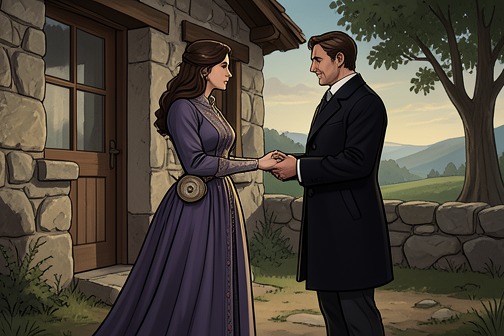
[Amanda's Pregnancy Revelation](entity:event-recall-event-amanda-s-pregnancy-reve-fe7a5795e755) is the decisive turn in [Amanda and Jace's reconciliation](entity:action-recall-action-amanda-and-jace-s-reco-a5d42c85c202): [Amanda](entity:character-recall-character-amanda-f7c90eb37305) tells [Jace](entity:character-recall-character-jace-976f1326765e) that she is pregnant just as they are discussing how to formalize their mate bond and stabilize the future of his pack. The announcement changes their reunion from a private declaration of love into a shared family and political commitment, linking intimacy, Alpha authority, succession, and public identity.
## Context and Relationship
The revelation occurs after Jace and Amanda have recognized the strength of their bond. Jace says that he is certain Amanda is his mate, and she agrees that the recognition is mutual. Their exchange presents the pregnancy not as an isolated medical fact but as part of a larger transition: the couple is moving from separation and uncertainty toward a permanent union. Amanda's response confirms that she understands the emotional and institutional consequences of becoming Jace's mate.
Their relationship also exists within the structure of Jace's pack. Jace is the Alpha, and Amanda's position beside him will carry public authority. The pregnancy therefore arrives at the intersection of personal attachment and communal expectation. It confirms a future in which Amanda is not merely Jace's lover but a central figure in the pack's continuity.
## The Proposal of a Public Future
Before Amanda makes the announcement, Jace proposes a mating ceremony for the pack and suggests that they marry as well. He wants the ceremony publicly reported so that paparazzi will not attempt to break into the private mating ritual. He also intends to name [Logan](entity:character-recall-character-logan-e11884a86c73) as his successor, presenting the ceremony, the succession announcement, and the couple's future as parts of one carefully shaped public settlement.
Amanda considers what this would require from her. As Jace's mate, she would be recognized as the Alpha female after the official ceremony. She has already been adjusting to the responsibilities associated with the role, and the demands of pack life mean reducing her hours at the office. At the same time, she is not being reduced to a ceremonial wife: she has taken a receptionist position for Jace, allowing her to remain involved in practical work rather than existing only as a housewife or public ornament.
Her acceptance is therefore qualified but deliberate. Amanda agrees to adapt to life in the public eye and chooses the bush as the setting for the mating ceremony. The choice gives the planned ritual a setting connected to the pack rather than to media spectacle. Only after she has accepted the implications of Jace's position does she interrupt the discussion to disclose the pregnancy.
## The Revelation and Immediate Response
Amanda tells Jace, "I'm pregnant." The brevity of the statement gives it unusual force. It is not framed as a request for permission or as a negotiation over their relationship. She presents it as a fact that must now be incorporated into the future they are designing together. Jace's immediate response is astonishment and happiness: his eyes light up, he asks whether she is certain, and Amanda confirms the news with a nod.
The disclosure intensifies the meaning of the proposed ceremony. The mating ritual will no longer mark only the recognition of two adults as lifelong partners. It will also publicly acknowledge an impending child and a new family unit within the Alpha's household. Jace's plan to name Logan as successor remains part of the same future, so the announcement places biological parenthood beside chosen succession rather than replacing it.
The scene's emotional movement is from planning to revelation, and from revelation to renewed physical certainty. Jace answers Amanda with a fiery kiss and holds her as though separation is no longer possible. The response makes the pregnancy a confirmation of permanence: the couple's reunion is no longer provisional, and the possibility of being separated again is explicitly rejected.
## Consequences for Pack and Family
Amanda's pregnancy gives concrete stakes to her coming role as Alpha female. She must balance office work, public ceremony, pack responsibilities, and the demands of pregnancy, while Jace must integrate his roles as lover, Alpha, and future father. Their intended marriage becomes both an intimate commitment and a public measure of pack stability.
The child also enters a succession-centered environment. Jace plans to name Logan as his successor, while Amanda's pregnancy introduces another child into the Alpha family's future. The event thus complicates inheritance without presenting it as a direct contest: Logan is designated through leadership and recognition, while Amanda's unborn child embodies the couple's new shared household. The revelation broadens the meaning of family beyond a single line of succession.
Amanda's announcement consequently completes a larger movement from secrecy and separation toward acknowledged belonging. She accepts visibility, accepts the responsibilities attached to Jace's Alpha status, and joins emotional commitment to reproductive continuity. The pregnancy is both intimate news and a structural change in the pack's future.
## Narrative Significance
The event functions as a romantic resolution and a political threshold. Jace and Amanda's mutual recognition as mates supplies the emotional foundation; the planned ceremony supplies public legitimacy; Logan's proposed succession supplies institutional continuity; and the pregnancy supplies the next generation. Each element reinforces the others, turning a private reunion into a lasting social arrangement.
The scene closes on Amanda's certainty that Jace is her mate and love and that their bond is permanent. That ending gives the revelation its decisive significance. The pregnancy does not merely add another plot fact to the relationship. It confirms that Amanda and Jace have moved into a shared future in which love, pack leadership, public recognition, and family formation can no longer be separated.
Event 86
Jesse and Charlotte's Breakup

[Jesse and Charlotte's Breakup](entity:event-recall-event-jesse-and-charlotte-s-b-4cb1518e1f7a) is the decisive rupture that transforms [Charlotte](entity:character-recall-character-charlotte-45ddf3085f55)'s romantic future from an imagined marriage into a campaign of revenge. After six months together, Jesse ends the relationship without offering Charlotte a concrete explanation. She experiences the separation not as a mutual adjustment but as the collapse of a life she had already begun to picture in detail: wealth, restaurants, public events, designer clothes, and marriage. The breakup therefore shifts the story's central value from anticipated intimacy to wounded pride and retaliation, while exposing how strongly Charlotte has tied emotional security to the social world she associates with Jesse.
## The Breakup and Its Immediate Cause
Charlotte reports that Jesse has ended the relationship after six months. His explanation consists of familiar evasions: he is not ready for a serious relationship, he does not think the relationship is working, and he wants to sleep around. Because he supplies nothing specific, Charlotte interprets the explanation as proof that he is an irresponsible or dishonest man rather than as an honest account of his feelings. The absence of a clear reason is itself consequential: it leaves her with no event to understand, negotiate, or repair, only a blank space that she fills with anger.
The scene presents the separation through Charlotte's emotional aftermath rather than through Jesse's perspective. She cries more gently after taking a potion, keeps tissues in her lap, drinks wine with Ella, and repeatedly returns to the insult she believes the breakup represents. Her distress is not merely disappointment at losing a partner. She had expected the relationship to become a permanent social ascent, and the sudden end makes that imagined future feel stolen as well.
## Charlotte's Lost Future
Charlotte says she thought she would marry Jesse and live an extraordinary rich person's life, complete with expensive restaurants, fashionable events, and designer clothing. Her comic lament that she will never have Louboutins now gives the grief a material vocabulary, but it does not make the grief unreal. The luxury objects stand for the future she believed the relationship had promised. When Ella asks whether such benefits matter without love, Charlotte insists that she loved Jesse and rejects the suggestion that the marriage would have been loveless.
This exchange reveals a tension in Charlotte's attachment to the relationship. She imagines love through both emotional devotion and access to a glamorous lifestyle, so Jesse's withdrawal destroys an intimate bond and a carefully furnished identity at the same time. Her conviction that she was heading toward marriage also shows the asymmetry between her expectations and Jesse's apparent willingness to remain uncommitted. The breakup is thus a reversal from certainty to humiliation: Charlotte believed she was moving toward a shared life, while Jesse's explanation implies that he never accepted that destination.
## From Grief to Revenge
Charlotte quickly converts sorrow into an objective. After more wine, she proposes revenge and asks Ella to find a spell that will punish Jesse for dumping her. Ella offers minor possibilities such as warts or slashed tires, but Charlotte dismisses them as childish. She wants to interfere with Jesse's mind and heart, making the retaliation proportionate to what she believes he has done to her emotionally.
The shift matters because Charlotte does not remain passive in the role of the abandoned partner. Her grief becomes a plan, and the plan depends on information. She tells Ella that Jesse has a secret, making that concealed fact the weapon through which the breakup may be answered. The breakup therefore initiates the revenge plot rather than closing Charlotte's story: the failed relationship supplies both the grievance and the motive for uncovering or exploiting Jesse's hidden identity.
## Narrative Function and Wider Motifs
The event belongs to a larger pattern in which intimacy is entangled with exchange, status, debt, and control. Elsewhere, relationships are negotiated through money, ransom, gifts, marriage expectations, or reproduction: Killian seeks to buy Danita's freedom by paying her debt and an additional two hundred and fifty thousand; [Maskin](entity:character-recall-character-maskin-5df12ba18891) offers [Cheryl](entity:character-recall-character-cheryl-af54b6410705) a grass necklace as a personal gesture that unsettles his feelings; and Sheridan identifies Maribel as the woman he wants to bear his child. Against these arrangements, Charlotte's breakup shows the emotional cost when an anticipated exchange fails. She believed love would yield marriage and a prestigious life, but Jesse withdraws before that imagined bargain is fulfilled.
The event also contrasts with relationships that develop toward lasting bonds. Charlotte's expectation of marriage is not fulfilled, and her response is not reconciliation but a desire to damage Jesse's emotional life in return. Her revenge proposal makes the breakup a dark turning point: romantic promise becomes grievance, private pain becomes a scheme, and a concealed secret becomes the hinge on which the next stage of the plot turns.
Event 87
Jesse's Dragon Shifter Revelation
[Jesse's Dragon Shifter Revelation](entity:event-recall-event-jesse-s-dragon-shifter-59f4fc41d480) is the decisive discovery in which [Charlotte](entity:character-recall-character-charlotte-45ddf3085f55) and Ella uncover Jesse's hidden dragon-shifter identity. What begins as a calculated search for evidence becomes a confrontation with a living, airborne creature, and the footage they secure changes the balance between private secrecy, romantic grievance, and deliberate blackmail.
## Causes and Background
Charlotte already believes Jesse is concealing something, and she has identified a recurring pattern in his movements: he comes to the same wooded location on Wednesdays. Rather than relying on rumor or an unverified photograph, she brings Ella to the highway, leads her roughly a mile through the woods, and follows a worn path into a clearing. The operation is treated as surveillance. Ella is instructed to prepare her camera, while Charlotte advances slowly enough to avoid being noticed.
The discovery is also shaped by the aftermath of Charlotte and Jesse's breakup. Jesse refuses her calls, and Charlotte knows that approaching him may expose her personally. Even so, she is willing to make herself visible if doing so will force him to reveal his identity. Her plan is therefore both investigative and confrontational: capture the creature first, then provoke Jesse into changing back so the connection between the dragon and the man can be demonstrated.
## The Discovery in the Clearing
In the center of the clearing, Charlotte and Ella see a huge silver dragon standing upright and eating a green plant. Its long, spiked tail rests behind it, while large paws with clawed ends hold the vegetation; even from a distance, Ella can see its razor teeth chewing. The sight challenges the expectation that a dragon must be a simple predatory monster, since this one is feeding on a plant. At the same time, its size, claws, teeth, and tail make the creature unmistakably dangerous and nonhuman.
Ella photographs the dragon, but Charlotte immediately recognizes the limitation of still images. A picture establishes that a dragon exists in the clearing, not that the dragon is Jesse. The value at stake shifts from discovery to proof. Charlotte decides to run into the clearing and call Jesse's name, hoping that the creature will respond to her and return to human form. Ella objects that the confrontation will identify Charlotte as the person behind the investigation, but Charlotte accepts that risk because she intends to use the evidence against him if necessary.
Charlotte charges through the brush while Ella starts recording. Jesse turns in dragon form and nearly strikes Charlotte with his massive tail. Charlotte demands that he change back so they can speak. The encounter makes the concealed identity visible through action rather than confession: the dragon recognizes the human relationship, responds to Charlotte, and then changes form in front of the camera. The revelation is thus not produced by Jesse's voluntary disclosure but by pressure applied to a secret he has tried to keep separate from his human life.
## The Second Transformation and Recorded Proof
The confrontation does not end with Jesse returning to ordinary conversation. After becoming human, he refuses Charlotte's attempts to reopen contact and tells her to leave. When she begins to cry and tries to hug him, he pushes her away, steps back, and changes into a dragon again. He then leaps into the air and flies toward the clouds, disappearing from sight; the narration indicates that he may have used a spell to conceal himself.
That second transformation is crucial because it links both identities on the same continuous recording. Ella captures Jesse as a dragon, sees him change, and records him changing again before flight. Charlotte and Ella later watch the footage repeatedly at Charlotte's home. Charlotte calls it perfect because it shows everything: the creature in the woods, Jesse's human form, and the unmistakable return to dragon form. The secret is no longer merely suspected or privately remembered. It has become a reproducible object that can be reviewed and potentially used against him.
## Immediate Consequences
The revelation intensifies the conflict between Charlotte and Jesse rather than repairing their relationship. Jesse's refusal to answer calls remains in place, and his flight ends the possibility of an ordinary face-to-face resolution in the clearing. His disappearance also preserves an element of uncertainty around the mechanics of his concealment, since the scene suggests magical hiding without explaining its limits or source.
For Charlotte, however, the recording supplies leverage. She has accepted the danger of exposing herself in order to obtain it, and the completed footage gives her a means to demonstrate Jesse's hidden nature to others. The investigation therefore moves from observation into coercive potential. The material evidence can support a threat even though the scene does not yet establish how Charlotte will deploy it or what Jesse will do in response.
The event also directly prepares Charlotte's next deception. Later that night, Ella watches Charlotte stand before a mirror and cast a spell that makes her stomach swell. Charlotte struggles to maintain the illusion and knows that the spell must be perfected if she is to convince people, especially Jesse, that she is pregnant. The dragon recording and the false pregnancy belong to the same escalating strategy: one exposes Jesse's secret, while the other constructs a bodily claim intended to influence his behavior.
## Narrative Significance
The event functions as a discovery plot and a metamorphosis scene at once. Its central reversal is that the apparently unreachable ex-partner is revealed not simply to possess a secret but to embody two incompatible public identities: Jesse, the human Charlotte knows, and the enormous silver dragon she and Ella find in the woods. The transformation makes secrecy physically visible, while the camera turns an unstable encounter into durable evidence.
The scene also gives a nonhuman form a concrete presence rather than treating dragonhood as an abstract rumor. The dragon eats, moves, reacts, threatens accidental violence with its tail, and escapes through the sky. Yet the evidence remains mediated through human observers and a phone camera. Charlotte and Ella do not master the dragon; they document it, interpret it, and seek to convert its existence into social power. The revelation consequently exposes not only Jesse's supernatural identity but also the machinery of surveillance, proof, and leverage that follows when a hidden identity is captured on record.
Event 88
Ella Becomes Murphy's Dog Walker
[Ella Becomes Murphy's Dog Walker](entity:event-recall-event-ella-becomes-murphy-s-d-37d3ba542da6) is the engineered first meeting between [Ella McCarthy](entity:character-recall-character-ella-mccarthy-ba610615bce4) and [Jesse Barrett](entity:character-recall-character-jesse-barrett-a093608e28a9), disguised as an ordinary employment opportunity. [Charlotte](entity:character-recall-character-charlotte-45ddf3085f55) turns a departing dog walker into an opening for Ella to enter Jesse’s household, while Ella’s improvised confidence and visible nervousness transform the plan from a calculated setup into the beginning of a personal connection. The event matters because the dog-walking job gives Ella sustained access to Jesse and his home, making an intimate relationship possible through an apparently mundane act of care for [Murphy](entity:character-recall-character-murphy-2bf27d1ce3fb).
## The Scheme Behind the Job
Charlotte devises the plan as part of a broader revenge scheme against Jesse Barrett. Ella and Charlotte know that Jesse’s regular dog walker, Lynn, is going to quit, and Charlotte proposes that Ella exploit the timing rather than merely wait for an accidental encounter. Lynn will telephone Jesse and leave him stranded; a few hours later, Ella will arrive with a flyer and offer herself as the replacement. Charlotte treats the plan as an exercise in calculated presentation, telling Ella that if she acts like her “cute self,” Jesse will fall in love with her. The scheme therefore combines deception, romantic ambition, and practical efficiency: a staffing problem is converted into an opening for emotional access.
Charlotte also warns Ella that Jesse usually prefers skinny girls, a comment that exposes the appearance-based assumptions built into the plan. Ella does not disguise herself as Lynn or attempt to become a different person. Instead, she is told to present herself as herself, with her friendliness serving as the persuasive instrument. The event thus begins with a tension between performance and authenticity. Ella is staging an opportunity, but the person Jesse meets is still Ella McCarthy rather than a fabricated employee.
## Ella's Arrival at [Jesse Barrett's Mansion](entity:location-recall-location-jesse-barrett-s-mans-96e29063d625)
Ella follows Charlotte’s instructions and drives to Jesse’s mansion on the day Lynn quits. At the gate, she uses a modest commercial pretext, asking whether Mr. Barrett has a dog and needs a dog walker while offering to leave a brochure with coupons. The approach allows her to conceal the larger purpose of the visit behind the language of a routine service call. When the unseen respondent tells her to come up to the house, the gate opens and the scale of the estate immediately changes the emotional temperature of the encounter.
The property is described as a large white building set in the middle of an expansive, perfectly manicured lawn. Ella passes marble steps, tall topiaries, and flowerbeds filled with bright blooms before reaching the entrance. Inside, long corridors with marble floors lead toward enormous rooms, and the sheer number of possible bedrooms and bathrooms overwhelms her. The mansion is not merely a backdrop; it establishes Jesse’s wealth and the social distance between the person seeking a dog-walking job and the man who owns the estate. Ella’s access to this space is made possible by a small, ordinary service, but the surroundings announce that the service will carry her into a much larger world.
## First Meeting with Jesse and Murphy
After Ella waits in the entrance hall, Jesse himself comes out to greet her. He introduces himself as Jesse Barrett and extends his hand. Ella is so startled that she forgets her name for a moment, gulps, and reaches out automatically, missing his hand by several feet before laughing and recovering. Her nervous mistake gives the encounter a physical vulnerability that contrasts with the confidence Charlotte asked her to perform. The meeting is therefore not smooth seduction; it is an awkward first contact in which Ella’s anxiety remains visible beneath her practiced friendliness.
When Jesse asks her name, she identifies herself as Ella McCarthy. He responds warmly and explains that the timing is unusually convenient: his regular walker quit that morning, and he has had to return home during his lunch break to walk Murphy. He has received Ella’s coupons and is willing to give her a chance, asking whether she can begin immediately. Jesse’s words confirm that Charlotte’s timing has worked exactly as planned, but they also give Ella a legitimate role in the household. The opportunity is no longer hypothetical. Jesse accepts her as a possible employee because a real vacancy exists and because her offer arrives at the precise moment he needs help.
Jesse then invites Ella inside to meet Murphy. The golden lab is waiting in the living room, sitting on his hind legs with his tail swishing against the floor. Murphy has evidently been trained not to bark at people who arrive at the door, and Jesse’s interaction with him shows the domestic routine Ella is entering. Jesse bends down to pet the dog, and Murphy jumps up and rubs against him. This affectionate exchange makes Murphy the immediate bridge between the two humans: Ella has come under the pretense of caring for the dog, and the dog’s presence gives her a natural reason to remain close to Jesse.
## The Job Becomes a Continuing Bond
Ella quickly discovers that the plan requires more than appearing at the mansion and attracting Jesse’s attention. She has little experience with dogs because her mother was allergic and she never grew up with one; she has become accustomed to life without a pet. The possibility of walking Murphy and picking up after him is therefore an unanticipated practical burden. Her claim to be a professional dog walker is partly an act of confidence, but she still has to perform the work that the act has secured.
Ella nevertheless assures Jesse that everything will be fine and presents herself as a professional. He laughs, retrieves Murphy’s leash, and returns with a red leash matching the dog’s collar. Ella snaps it on and takes the handle, accepting the concrete responsibility that accompanies her entrance into Jesse’s life. Jesse tells her that he will be working from home and gives her a business card with his name and number, establishing a direct line of contact beyond the immediate walk. The card is a small but consequential object: what began as a flyer and a fabricatedly convenient visit becomes an ongoing arrangement with repeated access and communication.
The value shift in the event is consequently clear. Ella begins with a plan that depends on manipulating circumstances, while Jesse is simply trying to solve a same-day household problem. By the end, she has gained employment, a reason to return, Jesse’s contact information, and a relationship to Murphy that can keep her present in the mansion. The apparent transaction is dog walking, but its narrative function is access. Care work becomes the route through which attraction, deception, and future intimacy can develop.
## Narrative Significance
The event uses an everyday exchange to initiate a romance shaped by unequal knowledge. Charlotte and Ella understand that the vacancy is being used strategically, while Jesse accepts the encounter as an ordinary response to Lynn’s resignation. That asymmetry supplies the scene’s tension: Ella’s arrival is neither wholly false nor wholly innocent. She genuinely must walk Murphy and learn how to manage a dog, yet the job would not have been pursued without the larger plan to reach Jesse.
Ella’s first meeting with Jesse also establishes a recurring contrast between intention and result. Charlotte predicts a controlled performance in which Ella’s charm will make Jesse fall in love, but the actual encounter is marked by a forgotten name, a missed handshake, and Ella’s dawning awareness that she has little practical experience with dogs. These awkward details prevent the scheme from functioning as a perfectly controlled seduction. Instead, the plan creates the conditions for contact, while Ella’s unsteady behavior makes the contact human and consequential.
In the wider pattern of the novel, the event echoes other relationships in which intimacy is mediated by an exchange: [Killian Flanagan](entity:character-recall-character-killian-flanagan-eec0e3e5b663) negotiates money and time to buy Danita Valdez’s freedom from the Lion, [Maskin](entity:character-recall-character-maskin-5df12ba18891) offers [Cheryl](entity:character-recall-character-cheryl-af54b6410705) a grass necklace as a personal gesture within a system of reproductive and political expectations, and Sheridan tells [Maribel Arnaz](entity:character-recall-character-maribel-arnaz-8523f9feeca4) that he wants her to bear his child. Ella’s dog-walking arrangement is far less coercive, but it belongs to the same broad narrative world in which access, affection, obligation, and bodily or domestic care are repeatedly organized through practical transactions. Here, a leash, a business card, a vacant job, and a friendly dog become the modest instruments through which a calculated encounter can grow into the central relationship between Ella and Jesse.
Event 89
Ella's Fake Pregnancy Confession and Jesse's Proposal
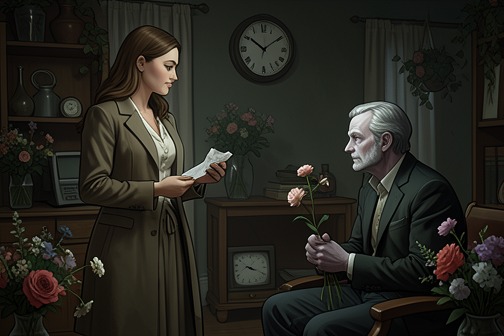
[Ella's Fake Pregnancy Confession and Jesse's Proposal](entity:event-recall-event-ella-s-fake-pregnancy-c-dbe9d3976968) is a reversal in which a carefully prepared deception meant to produce separation instead creates the possibility of marriage. Ella tells [Jesse Barrett](entity:character-recall-character-jesse-barrett-a093608e28a9) that she is pregnant, presents the confession as a reason they must stop seeing each other, and expects him to retreat. Jesse initially appears shocked and emotionally unresponsive, but he returns with flowers and a ring, transforming her attempted exit into his first proposal. The event exposes how loyalty, concealment, romantic expectation, and the prospect of family collide in Ella’s relationship with Jesse.
## Causes and Background
A few weeks before the confession, Ella and Jesse Barrett had continued seeing each other and messaging every day. Ella had also begun repairing her friendship with [Charlotte](entity:character-recall-character-charlotte-45ddf3085f55), who had been her best friend for almost ten years. The six-week point had been chosen as the moment to tell Jesse, and Ella approached the planned dinner with increasing sadness. She did not want to hurt Jesse or lose the relationship, which had become a decent and materially attractive romance, but she also did not want to take Charlotte’s former boyfriend for herself. Her decision therefore arose from a conflict between personal attachment and loyalty to Charlotte rather than from a desire to secure Jesse’s money or commitment.
Ella and Charlotte had prepared the speech together. Ella intended to say that the relationship had been too brief for her to expect anything from Jesse Barrett, that she wanted neither money nor his involvement with the baby, and that continued contact would only make matters awkward. The strategy was designed to remove every obligation from him while making separation appear necessary. Its apparent generosity also concealed the deeper purpose: Ella was trying to force a clean break before her renewed friendship with Charlotte was damaged beyond repair.
## The Confession and Immediate Breakup
When Jesse arrived for dinner, Ella did not greet him warmly. She stepped back when he moved to kiss her, asked to talk, and then told him, “I’m okay. I’m… pregnant.” Jesse froze and seemed to go pale. Ella immediately delivered the prepared explanation, insisting that she expected nothing from him, did not want his money, did not need him involved with the baby, and could no longer see him. The confession thus functioned as both a disclosure and a performative act: by naming the pregnancy and declaring the relationship over, Ella attempted to establish a new arrangement in which she would raise the child alone.
Jesse’s first response seemed to confirm Ella’s expectations. He paced, asked for time to think, and left without hugging or kissing her or asking how she was. Once the door shut, Ella burst into tears. His silence allowed her to interpret him as the selfish man Charlotte had warned her about, and the apparent rejection briefly converted her guilty decision into a judgment against him. She began calling Charlotte to recount what had happened, believing that the relationship had ended exactly as planned.
## The Proposal Reversal
The value of the scene changes when Jesse Barrett returns almost immediately, carrying flowers. Rather than accepting the breakup, he tells Ella that he likes her, believes he could love her, and wants a chance to become not only the mother of his child’s partner but her husband. He takes out a ring box, kneels, and proposes. The flowers and ring turn the objects of courtship into instruments of reassurance: instead of allowing the pregnancy to become a debt Ella must bear alone, Jesse offers marriage and a family as his answer.
Ella is startled because his response contradicts the entire plan. She tells him that he is supposed to be frightened, end the relationship, and disappear, but Jesse rejects that expected script. He argues that they are good together and can make a good family, then asks her to marry him and make the relationship work. His proposal does not erase the deception or the brevity of their courtship; it intensifies both. Ella had expected the pregnancy claim to close the future, while Jesse treats it as a reason to build one.
## Uncertainty and Consequences
Ella does not immediately accept. Her hesitation reflects more than surprise at the proposal: she had organized her future around herself and the baby, without Jesse Barrett. When he asks whether she will marry him, she clarifies that she only meant she understood his willingness to persist. She needs time to adjust to the possibility that he will not abandon her and that the relationship may become a family arrangement. Jesse acknowledges that they have been dating for only about three months and have not said “I love you,” yet he still wants her to be his.
Jesse leaves the ring with Ella and promises to give her whatever time she needs, asking only that she call him the next day to talk rather than provide an immediate answer. The event therefore ends in suspended commitment rather than resolution. Ella’s confession produces neither the clean separation she intended nor an instant marriage; it leaves her holding the ring, facing a future that has been reopened by the very disclosure meant to shut it down.
## Narrative Significance
The event is built around the gap between an expected romantic beat and its result. Ella prepares for rejection as the final stage of a breakup, but Jesse’s return supplies the grand gesture normally associated with reconciliation or commitment. The reversal gives the scene its dramatic force: the pregnancy confession is presented as an instrument of distance, while Jesse converts it into an appeal for permanence.
The episode also places agency and obligation in tension. Ella speaks first and tries to define the terms of the disclosure, refusing money and refusing to demand paternal involvement. Jesse answers with a proposal that is emotionally generous but also changes the scale of what Ella must decide. The ring does not settle the truth of the relationship; it makes that truth harder to evade. By the end, concealment has produced an unexpected promise, and the supposed ending has become the threshold of a new, uncertain family future.
Event 90
Ella Confesses the Revenge Scheme
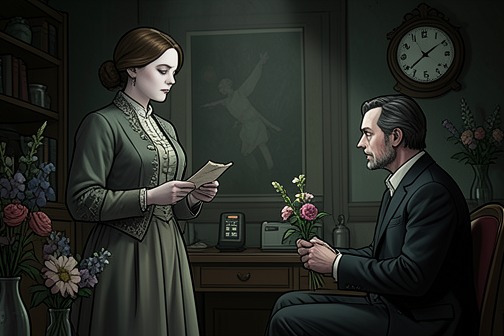
[Ella Confesses the Revenge Scheme](entity:event-recall-event-ella-confesses-the-reve-de6ac6d8fa60) is the decisive disclosure in which Ella abandons the false identity and revenge plot that brought her into Jesse's life. She admits that [Charlotte](entity:character-recall-character-charlotte-45ddf3085f55) recruited her after Jesse ended their relationship, that the plan was intended to blackmail him and wound him emotionally, and that her own genuine feelings eventually made the scheme unbearable to continue. The confession also exposes Ella as a witch and clarifies why her supposed pregnancy, altered appearance, and other deceptions were possible. What begins as an admission of betrayal becomes a test of whether intimacy can survive the truth.
## The Decision to Tell the Truth
Ella reaches the confession only after Charlotte confronts her about Jesse's secret and the damage caused by the scheme. Charlotte insists that Jesse would abandon Ella if he knew her real nature, but the confrontation has the opposite effect: it forces Ella to decide which secret deserves protection. She deletes every photograph and video of Jesse shifting, ensuring that there will be no evidence that could expose him. This is a concrete act of protection rather than a promise made for appearance. She recognizes that she has already harmed him and concludes that the only honest response is to tell him everything, though she postpones the conversation until the next day because she is exhausted and unable to organize her thoughts.
Jesse arrives before she can sleep, furious and demanding an explanation. His anger gives the scene its immediate danger, but his response changes when he sees her crying. He sits with her, brings her water, and asks her to talk. The gesture does not erase the deception; it creates the narrow space in which disclosure can occur. Ella therefore confesses not because the scheme has become harmless, but because the person she deceived is now present as a person she loves and cannot continue treating as a target.
## What the Revenge Scheme Was
Ella tells Jesse that Charlotte had been devastated after their breakup and wanted revenge for what she believed he had done to her. Because Charlotte was her best friend, Ella wanted to help. She accepted Charlotte's description of Jesse as a manipulative player who used women, and she believed she was retaliating against a selfish stranger rather than approaching someone whose conduct she would come to judge for herself.
The plan had two linked objectives: to blackmail Jesse for money and to break his heart in return for Charlotte's pain. Ella's role was therefore both practical and emotional. She entered the relationship under false pretenses, including a fabricated pregnancy, while intending to make Jesse vulnerable. Yet meeting him disrupts the story Charlotte gave her. Jesse does not resemble the cruel figure she expected, and Ella develops real feelings for him. Her confession distinguishes between the original motive and the later reality: the scheme was deliberate, but her attachment was not fabricated.
Ella is explicit that sleeping with Jesse served both purposes at first. It was part of the planned revenge, but it also became an expression of genuine desire and affection. That contradiction is the moral center of the event. She does not claim that love cancels the lie; instead, she admits that love grew inside a lie she had freely chosen. Her apology acknowledges responsibility rather than presenting herself as an innocent victim of Charlotte's influence.
## Jesse's Response and the Collapse of the False Identity
Jesse says he believes Ella, although she immediately points out that he has no reason to trust someone who has lied from the beginning. His willingness to listen is partly shaped by Charlotte's own conduct. Charlotte had burst through the gate accusing Jesse of lying and tricking Ella, an attempt to reverse the positions of victim and deceiver. Jesse recognizes the manipulation and refuses to accept Charlotte's account, calling her a liar and a cheat and questioning the supposed dog-walker identity Ella had used.
Ella explains that the dog-walking claim was technically grounded in a narrow truth: she was paid to walk Jesse's dog, [Murphy](entity:character-recall-character-murphy-2bf27d1ce3fb), so she could call herself a professional dog walker, even though Murphy was the first dog she had ever walked. The distinction captures the broader structure of her deception. Her statements were not always wholly invented; they were arranged to create a misleading identity. She admits that the dog-walking story was false in the meaningful sense, and she also admits that the pregnancy was false. At the same time, she insists that her behavior with Jesse was real. She had not been able to conceal that much of herself once her feelings became genuine.
The disclosure then moves beyond the revenge plot to the identity beneath it. Ella tells Jesse that she is a witch, revealing the supernatural nature she had kept hidden from him. She explains that magic allowed her to fake a pregnancy and alter her appearance. By dropping her glamour, she returns to her natural body, including the curves and fuller figure she had concealed. The physical change makes the confession visible: the false self disappears in front of Jesse, and Ella chooses to be seen as she actually is rather than continue performing the role Charlotte's scheme required.
## Magic, Consent, and the Proof of Real Feeling
The conversation also establishes an important limit on Jesse's dragon-shifter nature. Ella initially uses magic to heighten his feelings for her, believing the spell can help produce the attachment required by the plan. Jesse explains that dragon shifters cannot be affected by magic unless their own will aligns with it. A spell cast against his will cannot control him; it works only when he agrees with it. This rule changes the meaning of Ella's manipulation and provides the event's unexpected proof.
Ella admits that she cast the spell to make Jesse have feelings for her and had been using it during their relationship. Jesse replies that such magic cannot work on him. Ella understands the implication before she can fully accept it: his feelings for her are real. The revelation does not make her earlier conduct acceptable, but it separates supernatural coercion from emotional truth. She attempted to manufacture love, yet the dragon's consent-based immunity means that the love he developed was not produced by her spell. The failed enchantment becomes evidence that the relationship exceeded the revenge scheme.
This exchange gives the confession a double movement. Ella loses the protections of her false pregnancy, glamour, and fabricated occupation, but she gains certainty that Jesse's response is not magically imposed. Jesse, meanwhile, learns that the woman who deceived him possesses a hidden identity, but also that his attachment survived outside the reach of her magic. The scene therefore shifts the central value from manipulation to voluntary recognition: what appeared to be a manufactured bond is revealed as an unforced emotional connection.
## Consequences and Narrative Significance
Ella's confession changes the relationship's terms without resolving its pain. Jesse now knows that she entered his life as part of Charlotte's revenge, lied about central facts, and used magic in an attempt to influence his feelings. He also knows that she protected his dragon secret, that she came to regret the scheme, that her feelings are genuine, and that her magic could not create his love against his will. Trust is damaged, but the confession makes future trust possible because concealment has ended.
The event also completes Ella's break with Charlotte. Charlotte's plan depended on secrecy, emotional manipulation, and the assumption that Jesse's hidden nature would make him easy to control through exposure. Ella rejects that logic by destroying the evidence of his shifting and disclosing her own supernatural identity directly to him. The former friends are thus placed on opposite sides of secrecy: Charlotte weaponizes hidden truth, while Ella finally uses disclosure to prevent further harm.
Within the wider supernatural narrative, the confession echoes other revelations in which concealed species identities determine whether intimacy can survive. Jesse's dragon-shifter status and Ella's witchhood are not merely colorful secrets; they govern what magic can do, what consent requires, and how vulnerable each character is to public discovery. Ella's return to her unglamoured appearance and Jesse's explanation of dragon immunity turn private romance into an encounter between two supernatural systems. The decisive outcome is not that deception disappears without consequence, but that the relationship is given a truthful foundation for the first time.
Event 91
Jesse and Ella's True Engagement

[Jesse and Ella's True Engagement](entity:event-recall-event-jesse-and-ella-s-true-e-b139c62ff1e3) is the decisive romantic redefinition of their relationship: what began under false pretenses and circumstances that once made marriage seem necessary becomes a freely chosen promise. Jesse stages the proposal high above the city, but the height matters less than the change in meaning. This time, he is not asking Ella to perform a role or fulfill an obligation. He is asking her to share his future, and she accepts because the choice is finally real.
## Causes and Background
The engagement follows a relationship marked by concealment, altered identities, and unstable expectations. Ella had originally entered Jesse's life while presenting herself as a dog walker, a lie that Jesse later recognizes as part of the strange chain of circumstances that brought them together. Their earlier engagement was compromised by practical pressure: Jesse explicitly acknowledges that he had proposed before because he felt he had to. The new proposal therefore answers an unresolved question beneath the earlier one—whether their bond could survive once coercion and necessity were removed.
The surrounding story also places their intimacy within a larger pattern of unconventional bonds and socially regulated relationships. [Cheryl](entity:character-recall-character-cheryl-af54b6410705)'s decision to accept both Bjorn and [Maskin](entity:character-recall-character-maskin-5df12ba18891) requires the two men to remain together and turns a rivalry into a conditional shared commitment. Teresa learns that the [Kinai Joining](entity:state-recall-state-kinai-joining-dbc13549c076) is a guarded communal rite in which unmarried [Kinai](entity:location-recall-location-kinai-8c60014d50cf) between twenty and thirty spend the winter at the [Rookery](entity:location-recall-location-rookery-9e0fa67f09fd) every twenty-five years, when the beastlings hatch. These other relationship and identity rituals provide a contrast to Jesse and Ella's private choice: their engagement is not granted by a council, temple, or inherited custom, but confirmed by mutual consent.
## The Proposal in the Sky
Jesse first leads Ella into the backyard and checks the neighboring houses. Because they have neighbors, he cannot simply transform in the open; instead, he takes her hands, closes his eyes, whispers an inaudible spell, and makes the world shimmer as though they are standing behind a waterfall. The gesture creates privacy without removing the physical setting. It is a temporary boundary around an intimate act.
Jesse then shifts into his dragon form and invites Ella to climb onto his back through a voice that enters her mind. Ella is startled by the sensation, and Jesse explains that he can communicate with her this way because she is a witch and the ability is a dragon power. His transformation is therefore not merely spectacle. It joins the supernatural identities that once made their relationship complicated, allowing their differing natures to become the means of shared movement rather than separation.
With Ella holding his neck, Jesse launches into the air. His enormous wings carry them above the clouds and across the city, whose lights become scattered points below them. The moon guides their flight, while his silvery scales protect her from much of the cold. They circle the city several times before landing on the observation deck atop its tallest building. The journey establishes a threshold between ordinary domestic space and a place from which the entire city can be seen, turning the proposal into a passage from secrecy and confusion toward public emotional clarity.
## The Choice and Its Value Shift
On the observation deck, Jesse tells Ella that he sometimes comes there to be alone, think, and watch the city. He then redirects the scene's meaning toward her, telling her that the best view is where she is. The statement makes the emotional center of the setting unmistakable: the city is expansive, but the proposal concerns the person beside him.
Jesse takes a ring box from his pocket, kneels, and asks Ella to marry him because he wants to spend his life with her, have a family, and grow old with her. The wording changes the value of marriage from obligation to desire. Ella immediately recalls the earlier proposal and protests that Jesse does not have to repeat it now. His answer is the event's central reversal: he knows he is free not to do it, and that freedom is precisely why he is doing it.
Ella tests the sincerity of the moment by asking whether he is sure. Jesse confirms that he is. When he asks whether her response is yes, she laughs and agrees. Her acceptance completes the value shift from uncertainty to mutual commitment. The proposal is not validated by the ring alone; it becomes binding through the exchange in which both characters distinguish choice from pressure.
## Ritual, Symbolism, and Consequences
The scene follows a compact ritual structure. Jesse separates Ella from the familiar backyard, carries her through a liminal skyward journey, and brings her to the elevated observation deck, where their relationship is verbally redefined before the ring is placed on her hand. His kneeling, the ring, the question, the answer, the kiss, and the act of sliding the ring into place give the promise a visible sequence. The supernatural flight enlarges a conventional engagement ritual without changing its essential center: a spoken commitment made freely and answered freely.
The ring is therefore a material sign of an inward correction. Ella calls it perfect after Jesse places it on her left hand, while he kisses her hand immediately afterward. The physical gesture follows the verbal agreement rather than replacing it. Jesse has already explained why he is proposing, and Ella has already consented before the ring is put on her finger. The object seals a decision that language has made.
Jesse also looks backward while committing himself forward. He says that, as strange as it sounds, he is happy Ella lied when she first claimed to be a dog walker and that [Charlotte](entity:character-recall-character-charlotte-45ddf3085f55) helped bring them together. This does not erase the deception or the difficult circumstances surrounding their earlier relationship. Instead, it incorporates them into a shared history that now leads to a chosen future. The consequence is a true engagement: not simply a repeated promise, but a new interpretation of everything that came before.
## Narrative Significance
The engagement functions as the relationship's grand gesture and happy-forward resolution. In romance terms, it completes the movement from meeting through resistance and misunderstanding to deliberate commitment. The scene does not pretend that the couple's path was uncomplicated; it makes the earlier lie and forced proposal part of the emotional evidence that the new proposal means more. The difference between the two engagements is the difference between compliance and agency.
Its elevated setting also creates a sharp contrast with the other systems of belonging in the wider narrative. Cheryl is carried from the temple to the palace by a hovering platform and discovers that two men, rather than one, await her as prospective kings; she later imposes the rule that neither Bjorn nor Maskin may have her without the other. Teresa's knowledge of the Kinai Joining is controlled by elders and protected as a communal secret. Harrod's passage toward recognition as a [True Alpha](entity:expression-recall-expression-true-alpha-18dda9f4df57) occurs before the entire den under the full moon, with wolves, pups, family, and [Siobhan](entity:character-recall-character-siobhan-f4d21c07c592) gathered around the pit. Against these collective or institutional ceremonies, Jesse and Ella's engagement remains intimate, yet it is no less transformative. Its authority comes from an explicit mutual decision rather than from a temple, a council, a bloodline, or a public trial.
By the end of the event, Jesse and Ella are no longer bound merely by the circumstances that first joined them. Jesse has declared the future he wants, Ella has accepted it after verifying his freedom to choose, and the ring gives that mutual decision a lasting form. The flight over the city, the private magical boundary around the backyard, the proposal on the observation deck, and the final kiss together turn a precarious romance into an openly affirmed engagement.
Event 92
Ella's Real Pregnancy
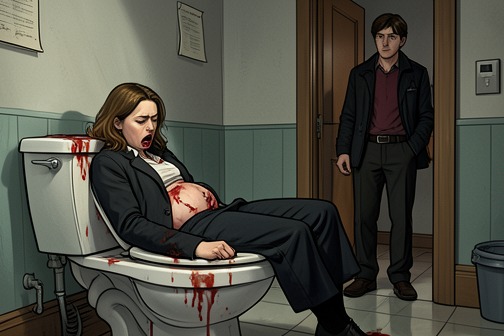
[Ella's Real Pregnancy](entity:event-recall-event-ella-s-real-pregnancy-8712313beef6) is a turning-point event in [Ella McCarthy](entity:character-recall-character-ella-mccarthy-ba610615bce4) and [Jesse Barrett](entity:character-recall-character-jesse-barrett-a093608e28a9)'s relationship. Occurring only a week after Jesse proposed and Ella accepted, it converts their tentative future together into a shared responsibility with immediate emotional and practical consequences. The pregnancy is unexpected rather than deliberately planned, but its discovery ultimately strengthens their reconciliation and prompts them to move rapidly toward marriage.
## Causes and Background
A week after the engagement, Ella McCarthy wakes with a sudden urge to vomit, runs to the bathroom, and assumes that she may have the flu. The physical symptom initially appears ordinary, and Jesse Barrett treats it as a possible illness rather than as evidence of pregnancy. The timing, however, leads Ella to search backward through their recent history and identify the specific circumstance that made pregnancy possible.
Ella remembers a morning after their first sexual encounter, when she climbed on top of Jesse while both were half awake. They had not used contraception. She had not considered that she could actually become pregnant, and the realization changes the meaning of their earlier intimacy: what had seemed like a private reconciliation now carries a biological consequence neither expected. Her tears and uncertainty show that the pregnancy is not received as a simple romantic reward; it arrives with fear, surprise, and the question of whether their newly repaired relationship can bear the pressure.
## The [Pregnancy](entity:state-recall-state-pregnancy-cdafbf158725) Test and Revelation
Jesse and Ella take a pregnancy test together in the bathroom. Jesse reads the instructions while Ella uses the test and places it on the counter, leaving both of them in a tense interval of waiting. The test produces two pink lines, confirming that Ella is pregnant. The concrete result ends the uncertainty created by her nausea and turns a suspicion into an irreversible change in their circumstances.
Ella reacts with shock, while Jesse embraces her tightly as she cries. Her first response is not uncomplicated joy: she is confused, frightened by the speed of events, and conscious that they are not yet married. Jesse answers the practical objection by insisting that marriage can happen at any time. His response makes the pregnancy a catalyst rather than a threat to the engagement, linking the newly disclosed child to a decision to formalize their relationship.
## Relationship Consequences
The revelation tests the emotional meaning of Jesse's proposal. Ella has reason to feel guilty because the pregnancy follows an unprotected encounter and because the couple's past contains enough conflict for her to fear that the new responsibility might reopen old wounds. Jesse refuses to let her remain trapped in that guilt. He tells her that they have moved on from the past and that he is happy about the pregnancy, even very happy. His reassurance changes the emotional direction of the scene: the discovery begins in panic and uncertainty but moves toward mutual acceptance.
The pregnancy therefore confirms the couple's reconciliation in action rather than merely in language. Jesse does not treat Ella's pregnancy as a reason to withdraw, punish her, or question the engagement. Instead, he responds through physical comfort and a clear willingness to share the consequences. Ella's tears remain important because they preserve the event's ambivalence: happiness and fear coexist, and the couple's commitment is tested precisely because the future has become more immediate than either expected.
## Accelerated Marriage Plans
After the positive test, marriage changes from a future possibility into an urgent practical decision. Ella points out that they are not yet married, while Jesse answers that the ceremony can be arranged whenever necessary. When she worries that suitable arrangements usually take time and that desirable venues book quickly, Jesse replies, “[Money can buy almost anything](entity:expression-recall-expression-money-can-buy-almo-543752122d98).” The statement gives the aftermath a distinctly transactional edge: affection and commitment are present, but wealth becomes the instrument that allows the couple to compress the normal timetable.
The event thus accelerates the movement from engagement to marriage. Jesse's confidence does not erase Ella's initial uncertainty, but it provides a direction for it. The pregnancy joins their personal reconciliation to a public and legal future, making their promise more concrete while also increasing the stakes of every decision that follows.
## Narrative Significance
As a romance event, Ella's Real Pregnancy completes a decisive value shift. Before the test, Ella and Jesse possess an accepted proposal but still face uncertainty about what their repaired relationship can sustain. After the two pink lines appear, their bond is attached to a child and to an accelerated marriage plan. The event changes intimacy into family formation and turns the couple's past conflict into a condition they must consciously leave behind.
The pregnancy also illustrates how bodily knowledge interrupts deliberate planning. Ella and Jesse have only just agreed to marry when an unplanned consequence of their earlier intimacy forces them to act sooner. Yet the narrative does not present the discovery solely as a crisis. Through Jesse's embrace, his insistence that the past is over, and his willingness to arrange the wedding quickly, the revelation becomes a confirmation of their renewed partnership. Its ending is therefore not the discovery alone but the couple's movement from shock toward shared commitment.
Event 93
Jesse and Ella's Skyscraper Wedding

[Jesse and Ella's Skyscraper Wedding](entity:event-recall-event-jesse-and-ella-s-skyscr-bd63e5ff1637) is the decisive public confirmation of [Jesse Barrett](entity:character-recall-character-jesse-barrett-a093608e28a9) and [Ella McCarthy](entity:character-recall-character-ella-mccarthy-ba610615bce4)’s relationship. Held on the top of the tallest building in the city, the ceremony transforms a private romance marked by deception, media pressure, and an unexpected pregnancy into an openly acknowledged marriage. The wedding also binds their human and dragon-shifter lives to the child whose magical presence they already feel, turning the elevated venue into a literal threshold between their former uncertainty and their chosen future.
## Setting and Ceremony
Two months after the preceding events, Ella waits at the end of a wide aisle in a white dress fitted around her chest and flowing outward in layers of chiffon, with her growing belly visible beneath it. Gems cover the upper layer like a falling veil of stars, and additional gems are woven into the curls of her swept-up hair. White rose petals and glitter cover the aisle, while candles flicker beside the path and around the altar.
The ceremony takes place on the observation deck at the top of the city’s tallest building. This is not an arbitrary setting. It is the place where Jesse and Ella first flew together and where Jesse proposed to her for the second time. They repeatedly returned there to look down at the world, talk, and make love after the observation deck had closed to ordinary visitors. Its height and quiet made it a private refuge above the city, and Jesse secures it for the wedding with a single phone call and a substantial payment.
The wedding’s staging gives the event a strongly liminal shape. Ella emerges from an elevator into open sky, with clouds and darkening blue space visible through the glass walls behind her and a circle of seated guests ahead. Jesse waits beside the minister in a white tuxedo, and the wedding coordinator gives Ella her cue before stepping aside. She therefore crosses from an enclosed private space into a public ceremony, moving physically and socially toward Jesse and the life they have decided to share.
## Public Commitment Under Pressure
The wedding follows the confirmation of Jesse and Ella’s real engagement and pregnancy, disclosures that provoke an aggressive response from [Charlotte](entity:character-recall-character-charlotte-45ddf3085f55). Charlotte contacts numerous media outlets in an attempt to smear them, and armed guards are positioned beside the elevator and throughout the venue. The guards are partly intended to keep reporters away, although Jesse says they would have been present regardless as a general precaution.
Jesse answers the scandal through a press conference rather than secrecy. He shows the media the restraining orders that he and Ella have against Charlotte, explains that Charlotte cheated on him and reacted angrily when he ended their relationship, and confirms that Ella and Charlotte were once friends but no longer are. The tabloids continue to dramatize the dispute, yet the wider public loses interest once the circumstances are stated plainly. The wedding thus occurs under scrutiny, but the couple’s public position is no longer controlled by Charlotte’s version of events.
The media instead becomes fascinated by the romance itself. Reports emphasize the story of the dog walker who met Jesse while covered in mud, the rapid intensity of their relationship, and the pregnancy that followed their engagement. Some stories speculate that the marriage is an obligation forced by the pregnancy, an interpretation that Ella recognizes as ironic because creating that appearance had once been part of her own plan. She rejects the implication. In her understanding, Jesse proposed and she accepted before either of them knew she was pregnant; the discovery of the child increased their happiness rather than creating the relationship.
## [Pregnancy](entity:state-recall-state-pregnancy-cdafbf158725) and Shared Magic
Ella enters the ceremony already experiencing the wedding as a family event. Jesse has accompanied her to every doctor’s appointment, arranged care whenever he could not be present, and made sure she had the best available healthcare and whatever comforts she needed, including chocolate, tea, and massages. Their evenings include reading baby books together, with Jesse rubbing her feet and back before they make love and fall asleep together.
The pregnancy also intensifies the couple’s magical bond. Jesse is a dragon shifter, and their shared magical ability brings them closer. As the baby grows, the child begins to project a magical presence of its own. Jesse tells Ella that what they feel is the baby’s individual magical essence, and both parents already sense the child as a distinct participant in their relationship.
That presence becomes tangible during the procession. The baby stirs inside Ella, and she places a hand over her belly. He presses back, and she sends him warm feelings of love. The child turns in response, returning warmth to her. When Ella looks toward Jesse, she sees that he has tears in his eyes; he can feel the exchange as well. His joy reaches her as a wave, and she steps forward with that shared awareness. The moment makes the wedding more than a legal or ceremonial union: it is also the first public movement of a family already connected through human affection, pregnancy, and magic.
## Resolution and Narrative Significance
The wedding resolves the instability surrounding Jesse and Ella’s engagement. Their relationship has passed through false appearances, Charlotte’s hostility, public gossip, and Ella’s fear after discovering the pregnancy, but the ceremony confirms that the commitment preceded the pregnancy and survives the surrounding conflict. The child does not force the union; instead, the pregnancy becomes an additional source of joy within an already chosen partnership.
The event also completes Ella’s transformation from someone entangled in other people’s schemes into a bride who openly claims her own story. She once imagined marriage in abstract childhood dreams, but the reality exceeds those expectations: her groom is handsome and wealthy, a dragon shifter, and the father of the magical child she carries. The wedding’s height reflects that enlarged future. The couple rises above the city not to escape ordinary life permanently, but to mark a new identity in which love, parenthood, supernatural heritage, and public recognition coexist.
As Ella walks from the elevator toward Jesse, the crowd, the candles, the petals, and the guards remain part of the scene, but they no longer define its meaning. The decisive movement is hers toward him and toward their child. The narrative closes immediately after she steps forward, presenting the wedding as a completed emotional resolution and a promise of the magical family life ahead.
Event 94
Ana and Joseph Discover the Anti-Shifter Conspiracy
[Ana and Joseph Discover the Anti-Shifter Conspiracy](entity:event-recall-event-ana-and-joseph-discover-860d1492f7f0) is the investigation’s turning point: what first appears to be a violent attack surrounding Senator [Seth Fischer](entity:character-recall-character-seth-fischer-9257c41e7291) becomes evidence of a coordinated anti-shifter campaign. The discovery gives Joseph and Ana a workable enemy, but it also widens the danger. Seth’s life, shifter civil rights, [Tracey](entity:character-recall-character-tracey-74fd38764fcc)’s café, and the investigators themselves are all caught inside a strategy designed to convert fear into public support for discrimination.
## Causes and Background
Ana refuses to remain hidden after the attackers take Seth Fischer. Although her leg is badly injured, she insists that they return to the city and find him, explaining that she has already collected documents about anti-shifter groups that have threatened the senator. Her urgency changes the investigation from passive survival into an active search for the people behind the kidnapping. Joseph understands why Seth may have been taken alive: historically, shifters were tortured into transforming, killed, and displayed as warnings. In his view, Fischer’s abduction is meant to send a message about shifters, and the intended conclusion is a public, spectacular death.
The immediate danger is therefore political as well as personal. The attackers are not merely seeking a ransom or revenge. They are using the senator’s captivity to make shifters appear vulnerable, punish those who defend them, and force the city to accept measures that would restrict their rights. Ana’s collected material provides the first organized map of that threat, while Joseph’s experience supplies the means to test it against police records, witnesses, and identifiable suspects.
## Investigation and Discovery
Ana’s most direct contribution comes through her work computer. She keeps detailed records of every threat received by the senator and hacks into the system so that she and Joseph can determine whom to investigate. Joseph initially tries to limit her involvement, telling her that he will confront anyone they identify and insisting that she stay out of danger because she is a personal assistant rather than a police officer. Ana continues the search, however, and her access to the files gives them a starting point that ordinary questioning could not provide.
Her records reveal several powerful groups that want shifters destroyed or reject the idea that shifters deserve treatment as human beings. Ana and Joseph then search the internet for information about members of those organizations. Their breakthrough comes in a chat room where the police officer who killed Buck had openly claimed to belong to the precinct investigating the attempted assassination of Senator Fischer. He disclosed enough personal information for Joseph to identify him. The discovery transforms generalized suspicion into a concrete link between anti-shifter activism, police authority, and violence.
The officer is already dead, leaving Joseph without the direct confrontation he wants. His reaction shows how the investigation has altered his understanding of the case: the officer is not simply a corrupt individual but part of a larger structure that has already killed Joseph’s partner and may still be holding Fischer. The dead suspect becomes both evidence and obstruction. His online statements expose the conspiracy, yet his death removes the possibility of learning who directed him or where the senator has been taken.
## Threats, Witnesses, and Political Coercion
The conspiracy becomes unmistakable when Ana and Joseph visit Tracey’s café. Tracey is a prominent shifter, and she shows them a note delivered to her door. The threat states that unless she publicly announces support for a shifter registry, the abductors will kill Fischer and burn down the café. The demand is carefully chosen: Tracey’s public endorsement would damage the shifter-rights cause precisely because her visibility gives her statement unusual influence.
Tracey’s fear is not limited to her business. She has a mate and two children, and she worries that the attackers may target them next. Ana notices the strategic contradiction: if the conspirators truly wanted to punish Tracey personally, they could have threatened the people closest to her from the beginning. Instead, they threaten Fischer and the café, using recognizable public symbols to compel a political announcement. Joseph agrees that finding Fischer’s kidnappers is the best course and shows Tracey photographs, asking whether she recognizes anyone. She cannot identify a suspect or add useful information about the organization linked to the corrupt officer.
Joseph continues across the city, consulting contacts and pursuing every available lead, but obtains little beyond a rumor that Seth is still alive. The lack of progress leaves him increasingly frustrated and helpless. He and Ana cannot safely return to her parents’ home, so they check into a hotel, where the investigation continues under pressure and uncertainty. The conspiracy has made ordinary shelter, police procedure, and public speech dangerous; every move now carries the possibility of exposing another target.
## Stakes and Consequences
The discovery produces a double value shift. At the beginning, Joseph and Ana are primarily trying to survive and locate a missing senator. Once Ana’s files and the chat-room evidence are assembled, the case becomes a struggle over whether anti-shifter groups can manipulate a kidnapping into a legal and social victory. The threat against Tracey demonstrates that Fischer’s captivity is part of a campaign of coercion, while the police connection suggests that the campaign can operate through institutions supposedly responsible for protecting the public.
Ana and Joseph also form a more effective investigative partnership. Ana supplies persistence, records, computer access, and the ability to recognize patterns in threats; Joseph supplies authority, field contacts, identification skills, and the willingness to confront the perpetrators. Their disagreement over Ana’s role does not end the partnership. Instead, it establishes its limits: Joseph wants to protect her and personally face the danger, while Ana’s evidence is indispensable to finding the enemy.
The conspiracy remains active rather than resolved. Fischer’s survival is uncertain, the corrupt officer cannot be questioned, Tracey’s family remains exposed, and the anti-shifter groups have not been dismantled. Yet the investigation now has a clear political shape. The abductors are attempting to turn one hostage’s life and one café’s safety into leverage for a shifter registry, making the event significant not only as a kidnapping but as an attack on equality and public memory.
## Narrative Significance
The event’s main narration is driven by investigative revelation: scattered threats, an injured witness’s records, an online chat room, a dead police officer, and a coercive note gradually align into a conspiracy. The pattern is forensic rather than mystical. Public rumors may be unreliable, but Ana’s organized files, the officer’s self-identifying statements, and the written threat offer concrete evidence that can withstand the investigation’s uncertainty.
This discovery also connects the Fischer plot to the wider book’s recurring conflict between supernatural identity and human institutions. Anti-shifter violence is shown operating through old torture practices, police corruption, online organizing, and demands for legal registration. The conspiracy’s power lies in combining private terror with public policy. By the end of the event, Ana and Joseph have not rescued Fischer or defeated the enemy, but they understand that the senator’s kidnapping is being used to make persecution appear necessary. That change in understanding is the event’s decisive consequence and the foundation for the next stage of the investigation.
Event 95
Ana and Joseph Accept the Mate Bond
[Ana and Joseph Accept the Mate Bond](entity:event-recall-event-ana-and-joseph-accept-t-9de5d6d81eca) is the turning point in Ana and Joseph’s relationship: physical attraction, emotional recognition, and the supernatural mate bond converge while the pair are confined in a situation they believe may end in their deaths. What begins as hesitant intimacy becomes an explicit mutual claim, changing the meaning of their encounter from temporary passion to lifelong partnership.
## Circumstances and Initial Resistance
The bond develops under pressure rather than in safety. Ana and Joseph have known each other for only a few days, and Ana is already injured when their attraction overcomes their resistance. Their first kiss begins the collapse of that resistance, and Joseph’s question about what she wants establishes a notable contrast with coercive or purely self-serving intimacy: he seeks to understand her desire while the encounter unfolds. Ana responds with eagerness, and their physical closeness becomes the immediate expression of a connection neither has yet fully named.
Joseph’s own hesitation is central to the event. He does not want to think that Ana is his mate, and he had not believed that he wanted or needed such a relationship. His reluctance makes the later confession a genuine reversal rather than a simple confirmation of an expectation. The bond is therefore presented as something that disrupts both characters’ prior self-understanding, forcing them to choose whether to acknowledge what their bodies and instincts have already begun to reveal.
## The Physical Encounter
Their sexual encounter moves from careful attention to overwhelming intensity. Joseph enters Ana slowly because of their physical difference, then adjusts his pace as she becomes more comfortable. His concern is made concrete when he asks whether the experience is good for her, while his hands continue to support and reassure her. Ana experiences his attentiveness as emotionally meaningful as well as pleasurable; she recognizes that he cares about what she wants rather than pursuing only his own satisfaction.
The encounter culminates in mutual release, but its decisive consequence is not merely sexual. They remain together afterward, still joined, and Ana falls asleep feeling completely content. The narration gives the moment a single, emphatic conclusion: “Mated.” That isolated declaration converts the preceding physical scene into a change of status. Desire has become recognition, and recognition has become a bond that both characters must confront.
## Confession in the Face of Death
The bond is accepted verbally when Ana and Joseph believe there is no way out and may die before they can escape. Ana says she has something to tell him, while Joseph speaks first and identifies her as his mate. His confession carries the weight of an admission against his own resistance: he had tried not to think of her in those terms, yet the connection has become impossible to deny.
Ana immediately confirms that she already understands what has happened. She tells Joseph that she loves him despite their brief acquaintance, presenting the speed of her feeling as mysterious even to herself. Her response transforms the bond from a one-sided supernatural claim into mutual recognition. Joseph then returns the confession, saying that he has loved her from the moment he saw her, despite trying to fight it, and states that she is his and he is hers.
Their acceptance reaches its fullest form when Ana promises permanence “For the rest of our lives.” The words carry a double meaning because both characters understand that death may be imminent. The promise is simultaneously a declaration of lifelong devotion and a vow made at the edge of life. Instead of allowing captivity and mortality to reduce their relationship to a final desperate encounter, they use the crisis to establish an enduring identity as mates.
## Relationship Transformation and Consequences
Before this event, Ana and Joseph’s relationship is marked by attraction, urgency, and uncertainty. After it, the relationship has an acknowledged supernatural and emotional foundation. Ana does not merely submit to Joseph’s declaration, and Joseph does not simply impose a mate claim upon her; both confess love, both accept the bond, and both describe the relationship as reciprocal. Their language changes the relationship from an encounter governed by immediate sensation into a partnership defined by mutual possession, loyalty, and duration.
The event also creates a sharp contrast between external powerlessness and internal agency. Ana and Joseph remain trapped, and they still expect that they may die there. Their acceptance does not immediately remove the danger or guarantee rescue. Its consequence is instead existential and relational: even in an environment where their choices appear limited, they decide what the crisis means. They choose to name themselves as mates and to treat their connection as real whether or not they survive.
## Narrative Significance
The event follows the structure of a romance midpoint and commitment turn. The initial attraction supplies physical closeness, resistance delays recognition, the mating encounter changes their status, and the confession gives that change conscious meaning. The sequence is driven by a value shift from uncertainty to certainty and from isolated survival to shared identity. Its dramatic force comes from the gap between the couple’s belief that they are about to die and the permanence of the promise they make.
The scene also makes the mate bond a form of revelation rather than a decorative supernatural label. Joseph’s Bear instinctively recognizes Ana as their mate, but the relationship is not complete until Ana and Joseph consciously agree with that recognition. The event therefore joins instinct, bodily experience, speech, and choice. Its final emphasis is not that fate has selected them, but that they accept the selection together, turning an involuntary bond into a mutual commitment even under the shadow of death.
Event 96
Ana's Kidnapping and the Ransom Trap

[Ana's Kidnapping and the Ransom Trap](entity:event-recall-event-ana-s-kidnapping-and-th-1d0813195562) is the decisive crisis in which [Ana Medina](entity:character-recall-character-ana-medina-58a684367f1b) is seized by the Human Rights Association and Detective [Joseph Baker](entity:character-recall-character-joseph-baker-92ff98d4a398) is lured into captivity through a staged ransom exchange. The episode turns a private romantic bond into a public threat: Ana and Senator [Seth Fischer](entity:character-recall-character-seth-fischer-9257c41e7291) are declared expendable unless two million dollars is delivered, while Joseph's attempt to save them is transformed into the kidnappers' second trap.
## Causes and Background
The kidnapping occurs while Ana is under instructions to remain in her hotel room after the danger surrounding her and Seth Fischer has intensified. She has been thinking about Joseph and the possibility that their relationship could become a lifelong mate bond, but she refuses to let uncertain futures govern her immediate choices. Hunger supplies the small, ordinary motive that breaks the protective arrangement: she decides that crossing the street for a croissant, perhaps even a doughnut, is harmless and that she has earned the treat after an exhausting week.
That decision is precisely what the kidnappers exploit. Ana does not notice the white van until it has pulled alongside her. Two men dressed entirely in black jump out, seize her around the waist, lift her from the ground, and force her into the vehicle. When she grips the door to resist, one attacker strikes her knuckles until she lets go. The men pin her to the floor with her hands twisted behind her back, and a blow to the head renders her unconscious. The contrast between the mundane breakfast errand and the sudden violence gives the event its first value reversal: ordinary freedom becomes abduction in a matter of seconds.
## The Ransom Demand
Joseph learns of the kidnapping not through a direct message from Ana but through a recording played in the captain's office. Recording equipment has been prepared on the desk, and the captain presses playback before Joseph can speak. Ana's trembling voice identifies her as Ana Medina, Seth Fischer's personal assistant, and states that the Human Rights Association is holding her. The demand is two million dollars by noon the following day; otherwise Ana and Senator Fischer will be killed. The kidnappers specify that Detective Joseph Baker must make the drop.
The recording supplies both proof of life and a calculated emotional weapon. Joseph hears Ana describe the exact location of the exchange, and his response moves rapidly from shock to self-reproach. He believes he should never have left her and recognizes that the kidnappers have targeted the person he loves because they understand what she means to him. Yet the message also leaves him one fragile basis for action: Ana is alive for the moment. His protective instinct, expressed through his shifter nature, rejects passive hope and commits him to finding her and preventing further harm.
## The Ransom Trap
At noon the next day, Joseph walks through the park carrying a duffle bag containing the demanded two million dollars. Plainclothes police officers have already spread through the area, attempting to observe the exchange without alerting the kidnappers. Joseph studies every unfamiliar face, looking for the people who took Ana, while the open park beside a busy street appears to offer the police a clear field of surveillance.
The apparent operation is compromised from the beginning. Joseph notices a jogger with a bulky shape beneath her shirt and briefly suspects a concealed weapon, only to realize that it is a water bottle. The moment emphasizes how the ransom exchange has turned the ordinary surroundings into a landscape of suspicion. When the captain orders Joseph away through his earpiece, Joseph obeys despite sensing that something is wrong with the location. The kidnappers have chosen a maintenance van as their concealed access point rather than approaching the visible drop directly.
As Joseph passes the van, a silenced gunshot tears through his leg. He falls and reaches for his own weapon, but two maintenance workers seize him. He manages to strike one of them before a taser hits the back of his neck and shuts him down. The planned rescue therefore reverses into a second abduction: the detective who came carrying money for Ana becomes another hostage, removed from the protection of the police operation.
## Captivity and Stakes
Joseph wakes inside a cage in a large, dusty warehouse under fluorescent lights, being transported on a forklift. A tourniquet has been tied above the bullet wound in his calf. Although shifters heal more quickly than humans, the injury is immediately dangerous: if the tourniquet remains in place without medical treatment, he may lose the leg, while loosening it too soon could cause him to bleed to death. The kidnappers have therefore made his body part of the trap, using injury and delayed treatment to restrict his choices.
The cage is surrounded by roughly half a dozen armed men carrying cattle prods. When Joseph asks where Ana is, they refuse to answer directly, promising that he will see her soon and saying that the boss has something special planned for the human. Their words reveal that Ana is not merely being held for payment; she is being treated as a vulnerable human target within an anti-shifter conspiracy. The men also taunt Joseph about what he said to make Ana want him, implying that their relationship is either deceptive or impossible and turning the emotional bond itself into an object of interrogation.
The immediate conflict thus contains two linked hostage situations. Ana's life and Seth's political significance are placed behind a financial demand, while Joseph's love and professional duty are used to draw him into physical danger. The kidnappers seek money, leverage, and psychological domination at once, and the ransom operation fails because the exchange was designed to capture the rescuer rather than simply collect the payment.
## Consequences and Significance
The event makes Joseph's attachment to Ana undeniable. Before the kidnapping, he could still tell himself that he did not need a mate; while carrying the ransom, that self-protective argument collapses. He understands that life without Ana would be meaningless, and his shifter instinct frames the rescue as a collective promise of action rather than a matter of abstract hope. The crisis therefore changes the emotional stakes of their relationship before it resolves the external threat.
For Ana, the episode exposes how little protection conventional routine can provide when hostile forces have identified her as leverage against Seth and Joseph. Her decision to seek food across the street is not presented as moral failure; it demonstrates how an apparently secure protective arrangement can be penetrated through timing, surveillance, and force. The white van, the disguised maintenance crew, the silenced weapon, the taser, and the warehouse cage form a chain in which each ordinary object conceals an instrument of control.
The ransom trap also belongs to the book's wider pattern of bodies and relationships being converted into negotiable assets. Elsewhere, people are threatened through debts, reproductive demands, political custody, or coerced exchange; here, two million dollars is placed against the lives of Ana and Seth, while Joseph's devotion becomes the currency that brings him within reach of the kidnappers. The episode's central reversal is consequently both tactical and thematic: a payment intended to purchase freedom instead purchases captivity, but the failed exchange also clarifies the strength of the bond that motivates Joseph to fight for Ana.
Event 97
Seth Fischer's Post-Rescue Shifter-Rights Speech

[Seth Fischer's Post-Rescue Shifter-Rights Speech](entity:event-recall-event-seth-fischer-s-post-res-4ac013e1e842) is the public turning point at which [Seth Fischer](entity:character-recall-character-seth-fischer-9257c41e7291) converts his recovery into an organized defense of shifter identity. Appearing outside the hospital on the day he is released, pale but standing firmly before cameras and microphones, he offers condolences to [Crystal Scott](entity:character-recall-character-crystal-scott-f6e2bbff51d4)'s family before arguing that Crystal's suffering was not an isolated personal failure. It was the consequence of a society that shames shifters, pressures them to hide, and treats their nature as something that must be removed. The speech therefore links bodily survival, mental health, public recognition, and civil rights: Seth's own return from danger becomes the platform from which he demands that other shifters no longer be forced into concealment.
## Causes and Background
The immediate setting is Seth's discharge from the hospital after a full recovery, although [Ana Medina](entity:character-recall-character-ana-medina-58a684367f1b) notes that doctors have warned him not to overexert himself. His physical condition is visibly fragile when he addresses the press, but his voice remains powerful and his determination has intensified. The broadcast follows the recent crisis surrounding Crystal Scott, whose mental breakdown exposed the human cost of anti-shifter prejudice. Crystal had been adopted by anti-shifter parents, and after her husband discovered that she was a shifter, he accused her of raping him. Ana describes Crystal as someone who never had a fair chance, because the hostility around her identity had shaped the conditions in which she was forced to live.
Seth's argument also develops against the proposed Shifter Registry. Ana is already working with him on research for arguments opposing the registry, and she says that they hope it will not pass. The political danger is clear: anti-shifter groups could use Crystal's breakdown as supposed proof that shifters require surveillance and classification. Seth instead seizes the same tragedy and redirects its meaning. Crystal's experience is presented not as evidence that shifters are inherently dangerous, but as evidence that hatred, shame, and forced self-denial damage people. The speech thus contests the state's proposed remedy at the level of cause: registration would institutionalize suspicion rather than address the social conditions that produced the harm.
## What Happens
Seth begins by extending sympathy to Crystal Scott and her family, acknowledging that the events have been painful for everyone and especially for those who loved her. He then states that the tragedy has strengthened his resolve to bring change to the country. His public language moves from mourning to diagnosis. When shifters are not free to be themselves, when they are shamed into believing that something is wrong with them, or when they attempt to suppress the part of themselves that makes them shifters, Seth argues that the damage reaches their mental health.
The speech gives that diagnosis a collective political conclusion. Seth calls on shifters to stand up publicly and affirm their presence and pride rather than accept silence. He insists that personal courage alone is insufficient because the law itself discriminates against shifters in a country that claims to be free. His challenge to the meaning of freedom is directed at the audience, the cameras, and the political system at once: freedom cannot be treated as a universal national principle while shifters remain legally marked as a suspect population.
The scene's most important reversal is interpretive. Crystal's collapse might have been absorbed into an anti-shifter narrative as proof of instability or danger. Seth makes it proof of social injury. The event shifts the value at stake from private survival to public dignity: the hospital release is not merely a medical conclusion but the beginning of Seth's renewed political action. His weakened appearance contrasts with the force of his position, allowing the speech to dramatize resilience without reducing the issue to individual heroism. The demand is structural: laws and public attitudes must change so that shifters can live openly instead of being driven to hide or suppress themselves.
## Participants and Political Stakes
Ana Medina and [Joseph Baker](entity:character-recall-character-joseph-baker-92ff98d4a398) watch the broadcast with Ana's parents, and their reactions show the speech spreading beyond the official platform into domestic and political life. Joseph feels pride as he listens, recognizing that the argument applies directly to his own decision to stop hiding his shifter side from coworkers. Seth's words therefore reach a shifter who has not been the center of the public crisis but has still experienced the pressure of concealment. Joseph understands that change will require many voices, including his own, rather than reliance on a single spokesman.
Ana's connection to Seth gives the speech an institutional continuation. She is already back at work with him, though less extensively, and is conducting research for his arguments against the Shifter Registry. Her work indicates that Seth's appearance is not an isolated emotional statement. The broadcast is part of a broader campaign combining public testimony, legislative research, and the growing visibility of shifter-rights groups. Ana reports that those groups have become more vocal since the news about Crystal broke, suggesting that the tragedy has produced collective mobilization rather than only grief.
The stakes extend beyond the registry itself. The proposed law would make shifter identity a matter for legal classification, while Seth's position treats identity as something that must be allowed to exist without shame. The opposing frameworks are sharply different: one responds to fear through surveillance, and the other responds to harm through rights, education, and social acceptance. Ana and Joseph's agreement that Seth has handled the moment brilliantly confirms the political effectiveness of his intervention, but their discussion also preserves the danger that opponents may continue to weaponize Crystal's story.
## Consequences and Aftermath
After Seth finishes, Ana's father asks when Ana will return to working with him, and Ana explains that she is already assisting him through research. Seth's recovery consequently produces an immediate political aftermath rather than a quiet return to private life. His hospital release becomes a renewed public mandate, while Ana's research supplies the arguments needed to challenge the registry through formal political channels.
Joseph's response shows a second consequence: the speech changes how he understands his own identity. He resolves to stop hiding his shifter side from coworkers and imagines that [Buck Harmon](entity:character-recall-character-buck-harmon-ef7dc1b25b0c) would be proud of him for finally taking a stand. Seth's advocacy thus generates a chain of recognition in which public speech enables private disclosure. The point is not that one speech instantly ends discrimination, but that it makes silence less inevitable and gives individuals a language for refusing the shame imposed on them.
The event also establishes a new way of remembering Crystal Scott. Her fate remains tragic, and Seth does not erase the pain inflicted on her or offer an easy recovery narrative. Instead, he makes her experience politically legible. The account of her adoption, marital accusation, and mental collapse becomes an argument for changing the conditions that made such damage possible. In that sense, the speech turns testimony into policy pressure: grief is preserved, but it is directed toward preventing the same social violence from being repeated.
## Narrative Significance
The speech stands as a clear confrontation between the medical or punitive treatment of difference and a social-rights understanding of identity. Crystal's breakdown is not presented simply as an individual defect requiring correction, and shifter nature is not treated as a danger that must be cut away. Seth identifies the surrounding culture of shame as a source of injury, placing responsibility on families, intimate partners, workplaces, and laws that deny shifters equal standing. The event therefore broadens the story's concern from supernatural secrecy to the political consequences of enforced secrecy.
Its placement after Seth's rescue gives the scene a value shift from vulnerability to agency. He leaves the hospital visibly weakened, yet he speaks with greater resolve, making recovery meaningful through action rather than physical restoration alone. The speech also contrasts private relationships built on recognition with institutions built on suspicion. Joseph's decision to be more open, Ana's research, and the increased activity of shifter-rights groups all show how a public statement can become a distributed movement.
Most importantly, Seth refuses to let the state define the lesson of Crystal Scott's tragedy. The registry would make shifters more visible as objects of legal scrutiny; Seth's appeal seeks visibility as a condition of pride and equal citizenship. His intervention therefore changes the political vocabulary of the surrounding conflict. [Shifters](entity:creature-recall-creature-shifters-eed847fffffa) are not merely beings to be monitored, concealed, or defended after a crisis. They are people entitled to speak, to remain whole, and to demand that the law recognize the freedom it claims to protect.
Event 98
Scarlett's burglary of Maximillian Barnes's safe
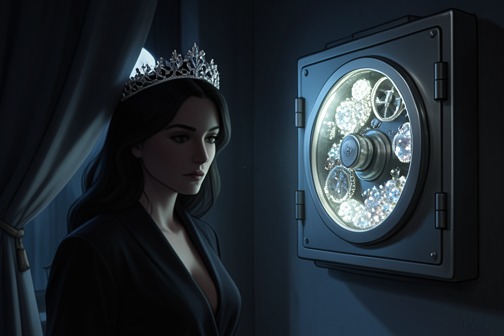
Scarlett’s burglary of Maximillian Barnes’s safe is the failed operation that exposes the limits of her carefully cultivated identity as the [Gentlewoman Thief](entity:expression-recall-expression-gentlewoman-thief-b193283d37c7). In a room filled with moonlight, inherited jewelry, and the theatrical pleasures of a grand house, she moves from confident thief to trapped intruder, while Maximillian Barnes reverses the expected power relationship by catching her, securing her, and identifying her profession from the contents of her pack.
## Causes and Setting
The burglary begins in an atmosphere designed for both luxury and concealment. Piano music and laughter rise through the grand marble staircase toward the fifth room on the right, while a breeze turns the lace curtains and moonlight falls directly into the room-sized wall safe. The setting makes the safe appear almost staged for discovery: jeweled necklaces, cufflinks, and other trinkets glitter in the wan light, converting a practical security space into a display of wealth and memory.
Scarlett’s attention settles particularly on a silver tiara. She fixes it on her head and studies the contrast between its pale metal and her dark hair, imagining herself in a fancy dress like a princess in a fairy-tale movie. Her fingers then pass over necklaces and delicate rings arranged on the safe’s shelves. The burglary is therefore not only an attempt to take valuables. The objects briefly invite Scarlett into an imagined role of aristocratic elegance, even as her tools and methods keep her anchored to the identity of a professional thief.
The jewelry also carries a family implication. Barnes has not been photographed with a woman other than his elderly housekeeper for nearly five years, since the tragic death of his parents, although he claims to have a fiancée. The lack of visible evidence leads Scarlett to infer that the necklaces and tiaras belonged to his mother. That inference gives the intended theft a more intimate dimension: the safe contains not merely expensive accessories but remnants of a dead family, preserved inside Barnes’s house.
## Discovery and Reversal
Scarlett’s confidence depends on remaining unseen, and the scene turns precisely when that condition fails. She does not hear footsteps approaching along the carpeted corridor and does not see the large shadow at the doorway. Barnes sees her before she sees him. When the light comes on, she is surprised but not frightened by the fact of being caught. Her immediate concern is professional: she is angry with herself for allowing a patron to walk in while she is working and recognizes that she has become too cocky. In her own code, arrogance is unattractive in a gentlewoman.
She attempts to preserve control through performance. Scarlett criticizes the piano music below as a mutilation of Mozart and emphasizes her southern drawl while sliding her bag of tools and acquisitions onto her back. The accent is part of her strategy because people generally mistake it for stupidity, and their condescension makes it easier for her to get away with things. Even at the moment of exposure, she tries to make the encounter resemble a social misunderstanding rather than a criminal confrontation, ending her light, conversational exit with “Goodnight to you, sir.”
That performance fails. Barnes does not accept the disguise of a harmless visitor, and Scarlett’s fear rises when he takes control of the physical space. She insists that he release her, but he answers, “You are an intruder in my house, madam,” using the courtesy of his English accent while making the legal and spatial hierarchy explicit. He takes the handcuffs from her own pack, spins her around, and attaches one wrist to a bar protruding from the wall before fastening the other. The tools of emergency escape become the instruments of her confinement.
The reversal is sharpened by Scarlett’s prior knowledge of danger. She knows that [Ken Madoc](entity:character-recall-character-ken-madoc-617c64dcfafe) has searched for her since she entered his house and found two bodies stuffed into his safe, and she knows that Barnes and Madoc move in the same circles. Her imagination immediately extends the present captivity into possible murder: Barnes might conceal her body, put cement shoes on her, or shoot her. The burglary thus shifts from a calculated intrusion into a threat to her life, with the glittering safe becoming a prison rather than a source of reward.
## Confinement and Recognition
Scarlett tries to recover agency by searching for her pack in the darkness. Her lock-picking gear is inside it, and retrieving the equipment could allow her to escape before Barnes returns. The effort is futile. By her reckoning, she remains inside the safe for an hour, no closer to freedom than when Barnes first placed her there. The room-sized vault, initially opened as the material expression of Barnes’s wealth, now encloses the burglar herself.
When the party below has ended, Scarlett does not bother screaming as Barnes removes the gag from her mouth. She watches him coldly while he picks up her pack and empties it. Even in humiliation, she notices that he has the decency to sort the contents into proper piles. The detail preserves her exacting, ironic perspective: Barnes is her captor, yet his orderly handling of her possessions earns a grudging acknowledgment of manners.
The decisive recognition comes through an apparently ordinary object. Among the contents is a newspaper clipping about a school in Queens being closed because of budget cuts. Barnes examines it and then identifies Scarlett as the Gentlewoman Thief. The clipping functions as a clue and as a public trace of her private operations, allowing him to connect the evidence in her pack with the name associated with her criminal persona. His recognition strips away the southern-drawl performance, the polite address, and the princess-like fantasy attached to the tiara.
Scarlett responds by nodding with all the grace she can muster. Barnes then bows and says, “I’m honored, madam.” The gesture is courteous but also theatrical. He does not merely restrain an anonymous burglar; he acknowledges a famous or distinctive adversary whose reputation has entered his house along with her tools. The encounter ends with Barnes possessing the immediate power, while Scarlett retains dignity only through the controlled manners that define her code.
## Consequences and Significance
The burglary’s value shift is stark. At the beginning, Scarlett possesses mobility, secrecy, and the ability to choose among glittering objects. She can place the tiara on her own head and imagine herself transformed by it. By the end, she is immobilized inside the very safe she entered, her wrists secured with her own handcuffs, her pack emptied, and her identity exposed. The operation moves from anticipated acquisition to confinement and from professional mastery to involuntary disclosure.
The event also establishes Barnes as more than a passive owner of wealth. He notices the intrusion, catches Scarlett without warning, controls her escape equipment, and reads the evidence in her belongings. His response combines authority with ritual politeness, creating a contrast between the brutal possibilities Scarlett fears and the formal courtesy he performs. That contrast does not make the situation safe; it makes the power imbalance more unsettling, because his composure remains intact while Scarlett’s carefully managed role begins to fracture.
For Scarlett, the failed burglary becomes a test of the Gentlewoman Thief’s code. She does not collapse into panic when first discovered. She criticizes the music, maintains her accent, tries to leave with conversational ease, and later answers Barnes’s identification with a graceful nod. Yet the event also punishes her growing self-confidence. Her own admission that she has become too cocky is confirmed by the practical facts of the scene: she fails to hear Barnes approach, fails to reach her equipment, and is caught in the room she believed she controlled.
The safe therefore operates as both object and enclosure. At first it is transparent to Scarlett as a professional target, a container of valuable jewelry and family history. Once Barnes places her inside it, its material presence becomes impossible to ignore. The same architecture that shelters wealth can confine the person attempting to take it, turning the burglary’s central object into the physical emblem of the event’s reversal. The Gentlewoman Thief enters the safe as an observer of another family’s secrets and emerges from the encounter as a captive whose own secret has been named aloud.
Event 99
Scarlett and Max's fake-engagement bargain
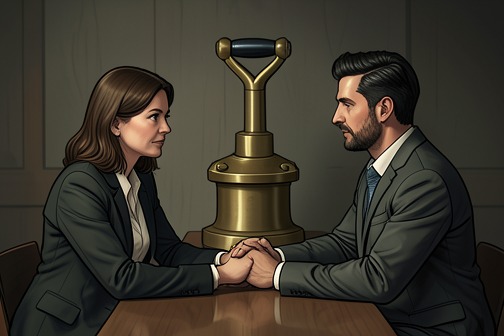
[Scarlett and Max's fake-engagement bargain](entity:event-recall-event-scarlett-and-max-s-fake-e9569292635e) is the turning point that transforms an attempted arrest into an audacious contract. Scarlett has been caught and expects Max Barnes to hand her over to the police, yet Max refuses that obvious conclusion. Instead, he offers a public fiction with private terms: she will become his fiancée for one year, and the performance will serve both his reputation and her freedom. The bargain therefore begins as a transaction, but its final handshake already carries the tension of a romance neither participant is willing to name.
## Causes and Background
Max's first decisive act is restraint. He chuckles and tells Scarlett that he has no intention of calling the police, immediately changing the value at stake from imprisonment to negotiation. He settles into a wing-backed leather chair and announces that he has a proposal, placing the scene in the language of business even though its subject is intimacy. Scarlett knows enough about him from newspaper coverage to understand that the offer will involve his public image, not merely her immediate escape.
Max explains that the newspapers have made much of a mysterious fiancée whom nobody has seen. The supposed fiancée does not exist: he invented her when visiting his extended family, hoping to end their questions about when he would settle down, and the media expanded the invention into a public story. The lie has acquired consequences because his female friends are being targeted by reporters and public attention. His problem is thus both fabricated and real. A private excuse has become a reputational machine, and he wants Scarlett to step into the role that the newspapers already expect.
Scarlett does not indulge the performance before she understands its purpose. She raises her hand and asks Max to get to the point, demanding to know what the invented fiancée has to do with her. Her impatience keeps the proposal from becoming a conventional seduction scene: she treats the arrangement as a problem to be priced, bounded, and accepted or rejected. That practical posture also preserves the asymmetry of the situation. Max has money, public influence, and the power to summon the police; Scarlett has the immediate need to avoid prison and the independent objective of continuing her charitable work.
## Terms of the Bargain
Max proposes that Scarlett hang on his arm for a year while the media enjoys its storm, after which the two can quietly part. The arrangement is explicitly temporary, and its public dimension is central: Scarlett is not merely to claim an engagement in private but to embody it before the press and the social world surrounding Max. In exchange, he promises to introduce her to the country's old wealth, giving her access to a clientele and social network that will provide plenty of work after the charade ends.
The financial inducement is even more dramatic. Max offers to donate one million dollars every month to a charity of Scarlett's choice, with five billion dollars directed wherever she wants at the end of the year. The figures make the proposal more than a personal favor. They turn Scarlett's moral priorities into a formal part of the contract, allowing her to convert proximity to Max into material assistance for causes she values. His wealth does not simply buy her compliance; it is routed through her chosen charities, giving her a reason to regard the performance as a means of doing tangible good.
Scarlett recognizes that it is a good offer, but her scowl shows that acceptance is not automatic. She weighs a year of pretending to marry Max against the possibility of prison and concludes that the bargain is better than incarceration. It also preserves her ability to help others. Her calculation is therefore pragmatic rather than sentimental, although she admits two personal complications: Max is attractive, and she has enjoyed their brief verbal sparring. The proposal wins because it satisfies several pressures at once—legal danger, ethical purpose, future work, and an attraction she has not entirely dismissed.
## The Consent Boundary
Scarlett accepts only after placing a bright line around the arrangement. She says that she will be Max's fiancée for a year, but warns him that the agreement does not include sex. The refusal is not a minor qualification. It distinguishes public performance from private possession and prevents Max's money and legal leverage from being treated as a claim over her body. The fake engagement may require her to appear attached to him, but it does not authorize him to decide what the attachment means physically.
Max's response intensifies rather than resolves the tension. His smile grows wider, and his eyes gleam as though Scarlett has offered him an exciting challenge. He holds out his hand and answers, "Deal." The concise response accepts her condition while also revealing that he experiences the boundary as a provocation. The bargain consequently contains an adversarial spark: Scarlett is protecting her autonomy, while Max appears energized by the fact that the woman accepting his proposal has made refusal part of the terms.
Their handshake completes the agreement. Scarlett's heartbeat increases as she takes Max's hand, and the bodily reaction complicates her stated position without overturning it. The narration makes clear that she is not thinking of withdrawing her no-sex rule, even as she notices the size of his hands. Attraction and consent remain separate facts. The scene permits physical awareness to enter the contract without allowing it to erase the boundary Scarlett has just established.
## Immediate Consequences
The exchange moves Scarlett from a fugitive facing police intervention to Max's contractual public partner. Max receives a solution to the nonexistent-fiancée scandal and a way to shield his female friends from continued targeting. Scarlett receives protection from prison, a route toward future work among the country's old wealth, and an enormous charitable commitment. Each party converts the other's vulnerability into leverage, making the arrangement reciprocal even though their resources are unequal.
The agreement also creates a year-long structure in which appearance will be labor. Scarlett must hang from Max's arm, absorb the media storm, and sustain the fiction that they intend to marry. Max must present the relationship convincingly enough to quiet his extended family's demands and redirect public attention away from the women previously caught in it. Their private agreement is therefore designed to produce a public spectacle, and its success depends on keeping the artificial nature of that spectacle hidden from everyone else.
The final note is deliberately uneasy. After the handshake, Scarlett thinks that the coming year will be long. That expectation reflects the bargain's double character. She has avoided prison and secured the means to continue doing good, but she has also agreed to spend twelve months in close public association with a wealthy, attractive man who treats her refusal as an exciting challenge. The event ends not with romantic certainty but with a negotiated future whose rules are clear, whose emotional risks are already visible, and whose performance has only just begun.
Event 100
Scarlett's pregnancy discovery
[Scarlett's pregnancy discovery](entity:event-recall-event-scarlett-s-pregnancy-di-5423e33bfd5a) is the decisive second revelation in her relationship with Maximillian Barnes: the exposure of his gorilla-shifter nature is followed by the discovery that their brief intimacy has created a child. The event turns private fear into an irreversible family decision. Scarlett must decide not only whether to remain with Max, but also whether the child should be raised with knowledge of its weregorilla heritage rather than hidden from it.
## Causes and Background
Two weeks before the discovery, the attack on Max's home had revealed his unique ability to transform into a gorilla. Scarlett remained in his home because she cared for him and hoped that the revelation might somehow prove unreal, yet she was frightened of him and emotionally divided. Their relationship entered a period of mutual avoidance: whenever Scarlett was not avoiding Max, Max was avoiding her. The physical distance between them therefore concealed a continuing emotional attachment rather than ending the relationship.
The pregnancy resulted from an encounter three weeks before the attack. Max had been unable to find a condom, and Scarlett had relied on the birth control she was taking. The contraception had failed. This circumstance makes the pregnancy unexpected rather than planned, while also tying it directly to the period before Scarlett understood the species difference between herself and Max. Her discovery consequently carries two forms of shock at once: she is learning that her lover can become a gorilla, and that she is carrying his child.
## Discovery and Immediate Reaction
While waiting in the bathroom, Scarlett took another pregnancy test. The stick showed a pink plus sign, and it was the third positive test in a row. The repeated result removes the possibility that the pregnancy is a momentary mistake or an isolated faulty reading. Her nausea, which she had previously associated with emotional distress, now had a physical explanation. She threw the test into the trash, washed her hands, and tried to move from bodily evidence toward a decision.
The discovery leaves Scarlett in a daze. She recognizes that the child will inherit Max's abilities because Max had told her that his condition was genetic. Her thoughts move rapidly through practical and frightening possibilities: whether an infant could control involuntary shifting, whether the baby might change forms unpredictably, whether the parents would have to conceal the child until it was old enough to control its abilities, and whether shifting might cause the child pain that she could not relieve. The pregnancy therefore exposes a future Scarlett cannot yet understand, not merely a present medical fact.
Scarlett also fears the consequences for the child's relationship with its father. If she and Max could not reconcile after the revelation, she still could not abandon the baby, while Max would nevertheless need to be part of its life. She remembers that Max himself had grown up without the answers he needed about his heritage and refuses to imagine repeating that absence for their child. Her concern shifts the event from personal panic toward an ethical commitment to prevent inherited secrecy and isolation.
## The Conversation with Max
Scarlett decides that Max deserves to know he will become a father, even though the two have been avoiding each other. When they finally sit down together, she tells him directly that she is pregnant. Max reveals that he already knows because [Vanessa](entity:character-recall-character-vanessa-83acb1fb5cc7) found a positive pregnancy test in the bathroom. His knowledge does not erase Scarlett's responsibility to tell him; instead, it makes her apology part of the emotional reckoning. She regrets leaving without explaining herself and admits that she should have told him before she went away.
Max responds with understanding rather than rejection. He acknowledges that he was angry, especially because Scarlett did not tell him, but he also recognizes that she needed space to decide how she felt about his abilities. His movement toward her hand, followed by Scarlett closing the distance between them, makes their physical reconciliation parallel the verbal one. The relationship has not been repaired through denial of Max's nature; it begins to recover through mutual acknowledgment of fear and uncertainty.
Scarlett then clarifies the decision that matters most: the uncertainty was not about the baby. She intends to keep the child. More than that, she wants Max to be part of their lives and wants the child to grow up knowing about his heritage, with someone present who understands it and can help. This is the event's central reversal. The pregnancy begins as a crisis that appears to threaten the relationship, but Scarlett converts it into a condition for honest family-making.
Max's reaction confirms the emotional stakes. He is visibly affected and tells Scarlett that her decision makes him extremely happy. Until that moment, Scarlett had not fully realized that she feared he might refuse involvement in the baby's life. His relief allows her own tension to loosen, and her happiness becomes connected to his willingness to accept fatherhood. The conversation thus establishes a shared future without claiming that every practical question has been solved.
## Cross-Species Bodies and Inherited Identity
The pregnancy belongs to the book's wider pattern of treating identity as something carried through bodies, bloodlines, and transformation. Elsewhere, the narrative presents bodily boundaries as unstable: Ella receives the Draco's Eye after it identifies her as [Darilth](entity:character-recall-character-darilth-6b2d2503203a)'s destined mate; Sara uses [bionic eyes](entity:object-recall-object-bbb6fc48b2ef) that can conceal stun grenades; [Lisa](entity:character-recall-character-lisa-f8f8fe21b70f)'s pregnancy is examined through a three-dimensional holographic scan whose embryo initially resembles a mixture of a tadpole and a dinosaur; and [Shay](entity:character-recall-character-shay-5a5fab224960) explains that [Stlozyn](entity:creature-recall-creature-stlozyn-25c0edab8dc8) ancestors came from [Earth](entity:location-recall-location-earth-a6b883af9147), with emphasized genes and additional DNA enabling shape-shifting. Against this broader biological and technological landscape, Scarlett's pregnancy is both intimate and species-political.
Max's weregorilla heritage makes reproduction a question of transmission. Scarlett is not only carrying a child conceived before she understood Max's nature; she is carrying the possibility of a new person whose human and animal identities may coexist from birth. Her questions about infancy, control, concealment, and pain show that inheritance is not presented as a simple biological label. It is a practical condition that will shape parenting, safety, secrecy, and the child's place in the wider world.
The event also gives Scarlett agency within a situation she did not plan. She is frightened, but she does not allow fear to determine the child's identity or sever Max's parental role. Her decision to keep the baby and disclose its heritage rejects the idea that an unusual body must be hidden until it becomes socially legible. The pregnancy therefore links motherhood with negotiation across the boundary between human life and shifter life.
## Consequences and Narrative Significance
The immediate consequence is a renewed commitment between Scarlett and Max. Their reconciliation is not framed as a return to their earlier relationship, because the revelation of Max's abilities and the pregnancy have permanently changed its terms. They must now confront parenthood, inherited transformation, and the possibility that their child will require guidance unavailable from ordinary human experience.
Scarlett's pregnancy also resolves one uncertainty while preserving others. Her choice is clear, but the future remains open: the evidence does not establish how the child will shift, whether control will be difficult, or how the family will manage public secrecy. Those unanswered questions are precisely what give the discovery continuing narrative force. The pregnancy creates a future plot pressure rather than a closed subplot.
As a story event, the discovery joins emotional confession to biological revelation. Scarlett's three positive tests provide material certainty; her conversation with Max provides relational certainty; and her insistence that the child know its heritage provides a social and ethical direction. The event's significance lies in that sequence: fear becomes knowledge, knowledge becomes speech, and speech becomes a shared decision to raise a child without erasing the father's weregorilla identity.
Event 101
Scarlett and Max's reconciliation
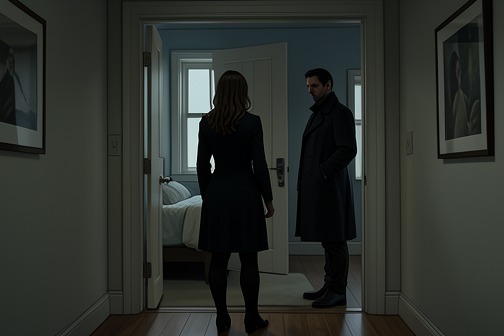
[Scarlett and Max's reconciliation](entity:event-recall-event-scarlett-and-max-s-reco-10417b0e4ce1) is the decisive emotional turning point in which separation gives way to mutual confession. Scarlett has left after witnessing Max transform into a gorilla and kill a man while protecting her, while Max's hidden identity and the violence of that act have made their relationship impossible to sustain without honesty. When he comes to her door, the reunion does not erase fear or trauma; instead, it creates the conditions for them to name what happened, acknowledge the pregnancy, and choose one another with fuller knowledge of the risks.
## Causes and Background
A couple of days pass with Scarlett hearing nothing from Max. Her worry moves between several possibilities: he may be angry, the men who threatened them may have returned and killed him and [Vanessa](entity:character-recall-character-vanessa-83acb1fb5cc7), or—most painfully—he may no longer want her in his life. She eventually calls to make sure he is safe, but the conversation is brief, and although she promises to call again, she does not. The silence therefore becomes part of the rupture: Scarlett is not merely waiting for information about Max's survival, but testing whether the relationship still exists after the way she left.
Max breaks that uncertainty by appearing at Scarlett's door. [Hao](entity:character-recall-character-hao-8e3733db422e) has conveniently gone shopping less than ten minutes earlier, and Scarlett infers that he told Max where to find her. His arrival produces immediate relief and excitement. Their time apart has not made the decision easier, but it clarifies the direction of her desire: once she sees that Max has come after her, she knows that she wants to return to living with him. His physical act of seeking her out functions as the reconciliation's first gesture, answering the abandonment she had feared with unmistakable pursuit.
The immediate subject of their conversation is Scarlett's pregnancy. Scarlett tells Max, “I'm pregnant.” Max already knows because Vanessa found a positive pregnancy test in Scarlett's bathroom. Scarlett regrets that he learned indirectly and admits that she should have told him before leaving. Her apology extends beyond the pregnancy: she believes she should not have left at all, and especially should not have disappeared without confronting him. The pregnancy thus exposes both the practical consequences of their intimacy and the moral cost of their failed communication.
## What Happens
Max responds with happiness rather than rejection. Scarlett realizes that she had been afraid of his reaction, and his acceptance lifts a weight from her. She is glad that he is glad, yet she also admits that the pregnancy is unexpected and that she feared he might not want to participate in the baby's life. Max's response shifts the scene from a possible separation over conflicting responsibilities toward the possibility of shared parenthood.
Scarlett then identifies the true reason she left. It was not simply fear that Max would reject the baby. She left because he had turned into a gorilla and beaten a man to death in front of her. The fact that he was protecting her does not neutralize the horror of witnessing someone die. Max flinches and apologizes for frightening her. He explains that he had not transformed for years and had tried to pretend he was a normal person, but keeping such a large part of his identity secret repeatedly destroys his relationships. When the threat against Scarlett became immediate, however, he knew he would die before allowing either attacker to touch her.
The conversation makes protection and violence inseparable. Max's transformation saved Scarlett from the threatened attack, but it also made him terrifying to her and forced the hidden supernatural truth into the open. Scarlett does not deny the wound. She tells him that she wishes she could say she was over it, but she is not, and that she may need therapy. The admission gives the reconciliation credibility: forgiveness is not presented as instant recovery, and love does not require Scarlett to pretend that the killing left no mark.
At the same time, Scarlett insists that she is not afraid of Max and promises never to reveal his secret. Her response recognizes the difference between fearing what happened and defining Max entirely by the violence of his gorilla form. Max answers with another confession, saying that he wishes he had never killed anyone before, but that he had done so while serving in the Marines. He describes the burden of such acts as carrying a backpack of bricks, and says that the people he loves are what make carrying those bricks worthwhile.
## Mutual Confession and Commitment
Max's confession becomes the scene's emotional climax. He corrects himself from speaking generally about those he loves and makes the declaration personal: he loves [Scarlett Brenan](entity:character-recall-character-scarlett-brenan-6e4596c1c63d), not merely because she is pregnant. He tells her that he has never wanted anyone to know who he is more than her. The hidden identity that once functioned as a barrier now becomes the ground of intimacy, because Max chooses disclosure over the normal life he had tried to imitate.
Scarlett stops him by pressing her fingers to his lips. Her physical response precedes the full verbal acknowledgment: her heart pounds, and the realization arrives with the force of something she had previously refused to believe. Vanessa had told her that Max loved her, but Scarlett had been too afraid to accept it until hearing it directly from him. His words therefore do more than confirm affection; they allow her to recognize her own position in the relationship.
The revelation carries an explicit social and class contradiction. Scarlett is the [Gentlewoman Thief](entity:expression-recall-expression-gentlewoman-thief-b193283d37c7), a woman who abhors the rich, while Maximillian Barnes is a billionaire. Her love crosses the hostility implied by those identities rather than dissolving it through denial. The event's irony is that the thief opposed to wealth finds herself in love with one of its most powerful embodiments, while the billionaire becomes the person whose concealed, vulnerable self must be trusted to her.
Scarlett answers Max with an equally direct declaration: “I love you, too.” When Max reacts with surprise, she repeats that she loves him. The repetition matters because it removes ambiguity from the confession. Their reconciliation is not secured only by the pregnancy, the promise of secrecy, or Max's protective instinct; it is secured by reciprocal love stated plainly after both characters have confronted fear, guilt, violence, and unequal social identities.
## Consequences and Aftermath
The reconciliation ends the emotional logic of the fake engagement. What began under an arrangement shaped by concealment and conflicting interests is no longer sustained merely as a performance. The pregnancy makes their future materially consequential, but the scene insists that parenthood is not the source of Max's love and that Scarlett's return is not simply an obligation to the unborn child. Their relationship becomes a chosen partnership grounded in disclosure and mutual acceptance.
The event also establishes a qualified rather than uncomplicated resolution. Scarlett wants to live with Max again, and the couple has reached a shared confession, but her trauma remains active. She may need therapy, and Max's past military killing and present gorilla identity remain realities they must carry together. The reconciliation therefore changes the value at stake from estrangement to connection without pretending that danger, grief, or moral weight has disappeared.
Narratively, the scene converts secrecy into intimacy. Max's secret once destroyed relationships because he tried to pass as ordinary; here, telling Scarlett the truth allows the relationship to survive. Scarlett's promise to protect that secret answers his vulnerability, while her insistence that she is not yet over the killing protects her own dignity and emotional reality. Their reunion is consequently both a love confession and a negotiated agreement about what it means to remain together after witnessing the worst parts of one another.
## Narrative Significance
The reconciliation follows a romance pattern of separation, return, disclosure, and reciprocal commitment, but its strongest movement is a value shift from feared abandonment to chosen belonging. Scarlett begins in uncertainty, imagining that Max may be dead, angry, or finished with her. Max's arrival reverses that expectation; the pregnancy then threatens to reopen the rupture, yet his happiness narrows the distance between them. The most difficult truth—the gorilla transformation and the death Scarlett witnessed—does not end the conversation. It becomes the test through which their love acquires weight.
The scene also treats love as a form of witnessing. Max asks Scarlett to understand the burden of his violence and hidden nature, while Scarlett refuses both sentimental erasure and total condemnation. She sees the gentle man she loves alongside the creature who killed to protect her. Max, in turn, accepts that his protection frightened her and apologizes without demanding immediate absolution. Their final declarations matter because they are made after that knowledge has entered the relationship, not before it.
By the end, Scarlett has moved from a self-protective flight to an informed decision to return, and Max has moved from concealment to explicit emotional and bodily truth. Their pregnancy gives the reconciliation a future-facing consequence, but the decisive resolution is relational: the Gentlewoman Thief and the billionaire choose each other after the fantasy of normality has failed. The event closes the gap between the performed engagement and the genuine bond beneath it, leaving their shared life founded on love that has been spoken, heard, and accepted.
Event 102
Scarlett and Max's wedding
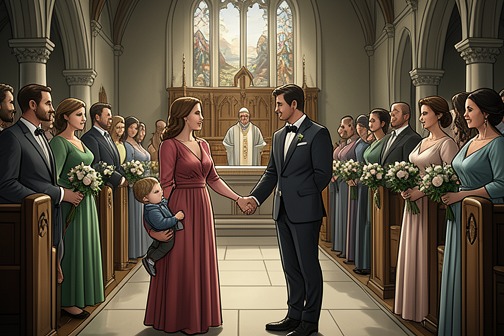
[Scarlett and Max's wedding](entity:event-recall-event-scarlett-and-max-s-wedd-62cb8cd76958) marks the conversion of a calculated arrangement into an openly chosen family life. Held two years after their fake-engagement deal, the ceremony brings their private reconciliation into public form: they arrive not merely as former negotiators, but as parents to ten-month-old Liam, partners who have endured violence and nightmares together, and spouses whose marriage is sealed before friends, family, and the priest. The event's decisive value shift is from performance to truth, from an agreement made for practical purposes to a freely embraced marital bond.
## Causes and Background
The wedding follows the period in which Scarlett's bruised face and the concealed attack on Max's private island exposed the danger surrounding their relationship, even though the media firestorm quickly faded and the public never learned what had happened on the island. Max insisted that Scarlett enter therapy, and the treatment helped her confront the trauma. More immediately sustaining was his physical presence when nightmares woke her at night and the couple's preparation for the baby growing inside her. Their eventual marriage therefore emerges not from a smooth romantic courtship, but from survival, care, and the gradual replacement of a contractual arrangement with dependable intimacy.
The ceremony is deliberately placed on the second anniversary of the fake-engagement deal. Scarlett recognizes the irony of the date while nursing the child who has made their former arrangement impossible to regard as merely theatrical. She had expected the ceremony to be carefully timed around the baby's sleep, but Liam, named Maximillian after his father and called Liam to prevent confusion, falls asleep before the wedding begins. His presence turns the anniversary into a family threshold: the original bargain is remembered, but the child and the marriage reveal how completely its meaning has changed.
## Ceremony and Participants
Scarlett and Max choose an elaborate wedding in theory, then reject extravagance in practice. Instead of spending the intended money on a grand affair, they donate it to various charities and hold a simple ceremony with friends and family in the church where Max's parents married. [Vanessa](entity:character-recall-character-vanessa-83acb1fb5cc7), the elderly housekeeper, is Scarlett's only matron of honor, and there are no bridesmaids. The decision gives the event a distinctly domestic and ethical character: its public scale is reduced, while its emotional and familial significance is intensified.
Scarlett prepares for the ceremony in a navy-blue taffeta dress laced at the front so that she can feed Liam easily. White embroidery accents the hems and sleeves, and white orchids form her bouquet because they are her favorite flower, one of the few extravagant details Max insists upon. She has not lost all the weight gained during pregnancy, but she does not treat that change as a defect; her sense of her body is grounded in her own judgment and in Max's admiration. The nursing dress, the sleeping infant, and the flowers together make the wedding a ceremony of embodied family life rather than an image of romance detached from labor and care.
[Hao](entity:character-recall-character-hao-8e3733db422e) escorts Scarlett down the aisle, honoring the promise she made two years earlier. He kisses her cheek when he sees her and walks beside her with evident happiness. In the chapel, Scarlett sees Max waiting in a black tuxedo, white shirt, and navy handkerchief. His smile and her answering response make the approach an emotionally charged passage from anticipation to recognition. Hao has to slow her when she begins walking faster toward the groom, a small physical detail that shows how ceremony cannot fully contain the force of her joy.
## The Marriage Vow and Public Union
Scarlett is scarcely conscious of the practiced exchange of vows because the words come readily. Liam wakes during the exchange of rings, gurgling and chewing on Vanessa's finger while both parents smile at him. The interruption does not diminish the solemnity of the ceremony; it places the child at the center of the couple's new identity and joins the formal ritual to the unplanned, comic, bodily realities of parenthood.
The priest then pronounces Scarlett and Max husband and wife. Max moves to kiss the bride, but Scarlett reaches him first, throwing her arms around his neck and rising onto her toes. Their lips meet amid thunderous applause. Her eagerness reverses the expected passivity of the bridal kiss and gives the moment its final emotional authorship: Scarlett does not simply receive the marriage or wait for Max to complete it. She actively closes the distance and publicly confirms the choice that has been developing since the engagement bargain.
## Consequences and Aftermath
The wedding establishes Scarlett and Max as a real married couple rather than partners still defined by the language of a deal. Its timing, two years after the fake engagement, makes the transformation measurable, while Liam's presence demonstrates that their relationship has acquired obligations and tenderness beyond the original bargain. The couple's family and friends witness the change, and the church associated with Max's parents places their union within a continuing family history.
The event also resolves the emotional aftermath of Scarlett's assault and the nightmares that followed it. Therapy remains part of her recovery, but the wedding shows healing as relational as well as clinical: Max's protection, patience, and nightly presence have helped create the conditions in which she can imagine a future. Their choice to redirect wedding money to charity further distinguishes the marriage from a display of status, making generosity part of the public meaning of their union.
The ceremony ends the narrative with a completed romantic and domestic transformation. Scarlett and Max began with a false public identity, passed through danger, trauma, pregnancy, and the practical demands of raising a child, and arrive at a marriage that is both socially declared and emotionally genuine. The applause after the kiss is therefore not only celebration of a wedding; it is the final public recognition that the arrangement has become love, family, and a shared future.
Event 103
Cindy's kidnapping and death
[Cindy's kidnapping and death](entity:event-recall-event-cindy-s-kidnapping-and-93815fb6cb7a) is the defining crime behind [Oskar Freyson](entity:character-recall-character-oskar-freyson-86081ca3de5f)'s prolonged investigation of [David Fezioni](entity:character-recall-character-david-fezioni-4c5891b37056). Two years before the present action, [Cindy](entity:character-recall-character-cindy-01a1e76ed8f8) was kidnapped, held for ransom, and ultimately returned only as a corpse. The case was officially constrained by FBI orders, but for Oskar the loss remained an unfinished obligation: Cindy belonged to the Shifter community he led, was engaged to his cousin, and had become the reason he was willing to risk his position, disobey instructions, and continue pursuing Fezioni after the authorities tried to close the matter.
## The Kidnapping and Failed Rescue
Cindy's abduction began as a ransom case. She was taken and held by kidnappers who demanded payment, and Oskar worked tirelessly to recover her. Although paying ransom violated FBI policy, he paid it anyway, treating Cindy's survival as more important than procedural obedience. The result turned the rescue into a devastating reversal: the kidnappers returned Cindy's body rather than Cindy herself. The expected value of the ransom—life, recovery, and reunion—collapsed into death, leaving Oskar with both grief and the conviction that the official account was incomplete.
Cindy's connection to Oskar made the crime more than an attack on a community member. She was engaged to his cousin, which placed the killing inside his family as well as inside the Shifter community. Oskar therefore occupied several positions at once: grieving relative by association, FBI agent, leader of the [Shifters](entity:creature-recall-creature-shifters-eed847fffffa) who relied on him, and investigator responsible for seeking justice. The overlapping obligations explain why the case could not become, for him, an ordinary closed file.
## Fezioni and the Suppressed Investigation
Oskar believed David Fezioni had participated in Cindy's kidnapping, but for two years he lacked proof. The suspicion became especially dangerous after Fezioni's own death. Oskar told Barton that Fezioni had kidnapped and killed his cousin's fiancée, yet the agency had effectively closed Cindy's case. When Fezioni was found dead, the unresolved accusation and Oskar's proximity to the new crime caused the authorities to treat Oskar as a possible suspect rather than simply as the investigator pursuing a lead.
The institutional conflict had already been severe. A deputy director ordered Oskar to stop investigating Fezioni and transferred the case to another division on the ground that Oskar was too personally involved. Oskar refused to let that order erase the connection. He took a leave of absence and followed Fezioni to [Blackcliff](entity:location-recall-location-blackcliff-c81c9efbfb4f), continuing the investigation outside the agency's preferred boundaries. Barton warned that Oskar was damaging his standing with the FBI and urged him to let Cindy's death go after two years. Oskar rejected that compromise, insisting that his first duty was to the Shifters who depended on him and that he would bring Cindy's killers to justice even if he no longer needed the agency.
## Cindy's Posthumous Testimony
The decisive revelation comes through Cindy herself. After death, she tells [Melody Zabat](entity:character-recall-character-melody-zabat-6a7d8078afac) that Fezioni was not merely connected to the kidnapping but was the person who killed her. Cindy explains that she tried to escape, saw Fezioni's face, and was killed quickly. Her memory of the death is fragmentary—she remembers being dead more clearly than the moment of dying—but the identification supplies the confirmation Oskar never possessed while she was alive.
This testimony changes the case from suspicion into direct supernatural testimony. Oskar's persistence, previously vulnerable to being dismissed as grief or obsession, is retrospectively validated: he had been right about Fezioni. Cindy's ghost also refuses the easy closure offered by time. When Melody suggests that knowing the truth might allow Cindy to move on, Cindy rejects the suggestion. Her continued anger shows that the crime remains active in the narrative even after the victim's death; the body has been recovered, but justice, recognition, and emotional release have not yet been secured.
## Consequences and Narrative Significance
Cindy's kidnapping and death drives Oskar into conflict with both the criminal investigation and the institution that is supposed to conduct it. The case threatens his agency position, exposes the limits of official procedure, and makes his wealth and leadership secondary to a personal promise of accountability. His insistence that Cindy's murder must be pursued also prevents Fezioni's death from conveniently ending the inquiry: if Fezioni died accidentally, Oskar's leads would disappear, while a homicide investigation might finally expose the network surrounding Cindy's death.
The event also links human law, Shifter communal responsibility, and the testimony of the dead. Cindy is simultaneously a ransom victim, a murdered fiancée, a member of Oskar's community, and a ghost who can identify her killer. That layering gives the event its unusual force. The crime begins as a conventional abduction and ransom plot, becomes an unresolved murder, and finally receives its clearest confirmation through a supernatural witness. Its central reversal is therefore not only that a rescue produces a corpse, but that the dead victim becomes the source of the truth the living authorities refused to establish.
Event 104
The discovery of Oskar and Cindy's son
[The discovery of Oskar and Cindy's son](entity:event-recall-event-the-discovery-of-oskar-2a08cc1f981a) is the turning point that joins the investigation into [David Fezioni](entity:character-recall-character-david-fezioni-4c5891b37056)'s murder with the unfinished family history of [Oskar Freyson](entity:character-recall-character-oskar-freyson-86081ca3de5f) and [Cindy](entity:character-recall-character-cindy-01a1e76ed8f8). The event begins with recognition rather than a confession: Melody sees a five-year-old boy whose face reproduces Oskar's blue eyes, dimples, cleft chin, nose, ears, and hair. That physical resemblance becomes the evidence through which a hidden parentage is recovered, while Cindy's ghost supplies the emotional truth that the living characters have been unable to speak.
## Recognition at the Daycare
Melody encounters the child while questioning [Elisabeth Burgess](entity:character-recall-character-elisabeth-burgess-7bf27ee077ff) about Fezioni. The boy approaches Elisabeth with a daisy, smiling shyly, and Melody is struck by how completely he resembles Oskar. Cindy stands behind him in tears, twisting her hands, making the scene a visual revelation before anyone states its meaning. Julius is not merely similar to Oskar; his features function as an unmistakable sign of biological connection, turning the child's ordinary presence among the other children into the center of the murder inquiry.
Cindy then tells Melody why she has remained as a ghost. She wanted to tell Oskar about their child but never knew how. Five years earlier, she and Oskar had given the baby up for adoption. Cindy believed she was doing the right thing and feared she would have been a terrible mother, yet her hesitation reveals that the decision was never emotionally complete. Her continued presence is therefore connected not only to her violent death but also to the child she left behind and the message she could not deliver while alive.
## Julius's Disrupted Childhood
Elisabeth confirms that Julius was adopted after birth. His adoptive parents died in a car crash the previous year, after which he passed through several foster homes before being sent to the daycare in [Blackcliff](entity:location-recall-location-blackcliff-c81c9efbfb4f). The discovery therefore exposes more than Oskar's paternity: Julius has already experienced repeated losses and unstable care before learning, through Melody's investigation, that a biological parent may still be alive.
The child's situation also carries a possible supernatural dimension. Elisabeth recalls that Julius's foster mother mentioned that his birth parents were [Shifters](entity:creature-recall-creature-shifters-eed847fffffa). That information does not establish the full circumstances of his identity, but it places Julius within the concealed social world surrounding Oskar and raises the stakes of his vulnerability. Melody wonders whether Fezioni came to Blackcliff to abduct Julius or exploit his existence for money from Oskar. The possible connection remains uncertain, but it makes the boy a potential target rather than a passive witness to the investigation.
## Cindy's Message Reaches Oskar
Melody eventually brings the revelation to Oskar while he is struggling with guilt over Cindy's death. He believes that, as a leader responsible for the safety of his Shifters, he failed her when she was kidnapped. Melody interrupts that self-accusation by taking away his brandy and telling him directly that his son is in Blackcliff. The news initially cannot settle in his mind; he asks whether “here” means the town itself, as though proximity makes the impossible suddenly immediate.
Oskar rejects the idea that Fezioni could have known Julius was there, but the possibility that the murderer was seeking the child, or attempting to use the child to extract more money, intensifies the investigation. The revelation also reopens Oskar's earlier choice. When Cindy became pregnant, he had considered adoption the obvious and best course, and fatherhood had never been among his priorities. The event does not erase that decision or prove that he was ready for parenthood at the time. Instead, it forces him to confront the living consequences of a choice he had treated as settled.
## The Choice to Become a Father
Oskar's first response is uncertainty. He tells Melody that he is not sure he is “father material,” a hesitation consistent with his long absence and with the fact that he has never raised Julius. Yet the discovery changes his orientation from avoidance to responsibility. He says that his response depends partly on the murder investigation, but he also admits that he may have another chance with their son after failing Cindy.
The most important value shift in the event is therefore personal rather than forensic. Julius begins as an unknown child hidden within a foster system, while Oskar begins as a man who believes adoption settled his obligations. By the end, Oskar expresses a desire to help his own son. He asks Melody to thank Cindy when she sees her again, and his embrace of Melody gives the revelation an intimate aftermath: he remains frightened and uncertain, but he is able to share that uncertainty rather than retreat into alcohol or denial. The prospect of fatherhood becomes a possible form of repair, though not a guarantee that the damage already done can be undone.
## Consequences and Narrative Significance
The discovery creates three linked consequences. For Julius, it reveals the possibility of a surviving biological parent after the deaths of his adoptive parents and the instability of multiple foster homes. For Cindy, it gives her ghost a purpose and a route toward communicating the truth that has kept her attached to the living. For Oskar, it converts grief over Cindy into a decision about future care, making parenthood an active responsibility rather than a fact from the past.
The event also complicates the murder plot. Fezioni's presence near the children may have been unrelated to Julius, but Melody's recognition makes the possibility of an attempted kidnapping or financial extortion impossible to ignore. The boy's resemblance supplies the first visible clue; Cindy's ghost provides the motive for disclosure; Elisabeth supplies the adoption history; and Oskar supplies the unresolved consequence. What looks at first like a child's face in a daycare becomes an anagnorisis for the entire investigation: the dead woman was protecting a secret, the suspected murderer may have been pursuing more than money, and Oskar's future now includes a son whose existence can no longer be treated as someone else's responsibility.
Event 105
Elisabeth's confession to Fezioni's murder
[Elisabeth's confession to Fezioni's murder](entity:event-recall-event-elisabeth-s-confession-540af47f90d4) is the decisive revelation that identifies [David Fezioni](entity:character-recall-character-david-fezioni-4c5891b37056)'s true killer and transforms a murder investigation into a story of coercion, threatened motherhood, and accountability. At Elisabeth's home, Melody confronts her with the evidence and recognizes that [Bobby](entity:character-recall-character-bobby-7cd7d55e806b) is Fezioni's son. Elisabeth then recounts how Fezioni returned to her life, demanded money, threatened to take Bobby away, and provoked the violent act that ended with him going over a bridge. The confession does not erase the killing, but it changes its emotional and moral meaning: Elisabeth acted illegally, yet understood herself as defending her child from a man who had abandoned them and later threatened to make Bobby disappear.
## Discovery at Elisabeth's House
Melody arrives late at Elisabeth's home after [Cindy](entity:character-recall-character-cindy-01a1e76ed8f8) vanished during the drive to Elisabeth's house, concentrating instead on the possibility that Elisabeth is connected to David Fezioni's death. Elisabeth answers the door in a faded Care [Bears](entity:creature-recall-creature-bears-1413ab78a9a7) bathrobe over flannel pajamas, visibly startled by the intrusion. Melody quickly enters despite Elisabeth's protests and announces that Uncle Todd found a baseball bat in the woods on the way to the city. The bat bears Bobby's name and is covered in blood, making it an immediate link between Elisabeth's household, her son, and the suspected murder weapon.
The atmosphere changes when Melody notices Bobby's photograph on the mantel. She picks it up while Elisabeth demands that she leave. Melody then opens the newspaper article about Fezioni's death on her phone and enlarges Fezioni's photograph. Holding the two images together, she compares their faces and identifies the same eyes and nose. Bobby resembles Elisabeth more strongly, but the resemblance to Fezioni is sufficient to expose a concealed parentage. Melody states that Bobby is Fezioni's son, and Elisabeth's physical reaction supplies the first confirmation: she turns pale, shivers, and collapses onto the couch while staring at the paired photographs.
## The Confession and Its History
Elisabeth explains that she and David were high school sweethearts. She remembers him as the bad boy whose attention made her feel special, but the relationship ended differently once she became pregnant. David wanted nothing to do with her after the pregnancy, leaving Elisabeth to raise Bobby and build a life around protecting him. She says that Bobby was the best thing that ever happened to her and that she did everything possible to give him a good life. Her account presents the past as something she had deliberately buried: she put David behind her and believed he would remain there.
Fezioni's return destroys that attempted separation. Elisabeth says she was sickened by his reappearance and told him that she did not want him near either her or Bobby. Fezioni refused to accept her decision, insisting that it was not hers to make. Elisabeth met him on a bridge with all her savings, hoping money would persuade him to leave them alone. Instead, he laughed at the amount and contrasted it with the wealth he already possessed. Melody connects that money to the money Fezioni obtained by kidnapping Cindy, adding another criminal dimension to his threat and explaining why he could regard Elisabeth's savings as insignificant.
The immediate trigger is Fezioni's threat against Bobby. Elisabeth says that he intended to take the boy and told her that, if she wanted to remain in her son's life, she would have to take him back. He claimed to know how to make people disappear and warned that she would never see Bobby again if she refused to comply. Under that pressure, Elisabeth snapped. She insists that she did not plan to kill him, then immediately complicates the denial by admitting that perhaps she did. When she seized the baseball bat, Fezioni was laughing at her; he was no longer laughing when he went over the bridge.
Elisabeth's final formulation is both a confession and a justification: she says she did it for Bobby. Her tears, hardened eyes, and sudden determination place maternal fear beside violent resolve. The scene therefore shifts from suspicion to disclosed culpability while preserving the motive's emotional force. Elisabeth is not presented as an abstract killer detached from circumstance. She is a mother responding to a direct threat against the child around whom she has organized her entire adult life, even as the confession confirms that her response caused Fezioni's death.
## Melody as Witness and Moral Intermediary
Melody does not force the confession through accusation alone. After the photographs expose the connection, she turns off her phone, sits beside Elisabeth, and places a hand on her shoulder. She waits because she recognizes that the shy, quiet woman may not be able to speak immediately. Melody wants to ask why Elisabeth allowed [Oskar Freyson](entity:character-recall-character-oskar-freyson-86081ca3de5f) to take the blame for a murder she committed, but she remains silent. The delay gives Elisabeth room to tell the story in her own sequence: abandoned romance, pregnancy, years of protection, Fezioni's return, the failed payment, the threat, and the bat.
This restraint makes Melody both investigator and witness. She establishes the factual connection through the baseball bat and the photographs, but then responds to Elisabeth's grief rather than treating the confession as merely a solved case. Elisabeth cries while tears fall onto the glass covering Bobby's photograph, turning the image of the child into the visual center of the confession. Melody's physical comfort does not absolve Elisabeth; it shows that discovering the truth also creates an obligation to remain present while its consequences become unavoidable.
When Elisabeth asks Melody to look after Bobby, the investigation acquires a second responsibility. Elisabeth says she has no family and that Melody is the closest thing she has to a friend. Her fear is not only of punishment but of Bobby entering the system. Melody understands that accepting the promise will be a huge responsibility, yet she cannot refuse a mother's plea for help. She promises to look after Bobby, and then, with a heavy heart, calls Uncle Todd. The call marks the point at which compassion gives way to formal disclosure: Melody protects Bobby's immediate interests while also reporting Elisabeth's confession.
## Consequences and Narrative Significance
The confession overturns the apparent direction of the murder case. Oskar Freyson had been positioned to take the blame, but Elisabeth's account identifies her as the person who wielded the baseball bat. The evidence is concrete rather than speculative: the blood-covered bat bears Bobby's name, the photograph reveals Bobby's resemblance to Fezioni, and Elisabeth directly describes the confrontation and Fezioni's death. Her admission also links Fezioni's murder to his kidnapping of Cindy, his access to money, and his pattern of threatening disappearance.
The event's central value shift moves from uncertainty to knowledge, but it also moves from the expectation of a straightforward murder investigation to a conflict between legal guilt and protective love. At the beginning, Melody wonders whether Elisabeth could be the killer and what motive she might have. By the end, the question of identity is settled, while the harder question remains: how should a violent act be understood when it is committed under a threat to a child? Elisabeth's confession supplies a motive without pretending that motive and innocence are the same thing.
The scene also makes truth an act of inheritance. Elisabeth cannot prevent the consequences of killing Fezioni, but she tries to secure Bobby's future by entrusting him to Melody. Melody, in turn, becomes the link between private confession and public accountability, carrying both the truth about the murder and a promise to protect the boy. The event closes not with Elisabeth's escape or absolution, but with her leaning against Melody and crying again as the call to Uncle Todd begins. The murder is solved, the hidden fatherhood is exposed, and the emotional aftermath is placed in the hands of those who must care for Bobby after Elisabeth's confession.
Event 106
Oskar and Melody's first real date
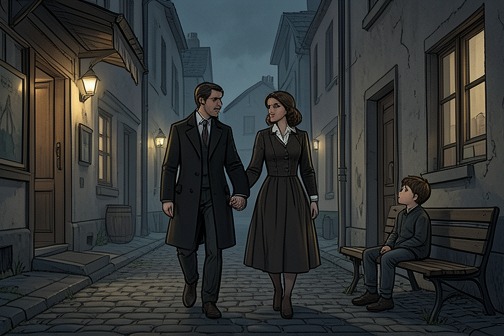
[Oskar and Melody's first real date](entity:event-recall-event-oskar-and-melody-s-firs-c912b04497a1) is the decisive transition from investigative intimacy to acknowledged romance. After months shaped by Elisabeth's arrest, David's criminal legacy, and the practical demands of caring for [Bobby](entity:character-recall-character-bobby-7cd7d55e806b), Melody finally allows herself an evening that is not devoted to crisis. Oskar's return to [Blackcliff](entity:location-recall-location-blackcliff-c81c9efbfb4f), his plans for Julius, and the couple's immediate physical and emotional ease turn an uncertain outing into the beginning of a shared future.
## Causes and Circumstances
The date takes place several months after Elisabeth's arrest, while Elisabeth's trial remains in progress. Melody has unexpectedly become responsible for ten-year-old Bobby, whose adjustment is described as difficult but steadily improving. She has also handled the government's resale of David's properties and placed the money from those sales into Bobby's college fund. These obligations explain why the evening matters: it is the first time Melody has arranged for Bobby to stay with a friend so that she can have a night entirely to herself.
The change in circumstance is equally important for Oskar. He has remained in contact with Melody while taking care of business in the city, and his adoption of Julius is almost complete. His return is therefore connected not only to romance but to a family decision. The date begins after the danger and investigation that once brought them together have receded, forcing them to discover whether their connection can exist without a murder case to solve.
## The Date and Its Turning Point
Melody prepares with unusual nervousness, smoothing her satin skirt and checking her reflection. She has even made a list of possible topics in case conversation falters, revealing that the emotional risk of an ordinary date unsettles her more than the practical demands of investigation. Oskar immediately answers that anxiety with a concrete gesture: when he arrives, he gives her a potted orchid. The flower makes the occasion unmistakably personal before either of them has settled the question of what their relationship is.
The evening quickly becomes a negotiation between dinner, conversation, and desire. Melody asks where Julius fits into Oskar's plans, and he explains that he intends to move to Blackcliff for the time being so that both he and Julius can adjust. Julius already knows the town and has friends at school, while Oskar wants him to have a good place to grow up. Oskar has also spoken with other [Shifters](entity:creature-recall-creature-shifters-eed847fffffa) who may want to leave the city, suggesting that his private decision could contribute to a broader relocation into the town.
Oskar's future in Blackcliff is not presented as withdrawal from active life. He plans to develop the ski hill and invest in hotels and new restaurants, giving the proposed domestic move an economic and civic dimension. Melody recognizes that some residents may object to having so many Shifters nearby, yet she accepts that opposition cannot determine the future. Her response is quietly consequential: she would like Oskar to be in town, and the prospect of his staying makes the relationship more than a temporary visit.
The scene's clearest reversal comes when physical attraction interrupts the cautious structure of the date. Melody kisses Oskar, and he pulls her closer; their embrace becomes openly sexual, leaving dinner in danger of being abandoned. Yet the intimacy does not erase the conversation about family. When Oskar admits that he did not want to become a single father but wants fatherhood now, and would prefer to have someone with him, Melody hears an implicit proposal for partnership. She points out that this is only their first date, while Oskar playfully treats it as a business meeting and promises an almost absurd number of future dates. The joke converts uncertainty into mutual expectation: Melody agrees to more encounters and then tells him to kiss her, which he does.
## Relationships and Commitments
The date resolves the emotional ambiguity surrounding Oskar's previous relationship with [Cindy](entity:character-recall-character-cindy-01a1e76ed8f8) without turning that history into a new rivalry. Melody asks about Cindy after Oskar's adoption process has begun, saying that she has not seen Cindy and thinks Cindy has moved on. Oskar responds that he is glad Cindy has found peace. Their exchange establishes that the new relationship does not depend on denying the past; instead, it becomes possible because the earlier attachment has been acknowledged and allowed to settle.
Oskar's relationship with Melody is also inseparable from his relationship with Julius. His plan to move to Blackcliff is framed as an adjustment undertaken for both of them, not as a romantic escape. Melody is consequently being invited into a life that includes a child, a custody transition, Shifter community politics, and business responsibilities. The date's significance lies in this breadth. It is not merely a flirtation between two investigators; it tests whether attraction can coexist with parenthood, relocation, and public pressure.
Melody's response shows a parallel movement from self-protection toward participation. She initially worries that they may have nothing to discuss once the investigation is over, and she prepares conversational safeguards against silence. By the end, she no longer needs the list. The physical initiative comes from her, while the verbal promise of future dates comes from Oskar, creating a reciprocal pattern rather than a one-sided pursuit. Their affection becomes both bodily and practical, joining immediate desire to the possibility of a stable household.
## Consequences and Narrative Significance
The date changes the value at stake from companionship under pressure to chosen romantic commitment. Before the meeting, Oskar and Melody are connected by trust developed during danger and investigation; afterward, they have a mutual understanding that their relationship can continue in ordinary time. The transition is deliberately small in outward action—an orchid, a conversation, a kiss—but large in narrative consequence because it gives their bond a future beyond the solved case.
The scene also establishes a possible new center for Blackcliff. Oskar's proposed move, Julius's schooling, the potential arrival of other Shifters, and planned investments in the ski hill, hotels, and restaurants connect private happiness with the town's social and economic transformation. Melody's willingness to welcome Oskar despite anticipated anti-Shifter resistance positions the relationship as part of a broader movement toward coexistence rather than an isolated affair.
Its ending is a promise of continued development rather than a final declaration. Oskar imagines repeated dates, Melody accepts the premise, and their kiss resumes with both of them aware that the evening has crossed its original boundary. The first real date therefore functions as a quiet romantic resolution to the uncertainty left by the investigation while opening a domestic future in which love, family, Shifter identity, and Blackcliff's changing community will remain intertwined.
Event 107
Clara discovers Nate is a wolf shifter

Clara discovers that Nate is a wolf shifter during an evening that begins as an apparently ordinary invitation and ends by destroying her understanding of the man—and of the animal she had seen before. The transformation is both a disclosure of supernatural identity and a severe test of trust: Nate wants to be understood as someone capable of intimacy, while Clara must decide whether the revelation makes him dangerous or merely honest in an alarming way.
## Causes and Setting
The discovery follows an unexpected change of plans. Clara had expected Nate to take her to a bar, but he brings her to his home instead, an alteration that immediately makes her apprehensive. Nate explains that he prefers drinking at home, then welcomes her into a sitting room with a fully equipped bar. The domestic setting is meant to appear comfortable and controlled, yet its privacy also removes the public safeguards Clara had anticipated. Her unease is therefore present before the supernatural revelation begins.
Nate’s home becomes a transitional space between his professional identity and his hidden nature. Clara knows him as her boss, and she is already concerned that any romantic involvement between them could produce damaging workplace rumors. The evening consequently carries two forms of uncertainty at once: she does not know what Nate wants from her personally, and she does not know what kind of being he is. His wine, his attempt at hospitality, and his relaxed manner make the room look ordinary while concealing the fact that its host can cross the boundary between human and wolf.
## The Revelation
Clara presses Nate about his earlier claim that she had seen a dog. She remembers that there was no dog in the room when it was opened, so the explanation seems impossible. Nate tells her that appearances had deceived her: the animal she saw was not an ordinary dog but a wolf. Clara rejects the idea because wolves have supposedly been absent from the area for hundreds of years. Her objection shows that she is still interpreting the scene through ordinary human knowledge, while Nate is preparing to disclose a reality that knowledge cannot explain.
The disclosure begins when Clara states that she is not seeking a relationship with her boss because she wants to advance professionally and avoid rumors that they are dating. As she rises, Nate appears to shift in place. He doubles over, sinks onto all fours, and changes in front of her. His eyes turn from chocolate brown to bright yellow; his tanned skin becomes gray, nearly black fur; and his body grows larger than that of a normal dog. Clara recognizes him almost immediately because he is the same creature connected to the earlier unexplained sighting. The mystery is not resolved by discovering a hidden animal in the house. It is resolved by realizing that the man standing before her is the animal.
The central fact of the event is therefore stark: Nate was not merely telling a strange story about a wolf. He was the wolf. The transformation collapses the distinction Clara had been relying on between a human employer and a dangerous nonhuman presence. What had seemed like flirtatious mystery becomes a revelation about bodily identity, and what had seemed like an ordinary dog becomes evidence of a concealed supernatural life.
## Fear, Contact, and Reversal
Clara reacts with immediate terror. She falls backward into her chair, scrambles away from the large wolf, and closes her eyes when he approaches with a growl. She begs him not to kill her, treating the encounter as a possible attack rather than an intimate confession. Her fear is physical before it becomes intellectual: her heart pounds, her breathing catches, and she cannot yet process what she is seeing as a coherent explanation.
The scene then reverses without erasing the danger. The wolf’s tongue passes over Clara’s cheek, but the sensation is not that of an ordinary dog’s tongue; it feels like a man’s. A hand moves to her face, and when she opens her eyes she sees Nate’s dark chocolate eyes again. Nate has returned to human form and apologizes for frightening her. The shift from beast to man does not restore the earlier normality. Instead, it proves that the two identities belong to one body and leaves Clara facing a hybrid reality that cannot be dismissed as a trick.
Clara’s fear becomes anger once she understands that Nate is not immediately trying to kill her. She slaps him across the face and demands an explanation, objecting that he cannot simply turn into a dog and expect her not to panic. The slap is a boundary-setting act: she refuses to let Nate’s amusement or attraction define the meaning of what happened. His transformation may be a confession, but it was also an imposed shock, and Clara insists that her terror has consequences for him.
## Trust and Consequences
Nate responds with remorse rather than retaliation. He sits down, waits for Clara to calm, and explains that he normally would not have revealed himself so directly, but something about her makes him want to trust her. This admission gives the transformation an emotional motive without making it harmless. Nate has chosen Clara as someone to whom he can expose his hidden self, yet he has also placed her in a position where refusal, fear, or disbelief could affect both their personal and professional relationship.
For Clara, the immediate consequence is not romantic acceptance but survival, clarification, and the recovery of limited control. She remains shaken, cannot find words at first, and needs time before she can respond normally. Her demand for more wine becomes a practical attempt to steady herself after an encounter that has altered the terms of the evening. The fact that Nate appears not to intend murder does not make the event comfortable; it merely changes the crisis from an apparent attack into an unsettling negotiation over trust.
The event also changes the significance of Clara’s earlier observation. The “dog” was not a mistaken perception, and Nate’s explanation is not simple flirtation or deliberate nonsense. His revelation confirms that Clara’s senses had registered something real before her mind possessed the category needed to interpret it. The discovery thus turns apparent confusion into knowledge while leaving the larger implications of Nate’s identity unresolved.
## Narrative Significance
The event’s decisive value shift runs from social caution to mortal fear, then from fear toward conditional understanding. Clara begins by managing the risks of dating her boss and worrying about professional reputation. Nate’s transformation makes those concerns seem suddenly secondary, because the more immediate question is whether the man before her is a threat. His return to human form and his apology move the scene away from death, but not back to ordinary safety. Trust becomes possible only after fear has exposed the cost of concealment.
Nate’s body functions as the scene’s most powerful evidence. His yellow eyes, dark fur, altered size, and movement onto all fours make the supernatural identity visible rather than merely asserted. The narrative treats the human and wolf forms not as separate characters but as two connected expressions of one person, forcing Clara—and the reader—to abandon the assumption that human appearance guarantees human nature. At the same time, Clara remains an active judge of the revelation. She questions Nate, recoils from him, strikes him, and dictates the pace at which the conversation can continue.
The discovery therefore establishes a relationship built on contradiction. Nate presents the transformation as an act of trust, but Clara experiences it first as a violation of expectation and personal safety. His wish to be known collides with her right to understand what is happening before being drawn closer. By ending with Clara accepting wine while still shaken, the scene does not resolve the conflict; it leaves her in the uncomfortable space between rejection and belief, where knowledge has arrived but trust has only begun to be negotiated.
Event 108
Clara and Nate's heart-line mating bond
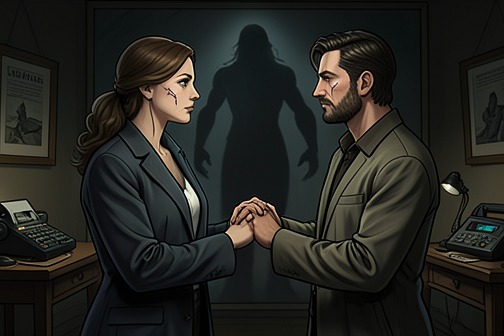
[Clara and Nate's heart-line mating bond](entity:event-recall-event-clara-and-nate-s-heart-92aac60b8afa) is the decisive turning point in their relationship. What begins with Clara discovering that her employer is a shapeshifter becomes a revelation that their bodies carry a matching sign of destiny. Nate names the connection a heart line, and the shared mark changes the scene's emotional value from confusion and suspicion to the possibility of an intimate, supernatural union.
## Identity and Revelation
Clara first tries to establish what Nate is after witnessing his transformation. She asks whether he is a werewolf, but Nate rejects the implication that his wolf is an uncontrolled alter ego. He explains that he has command of his other form, can extend and retract his claws at will, and prefers the more accurate term “shapeshifter.” He further tells her that entire communities contain people who can become wolves, cats, or even deer, while the local shifters are mostly wolves under his authority.
Nate’s social identity makes the disclosure more consequential. He is not merely a hidden supernatural being but a CEO, a billionaire, and the alpha of the largest wolf pack in the Americas. Clara therefore receives several revelations at once: her employer has concealed a nonhuman identity, he exercises leadership over a supernatural community, and the apparently ordinary workplace where she met him is connected to a larger shifter society.
## The Heart Line
Nate tells Clara that he has revealed the truth because they are meant to be together. He interprets her having been drawn to work at his company, remaining late, and seeing him in his true form as part of destiny. Clara initially calls him crazy and resists the conclusion that his declaration should determine her response. The bond is not established by his assertion alone, however; the narrative gives it a visible and bodily confirmation.
Clara has long possessed a birthmark extending from her sternum down her arm to her wrist. She has regarded it as an unattractive but otherwise unremarkable mark and usually kept it covered. Nate bears a corresponding mark on his own arm. When they press their arms together, the marks begin to glow with a dull throb described as resembling a second heartbeat. The physical sign makes their connection legible before Clara can intellectually accept it.
Nate explains that every shifter is born with a heart line. Sometimes the matching person is another shifter; sometimes it is a human. In Clara’s case, the mark identifies her as the human whose line corresponds to Nate’s. He calls the implication a soulmate relationship and says that the two are destined to be together. The revelation thus crosses the boundary between species without erasing Clara’s humanity: the extraordinary feature is not that she transforms, but that a human body can participate in a shifter bond.
## Emotional and Physical Shift
The scene moves through a clear sequence of resistance, recognition, and approach. Clara questions Nate’s identity, challenges his interpretation of their meeting, and attempts to free her hands when he presents the bond as destiny. Yet the glowing mark and the transferred heartbeat create an affective experience that precedes full rational belief. The connection is felt through skin, pulse, warmth, and electrical sensation before it is accepted as a named relationship.
Clara still questions whether the heart line means she must immediately submit to Nate’s wishes. Nate answers that he does not expect her simply to fall into his arms, even while admitting that he would appreciate it. Her subsequent movement toward him changes the relationship from imposed explanation to reciprocal contact. They kiss slowly; Clara does not stop his hands, tangles her fingers in his hair, and responds to his touch by drawing him closer. The electricity that races through her body reinforces the earlier heartbeat imagery, making the bond operate both as supernatural evidence and as an immediate erotic charge.
The scene therefore does not present the heart line as a purely abstract promise. It becomes a relational mechanism that joins revelation to consent and attraction. Nate names the destiny, but Clara’s bodily response supplies the scene’s movement toward intimacy. Her uncertainty remains part of the encounter, while her decision to kiss him marks the first practical acceptance of what the matching marks imply.
## Consequences and Narrative Significance
The bond alters the meaning of Clara’s connection with Nate on several levels. Professionally, he is her boss; socially, he is an immensely powerful alpha; biologically and spiritually, he presents himself as her destined mate. The heart line binds these otherwise unequal identities into one relationship and makes Clara’s ordinary human background part of the shifter world Nate governs.
The event also establishes a central rule of the setting: supernatural partnership can be recognized through an inherited bodily sign, and the sign may connect a shifter with a human. That rule expands the possible boundaries of the shifter community while giving intimate relationships a visible, almost anatomical form. The mark is simultaneously identity, evidence, and promise.
Its narrative force lies in the reversal from Clara’s attempt to categorize Nate to her discovery that she is personally implicated in his hidden world. She begins by asking what kind of creature he is and ends the scene physically responding to the possibility that she is his mate. The heart line changes the story from an encounter with the supernatural into a romance whose stakes are carried in both the body and the social order surrounding it.
Event 109
Clara tells Nate she is pregnant
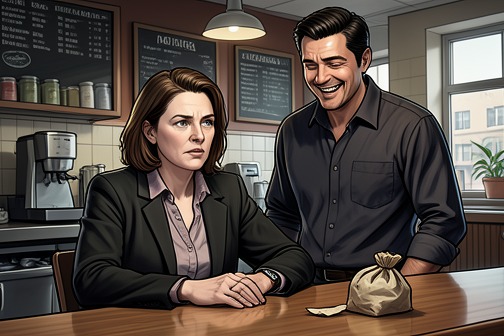
[Clara tells Nate she is pregnant](entity:event-recall-event-clara-tells-nate-she-is-52405c6b7462) at a secluded diner, a disclosure that changes the terms of their concealed relationship from a private romance into a future that must be acknowledged publicly. The announcement begins with uncertainty and physical distress, but ends with Nate’s immediate joy and their shared decision to face the practical consequences together.
## Causes and Background
For several weeks, Clara and Nate had maintained a strict division between their private and professional lives. After spending their free time and nights together, they became “employee and employer” once they entered the workplace. Nate deliberately avoided public affection because he did not want Clara to acquire a bad reputation through their relationship, and Clara accepted the arrangement because it protected her professionally. Their intimacy therefore depended on concealment and compartmentalization: tenderness existed outside the office, while the workplace required them to appear unrelated.
The situation began to change when Clara developed persistent morning nausea. She rushed to the bathroom immediately after waking for an entire week, initially dismissing the symptoms as food poisoning or a stomach bug. The repetition forced a more serious interpretation. Clara realized that she was pregnant and had no idea how to tell Nate. At work, the physical symptoms made the secret increasingly difficult to manage. She could not tolerate ordinary food or caffeine, suffered a severe headache, and sat over decaffeinated tea while trying to function at her desk.
The pregnancy also exposed the danger of the workplace arrangement. [Jeremy](entity:character-recall-character-jeremy-9ac2d6df3d50), Clara’s supervisor, noticed that she looked unwell and connected her condition to a possible late night with Nate. His insinuating manner and later hostile glare made Clara aware that their privacy might already be under scrutiny. Nate interrupted the encounter by sending Jeremy downstairs with files, then invited Clara to lunch after receiving her message that they needed to talk. The lunch was arranged at a diner far enough away from the office to give them privacy.
## The Announcement
At the diner, Nate held Clara’s hand and pressed his lips to her knuckles while asking what was so life-changing. Clara had been unable to eat and was visibly anxious, but she finally looked up at him and told him, “Nate, I’m pregnant.” The moment is presented as a pause in which the expected reaction remains uncertain. Nate’s face froze, his mouth fell open, and he struggled briefly for words, allowing Clara’s fear to occupy the silence before his response became clear.
Nate then moved from stunned silence to wholehearted delight. He took Clara’s hands and told her, “Sweetie, that's great!” He called the news amazing and immediately recognized that it would alter their professional circumstances. Their relationship could no longer remain entirely private, because the pregnancy would require them to announce their connection to the company. Rather than treating the disclosure as a crisis or blaming Clara, Nate spoke of solving the logistics together, postponing the details until they could address them properly.
Clara had already begun applying to other corporations so that neither of them would have to face a scandal within their current workplace. This preparation reveals that her anxiety was practical as well as emotional. She was not only afraid that Nate might reject the pregnancy; she was also calculating how to protect both their reputations and her employment. Nate’s happiness therefore answers two separate fears: he welcomes the child, and he accepts that the relationship must become visible.
## Immediate Consequences
The announcement turns their private bond into a public problem without diminishing its emotional certainty. Nate speaks of maternity leave and of arranging their professional future afterward, while Clara allows herself to relax as his excitement continues. She had expected the possibility that he might be upset, but his reaction is the opposite. He says that he loves children and regrets only that they had not married first, making marriage part of the social and logistical future that the pregnancy has opened.
Clara refuses an immediate wedding because she does not want to fit a baby bump into a wedding dress. Her refusal does not reject Nate or the relationship; it establishes her control over the timing and conditions of marriage. Nate accepts the delay without withdrawing his commitment. The exchange separates the biological and social dimensions of their future: pregnancy has already happened, but marriage will wait until Clara is ready.
Nate reassures her that she is his mate and that marriage is “just for the press.” He promises that everything will be fine, touches her cheek, and returns their attention to the ordinary question of what to order. That movement back toward the menu gives the scene its domestic resolution. A life-changing disclosure is absorbed into shared planning rather than dramatic rupture, and the couple’s next step is not separation but the practical continuation of their life together.
## Narrative Significance
The event functions as a value shift from concealed intimacy to acknowledged partnership. Before Clara speaks, the pregnancy is a private burden associated with nausea, fear, professional danger, and the possibility of rejection. After Nate responds, it becomes a shared future marked by delight, maternity planning, possible workplace disclosure, and eventual marriage. The scene’s tension comes from the gap between Clara’s expectation of trouble and Nate’s immediate acceptance.
The revelation also confirms that their relationship is not merely a clandestine workplace affair. Nate identifies Clara as his mate, giving the pregnancy a supernatural relational significance as well as a social one. His statement places the mate bond before marriage: marriage may be useful for public presentation, but the underlying connection is already established in his understanding of their relationship.
Clara’s pregnancy announcement consequently joins bodily evidence, professional secrecy, romantic commitment, and public consequence in one compact turning point. The week of repeated sickness makes the concealed future impossible to ignore; the private diner provides a protected setting for disclosure; Nate’s stunned pause creates suspense; and his joy resolves the immediate fear while opening the next conflict, namely how the couple will reveal their relationship and reorganize their working lives. The event is therefore both a confession and a transition into shared responsibility.
Event 110
Harrod learns the Ford family are werewolves
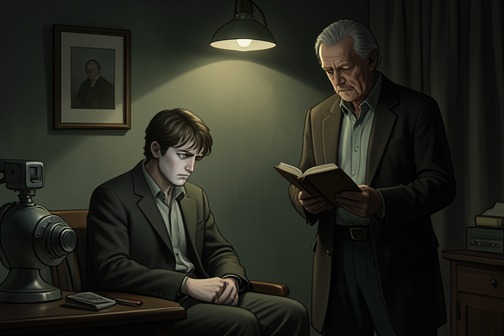
[Harrod learns the Ford family are werewolves](entity:event-recall-event-harrod-learns-the-ford-6672dc700e7c) in a confession that overturns his understanding of his family, his mother’s sanity, and his own identity. What begins as an explanation of strange family history becomes a forced initiation into a hidden supernatural inheritance: Harrison, whom Harrod believed had drowned, is alive; Harrod’s father has concealed the truth for years; and Harrod himself is expected to become what he calls a freak.
## The Confession and Its Buried History
Harrod’s father first prepares him for information that will be difficult to accept, asking him to listen, expect questions, and take time to process what he is about to hear. The warning gives the revelation the character of an initiation rather than a casual disclosure. Harrod is not merely being told a family secret; he is being asked to abandon the version of reality on which his adult life has been built.
The first rupture concerns Harrod’s mother. Harrod had inherited the family explanation that her strange claims were delusions, and he repeats that understanding when his father asks whether he remembers them. His father directly reverses that judgment: she had not been deluded, but had been telling the truth. The correction makes the mother’s suffering newly legible. Her apparent instability was not madness detached from reality but the consequence of encountering something supernatural without preparation or support.
The confession also exposes a second deception. Harrod had been told that his brother Harrison drowned in the pool while their mother was not paying attention. He had further been warned that child protective services would take him away if he told anyone what happened. His father now says that Harrison is alive and living with Grandpa, whom the father visits every month while hunting. The revelation does not simply restore a missing sibling; it proves that Harrod’s childhood was organized around a deliberate lie and that the adults around him cooperated in preserving it.
## The [Werewolf](entity:creature-recall-creature-werewolf-73193042775d) Revelation
The decisive disclosure comes when Harrod’s father identifies him as a werewolf and explains that the entire family shares the condition except for Harrod’s mother. The father says that the family’s werewolf nature extends through their line, while the mother’s side is outside that inheritance. The supernatural is therefore presented as a hereditary family identity rather than an isolated curse or an accidental transformation.
The timing of the revelation is also explained. The Ford family lives in cities, where werewolves may have to wait for an inner wolf to emerge. According to Harrod’s father, werewolves raised in packs can shift at a very young age, whereas urban family members may not manifest their nature as quickly. Harrison was able to shift easily when he turned nine, but Harrod has reached twenty-five while still waiting for his own inner wolf to appear. His father has delayed telling him because he expected the transformation to reveal itself first.
That explanation turns Harrod’s age into part of the crisis. He is not being introduced to a distant family legend; he is an adult standing at the threshold of a bodily change that has been anticipated by everyone else. The father’s claim that Harrod will eventually learn to appreciate and respect who he is offers acceptance as a future expectation, but it does not answer Harrod’s immediate fear of losing control over the life he considers normal.
## Harrod’s Shock and Resistance
Harrod’s response moves through disbelief, anger, and bodily distress. When his father says that Harrod’s mother had been telling the truth, Harrod’s jaw drops and he temporarily loses the ability to speak. He initially assumes that his father has followed his mother into madness. Once Harrison’s survival is disclosed, that disbelief becomes accusation: Harrod says that his father lied and demands to know why his mother was put through years of being treated as delusional when she had been right.
The emotional force of the confrontation is described physically before Harrod can fully articulate it. He feels wronged, and his heart expands and contracts heavily in his chest as though it might explode. The reaction records the collapse of several identities at once: the son who believed the family story, the brother who mourned Harrison, and the adult who believed himself ordinary. His father’s gaze intensifies the threat. Harrod sees power in it and wants to curl up under the bed, an instinctive fear that makes the supernatural danger register before he can rationally accept it.
Harrod then rejects the identity outright. He says that he does not want to be a werewolf, wants a normal life, and does not want to be a freak. His question about whether Grandpa is also a werewolf is not idle speculation; it tests whether the impossible disclosure is limited to his father or governs the whole family structure. His father confirms that everyone in the family is a werewolf except Harrod’s mother and her side of the family, making the revelation comprehensive rather than exceptional.
## Immediate Consequences and Unresolved Conflict
The conversation leaves Harrod with a newly confirmed brother, a reinterpreted mother, a concealed family history, and an unwanted supernatural inheritance. His most immediate demand is to see Harrison. The request shows that the revelation is not only about species identity. It also reopens a severed sibling relationship and gives Harrod a concrete person through whom the abstract claim might be verified.
His father does not provide that reunion. Instead, he orders Harrod to leave and says they will talk the next day, his anger rising sharply as the conversation ends. The interrupted exchange leaves the central questions unresolved: Harrod has not shifted, has not accepted the werewolf condition, and has not learned why the family’s secrecy was maintained beyond his father’s claim that it was necessary and for the best. The event therefore functions as an opening transformation rather than a completed acceptance.
## Narrative Significance
The revelation converts ordinary family secrecy into supernatural concealment and makes retrospective reinterpretation the event’s principal effect. Harrod’s mother’s supposed delusions become testimony, Harrison’s supposed death becomes a protective lie, and the father’s authority becomes inseparable from the power of the hidden werewolf family. The scene’s structure depends on successive disclosures: truth about the mother, truth about Harrison, and finally truth about Harrod himself.
Harrod’s identity is presented as relational and inherited rather than self-created. His father treats the inner wolf as something already present and merely awaiting emergence, while Harrod experiences that inheritance as an invasion of the normal life he thought belonged to him. The conflict is not only between belief and disbelief but between a family definition of belonging and Harrod’s refusal to accept the terms on which that belonging is offered. The event ends before reconciliation, leaving his future transformation and his relationship with the Ford family suspended between fear, anger, and the promise of understanding.
Event 111
Harrod's first transformation and wolf training
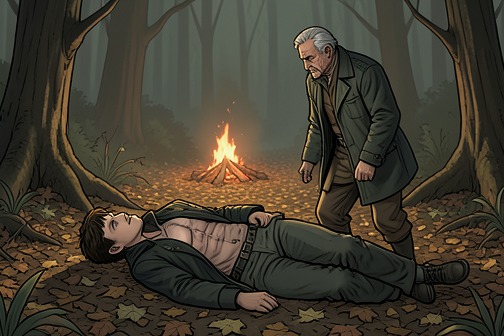
[Harrod's first transformation and wolf training](entity:event-recall-event-harrod-s-first-transfor-a98e25b74260) are the decisive threshold through which Harrod stops treating the werewolf world as an improbable story and begins inhabiting it as his own nature. The event combines revelation, pain, instruction, and family belonging: Harrison demonstrates the change, the den confirms that it is normal, and [Mishayev](entity:character-recall-character-mishayev-8dc7b684b407) forces Harrod through the first shift that his full-moon inheritance will make unavoidable.
## Discovery of the [Werewolf](entity:creature-recall-creature-werewolf-73193042775d) World
Harrod's training begins after he has been brought to the forest by his family and has spent time learning its history while speaking with [Siobhan](entity:character-recall-character-siobhan-f4d21c07c592) from the isolated household's landline. His grandfather identifies him as a late bloomer and tells him that it is time to unleash the inner wolf, although Harrod still does not believe the explanation. His recurring dreams have also stopped since his arrival, which makes the grandfather's assurance that Harrod is where he is supposed to be feel like part of a pattern Harrod has not yet learned to read.
The revelation comes beside the fire when Harrison removes his clothes and transforms in front of Harrod. His body jerks and bends out of shape, his limbs twisting at unnatural angles before, roughly ten seconds later, he becomes a wolf. Harrod is stunned, but nobody else reacts as though anything unusual has happened. The grandfather follows Harrison's example, and then the others shift one after another until Harrod is surrounded by wolves. The scene reproduces the structure of his dreams, including the altered perception of the moonlit landscape, while making the dream's hidden subject literal and communal.
## Family Secrets and Inherited Compulsion
Mishayev tells Harrod that training must begin because the first full moon will bring an unavoidable transformation. No member of the family can resist shifting during a full moon, and Harrod learns that his father's supposedly random monthly hunting trips have actually followed the lunar cycle. The disclosure also changes the meaning of his father's secrecy. His father once locked himself in a study during full moons, but Harrod's mother opened the door while carrying Harrison and witnessed the complete change from man to wolf. She reacted by trying to expose the secret, then lost her mental stability; Harrison was taken to the forest while still young because the family believed that early knowledge would prevent severe trauma.
The inheritance is presented not merely as a private condition but as a force that organizes family life. Harrod is told that his father could have converted his mother through an Alpha's bite, but chose not to because she could not be trusted. The statement establishes both the physical mechanism of werewolf conversion and the community's strict boundary around disclosure. Harrod's training therefore answers two pressures at once: he must learn to control a body governed by the full moon, and he must become trustworthy enough to remain inside the werewolf secret.
## The First Shift and Its Ordeal
Mishayev warns that most of the training will be easy, but that the first shifting will be terrible. Her method is deliberately harsh. She throws sand into Harrod's face, blocks his sight, repeats the command to shift, strikes him, and allows another wolf to bite his wrist. The repeated word becomes an assault on his senses as much as an instruction. His heart races, anger rises, and the physical intensity that once belonged to his dreams becomes immediate and uncontrollable.
The transformation is described as bodily rupture rather than graceful metamorphosis. Harrod screams as his arms twist and bend backward, while his mouth swells and becomes unusable. He hears multiple heartbeats and loses the ability to understand his changing body. The scene makes the cost of entering the new identity unmistakable: the wolf is not reached through calm recognition but through pain, disorientation, and the collapse of ordinary human control.
Once transformed, however, Harrod's senses change with startling force. He sees through the cleared sand with a form of night vision, identifies bodies by movement and scent, and responds instinctively with aggression. He runs on all fours and pounces at the wolf who had struck him. Mishayev and his brother restrain him, throw him into the water, seize his muzzle, and try to bring him back to himself. Harrison's instruction, “Brother, come back. Harrod, focus. Remember. Take control,” is the first bridge between the human family relationship and the animal body. Harrod stops, and the others shift back after establishing that he has survived the first lesson.
## Training, Control, and Belonging
Mishayev tells Harrod that he has done well, although he remains furious and does not offer thanks. The evaluation nevertheless marks a change: the family no longer treats him as an outsider who merely needs an explanation, but as a novice wolf who has completed the necessary first passage. They swim in the lake, show him the surrounding area, and teach him to recognize the overwhelming smell that Mishayev calls scent. The practical lesson continues after the transformation itself, turning extraordinary perception into a skill that can eventually be used rather than simply endured.
The training also reverses Harrod's position within the family. Harrison, who had once been the frightened child taken away from the household crisis, is now an experienced wolf capable of handling Harrod during the change. The grandfather's earlier intervention has produced the result the family intended: Harrison was not permanently traumatized by discovering the secret, but became at home in the den. Harrod's own initiation follows a more difficult route because he arrives later, carrying disbelief, incomplete explanations, and the emotional residue of a family that concealed its nature from him.
## Narrative Significance and Later Test
The first transformation unites the event's major tensions: secrecy versus disclosure, human self-conception versus inherited animality, and fear versus communal instruction. Harrod's dreams had supplied images without interpretation; the forest supplies the social meaning behind them. The wolves surrounding him are not only a threat but also evidence that the terrifying condition is shared, structured, and teachable. His body becomes the site where family history, lunar compulsion, and collective identity meet.
The event also prepares Harrod for the later test that gives his transformation public consequence. On his last night in the den, beneath a bright full moon and amid fog, the entire wolf community gathers around the pit while Harrod faces Harrison, with his father and grandfather watching from a cliff and Siobhan present as the lone human witness. That later trial shows how far the first chaotic lesson has carried him: the novice who once reacted blindly to blows and unfamiliar senses is placed before the den as a participant whose status must be recognized. His first shift is therefore not an isolated spectacle. It is the painful beginning of Harrod's movement toward control, kinship, and eventual standing among the wolves.
Event 112
Siobhan discovers her pregnancy

[Siobhan discovers her pregnancy](entity:event-recall-event-siobhan-discovers-her-p-58d761465e8c) when the physical aftereffects of her first night with [Harrod Ford](entity:character-recall-character-harrod-ford-fac66edc1834) refuse to remain merely romantic. Her longing for him begins as an almost feverish attachment after he leaves, but persistent nausea turns that intensity into a medical question. The diagnosis changes the relationship from a private encounter into a public and familial crisis, forcing [Siobhan](entity:character-recall-character-siobhan-f4d21c07c592) to seek Harrod, disclose the pregnancy, and enter the hidden world surrounding his training and family.
## From Longing to Physical Distress
Siobhan’s discovery is preceded by an emotional and bodily disturbance that she initially interprets through love and desire. After spending one night with Harrod, she becomes preoccupied with seeing him again and with the intimacy they shared. She regards losing her virginity to him as worth the long wait and feels certain that she will not regret it. Yet Harrod disappears the next day, leaving her in an increasingly desperate state for two weeks. She waits for his call in pajamas with a trash bin beside her, vomiting from what she assumes is an illness while still describing herself as lovesick.
When Harrod finally calls, Siobhan tells him that she has missed him and asks when he will return. Another wave of nausea interrupts the conversation, and she vomits while speaking to him. Harrod says that he will need another week before he can come back. The delay intensifies the practical problem already hidden inside Siobhan’s longing: she is sick, alone with the consequences of their unprotected encounter, and unable to reach him when she most needs an answer.
## The Diagnosis
The decisive turn occurs the following morning, when the persistent sensation in Siobhan’s stomach has not disappeared. She books an appointment with her general practitioner, who asks when she last had sex and whether she used protection. Siobhan answers that it was almost three weeks earlier, insists that it happened only once, and initially rejects the possibility that she could be pregnant. The doctor gives her water and a cup and instructs her to provide a urine sample.
The test is positive. When Siobhan asks whether the result is certain, the doctor explains that early tests can sometimes be negative, but a positive result is positive; a blood test or ultrasound could provide further confirmation, although the doctor considers the pregnancy definite. The scene replaces Siobhan’s romantic language of butterflies and lovesickness with an unmistakable biological fact. Her body has disclosed a consequence before Harrod can return to discuss what their night together means.
The diagnosis also establishes the pregnancy’s timing. Siobhan later tells Harrod’s father that she is three weeks along, which corresponds to the single unprotected encounter she reported to the doctor. The event is therefore not presented as an abstract possibility or a suspected illness but as a pregnancy with a clear connection to Harrod.
## Disclosure to the Ford Family
Siobhan knows that she must tell Harrod, but she is also afraid that the pregnancy could be used against her mother in the media. Journalists, she believes, would turn the revelation into a damaging story, so she tries to control the disclosure rather than allow it to become public scandal. She spends the day attempting to call Harrod, but cannot get through. She then goes to his house, where officers refuse to admit her because Harrod is absent.
Rather than leave, Siobhan decides to wait for his father. The confrontation is difficult because Harrod’s father intimidates her, pressures her for an explanation, and makes clear that he will not simply let her speak to Harrod immediately. Siobhan finally blurts out that she is pregnant. When he identifies Harrod as the father, he reacts with disbelief, especially after Siobhan emphasizes that it was only one time. Her disclosure transforms the event from a private medical diagnosis into a family matter involving inheritance, reputation, and the Ford household’s authority.
Harrod’s father nevertheless responds practically once the fact is established. He asks how far along Siobhan is and discusses what she might do, where she might stay, and whether the baby will be kept. His attitude is described as outwardly cocky and impassive, but his discussion of the baby reveals a more vulnerable investment: his eyes brighten when he speaks about the child, with the same icy blue quality associated with Harrod’s eyes. The pregnancy thus creates an unexpected point of connection between Siobhan and a man who initially appears threatening.
## The Journey Toward Harrod
Because Harrod is away and cannot be reached, his father offers Siobhan a private jet to visit him. The offer comes with a condition: she cannot return until Harrod completes his training, which will take another week. Siobhan does not yet know what Harrod is training for; when she asks, his father refuses to explain fully and suggests that she discover the truth for herself.
An hour later, Siobhan is aboard the jet, circling a forest on a mountain. The only visible sign of civilization below is a short asphalt runway. This transition carries her away from the ordinary medical setting where the pregnancy was diagnosed and toward a remote, concealed environment connected with Harrod’s supernatural life. The event therefore ends not with emotional resolution or immediate reunion, but with Siobhan physically crossing into the unknown circumstances that Harrod had kept from her.
## Narrative Significance
Siobhan’s pregnancy discovery is a reversal in which bodily knowledge outruns romantic certainty. The event begins with love, lust, longing, and the memory of a first sexual experience, but it becomes undeniable through vomiting, a urine sample, and a positive test. The narrative repeatedly places intimacy beside mechanisms of confirmation: the private night with Harrod is followed by medical questioning, and Siobhan’s feelings must give way to a fact that can alter both families’ futures.
The surrounding story expands that bodily uncertainty into a wider posthuman framework. Elsewhere, Ella receives the Draco’s Eye, a blue-stoned band that identifies her as [Darilth](entity:character-recall-character-darilth-6b2d2503203a)’s destined mate; Sara uses a bionic eye as a concealed stun grenade; [Lisa](entity:character-recall-character-lisa-f8f8fe21b70f)’s pregnancy is verified through a medical scan that projects a three-dimensional image of an embryo; and [Shay](entity:character-recall-character-shay-5a5fab224960) explains that [Stlozyn](entity:creature-recall-creature-stlozyn-25c0edab8dc8) ancestors were taken from [Earth](entity:location-recall-location-earth-a6b883af9147), genetically altered, and given DNA enabling them to shift forms. Against this larger pattern, Siobhan’s diagnosis belongs to a recurring concern with bodies that disclose hidden identities, cross ordinary boundaries, and become politically consequential. Her pregnancy is simultaneously an intimate consequence, a family revelation, and the doorway into the concealed supernatural world occupied by Harrod and the Ford family.
Event 113
Siobhan enters the werewolf den
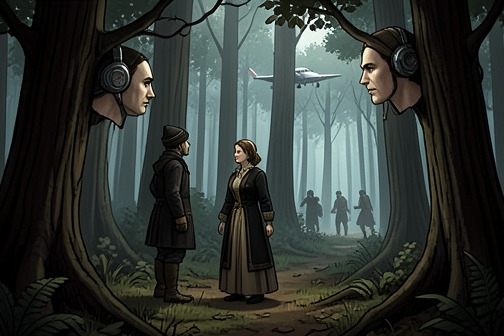
[Siobhan enters the werewolf den](entity:event-recall-event-siobhan-enters-the-were-3be7defba8e1) as both an investigator and a partner demanding the truth. Sent to Harrod’s hidden community after confronting his family about his unexplained absence, she crosses from an ordinary political-family life into a secluded world where resemblance, secrecy, bodily transformation, and pack authority redefine what she thought she knew about him. The event’s decisive significance lies in her response: learning that Harrod is a werewolf does not end their relationship, but makes her continued involvement an informed choice rather than a relationship sustained through concealment.
## Arrival at the Hidden Community
[Siobhan](entity:character-recall-character-siobhan-f4d21c07c592) reaches the site by plane and sees two nearly identical heads among the trees. From a distance she cannot tell which belongs to Harrod, an early visual sign that the community’s identity is structured through kinship and physical resemblance. She waits inside the landed plane until the men come to her, experiencing the forest as beautiful but also terrifying. The setting therefore carries two meanings at once: it is secluded and potentially threatening, yet it is also the place where Harrod has been living and where his concealed family life will finally become visible.
Harrod enters with another man who initially appears to be him. Siobhan rises to greet the first figure, only to realize that the actual Harrod follows behind. Once he recognizes her, Harrod pushes the other man aside, embraces her, and kisses her, replacing the confusion of visual doubling with an unmistakable personal recognition. The other man introduces himself as Harrison, Harrod’s brother and twin. Siobhan’s discovery that Harrod has a twin is the first layer of the den’s concealed reality, and it makes the community’s secrecy tangible before the supernatural revelation is even spoken.
The settlement lies about a fifteen-minute walk from the plane, behind a fence and arranged as a village-like community. Harrod introduces Siobhan to his grandfather and to [Mishayev](entity:character-recall-character-mishayev-8dc7b684b407), whom he identifies as his teacher. The place is not merely a hiding spot or a private family retreat; it is a structured community with elders, instruction, shared rooms, and rules that Harrod expects Siobhan to understand gradually. When she presses him about what he is being taught and why he was taken away, he initially delays the explanation. She refuses to accept another postponement and insists that he tell her what separated him from her.
## The [Werewolf](entity:creature-recall-creature-werewolf-73193042775d) Revelation
Harrod prepares Siobhan before the disclosure, warning her that what she is about to learn is extraordinary. He asks Harrison to demonstrate, and the resulting transformation leaves her breathless. Her first interpretation is that Harrison is a shape-shifter, but Harrod corrects her: Harrison is a werewolf. Harrod then confirms that he is one as well, as is everyone else in the community. His father is also a werewolf; only his mother is excluded from that identity. The revelation consequently expands from an individual secret into a family and communal condition.
Harrod’s father appears to have sent Siobhan to the den partly so she would learn the truth before the relationship became more serious. Harrod frames the disclosure as a chance for her to leave while she still can. He does not deny that he wants her to stay, but he distinguishes desire from coercion: he would try to stop her, yet he would not force her. This distinction is central to the event. The den is a place of secrecy and inherited supernatural identity, but Harrod presents Siobhan’s participation as dependent on her consent rather than on the pack’s authority.
Siobhan’s reaction rejects the expected narrative of panic or immediate flight. She acknowledges that her upbringing in a political family has exposed her to circumstances she considers deeply abnormal, even though nothing in that background has prepared her for werewolves. She says she can become accustomed to the truth, while also making clear that she will not live in the den forever. Her answer accepts the reality of Harrod’s identity without surrendering her own independence or agreeing to absorb the community’s way of life completely.
## Choice, Transformation, and the Alpha Trial
The discovery leads directly to a question about whether Siobhan can become a werewolf herself. Harrod explains that a bite can cause the transformation, but not every werewolf possesses the authority to do so. Only an [Alpha’s bite](entity:concept-recall-concept-alpha-s-bite-22270b9ae60e) can convert her, and Harrod is not yet an Alpha. The supernatural condition is therefore governed by a hierarchy rather than by a simple biological exchange between lovers; bodily transformation depends on social rank and succession.
Harrod’s route to that rank is imminent. Six days after Siobhan enters the den, he must face Harrison in [The Pit](entity:location-recall-location-the-pit-31b70981cca8). If he defeats his brother, he will become the Alpha, and only then can the possibility of biting Siobhan be reconsidered. The coming contest thus carries both political and intimate stakes. It is a struggle between twins for leadership, but it also determines whether Harrod will possess the authority required to transform the woman who has chosen to remain with him.
The scene closes with Harrod and Siobhan still together rather than with a completed transformation. Harrod’s attention returns to physical intimacy, while the unresolved questions of Alpha succession, Siobhan’s possible conversion, and the couple’s future remain ahead. The den has not produced a final settlement; it has produced the terms under which future choices will be made.
## Narrative Function and Thematic Significance
As a plot event, Siobhan enters the werewolf den marks the passage from romantic uncertainty to supernatural disclosure. Harrod’s disappearance is explained through the existence of the secluded community, the family’s shared werewolf identity, and the requirement that the couple visit the den during every full moon. The revelation also changes the meaning of Harrod’s earlier absence: it was not simply withdrawal or avoidance, but participation in a recurring condition that imposes obligations on his body and time.
The event repeatedly unsettles the boundary between the familiar and the nonhuman. Siobhan first encounters a twin who can be mistaken for Harrod, then sees a human body become a werewolf, and finally learns that the entire village shares the same condition. Yet the narrative does not make transformation purely monstrous. Harrod’s werewolf identity is frightening because it has been hidden, but it is also presented as a communal and inherited form of life, complete with education, kinship, leadership, and ritualized full-moon obligations.
Siobhan’s position gives the revelation its ethical force. She is not compelled to remain, compelled to transform, or compelled to accept permanent residence in the den. Instead, she learns the truth, states her limits, and chooses to continue the relationship under those conditions. The event therefore treats supernatural intimacy as a negotiation between human autonomy and nonhuman belonging. Its immediate outcome is not that Siobhan becomes a werewolf, but that she becomes a fully informed participant in Harrod’s world, with the Alpha trial in The Pit standing between the couple and the next irreversible decision.
Event 114
Harrod's Alpha trial and recognition as a True Alpha

[Harrod's Alpha trial and recognition as a True Alpha](entity:event-recall-event-harrod-s-alpha-trial-an-b04e65148aa0) is the decisive rite through which Harrod moves from a younger member of the Ford family into acknowledged leadership of the werewolf pack. Staged in the pit beneath a full moon, the trial combines physical combat, family expectation, public witnessing, and a startling bodily revelation: Harrod defeats Harrison without abandoning his reluctance to harm his brother, then shifts into a form no other wolf present has displayed. His victory is therefore not merely a win over a rival; it is the pack's recognition that he possesses both the strength and the control required of a [True Alpha](entity:expression-recall-expression-true-alpha-18dda9f4df57).
## Setting and Ritual
The trial takes place on Harrod's last night at the den. The full moon shines above a landscape broken by heavy fog, while wolves in their natural forms surround the sand-filled pit. Pups, elders, Harrod's father, Harrison, and [Siobhan](entity:character-recall-character-siobhan-f4d21c07c592) all witness the confrontation. The scene is communal rather than private: the entire den is present, and the pack's attention turns the fight into a public judgment of Harrod's fitness.
Harrod's grandfather initiates the ceremony from a projecting cliff roughly two stories above the pit. After silence falls across the crowd, he faces the moon and releases a deep howl that reverberates through the forest. The howl functions as the trial's formal opening, separating the combat from ordinary pack life and placing it within an inherited ritual order. The pack does not simply watch two brothers fight; it waits for the event to establish who may lead.
Harrison enters the circular pit on all fours, followed by Harrod. They circle each other across the sand without breaking eye contact. Harrod knows that Harrison wants him to win, but also that Harrison will not deliberately lose. The trial thus preserves the credibility of the succession: affection between brothers cannot replace the demand that the chosen Alpha survive a genuine challenge.
## Combat and Emotional Stakes
The first exchange emphasizes the danger of the trial. Fog moves into the pit and hides Harrison's yellow eyes. When his shadow tears through the cloud, he surprises Harrod and strikes his muzzle. Harrod answers by driving headfirst into Harrison's abdomen, but Harrison turns, pounces, and kicks at his paws. The fog repeatedly interrupts sight, forcing Harrod to rely on movement and scent rather than simple visual control.
Harrison gains the advantage when his fangs sink into Harrod's neck. Siobhan cries out and tries to enter the pit, but [Mishayev](entity:character-recall-character-mishayev-8dc7b684b407) shifts into human form and restrains her. Her intervention makes the pack's rules visible: even a distressed partner cannot interrupt the contest. Harrod survives the moment by waiting through another cloud, identifying Harrison by scent, and launching a full-force attack that sends his brother out of the pit. Harrison immediately returns, confirming that neither fighter treats the struggle as symbolic alone.
The emotional center of the trial is Harrod's hesitation. Harrison pins him and repeatedly strikes his face, leaving Harrod with an opportunity to bring the fight to an end. Harrod refuses to take it because he cannot bring himself to hit his own brother. He would rather lose than deliberately injure Harrison, and Harrison's claws cut his skin while Harrod remains conflicted. The succession therefore tests more than aggression. Harrod must discover whether mercy toward family can coexist with the violence demanded by leadership.
Siobhan breaks through that hesitation by shouting that Harrod must win for her and for the child inside her. Her pregnancy changes the meaning of defeat. Harrod is no longer fighting only for a title or to satisfy the expectations of his grandfather and father; the outcome now bears on Siobhan and their unborn child. Her plea gives him the final reason to act without turning his love for Harrison into hatred.
## The Hybrid Revelation
Harrod strikes beneath Harrison's abdomen, causing his brother to yelp and fall aside in the sand. He rises and howls, but the decisive surprise comes when his body shifts beyond the forms he has previously known. His bones crack and strain as he becomes a hybrid, part man and part wolf. No other wolf Harrod has seen at the den can make this transformation.
The change produces a collective reaction from the gathered pack, whose response is described as a mixture of shock and awe. Harrod can also see his father and grandfather more clearly from the altered state, suggesting that the new form brings not only greater force but a different kind of physical command. The transformation is not presented as a costume or temporary trick. It is an embodied sign of an exceptional nature that the pack has not previously recognized.
In hybrid form, Harrod howls and lands a fierce blow on Harrison. The strike knocks Harrison unconscious, and he remains on the sand for a minute before whimpering in pain. Harrod wins by combining the power of the newly revealed form with the tactical patience he has already shown in the fog. The victory is consequently grounded in both transformation and discipline rather than brute strength alone.
## Recognition and Consequences
After Harrison falls, Harrod's grandfather and father answer one another's howls. On the third howl, the entire wolf pack joins them, creating a collective acknowledgment that extends beyond the immediate combatants. Harrod's grandfather announces that there is a winner and that the pack has a new Alpha. The wolves howl again in celebration while Harrod goes to Harrison's side instead of treating him as a discarded enemy.
Harrison shifts back into human form and tells Harrod that he is fine, praises the way he fought, and says that he trained him well. Four werewolves from the infirmary carry Harrison away on a gurney, making the cost of succession plain even though the defeated brother survives. Siobhan then runs into the pit and embraces Harrod, linking the public victory to the private relationship whose future helped drive it.
The grandfather gives the victory its formal interpretation by declaring that the pack has found a True Alpha, a rare occurrence. He identifies Harrod's bloodmoons for eyes and his precise control over the form between animal and man as the defining evidence. The title therefore rests on controlled hybridity: Harrod is recognized not simply because he defeated Harrison, but because he can inhabit the boundary between human and wolf without losing mastery of either side.
## Narrative Significance
The event follows a separation, threshold, and reintegration pattern. Harrod stands apart from ordinary pack life at the edge of the pit, enters a liminal space governed by moonlight, fog, howling, and sanctioned violence, and emerges with a new social identity. The pit is both arena and ritual chamber; the pack's repeated howls convert a bodily contest into a communal act of succession.
The trial also revises the usual logic of an Alpha challenge. Harrod's reluctance to hurt Harrison initially appears to threaten his ability to lead, yet that reluctance remains part of the victory rather than being erased by it. He wins only after Siobhan's pregnancy makes the stakes unavoidable, and he immediately attends to Harrison after the decisive blow. The event presents leadership as a balance between power, restraint, kinship, and responsibility.
Most importantly, Harrod's recognition changes the pack's understanding of what he is. His hybrid form and exceptional control become public knowledge, and the grandfather's proclamation gives that difference institutional force. The trial ends with Harrod not merely surviving a dangerous family contest, but being named a rare True Alpha whose body, conduct, and connection to the pack together justify his authority.
Event 115
Harrod and Siobhan's pack union announcement

[Harrod and Siobhan's pack union announcement](entity:event-recall-event-harrod-and-siobhan-s-pa-622568494af3) is the public moment when their private relationship becomes a recognized werewolf union. It follows Harrod's recognition as a rare [True Alpha](entity:expression-recall-expression-true-alpha-18dda9f4df57) and immediately binds his new authority to [Siobhan](entity:character-recall-character-siobhan-f4d21c07c592), her pregnancy, the pack's future pup, and a ceremony that will make their mate bond a marriage under pack custom. The announcement is therefore both a celebration and a transfer of personal intimacy into communal law, inheritance, and protection.
## Causes and Background
The announcement comes after Harrod's victory in the Alpha trial. His grandfather identifies him as a True Alpha, marked by bloodmoon eyes and the extraordinary control required to maintain a form between animal and human. The declaration makes Harrod's status exceptional within the pack and creates a public setting in which his personal future carries institutional weight. [Mishayev](entity:character-recall-character-mishayev-8dc7b684b407)'s cry of “Good tidings, I told you” frames the recognition as part of a sequence of auspicious developments rather than an isolated triumph.
Siobhan then reveals the second piece of the good news: she is pregnant. Harrod holds her firmly, and when she begins to qualify the disclosure by saying that they could change course if he is unhappy, he immediately assures her through action and response that the child is wanted. His happiness is not presented as an abstract promise. He kisses her before she can continue toward the possibility of ending the pregnancy, then later kneels to kiss her belly and dedicates the gesture to their unborn pup.
## What Happens
From the cliff above the gathering, Harrod's father announces that the pack has a new union, specifically one belonging to the new Alpha, and that the pack will grow through the child on the way. The announcement converts knowledge previously held by only a few people into collective recognition. The pack answers with delighted howls, then shifts into human form and applauds the couple, making the werewolf community's two bodies and two social modes part of the same ceremony of approval.
Siobhan explains that Harrod's father already knew about the pregnancy because she had told him before coming to the pack. She had delayed telling Harrod until after the fight, while Harrod's father had arranged the union after asking whether she wanted it. This gives the announcement a negotiated foundation: it is not simply imposed by the family or pack, because Siobhan had consented to the union and retained the stated option to change her mind. Harrod's emphatic refusal to lose the union, followed by his lifting her off her feet and kissing her again, publicly confirms his choice.
The moment also exposes the difference between emotional commitment and formal completion. Harrod has already imprinted on Siobhan, but Mishayev explains that the bond must be formed properly before the relationship is recognized as marriage. Until the ceremony, Harrod may see Siobhan only under supervision. His father refuses to make further exceptions after having already sent her to the pack in disregard of other rules and orders that the ceremony take place the next day. The announcement thus celebrates a union that is emotionally present but legally and ritually unfinished.
## Communal Ritual and Protection
The pack's reaction surrounds the couple with physical as well as social acknowledgment. Members crowd around them, offering pats on the back, handshakes, and blessings, while Mishayev immediately takes Siobhan toward the infirmary and insists that both partners see a doctor. Celebration is inseparable from medical care because Siobhan's pregnancy and Harrod's newly confirmed status affect the future of the entire pack.
The family also invokes [Mountain Ash](entity:object-recall-object-mountain-ash-fed186a37d77) as a protective boundary. Mishayev explains that the substance is toxic to werewolves but that humans assist the pack in using it. Laid in a perfect circle, it prevents wolves from crossing and is customarily placed during mourning or celebration so rivals cannot attack when the pack is least prepared. In this context, the union announcement is not merely festive. It is a vulnerable public transition, and the boundary turns the space of celebration into a defended communal enclosure.
## Consequences and Aftermath
The immediate consequence is the recognition of Siobhan as the new Alpha's prospective mate and of her child as a future addition to the pack. Harrod's father's announcement links succession, marriage, and reproduction: the new Alpha is not only acknowledged as a leader but positioned within a continuing line of pack life. The pregnancy therefore intensifies the political meaning of the union without erasing Siobhan's role in choosing it.
The announcement also imposes temporary separation. Harrod and Siobhan are deeply reluctant to be apart, and Harrod's recent attachment makes even one night without her difficult, but pack law requires restraint until the ceremony. Their desire is consequently placed inside a system of supervision, imprinting, and ritual timing. The next day's union is expected to convert the existing imprint into a recognized lifelong bond, while the Mountain Ash boundary guards the celebration against rival attack.
## Narrative Significance
The event functions as a compact convergence of the book's recurring concerns: bodily transformation, communal identity, reproductive continuity, and the tension between personal consent and inherited custom. Harrod's True Alpha status is established through control over the border between human and animal form; his union is then confirmed through another boundary, the ritual line between private imprinting and public marriage. Siobhan's pregnancy likewise joins intimate bodily change to pack politics, while the unborn pup makes the couple's future materially visible.
Its emotional force comes from the way public acclaim follows private uncertainty. Siobhan initially fears that Harrod might reject the pregnancy, and Harrod answers before the fear can become a proposal for withdrawal. Yet the pack does not treat love alone as sufficient: supervision, medical examination, the ceremony, and the protective circle remain necessary. The announcement consequently presents union as both joy and obligation—a chosen relationship that gains meaning, security, and permanence through collective recognition.
Event 116
Kaelyn moves into Hayden's mansion
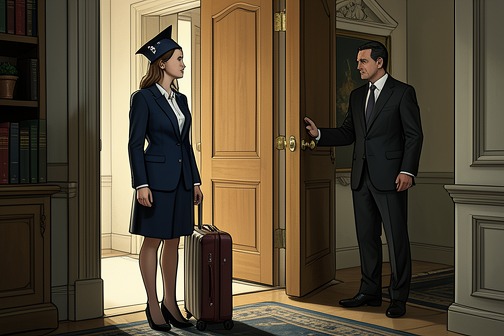
Kaelyn moves into Hayden Lynch’s mansion as a temporary measure after graduating from Stanford with a computer science degree and beginning a new job. The move is arranged through her longtime friendship with [Gabby](entity:character-recall-character-gabby-a135c040c59f), but its significance reaches beyond simple convenience: it brings Kaelyn back into Hayden’s daily life, converts a remembered adolescent connection into shared domestic space, and places her colorful, independent presence against the disciplined world of his mansion and corporate routine.
## The Request and Its History
Gabby introduces the arrangement by reminding Hayden of Kaelyn, his best friend’s inseparable companion during their freshman year of high school. That year was the only period when Hayden, Gabby, and Kaelyn attended the same school before Hayden left for college. Kaelyn had been constantly present at the family home and had become almost a second sister to him, although Hayden had also carried a small crush on her. The request therefore rests on an established intimacy rather than an accidental acquaintance, while the recollection of his youthful feelings gives the practical favor a latent emotional charge.
Gabby presents Kaelyn’s circumstances as temporary and specific. Kaelyn has just completed a computer science degree at Stanford, obtained a new job, and needs somewhere to sleep and store her belongings after moving out of her dormitory. Gabby asks Hayden to let her use one of the many rooms in his enormous mansion for only a few months, until Kaelyn can find her own place and become established. The mansion’s size and its proximity to Kaelyn’s workplace make it the obvious solution, whereas the alternative would have been a cheap hotel. Hayden initially protests that Gabby has mistaken him for someone kind and generous, but he immediately asks when Kaelyn will arrive, revealing that his refusal is performative rather than genuine.
## Preparing the Mansion
Kaelyn’s arrival is scheduled for the following week, and Hayden delegates the practical arrangements to his assistant. When a demanding week of acquisitions causes him to lose track of the days, he notices “Kaelyn arrives” at the bottom of the next day’s schedule and realizes that he has nearly forgotten the commitment. He hesitates to disturb his assistant after office hours because he recognizes that [Lynch Corporation](entity:organization-recall-organization-lynch-corporatio-d4505275d933) is not her entire life in the way it has become his, yet the arrival matters enough for him to send a text asking whether everything is ready.
The response confirms that the move has been organized in detail. A small moving van is due at 3 p.m. to collect Kaelyn’s possessions from her dormitory. A new key has been prepared, along with the codes and passwords for the mansion’s security systems and Wi-Fi. The household staff has been notified, Kaelyn’s room is ready, and a welcome basket will be waiting for her. Hayden’s evening schedule has also been left open so that he can spend time with her if he wishes. The arrangements transform a favor into an official place within the household: Kaelyn is not merely being allowed to sleep under his roof, but is being given controlled access, logistical support, and a prepared private space.
## Arrival at the Lynch Residence
Hayden intends to leave work at 4:30 p.m., exercise at the gym, and then return home in time to meet Kaelyn, but meetings run late. He reaches his car after 5 p.m. and abandons the gym, choosing to go straight home. The moving van is absent, which suggests that the transfer has proceeded as planned, and the first visible sign of Kaelyn’s presence is her car: a battered, several-years-old Toyota parked among Hayden’s Jaguar, Lamborghini, and Ferrari. Hayden keeps the Jaguar for everyday driving, while the other vehicles belong to his collection of showpieces or recreational cars. The Toyota is therefore materially out of place, an immediate image of Kaelyn entering a world of luxury without sharing its assumptions or possessions.
Inside, Hayden is told by the housekeeper that Kaelyn would be delighted to have dinner with him. Although he is tired and had wanted to work out, he accepts the prospect of relaxing over a meal with an old friend. He goes upstairs to the room assigned to her and knocks. Kaelyn opens the door, throws her arms around him in a tight hug, and thanks him enthusiastically for letting her stay. Hayden answers that she can come to him anytime, a response that confirms the continuity of their old bond and the ease with which the mansion becomes her temporary refuge.
## The Room and the Domestic Contrast
Kaelyn has little to move from the dormitory—only a few boxes—and is already unpacked when Hayden arrives. Her belongings quickly alter the room’s character. A laptop with a purple cover occupies the desk beside bottles of nail polish. Perfumes and hair products fill the dresser, while a bright turquoise pillow interrupts the existing white comforter patterned with black flowers. Her closet, once merely large, is packed with brightly colored clothing and sparkling fabrics. Photographs of Kaelyn and her friends, including several pictures with Gabby, cover the wall. The room becomes recognizably hers almost at once, not through structural renovation but through the accumulation of personal objects.
The transformation exposes the difference between Kaelyn’s domestic style and Hayden’s. His own room contains suits, ties, and workout clothes and appears stark beside hers. The contrast is not simply one of wealth, because both inhabit the same mansion; it is a contrast between Hayden’s controlled, work-centered order and Kaelyn’s visible collection of color, beauty products, photographs, and social memories. Her belongings make the room expressive and relational, while his possessions reflect professional discipline and physical routine. Kaelyn’s move thus changes the mansion before it has changed Hayden’s schedule: a space organized around corporate pressure now contains evidence of a new resident’s history and personality.
## Meaning Within the Larger Arc
The move establishes Kaelyn’s return to Hayden’s immediate orbit under circumstances that combine practical security with remembered affection. She arrives as a recent graduate and newly employed adult, not as the slightly chubby schoolgirl Hayden remembers from adolescence. His earlier sympathy for the pressures her parents placed on her appearance, and his memory of Gabby defending Kaelyn’s right to be herself, frame the reunion through the distance between past and present. The event begins with a request for shelter, but it ends with Kaelyn physically claiming a room, embracing Hayden, and bringing her own visual language into his home.
The decisive shift is from absence to presence. Kaelyn had been a remembered friend associated with school, Gabby, and Hayden’s youthful crush; after the move, she is a resident with a key, security access, household support, a prepared bedroom, and a place at dinner. The battered Toyota among Hayden’s luxury cars and the turquoise pillow amid his stark furnishings give that shift concrete form. Her temporary stay becomes the first sustained domestic proximity between them since high school, creating the setting in which their old familiarity can be tested against their changed adult identities.
Event 117
Hayden and Kaelyn's first kiss

[Hayden and Kaelyn's first kiss](entity:event-recall-event-hayden-and-kaelyn-s-fir-12e507c5730f) is the decisive turn in a relationship that had previously been sheltered by friendship, familiarity, and circumstance. During a dinner that Kaelyn believed might be an outing between friends, the romantic setting and Hayden's attention expose a mutual attraction neither has yet openly defined. When Hayden kisses her after they return to his house, the moment confirms that their bond has crossed into romance; the conversation the next morning then gives that change a deliberate limit rather than allowing it to become an unexamined affair.
## Setting the Date
The evening begins at an elegant restaurant with landscaped bushes, bright flowers, and a stone-and-glass facade. Hayden and Kaelyn are seated at a small table near the back, where a candle flickers in a glass holder. Kaelyn notices the atmosphere, the subtle flirting during the drive, and the way Hayden keeps looking at her, and begins to wonder whether he intended the dinner to be a date. Her uncertainty is central to the scene: she desires the possibility, but she still understands their meeting through the safer language of friendship.
Kaelyn is also out of her usual social environment. The menu uses elaborate descriptions she struggles to decipher, and the meal, wine, and service belong to Hayden's affluent world. When she admits that she may never want to leave, the remark reveals how happy and overwhelmed she feels, but Hayden's surprised expression makes her fear that she has said too much. By the time they return to his house, her earlier glow has weakened into embarrassment and self-consciousness.
## The Kiss
The physical turn occurs on the stairs, just before Kaelyn is about to leave for her room. Hayden reaches for her hand, pulls her toward him, and spins her around to face him. He kisses her before she has time to think through the implications or stop him. His hand draws her closer, and the suddenness of the gesture carries the scene from implication into action: the attraction that had circulated through glances, flirting, and uncertainty becomes bodily and undeniable.
Kaelyn's response is complicated by the identities Hayden carries for her. She is kissing Hayden Lynch, the billionaire; she is also kissing her best friend's older brother, someone she has known for years and once regarded as a dorky teenager. The transformation is therefore not simply from acquaintanceship to desire. It overlays her established memory of him with his newly recognized adult attractiveness, wealth, and emotional availability. Her astonishment does not become rejection. She kisses him back with equal passion, and their mouths move together until they separate breathless.
The kiss ends with a quiet asymmetry. Hayden closes his eyes, smiles, wishes Kaelyn goodnight, and retreats into his room. The gesture confirms the intimacy while postponing its interpretation. Nothing is formally promised, but the old category of “just friends” can no longer contain what has happened.
## Immediate Negotiation
The next morning, the kiss cannot be dismissed as an isolated accident. Over breakfast, with coffee, eggs, and bacon between them, Kaelyn asks whether she made a fool of herself. She explains that she drank more than intended and then identifies the point of anxiety directly: she kissed him. Hayden does not deny that the kiss was good, but he says the pace may have been too fast because they had not discussed it and Kaelyn is staying in his house.
Their exchange turns desire into a question of consent, timing, and domestic boundaries. Kaelyn proposes that they should not “hook up” without discussing it first, and Hayden adds that it may be better to wait until they are no longer living together. The shared residence matters because it complicates every later choice: attraction is real, but the household gives the relationship an uneven practical context and makes retreat more difficult.
Kaelyn agrees to stop kissing him until she has moved out and they have discussed what they want. She experiences the rule as a release from pressure, while Hayden feels relieved despite being disappointed because he enjoyed the kiss. The decision does not erase the romantic shift. Instead, it converts spontaneous passion into a postponed possibility that both acknowledge and can revisit under clearer conditions.
## Dramatic Function
The event follows a recognizable romantic midpoint pattern: a carefully ambiguous meeting becomes physical confirmation, then immediately encounters a boundary that prevents easy consummation. The candlelit restaurant supplies the approach, the staircase supplies the rupture of uncertainty, and the breakfast conversation supplies the counterforce of restraint. The movement is not from indifference to a completed relationship, but from unspoken attraction to mutual knowledge of attraction.
The scene's emotional force lies in the contrast between bodily immediacy and verbal caution. Kaelyn's happiness, wine-warmed confidence, embarrassment, surprise, and passionate reciprocation unfold before either character has established a plan. The next morning restores deliberation without restoring emotional distance. Hayden and Kaelyn therefore leave the event in a changed but unresolved state: they are still sharing a home, still constrained by their existing social connection, and now consciously waiting to discover what the kiss means when those circumstances no longer dictate the terms.
## Boundaries and Significance
The first kiss is significant because it makes a concealed relationship legible to the two people involved while refusing to treat desire as sufficient justification for immediate escalation. Hayden initiates the physical contact, but Kaelyn reciprocates; the scene consequently presents attraction as mutual even though the timing is sudden. Their later agreement gives that mutuality an explicit ethical structure, requiring discussion before further intimacy.
This pattern also distinguishes the event from other charged relationship arrangements in the wider narrative. [Cheryl](entity:character-recall-character-cheryl-af54b6410705)'s decision involving Bjorn and [Maskin](entity:character-recall-character-maskin-5df12ba18891) is expressed as a collective condition that requires the two men to remain together, while Kenner's disclosure to Teresa makes secret communal knowledge a matter of trust. Hayden and Kaelyn's scene is more private and domestic: its decisive action is not a public vow or ritual, but a kiss followed by an agreement about when not to repeat it. In that restraint, the event establishes the relationship's central tension between genuine longing and the need to separate romantic choice from convenience, wealth, household dependence, and familiar family ties.
Event 118
Will confronts Hayden at the Lynch residence

[Will confronts Hayden at the Lynch residence](entity:event-recall-event-will-confronts-hayden-a-ed71e3c39ca8) in a brief but decisive domestic encounter that transforms an uncertain romance into an apparent triangle. What begins as an ordinary morning at Hayden’s home becomes a collision between Hayden’s private hope, [Will](entity:character-recall-character-will-17d4ceb7f768)’s public claim over Kaelyn, and the dangerous volatility of Hayden’s shifter nature. The event matters less because of any physical confrontation than because Will’s arrival turns unspoken attraction into suspicion and gives Hayden a rival he cannot dismiss.
## Causes and Background
Kaelyn and Hayden have recently grown close while maintaining an explicit no-kissing rule. Hayden has found the rule useful because it restrains impulses he does not know how to interpret, but it also leaves their relationship suspended between intimacy and denial. On the morning of Will’s visit, Kaelyn has gone shopping with friends while Hayden prepares to meet his own friends for basketball. Their separation is routine, and Hayden expects to leave the house without disturbance.
The setting is Hayden’s secure residence, where access is controlled by a gate and a pass code. That security has already proved imperfect: the code has been hacked once or twice, and Hayden suspects that someone at the security company may have sold the information. Consequently, the knock at the door carries an immediate undertone of intrusion. Hayden is close enough to answer it himself, even though the housekeeper would ordinarily handle visitors, and he looks through the window before opening the door. He does not recognize the man outside, but opens the door rather than refusing contact.
## What Happens at the Door
Hayden asks whether he can help, speaking with an edge because the visitor might be a salesperson, a media representative, or someone who has bypassed the property’s security. Will does not introduce himself as an intruder or explain how he reached the house. Instead, he immediately asks whether Kaelyn is there. The question surprises Hayden: Kaelyn is free to receive visitors, but Hayden believes she would have mentioned someone coming to the residence.
When Hayden tells him that Kaelyn is out, Will identifies himself as “Will. I’m her boyfriend.” The declaration is simple, but its effect is enormous. Hayden has been acting on the possibility that his connection with Kaelyn might develop into something more, even while their no-kissing agreement limits what either of them has openly acknowledged. Will’s statement places a pre-existing romantic relationship directly in the path of that possibility.
Will intensifies the claim by saying, “We’re in love. But she doesn’t like to tell too many people. Doesn’t want to seem like we’re bragging about it or anything.” His grin gives the announcement a self-satisfied quality, while Hayden keeps his face controlled. Hayden answers that he will tell Kaelyn that Will stopped by, maintaining outward politeness rather than challenging the visitor at the door. The exchange therefore ends without proof, accusation, or physical violence. Will leaves with his claim intact, and Hayden is left alone with the implications.
## Hayden’s Reaction and Value Shift
The scene’s decisive shift is from guarded hope to jealousy. Before Will arrives, Hayden’s feelings for Kaelyn remain constrained but possible: the no-kissing rule has made their situation simpler by preventing either of them from crossing a clearly negotiated boundary. After Will announces that he and Kaelyn are in love, Hayden begins questioning every recent interaction. He wonders whether Kaelyn was dating Will before or after their kiss, whether she has deliberately led him on, and why she never mentioned a boyfriend during the night they spent talking.
Hayden’s uncertainty quickly hardens into competing rage and jealousy. He considers the timing of Will’s supposed relationship and concludes that, if Will is telling the truth, Kaelyn must have been dating him when she and Hayden kissed. The thought makes the kiss appear not as an isolated moment of mutual possibility but as evidence of concealment or betrayal. At the same time, Hayden cannot determine whether Will is genuine, boastful, or deliberately provoking him. The event thus produces no confirmed romantic fact; it produces a destabilizing interpretation that Hayden cannot set aside.
The confrontation also exposes Hayden’s physical susceptibility to anger. As he drives his Jaguar out of the garage, rage and jealousy battle within him, and he wishes he could run Will over. Will has already gone, so the imagined violence has no immediate target, but the impulse reveals how rapidly emotional uncertainty becomes bodily aggression for Hayden. The narration associates this volatility with shifter biology, describing shifters as naturally hot-headed. Hayden’s anger is therefore both personal and species-coded: jealousy activates an inherited or embodied tendency toward dangerous excess.
## Consequences and Aftermath
Will’s visit follows Hayden out of the house. He drives too fast before forcing himself to ease off the accelerator, a concrete sign that self-control is already becoming work rather than instinct. At basketball, the aggression continues. Hayden throws the ball harder than usual, takes risks he normally would not take, and nearly attacks a teammate after a missed shot. Lee finally asks what his problem is and points out that such aggression is unnecessary in a casual game.
The aftermath confirms that the confrontation has not been contained to the doorway. Hayden’s inability to verify Will’s story does not make the claim harmless; uncertainty itself becomes the source of the disturbance. Kaelyn is absent from the scene and cannot clarify whether Will is truly her boyfriend, whether they are in love, or whether Will is manipulating Hayden. That absence preserves the event’s central tension. Hayden must respond to a rival’s assertion before hearing Kaelyn’s account, and his emotional reaction outruns the available evidence.
The visit also threatens the fragile arrangement Hayden and Kaelyn have established. Their no-kissing rule had functioned as a boundary that kept desire manageable, but Will’s appearance makes the boundary feel inadequate. Even if Hayden honors the agreement, he now suspects that Kaelyn may not have been approaching their relationship under the same assumptions. The confrontation therefore turns restraint into resentment: the rule that once simplified Hayden’s choices now reminds him of how little he knows about Kaelyn’s other commitments.
## Narrative Significance
As a scene, Will’s arrival is structured around the gap between expectation and result. Hayden expects to leave for basketball; instead, an unfamiliar visitor appears at a secured door. Hayden expects a routine inquiry or an irritating sales call; instead, Will delivers a claim of romantic ownership. Hayden expects his composure to survive the encounter; instead, the emotion follows him into driving and sport. Each reversal enlarges the event beyond its few lines of dialogue.
The confrontation also dramatizes the difference between public declaration and private knowledge. Will speaks with certainty, calling himself Kaelyn’s boyfriend and describing their love, while Hayden possesses only fragments: a kiss, a conversation, and the absence of any disclosure about Will. The man who makes the claim controls the public version of the relationship, but the scene offers no independent confirmation. Hayden is forced to live inside that unresolved contradiction, and the resulting jealousy becomes more powerful precisely because it cannot be settled at the door.
Finally, the event foreshadows the escalation of Hayden’s conflict with Will. No fight occurs at the Lynch residence, yet the emotional conditions for one are unmistakable: an uninvited rival, a threatened attraction, a possessive claim, and a shifter whose anger becomes reckless when challenged. Will leaves without being confronted, but his visit has already changed the balance. Hayden’s hope has not been disproved, and neither has Will’s story; what has been established is the rivalry itself, together with the anger that will shape Hayden’s next response.
Event 119
Will's stalking escalation
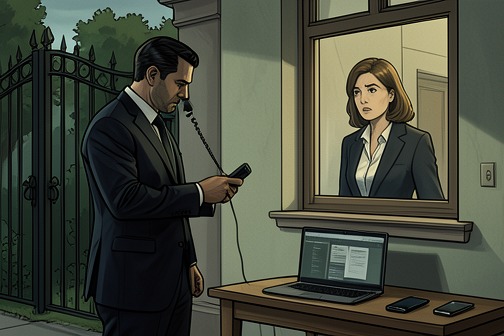
[Will's stalking escalation](entity:event-recall-event-will-s-stalking-escalat-99b357f6898f) is the turning point at which Kaelyn's unwanted attention becomes an immediate threat to her private life and physical security. What began as intrusive workplace contact develops into surveillance-like access to her personal information, an unsolicited appearance at the gated residence where she is staying, and a false claim of intimacy made to Hayden. The episode shifts Kaelyn's situation from irritation and uncertainty to fear, forcing her to document the conduct, secure her accounts, and seek police intervention even though the available institutions still treat the behavior as insufficiently actionable.
## From Workplace Intrusion to Personal Threat
Kaelyn first encountered [Will](entity:character-recall-character-will-17d4ceb7f768) on her first day at her new job. She had been friendly, but she declined his invitation to lunch and turned down dinner twice that week. He nevertheless interpreted ordinary first-day camaraderie as something more intimate and continued coming to her cubicle after she asked him not to. He somehow obtained her phone number and began calling her, while leaving notes on her desk. Human Resources characterized his conduct as an attempt to be friendly and said they would speak to him, but the contact did not stop.
The escalation is defined by the sudden collapse of the boundary between Kaelyn's workplace and home. Will located the address where she was staying with Hayden and obtained the code for the gate. He then came to the property and told Hayden that he was Kaelyn's boyfriend and that they were in love. The claim was not merely false; it attempted to manufacture a relationship in front of the man with whom Kaelyn's feelings were growing. By presenting himself as her partner, Will converted private harassment into a public challenge to her autonomy and reputation.
## Kaelyn's Immediate Response
After returning to her room, Kaelyn closed the door, dropped her bags, and struggled to control her breathing while wiping tears from her eyes. Her first practical response was defensive: she opened her laptop and changed the password for every account she could think of, fearing that her phone or another account had been compromised. The need to audit her digital life shows that Will's access to the gate code and address had made ordinary privacy feel unreliable. She no longer knew what information he possessed or how he had obtained it.
Kaelyn understood that the pattern had intensified within only a week. Earlier incidents had seemed like nuisances of limited concern, and she had hoped that workplace intervention would frighten him away. The discovery that he knew where she lived changed the emotional value of the situation. The conduct was no longer merely unwanted attention at a desk or through a phone; it had reached the place where she expected to be protected. She decided to add the incident to her report at work and considered changing her phone number, although doing so would be burdensome and felt unfairly costly to her.
Her fear also threatens the fragile happiness developing elsewhere in her life. She had been enjoying her new job and staying with Hayden, whose home felt almost like a resort; their relationship had begun to grow more intimate, and her feelings for him were becoming stronger. Will's intrusion therefore endangers not only Kaelyn's safety but also the ordinary future she was beginning to imagine. The harassment tries to make her retreat from a promising life simply because the harasser refuses to accept her refusals.
## Institutional and Legal Failure
Kaelyn drives to the local police station, where she had already gone earlier in the week, hoping that the new facts will finally be enough for action. The officer asks whether Will's calls or texts have changed in nature. Kaelyn explains that he still says how much he loves her and wants to be with her, rather than making explicit threats. That distinction becomes central to the institutional response.
The officer tells her that there is little the police can do unless they can prove Will obtained the information illegally. He has not threatened her, damaged property, or committed an offense that would authorize the investigation she requests. Even a computer search would require evidence that a crime had already occurred. A protection order is available, but its reach would be limited for the same reason: the conduct is frightening and invasive, yet it has not crossed the narrow evidentiary threshold demanded by the law.
This exchange produces the event's decisive reversal. Kaelyn's subjective sense of danger has moved sharply from slight concern to fear, while the official classification of Will's behavior remains close to harmless romantic persistence. The gap leaves her carrying the burden of proof, prevention, and self-protection. The story presents stalking as escalation precisely through that gap: the absence of an explicit threat does not restore safety when a person has already obtained an address, a gate code, repeated access to private communications, and the confidence to impersonate a boyfriend.
## Narrative Function and Consequences
The escalation belongs to a broader pattern in which hidden identities and social prejudice make disclosure dangerous, but it operates differently from the supernatural secrets surrounding other characters. [Cain Samson](entity:character-recall-character-cain-samson-196b7eb0ae79) fears that revealing what he is will cause people to leave him and expose him to government suspicion; Maximillian Barnes conceals his gorilla-shifter identity because public knowledge could make him a target; [Bianca](entity:character-recall-character-bianca-579dc0b65e0a) struggles to name what she has discovered about [Eric McKenna](entity:character-recall-character-eric-mckenna-8ed35f2dc851). Kaelyn's danger instead comes from a human aggressor who claims intimacy without consent. Her experience shows that the threat need not be visibly monstrous to be real.
The episode also contrasts the labor expected from institutions with the labor forced onto the victim. Human Resources asks Kaelyn to tolerate and report the behavior, while the police ask for proof of illegality. Kaelyn must change passwords, consider changing her number, preserve reports, drive to the station again, and calculate how to remain safe inside a home whose access controls Will has already breached. The administrative responses do not eliminate the threat; they make her responsible for translating fear into evidence before protection becomes available.
As a plot event, Will's stalking escalation prepares the later confrontation between Will and Hayden and the eventual danger to Kaelyn. Its significance lies in the accumulation of small violations rather than one spectacular attack: unwanted visits to her cubicle, calls to a number he should not have had, notes left on her desk, discovery of her address and gate code, and the false declaration of love to Hayden. Together these acts destroy the assumption that refusal will be respected and force Kaelyn to recognize that the situation will not end simply because she has made her lack of interest clear.
Event 120
Hayden's gorilla attack on Will

[Hayden's gorilla attack on Will](entity:event-recall-event-hayden-s-gorilla-attack-f2f8ea869504) is the decisive escalation of the conflict surrounding Kaelyn's stalking. After discovering that [Will](entity:character-recall-character-will-17d4ceb7f768) works in the same building as Kaelyn, Hayden witnesses the pressure under which she is trying to work and chooses intervention over restraint. His attempt to protect her becomes an act of intimidation and assault, turning a private workplace threat into a public danger of its own.
## Causes and Background
Hayden encounters Will at Kaelyn's workplace after arriving with a bouquet of brightly colored flowers. The visit is initially directed toward Kaelyn, but the scene changes when Hayden sees Will and realizes that the man is employed on the same floor. Kaelyn's earlier account of her stressful work life suddenly acquires a concrete explanation: Will has continued to reach her even after their relationship ended, and the workplace has become another setting in which he can pursue her.
Will's conduct, as Hayden hears it, is not a single unwanted approach. Will has already been to Kaelyn's house, obtained the passcode, and continued pressing her after she denied interest. At work, he demands that she agree to go out with him before he will leave her alone. Kaelyn has reported him to human resources, but Hayden sees that the complaint has not yet stopped the harassment. She is reduced to ignoring Will while attempting to continue working, a detail that makes the intrusion feel both persistent and structurally difficult to escape.
Hayden interprets the situation in openly moral terms. He regards Will as a total creep and decides that standing back would amount to allowing the conduct to continue. Yet the decision also reveals Hayden's impulsive, possessive mode of protection. Rather than wait for institutional action or ask Kaelyn what response she wants, he removes the flowers from the immediate scene, identifies Will's car, and prepares a private confrontation. The movement from concern to surveillance shows how quickly his protective impulse becomes coercive action.
## The Attack in the Parking Lot
Hayden waits in the parking lot near the end of the workday, watching for Will among the employees leaving the building. When Will reaches his green Honda, Hayden crouches between the cars to remain hidden, then grabs Will by the wrist as he reaches for the door handle. He orders Will to come with him and pulls him toward a thick patch of trees, choosing a place with fewer witnesses rather than confronting him in the open.
Will initially allows himself to be dragged a short distance, then breaks free and runs. Hayden refuses to let the escape end the confrontation. Once beneath the trees, he changes into his gorilla form; his clothes are torn into shreds as the transformation exposes the physical reality he has kept concealed. He catches Will on all fours, roars, and pounces, pinning him beneath his enormous arms. The attack is therefore not merely a threat delivered by a strong man. It is an intentional display of nonhuman strength designed to make Will experience Hayden as a monster capable of overpowering him.
The scene then reverses the transformation. Hayden shifts back into human form while Will remains trapped and terrified, and Hayden punches him across the jaw. The return to human shape does not restore restraint; it places a spoken warning inside the violence. Hayden tells Will, “You stay away from Kaelyn, do you understand? Or next time, you might find yourself the victim of a gorilla attack.” The threat makes the attack both punishment and deterrent, while also directly naming the identity Hayden has been concealing.
## Immediate Consequences
Will scrambles away and runs once Hayden releases him. Hayden walks back toward the parking lot, but the practical consequences of shifting follow him. His clothes have been destroyed, and although he keeps spare clothing in his trunk and in other locations because he may need to shift unexpectedly, reaching those clothes requires crossing a parking lot that has not fully emptied. The aftermath thus combines supernatural force with mundane exposure: Hayden has won the confrontation, but he must still recover his keys and wallet from the shredded clothing and avoid being seen in the vulnerable condition the transformation has created.
The attack does not erase the underlying problem. Will's stalking has already crossed from unwanted contact into intrusion at Kaelyn's home and workplace, and Hayden's assault adds another layer of danger around her. The incident may frighten Will away, but it also leaves Hayden responsible for using a hidden supernatural identity as an instrument of personal justice. His action protects Kaelyn in the immediate sense while bypassing the boundaries, procedures, and choices that should govern a workplace harassment complaint.
## Relationships and Conflict
The event is structured around a three-way conflict, although Kaelyn is physically absent from the parking-lot assault. Will's fixation makes Kaelyn the target; Hayden positions himself as her defender; and the confrontation becomes a contest over who can control access to her. Will insists on continued contact despite Kaelyn's refusal, while Hayden answers that violation of her refusal with a violent command of his own. The two men therefore mirror one another in method even though the narrative clearly distinguishes their aims and degree of threat: Will pursues Kaelyn for his own desire, whereas Hayden acts in response to her reported distress.
Hayden's relationship with Kaelyn is also revealed through what he does not do. He does not give her the flowers during the encounter, because he decides to deal with Will first. That choice captures the tension in his role as a romantic figure and protector. His tenderness is displaced by anger, and the gesture intended for Kaelyn is held back while his attention narrows to eliminating the perceived threat. The attack consequently develops both the external conflict with Will and the internal question of whether Hayden's protection can remain distinct from domination.
## Narrative Significance
Hayden's gorilla attack on Will is the clearest physical disclosure of Hayden's gorilla-shifter nature in this conflict. The transformation is not presented as an abstract identity statement but as a sudden bodily rupture: human clothing shreds, the body moves on all fours, a roar replaces ordinary speech, and enormous arms pin a terrified man to the ground. The scene makes Hayden's concealed nature visible precisely when he believes concealment must yield to protection.
Its significance lies in the collision between a legitimate grievance and an illegitimate response. Kaelyn has been stalked, Will has ignored her refusal, and institutional reporting has failed to stop him. Those facts explain Hayden's fury without making the assault harmless. The attack turns a protective promise into a threat of recurring violence, expressed in the warning that Will may become “the victim of a gorilla attack” next time. Hayden's intervention therefore advances his relationship with Kaelyn by demonstrating his willingness to defend her, but it also exposes the volatile power and ethical danger attached to his hidden supernatural identity.
Event 121
Kaelyn's resignation from her job
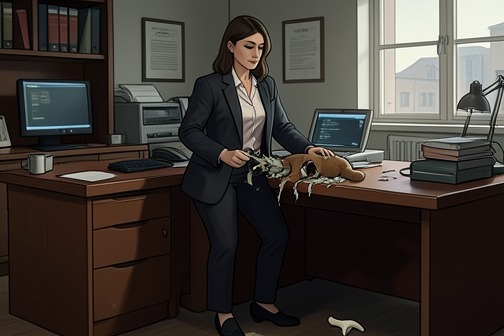
[Kaelyn's resignation from her job](entity:event-recall-event-kaelyn-s-resignation-fr-02150a9ff543) is not a routine career decision but an act of self-protection forced by stalking, workplace intimidation, and the danger created when [Will](entity:character-recall-character-will-17d4ceb7f768) learns that her boyfriend, Hayden Lynch, is a gorilla shifter. The resignation ends Kaelyn's immediate exposure to Will's harassment, preserves Hayden's secret, and redirects her from an increasingly unsafe workplace toward direct reliance on Hayden and the police.
## Causes and Escalation
Kaelyn's breaking point develops through a pattern that is difficult to report precisely because Will calibrates his behavior to remain just inside the limits of what her employer considers actionable. Human-resources staff tell her that he must make sexual innuendo or say something more specific before the conduct can legally justify firing him. After that warning, Will becomes more cautious in writing without becoming less threatening. His messages continue to imply intimacy, surveillance, and a claim over Kaelyn that he can deny if challenged.
The threat becomes physically legible when Kaelyn arrives at her desk and finds a stuffed gorilla torn apart with a knife. Its stuffing and gorilla parts cover the workspace, turning a familiar toy into a deliberately mutilated warning. She photographs the damage, but reporting it to HR or the police could expose Hayden's secret, because the gorilla image connects the threat to the revelation of his shifting ability. Kaelyn therefore cleans the remains into the trash and begins work, forced to manage both the violence against her and the secrecy surrounding Hayden.
Will's email confirms the coercive logic of the incident. He says he met her boyfriend, calls him wild, suggests that Kaelyn is afraid Hayden will discover that she and Will are falling in love, and proposes that they meet for a romantic lunch. The message is sexually suggestive in context, but sufficiently deniable to frustrate formal action. Kaelyn recognizes that Will has learned how to turn harassment into ambiguity: each line can be recast as affection, jealousy, or foolish romantic fantasy rather than an explicit threat.
## The Workplace Confrontation
At lunchtime, Will comes directly to Kaelyn's cubicle with food and announces that he has planned a fabulous lunch. When she refuses to acknowledge him, he sits on the edge of her desk and arranges the meal there, converting her workstation into a stage for unwanted intimacy. His persistence makes the office complicit even when colleagues do not understand the danger. He turns to a neighboring co-worker, Jill, and presents his version of the relationship as a secret romance obstructed by Kaelyn's supposedly jealous boyfriend.
Will's performance places Kaelyn under social pressure as well as personal threat. Jill responds as though Kaelyn is rejecting a romantic opportunity and advises her to leave the man with jealousy and anger issues in favor of the romance supposedly waiting in front of her. The scene reverses the visible roles: Will appears attentive, Kaelyn appears ungrateful, and the actual victim must flee to escape being made responsible for the harassment. She grabs her purse and rushes to the elevator, narrowly avoiding Will as the doors close before he can follow.
The immediate escape produces the resignation. Kaelyn storms into the HR office without an appointment and tells Mr. Brown that she can no longer take it. She says Will continues sending emails and harassing her, declares that the previous intervention accomplished nothing, and quits effective immediately. She leaves her badge on his desk and warns that she has been working with the police, adding that the company should act before it faces a lawsuit. Although she does not actually intend to sue the employer, she realizes that her warning sounds like a threat of legal action; she accepts that consequence because ordinary internal complaints have failed.
## Labor, Secrecy, and Refusal
Kaelyn's departure exposes the unequal burden created by a workplace that treats harassment as actionable only after it becomes explicit enough to satisfy a formal rule. Will adapts to that rule, preserving plausible deniability while using the office, email, food, gossip, and insinuation as instruments of control. Kaelyn, by contrast, must perform calm professionalism, continue checking work email, avoid revealing the supernatural truth about Hayden, and absorb the cost of leaving her employment. Her resignation is therefore a refusal of working conditions that demand her continued presence while denying the reality of the danger.
The mutilated gorilla is especially consequential because it operates simultaneously as a threat to Kaelyn and as a risk to Hayden's identity. The object is not merely damaged property; its destruction translates the hidden supernatural conflict into a public workplace image. Yet Kaelyn cannot safely use it as evidence without explaining why a gorilla matters. The scene makes secrecy part of the labor she is forced to perform, and it helps explain why quitting becomes preferable to pursuing a conventional complaint.
The event also contrasts Kaelyn's decision with other forms of service and obligation in the surrounding narrative. [Ana Medina](entity:character-recall-character-ana-medina-58a684367f1b) assists Senator [Seth Fischer](entity:character-recall-character-seth-fischer-9257c41e7291) in perfecting a speech against the proposed Shifter Registry because she believes that people are people, even though she is not herself a shifter. Elsewhere, [Mack](entity:character-recall-character-mack-132f1b9991de) is assigned to care for [Oliver Bishop](entity:character-recall-character-oliver-bishop-2f14846766d5) by enforcing an exact schedule of food, bathing, calls, and business responsibilities, while Maribel accepts paid human blood-donor work because severe debt leaves her with few alternatives. These situations differ in consent and danger, but together they frame labor as something shaped by power, bodily vulnerability, and the possibility of refusal. Kaelyn's refusal is comparatively direct: she leaves rather than continue negotiating with an institution that will not protect her.
## Consequences and Aftermath
After leaving the HR office, Kaelyn is relieved that she has not brought personal belongings to work. Her only possession there is her purse, already over her shoulder, so the resignation requires no return to the building and no prolonged confrontation. She goes straight to her car and calls Hayden, trying not to cry as she tells him about the mutilated gorilla and Will's lunch performance. She then informs him that she has quit, making him the first person to receive the full account of the breaking point.
The resignation does not resolve the underlying threat. Will remains capable of stalking, insinuating, and exploiting institutional uncertainty, while Hayden's secret remains vulnerable because Will has witnessed his gorilla form. Kaelyn's action changes the terrain rather than eliminating the conflict: the workplace is no longer her daily point of exposure, but the danger now belongs more clearly to the private relationship between Kaelyn, Hayden, and Will. Her call to Hayden and reference to police involvement establish the next stage as one requiring protection, disclosure choices, and confrontation beyond the office.
As a narrative event, the resignation functions as both an ending and a threshold. It ends Kaelyn's employment immediately, ends her willingness to treat Will's conduct as an inconvenience that can be managed through HR, and begins her movement toward a life organized around safety rather than workplace normality. The event's significance lies in that conversion of apparent romantic persistence into recognized coercion: once the gorilla is butchered, the lunch is imposed, and the harassment is staged before a co-worker, remaining at the job would mean participating in the denial of her own danger.
Event 122
Will's kidnapping of Kaelyn
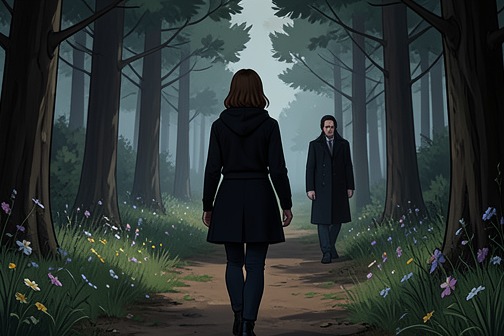
[Will's kidnapping of Kaelyn](entity:event-recall-event-will-s-kidnapping-of-ka-d83539613fcc) marks the point at which his stalking stops being an intrusive threat and becomes direct physical captivity. Kaelyn goes to the [Park Trail](entity:location-recall-location-park-trail-05ae148b1bc6) seeking calm and distance from him, but [Will](entity:character-recall-character-will-17d4ceb7f768) turns the secluded landscape into an ambush site, isolates her from public view, suppresses her attempts to escape, and renders her unconscious with an injection. The episode changes Kaelyn's immediate struggle from avoiding Will to surviving his control, while establishing the danger that later makes her rescue necessary.
## Causes and Setting
Kaelyn drives to the park hoping to replace thoughts of Will with thoughts of Hayden. The walk is initially chosen as a restorative act: she considers exercising, connecting with nature, and returning home in time for a pleasant dinner with Hayden. Once she reaches the trail, however, its peacefulness persuades her to stroll rather than run. She pauses to notice flowers and trees, allowing the setting to represent the ordinary safety she is trying to recover.
That safety proves deceptive. The trail is longer than Kaelyn expects, and as she begins to wonder how far she has gone, she stops and turns around. Will is already behind her on the path, and the narration leaves open how long he has been there. His concealed presence transforms the same environment that offered relief into a space of uncertainty: Kaelyn cannot safely continue toward her car because doing so would take her past him, yet she does not know where the trail leads if she turns away.
## Ambush and Abduction
Will abruptly darts from the path into the trees and disappears from sight. Kaelyn runs toward her car, turning the escape into the exercise she had originally considered. The brief irony of finally getting the run she wanted collapses when she stops, breathless, and realizes that Will may have been following her. His absence from the visible path offers no reassurance; it makes his location unknowable.
When Kaelyn stands to search the surroundings again, Will clamps a hand over her mouth. She does not waste energy trying to scream and instead pulls backward, digging her heels into the ground. She gains only a foot or two before Will tugs her down. The struggle establishes a stark physical imbalance: he is much stronger than he appears, and Kaelyn's resistance delays him but cannot prevent him from controlling her body.
Will moves her step by step into the woods, beyond the sightline of the trail. This relocation is central to the kidnapping because it removes the possibility of casual intervention; people walking nearby would not see them. Kaelyn manages only garbled cries while trying to free her mouth, and her fear shifts toward the sexual threat she believes may be his intention. The attack therefore combines physical restraint, isolation, and the terror of not knowing what he plans to do next.
Will then speaks directly to her, saying, “You shouldn’t have quit, Kae.” The line links the abduction to the earlier pattern of pursuit and harassment while using her familiar name to make the assault feel personally possessive. His words do not de-escalate the encounter; they accompany an act of further control. Kaelyn feels a pinch in her neck and realizes too late that he has injected her with something. The world goes black as she falls to the ground, ending the scene with her consciousness and immediate agency removed.
## Value Shift and Immediate Consequences
The event is built around a rapid reversal in the value of freedom. Kaelyn begins with the hope of reclaiming an ordinary day through movement, solitude, and a possible dinner with Hayden. The park appears to support that recovery until Will's presence converts the trail into a trap. Her attempt to run produces temporary distance but ultimately carries her into the decisive confrontation, and her physical resistance ends not in escape but in unconsciousness.
The kidnapping also makes Will's threat concrete. Before the ambush, he can be understood as someone who follows and intimidates Kaelyn; afterward, he has demonstrated the capacity to overpower her, conceal her in the woods, and drug her. The unknown injection creates an immediate medical and narrative danger without specifying its substance in this scene. The final image is not a completed escape or confrontation but Kaelyn's fall, leaving her whereabouts and condition unresolved and creating the direct stakes for her rescue.
## Narrative Significance
Will's kidnapping of Kaelyn is the culmination of stalking escalation and the threshold between harassment and captivity. Its structure depends on contrast: a trail associated with flowers, trees, exercise, and peace becomes the place where Will has been waiting; the run Kaelyn undertakes for relief becomes the movement that exposes her to pursuit; and the open path gives way to concealed woodland where no passerby can see what is happening.
The scene's physical details make the loss of agency cumulative rather than instantaneous. Will first controls Kaelyn's voice by covering her mouth, then her movement by dragging her from the path, and finally her consciousness by injecting her. Each step narrows her available choices. His remark about quitting further suggests that the kidnapping is connected to an ongoing personal fixation rather than an accidental encounter. By ending at the moment the drug takes effect, the narrative leaves the abduction suspended at its most dangerous point: Kaelyn has been taken, but the consequences of her captivity have yet to unfold.
Event 123
Kaelyn's rescue from Will
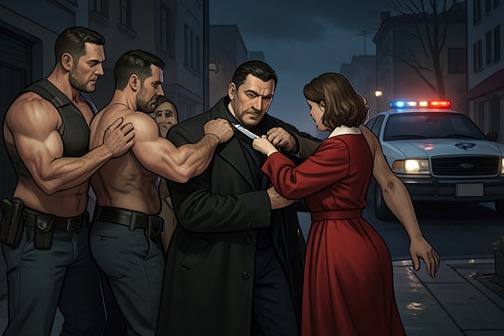
[Kaelyn's rescue from Will](entity:event-recall-event-kaelyn-s-rescue-from-wi-da6067242a8c) is the climactic intervention that transforms an atmosphere of stalking and fear into a concrete rescue operation. When Kaelyn stops answering Hayden's calls and messages, Hayden uses a phone-tracking application he had installed as a precaution after [Will](entity:character-recall-character-will-17d4ceb7f768)'s harassment. The location leads him to an isolated, apparently abandoned house, where he and his gorilla family force entry, overpower Will, free Kaelyn, and hold him until the police arrive. The event shifts Kaelyn from captive to survivor and moves Will from unseen pursuer to arrested perpetrator.
## Causes and Background
Hayden's alarm begins with silence. Kaelyn does not answer when he calls, does not respond after he waits, and remains unreachable despite his attempts to contact her. He sends a message asking her to call or text so he can know that she is safe. The failure of ordinary communication becomes frightening because Will's stalking has already made Kaelyn's movements and safety a serious concern. Earlier that day, Kaelyn had quit her job after Hayden left a torn stuffed animal on her desk as a veiled threat, and Hayden understands that the disappearance cannot be treated as an ordinary missed call.
The tracking application is significant because Hayden had hoped never to use it. He downloaded it as a parental-style phone locator and configured it to track Kaelyn's phone if the situation with Will became dangerous. At the time, he regarded it as a security measure that could later be deleted. Now, with Kaelyn's location appearing far from him and her unexplained silence contradicting what she would normally do, the supposedly inactive safeguard becomes the only immediate lead. Hayden's shaking hands and terror show that technology has not made the danger manageable; it has merely made the danger visible.
## The Rescue Operation
Hayden calls the police and asks for the officer handling Kaelyn's case. He reports that Will may have kidnapped her, recounts the day's threatening circumstances, and explains that Kaelyn is now far away and not answering. He also calls his gorilla family, knowing that [Katherine](entity:character-recall-character-katherine-66e439ad0b50), [Stella](entity:character-recall-character-stella-1c92ed1acee3), and [Bella](entity:character-recall-character-bella-e7bb6f6c0c73) will come when he summons them. Their response creates a coordinated rescue group rather than leaving Hayden to act alone, even though his fear pushes him toward immediate action.
The tracking signal guides Hayden through smaller roads toward an isolated address. He gives the address to the police and is told to remain in his car until officers arrive, but the rescue team reaches the house before the police. The house appears abandoned, and Will's car is parked outside. Hayden checks the rear entrance while Katherine confirms that the front door is locked. With every conventional entry blocked and Kaelyn's condition unknown, the group takes the extreme step of shifting into gorilla form. Hayden, Katherine, Stella, and Bella charge the back door together, breaking through it with their combined physical force.
Inside, the family divides its search. Stella and Bella descend toward the basement, Katherine covers the main floor, and Hayden goes upstairs. He hears movement from a bedroom and sees that the door has been barricaded with heavy furniture. He does not wait for the police or attempt a cautious negotiation. He drives his shoulder into the interior door, breaks it, and pushes the dresser aside, turning the architecture of confinement into part of the rescue's physical confrontation.
## Kaelyn and Will in the Bedroom
The bedroom reveals the full reality behind the tracking signal. Kaelyn is on the bed, tied up and wearing only her underwear. A bandana has been tied over her mouth to prevent her from making noise, while Will crouches in the corner and points a gun with a shaking hand. The scene confirms that Hayden's fear was justified: Kaelyn has not chosen to disappear, and her silence is the result of drugging, restraint, and forced isolation.
Hayden's rescue is dangerous even with his gorilla strength. His own gun is outside with his discarded clothing because shifting was necessary to enter the house. He therefore has only his thick skin and physical power when Will threatens him. The balance changes when the other gorillas arrive. Will points the gun first at Hayden, then at Katherine and the twins, searching for a target. When he aims at Bella, Katherine charges from the greatest distance and crashes into him. The gun falls, Katherine pins Will down, and Stella and Bella hold his arms and legs so that he cannot move.
The family’s physical coordination is as important as Hayden's individual force. Hayden breaks the barrier and reaches Kaelyn, but Katherine's intervention prevents the armed confrontation from becoming a shooting. The rescue thus depends on collective action: Hayden's tracking and persistence, the family's willingness to answer his call, their shared gorilla form, and the precise moment at which Katherine chooses to attack.
## Medical and Legal Aftermath
Once Will is restrained, Hayden shifts back into human form and runs to Kaelyn. He removes the bandana from her mouth, loosens the ties around her wrists, and asks whether she is all right. Kaelyn is groggy and says that she thinks she is okay, then explains that Will drugged her. Her statement gives the rescue a clear medical dimension: freedom has been restored, but her body still bears the immediate consequences of captivity and sedation.
The approaching cars announce the police's arrival. While Kaelyn receives medical attention on the bed, Hayden answers questions from an officer. Another officer takes Will from the room in handcuffs and arrests him, transporting him to jail. The event therefore ends with more than a private act of revenge or a family confrontation. Will's threat enters the legal system, and the evidence of kidnapping, restraint, drugging, and the gun makes his previously elusive stalking materially prosecutable.
Hayden remains beside Kaelyn after the officers take Will away. He puts an arm around her, asks how she is, and watches as she drinks water and receives care. The final movement is deliberately quieter than the forced entry: the danger has not been erased from memory, but Kaelyn is no longer isolated, gagged, or unable to answer. The immediate value shift is from threatened life and freedom to physical safety, medical attention, and the possibility of legal protection.
## Narrative Significance
The rescue dramatizes the difference between surveillance as control and tracking as emergency care. A phone application that might ordinarily suggest intrusion becomes, in this circumstance, a means of locating a kidnapped person whom ordinary communication cannot reach. Its moral meaning is determined by the crisis surrounding it: Hayden uses the information not to manage Kaelyn's daily life but to find her when her silence, distance, and history of harassment indicate that she may be in mortal danger.
The sequence also turns Hayden's identities into complementary forms of action. His business-minded rationality initially struggles with a kidnapping, a situation outside his professional experience, but he does not remain trapped in that uncertainty. He recognizes the limits of individual expertise, contacts the police, mobilizes his gorilla family, and accepts the physical necessity of shifting. The rescue joins institutional procedure with familial solidarity and supernatural strength rather than presenting any one of them as sufficient by itself.
Most importantly, the event reverses Will's pattern of making Kaelyn fearful and unseen. Will had used a veiled threat, isolation, drugs, restraints, a gag, and a firearm to control what Kaelyn could do and communicate. Hayden's tracking exposes the hidden location; the broken doors expose the hidden room; the family's attack removes the gun; and the police remove Will from the scene in cuffs. Kaelyn's rescue is therefore both a bodily liberation and a narrative disclosure: what had been suspected becomes visible, what had been privately endured becomes legally actionable, and Will's power ends with his arrest.
Event 124
Hayden and Kaelyn's love confession
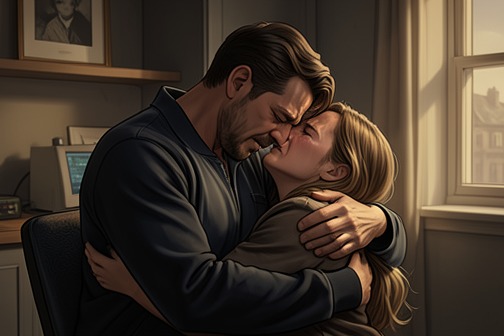
[Hayden and Kaelyn's love confession](entity:event-recall-event-hayden-and-kaelyn-s-lov-54980cdd4165) marks the point at which their relationship becomes openly reciprocal rather than merely protective or newly intimate. Immediately after Kaelyn's rescue, Hayden holds her while she cries and admits that he cannot imagine life without her; Kaelyn answers that she loves him too and asks to go home with him. The scene converts survival into belonging and gives their romance a concrete future in shared domestic life.
## Causes and Immediate Context
The confession follows a crisis in which Kaelyn has been endangered by [Will](entity:character-recall-character-will-17d4ceb7f768). Once the police and medics finish their work, Hayden and Kaelyn leave together after exchanging hugs with [Katherine](entity:character-recall-character-katherine-66e439ad0b50), [Stella](entity:character-recall-character-stella-1c92ed1acee3), and [Bella](entity:character-recall-character-bella-e7bb6f6c0c73). Their privacy is significant: only then can Hayden take Kaelyn into his arms and acknowledge the terror he felt while imagining that Will might kill her or inflict something worse. His confession therefore emerges from direct confrontation with loss, not from casual attraction. The rescue has clarified the emotional stakes of the bond between them.
Kaelyn's response completes the emotional movement of the scene. With her face against Hayden's shoulder, she cries and thanks him for coming; when Hayden says that he loves her, her surprise gives way to a stronger embrace and a reciprocal declaration. She then asks whether they can go home. The word makes the confession more than a romantic exchange: it identifies Hayden's home as the place where she wants safety, recovery, and continued closeness.
## The Confession as a Turning Point
Hayden's statement that he cannot imagine life without Kaelyn changes the value at stake from immediate safety to permanent attachment. His fear of what Will might do to her becomes a spoken recognition of how indispensable she has become. Kaelyn's answer prevents the moment from remaining a one-sided rescue fantasy. She does not merely accept protection; she names her own love and embraces Hayden as an equal participant in the relationship.
The scene's physical progression reinforces that change. Hayden first holds Kaelyn for a long moment, then tightens his arms and pulls back to look directly into her eyes. Kaelyn, crying harder, wraps her arms around his neck and whispers her answer. The movement from sheltering embrace to face-to-face acknowledgment makes the confession both bodily and verbal: care is present before it is named, but the relationship becomes fully legible only when both characters speak.
## Domestic Commitment and Mutual Protection
After the confession, Hayden asks Kaelyn to live with him, although he notes that she is technically already moved in. He then states that he wants her to be his, and Kaelyn replies that she wants to be his. This exchange extends the confession into an explicit domestic commitment. Their union is not left as an isolated response to danger; it is attached to a shared residence and a mutual understanding of belonging.
Hayden frames cohabitation partly as protection from stalkers and creeps, while Kaelyn accepts a reciprocal form of security. When Hayden raises the possibility of tracking their phones, Kaelyn agrees that he may see where she is because she has nothing to hide and says they should do the same for his phone so that she will not worry if something happens to him. The arrangement matters because protection is no longer defined as Hayden watching over a vulnerable Kaelyn. It becomes mutual reassurance, with both partners consenting to the same measure and sharing responsibility for one another's safety.
## Intimacy After the Crisis
The emotional confession is followed by a private scene in which Kaelyn asks Hayden to stay with her because she does not want to be alone. Hayden joins her in bed and wraps his arms around her, making her feel safer than she has felt in days. Her request shows the continuing psychological aftermath of the kidnapping: rescue has not instantly erased fear, and her need is first for presence rather than grand reassurance.
Their closeness then becomes sexual, but the sequence remains tied to emotional security. Kaelyn turns toward Hayden, kisses him, and seeks greater physical intimacy; the encounter ends with both climaxing and Hayden pulling her into his arms. In context, sex functions as an extension of the newly spoken bond, joining vulnerability, desire, and reassurance. The relationship moves from emergency reunion to chosen physical and domestic intimacy without separating the erotic from the need for safety.
## Narrative Significance and Outcome
The event completes the romance's movement from danger and uncertainty toward a freely acknowledged partnership. Will's violence creates the external pressure, but the confession itself is not coerced: Hayden speaks when the immediate medical and police response is over, and Kaelyn answers in her own words. Their declarations therefore act as performative commitments, changing what they are to one another in the narrative as soon as they are spoken.
The aftermath confirms the confession's practical consequences. Kaelyn remains with Hayden, their home becomes a shared refuge, and their phone agreement establishes reciprocal transparency rather than one-directional control. The event also closes the immediate emotional arc opened by Kaelyn's rescue: she is no longer only a victim needing protection, and Hayden is no longer only her rescuer. They become partners who openly claim one another, care for one another, and face the continuing problem of Will together.
Event 125
Mack enters witness protection

[Mack enters witness protection](entity:event-recall-event-mack-enters-witness-pro-4b66446690ab) after helping convict Gedge for murder, and the move marks a decisive exchange of one kind of freedom for another: she survives the criminal organization’s reach, but loses her name, home, family access, and control over her immediate future. Assigned to work for [Oliver Bishop](entity:character-recall-character-oliver-bishop-2f14846766d5) in [Florida](entity:location-recall-location-florida-1618e1042117), she is placed inside a concealed mansion where her experience with exotic animals may keep her useful and alive, even as the relocation deepens the trauma left by the crime she witnessed.
## Causes and Protective Conditions
US Marshal [Tom Meyer](entity:character-recall-character-tom-meyer-256fc4d1f577) gives [Mack](entity:character-recall-character-mack-132f1b9991de) an information packet in a fluorescent-lit office and explains that her new identity is necessary because Gedge, though convicted, still has associates outside prison. Mack corrects the temporary name attached to her file, insisting on “Mack” after being addressed as “Bertha,” a small act of self-definition in a process designed to replace her identity. The packet establishes the legal and practical terms of the arrangement: she will work for Oliver Bishop, remain in his home for three months, and later be transferred to a new life under another name.
The protection follows two years of separation from her family. Mack has been unable to see or speak with her parents and two younger brothers since the danger began, while repeatedly reliving the sight of her elderly employer being shot at point-blank range. Her testimony put Gedge away, but it also made her a continuing target. Meyer therefore permits only a brief goodbye before the no-contact rules resume, warning that even her family will eventually receive new identities. The arrangement protects the witness by making ordinary relationships dangerous and turning disappearance into a condition of survival.
## Relocation to Florida
Mack had hoped that Gedge’s conviction would allow her to return home, resume a normal life, and eventually open an animal rescue center. [Witness protection](entity:concept-recall-concept-witness-protection-4d009e0e7ad2) blocks that anticipated return. Her dream is not abandoned because she no longer cares about animals; instead, it is displaced by an assignment that uses her existing expertise. Oliver Bishop has specifically requested someone in witness protection and does not want a permanent worker, making his household both a hiding place and a temporary workplace.
The journey also creates a sharp geographical and emotional contrast. Mack grew up among the subtle greens and browns of a semi-arid desert, whereas Florida appears green, wet, humid, and oppressive to her. She expects to be forced into shorts despite her discomfort with her body and struggles to breathe in the heat even inside the air-conditioned marshal’s van. These details make relocation more than a change of address: the protected life begins in an environment where Mack feels physically conspicuous and culturally displaced.
Her destination is deliberately concealed. There is no visible yard or driveway, and thick trees and brush hide the residence until she steps from the vehicle. The building is not an ordinary house but a mansion, almost a palace, with a flat roof rising above the surrounding vegetation and mottled green walls intended to blend into the wilderness. Its apparent security and camouflage embody the contradiction of witness protection: the place is designed to keep Mack unseen, yet its scale makes clear that she has entered a controlled and unfamiliar world.
## The Value Shift of the Event
At the beginning of the relocation, Mack’s imagined future is narrowed. She has lost her old job, cannot contact the family she misses, and doubts that the animal-rescue center will ever become real. The promise of a new identity offers safety but not restoration. Meyer can assure her that another location, perhaps Utah, will be arranged, yet the prospect of moving again reinforces that her life is being administered by others rather than chosen by herself.
The event nevertheless produces a limited gain. Mack no longer has to waitress, and her specialized experience with exotic animals may lead toward work more meaningful than the employment she left behind. Her new placement also gives her a practical role rather than treating her solely as a passive protected witness. The shift is therefore from exposed witness to concealed caretaker: she is deprived of public identity and personal freedom, but given a route by which her competence can remain part of her future.
## Trauma, Secrecy, and the Wider Plot
Mack’s relocation belongs to a wider world in which criminal violence, supernatural secrecy, and institutional protection repeatedly collide. Her fear is grounded in a witnessed murder, while other investigations in the same narrative involve the death of Melissa, forensic traces of lethal abortion drugs, contradictory rumors about [David Fezioni](entity:character-recall-character-david-fezioni-4c5891b37056), and Oskar’s emphatic denial that he killed him. Against that background, Mack’s testimony is not merely administrative information; it is the surviving witness’s vulnerable position within a continuing criminal threat.
The event also establishes the conditions for Mack’s later connection with Oliver Bishop. Her enforced isolation places her in a mansion concealed within Florida’s vegetation, and her animal-handling background makes her suitable for a household associated with exotic creatures. The protection program thus functions as a threshold: Mack leaves behind the name and family life she wants to recover, enters an unfamiliar protected space, and begins a new relationship whose consequences extend beyond the three-month assignment.
## Consequences and Significance
Mack’s entrance into witness protection does not resolve the damage caused by Gedge. It suspends the danger while preserving its effects in altered form: nightmares remain, family contact is restricted, and the prospect of opening an animal rescue center recedes. The future identity she will eventually receive is presented as something she must learn to inhabit rather than something she has chosen, making the event a study in survival through institutional erasure.
Yet Mack retains a stubborn continuity beneath the imposed changes. She corrects the marshal’s use of the wrong name, carries the emotional weight of her family ties, and continues to imagine a life connected to animals. Her relocation therefore carries both loss and latent possibility. It saves her from immediate retaliation, but it also places her at the entrance to a new chapter in which protection, secrecy, work, and personal identity will become inseparable.
Event 126
Mack accepts Oliver's secret
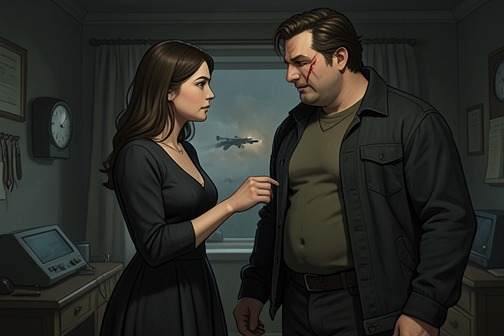
[Mack accepts Oliver's secret](entity:event-recall-event-mack-accepts-oliver-s-s-cd3878addcb6) at the moment when his hidden nature becomes impossible to separate from the man she already knows. After gunshots have frightened her, Oliver enters hesitantly and reminds her that she was supposed to lock the door. [Mack](entity:character-recall-character-mack-132f1b9991de), still alarmed, rises and examines him, asking whether he has been shot. The immediate physical check turns the scene away from suspicion and toward care: the danger surrounding Oliver matters, but so does his survival and his willingness to return to her.
## The Secret Revealed
Oliver explains that he is a gorilla shifter whose transformations are usually under control but can occur involuntarily when he feels threatened. The danger is not limited to deliberate attacks. Because he sometimes interprets harmless social situations as threatening, his altered state can place him in attack mode, where even a vaguely threatening stimulus may provoke him to kill. The disclosure therefore carries both an identity revelation and a genuine safety risk. Oliver is not merely concealing an unusual ancestry; he is concealing a condition that has shaped his conduct and could endanger people around him.
His history makes the secret a lifelong burden rather than a recent complication. The transformations began at puberty, after a childhood in which he had been an ordinary, if socially awkward, boy. Once his strength increased, he accidentally hurt people because he did not yet understand his own power. He hid the changes from his parents, and his uncertainty about his birth parents became tied to his search for an explanation. He had hoped that discovering where he came from might reveal others like him, but he had found no clue about his origins or nature. The secret thus joins bodily difference, family absence, shame, and the fear of losing control.
## Mack's Choice to Stay
Oliver expects rejection. He asks Mack whether she will run away from him, and the question exposes the emotional cost of his secrecy more directly than the revelation of his shifting does. Mack recognizes that fear would be understandable; part of her instinct tells her that she ought to leave because he is a shapeshifting gorilla. Yet knowledge also rearranges her earlier impressions. His constant vegetarian grazing, his outburst on the anniversary of his parents' death, and even his gorilla-like build suddenly become intelligible rather than inexplicable.
Mack answers that she will not leave, and her response is more than reassurance in the moment. Oliver calls himself a freak, but Mack separates his identity from his condition. She tells him that he is the most wonderful man she has known and that the gorilla-shifting does not change who he is. The significance of her acceptance lies in its firmness: she briefly wonders whether she can believe her own words, then realizes that she can. Her feelings have not changed after the secret is disclosed. The event's decisive value shift is from threatened intimacy to chosen trust.
## Care, Touch, and Mutual Confession
The acceptance is enacted through physical contact as much as through speech. Mack takes Oliver's hand and squeezes it while he struggles to explain when the transformations began, giving him contact at the exact point where his account turns toward childhood isolation and self-protection. Her earlier examination of his shoulders and her later refusal to move away make care concrete rather than abstract. She does not deny the danger of his condition, but neither does she treat danger as the whole truth about him.
Oliver tests the permanence of her decision when he notices her smile and asks whether it means she will stay. Mack replies that she is staying and will remain as long as he wants her there. This promise answers the fear beneath his question: not simply that she might flee from the gorilla, but that knowledge of the gorilla might invalidate the relationship they had already formed. Her declaration restores Oliver's place as a wanted partner rather than a tolerated threat.
The scene then turns confession into reciprocal intimacy. Oliver wraps his hands around Mack's head and leans toward her, hesitating before contact. Mack closes her eyes, raises her face, and pulls him closer. Their kiss follows her active confirmation of consent and his cautious movement toward her. The physical intensity of the moment is rendered as sparks beneath Mack's skin, making the kiss the bodily consequence of the trust established through conversation. Acceptance is not the end of attraction; it releases attraction from the fear of concealment.
## Consequences and Narrative Significance
Mack accepting Oliver's secret is the relationship's central threshold. Oliver's gorilla identity, involuntary attack response, uncertain origins, and history of hiding are brought into the open, while Mack's response prevents disclosure from becoming the expected rupture. The event therefore combines the discovery and love plots: a revelation that could have produced flight instead produces a more honest bond.
The scene also reframes earlier behavior. Details that once appeared eccentric or emotionally disproportionate become signs of Oliver's hidden condition and difficult self-management. At the same time, the story refuses to reduce him to his nonhuman form. Mack's acceptance does not erase the risks of his transformations; it insists that those risks coexist with his character, history, and capacity for intimacy. Her promise to stay gives the secret a social consequence: Oliver is no longer carrying it alone.
The immediate ending is a kiss, but the larger consequence is a new relational agreement founded on disclosure. Oliver has shown Mack the part of himself he fears will make him unlovable, and Mack has answered by remaining present, naming his humanity as unchanged, and choosing closeness. Their first mutual confession thus converts hidden identity into shared knowledge and turns vulnerability into the beginning of partnership.
Event 127
Gedge's escape from prison
[Gedge's escape from prison](entity:event-recall-event-gedge-s-escape-from-pri-a0e644897eef) is the decisive reversal that turns an already dangerous attack on [Oliver Bishop](entity:character-recall-character-oliver-bishop-2f14846766d5)'s mansion into an expanding crisis. While [Mack](entity:character-recall-character-mack-132f1b9991de) is trying to summon help after fighting off some of Gedge's men, the news that Gedge himself has escaped removes the apparent security offered by his imprisonment and makes further violence immediately possible.
## Causes and Background
Mack and Oliver are already under direct threat when Gedge's men attack them. They manage to fight the attackers off, but Mack believes that more men may be coming and contacts [Tom Meyer](entity:character-recall-character-tom-meyer-256fc4d1f577) for assistance. Her first call is to the helicopter; when it reaches voicemail, she explains the situation and pleads for an immediate response. She then calls Meyer, treating outside rescue as necessary rather than assuming that the mansion can withstand another assault.
The escape matters because the original attack was not an isolated intrusion. The attackers are identified as Gedge's men, linking the violence at the mansion to an organized enemy whose imprisoned leader can still direct or intensify the danger. Oliver's response reflects the emergency's severity: he insists that Mack hide in the secret place in the atrium while he deals with the intruders, even though she argues that he could protect her by remaining with her and finding somewhere to conceal them both.
## The Revelation
Meyer's call begins with confusion over Mack's identity, as he is surprised to hear from her under the name he expected to use for someone else. Mack interrupts that uncertainty to report the attack and demand that he come for them. When Meyer falls silent, she asks whether he has heard her. His answer carries the event's crucial information: he had been about to phone her because he had just received news of his own.
The news is not merely that Gedge remains dangerous. Gedge has escaped from prison. That fact changes the value of the scene from threatened safety to active exposure: Mack and Oliver can no longer wait for authorities while imagining that the principal source of the threat is contained. The prison, which had represented legal control over Gedge, has ceased to function as a barrier, and the attackers outside the mansion are now understood as part of a crisis whose central figure is free.
## Immediate Consequences
Mack's attempt to obtain help becomes more urgent after the revelation. She has already called the helicopter and Meyer, while Oliver has ordered her toward concealment and emergency communication. The escape therefore compounds two dangers at once: the mansion may face additional attackers, and the person behind the organization is no longer confined elsewhere. Her situation is explicitly worse than she had thought, not because the first assault was misjudged, but because the supposed limit on Gedge's power has vanished.
The event also sharpens the contrast between protection and separation. Oliver believes he can protect Mack by sending her to the atrium hiding place and confronting the intruders himself; Mack believes protection requires staying together and escaping to a place the attackers cannot find. Gedge's escape makes both positions more desperate. A hiding place may no longer be enough, yet remaining exposed beside Oliver may leave Mack vulnerable to the next wave of the assault.
## Narrative Significance
As a plot event, Gedge's escape is a classic reversal from temporary containment to renewed pursuit. The sequence begins with Mack reporting that the immediate attackers have been driven off, which suggests a narrow victory. Meyer's disclosure overturns that interpretation: the defeated men were only the visible edge of the danger, and their imprisoned leader has returned to the field. The escape converts aftermath into preparation for a larger confrontation.
The event also belongs to the book's broader concern with institutions that promise safety while failing to secure it. Prison custody appears to offer a formal answer to Gedge's threat, just as other authorities elsewhere claim that detained people are not prisoners while restricting their movement. Here, the failure is more direct: legal confinement does not prevent Gedge from re-entering the conflict, leaving Mack and Oliver to rely on improvised hiding places, emergency calls, and personal courage. The escape's significance lies not in a described breakout method, which the available account does not provide, but in the sudden collapse of the assumption that imprisonment has made the enemy inaccessible.
Event 128
Mack and Oliver's reunion
[Mack and Oliver's reunion](entity:event-recall-event-mack-and-oliver-s-reuni-31d24d5a2071) is the emotional resolution of the mansion battle's apparent loss. After Oliver falls from the building and cannot be found, [Mack](entity:character-recall-character-mack-132f1b9991de) refuses to accept that he is dead. Her search eventually brings her back to the damaged mansion, where finding him alive forces both characters to confront the supernatural identity that Oliver had tried to keep hidden. The reunion therefore changes more than their physical separation: it turns a survival mystery into a test of whether love can withstand fear, secrecy, and the collapse of Oliver's belief that he has no place among human beings.
## Causes and Background
Mack's hope begins in the hospital, where she recovers from a bullet wound while drifting through drug-fueled dreams and an unnamed panic. Her family visits as she heals, and her mother, father, and brothers remain present through the recovery. Once Mack's mind clears, she learns that her emergency message reached the helicopter contacts after she left it, prompting the marshals and the FBI to mobilize. A SWAT team arrived just after Oliver toppled from the building. Mack had lost a great deal of blood, but the authorities reached her in time.
The immediate danger appears to recede when a marshal tells Mack that [Gedge's organization](entity:organization-recall-organization-gedge-s-organiza-b9c5e8d8300e) is too divided to pursue her or her family. Gedge's men are fighting among themselves for control of his empire, and Gedge has no family likely to seek revenge. Yet the official reassurance does not resolve Mack's most important question. Gedge's body has been recovered on the forest floor beside the mansion, while Oliver's has not. When Mack asks about Oliver and hears that his body remains missing, she treats the absence as evidence of survival rather than as an uncertain possibility. Oliver's ability to become a gorilla gives her a concrete explanation for how he might have escaped: he could be injured in the forest or swamps, unable to shift back into human form, or hiding in the concealed shelter.
Mack's determination is sharpened by guilt. She believes that trusting [Tom Meyer](entity:character-recall-character-tom-meyer-256fc4d1f577) instead of waiting for Oliver caused their separation, while Oliver had defended her until the last possible moment. The thought that she had failed him makes surrender impossible. Even after officials caution her not to raise her hopes, Mack decides that she will find him wherever he is.
## The Search and Discovery
Several weeks later, Mack returns to the mansion in a rental car, frightened that her promise to find Oliver may end in disappointment. The site bears the physical record of the battle: the SWAT team has dismantled Oliver's traps, shattered glass covers the atrium, bullets have torn chunks from the wood, and plants have been ripped up and trampled. Mack enters through an atrium window, moving cautiously despite the authorities' removal of the defenses.
She checks the hidden trapdoor first. The frozen food has thawed, and some of it has gone moldy, which seems to confirm that Oliver has not been sheltering there. Mack had told the marshals about the hideout but had privately hoped that the information would not reach the search-and-rescue team. The empty refuge makes that hope collapse. She goes toward her room to collect the books she left behind and considers taking a cold shower because of the heat and the pain in her temples, but the ordinary errand becomes another search for signs of life.
The bedroom supplies the reversal. Mack remembers making the bed carefully on the morning of the attack; now the blankets are twisted into a crumpled mess. Leaves cover the floor. Some are brown and dried, while others are fresh, as if recently torn from a plant. The distinction turns debris into a message. Mack calls for Oliver, searches the empty bathroom, and notices that the bathroom window's screen is missing. Only the small shadow on the sill reveals that something is outside against the wall.
Oliver is standing on the narrow ledge, clinging to the wall with enormous, nimble hands. The sight confirms that he survived the gunfire and the fall, but it also presents him in the form he most fears Mack will reject. He slips back into the room without even attempting a smile. Mack throws her arms around him and sobs that she thought he was dead and would never see him again. Her relief is immediate and bodily; Oliver's return changes the scene from mourning to contact before either of them can make the survival intelligible.
## Identity, Fear, and Conflict
Oliver cannot accept the reunion as a simple return. He pushes Mack away gently but firmly and looks at the floor while explaining that he should have died. A normal person could not survive being shot multiple times and falling from a building without even a scar. His survival is proof, in his mind, that he is not human and does not belong in Mack's world. The battle has exposed not only his physical nature but also the violence he is capable of: he remembers what he did to Gedge's men and concludes that he is too dangerous to remain near people.
His language converts supernatural difference into moral exclusion. Oliver insists that he is an animal rather than a person, treating his gorilla nature as evidence against his own right to intimacy. Mack rejects that division. She does not deny what he is, and she does not require him to become human before he can be loved. Her response treats personhood as something demonstrated through care, loyalty, and the capacity to choose—not as a category invalidated by extraordinary strength or transformation.
Oliver then introduces another barrier by saying that he cannot have children. The statement suggests that he expects Mack to calculate the cost of staying with him and leave once the future appears limited. Mack answers that she does not care because she loves him. The declaration breaks through the defensive logic that has kept him distant: his body, his danger, and his inability to have children are no longer arguments that can automatically decide the relationship for them.
## Reconciliation and Outcome
The reunion becomes a mutual recognition rather than merely Mack's rescue of Oliver from isolation. Oliver admits that he had intended to tell Mack he was alive and had not meant to make her suffer. He had feared that she would run away from him, but her return to the mansion proves the opposite. Mack did not retreat from the danger or wait for someone else to confirm his survival; she ran toward him.
Mack explains that Oliver is the most unique and wonderful man she has ever met, and that he allows her to be herself. Her attachment is presented as reciprocal freedom: she is happy with him, and she believes that he is happy with her. Oliver confirms that belief with an intensity he has never experienced before, calling himself deliriously happy. The physical evidence of his strong, steady heartbeat, followed by his embrace and kiss, completes the movement from suspected death to chosen intimacy.
The ending does not erase the violence at the mansion or Oliver's difference. Instead, it places those facts inside a relationship that can acknowledge them without allowing them to dictate separation. Mack's search restores Oliver to the shared world, while Oliver's confession gives the survival event its deeper meaning: he is not simply an indestructible creature who escaped a battle, but a frightened partner asking whether he can be loved as he is. Mack's answer makes the reunion a promise of continued connection rather than a temporary relief after danger.
## Narrative Significance
The event reverses the value of life and death established by the mansion battle. Oliver's fall initially creates the possibility of death, and the absence of his body keeps that possibility suspended. The damaged house, the empty trapdoor, and the stale food prolong Mack's fear before the fresh leaves and the shadow at the window convert absence into presence. This delayed discovery gives the reunion its force: hope is repeatedly weakened before a precise physical sign confirms it.
The scene also exposes the cost of hidden supernatural identity. Oliver's extraordinary healing does not comfort him; it convinces him that he is excluded from ordinary human life. Mack's acceptance answers that self-condemnation without pretending that the danger was imaginary. In that sense, the reunion joins romance and revelation. Survival becomes the condition for confession, confession becomes the condition for acceptance, and acceptance allows the pair to move from enforced separation toward a relationship founded on Oliver's revealed nature and Mack's deliberate choice to remain.
Event 129
Claire discovers the werewolves

[Claire discovers the werewolves](entity:event-recall-event-claire-discovers-the-we-99156981a5e3) during a full-moon encounter at Roland Davis’s mansion, where an apparent crime-scene follow-up becomes a violent revelation of the supernatural world. The event is decisive because it destroys Claire’s assumption that the people around Roland are ordinary humans: the attackers are his employees, her rescuer is Roland himself, and the pack’s secret identity is exposed to her through bodily transformation rather than confession.
## Causes and Setting
Claire goes to Roland’s mansion because she does not want to investigate alone and hopes that [Grace](entity:character-recall-character-grace-f21f0fdf609d) can obtain information from [Adam](entity:character-recall-character-adam-7e6d3c5ddcc8) while she speaks with Roland. She has already been examining the crime connected with the mansion, and Roland has told the police that nobody is living there until the matter is resolved. That arrangement gives Claire both access and a reason to return: she can use her keys to inspect the house and the crime scene without expecting to disturb anyone.
The journey takes place under a heavy full moon. Claire drives with the windows down, finding that the cool air eases her cramps, although her urgency makes her arrive half an hour earlier than planned. The ordinary details of the drive and the deserted mansion establish a familiar investigative situation before the atmosphere changes. A howl cuts through the dark air before she reaches the front door, and further howls answer it until the surrounding forest seems filled with a coordinated chorus.
## The Attack at Roland’s Mansion
The first visible threat emerges from the forest edge. Claire initially wonders whether the huge upright figure is a bear, then notices that its shape is wrong for a bear and considers whether Roland might be hunting at night. The uncertainty lasts only briefly. The creature drops to all fours and charges across the yard, forcing Claire to retreat to her car in panic.
The attacking creature is humanoid but unmistakably wolfish: it has a barrel-like chest, thick banded arms, thighs like tree trunks, yellow eyes, and teeth bared in a snarl. It leaps onto the hood, and its growls make the car vibrate. When a clawed fist smashes the windshield, Claire struggles to start the engine while more creatures gather around the vehicle. The windshield cracks, the mirrors are torn away, and the metal is ripped as the attackers surround her.
Claire manages to press the accelerator, but she cannot escape. The creatures assemble on one side of the car and flip it with ease, leaving it upside down and showering her with glass. Trapped by the seatbelt, surrounded by growls and yellow eyes, she faces what appears to be an imminent death. The car, previously a means of escape, becomes an overturned enclosure that exposes her physical helplessness and the attackers’ overwhelming strength.
## The Pack’s Intervention and Transformation
The attack changes when a black shape crashes into the creature preparing to reach Claire. Her rescuer tears into it with such ferocity that dark liquid splashes across the scene, and the wounded attacker finally collapses. A second charge drives the remaining creatures back. Instead of continuing their assault, they gather in the yard on their hands and knees with their heads bowed before the dominant figure.
Claire can now name what she is seeing: werewolves. The word is impossible within her previous understanding of the world, yet the creatures’ behavior makes the conclusion unavoidable. The black werewolf throws the defeated attacker into the others, raises his head, and howls. The remaining members of the group flinch and retreat, establishing a clear hierarchy before any human explanation is offered.
The revelation becomes undeniable at sunrise. As daylight appears, the werewolves moan and shield their faces. Their bodies twist while claws withdraw and fur falls away in clumps, leaving naked, shivering men on the ground. The transformation reverses the horror’s direction: the monsters are not replaced by humans but revealed as human beings who have been hidden inside monstrous forms. The physical process also confirms that the full moon has governed the timing of the encounter.
## Identity of the Pack
The rescuer is the last to change. Unlike the others, he stands still while the fur falls from his body, revealing strong legs, a muscular back, and tousled blond hair. Claire recognizes the men one by one. They are not unknown animals from the forest; they are all employees of Roland Davis. Adam is among them, on his knees as his face returns to human form, and he looks at Claire with terror.
The recognition makes the discovery personal and institutional at once. Claire has not stumbled upon an isolated monster but upon a concealed group embedded in Roland’s household and workplace. The employees’ obedience during the night, their submission to the black rescuer, and their exposure as familiar men reveal a structured pack operating within an ordinary human environment.
The final disclosure comes through a command. A strong, clear voice orders the others to get Claire out of there. Claire recognizes the voice immediately. She already knows Roland, and the voice confirms that the leader who protected her is not merely associated with the pack. When the rescuer turns toward her, Roland’s amber eyes meet hers, completing the revelation that Roland Davis is a werewolf and the leader of these creatures.
## Consequences and Narrative Significance
Claire’s value shift is absolute. She arrives intending to revisit a crime scene and perhaps gather evidence through Grace and Adam; she leaves the encounter facing a hidden supernatural identity, a violent pack, and Roland’s direct involvement. Her danger moves from abstract investigation to immediate personal knowledge, because the people she has been questioning can transform into predators and the man at the center of the investigation commands them.
The scene builds fear through delayed recognition. Howls create terror before the creatures appear, the upright figure sustains uncertainty, the attack supplies visible horror, and the transformation produces the final shock of recognition. The narrative therefore withholds the exact identity of the threat while progressively narrowing the possibilities: animal, humanoid monster, werewolf, familiar employee, and finally Roland. Claire’s bodily reactions—her racing heart, scream, shaking hands, nausea, and immobilization upside down in the car—make the discovery an experience of physical intensity before it becomes an articulated conclusion.
The overturned car and the changing bodies also mark a collapse of the boundary between ordinary objects, human beings, and animals. Claire’s car cannot protect her, while the apparently monstrous attackers turn out to be members of Roland’s social world. The event does not simply add werewolves to the setting; it forces Claire to reinterpret the mansion, the employees, the crime investigation, and Roland’s authority through the existence of a concealed werewolf pack. The revelation ends with Roland’s recognized voice and amber eyes, leaving Claire confronted not with a rumor but with the leader himself.
Event 130
Claire’s Attack by the Pack
[Claire’s Attack by the Pack](entity:event-recall-event-claire-s-attack-by-the-c0ee4ed3a48c) is a full-moon assault that nearly kills [Claire Doyle](entity:character-recall-character-claire-doyle-40b3d1fa9772) and forces Roland Davis to reveal the supernatural identity he had kept from her. The attack is also the immediate consequence of Roland’s earlier refusal to answer [Brian](entity:character-recall-character-brian-571585bc13fb)’s challenge: by turning away from the pack’s internal power struggle, Roland leaves the group without a decisive Alpha display, and the wolves later pursue Claire without recognizing the protection owed to the Alpha’s pregnant mate.
## Causes and Background
Roland understands the assault as a failure of leadership rather than an unavoidable accident. Brian had challenged him in the forest, but Roland declined the fight because he did not want the confrontation to become something both men would regret. That restraint becomes a fatal miscalculation. Roland later reasons that, had he accepted the challenge and put Brian back in his place immediately, the pack would not have gone after Claire. The wolves would have smelled Roland’s pup inside her and recognized her as the Alpha’s mate, causing them to retreat rather than attack.
The full moon complicates responsibility. Roland knows that the wolves cannot retain ordinary judgment once their animal selves emerge, and he recognizes that they cannot be held fully accountable for what they do under the moon’s influence. Yet the loss of conscious control does not erase the pack hierarchy that should have protected Claire. The attack therefore exposes a tension between instinct and governance: the pack’s members are driven by transformation, while Roland’s authority depends on anticipating that transformation and containing its consequences.
## The Attack and Rescue
The wolves scent Claire and run after her, with Brian at their head. Their pursuit is presented not as an isolated threat but as the physical eruption of the challenge Roland had refused to settle. Claire becomes the vulnerable point through which the pack’s disorder reaches Roland’s private life. Her pregnancy makes the stakes greater than her individual survival, because the wolves are also endangering the child carried by the Alpha’s mate.
Roland manages to pull Claire from the car and carry her into safety. He shuts the door behind them and takes her to the couch, still reading her body for signs of injury. He can smell no wounds, but her silence and shock make clear that survival has not restored her sense of security. Kneeling in front of her, Roland asks whether she is hurt, treating immediate care as the first necessity after the violence.
[Adam](entity:character-recall-character-adam-7e6d3c5ddcc8) is left to deal with the pack while Roland remains with Claire. Roland is tempted to beat the wolves senseless, but he knows that rage cannot undo the conditions that produced the attack. The pack’s behavior is both culpable in its effects and altered by the full moon’s compulsion. The rescue thus ends the immediate physical danger without resolving the deeper crisis of authority.
## Revelation of Roland’s Identity
Claire’s fear is followed by a blunt recognition. She tells Roland that he is a werewolf, and he confirms it. Her repetition of the word marks the collapse of the concealment between them: the danger she has just experienced is no longer an inexplicable assault but evidence of Roland’s place within a hidden supernatural society.
The disclosure changes the meaning of the entire encounter. Roland is simultaneously the man who carries Claire away from danger and the Alpha whose pack has endangered her. He is a protector implicated in the structure from which protection must come. Claire’s discovery therefore does not function as simple exposition; it transforms intimacy into knowledge and makes the relationship answerable to the werewolf hierarchy, the full-moon cycle, and the unborn child.
## Consequences and Aftermath
The attack forces Roland to confront the cost of avoiding a challenge. His earlier attempt to prevent violence has produced a more dangerous outcome: Brian’s position at the head of the pursuing wolves, Claire’s near-death experience, and the revelation of Roland’s identity under extreme circumstances. The event confirms that leadership in the pack cannot be sustained by withdrawal alone. Roland must protect both his authority and the people whose safety depends on it.
For Claire, the assault creates a threshold between ordinary human understanding and the supernatural reality surrounding her. She has been pursued by wolves, carried to safety by the man who commands them, and told that the threat belongs to Roland’s own nature and community. Her pregnancy intensifies the consequences, because the child is treated within the pack as a sign of rank and continuity even while Claire herself has been exposed to lethal danger.
The event also establishes a recurring pattern in Roland’s story: private love cannot remain separate from pack politics. Claire’s body carries the future of Roland’s line, but that same fact should have protected her and instead becomes part of the retrospective explanation for why the attack should never have happened. The full-moon assault consequently turns the pack’s reproductive hierarchy, its Alpha succession logic, and its supernatural secrecy into immediate personal stakes.
## Narrative Significance
Claire’s Attack by the Pack is a value reversal from presumed safety to bodily peril, followed by a reversal from secrecy to revelation. Roland’s refusal to fight Brian initially appears to be restraint, but the attack recasts it as a leadership error. The wolves’ loss of reason under the full moon explains their conduct without making the consequences less devastating, while Roland’s rescue demonstrates that care and authority are inseparable in his position.
The event’s strongest dramatic force lies in its double image of Roland. He is the man who carries a silent, shocked Claire to the couch and asks whether she is hurt; he is also the werewolf Alpha whose failure to settle a challenge left her exposed. Claire’s repeated recognition of him as a werewolf fixes that contradiction in language. From this point, their relationship must be negotiated not only through affection and pregnancy but also through the pack’s violence, the discipline of the full moon, and the obligations of supernatural leadership.
Event 131
Roland Reveals Claire’s Pregnancy
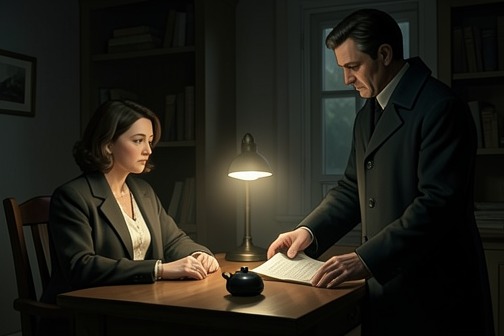
[Roland Reveals Claire’s Pregnancy](entity:event-recall-event-roland-reveals-claire-s-c8b196161a8e) is the moment when Roland Davis interrupts [Claire Doyle](entity:character-recall-character-claire-doyle-40b3d1fa9772)’s murder investigation to disclose that she is pregnant with his child. The revelation does more than add a personal complication to the case: it exposes the biological and social consequences of Roland’s werewolf identity, confirms that their brief encounter has produced a supernatural pregnancy, and forces Claire to confront a future she has not chosen or understood.
## Causes and Background
Roland raises the subject while Claire is questioning him about [Melissa Clarkson](entity:character-recall-character-melissa-clarkson-216b39db925d)’s death. He knows that Claire’s work requires her to examine whether Melissa was targeted because of her connection to the werewolf community, and he initially tries to redirect the conversation toward what he considers more immediately important for Claire personally. His urgency comes from the fear that he might lose Claire before telling her that she is carrying his pup. The murder investigation therefore becomes the setting for a second, more intimate disclosure: evidence about violence against one woman is interrupted by news about the future of another.
The pregnancy is inseparable from the werewolf world Roland has concealed from Claire. His heightened senses have already identified the pregnancy through scent during the full moon, but Claire does not possess the knowledge needed to interpret that perception. The scene consequently places two incompatible systems of understanding side by side. Claire approaches events through investigation and evidence, while Roland recognizes bodily and supernatural signs that ordinary human reasoning cannot yet explain.
## The Revelation
Roland states plainly that Claire is pregnant and then immediately clarifies that the child is his. The bluntness of the disclosure produces a physical shock: the color drains from Claire’s face, her eyes widen, and her heartbeat accelerates. Her reaction makes the revelation an embodied event rather than a mere exchange of information. Before Claire can decide what the news means, her body registers its danger and scale.
Claire challenges Roland’s certainty, asking how he could know. Roland explains that he could smell the pregnancy when the moon was up. The explanation is both intimate and alienating. It establishes a werewolf sensory capacity while reminding Claire that Roland has access to facts about her body that she cannot independently verify. The same supernatural perception that allows him to identify the pregnancy also intensifies the imbalance between them.
Roland is still naked and crouched before Claire when he tells her, but he pushes aside his embarrassment because his priority is to comfort her. He wants to tell her that she is his mate, yet he recognizes that doing so could frighten her further. This hesitation reveals that the disclosure is not a complete romantic confession. Roland gives Claire the pregnancy and the child’s paternity first, while withholding the larger claim implied by their mate bond.
## The Child’s Inheritance
Claire asks whether the baby will be a werewolf. Roland confirms that it will. He explains that he was born a werewolf and that the condition appears to be dominant: one werewolf parent is enough for a child to inherit it. He also mentions that biting can inject or mutate the relevant genetic material, although the exact mechanism remains under investigation. His account combines inherited biology, supernatural transmission, and incomplete scientific knowledge rather than presenting lycanthropy as a simple curse.
Roland admits that reliable information about werewolf pregnancies is scarce. He identifies himself and [Adam](entity:character-recall-character-adam-7e6d3c5ddcc8) Buchan as the only individuals born since his father within the relevant family line, leaving very little established research. This lack of knowledge increases the stakes for Claire. She is not merely receiving news of a pregnancy; she is entering a medical and social situation in which the people around her possess limited information about the development of a werewolf child.
The revelation also connects Claire’s pregnancy to the broader pattern of cross-species reproduction in the book. Other storylines treat unusual pregnancies as objects of scientific, political, or exploitative interest: [Lisa](entity:character-recall-character-lisa-f8f8fe21b70f)’s pregnancy is initially mistaken for a parasite before advanced imaging confirms an embryo, while [Gemma](entity:character-recall-character-gemma-b1c21c6b476b)’s child is described by the Science Board as a possible key to curing the [Stlozyn disease](entity:state-recall-state-stlozyn-disease-66cf1a5638e9). Against those plots, Roland’s disclosure is more private, but it raises the same question of who has authority over an extraordinary pregnancy and who bears its risks.
## Relationships and Conflict
The event changes the relationship between Roland and Claire by turning an unresolved intimate encounter into a permanent biological connection. Roland is no longer only a suspect, informant, or supernatural source in Claire’s investigation. He becomes the father of her unborn child, while Claire becomes connected to the werewolf lineage through pregnancy. His phrase that the child is his is factually clarifying but emotionally inadequate; it cannot resolve Claire’s fear or explain what Roland expects from her.
The scene is structured around a pursuit-and-withdrawal tension. Roland pursues disclosure because silence might cost him Claire, yet he withdraws the declaration that she is his mate because he anticipates that the claim could overwhelm her. Claire, meanwhile, seeks information through direct questions, moving from disbelief about the pregnancy to concern about the child’s nature. Her questions show that she is not passively accepting Roland’s interpretation; she tests his claims and demands an account of how he knows and what the child will become.
This conflict is also ethical. Roland is trying to protect Claire and the unborn child, but the knowledge arrives through his private sensory access to her body rather than through a shared medical process. The narrative presents his concern as genuine while preserving Claire’s vulnerability: she must absorb the consequences of a supernatural pregnancy before she has been given a complete account of the supernatural society into which it places her.
## Consequences and Narrative Significance
Roland’s revelation redirects the emotional center of the surrounding plot. Claire’s investigation into Melissa’s murder continues to matter, but it can no longer be separated from the possibility that Claire herself may become vulnerable because of her connection to Roland and the werewolf pack. The pregnancy creates a new stake in the investigation: the outcome may affect not only justice for Melissa but also Claire’s safety, Roland’s future, and the status of their unborn child.
The disclosure is a threshold between concealment and acknowledgment. Roland has already exposed enough of his nature for Claire to understand that he is not an ordinary man, yet the pregnancy forces him to articulate the hereditary consequences of that identity. His explanation that the baby will be a werewolf makes the child a living continuation of the pack’s bloodline and turns reproduction into a matter of succession, secrecy, and responsibility.
The scene’s bodily imagery links it to other revelations throughout the book. Sara’s [bionic eyes](entity:object-recall-object-bbb6fc48b2ef) can be removed and used as stun grenades, making the human body a site of concealed technology; Lisa’s medical scans reveal an embryo that initially appears monstrous and nonhuman; and [Shay](entity:character-recall-character-shay-5a5fab224960) explains that [Stlozyn](entity:creature-recall-creature-stlozyn-25c0edab8dc8) bodies were engineered from human ancestors through emphasized genes and added DNA. Claire’s pregnancy likewise unsettles the boundary between human and nonhuman. Yet unlike a laboratory specimen or a technological device, the child is revealed within a relationship, and the immediate demand is not extraction or classification but a response to Claire’s fear.
Roland’s disclosure therefore functions as both plot reversal and moral test. He possesses knowledge that could be used to claim Claire, frighten her, or reduce her to the bearer of a werewolf heir. Instead, he hesitates over the language of mating and tries to comfort her, even though his explanation remains incomplete. The event ends without resolving Claire’s feelings or the future of the pregnancy. Its decisive consequence is that neither character can return to the earlier uncertainty: Claire now knows that she is pregnant, that Roland is the father, and that the child will inherit the werewolf condition.
Event 132
Claire Chooses to Continue the Pregnancy
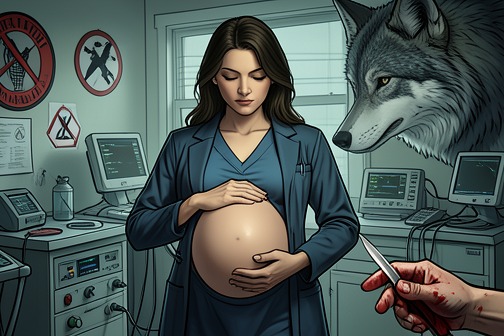
[Claire Chooses to Continue the Pregnancy](entity:event-recall-event-claire-chooses-to-conti-768b310ddbc1) is the decisive moment in which Claire accepts the risks of carrying Roland’s child. The pregnancy is medically dangerous, entangled with the werewolf pack’s need for an Alpha heir, and potentially connected to [Melissa Clarkson](entity:character-recall-character-melissa-clarkson-216b39db925d)’s murder, but Claire refuses to let those pressures erase her agency. Her decision binds personal love, bodily autonomy, supernatural succession, and political danger into one choice.
## Medical Risk and Political Pressure
[Pregnancy](entity:state-recall-state-pregnancy-cdafbf158725) is presented to Claire as an immediate and serious decision rather than a simple consequence of her relationship with Roland. The pregnancy is not normal, and the full moon may kill the fetus. Claire therefore recognizes that continuing it could endanger both her and the child, while termination would need to happen quickly if that were her decision. Her concern is intensified by the history of Roland’s previous partners: he had repeatedly tried to have a child, and those pregnancies had ended in miscarriage.
The pregnancy also carries a political burden. Roland needs an Alpha heir, and Claire understands that the child could determine the future of his pack. She worries that, if she refuses the pregnancy, Roland may seek another woman who can provide that heir. This possibility awakens an unexpected jealousy in her, revealing that her attachment to Roland is stronger than she had allowed herself to acknowledge. At the same time, the prospect of the child being treated primarily as a successor exposes the pressure placed on Claire’s body by pack continuity.
## Claire’s Deliberation and Choice
Claire approaches the decision with deliberate practicality. She considers her stable employment, reliable salary, and ability to care for a child, as well as the fact that the father is a billionaire. These material circumstances do not remove the medical danger, but they convince her that motherhood is possible rather than impossible. She also asks Roland what he would do if she decided not to risk the pregnancy, forcing him to state whether his desire is for an heir in general or for a child with Claire specifically.
Roland tells her that he would understand a decision to terminate. He offers to take full custody if she keeps the child but does not want to participate in its life, and he says they could work out custody if she wants to raise the baby herself. His willingness to accept either arrangement gives Claire room to choose, even though his evident desire for both her and the baby makes the conversation emotionally difficult.
Claire eventually resolves the conflict internally. She knows she had wanted a stable relationship before having a child and had not expected pregnancy so soon. Nevertheless, despite being frightened, she decides to carry the baby to term. Her decision is not presented as ignorance of the danger: she explicitly acknowledges the possibility that the full moon could kill the pregnancy. The significance of the choice lies in accepting the risk with that knowledge, not in pretending the risk does not exist.
## Disclosure to Roland and the Murder Connection
Claire first tells Roland that she will keep the baby when he comes to the guesthouse. She admits that she had lied about her intentions and then states that she still plans to continue the pregnancy. Roland’s immediate shock and relief show how much the decision matters to him; he has feared losing not only the child but also Claire’s willingness to remain connected to him.
The conversation immediately returns the pregnancy to the danger surrounding Melissa Clarkson’s death. Claire believes Melissa may have been murdered because she was trying to become pregnant. Her theory is that a member of Roland’s pack wanted Roland’s position and either discovered that Melissa was being drugged or tried to impregnate her against her wishes. In this interpretation, pregnancy is not merely a family matter. It can become evidence in a succession struggle, a target of violence, and a means by which power is transferred.
Claire’s choice therefore does not end the threat. By continuing the pregnancy, she may place herself in the same line of danger that she believes led to Melissa’s murder. Her acceptance of motherhood is simultaneously an act of hope and an exposure to the pack’s unresolved conflict over leadership and reproduction.
## Consequences and Narrative Significance
The decision changes Claire’s position in several connected ways. She becomes the prospective mother of Roland’s heir, a possible future member of the pack, and a person whose safety may matter to the succession of the Alpha line. She also becomes more deeply tied to Roland, because her question about custody and his willingness to accept her decision force their relationship into a future-oriented form rather than leaving it as a temporary encounter.
The event’s central value shift is from uncertainty to commitment. Claire begins by weighing termination against continuation, frightened by the abnormal pregnancy and the possibility of loss. She ends by placing her hands on her stomach and acknowledging that the pregnancy will proceed whether or not she feels ready. That gesture does not make the danger disappear; it marks her decision to face it as an active participant.
The wider book repeatedly places reproduction at the boundary between personal choice and institutional power. [Cheryl](entity:character-recall-character-cheryl-af54b6410705)’s insistence that Bjorn and [Maskin](entity:character-recall-character-maskin-5df12ba18891) remain together makes her reproductive and romantic future conditional on her own rules. [Lisa](entity:character-recall-character-lisa-f8f8fe21b70f)’s pregnancy is initially mistaken for a parasite before medical imaging identifies an embryo. [Gemma](entity:character-recall-character-gemma-b1c21c6b476b)’s cross-species child is treated by the Science Board as a possible cure and therefore as an object of research. Against these examples, Claire’s decision is significant because the narrative gives her a direct moment of deliberation: she considers the risks, questions the father, evaluates her resources, and states her decision herself. Her pregnancy remains dangerous and politically consequential, but it is not surrendered to the claims of the pack, medicine, or succession.
Event 133
Brian’s Coup Attempt
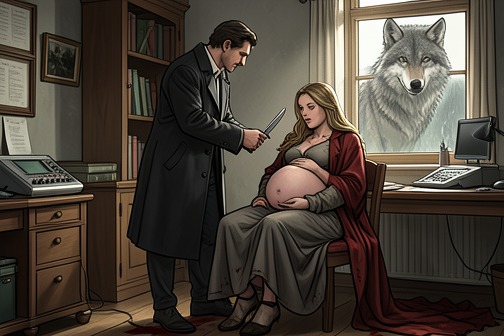
[Brian’s Coup Attempt](entity:event-recall-event-brian-s-coup-attempt-6941012b5a73) is the point at which [Brian](entity:character-recall-character-brian-571585bc13fb)’s opposition to Roland becomes an explicit plan to murder the Alpha and take control of the pack. The attempted coup is not merely a challenge for status: Brian intends to exploit Claire’s pregnancy, use the unborn pup as a future political instrument, and force both the pack and Claire to accept him after Roland’s death. Its central conflict joins personal violence to succession politics, making pregnancy, parenthood, and leadership the contested resources through which Brian seeks power.
## Causes and Political Objective
Brian’s plan grows from an effort to consolidate leadership by removing Roland. He tells Claire that the pup she carries is what he needs to “solidify my leadership over the pack once Roland is dead,” linking the murder he is preparing to the succession that would follow it. The unborn child is valuable to him not as an individual whose safety matters, but as a future Alpha whose existence could legitimize Brian’s authority. His proposed rule therefore depends on converting Roland’s child into proof of continuity while placing the child’s upbringing under Brian’s control.
Brian also reveals that Claire’s pregnancy changed his calculation. He says that after discovering she had become pregnant, he thought, “why not?” If Roland died while Brian raised the new Alpha, Brian expected the pack to follow him. The phrase exposes the opportunistic character of the coup: Claire’s pregnancy is not presented as the origin of his ambition, but as the opportunity that makes the ambition politically workable. Brian imagines succession as a chain of possession—Roland’s death, Claire’s forced submission, the child’s dependence, and the pack’s eventual obedience.
The plot is further connected to Melissa’s murder. When Claire asks whether he killed Melissa, Brian answers that he did, explaining that he liked her but that she had discovered what he was doing. Her death is thus a concealed step in the same conspiracy rather than an isolated act of violence. Brian’s admission changes the scale of the threat confronting Claire: the man attacking her is also the person responsible for silencing someone who uncovered his activities, and he is prepared to eliminate additional obstacles, including [Adam](entity:character-recall-character-adam-7e6d3c5ddcc8), if doing so protects his claim.
## The Assault on Claire
The coup becomes immediate when Claire runs from the confrontation to retrieve her gun. Brian reaches her first, spins her around, slams her against the wall, and pins her in place. The physical sequence strips away any remaining possibility that his political language is only a threat or boast. His attempted seizure of the pack begins as a seizure of Claire’s body and movement: he prevents her from defending herself, then treats her pregnancy as the basis of his authority.
Brian’s insult toward Claire’s pregnant body is deliberately joined to his dynastic purpose. He calls her an “overstuffed sausage,” then immediately identifies the pup inside her as the thing he needs. The contrast reveals the logic of his power: Claire is degraded as a person while her pregnancy is elevated as a political asset. He wants the child but not Claire’s autonomy, and he wants the future Alpha without recognizing the mother as Roland’s mate or as an agent capable of resisting him.
When Claire realizes the implications of his confession, Brian answers her question about what he has done with the blunt declaration that he did what was necessary. His language presents murder and coercion as administrative steps in a leadership transition. He does not describe the coup as revenge or passion; he frames it as necessity, a word that attempts to erase choice even as every revealed action demonstrates deliberate choice.
## Coercion, Resistance, and Escalation
Claire refuses Brian’s assumption that the pack will accept him. She tells him they will not follow him and insists that she is Roland’s mate, declaring that Brian will never be Alpha. Her resistance challenges both parts of his plan: the political claim that Roland’s death automatically creates Brian’s authority, and the personal claim that Claire can be absorbed into his household and reproductive strategy.
Brian responds by extending the coup’s intended reach. He admits that he may have to kill Adam, but says that the others will be his sheep. The image of the pack as sheep exposes the contempt beneath his leadership project. He does not imagine governing people who choose or recognize him; he imagines subjects rendered obedient by the removal of alternatives. Adam becomes another possible obstacle, while the rest of the pack is reduced to a passive collective that Brian expects to manage.
Claire’s physical resistance is equally direct. She spits in Brian’s face and claws at his eyes, refusing to let him touch her or the child she carries. Brian then takes the gun from the nightstand and presses it against her throat, forcing her to freeze. The weapon converts his claimed political future into immediate bodily control. His assertion that the pack will have no choice but to accept him—and that neither Claire will have a choice—makes coercion the governing principle of the regime he wants to establish.
## Consequences and Narrative Significance
The attempted coup exposes Brian as a conspirator responsible for Melissa’s death and willing to target Roland, Adam, Claire, and the unborn heir for power. It also reframes the pregnancy from a private development in Roland and Claire’s relationship into the center of a succession crisis. The child becomes the intended bridge between murder and legitimacy, while Claire becomes the person Brian must subdue because she carries both the pregnancy and the authority of Roland’s mate.
Brian’s betrayal creates a sharp value reversal. Leadership, which should imply protection of the pack, becomes an excuse for killing; parenthood, which should imply care for a vulnerable child, becomes a method of political control; and mating, which should signify loyalty, is set against Brian’s attempt to possess Claire through force. The coup’s most disturbing contradiction is that Brian seeks to rule through the unborn Alpha while treating the child’s mother as property and the pack as sheep.
The event also clarifies the stakes of the surrounding wolf-pack conflict. Brian’s proposed succession depends on Roland’s death, but his plan is not secure merely because he imagines the next Alpha can be raised under his influence. Claire’s refusal, her status as Roland’s mate, Adam’s potential opposition, and Brian’s need to use a gun all reveal the fragility beneath his confidence. The attempted coup therefore marks not the establishment of a new order, but the moment when Brian’s hidden ambition becomes visible as a violent struggle over who may define the pack’s future.
Event 134
Ada Doyle-Davis’s Birth
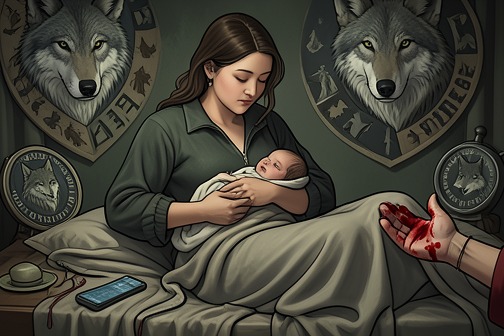
[Ada Doyle-Davis’s Birth](entity:event-recall-event-ada-doyle-davis-s-birth-ee3b96ff295b) is a turning point in the Davis pack’s future: [Claire Doyle](entity:character-recall-character-claire-doyle-40b3d1fa9772)’s difficult supernatural pregnancy ends with the arrival of an exceptionally small daughter, and the newborn is immediately understood not only as a vulnerable child but as the next Alpha. Her birth transforms the family’s anxieties about pregnancy, full-moon danger, and premature delivery into a new obligation of protection and succession.
## [Pregnancy](entity:state-recall-state-pregnancy-cdafbf158725) Under the [Full Moon](entity:state-recall-state-full-moon-d38f92e45824)
Claire’s pregnancy had been marked by the bodily dangers of werewolf inheritance. Every full moon became more difficult as the baby grew, and Claire repeatedly feared that she might lose the child. Roland Davis remained beside her during those episodes, even while his own body changed into a humanoid wolf. His presence made the pregnancy a shared ordeal rather than a danger Claire faced alone, but it could not remove the threat created by the pack’s monthly transformation cycle.
Labor began at thirty-six weeks, before the pregnancy had reached full term. Claire was relieved that delivery meant she would not have to endure another full moon while carrying the baby, a relief that reveals how closely Ada’s survival was tied to the pack’s supernatural biology. The birth therefore arrives not as an uncomplicated domestic milestone but as the conclusion of a prolonged contest between maternal fear, fetal vulnerability, and the werewolf body’s recurring transformations.
## The Birth and Its Immediate Aftermath
Two weeks after the delivery, Claire was living with Ada in Roland’s guesthouse, which had become her new home. She felt a melancholy absence where the pregnancy had been, tracing the curve of her now-empty belly, yet holding her daughter made the loss worthwhile. The emotional transition is intimate and physical: Claire is no longer waiting for life to move inside her, but caring for the life that has emerged.
Ada had been born at only five pounds and four ounces. When Claire first saw her, she feared that the baby was too small to survive. Ada appeared almost skin and bones, and she remained exceptionally thin even though the doctors said she was doing well. The medical reassurance does not erase Claire’s alarm; instead, it places the child’s survival in the uncertain space between clinical confidence and a mother’s instinctive dread.
The doctors advised extensive physical contact because it was especially beneficial for a prematurely born baby. Roland and Claire therefore took turns holding Ada continuously. This care gives the birth a concrete domestic rhythm: the pack’s future Alpha is sustained not by ceremony or authority but by touch, vigilance, feeding, and the repeated act of keeping her close. When Ada stirs at the sound of Claire’s voice, despite not yet having opened her eyes, the infant’s responsiveness confirms a connection already active before she can fully see the world.
## A Child Claimed by the Pack’s Future
Ada’s birth has consequences beyond Claire and Roland’s household. Other members of the pack remained near the guesthouse, preparing food, cleaning, and refusing to stray far. Their presence turns the guesthouse into a collective nursery and shows that Ada’s arrival is treated as a pack event rather than a private family matter. Every member contributes to the practical work of protecting a child too fragile to be left unattended.
The pack’s protectiveness is intensified by Ada’s designated future. She is not merely Roland and Claire’s daughter; she is the child who will become the next Alpha. That expectation gives her birth political and hereditary significance from the moment she arrives. Her thinness and premature condition make the succession appear precarious, while the pack’s readiness to surround her demonstrates its determination to preserve the line of leadership.
Claire’s caution about visitors also reflects the continuing supernatural risk. [Grace](entity:character-recall-character-grace-f21f0fdf609d) wants to meet Ada and hopes to play a major role in her life, but visits must be planned around the full moon. Even after delivery, the lunar cycle still governs the family’s movements and safety. Ada’s birth changes the form of the danger rather than ending it: Claire is no longer protecting a fetus inside her body, but a newborn whose first months must be organized around the pack’s transformations.
## Significance
The event resolves one narrative danger while establishing another stage of responsibility. Claire survives a pregnancy made hazardous by the full moon, Ada survives a delivery at thirty-six weeks, and Roland’s family converts fear into constant care. The child’s survival is therefore both a personal relief and a communal duty.
Ada’s arrival also gives the Davis pack a visible future. The newborn is physically fragile, but her position is already powerful: the pack gathers around her because she embodies continuity, inheritance, and the prospect of a new Alpha. The contrast between her tiny body and her immense symbolic importance is the defining tension of the event. Ada begins life dependent on every adult around her, yet the community already measures its future through her existence.
Event 135
Thea’s Love-Potion Scheme
[Thea’s Love-Potion Scheme](entity:event-recall-event-thea-s-love-potion-sche-382d88763dde) is thea’s deliberate attempt to manufacture romantic attachment in [Logan](entity:character-recall-character-logan-e11884a86c73) through hidden magic. Its decisive significance lies in the contrast between the intimate promise of love and the event’s calculated method: [Thea](entity:character-recall-character-thea-1f97d6230d52) does not wait for Logan’s freely expressed feelings, but prepares a potion designed to make him love the person who brewed it, then places it in his coffee without his knowledge.
## Preparation and Concealment
The scheme begins in the closet of Thea’s dorm room, a cramped hidden workspace containing crushed herbs and other ingredients, several test tubes, a candle, and a book of potions. Thea closes the door, turns on the lamp, and follows the instructions with deliberate care. She pours oyster oil into a flask, adds her own saliva, then mixes in a dove feather, rose petals, and lavender. The procedure requires repeated heating, cooling, and stirring over the candle flame, making the potion less an impulsive gesture than a controlled piece of practical magic.
Thea tests the mixture before using it. She tastes it to determine whether the flame has burnt it, whether it has turned rotten, how strong its flavor is, and what might conceal it most effectively. The potion is specifically designed to be hidden because its targets are generally tricked into drinking it rather than knowingly accepting it. Its taste is faint enough to disappear into most foods and drinks, although its pinkish hue could reveal it in something clear or flavorless. That limitation shapes Thea’s later choice of coffee.
The secrecy of the closet mirrors the secrecy of the plan. Thea sometimes mixes potions and performs spells there to keep them from her roommate, while worrying that she might emerge to find Marie watching and judging her. Once the potion is ready, she turns off the lamp and checks her appearance in the mirror, wanting to look attractive without appearing to have dressed deliberately for the encounter. The preparation therefore joins magical technique to social staging: the potion creates the hidden force, while Thea manages the visible circumstances around it.
## The Kitchen Operation
The opportunity appears during an ordinary visit involving Logan and [Elise](entity:character-recall-character-elise-910ceff1d907). Logan pours himself coffee, and Elise prepares cups for herself and Thea. Thea immediately recognizes coffee as the ideal carrier because its strong taste can conceal the faint flavor of the potion. Her objective becomes one of timing and proximity: she must get close enough to Logan’s mug while ensuring that neither Logan nor Elise sees the act.
The first opening comes when Logan leaves the kitchen to use the bathroom. Thea moves toward his mug, but Elise is still looking at her phone and could look up at any moment. Rather than risk acting immediately, Thea creates a second distraction by claiming to have a headache and asking Elise for ibuprofen. Elise leaves the kitchen and goes upstairs to her room, removing the last obstacle to the scheme.
Thea then takes the thin glass vial from her pocket, removes its cork stopper, and pours the liquid into Logan’s coffee. She stirs the drink with her finger, replaces the vial in her pocket, and completes the concealment just as the toilet flushes. The scene’s tension comes from the narrow interval between private action and public normality: a domestic coffee mug becomes the vehicle for an invisible alteration, and Thea returns to ordinary behavior before Logan reenters.
## Immediate Result and Value Shift
Logan comes back, takes a long swig of the coffee, and then dumps the rest. The immediate outcome is therefore more complicated than a clean magical success. Thea succeeds in putting the potion into his drink and succeeds in making him consume at least some of it, but the evidence does not establish that he finishes the cup or that the potion has already produced its intended emotional effect. His decision to discard the remainder leaves the scheme’s effectiveness uncertain at this moment.
The act nevertheless changes the value at stake in the scene. Before the operation, Logan’s romantic feelings are outside Thea’s control; afterward, the possibility of influencing them has been physically introduced into his body. The coffee remains an ordinary object on the surface, yet the vial, the finger-stirring, and the discarded remainder expose the material mechanism behind what is supposed to appear as spontaneous love. The event thus converts courtship into a hidden intervention while preserving the outward appearance of routine social life.
## Consequences and Narrative Significance
Thea’s scheme establishes the foundation for the later relationship between Thea and Logan and explains why that relationship cannot be read simply as an uncomplicated romance. The act is simultaneously an expression of desire and a violation of informed choice. Thea’s elaborate preparation shows determination and technical competence, but the potion’s purpose makes the relationship ethically unstable from the beginning: it is meant to trick Logan into loving the brewer rather than allow affection to develop through mutual recognition.
The event also introduces a recurring tension in Thea’s storyline between concealment and disclosure. The potion is made in a locked closet, carried in a thin glass vial, hidden inside a pocket, disguised in coffee, and administered during a carefully engineered distraction. Each stage depends on keeping magical practice and emotional intention out of Logan’s sight. The later significance of the plot therefore rests not only on whether the potion works, but on the secret that must eventually be understood: Logan’s attachment has been connected to an act of magical coercion.
At the same time, the scene makes Thea an active architect of the relationship rather than a passive recipient of romantic fate. She studies ingredients, tests the potion, chooses the carrier, observes the people around her, and creates the precise opening required to act. The operation’s precision gives the event its narrative force, while Logan’s partial consumption and disposal of the coffee preserve uncertainty about the extent of the potion’s influence. The scheme begins the relationship’s magical complication without resolving every consequence at once.
Event 136
Thea and Logan’s First Night Together
[Thea and Logan’s First Night Together](entity:event-recall-event-thea-and-logan-s-first-18c462eea2ca) marks the moment when a long-developing friendship becomes a sexual and emotional relationship, while also exposing how fragile that transformation is. [Logan](entity:character-recall-character-logan-e11884a86c73) arrives at [Thea](entity:character-recall-character-thea-1f97d6230d52)’s room sober after earlier drinking, asks to be let in, kisses her, and explains that he has just broken up with [Sophia](entity:character-recall-character-sophia-b824199f891b) because his feelings for Thea have been growing for years. Their intimacy brings the possibility of love into the open, but Logan’s immediate regret the following morning prevents the encounter from becoming a secure union. The event therefore functions as both consummation and rupture: a beginning that already contains its own retreat.
## Background and Emotional Threshold
Logan’s arrival follows a period in which Thea has apparently occupied an important place in his life without being acknowledged as a romantic partner. He tells her that they know everything about each other and that she has been important to him for a long time. His explanation presents the encounter not as an entirely sudden impulse, but as the release of feelings he says have accumulated over years. The timing nevertheless makes the situation ethically and emotionally unstable: he has broken up with Sophia that same night and has come directly to Thea because he wanted to be with her.
The scene begins at a literal threshold. Logan asks Thea to let him in, and she opens the door to find him smiling and sober. His sobriety matters because Thea does not want to believe that anything between them has happened merely because of alcohol. The door consequently separates hesitation from action, while his entry turns a private friendship into an immediate confrontation with desire. Thea’s heart jumps when she sees him, and her surprise quickly gives way to reciprocation when he pulls her close and she kisses him back.
## The Encounter
Logan’s confession changes the emotional value of the scene before the sexual encounter begins. He says that he has ended his relationship with Sophia and that what he feels for Thea has been growing for years. Thea is startled that he ended the relationship that very night, but Logan answers that remaining with Sophia would have been unfair when he wanted to be with Thea so intensely. His movement from explanation to another kiss makes the confession bodily rather than merely verbal: the claim of longstanding feeling is immediately tested through action.
Thea and Logan then move from kissing to sex in her room. Logan crawls forward until Thea lies back, climbs on top of her, and tells her that he has wanted her for a long time. She answers that she wants him as well. The encounter is presented as mutually desired, with both characters expressing consent before Logan enters her. Their physical closeness is accompanied by tenderness rather than only urgency: Thea runs her fingers through his hair, looks into his eyes, and responds to his movements, while both attempt to remain quiet because her roommate is sleeping nearby.
The sexual encounter culminates in mutual release, followed by an intimate pause in which Logan kisses Thea’s face and makes her laugh. That softness gives the scene a brief impression of safety. The laughter is especially important because it makes the encounter feel like an extension of their familiarity as friends, even as the physical relationship has crossed a boundary that cannot easily be uncrossed. The night thus joins two registers of intimacy: the comfort of shared knowledge and the risk of newly acknowledged desire.
## Love, Potion, and Uncertainty
After sex, Logan tells Thea that he thinks he is in love with her. The declaration intensifies the encounter from a single sexual act into a possible romantic commitment. Thea is overjoyed, because the relationship she has apparently hoped for is finally taking place. Yet her happiness is accompanied by a specific fear: she wonders whether Logan’s feelings might be caused by the love potion. The text therefore places genuine emotional history beside magical uncertainty. Logan’s statement may confirm a long-hidden attachment, but the potion prevents Thea from treating that confirmation as unquestionably authentic.
This tension gives the event a distinct value shift. Before Logan arrives, Thea and Logan are longtime friends whose romantic potential remains unrealized. During the night, friendship becomes mutual desire, and desire appears to become love when Logan names it. The promise then reverses the next morning, when Logan interprets his own actions through guilt and alcohol rather than through the lasting feelings he described. The scene’s central uncertainty is not whether the two characters desire one another; both say that they do. It is whether desire can survive doubt about its source and whether a decision made amid emotional and magical pressure can become a stable relationship.
## The Morning Reversal
The apparent fulfillment does not last until morning. Logan sits on the floor with his head in his hands and tells Thea that he may have done something horrible. He says that he drank too much, broke up with Sophia, and now feels awful about both the breakup and coming to Thea’s room. The remorse directly contradicts his nighttime explanation that ending the relationship was necessary because it was unfair to Sophia to remain with her while wanting Thea. What had seemed like clarity becomes, in his own account, an impulsive mistake.
Logan’s withdrawal is brief but consequential. He stands, pauses to kiss Thea on the cheek, and apologizes before saying that he has to leave and that he will see her around. The farewell is neither a reconciliation nor a promise. It leaves Thea with the memory of his confession, their first sexual encounter, and his later repudiation of the circumstances that produced it. The event ends in separation rather than in the secure happy-for-now resolution suggested by the night itself.
## Narrative Significance
The encounter is the defining movement in Thea and Logan’s relationship because it makes their previously submerged attachment explicit while refusing to settle its meaning. Logan’s claim that his feelings have been developing for years supports the possibility that the night reveals an existing bond rather than creating an entirely new one. His remorse, however, shows that recognition does not automatically produce readiness. He can name love in the aftermath of sex and still retreat when faced with the consequences of leaving Sophia and choosing Thea.
The event also establishes a recurring conflict between personal desire and external or altered conditions. Thea wants to believe Logan’s confession, yet fears the love potion has distorted his emotions. Logan wants Thea badly enough to end his relationship and cross the threshold to her room, yet later attributes his behavior to alcohol and condemns it. Their first night together therefore carries both romantic fulfillment and dramatic instability. It is a consummation without security, a confession followed by denial, and a beginning whose immediate aftermath threatens to turn it into a painful misunderstanding rather than a lasting union.
Event 137
Thea Discovers Her Pregnancy
[Thea Discovers Her Pregnancy](entity:event-recall-event-thea-discovers-her-preg-aa31e0b0a18b) marks the moment when a concealed consequence of [Thea](entity:character-recall-character-thea-1f97d6230d52)’s encounter with [Logan](entity:character-recall-character-logan-e11884a86c73) becomes undeniable. What first appears as tiredness, increased appetite, and deepening sadness resolves into a positive pregnancy test, forcing Thea to confront a future that threatens to overturn her plans and redefine her relationships. The discovery is not presented as a celebratory revelation: it arrives through isolation, fear, physical distress, and a cascade of unanswered questions about responsibility, identity, and choice.
## Emotional and Relational Background
The discovery follows several weeks of emotional withdrawal and uncertainty. Logan has returned to [Sophia](entity:character-recall-character-sophia-b824199f891b), which Thea tells herself is temporary, but his behavior increasingly suggests distance: he answers her messages slowly, leaves the house quickly, and makes plans with Sophia whenever [Elise](entity:character-recall-character-elise-910ceff1d907) tries to bring them together. He remains outwardly kind when they share a room, yet he is less comfortable than before, while Thea suspects that Sophia has noticed the tension. Thea’s attempts to alter the situation through a love potion have not produced a clear result. She has tried to place it in Logan’s drink, including once in a half-finished bottle of soda in his room, but she never knows whether he consumed it and observes no definite change in him.
By the fourth week after Thea and Logan slept together, her sadness seems to be becoming depression. She is tired constantly, wants to do little besides eat, and spends more time alone because Elise is occupied with a new boyfriend. The emotional pattern makes her physical symptoms easy to overlook. Only when seven weeks have passed and her period grows increasingly late does Thea reconsider the fatigue and appetite as possible signs of pregnancy. The delayed realization gives the event its particular force: the consequences have been present in her body before she is able to name them.
## The Discovery
Fear replaces uncertainty as Thea begins calculating what pregnancy would mean. She wonders how it could affect her plans, Logan, her education, and her ability to care for a baby. She had intended to wait until after her last class to walk to a convenience store, but the prospect of waiting until the afternoon becomes intolerable. She skips her first class and leaves for the store immediately, turning an ordinary errand into an urgent private investigation of her own body.
At the convenience store, the range of pregnancy tests overwhelms her. She chooses one in the middle price range, then decides not to carry it back to her dorm, where her roommate might find it in the trash. Instead, she uses the store bathroom. The test takes longer than expected, and Thea repeatedly checks her watch before counting to 120 with her eyes closed. When she finally looks, two blue lines are visible in the window. She checks the box again, drops the test, and cries on the toilet.
The scene immediately joins emotional shock to physical evidence. The abandoned test seems to announce that the pregnancy was not planned, and Thea is too distressed to care who might discover it. When she tries to leave, her stomach clenches and she vomits into the toilet, making morning sickness another confirmation that the result is not merely an abstract possibility. She rinses her mouth, splashes water on her face, hides the test beneath crumpled paper towels, and returns to her room, where she spends the rest of the day crying and sleeping instead of attending class.
## Questions of Identity and Choice
The positive result changes the value at the center of Thea’s immediate life from uncertain romance to irreversible responsibility. She does not yet know whether to keep the pregnancy or tell Logan. She worries about his reaction, about Elise’s response, and about how the pregnancy might alter the relationships already strained by Logan’s involvement with Sophia. The pregnancy therefore exposes rather than resolves the instability surrounding Thea and Logan.
The unborn child also raises questions that ordinary pregnancy cannot answer. Thea wonders whether the baby will be a witch, a shifter, neither, or a purely human child born from a witch and a shifter. The uncertainty places the event within the book’s larger concern with supernatural inheritance and mixed identities. [Pregnancy](entity:state-recall-state-pregnancy-cdafbf158725) becomes not only a personal condition but also a test of the boundaries between human, witch, and shifter lineages. Thea is forced to imagine a child whose nature may challenge the categories used by both family and community.
Her fear extends beyond the immediate household. She asks what her parents would do and whether they would welcome a grandchild from their twenty-one-year-old unmarried college-student daughter. The social fact of being unmarried matters to her because she anticipates that her family will judge the circumstances as well as the pregnancy itself. Education, family approval, romantic commitment, and supernatural identity converge in one moment, leaving no part of her planned future untouched.
## Consequences and Narrative Significance
The discovery does not end with Thea’s private knowledge. She recognizes that she must tell someone because the questions cannot be answered alone, and Elise appears to be the person she can approach despite the complicated fact that Thea is now carrying Elise’s niece or nephew. That intended disclosure establishes the next movement of the story: the pregnancy will become a family and relational matter rather than remaining a secret contained within Thea’s room.
The event also creates a sharp contrast with other reproductive and identity rituals elsewhere in the narrative. [Cheryl](entity:character-recall-character-cheryl-af54b6410705)’s movement from temple to palace is staged publicly on a hovering stone platform before a chanting crowd, while Thea’s transition into possible motherhood occurs in a convenience-store bathroom, behind a closed door, with a test hidden under paper towels. A royal fertility system can define pregnancy as public succession, and [Kinai](entity:location-recall-location-kinai-8c60014d50cf)’s Joining formally determines communal belonging, but Thea encounters pregnancy first as an unsanctioned private fact. Her body crosses a threshold before any institution, partner, or family has recognized it.
That contrast gives the discovery broader thematic weight. The book repeatedly treats bodies as sites where social categories are negotiated: Ella’s Draco’s Eye identifies her as [Darilth](entity:character-recall-character-darilth-6b2d2503203a)’s destined mate; Sara’s detachable bionic eye becomes a weapon; [Lisa](entity:character-recall-character-lisa-f8f8fe21b70f)’s medical scan renders her cross-species pregnancy as a three-dimensional image; and [Shay](entity:character-recall-character-shay-5a5fab224960) explains that [Stlozyn](entity:creature-recall-creature-stlozyn-25c0edab8dc8) and human bodies share an altered ancestral history. Thea’s pregnancy joins this pattern while remaining grounded in fear and uncertainty. The positive test makes an invisible biological process materially legible, but it does not provide the answers Thea needs. It confirms the pregnancy while leaving its emotional, familial, educational, and supernatural consequences open.
The event’s decisive significance lies in that gap between confirmation and control. Thea now knows that she is pregnant, yet she does not know what she will choose, how Logan will respond, how Elise will react, or what kind of child she carries. The discovery converts postponed sadness into an unavoidable future and begins the process by which Thea must replace secret schemes and solitary speculation with disclosure, responsibility, and a decision about the life developing within her.
Event 138
Logan and Thea Decide to Raise the Baby Together
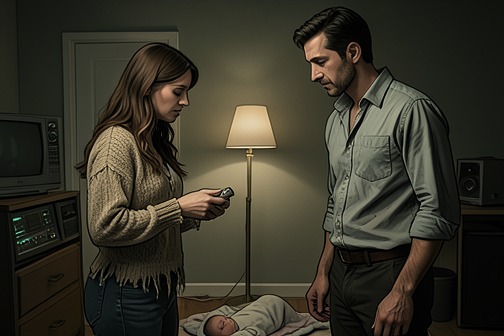
[Logan and Thea Decide to Raise the Baby Together](entity:event-recall-event-logan-and-thea-decide-t-3c3cd0fbe999) is the turning point that transforms an accidental pregnancy and a damaged friendship into a deliberate co-parenting commitment. The decision does not begin with uncomplicated romance. It begins with [Thea](entity:character-recall-character-thea-1f97d6230d52)’s fear that [Logan](entity:character-recall-character-logan-e11884a86c73)’s recent rejection means he will reject the child as well, and it culminates in Logan choosing responsibility, loyalty, and a shared future despite acknowledging that his feelings do not match conventional romantic love.
## Causes and Emotional Stakes
The decision follows Thea’s disclosure that she is pregnant after the night she and Logan spent together. Thea presents the news hesitantly, first saying that she “sorta got pregnant,” then clarifying that she is pregnant. Her uncertainty is not about the fact itself but about what will happen next: she is still considering whether to continue the pregnancy, and Logan’s earlier admission that he does not feel strongly enough to be her boyfriend has made her expect disappointment rather than enthusiasm.
Logan initially responds without pretending that the situation is easy. He reacts sharply when Thea asks whether she should keep the baby, have an abortion, or give it up for adoption. He does not claim immediate excitement, but he rejects the idea that his shock should determine the child’s fate. His insistence that the baby is theirs reframes the pregnancy from Thea’s solitary crisis into a shared responsibility. The emotional value of the scene shifts from abandonment toward recognition: Logan’s uncertainty remains, but his refusal to abandon Thea or the baby becomes clear.
## The Decision and Commitment
After spending the night thinking about the consequences, Logan tells Thea that he cannot imagine his life without her because she has been part of it for so long. He describes caring for her and for their baby as his responsibility, then makes a concrete change rather than offering only reassurance: he breaks up with [Sophia](entity:character-recall-character-sophia-b824199f891b) permanently. His reason is not that Sophia has wronged him or that his feelings for Thea have suddenly become conventional romantic love. He explains that he cannot continue with Sophia while Thea is carrying his child, because doing so would be unfair and incompatible with the responsibility he has accepted.
The central commitment comes when Logan proposes that he and Thea have the baby together and raise it as a shared undertaking. Thea asks whether he is truly certain, recognizing that the decision cannot be casually reversed. Logan answers that he is completely sure, and the exchange culminates in a kiss and Thea’s joy. The kiss confirms emotional reconciliation, but the scene keeps the distinction between affection and romantic certainty intact. Logan has not falsely declared himself in love; he has chosen Thea and the child through an honest acknowledgment of care, friendship, and duty.
## Consequences for Thea and Logan
For Thea, Logan’s decision resolves the immediate fear that pregnancy will leave her isolated or force her to make the choice alone. His willingness to remain beside her gives her a basis for continuing the pregnancy, although the evidence presents the decision as mutual rather than as a simple rescue by Logan. Thea’s tears, uncertainty, and eventual happiness chart the movement from anticipated rejection to a future she can imagine sharing with someone who knows her deeply.
For Logan, the event is a practical and emotional reordering of his life. He gives up his relationship with Sophia, accepts that he will become a father, and turns a long friendship with Thea into a family arrangement. The decision is significant precisely because it does not erase the complications that produced it. Logan still admits that he is not “totally in love” with Thea in the way a boyfriend ordinarily should be, yet he recognizes that friendship-based love is real and consequential. Parenthood therefore becomes the structure through which their relationship can continue, rather than a reward for resolving every romantic uncertainty first.
## Pattern of Choice and Social Expectations
Within the wider narrative, the event echoes other moments in which intimate relationships are shaped by systems of obligation, reproduction, and public or communal expectation. [Cheryl](entity:character-recall-character-cheryl-af54b6410705)’s movement from the temple to the palace is framed by a royal fertility duty, while her later declaration that Bjorn and [Maskin](entity:character-recall-character-maskin-5df12ba18891) must always share her establishes a partnership on her own terms. Kenner’s disclosure of the [Kinai Joining](entity:state-recall-state-kinai-joining-dbc13549c076) likewise presents reproduction and communal belonging as guarded institutions. These contrasts clarify Logan and Thea’s choice: unlike a royal procession, a secretive rite, or a forced reproductive demand, their commitment is made through conversation and consent between the people directly involved.
The event also contrasts with relationships in which pregnancy is treated as possession or destiny. Sheridan tells Maribel that he has been seeking a woman to bear his child, reducing her future to a reproductive purpose. Logan’s response to Thea does not make her a vessel or property. He recognizes the baby as belonging to both parents while allowing the decision to emerge through Thea’s fear, his reflection, and their explicit agreement. The story thus places biological consequence beside ethical choice: pregnancy creates an obligation, but the family they form depends on whether Logan and Thea actively accept that obligation.
## Narrative Function and Outcome
As a romance beat, the event occupies the reconciliation and commitment stage that follows emotional rupture. Thea’s pregnancy reveals the hidden consequence of their intimacy; Logan’s prior rejection creates the dark possibility of separation; his breakup with Sophia supplies the concrete gesture that demonstrates changed priorities; and the promise to raise the child together establishes a future-facing resolution. The narrative does not deliver a simple “they were secretly in love all along” reversal. Instead, it makes friendship, care, and chosen responsibility sufficient foundations for a family decision.
The immediate ending is hopeful but deliberately qualified. Logan and Thea are going to have a baby together, and Logan is “really, really sure” that he wants to proceed. Their kiss gives the decision emotional warmth, while Logan’s final admission that the situation is still “nuts” preserves its disruptive reality. The event therefore closes the uncertainty surrounding whether Logan will accept Thea’s pregnancy, but it does not claim that parenthood will be effortless or that every question about their romantic future has disappeared. Its decisive achievement is narrower and more durable: Thea no longer faces the pregnancy alone, and Logan has converted shock into a committed plan.
Event 139
Elise’s Potion Attack on Thea
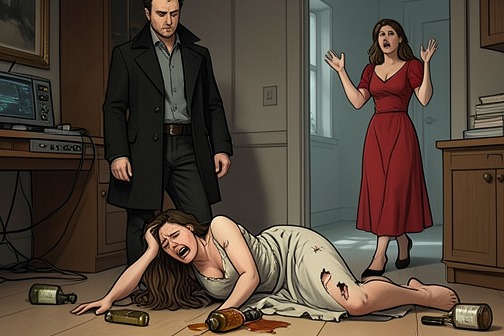
[Elise’s Potion Attack on Thea](entity:event-recall-event-elise-s-potion-attack-o-e99344efd93c) marks the moment jealousy and possessiveness become overt violence. During an argument over [Thea](entity:character-recall-character-thea-1f97d6230d52)’s relationship with [Logan](entity:character-recall-character-logan-e11884a86c73), [Elise](entity:character-recall-character-elise-910ceff1d907) attacks Thea with a potion intended to disfigure her permanently. The assault does not achieve Elise’s stated goal of separating the couple; instead, it reveals the extremity of her hostility and gives Logan a reason to stand beside Thea rather than abandon her.
## Causes and Confrontation
The attack follows a direct confrontation between Thea and Elise over Logan. Thea tries to acknowledge Elise’s concern while refusing to surrender her relationship. She explains that she loves Logan, that he treats her well, and that her feelings for him have existed for years. She also recognizes the bond between Elise and Logan, calling Logan Elise’s brother, and asks Elise to accept that the relationship will not change. Thea’s appeal is conciliatory, but it establishes a firm boundary: affection and loyalty do not require her to obey Elise’s demand for a breakup.
Elise rejects that boundary. Her response is not uncertainty or wounded disappointment but a determined refusal to accept Thea and Logan together. She insists that Thea will break up with him so that everything can return to normal. The language of restoration conceals coercion: Elise treats the couple’s relationship as a disruption that she has the authority to erase. Thea’s fear intensifies because Elise appears transformed by anger and hatred, behaving in a way Thea has never witnessed before. The emotional force of the confrontation therefore becomes physical before the potion is even thrown; Elise’s hostility is registered through Thea’s racing heart, retreating steps, and inability to interpret Elise’s next action safely.
## The Potion Attack
Elise uses a test tube containing an unidentified potion as a weapon. After taunting Thea with the possibility of discovering whether Logan truly cares for her, Elise throws the potion over Thea’s face. The effect is immediate and agonizing. The potion burns like fire, and Thea screams as the substance reacts with her skin. Elise then frames the injury as a test of Logan’s devotion, suggesting that his commitment will fail once Thea’s appearance has been altered.
The damage is not merely cosmetic in the immediate scene. As Thea attempts to wipe the potion away with her shirt, bubbles of pus rise across her skin wherever she touches it. Her vision becomes blurred when tears mix with the potion, and the burning reaches her eyes and face. The attack converts a disagreement about romance into bodily vulnerability: Thea can no longer rely on sight, ordinary first aid, or her own knowledge of spells and potions. She considers whether water might worsen the injury and mentally searches for a remedy, but fear prevents her from identifying the substance or producing a solution.
Elise intensifies the cruelty by declaring that there is no cure and that Thea is permanently disfigured. Her claim turns the potion into a sentence rather than an injury, attempting to define Thea’s future in the instant of violence. The statement also serves Elise’s larger purpose: if Logan’s love depends on Thea’s beauty, then the disfigurement should expose it. Yet the attack’s design contains its own contradiction. Elise wants to make Logan judge Thea’s appearance, but the extremity of the assault makes Elise herself the clearest source of moral ugliness.
## Logan’s Response and the Search for a Cure
Logan arrives when he hears Thea screaming and immediately takes hold of her arms, trying to steady her. His first response is protective rather than evaluative. He confronts Elise about what she has done and demands to know whether the injury consists of boils or some other magical effect. Elise answers with an evil smile and refuses to help, insisting that the couple must use their teamwork to solve the problem themselves.
Logan then treats Thea’s immediate pain. He has her lie on the floor, tells her not to move, and pours a cool liquid over her face. Wherever the liquid touches, the burning stops. He wipes the potion from her eyes and helps her sit up. The treatment does not remove the raised bumps, so the danger is not instantly resolved, but it interrupts the potion’s most acute physical effect and restores enough of Thea’s sight for her to confront what remains.
The scene’s crucial reversal comes when Thea expects Logan to recoil from her altered face. She asks whether she looks hideous and whether the sight of her disgusts him. Logan does not deny that her appearance is different, but he separates difference from the loss of beauty. He kisses her and tells her that he can still see her beauty. He also makes clear that his disgust is directed at Elise’s act, not at Thea’s injured body. Against Elise’s attempt to turn appearance into a measure of love, Logan answers with care, physical reassurance, and confidence that a cure exists. He rejects Elise’s declaration that the damage is permanent, maintaining that an antidote may be difficult to find but that there is one.
## Consequences for the Relationships
The attack permanently changes the meaning of the conflict among Elise, Thea, and Logan. Before the assault, Elise could present her opposition as concern for Thea and as a desire to preserve normal family relations. Thea even acknowledges that Elise loves her and would be upset if she believed a partner might cause harm. Once Elise throws the potion, that protective language is exposed as a cover for control. Elise is willing to injure Thea herself in order to dictate whom Thea may love.
For Thea and Logan, the incident becomes a test that confirms rather than destroys their relationship. Elise predicts that Logan will leave once Thea’s face is disfigured, but Logan stays, tends to the injury, searches for a cure, and reassures Thea that his perception of her beauty has not vanished. His response directly disproves Elise’s theory that love can be defeated by physical alteration. The couple’s teamwork, which Elise invokes mockingly, becomes an actual form of mutual survival: Logan provides immediate care while Thea remains alert to the potion’s magical properties and the need for an antidote.
The episode also creates a lasting moral contrast between Elise’s understanding of love and Thea and Logan’s. Elise treats love as something that must be enforced through fear, appearance, and the restoration of a preferred social order. Thea describes love as a relationship grounded in mutual choice and long-standing feeling, while Logan demonstrates it through action under pressure. The potion therefore fails at its intended romantic objective even while causing genuine suffering.
## Narrative Significance
As a dramatic event, Elise’s Potion Attack on Thea combines family conflict, threatened romance, magical violence, and a rescue that is incomplete but decisive. Its structure moves from argument to coercive ultimatum, from ultimatum to bodily harm, and from apparent permanence to the possibility of cure. The progression gives the scene a sharp reversal: Elise believes the injury will reveal Logan’s lack of devotion, but the injury instead reveals Logan’s loyalty and Elise’s own transformation into the aggressor.
The potion is also the scene’s defining object. It begins as a small, partly concealed substance in Elise’s hand, something Thea can identify only as a mysterious liquid. Once thrown, it ceases to be an ordinary magical instrument and becomes an intrusive physical force that changes skin, sight, movement, and social perception. Its material effects make the emotional conflict impossible to keep at the level of words. Elise’s hatred becomes visible on Thea’s face, while Logan’s answer to that visible injury is not avoidance but touch, cooling liquid, a kiss, and the promise of an antidote.
The event’s ending does not provide a complete cure within the available scene. The burning is stopped, but the bumps remain, and Thea is left frightened by the possibility of lasting disfigurement. That unresolved condition preserves the stakes of the larger magical plot while establishing the essential emotional outcome: Elise has failed to break Thea and Logan apart, and Logan’s first sustained response to Thea’s altered appearance is acceptance rather than disgust. In that sense, the attack is both a wound and a revelation. It damages Thea’s body, but it clarifies which relationship is governed by coercion and which is capable of care.
Event 140
The Love-Potion Misattribution Revelation
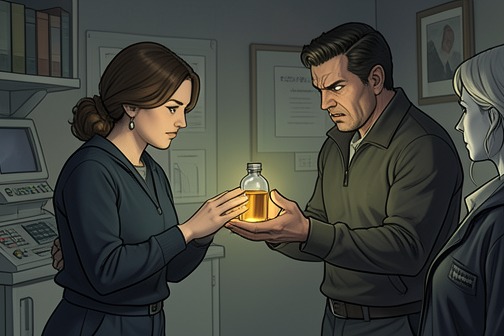
[The Love-Potion Misattribution Revelation](entity:event-recall-event-the-love-potion-misattr-91efdacf92e6) is a revelation-centered confrontation in which a stolen potion turns an apparent romantic rivalry into a problem of mistaken magical causation. [Sophia](entity:character-recall-character-sophia-b824199f891b) believes she has found the means to make [Logan](entity:character-recall-character-logan-e11884a86c73) love her again, but the potion’s actual victim is [Elise](entity:character-recall-character-elise-910ceff1d907), whose recent hostility toward [Thea](entity:character-recall-character-thea-1f97d6230d52) is revealed to have been intensified by enchantment. The event therefore changes the meaning of several relationships at once: Sophia’s scheme is exposed, Logan’s apparent attraction to Thea is reassessed, and Elise’s jealousy is shown to arise from a magically magnified form of love rather than from the motive everyone initially assumed.
## Discovery of the Stolen Potion
The immediate trigger is Logan catching Sophia as she tries to conceal a long test tube. He takes the container from her and asks what it is, while Sophia responds with defiance rather than an explanation. Thea recognizes the contents as the love potion she brewed months earlier, making the object itself the first decisive piece of evidence: something previously hidden among Thea’s possessions has become visible as the material proof of interference in the household’s emotional life.
Sophia admits that she obtained the potion after Logan first broke up with her. She had gone through Thea’s belongings while visiting a roommate, found the unlabeled or insufficiently protected preparation, and decided that it might explain Logan’s change in feeling. Her reasoning rests on a false premise: she assumes that the potion would direct Logan’s love toward whoever administered it. To enact that plan, she spiked a carton of orange juice that she believed Logan drank. The scheme is deliberate, but its mechanism is not understood by its creator.
## The Misattribution Reversed
The central reversal occurs when Sophia asks whether Elise has been drinking the potion instead. Logan explains that he does not like the orange juice and only drank it while ill, whereas Elise drinks a glass every morning. The apparent evidence that Logan had consumed the potion collapses, and Elise becomes the unrecognized recipient. The accusation consequently moves away from the expected triangle between Sophia, Logan, and Thea and toward the friendship between Elise and Thea.
Thea explains the potion’s governing principle: because it contains her essence, anyone who drinks it falls in love with her. This clarification changes the event from a failed attempt to manufacture Logan’s love into a successful enchantment that has affected Elise. When the implication finally reaches them, Logan identifies the otherwise confusing pattern: Elise’s anger and extreme jealousy resemble Sophia’s behavior because both are responses to perceived romantic displacement, but Elise’s feelings have been magically intensified.
The discovery also introduces an important distinction between kinds of affection. Elise rejects the idea that she has romantic feelings for Thea, yet Logan proposes that the potion operates on loving feelings that are not originally romantic. Elise’s friendship-based love for Thea may have been transformed into obsessive jealousy rather than simple romantic devotion. The explanation preserves Elise’s understanding of herself while accounting for conduct that she could not otherwise explain.
## Breaking the Enchantment
The revelation produces a concrete corrective action rather than ending with an explanation alone. Logan stops Elise before the group returns upstairs and casts a spell that strikes her in the chest. He explains that she has been drugged and that the spell reverses the potion’s effects. The act establishes the difference between the original enchantment and its removal: Sophia’s intervention was covert and misdirected, while Logan’s counterspell is deliberate, witnessed, and aimed at restoring Elise’s unaltered judgment.
Elise then tests the orange juice with her own magic. Holding the glass, she casts a revealing spell and sees that the liquid glows faintly, confirming that the potion remains present in the drink. This verification makes the reversal physical and observable. The magic is no longer merely a disputed explanation supplied by Thea or Logan; it can be detected in the contaminated beverage and treated as an active cause.
The counterspell also gives the scene its final value shift. Before the discovery, Elise’s anger appears to be an authentic and potentially destructive rejection of Thea and Logan’s relationship. After Logan removes the enchantment, that anger can be understood as an imposed distortion of attachment. The event does not erase the conflict’s consequences, but it changes the moral and emotional interpretation of Elise’s conduct by identifying the force that altered it.
## Consequences and Narrative Significance
Sophia’s plot fails because she confuses possession of a magical object with knowledge of its operation. She steals Thea’s potion, assumes that Logan’s consumption would redirect his love to her, and interprets his occasional drinking of orange juice as confirmation. The plan instead exposes Sophia’s vulnerability to mistaken inference: she tries to make emotion obey a simple formula, but the potion follows the identity encoded in Thea’s essence rather than the intention of the person who administers it.
For Thea, the revelation is painful before it becomes clarifying. She had believed that Logan’s feelings might have been produced by the potion, and the possibility makes her want to cry. Once the orange juice is identified as Elise’s regular drink rather than Logan’s, however, the enchantment no longer explains away Logan’s relationship with Thea. The event therefore separates two uncertainties that had been entangled: Sophia’s magical interference affected Elise, while Logan’s feelings cannot be attributed to the dose Sophia intended for him.
The incident also reframes Elise’s role in the conflict. Her recent anger was real as an experience, but its intensity was not wholly self-generated. The potion magnified a preexisting loving bond until it expressed itself as jealousy and hostility. That combination makes the event more complex than a simple love spell: the magic does not create an entirely unrelated attachment from nothing, but alters the direction and force of an affection already present.
As a plot mechanism, the event is an anagnorisis and a reversal. The apparent explanation for Logan’s behavior is displaced by the recognition that Elise, not Logan, has been enchanted. A domestic object—the test tube, the orange-juice carton, and the faintly glowing glass—carries the hidden truth into the open. Once the counterspell is cast, the household’s emotional conflict can no longer be read as an uncomplicated contest over Logan; it becomes a struggle over consent, interpretation, and the boundary between genuine feeling and magically imposed desire.
Event 141
Alora’s Birth
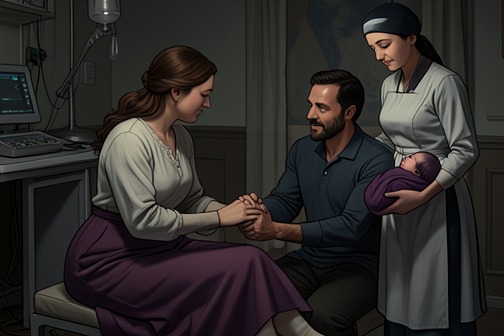
[Alora’s Birth](entity:event-recall-event-alora-s-birth-dd80562e6530) is the moment when [Thea](entity:character-recall-character-thea-1f97d6230d52) and [Logan](entity:character-recall-character-logan-e11884a86c73)’s difficult pregnancy ends in the arrival of a healthy daughter whose purple scales reveal her dragon-shifter inheritance. The birth joins intimate domestic care to the larger problem of supernatural secrecy: [Alora](entity:character-recall-character-alora-675e223938c1) initially appears almost human, yet her body already carries visible evidence of the nature she will eventually learn to understand and express.
## Labor and Delivery
The scene begins with Thea calling for Logan and gripping his hand as labor intensifies. He remains beside her for the next several hours, holding her hand and helping her through each contraction while the midwife coaches her breathing and guides her through pushing. The delivery takes place at home rather than in a hospital because the family understands that a shifter child may display identifying signs immediately after birth. The lack of ordinary pain medication is partly offset by potions supplied by Logan’s parents, intended both to ease Thea’s labor and to help protect the pregnancy and birth.
The birth itself is announced when the midwife lifts the crying infant and places her on Thea’s stomach beneath a blanket. The moment brings relief after the prolonged strain of labor, but it also confirms that this is not an ordinary human delivery. The child’s arrival is therefore both a family event and a revelation about the supernatural inheritance carried into the next generation.
## The Child’s Visible Inheritance
Alora looks mostly human, but purple scales cover patches of her arms, legs, and stomach. These markings establish her dragon-shifter lineage at birth, even though they are expected to fade over the following hours and days. The concealment is temporary rather than absolute. For several years she will appear human, but in toddlerhood she is expected to become aware of her other nature, grow curious about it, and begin to shift.
The timing of the signs is important to the family’s decision to avoid a hospital. A medical setting could expose the child’s difference before the family was prepared to manage the consequences of supernatural secrecy. Home birth allows the midwife and Logan’s family to interpret the scales as part of a known inherited condition rather than as an unexplained medical anomaly. Alora’s body thus occupies two identities at once: visibly marked as a shifter in infancy, yet capable of passing as human for much of her early childhood.
## Protection Against Earlier Threats
Alora’s survival also closes the immediate danger created by the pregnancy. Thea had previously endured [Elise](entity:character-recall-character-elise-910ceff1d907)’s poisoning attack, and the family feared that its effects might harm the unborn child. Those fears do not materialize. The poisoning has not injured Alora, and the protective potion prepared by Logan’s parents has helped ensure that both pregnancy and delivery proceed safely.
This outcome gives the birth a restorative force. The child does not arrive as a damaged remnant of the conflict surrounding her parents; she arrives healthy and vibrant. The potions cannot erase the history of danger, but they help convert that danger into a guarded birth attended by people who understand the supernatural stakes. Alora’s health becomes the concrete proof that the family’s intervention succeeded.
## The Parents’ Recognition
After the midwife declares that the baby is a girl, Thea looks from Logan to the crying infant, and the parents share an immediate recognition of her perfection and safety. Logan traces one fingertip over the baby’s forehead, and she stops crying. He names her Alora, turning the newborn from a medical and supernatural subject into a distinct member of the family. Her small hiccup and Thea’s observation that she may like the name lend the scene a quiet domestic tenderness after the intensity of labor.
The naming also establishes Alora’s place in the relationship between Thea and Logan. They confront the child together, not as an abstract consequence of supernatural biology but as a daughter whose future they will have to protect and explain. Her existence binds their private family life to the inherited obligations and dangers of shifter identity.
## Narrative Significance
Alora’s Birth is a threshold event in the family’s story. It completes Thea’s pregnancy arc, confirms that Elise’s attack has failed to destroy the child, and introduces a new generation whose supernatural identity will unfold gradually rather than through a single permanent transformation. The purple scales make the hidden nature of the family briefly visible, while their predicted fading dramatizes the tension between appearance and inheritance.
The event also places revelation inside care. Elsewhere in the wider narrative, bodies are scanned, classified, or claimed for research and reproduction; here, the child’s unusual body is met by protection, informed preparation, and parental recognition. Alora is not treated as a specimen or as a solution to another group’s crisis. She is welcomed as a healthy daughter. Her birth therefore carries both plot consequence and thematic weight: it shows supernatural difference passing into the future while insisting that the first response to that difference can be love, shelter, and a name.
Event 142
Jason McKenna’s Attack
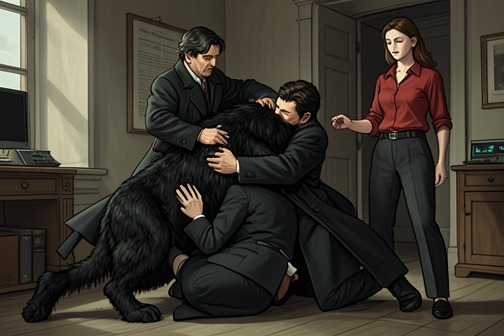
[Jason McKenna’s Attack](entity:event-recall-event-jason-mckenna-s-attack-facbdf194cb6) is the decisive garage ambush that converts a financial investigation into a supernatural crisis. What initially appears to be an internal threat against [McKenna Enterprises](entity:organization-recall-organization-mckenna-enterpri-d6dd3cd57d87) becomes a physical assault on [Eric McKenna](entity:character-recall-character-eric-mckenna-8ed35f2dc851), [Janet Hutchinson](entity:character-recall-character-janet-hutchinson-84fb4c50da69), and [Bianca Jamison](entity:character-recall-character-bianca-jamison-0020e11d3819), while Eric’s transformation from a black-furred monster back into a human being destroys [Bianca](entity:character-recall-character-bianca-579dc0b65e0a)’s understanding of the people around her and exposes the hidden nature of the McKenna family.
## Causes and Background
The attack follows Jason’s discovery of a $35 million discrepancy in McKenna Enterprises’ accounts. He tells Eric that the money is missing and identifies [Hector McKenna](entity:character-recall-character-hector-mckenna-333105e3ebb4) as the thief. The accusation is especially dangerous because the company is the family legacy, and Eric cannot imagine either himself or one of his brothers deliberately damaging it. At the same time, he trusts Jason’s financial ability enough to believe that the suspicious traces are real. The resulting contradiction—that Hector may appear guilty while the accusation may also be part of a larger plot—creates the crisis that precedes the ambush.
Eric confronts Hector directly rather than acting on the accusation in secret. He approaches with deliberately peaceful body language and insists that he does not believe Hector stole from the company, while also acknowledging that Jason found evidence pointing toward him. Eric argues that an unknown person may be manipulating the brothers into turning against one another. Hector’s anger is therefore contained rather than converted into open violence, and the brothers agree to have Jason collect the suspicious files for an impartial outside investigation by Athena Consulting. The attack interrupts this attempt to preserve family trust and institutional stability before the investigation can begin.
## The Garage Ambush
The immediate setting is the McKenna Enterprises garage, where ordinary corporate movement suddenly becomes ominous. When the elevator doors open, the garage is almost completely black, and Bianca notices an unsettling scent of anise, ginger, and cinnamon. Janet Hutchinson confirms that the darkness is abnormal. Eric steps out to investigate and finds a broken neon lightbulb, but before he can finish ordering Janet to return upstairs, something enormous and dark tackles him from the side and drags him into the shadows.
Janet attempts to protect Bianca by directing her toward the lobby, where she could alert security. The instruction fails when a huge brown-furred hand with vicious claws seizes Janet around the waist and throws her away. The violence is presented through Bianca’s shocked perception: the attacker is twice the size of Hector, vaguely humanoid but unmistakably canine, with a long snout, enormous teeth, drooling jaws, triangular ears, golden eyes, a thick dark-brown pelt, a tail, and clawed feet. Its growl is so powerful that Bianca feels the elevator walls vibrate. The scene shifts the value at stake from financial security and family loyalty to immediate survival.
A second creature, equally large but pitch black, slams into the brown attacker before it can pounce. Bianca watches the two monsters circle and fight on hind legs, their tails and paw-like feet making their animal nature unmistakable. The black creature avoids the brown one’s jaws, tears its face with its claws, and throws it high overhead after rolling beneath it. The brown creature repeatedly rises and attacks again, giving the conflict a relentless, almost ritual quality. Its persistence also allows Janet to turn the attack into an escape attempt.
## Eric’s Transformation Revealed
Janet drives a white sedan into the garage and collides with the brown creature, mowing it down and forcing it to release the black one. The black creature lands on all fours facing the car. Bianca steps out in panic, fearing that it will attack Janet, but Janet orders her into the vehicle and assures her that the black creature will not hurt her. The distinction between the two monsters is therefore established before Bianca understands why it exists: one is the attacker, while the other has intervened on their behalf.
During the escape, the black creature begins to melt and shrink. Its golden eyes dim and change color; its fur thins, shortens, and shifts through black, gray, tawny, and sandy blond before becoming ordinary human skin. Its clawed hands become large male hands—the same hands Bianca had been imagining touching her. The metamorphosis collapses the boundary between the frightening animal and the powerful executive she desires. The black monster disappears, and Eric McKenna sits in its place, exhausted and gloriously naked.
The revelation changes Bianca’s position from outsider observing corporate and family conflict to involuntary witness of a concealed supernatural identity. Her disbelief and confusion contrast with Janet’s composure, which suggests that the transformation is familiar to those inside Eric’s circle even though it is wholly new to Bianca. Eric’s first practical response is not an explanation but an instruction: Janet is to take them to the compound, and Bianca is told to retrieve a phone from Janet’s purse. He then begins typing long, angry messages, implying that the attack has immediate consequences beyond the garage.
## Consequences and Aftermath
The ambush leaves the financial accusation unresolved while making the danger behind it tangible. Before the attack, Eric and Hector were trying to determine whether someone had planted evidence to make them destroy one another. After the attack, the family’s vulnerability is no longer merely economic or political. A hostile creature has entered their protected environment, Eric has been forced to reveal his own nonhuman nature to Bianca, and Janet has had to execute an emergency escape while the brown attacker may still recover.
The encounter also establishes a contrast between apparent monstrosity and actual allegiance. The brown creature attacks Eric and Janet, while the black creature fights it, protects Bianca indirectly, and allows the car to escape. Yet the black creature’s physical form initially appears just as terrifying as the brown one. Bianca must therefore revise her categories in real time: size, claws, fur, and animal features do not identify the true enemy, and the human appearance she trusted does not reveal the whole person. Eric’s return to human form makes the supernatural secret visible, but it does not make the danger manageable.
As an event, Jason McKenna’s Attack combines discovery, pursuit, metamorphosis, and family conflict. Jason’s allegation supplies the political and economic pressure; Eric’s cautious investigation preserves the possibility of reconciliation; the garage assault breaks that fragile balance through direct violence. The result is a value reversal: the company crisis that seemed to threaten the McKenna family becomes the doorway through which Bianca sees the family’s hidden nature, while the apparently monstrous Eric becomes the figure associated with her survival rather than her destruction.
Event 143
Bianca’s Discovery of the New York Pack
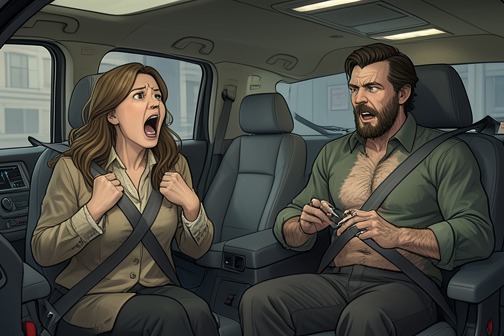
[Bianca’s Discovery of the New York Pack](entity:event-recall-event-bianca-s-discovery-of-t-ea6cea1c349f) marks the moment when an apparently human encounter is reclassified as an entry into a concealed supernatural society. The revelation begins in terror: after [Janet Hutchinson](entity:character-recall-character-janet-hutchinson-84fb4c50da69) drives away from the garage, [Bianca](entity:character-recall-character-bianca-579dc0b65e0a) watches the creature behind them shrink and melt out of its monstrous form. Its golden eyes change, its fur thins and shifts through black, gray, tawny, and sandy blond, and clawed limbs become human hands. The creature is revealed as [Eric McKenna](entity:character-recall-character-eric-mckenna-8ed35f2dc851), exhausted and completely naked. For Bianca, the impossible is no longer a rumor or an unseen threat; the man she had been drawn to is also the black-furred being who attacked them from behind.
## The Transformation and Recognition
Bianca’s discovery is presented as a bodily shock before it becomes an intellectual explanation. She is screaming, pulling at her seatbelt, and prepared to escape the speeding sedan, while the transformation unfolds in front of her. The scene makes the boundary between human and animal visibly unstable: fur becomes skin, claws become hands, and the threatening body resolves into the same male figure whose touch Bianca had imagined earlier that day. That continuity is crucial. Eric is not introduced as a separate monster impersonating a man; the human and animal forms belong to one identity, forcing Bianca to reinterpret both her attraction and her fear at once.
The change also exposes the limits of Bianca’s previous understanding. She cannot immediately decide what she has seen or what she feels, while Janet’s composure suggests that the event belongs to a world familiar to everyone except Bianca. Eric, by contrast, is left exhausted and naked, stripped of the authority that his human appearance normally provides. His physical vulnerability does not erase his power, but it makes the revelation intimate as well as frightening: Bianca discovers the hidden species through a body that is at once dangerous, human, and personally significant to her.
## Arrival at [Oak Hills](entity:location-recall-location-oak-hills-e3f52430acdd)
Janet’s sedan takes a little more than an hour to travel from downtown [Manhattan](entity:location-recall-location-manhattan-5036578184bd) to Oak Hills, an online-described luxurious gated community between [Cross River Reservoir](entity:location-recall-location-cross-river-reservoi-7a4adc8072db) and [War Pound Ridge Reservation](entity:location-recall-location-war-pound-ridge-rese-282a76ff9ab5). The New York Pack calls it “the compound,” a name that reveals more than the public description does. It is not merely a private housing development but a protected werewolf settlement, with individually owned houses, communal buildings, and the [Big House](entity:location-recall-location-big-house-6f9c9cecc9c4) built above the central grounds.
The compound’s social organization becomes visible when Eric arrives. [Brian](entity:character-recall-character-brian-571585bc13fb), his Beta, waits with the remaining eight members of the [Alpha Guard](entity:character-recall-character-alpha-guard-1bf14704b242), a highly trained group responsible for protecting the Pack, the Alpha, Eric’s Mate, and their children. Eric had changed only two members of the Guard after taking control, and the unit functions as a disciplined collective as well as a set of individual protectors. Bianca therefore enters not an isolated household but a structured community with hierarchy, security, and inherited obligations.
Eric’s arrival also establishes the contrast between Bianca’s vulnerability and the Pack’s institutional strength. Brian gives Eric a terrycloth robe, while two Lieutenants assist Janet and Bianca. Bianca is pale, shivering, and too traumatized to leave the car until Janet comes around to help her. Eric responds with protective anger toward the attacker, but the practical consequence is that Bianca is brought deeper into the Pack’s territory. Janet is instructed to give her a room, a shower, clothes, food, and whatever else she needs, while the Guard follows Eric to his office to address the threat posed by [Jason McKenna](entity:character-recall-character-jason-mckenna-3dc3c226b4f0).
## Eric’s Disclosure of Pack Politics
The discovery becomes explicit when Eric visits Bianca in her room. He knocks and waits rather than entering without permission, arranges his body so that he will not appear threatening, and asks whether he may come in. Bianca opens the door only far enough to show half her face and one shoulder before allowing him inside. Her guarded posture and strained question, “What are you?”, show that the transformation has produced not curiosity alone but a crisis of safety and language: she knows what Eric is, yet cannot bring herself to name it.
Eric does not force her to say the word. He tells her that she does not have to, then offers to explain what happened and what will happen next. His first formal disclosure is political rather than biological: he is the Alpha of his Pack, and his brother Jason is attempting to take his place. Jason had tried to frame Hector for embezzlement, expecting Eric and Hector to turn against one another and thereby remove one or both rivals. The plan failed because Eric and Hector trusted each other; when Jason learned that an outside firm would investigate, he panicked and attacked. Bianca and Janet were caught in the middle of that attack.
This explanation changes the meaning of Bianca’s discovery. Eric’s shifting is the visible revelation, but the deeper revelation is that the Pack is governed by a contested hierarchy in which family loyalty, investigation, and violence are inseparable. Bianca was not targeted because she understood the Pack or chose to enter it. She became endangered because an internal succession struggle spilled into the human world. The supernatural secret and the family conspiracy therefore arrive together, binding her personal danger to the stability of Eric’s rule.
## Protection, Confinement, and the New Boundary
Eric tells Bianca that Oak Hills is near War Pound Ridge and that most Pack members live there. He identifies the Big House as his residence because he is the current Alpha and assures her that staff members have been instructed to provide whatever she needs. Yet his promise contains a decisive limitation: she cannot be released until the conflict with Jason is resolved. Eric insists that she is not safe alone outside, while also promising that she will be free as soon as it is safe.
The language of protection and restriction remains deliberately entangled. Bianca receives shelter, care, food, clothing, and access to the Alpha’s household, but her movement is suspended by an emergency that she did not create. Her arrival at Oak Hills resembles both rescue and captivity, because Eric’s authority is used to protect her while also preventing her immediate return to the human world. The event thus exposes the Pack’s exceptional legal order: danger permits ordinary freedom to be postponed, and personal safety becomes the stated justification for temporary confinement.
## Narrative Significance
The event’s value shift is stark. Before the garage transformation, Bianca’s attraction to Eric belongs to a human romantic frame; during the transformation, that frame collapses into fear; afterward, the fear is reorganized by Eric’s confession, his Alpha status, and the existence of the New York Pack. The discovery does not restore the old world with a simple explanation. It replaces it with a larger system of Pack territories, ranks, family succession, guarded compounds, and rules that Bianca must learn while already endangered.
Bianca’s passage into the Pack also echoes the book’s wider concern with identities concealed beneath ordinary institutions. Oak Hills can appear online as a gated community, just as Eric can appear to be a powerful human man, but each surface conceals a different social reality. The transformation makes that concealment impossible for Bianca, while the compound and Eric’s direct disclosure begin the slower process of converting shock into knowledge. Her discovery is therefore not only the revelation that Eric is a werewolf; it is the threshold through which a human outsider is forced to recognize the Pack as a living political world.
Event 144
Maribel成为Sheridan的私人血液供体
[Maribel Arnaz](entity:character-recall-character-maribel-arnaz-8523f9feeca4) becoming Sheridan’s personal blood donor is a decisive transaction in which financial survival, bodily labor, sexual expectation, and dynastic reproduction converge. Maribel enters the vampire city because she has lost her home and conventional means of support; she leaves the interview bound to the king himself, with her blood, proximity, and possible pregnancy placed at the center of a supernatural power structure.
## Economic Desperation and the Donor System
Maribel’s decision begins with material collapse rather than romantic aspiration. She has been evicted after losing her job, her car has been repossessed, and she is half a million dollars in debt because her former boyfriend stole her identity and spent money in her name. With ordinary employment unavailable, she applies to become a living blood donor because vampires have a continuing demand for human blood and are willing to pay for it.
The arrangement is presented in openly commercial terms. Maribel is offered ten thousand dollars a month merely for remaining at the palace, an additional hundred dollars for every ounce of blood consumed, and further benefits if she becomes exclusive to a vampire. The interview also makes clear that feeding may become sexual: she is told that an additional twenty-five thousand dollars is available when drinking develops into sexual intimacy. Blood is therefore not only a medical resource but also a form of embodied labor whose financial value is inseparable from erotic access and aristocratic privilege.
## Acceptance into the Palace
Maribel is accepted quickly because she is healthy and has a relatively uncommon blood type. The vampire administration explains that demand for fresh blood exceeds supply, making donors with desirable characteristics especially valuable. She signs the agreement with trembling hands, understanding the contract as a possible route out of student debt, the liabilities created through identity theft, and the destruction of her credit rating. Her signature changes the situation from desperate possibility to enforceable obligation.
The terms initially promise a period of controlled transition. She is to be taken to the girls’ wing and placed among the vampires in formal and informal settings for a month, while feeding is prohibited during that introductory period. That apparent delay suggests a regulated system of consent and acclimatization, but it is immediately overtaken by the king’s intervention. The event’s tension lies in the contrast between bureaucratic procedure and the personal authority of a ruler who can select a donor for himself.
## Sheridan’s Claim and Maribel’s New Status
Sheridan enters the interview after Maribel has signed the consent forms and immediately changes her position within the institution. Rather than becoming one donor among many, she is designated his personal donor. He takes her hand and tells her that she will remain close to him, converting a former library into her bedroom beside his chambers. The palace’s corridors, modern furnishings, ancient chandeliers, and massive city walls establish the setting as both luxurious residence and enclosed political domain.
Sheridan’s decision carries more than an economic benefit. He openly anticipates frequent sex, and Maribel recognizes an immediate attraction to him that she has never experienced before. His interest is framed through scent, desire, and supernatural recognition: he says he has been aware of her presence since she entered the palace and that he has found the woman he was seeking. The donor agreement thus becomes a personal claim, with the king’s power transforming a signed employment-like arrangement into an intimate and dynastic relationship.
## Reproduction and the Reversal of Expectations
The greatest reversal occurs when Sheridan states that he wants Maribel to bear his child. Until that disclosure, she believes she is exchanging blood for money and accepting the possibility of sexual contact as part of the donor arrangement. Sheridan’s revelation exposes a separate objective: her body is wanted not only as a source of blood but also as the potential vessel of royal succession.
Maribel’s startled retreat marks the event’s sharpest value shift. Financial security and apparent opportunity give way to a more dangerous awareness of reproductive pressure. Her consent to the donor agreement does not automatically settle the question of pregnancy, and Sheridan’s direct statement shows that the vampire economy reaches beyond blood extraction into control of human reproduction. The scene therefore establishes the limits of contractual language when a powerful supernatural ruler can combine payment, desire, proximity, and lineage in one offer.
## Consequences and Narrative Significance
After the selection, Maribel is no longer an economically vulnerable applicant whose immediate goal is debt relief. She becomes Sheridan’s exclusive living blood donor, an intimate resident of the royal chambers, and the woman he has identified as a possible mother for his child. The arrangement gives her access to money and protection, but it also places her under the gaze and authority of the vampire king.
The event introduces the central contradiction of the donor system: Maribel exercises agency by choosing an available means of survival, yet the institution defines her value through blood type, bodily health, sexual availability, and reproductive potential. Her short, overweight body, which she initially assumes will count against her, is not treated as disqualifying; Sheridan instead calls her beautiful and selects her personally. That reversal challenges the standards she has internalized while leaving intact the larger structure in which her body is appraised and claimed.
Sheridan’s selection also connects private attraction to public vampire politics. The walled city, the palace’s formal donor procedures, and the king’s authority make Maribel’s body part of a system concerned with blood supply and royal reproduction. The event’s lasting importance is therefore not simply that Maribel meets Sheridan. It is that a paid bodily service becomes the threshold through which she enters an unequal relationship where survival, desire, blood, and succession can no longer be separated.
Event 145
Alice怀上Matheus的孩子
Alice’s pregnancy with [Matheus](entity:character-recall-character-matheus-fd8143cd6a1d)’s child is the turning point at which a private romance becomes a public dynastic crisis. After two months together, Alice discovers that she is pregnant while serving as Matheus’s mate and official queen. The pregnancy promises a child capable of challenging the established boundaries between humans and vampires, but it also threatens a court already hostile to Alice and suspicious of Matheus’s radical changes.
## From Human Mate to Queen
Alice’s position has changed before the pregnancy is revealed. Matheus has taken her as his mate, and the relationship makes her the standing queen even though she is not a vampire. The narrative emphasizes the unprecedented nature of that status: Alice is the first human vampire queen. Her elevation therefore carries both intimate and institutional consequences. She is not merely living with the king; she must participate in the daily politics of the court, including meetings with visiting lords and the management of a society that does not readily accept her presence.
The pregnancy intensifies this contradiction. Alice’s body, still human, becomes the vessel for Matheus’s child and the possible continuation of his royal line. Her queenly authority and her vulnerability become inseparable. The same relationship that gives her official standing also exposes her to the hostility of those who reject Matheus and his reforms.
## Discovery and Immediate Reversal
Alice first recognizes the pregnancy through bodily changes rather than a formal announcement. Her breasts become tender, her moods change unpredictably, and, after the second month of her relationship with Matheus, her missed menstrual cycle no longer seems accidental. The discovery reverses the emotional balance of the relationship. What had been a developing romance now carries a life-altering consequence, and what might have been a private bond becomes an event with consequences for the vampire court.
Matheus reacts with delight when Alice tells him, whereas Alice immediately thinks about danger. She understands that the court does not like her and expects that its members will not welcome her child. Her concern is not simply personal anxiety: the child’s existence could provoke opposition to Matheus’s rule and place the pregnancy itself at risk. She considers concealing the baby for as long as possible so that the child can be protected from political retaliation.
## The Argument over Secrecy
The central decision after the discovery concerns whether concealment would preserve safety or create a greater threat. Alice argues for secrecy because she fears the reaction of the vampire nobles. Matheus rejects that approach. In his view, a child produced without warning would shock the court and could trigger revolts. Rather than hiding the pregnancy, he intends to let the kingdom encounter the change gradually, easing his subjects toward acceptance.
The disagreement reveals a difference in their positions. Alice experiences the pregnancy as a physical and political danger carried inside her own body. Matheus, as king, treats its announcement as a problem of governance and public adaptation. His happiness is genuine, but his response is also strategic: the child must be integrated into the political order before its birth can become a destabilizing surprise.
Alice ultimately accepts Matheus’s judgment because she believes he understands his people better than she does. Her trust is expressed through cooperation rather than surrender of concern. She warns him to proceed carefully and imagines the possibility that she might have to suppress a rebellion to save him. That possibility shows how quickly her role has expanded. The human woman who entered the king’s life is now contemplating the defense of the vampire monarchy and the survival of its future heir.
## Court Power and the Threat of Revolt
The danger surrounding the pregnancy is magnified by the power of Matheus’s mother, the former queen. Although she is no longer directly ruling, she has spent nearly four hundred years in the manor and retains immense influence over the government. Those who cross her end up dead, and her authority continues to operate through fear and political manipulation. Her presence gives Matheus protection, but it does not erase the possibility of revolt against his reforms or Alice’s elevation.
This political background makes the pregnancy more than a succession detail. The child embodies a radical change in royal practice: a human queen is carrying the king’s child at a court where human and vampire identities are sharply separated. Alice’s pregnancy therefore tests whether Matheus’s kingdom can absorb a new form of kinship without treating it as an assault on tradition. The threat is collective as well as intimate, extending from Alice’s physical safety to the stability of the realm.
## Narrative Significance and Consequences
The event joins romance, reproduction, and sovereignty into a single conflict. Alice’s relationship with Matheus begins as an attachment between two individuals, but her pregnancy makes their union visible as a political institution. Her status as a human queen is no longer merely symbolic; she is now carrying a child whose existence may force the vampire court to recognize human participation in royal succession.
The pregnancy also establishes Alice as an active political participant. She identifies the danger, proposes a protective course, evaluates the possibility of rebellion, and agrees to support Matheus’s plan while demanding caution. Her response is neither passive acceptance nor simple withdrawal. She attempts to protect the child while learning how to act within the system that now defines her as queen.
By the end of the episode, the pregnancy remains unresolved as a public crisis rather than a completed succession. Matheus has chosen gradual disclosure over concealment, Alice has entrusted him with that decision, and the court’s hostility remains a live threat. The child’s future consequently depends on whether love can be converted into legitimacy before political resistance turns the pregnancy into the spark of revolt.
Event 146
Veronica刺杀Matheus与Alice未遂
[Veronica](entity:character-recall-character-veronica-68dfadfcf305)'s attempted assassination of [Matheus](entity:character-recall-character-matheus-fd8143cd6a1d) and Alice is a failed nighttime attack that converts domestic intimacy into immediate mortal danger. Alice detects the intruder before the sleeping Matheus can respond, uses magic to illuminate and restrain the attacker, and discovers that Veronica is carrying a silver blade charged with dark magic. The failed assault therefore does more than threaten two powerful vampires: it reveals a hidden conspiracy or supplier behind Veronica's apparent confession and places trust, loyalty, and security under suspicion.
## Causes and Background
The attack begins while Alice and Matheus are in bed together after affirming their love and settling into sleep. Alice has just started to doze beside her mate while Matheus sleeps heavily enough that the door opening does not wake him. The scene's calm is important because it establishes the couple at their most unguarded: their physical closeness and affectionate exchange suggest safety, while Matheus's sleep leaves Alice as the first line of defense.
That safety erodes through sound rather than sight. Alice hears soft footsteps approaching the bed and recognizes hesitation and fear in them. The steps do not belong to someone entering with good intentions, so the threat is identified before its weapon is visible. This delayed revelation creates a compact pursuit pattern: an unseen intruder advances, Alice listens and concentrates, and the danger becomes legible only when she is ready to act.
## The Ambush and Its Reversal
Alice responds with the command "Lux," immediately lighting the candles. Illumination changes the value of the scene from uncertainty to exposure: the intruder freezes, and the silver blade in the attacker's hand becomes visible. Alice then shouts "Flumine!" and sends a surge of water into the attacker, throwing the intruder against the wall. The assassination attempt fails not through luck alone but through Alice's vigilance, magical skill, and ability to transform the bedroom's vulnerability into a controlled defensive space.
The sudden violence wakes Matheus. He rises shouting, sees the intruder pinned to the wall, and moves in front of Alice. His first movement is protective, placing his body between his mate and the danger before full recognition has taken place. Once the attacker is identified, the scene's threat becomes personal rather than anonymous: the would-be assassin is Veronica, someone already known to both of them.
Matheus responds to Veronica with murderous anger, while Alice stands beside him and demands to know who ordered the attack. Her question establishes the central uncertainty of the event. Alice knows Veronica is manipulative and controlling, but she does not believe Veronica is malicious enough to design an assault of this scale by herself. The failed attack thus produces an immediate reversal in understanding: Veronica is caught as the visible assailant, yet the evidence points beyond her.
## Veronica, the Blade, and the Hidden Hand
Veronica denies receiving help and claims that the entire plan was hers. Her panic is visible as she struggles against Alice's watery bindings, and she insists that she bought the blade. The denial does not resolve the matter. It instead collides with Alice's technical assessment of the weapon and Veronica's limited status.
Alice states that a servant in Veronica's position could not have acquired a silver blade containing so much embedded power. She further identifies the weapon as dark magic and says that Veronica does not possess enough power to create or command such an object independently. The blade is therefore the event's most concrete clue. It links the attempted killing to resources, knowledge, and magical ability outside Veronica's demonstrated reach.
The discrepancy between Veronica's confession and the weapon's properties keeps the plot open after the immediate danger has ended. Veronica may be lying to protect an accomplice, may have been supplied without understanding the full nature of the weapon, or may be attempting to claim responsibility for a plan shaped by another party; the evidence confirms the mismatch but does not yet identify the person behind it. What Alice and Matheus do know is that the attack was not an ordinary act of personal resentment. The silver blade's dark enchantment makes the incident part of a larger threat against their household and relationship.
## Consequences and Significance
The immediate consequence is survival. Alice's water magic holds Veronica against the wall, the weapon is removed from her hand and placed on the counter, and Matheus is able to confront the attacker rather than discover the assault after it has succeeded. The couple's shared response also demonstrates their complementary roles: Alice detects and neutralizes the danger, while Matheus wakes, recognizes it, and physically shields her.
The event nevertheless damages the meaning of home. A bed that has just represented love becomes the site of an attempted killing; a familiar servant becomes an armed intruder; and a weapon that appears to confirm Veronica's guilt simultaneously undermines her explanation. The attack turns intimacy into an investigative problem, because the couple must now ask not only why Veronica came to their room but who could have equipped her.
Veronica's failed assault also intensifies the conflict surrounding Alice and Matheus's partnership. Their mate bond is visible in the way Alice presses close to Matheus, in Matheus's protective positioning, and in their rapid coordination under pressure. The assailant's choice to attack them together therefore threatens both life and union. Yet the outcome strengthens their immediate alignment: they face Veronica side by side, question her jointly, and treat the darkly empowered blade as evidence requiring further scrutiny rather than accepting the first available confession.
As a narrative event, the episode combines an attempted assassination, a recognition scene, and the first exposure of a concealed mechanism behind the violence. Fear begins with footsteps and hesitation, becomes visible through the silver blade, and turns into rage when Matheus recognizes Veronica. The final uncertainty prevents the scene from closing as a simple defeat of one culprit. Veronica is restrained, but the larger danger remains active, carried in the unresolved question of who supplied the weapon and why Alice and Matheus were targeted in their own bed.
Event 147
Matheus and Alice assassination attempt
[Veronica](entity:character-recall-character-veronica-68dfadfcf305)’s attempted assassination of [Matheus](entity:character-recall-character-matheus-fd8143cd6a1d) and Alice is a failed murder plot that transforms a moment of domestic vulnerability into evidence of a coordinated supernatural threat. Veronica is caught with a magically bound body and a powerful silver blade, but the immediate arrest does not resolve the danger: Alice and Matheus recognize that the weapon’s construction and enchantment exceed Veronica’s status and abilities, pointing toward an undisclosed accomplice.
## Causes and Hidden Agency
The confrontation begins with Alice demanding to know who told Veronica to carry out the attack. Veronica insists that no one directed her and claims that the plan was entirely her own. Her panic, however, undermines the confession. Alice knows Veronica as manipulative and controlling, yet not malicious enough to have devised an attack of this scale by herself. The gap between Veronica’s assertion and Alice’s judgment creates the event’s central mystery: the visible assailant is probably not the true architect.
The weapon provides the strongest evidence against Veronica’s story. Alice identifies the blade as a silver weapon carrying an unusually powerful enchantment and argues that a servant of Veronica’s standing could not have acquired it independently. Very few people can create such a blade; those capable of doing so are powerful magicians or witches, and they would ordinarily have little reason to work with someone as socially insignificant as Veronica. Veronica maintains that she bought it, but the claim does not explain how she obtained a weapon whose magic places the attack beyond her apparent reach.
## The Attack and Its Discovery
Veronica is held by watery magical bindings while Alice confronts her, and guards eventually arrive to take custody of her. Alice releases the bindings only when the guards can restrain Veronica themselves, shifting the scene from private interrogation to formal capture. Alice threatens that Veronica will not endure the torturer’s blade for long, although she also acknowledges that interrogation is not her particular strength. The threat produces fear, not the identity of the person who supplied or commissioned the weapon.
The attempted murder is revealed to have targeted both members of the household. Matheus explains that the knife was not meant only for him because it had been placed on Alice’s side of the bed. Its enchantment was designed to kill a witch as well as a vampire. The blade therefore converts what might have appeared to be a single assassination into a double attack, aimed at Matheus, Alice, and the family they are building together. The location of the knife supplies the material proof of that intention more decisively than Veronica’s denials do.
## Recognition and Immediate Consequences
The failed attack produces a rapid reversal in the household’s condition. Matheus and Alice have survived, but their sense of safety changes into suspicion and defensive resolve. Alice had already understood the danger when she saw the blade; Matheus’s explanation confirms that the weapon was specifically suited to destroy both of them. The silver is not merely a physical instrument. Its embedded magic gives it the capacity to cross species vulnerabilities, making the object itself a decisive agent in the plot.
The event also reveals the likely motive behind the attack. Alice identifies the probable enemy as a vengeful, grief-driven witch, a description that makes the danger more serious than Veronica’s individual capabilities suggest. The arrest therefore closes only the most visible part of the incident. Veronica is removed by the guards, while the person who persuaded her, supplied the weapon, or directed the assault remains unknown and potentially free to act again.
## Family, Threat, and Aftermath
After Veronica is taken away, Alice tends to Matheus physically, kissing his shoulder and neck and holding him around the waist while he remains distant and angry. Their tenderness is set against the threat of violence: affection does not erase the danger, but it gives the survivors a shared position from which to face it. Alice promises that they will discover who convinced Veronica and prevent that person from attempting the same thing again.
Matheus responds with a much harsher vow of retribution, declaring that whoever tried to harm his family will regret it and will have “hell to pay.” The line marks a change in his emotional state. Alice hears a hatred in him that she has never heard before, showing that the attack has reached beyond political or personal hostility and touched the protection of his household at its most intimate point.
Alice’s final resolve makes the stakes explicit: she will protect Matheus and their unborn child, regardless of what that protection requires. The attempted assassination thus ends without a death but not without lasting consequence. It confirms that Matheus and Alice are being treated as a joint target, exposes the reach of dark magic into their private life, and turns their pregnancy and family bond into both the motive for their enemies and the source of their determination to resist them.
Event 148
Eric Gaultiero's conspiracy

[Eric Gaultiero's conspiracy](entity:event-recall-event-eric-gaultiero-s-conspi-014a3e47f205) is the concealed attempt to poison [Matheus Lindgern](entity:character-recall-character-matheus-lindgern-70cfcbf3b33f) and his family, a plot whose discovery transforms private suspicion into actionable evidence. The conspiracy is not merely an accusation against Eric: the scrying vision shows him speaking with a group of nobles and identifies the poisoning as an imminent attack planned for dinner. Its decisive consequence is [Jennifer Lindgern](entity:character-recall-character-jennifer-lindgern-6d1a99d63e67)'s rapid decision to confront the members of her son's inner circle before they can carry out the scheme.
## Suspicion and Investigation
Alice initiates the investigation because she has found a way to determine exactly what Eric has planned and whether he is the person trying to kill her and her family. To obtain the answer, she uses a small bag containing various bones, acacia powder, and a vial of blood collected earlier. She places these materials into a bowl of water before a mirror, turning the investigation into a ritualized act of supernatural observation rather than relying on rumor or political inference alone.
The ritual produces a visible result. Smoke rises slowly from the bowl as a silver mist, curls around the mirror, and begins to shimmer. An image then appears on the glass, making the hidden conspiracy observable to both Alice and [Jennifer](entity:character-recall-character-jennifer-1d374ea45bda). The method supplies the scene's central evidentiary reversal: what began as uncertainty about Eric's intentions becomes a witnessed exchange that identifies both the suspected planner and the people connected to him.
## The Conspirators Revealed
The image shows Eric standing before a small group of lords and ladies. Although the voices of the other conspirators remain muffled, their faces are visible, allowing Jennifer to recognize them. She explains that they had sat on her husband's council for years, linking the present plot to the former political order and showing that the threat comes from people with established access to Matheus Lindgern's household and government.
Eric's words reveal that he knows Alice has become suspicious. He complains that the “little witch” approached him without provocation, indicating that Alice's investigation has already unsettled him. The exchange therefore exposes both the conspirators' awareness of their vulnerability and the reason they are accelerating their plans: the plot is no longer safely hidden from its intended targets.
Eric then states that the group must act soon or end up like “the little whore” he sent to kill Alice. The remark reveals that the conspiracy includes a previous assassination attempt and that the failed or completed agent is being treated as a disposable instrument. Eric's movement to a counter and his lifting of a vial make the next stage concrete: the conspirators intend to poison their target at dinner that very night.
## Immediate Countermove
The revelation changes the value at stake from uncertainty to imminent danger. Before the vision, Alice needs confirmation about Eric's role; afterward, the family faces a specific poisoning attempt with a stated time and method. Jennifer recognizes that the evidence is sufficient, responding that it is exactly what she needed to hear. Her reaction is not passive relief but immediate mobilization.
Jennifer takes a cloak from her closet, pulls it over her shoulders, and tells Alice that they must fetch several people. The physical preparation gives the discovery a compressed, urgent rhythm: the vision ends, and a counter-operation begins. Alice follows Jennifer despite not knowing what she intends to do, while remaining certain that Jennifer is about to bring severe consequences upon the members of her son's inner circle who betrayed him.
## Consequences and Significance
The conspiracy establishes Eric Gaultiero as an active threat rather than a distant political suspect. His own speech connects him to the planned poisoning, the earlier attempt on Alice, and a coalition of former council members. The use of the mirror makes the hidden plot legible without requiring Alice or Jennifer to rely on an informant's uncertain account; the conspirators' faces, affiliations, words, and poison vial all appear within the same discovery sequence.
The event also shifts the balance between secrecy and retaliation. Eric believes the conspiracy can still be completed at dinner, but Alice's ritual exposes the plan before the poison is administered. Jennifer's departure with Alice marks the end of the investigative phase and the beginning of direct action against the traitors. In narrative terms, the conspiracy functions as a discovery-and-reversal event: a concealed threat becomes visible, a suspected enemy is confirmed, and the household's response is set in motion before the planned attack can occur.
Event 149
Purging the vampire royal council
[Purging the vampire royal council](entity:event-recall-event-purging-the-vampire-roy-e387f84a639d) is the royal arrest and political cleansing led by [Jennifer Lindgern](entity:character-recall-character-jennifer-lindgern-6d1a99d63e67) after Eric Gaultiero’s conspiracy against [Matheus Lindgern](entity:character-recall-character-matheus-lindgern-70cfcbf3b33f), Alice, and their unborn child is exposed. The event shifts the vampire court from inherited noble influence toward a more openly controlled and reform-minded monarchy: Eric and the nobles identified with him are seized, the remaining court is warned, and [Matheus](entity:character-recall-character-matheus-fd8143cd6a1d) resolves to retire officials who remain attached to the old order.
## Causes and Political Background
The purge begins inside a meeting devoted to foreign policy, where several vampire lords have gathered before Jennifer Lindgern and Alice enter with a small army of guards. The setting matters because the threat is confronted at the center of governance rather than in a hidden refuge or private household. Eric Gaultiero is not treated as a distant suspect; he is present among the ruling nobles when the accusation becomes action.
Eric’s crime is identified as attempted murder directed at three members of the royal family: Matheus Lindgern, Alice, and their grandchild, Alice’s unborn child. [Jennifer](entity:character-recall-character-jennifer-1d374ea45bda)’s anger is therefore both political and familial. The conspiracy threatens the succession as well as the bodies of the king, his mate, and the next generation. Her intervention makes the unborn child part of the event’s political stakes, turning the protection of pregnancy into an act of state defense.
## The Arrest in the Meeting Room
Alice acts first. Her eyes lock onto Eric, and she casts the spell "Consto!" The magic freezes him before he can reach the door, giving the guards time to move against the people Jennifer has listed for arrest. The sequence joins magical authority to organized force: Alice immobilizes the immediate target, while Jennifer’s guards transform the room into a controlled detention scene.
Eric responds with rage and demands release, but Jennifer answers by formally placing him under arrest for attempted murder. She lifts his chin while accusing him of intending to kill Matheus, Alice, and their grandchild. Eric insists that there is no proof, yet Jennifer declares that she has more than enough evidence to justify severe punishment and orders the guards to bring the arrested nobles to the dungeon.
The arrest is also staged as a warning to the court. Jennifer dismisses the nobles who are not being taken away, but she makes the purge exemplary rather than merely administrative, saying that the action should serve as a lesson to all of them. Nervous obedience from the remaining nobles shows that the old council’s security has broken: its members may still occupy the room, but Jennifer controls the meaning of what has happened there.
## Transfer of Power and Protection
After ordering the arrests, Jennifer turns from the accused to Alice. She touches Alice’s shoulder and kisses her cheek, telling her that she will be a great queen and will serve the kingdom as well as Jennifer has. The gesture gives the purge a dynastic dimension. Jennifer is not only removing enemies; she is affirming Alice as the future center of royal service.
Jennifer then instructs Alice to relax and care for the child while she handles the remaining defenses. This division of responsibility separates two forms of protection. Alice’s pregnancy and position as Matheus’s mate are treated as essential to the future, while Jennifer assumes the immediate burden of confronting the hostile nobles. The royal household and the political apparatus are therefore secured through cooperation between generations of queenship.
## Matheus’s Reformist Response
Matheus Lindgern receives Alice with affection after Jennifer leaves, and the emotional reunion follows directly from the political violence of the purge. He carries Alice toward their rooms, praises her, and touches her swollen stomach. Their intimacy does not erase the court crisis; instead, it clarifies what the crisis is meant to protect and what kind of future the arrests are intended to make possible.
Matheus acknowledges that arresting so many nobles will provoke backlash. He nevertheless describes the purge as clearing the slate. In his view, replacing entrenched officials with fresh blood is necessary because his father’s men have proved unwilling to accept change. He had hoped they would be more open-minded, but the day’s events convince him that those fixed in the old ways should be retired.
The consequence is thus broader than Eric Gaultiero’s imprisonment. The purge becomes the opening move in a program of institutional renewal. Matheus and Alice expect substantial changes in the following months, and Matheus’s acceptance of political backlash shows that the new monarchy will not preserve stability by leaving the inherited council untouched.
## Narrative Significance
The event dramatizes a movement from concealed conspiracy to public accountability. Eric’s attempted murder begins as a threat aimed at a family, but Jennifer exposes it before the assembled court and answers it through arrest, imprisonment, and a warning to every noble who remains. The meeting room becomes a threshold between two political conditions: before the arrests, the old nobles possess the confidence to plot within government; afterward, their authority is subject to royal scrutiny and removal.
The purge also contrasts with other ceremonial transfers of status in the wider narrative. [Cheryl](entity:character-recall-character-cheryl-af54b6410705)’s arrival at the palace is presented as a public royal spectacle, with a hovering stone platform carrying her over a chanting crowd, yet she discovers two men waiting below rather than the single king she expected. Teresa learns that Joining is a guarded [Kinai](entity:location-recall-location-kinai-8c60014d50cf) institution performed every twenty-five years for unmarried adults between twenty and thirty, while Harrod’s full-moon trial is witnessed by the entire den. Against these ritualized transitions, Jennifer’s purge is a counter-ceremony of force: no crown is placed, but a court is reordered; no public festival announces the change, but guards, magic, and the dungeon make it irreversible.
Its decisive value shift is from royal vulnerability to defensive control. Eric expects to challenge the accusation, but Alice’s spell removes his physical freedom, Jennifer’s evidence removes his political protection, and Matheus’s response converts the immediate victory into a long-term reform agenda. The vampire royal council is not merely punished for one conspiracy; it is marked as an inherited structure whose resistant members can be cleared away in the name of a new reign.
Event 150
Transformation of Matheus's harem into a school
[Transformation of Matheus's harem into a school](entity:event-recall-event-transformation-of-mathe-a12ea1014512) is the reform through which Alice repurposes [Matheus](entity:character-recall-character-matheus-fd8143cd6a1d)'s former harem as a place of education, magical practice, and collective defense. What had been associated with service and confinement becomes a school in which the girls can learn to read, write, and use magic, gaining a chance to become something more than servants while helping protect Alice's family.
## Causes and New Purpose
The transformation takes place after Matheus has begun reshaping his political order. Over the following months, he removes nobles who will not bend to his rules and replaces them with people willing to obey, while relations with neighboring nations gradually improve. Against that backdrop of institutional change, Alice undertakes a parallel reform inside the household. Her project does not merely alter the function of a room or repurpose a building; it changes what the girls are expected to be and what resources they are allowed to possess.
Alice turns the former harem into a school because she has grown attached to the girls and wants them to have an opportunity beyond domestic service. Education becomes both an act of affection and a practical strategy. By teaching the students, she creates a new form of guard capable of helping keep her family safe. The school therefore joins two aims that might otherwise seem separate: personal advancement for the girls and collective security for the household.
## Classes and [Magical](entity:state-recall-state-magical-215ffddeb1af) Instruction
Alice teaches literacy alongside magic. The curriculum includes reading and writing, but the classroom scene shows that magical instruction is already concrete and practical rather than merely theoretical. Alice explains that love potions vary in potency and react differently according to their ingredients. Bachelor's Buttons can influence love and help reveal whether a relationship is meant to be, whereas cinnamon acts as an aphrodisiac, producing lust rather than love. Her lesson distinguishes emotional attachment from physical desire and treats magical knowledge as something that must be understood carefully.
The warning also establishes the risks of careless practice. Alice tells the students to remember their book on love potions and jokes that she will not be responsible if they accidentally make their true loves turn purple. The humor softens the lesson, but the underlying point is serious: magic has differentiated effects, and misunderstanding those effects can produce visible and potentially disruptive consequences.
The students are not passive recipients of symbolic empowerment; they are learning specific techniques. Alice reports that Lindsey has already mastered basic fire spells, although her first attempt nearly set her hair on fire. That near accident shows both the promise and danger of the new education. The girls are acquiring abilities that can make them useful defenders, but their training also requires supervision, repetition, and a teacher willing to tolerate early mistakes.
## Care, Authority, and Daily Practice
The school operates within Alice's domestic life rather than outside it. During the lesson, Alice balances her barely month-old daughter, [Emma](entity:character-recall-character-emma-0b5c09f9ac66), in the crook of her arm while moving between the desks. The image places instruction, motherhood, and institutional reform in the same physical space. Alice is not represented as abandoning care in order to pursue authority; she exercises authority while caring for her child and while remaining closely involved with the students.
When Emma becomes fussy, Alice dismisses the class and reminds the girls to finish reading their book by the end of the week. Afterward, she settles behind her desk to feed the baby. The classroom thus remains a lived household environment, with its schedule shaped by the needs of an infant as well as by the demands of study. The interruption does not cancel Alice's role as teacher. Instead, it reveals a model of leadership in which care is part of the institution's ordinary operation.
Alice's conduct as Emma's mother reinforces that principle. Although many people are available to watch the child, she insists on being the primary caretaker because she does not want Emma to remember being raised by a group of nannies. Her decision parallels the school reform: in both cases, Alice resists impersonal arrangements and chooses direct, sustained responsibility. Her work with the girls and her care for her daughter are presented as connected forms of protection and attachment.
## Consequences and Continuing Reform
The immediate result is a functioning school whose classes are progressing without major mistakes. Alice acknowledges that some of the girls still struggle to remember which ingredient or spell produces which effect, but she is proud of their development and especially of Lindsey's progress. The girls' advancement gives substance to the promise that they can become more than servants, while their magical training supplies the beginnings of the protective force Alice intended to create.
The reform also changes the emotional atmosphere of the former harem. Alice has taken the girls under her wing, and their education is described as a chance to become something more. The space is no longer defined solely by its former institutional role; it now holds desks, lessons, books, spells, and the possibility of self-development. Its transformation is consequently social as well as architectural, replacing dependence with knowledge and treating the former occupants as students with futures.
The event's domestic aftermath is deliberately quiet. Matheus enters after class, asks how the lesson went, and helps Alice to her feet after Emma finishes feeding. He then leads her into the hallway and suggests dinner once the baby is asleep. Alice agrees and considers asking Matheus's mother to watch Emma so that they can have a night to themselves. This closing movement places the school's reform within a continuing family life: political change, magical education, infant care, and intimacy coexist rather than appearing as isolated storylines.
## Narrative Significance
The transformation is a constructive counterpart to Matheus's political purge. He consolidates power by removing nobles who refuse his rules, while Alice builds loyalty and safety by teaching people who had previously been confined to service. Their methods differ, but both reshape inherited structures. The contrast gives the event its larger significance: authority can be secured through obedience imposed from above, yet a more durable community may also be built through education, affection, and participation.
The school therefore embodies a shift from possession to cultivation. The girls are not simply reassigned within the same hierarchy; they are given literacy, magical knowledge, and a role in defending the family. Alice's classroom joke about turning true loves purple captures the reform's tone—warm, playful, and domestic—while the fire-spell accident and the need to distinguish lust from love preserve an awareness of danger. The former harem becomes a place where knowledge can create both freedom and responsibility, making Alice's reform one of the clearest local expressions of the book's movement toward a changed social order.
Event 151
The Great Plague vampire turning
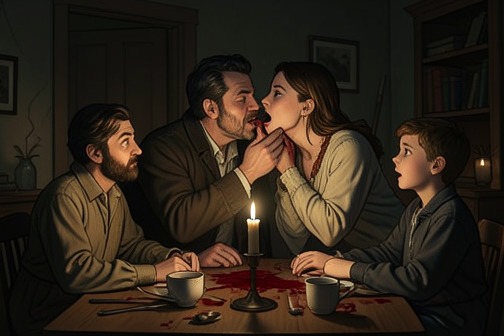
[The Great Plague vampire turning](entity:event-recall-event-the-great-plague-vampir-7b13cfd108f2) is the origin event of [Viktor](entity:character-recall-character-viktor-b7b35c6bd11e)’s vampire household and, by extension, the historical foundation of the Fort community. During the [Great Plague](entity:time-recall-time-great-plague-bd4e62d6088a), Viktor bit and transformed the members of his family, replacing an ordinary human household with a long-lived supernatural one whose descendants and recruits would eventually occupy a vast, partially subterranean mansion.
## Historical Setting and Founding Transformation
The turning took place during the Great Plague, when Viktor converted his family through biting. The account presents the act retrospectively, but its consequences define the Fort’s present. Viktor transformed himself into the founding patriarch of a vampire household and became its continuing authority: he is identified as the president, head, and master of the house. The event therefore functions as both a biological conversion and a political founding, joining family hierarchy to communal governance.
Viktor’s victims included his child, [Valnoir](entity:character-recall-character-valnoir-18546c75dafd), who was twenty-four at the time; [Magnus](entity:character-recall-character-magnus-098304000edd), then twenty-five; [Charlotte](entity:character-recall-character-charlotte-45ddf3085f55), only four; [Victoria](entity:character-recall-character-victoria-fef24d0cf051), twenty-nine; Viktor’s wife, Lady [Harriet](entity:character-recall-character-harriet-9ce5f2664d7b); and his former step-wife, [Lady Mary](entity:character-recall-character-lady-mary-5c3a9c4997b6). The list makes the turning unusually intimate and familial. It was not an isolated attack on strangers but a collective remaking of a household, with children, spouses, and step-relations all drawn into the same immortal condition. Their different ages at conversion preserve the social outlines of the former family even as the bite suspends ordinary human aging.
## Physical Consequences of the Turning
The transformation establishes the defining needs and dangers of the Fort’s inhabitants. They require blood to survive and are photosensitive: sunlight dries them out, while prolonged exposure reduces them to ashes or dust. Their condition is consequently less a romantic metamorphosis than a permanent medical and environmental constraint. The narrative compares the need for blood to a diabetic’s need for insulin or to other special dietary requirements, emphasizing bodily dependence rather than supernatural glamour.
The turning also creates a sharp contrast between appearance and reality. The vampires reject the familiar fictional image of creatures who sparkle in sunlight, and their condition is presented as compatible with ordinary human feeling and social identity. They regard themselves as people despite their need for blood and their lethal vulnerability to the sun. The event thus produces a community that is biologically different but insistently human in its self-understanding.
## From Family to Fort Community
The family transformation eventually becomes the basis for a much larger settlement. The Fort is an eighteenth-century mansion with more than 500 rooms across roughly ten stories; only three stories are above ground, while the remainder lie underground, and additional rooms continue to be excavated as more vampires join the community. Its architecture materializes the turning’s long aftermath: a private family conversion has expanded into a collective refuge whose enclosed, dim spaces accommodate hundreds of altered lives.
The Fort houses more than 300 people, all subject to a common labor system. Every resident receives assignments on [Sunday](entity:time-recall-time-sunday-073632221971) evenings, ranging from important duties to menial work, and must complete them before the following week. Viktor’s children receive the limited privilege of using the upper two stories reserved for his family, but otherwise they are treated like everyone else. The original kinship structure therefore survives, yet it is partially absorbed into an organized community in which inherited status does not exempt members from communal tasks.
The Fort’s interior further expresses the consequences of sunlight vulnerability. Its apparent windows are actually thin plasma screens set over bricks and plaster, broadcasting an exterior view without admitting real sunlight. Even the skylight in the foyer reproduces the outside brightness at a dimmer level. A mansion that appears open to the day is therefore sealed against it, turning the household’s founding condition into an architectural principle.
## Family Continuity and Historical Memory
Because Viktor converted the family at different ages, the turning preserves a distorted chronology within the household. Charlotte remains associated with the age of four, while the older family members retain the ages they had when Viktor bit them. Their relationships continue across centuries, but the original circumstances of conversion remain embedded in their identities and status. Viktor’s authority is both paternal and institutional: he is not merely the father who caused the transformation but the master who oversees the community created by it.
The family’s later tensions also remain tied to the circumstances preceding and following the turning. Lady Mary and Lady Harriet once quarreled repeatedly, with Lady Mary accusing Harriet of being a harlot because Harriet had slept with Viktor while he was still married to Lady Mary. Their marital history had already been damaged by expectations surrounding the production of a son. The vampire household thus carries human resentments into immortality rather than erasing them. The turning preserves conflict as effectively as it preserves bodies.
Magnus illustrates another long-term consequence. For roughly a century or two he lived up to his name and was regarded as magnificent, but his room was later reassigned underground, and he had not been seen by Valnoir for about ten years. Rumor placed him largely in the Harem, where men of his age frequently went. The transformation grants longevity, but it does not guarantee enduring prestige, family closeness, or a stable place within the Fort’s hierarchy.
## Narrative Significance
The Great Plague vampire turning is a threshold between human history and the Fort’s enclosed supernatural present. It changes life into vampiric survival, a family into a population, and a household into an institution. Its effects are visible in every practical feature of Fort life: blood-based sustenance, lethal sunlight exposure, artificial windows, underground expansion, communal work, and Viktor’s continuing authority.
The event also gives the Fort a distinctly Gothic historical weight. The eighteenth-century mansion is simultaneously home, shelter, workplace, and sealed monument to an old act of bodily conversion. Its musty, stale atmosphere and extensive underground rooms make the past physically inhabitable. Yet the inhabitants’ insistence that they are people, combined with the mundane distribution of jobs and household grievances, complicates the horror of the origin story. The turning creates monsters in biological terms, but the resulting community is organized around survival, kinship, labor, memory, and the claim to ordinary personhood.
Event 152
Charlotte's death in sunlight

[Charlotte](entity:character-recall-character-charlotte-45ddf3085f55)’s death in sunlight is a brief but devastatingly revealing event: the young vampire leaves the Fort’s protected life, enters the garden on a breezy summer day, and never returns. Because she remains trapped in childhood, her excursion has the terrible logic of a child’s movement beyond the limits of understanding. Her ashes scatter with the wind, while her clothes are the only physical remains recovered. The event turns sunlight from a background danger into an irreversible boundary between the Fort’s enclosed existence and the outside world.
## Causes and Circumstances
Charlotte is described as the younger sister of the Fort’s narrator, a child preserved in the age when children played in gardens. Her departure is not presented as a calculated escape or a deliberate suicide. She ventures into the garden, and the sunlight kills her before she can return. The circumstances therefore combine supernatural vulnerability with arrested development: she possesses the longevity of a vampire but remains psychologically and physically associated with childhood. The garden, ordinarily a space of play and openness, becomes the threshold through which that preserved childhood meets the lethal conditions of the present.
The family’s knowledge of the event is concrete but incomplete. Charlotte’s clothes are recovered, but her body is not; her ashes have gone with the breeze. That disappearance makes the death both material and strangely elusive. The Fort can confirm what happened without restoring a body for burial, leaving the family with clothing, scattered remains, and the knowledge that Charlotte walked out and never came back.
## The Death and Its Retelling
The event is recalled retrospectively during an explanation of the family’s history. The account first presents Charlotte’s fatal excursion almost clinically: she entered the garden roughly two decades earlier, on a breezy summer day, and her ashes were carried away. A later retelling supplies the emotional context, identifying her explicitly as the speaker’s daughter and emphasizing that she was a child trapped in childhood. The repetition changes the event’s meaning. What first sounds like an old supernatural accident becomes the central wound of a parent who has remained psychologically inside it.
The remembered death also clarifies the danger of the Fort’s existence. The residents may share work, routines, and domestic spaces, but sunlight remains an absolute physical limit. Charlotte’s clothes mark the point at which ordinary family life ends and vampire mortality asserts itself. Her death is not a battle or a public execution; it is an ordinary movement into a familiar space followed by total erasure, which makes the danger more intimate and unsettling.
## Family Consequences
Charlotte’s mother is the only family member described as openly devastated. After the death, she withdraws to her room and sinks into a deep depression. Her repeated attempts to hang herself from the ceiling fan are discovered by the family, who find her embarrassed when interrupted. The disturbing repetition shows grief becoming part of the Fort’s routine: even self-destruction is absorbed into the household’s exhausted, long-lived domestic life.
Charlotte’s father responds differently. He is said to have taken her death hard and to have stopped speaking about her. His silence contrasts with the mother’s visible collapse, but it does not indicate indifference. The later account suggests that his refusal to discuss Charlotte remains an active form of grief, and that fear may shape his attitude toward later family decisions. The death therefore continues to govern the family not through public mourning, but through silence, depression, and emotional avoidance.
## Memory, Time, and Emotional Exhaustion
The narrator’s reaction reveals the corrosive effect of extended vampire life. After living for years, family members become bored with people and lose the emotional intensity that once attached them to individual lives. The narrator admits that most feelings have died, leaving lust as the principal surviving impulse. Against that generalized numbness, Charlotte’s death is a significant exception: it is old, but it still structures the mother’s depression and the father’s silence.
This contrast makes the event a measure of what immortality has damaged. The family claims that no one was greatly affected except Charlotte’s mother, yet the father’s silence and the narrator’s detailed recollection demonstrate that the death has not disappeared from the household. Its effects have merely been converted into habits, evasions, and a detached manner of speaking. The narration’s apparent callousness is thus itself evidence of the Fort’s long temporal burden: grief has not vanished, but it has been forced to coexist with boredom.
## Narrative Significance
Charlotte’s death establishes the Fort as a community shaped by accumulated loss and obscured history. Its residents inherit customs whose origins they no longer understand, and Charlotte’s fate becomes one more event whose consequences survive after its immediate circumstances have faded. The family can explain the physical rule that killed her, but it cannot restore the child, undo the mother’s depression, or make the father speak.
The event also creates a sharp contrast between arrested youth and extreme age. Charlotte remains trapped in childhood while the surviving vampires have lived long enough for attachment to erode. Her death exposes the cruelty of that imbalance: the child is vulnerable to a danger she may not comprehend, while those who survive her possess centuries of experience but little remaining emotional capacity. In the family’s retrospective telling, the sunlight does more than kill Charlotte. It reveals the Fort’s central condition—that life can continue indefinitely while childhood, love, and grief are each damaged by time.
Event 153
Lola and Valnoir's first encounter

[Lola and Valnoir's first encounter](entity:event-recall-event-lola-and-valnoir-s-firs-9820d18243ca) is the decisive meeting between a hospital inventory worker and the grieving stranger who will become important in her life. What begins with suspicion at a locked morgue door moves through sympathy, permission, recognition, and sexual immediacy. The scene's central reversal is that [Lola](entity:character-recall-character-lola-2f3bbe3e3fd0) first treats [Valnoir](entity:character-recall-character-valnoir-18546c75dafd) as a possible intruder, then becomes the person who grants him access to the dead and finally initiates an intimate encounter with him. His grief gives the meeting its emotional pretext, while the unmistakable coldness of his body quietly signals that the encounter involves more than an ordinary stranger.
## Setting and Initial Suspicion
Lola encounters Valnoir during the quietest part of her overnight shift at a hospital. After the bustle has diminished, she notices a pale man in a hoodie moving purposelessly through the building, keeping his head down and his eyes darting from side to side. His casual appearance makes him seem out of place in the hospital, and his repeated stops to look around before turning corners convince her that he may be attempting to avoid notice. Because another receptionist is handling the front desk, Lola leaves her seat, takes a clipboard as a disguise, and follows him while maintaining what she considers a safe distance.
Valnoir's route intensifies the suspicion. He climbs to the second floor, enters an elevator, and sends it down to the basement. Lola avoids entering the same elevator because she does not want him to realize that he is being followed; instead, she waits for another car and descends after him. The basement opens onto a long corridor whose doors are locked to everyone without passes. A sign explicitly warns, “No Visitors — Only Staff Allowed.” Valnoir is standing near a glass door with his back to her, placing him at the precise boundary between the hospital's public spaces and its restricted morgue area.
Lola confronts him in her professional capacity, asking whether she can help and then informing him that the floor is for staff only. Valnoir immediately appears sheepish rather than threatening. His voice is unexpectedly deep and husky, an incongruity that complicates Lola's first impression of the furtive figure in the hoodie. She orders him out and threatens to call security, even remarking on what she sees as people's strange obsession with morgues. Her hostility is practical and performative, but it gives the scene its first value shift: the apparent trespasser is not exposed as a criminal but as someone drawn toward a place of unresolved loss.
## Grief, Permission, and Closure
Valnoir explains that he feels closer to his mother when he is at the hospital. He has never entered the morgue because, when she died, he could not bring himself to do so; instead, he panicked and fled town. By the time he returned, his family had already completed the funeral. His return to the hospital is therefore not an attempt to steal or interfere with anything. It is the physical expression of a grief that has never reached its final ritual. He feels as if his mother is still there, and something keeps pulling him back to the morgue despite his awareness that the impulse may seem foolish.
The disclosure changes Lola's position. She says that she is not close to her own parents, a contrast that helps explain why Valnoir's attachment initially seems incomprehensible to her. Yet she decides that there is no practical reason to deny him this single act of mourning. Having nothing better to do, she chooses to help him and unlocks the restricted door. The gesture is a breach of hospital procedure, but within the scene it functions as an act of compassion: Lola becomes the gatekeeper who allows Valnoir to confront the place he had avoided when his mother died.
Valnoir remains inside for five minutes while Lola waits outside and keeps watch. When he returns, he thanks her, and her question about whether he has found closure gives the encounter a temporary emotional resolution. Valnoir answers gratefully that he supposes he has. The exchange does not erase his history of panic or absence, but it converts his restless return into a completed visit. The morgue, initially a forbidden threshold, becomes the place where his grief is acknowledged and where his relationship with Lola begins.
## The Meeting Turns Physical
After the morgue visit, the two exchange names. Lola identifies herself, and the stranger introduces himself as Valnoir. He tells her that it is a pleasure to meet her and thanks her for letting him enter. Their politeness makes the following turn more abrupt: Valnoir says that he thinks he has seen her somewhere before. Lola treats the remark as a conventional pickup line and answers dryly that, if he wants sex, he should simply ask for it. Valnoir denies that the comment was calculated and says he genuinely believes he has seen her on television, but he still asks whether she is serious about the proposition.
Lola's response is driven less by an established emotional attachment than by an intense immediate need. She does not care what Valnoir looks like and admits that she barely looks at him. In her assessment, he is a sad man who needs comfort, and she has resolved to help everyone. That charitable impulse is inseparable from her own sexual frustration: the prospect of sex is so urgent that she literally throws herself at him. The scene therefore intertwines consolation and appetite rather than presenting them as separate motives. Lola responds to Valnoir's grief with the same directness with which she handles the hospital's practical demands, turning sympathy into physical action.
Valnoir is stronger than he appears and catches her easily, pressing her against the wall as he grinds against her. He still asks whether she is sure, preserving a moment of explicit hesitation and confirmation within the sudden escalation. Lola answers through action rather than explanation: she pulls him closer by his hoodie and kisses him. He holds her face while kissing her, and she reaches into his trousers. The encounter is narrated through touch, pressure, movement, and proximity before either character can construct a larger meaning for it.
The bodily details also introduce an ominous discrepancy. Lola feels that Valnoir is hard and cold and wonders whether she has forgotten what a man's body should feel like. The coldness is not explained within the encounter, but it is too prominent to be merely decorative. It places Valnoir's physical presence at odds with Lola's expectations and makes the scene's erotic attraction carry a simultaneous undertone of strangeness. The man who has just sought contact with the dead is himself marked by a body that does not feel conventionally alive.
## Consequences and Narrative Significance
The encounter begins with Lola trying to protect a restricted hospital area and ends with her surrendering control of the immediate situation. At first, she follows Valnoir, regulates his movement, and threatens to summon security. Then she opens the locked door for him. Finally, she initiates the physical contact and allows him to take the lead in the encounter's mechanics. This progression makes the meeting a compact study in threshold crossing: Valnoir crosses from public hospital space into the morgue, Lola crosses from professional authority into personal intimacy, and both cross from formal introductions into sexual contact.
The scene also binds death and desire together. Valnoir comes to the morgue because he cannot accept his distance from his dead mother, while Lola's response to his sadness is shaped by her own urgent desire to have sex. The hospital's locked basement, the warning against visitors, the five-minute visit, and Valnoir's reported sense of closure establish a setting governed by grief and institutional control. Against that setting, Lola's blunt proposition and immediate physicality create a jarring counterforce. The result is neither a conventional romantic introduction nor a purely casual encounter: it is a meeting in which mourning provides the opening, compassion provides permission, and bodily urgency determines what follows.
As a narrative event, the first encounter is significant because it presents Valnoir through partial disclosure. He is introduced as a grieving son, a possible trespasser, and a man whose appearance and strength do not fully match Lola's expectations. His unexplained coldness and his attraction to a morgue foreshadow the concealed supernatural identity associated with him elsewhere in the story, while Lola's willingness to help a stranger and then proposition him establishes her as unusually direct, impulsive, and responsive to immediate need. The encounter's final movement does not settle what either character understands about the other; instead, it creates the charged connection from which their later relationship can develop.
Event 154
Lola's harem escape and fire
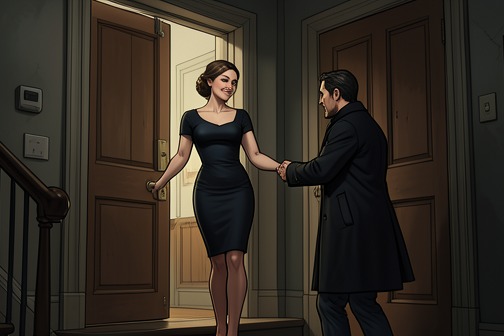
[Lola's harem escape and fire](entity:event-recall-event-lola-s-harem-escape-and-e274836af7fc) marks the moment when confinement ceases to be merely a condition imposed on [Lola](entity:character-recall-character-lola-2f3bbe3e3fd0) and becomes the setting for her own rebellion. [Valnoir](entity:character-recall-character-valnoir-18546c75dafd) attempts to contain her by force, but her escape, the fire, and the revelation of her witchcraft make the Harem's supposedly controlled order visibly fragile. What begins as a locked-door struggle ends with Lola possessing the most consequential power in the room.
## Causes and Captive Setting
Valnoir has already warned Lola that he will not allow her to leave and tells her to accept her stay. When he departs, the door closes behind him as if moved by an unseen force. He locks it from the outside, yet Lola soon appears on the stairs above him with a smug expression, insisting that she can release herself. Her escape is therefore not presented as an accidental opportunity or a lapse in supervision: it demonstrates that the physical barriers of the Harem cannot reliably hold her.
Valnoir responds by seizing Lola by the wrist and returning her to the Harem. He closes and locks the door again, treating restraint as the solution to her resistance. The repetition is important. Lola has escaped once, been recaptured, and then been confined again, so the second break is a direct answer to an escalating attempt at control. [The Harem](entity:organization-recall-organization-the-harem-5fcc3c7b0253) becomes both a prison and a stage on which the unequal relation between captor and captive is exposed.
## The Escape and the Fire
Valnoir has barely reached the end of the corridor when screams come from the Harem. He turns back and finds the women gathered in one corner, Lola standing in the middle, and every bed burning. The scene reverses the room's normal arrangement: the beds, ordinarily associated with the Harem's sexual routine and controlled use of its women, have become the instruments of visible disorder. Lola is no longer simply placed among the women; she occupies the center of the crisis.
When Valnoir demands to know who started the fire, Lola answers with mock innocence that she did it. The admission is neither an apology nor a plea. It is a declaration of authorship, giving the destruction a deliberate and confrontational quality. Valnoir orders one of the women to fetch a fire extinguisher, but Lola dismisses the need. With a wave of her hand and a snap of her fingers, she puts out all the flames at once. Her power is therefore shown in two stages: first as destructive force capable of setting the room ablaze, and then as precise control capable of ending the danger immediately.
The fire creates a value shift from captivity toward agency. Lola has been locked in a room and physically returned to it; moments later, the person who controls the room's greatest emergency is Lola herself. The extinguished fire also prevents the incident from becoming simple destruction. Its decisive function is revelation: the blaze forces the household to witness what Lola can do.
## Revelation of Witchcraft
[Victoria](entity:character-recall-character-victoria-fef24d0cf051) identifies Lola as a witch and recognizes the political danger of the discovery, saying that Valnoir has brought a witch into the Harem and that the information will please Father. The statement connects Lola's personal resistance to the larger authority governing the household. Her identity is no longer a private secret between herself and Valnoir; it has become knowledge that can be reported upward and used against them.
Valnoir tells Victoria not to inform Father yet and promises to explain later. His response delays disclosure rather than resolving it. He understands that Lola's presence does not fit comfortably within the Harem, but he still attempts to manage the information himself. Victoria objects that Lola does not belong there and urges Valnoir to set her free before the situation becomes more complicated. The warning confirms that Lola's witchcraft has altered the terms of her captivity: keeping her locked away is no longer a routine act of possession but a dangerous household problem.
The event also contrasts Lola's magic with the Harem's established practices. Victoria leaves to seek a feeding, while [Magnus](entity:character-recall-character-magnus-098304000edd) enters, chooses another woman, and takes her to bed without even drawing the curtains. The sexual routine continues around the aftermath of the fire, making the contrast stark. The Harem's old order depends on repetition, access, and the treatment of women as available bodies; Lola introduces an unpredictable power that cannot be absorbed into that routine.
## Consequences and Narrative Significance
After Victoria leaves and the women gradually return to their ordinary activities, Valnoir takes Lola to a bed and draws the curtains. The immediate consequence is not liberation. Lola remains inside the Harem, and Valnoir continues to exercise physical control over her. Yet the conditions of that confinement have changed. He can lock a door, seize her wrist, and return her to the room, but he can no longer plausibly regard her as an ordinary captive.
The episode therefore functions as an escape plot and a discovery plot at once. Lola escapes confinement, is recaptured, escapes again through supernatural means, and exposes a hidden identity in the process. Its structure moves from threat, to pursuit, to apparent containment, to spectacular reversal. The first escape proves that the lock is inadequate; the fire proves that the institution itself is vulnerable; the extinguishing gesture proves that Lola's power is controlled rather than merely chaotic.
In thematic terms, the Harem fire turns architecture into an argument. A closed door represents Valnoir's claim to possession, while the burning beds reveal the violence and instability beneath the household's polished routine. Lola's magic breaks the illusion that the Harem can contain every woman placed inside it. Even though she has not yet been released, she has made her captivity visible as a conflict and has forced Valnoir to negotiate with a captive who can damage, command, and redefine the space around her.
Event 155
Lola's Wicce succession revelation
[Lola's Wicce succession revelation](entity:event-recall-event-lola-s-wicce-succession-98259324ccb6) transforms her from a young woman caught in an uncertain romance into the recognized heir to the Fort's spiritual authority. The revelation begins with an apparently strange announcement about an “improbable pregnancy,” then moves through the Fort's lavish interior to a private bedroom, where [Lady Mary](entity:character-recall-character-lady-mary-5c3a9c4997b6) leads [Lola](entity:character-recall-character-lola-2f3bbe3e3fd0) to a woman lying with her back turned. When the woman faces them, Lola recognizes her as her grandmother. The scene joins concealed family history, institutional succession, and Lola's emerging adult responsibilities in one decisive disclosure.
## Discovery of the Wicce's Identity
Lola is not given the truth in a public ceremony. Lady Mary takes her outside, asks her to follow, leads her up a single staircase, and guides her through a lavish corridor to a closed room. She knocks but opens the door herself, urging Lola inside. The controlled movement through the Fort's grand architecture gives the discovery the shape of an initiation: Lola passes from ordinary conversation into a secluded chamber where an older generation has been waiting for her.
The woman on the bed initially faces away from Lola, delaying recognition. Lady Mary announces Lola's arrival, and the old woman turns around. Lola's shocked recognition of her grandmother supplies the emotional and informational climax of the scene. [The Wicce](entity:character-recall-character-the-wicce-9d83164d4eb3) is not an unknown religious figure or a distant officeholder; she is part of Lola's own family. The Fort's hidden authority is therefore revealed as a bloodline secret, and Lola's personal past becomes inseparable from the institution's future.
## Appointment as Heir
The disclosure is followed by a succession demand. The Head of the Fort asks Lola to become the next Wicce, replacing her grandmother when the older woman dies. Lola does not initially welcome the prospect. She admits that she does not really want the role, but the opportunity feels like an honor because it would allow her to take her grandmother's place. Her eventual agreement is therefore neither effortless ambition nor simple coercion. It is a conflicted acceptance shaped by family loyalty, institutional respect, and the weight of inheritance.
Lola must begin learning in days what ordinarily takes years to master. That compressed training makes succession an immediate burden rather than a distant title. The role demands that she leave behind the pace and priorities of her former life, while the Fort treats her as someone who must rapidly acquire knowledge belonging to an older order. Her agreement establishes a new identity for her before she has emotionally settled the consequences of the revelation.
## Conflict with [Valnoir](entity:character-recall-character-valnoir-18546c75dafd)
Lola's succession unfolds alongside a sharp rupture with Valnoir. After she enters her grandmother's sphere, Valnoir sees her only a handful of times. Their encounters are reduced to polite greetings, and he experiences her withdrawal as deliberate neglect. From his perspective, she moves through the Fort with an air of superiority and purpose while withholding the attention he wants. He resolves to confront the matter when he next sees her, but the succession has already changed the terms of their relationship.
Lola's later account reveals that the distance is more complicated than simple rejection. She remembers first disliking Valnoir, then playing hard to get, then allowing the situation to become emotionally unmanageable. Once he stops seeking her out, she realizes how painful his absence is. She tries to speak with him, but he speeds up and disappears whenever she approaches. The Wicce appointment thus coincides with a pursuit-and-withdrawal pattern in which both lovers interpret silence as an answer while neither has resolved the underlying conflict.
## [Pregnancy](entity:state-recall-state-pregnancy-cdafbf158725) and the Cost of Inheritance
The succession revelation also arrives beside Lola's missed period. She thinks she is probably pregnant, and the possibility matters deeply because she has wanted a child for a long time. Yet the pregnancy is entangled with the collapse of her romance. Lola is unsure whether Valnoir loves her or whether she was only a passing fancy, and she fears that accepting the role of Wicce may force her into an impossible choice between him and the child.
She cannot bring herself to take a pregnancy test because the result could confirm either her hope or her fear: she might be pregnant, or she might merely be ill. Valnoir has previously made clear that he does not want children, which makes the possible pregnancy a direct threat to the future she imagined with him. Lola's new religious and familial duty therefore does not replace her private crisis; it intensifies it. She has agreed to inherit her grandmother's office while still lacking certainty about her body, her lover's feelings, and the shape of her family life.
## Narrative Significance
The event changes the meaning of Lola's isolation. What can look from Valnoir's viewpoint like calculated indifference is, from Lola's perspective, the consequence of sudden training, family revelation, and an unconfirmed pregnancy. The alternating viewpoints expose a mutual misunderstanding rather than providing a single authoritative emotional explanation. Valnoir sees an inaccessible woman claiming a new authority; Lola sees a lover retreating just when she needs reassurance.
The succession also converts ancestry into obligation. Lola's grandmother is simultaneously a beloved relative and the holder of an office that Lola is expected to inherit. The family revelation carries institutional consequences, while the institutional appointment redefines the family relationship. By agreeing to become the next Wicce, Lola accepts an honor that requires accelerated learning and threatens to reorder her romance, pregnancy, and sense of home. The event's decisive significance lies in that collision: a hidden grandmother is revealed, a supernatural succession is set in motion, and Lola must begin choosing a future before she knows whether Valnoir will share it.
Event 156
Lola discovers her pregnancy

[Lola discovers her pregnancy](entity:event-recall-event-lola-discovers-her-preg-073635055d99) after a period of emotional uncertainty and professional upheaval, and the positive test changes the direction of her life. What begins as a private fear—whether she is ill or carrying [Valnoir](entity:character-recall-character-valnoir-18546c75dafd)’s child—becomes a confirmed pregnancy, a medically observed early life, and the first step toward a new identity beyond her troubled relationship and inherited family role.
## Emotional and Social Background
Two weeks after the previous turning point in her relationship with Valnoir, [Lola](entity:character-recall-character-lola-2f3bbe3e3fd0) is caught between attachment and abandonment. She recalls that she initially disliked him, then resisted him, and eventually found that the relationship had become emotionally important. Since Valnoir last visited her grandmother’s room, however, he has avoided her, speeding up and disappearing whenever she tries to speak with him. His withdrawal leaves Lola unsure whether she was only a passing fancy and makes the possibility of pregnancy inseparable from the question of whether he still loves her.
At the same time, Lola has accepted the Head of the Fort’s request that she become the next Wicce after her grandmother’s death. She does not fully want the position, but regards succeeding her grandmother as an honor. The appointment imposes an accelerated education: she must learn in days what ordinarily takes years. This new responsibility places her between inherited magical authority and an unexpected maternal future, so the pregnancy is not merely a private development but part of a broader transfer of identity.
## Discovery and Medical Confirmation
Lola has missed her period and suspects that she is pregnant, but she hesitates to take a test. [Pregnancy](entity:state-recall-state-pregnancy-cdafbf158725) is something she has wanted for a long time, yet she fears that it may come at the cost of love. She also remembers that Valnoir had been clear about not wanting children. Her anxiety therefore has two directions: she hopes for a child while fearing that the child may confirm the end of her relationship with its father.
After speaking with her grandmother, Lola leaves the Fort for the first time in weeks and goes to a pharmacy. The action is a decisive recovery of agency. Rather than waiting for Valnoir to define the situation or allowing the Fort’s demands to determine her next step, she obtains the pregnancy test herself, returns to her apartment, and faces the result privately. She prays for a positive result while preparing herself for the possibility that it will not come. The test is positive, confirming that she is pregnant with Valnoir’s child.
The discovery is immediately followed by clinical confirmation. Lola returns to the hospital, submits her resignation, and books a scan. During the examination, the doctor spreads gel across her stomach and moves a scanner over her body, showing her the tiny developing baby on the screen. The doctor cautions that the pregnancy is still very early and that many things can go wrong, but reports that everything appears perfect so far. The reassurance does not erase the risks; instead, it establishes the pregnancy as both vulnerable and real, requiring continuing care.
## A New Chapter and Conflicting Loyalties
Lola interprets the positive test as the beginning of a new chapter. Her resignation from the hospital marks a practical break with her former routine, while the scan gives the future a visible form. The baby is not an abstract possibility anymore: it appears on the screen as a small, developing life whose growth will proceed quickly even though the pregnancy has only just begun.
Her response also reveals the conflict between personal desire and relational uncertainty. Lola wants the child, but she does not want to be forced to choose between Valnoir and motherhood. The prospect of returning to her mother’s house expresses her longing for protection at a moment when love, family inheritance, work, and magical duty all seem unstable. Yet her decision to test herself, resign, and arrange medical care shows movement away from dependence. The event shifts the central question from whether Valnoir will return to how Lola will organize her life around a future she has chosen to acknowledge.
## Consequences and Narrative Significance
The pregnancy discovery connects several transformation patterns in the larger story: ceremonial elevation, bodily change, reproduction, and the assumption of communal responsibility. [Cheryl](entity:character-recall-character-cheryl-af54b6410705) is carried from the temple to the palace in a public queen-making procession and is expected to provide heirs; Teresa learns that Joining determines [Kinai](entity:location-recall-location-kinai-8c60014d50cf) identity and occurs within a tightly guarded communal cycle; and Harrod’s transformation is witnessed by an entire wolf den beneath the full moon. Lola’s pregnancy differs from these collective rites because it begins in uncertainty and is confirmed through a private medical test and scan. Its threshold is domestic and bodily before it becomes social.
The event also stands in sharp contrast to the coercive reproductive systems elsewhere in the narrative. [Gemma](entity:character-recall-character-gemma-b1c21c6b476b) is told that her impossible child could be the key to curing the [Stlozyn disease](entity:state-recall-state-stlozyn-disease-66cf1a5638e9), and the Science Board pressures [Shay](entity:character-recall-character-shay-5a5fab224960) to expose his research and obtain fetal material despite the danger to Gemma and the unborn child. Lola’s examination, by contrast, is presented as a step she initiates after deciding to know the truth. The doctor acknowledges uncertainty without reducing her or the fetus to a research specimen. That contrast makes Lola’s pregnancy a story of threatened but reclaimed bodily agency.
The positive test does not resolve Lola’s relationship with Valnoir, nor does it guarantee a safe pregnancy. It leaves her facing the possibility of motherhood without the assurance of the child’s father’s affection, while the Wicce succession demands that she acquire knowledge and authority at extraordinary speed. Its decisive consequence is therefore not simple happiness but commitment: Lola accepts that the pregnancy exists, begins medical care, resigns from the hospital, and turns toward a future she must now build rather than await.
Event 157
Lola's confrontation with Mayumi May
[Lola's confrontation with Mayumi May](entity:event-recall-event-lola-s-confrontation-wi-952d19d06e97) is a decisive act of separation: after learning that she is pregnant, [Lola](entity:character-recall-character-lola-2f3bbe3e3fd0) returns to her mother's guarded residence not to seek money or reconciliation, but to announce that she will not repeat Mayumi's failures. Mayumi's refusal to acknowledge the pregnancy turns the visit into a final judgment, and Lola leaves having chosen the Fort, her unborn child, and her own definition of family over the approval of the mother who failed her.
## Causes and Preparation
The confrontation follows Lola's first departure from the Fort in weeks. She goes to a pharmacy, buys a pregnancy test, and returns to her apartment hoping intensely for a positive result. The test confirms that she is pregnant, changing the meaning of the choices ahead of her. She resigns from her hospital position and arranges an ultrasound, where the doctor reassures her that the pregnancy is developing well and points out the baby on the screen. The pregnancy therefore precedes the confrontation not as incidental news but as the concrete reason Lola decides that her life must enter a new chapter.
Her pregnancy also gives the visit a moral purpose. Lola has already concluded that she is not her mother and will not become her. Mayumi's history of emotional failure has become the negative model against which Lola defines her own future: she intends to be present for her child and to be a good mother. The confrontation is consequently both an accusation directed backward and a vow directed forward. Lola does not merely condemn Mayumi; she uses Mayumi's failure to establish the standard by which she will judge herself.
## The Confrontation at Mayumi's Home
A guard admits Lola to Mayumi's residence with the warning that her mother is in a bad mood. Lola answers that Mayumi never is, immediately revealing how familiar and entrenched the hostility has become. Inside, Mayumi occupies the same stainless-steel sofa in the same posture as before. Only her clothes and shoes have changed. The repeated setting and posture make the meeting feel frozen in an old pattern, while Lola's pregnancy represents the irreversible change that the room and Mayumi appear unable to register.
Lola tells Mayumi that she is pregnant and waits for a response. Mayumi offers none. She looks at Lola as though the announcement has not been made and as though Lola herself is not present. That silence is the scene's sharpest rejection: Mayumi does not contest the pregnancy, welcome the future grandchild, or acknowledge the emotional importance of the news. Her apparent indifference forces Lola to speak more directly, declaring that she will not fail her child as Mayumi failed her and will not become her mother.
Mayumi interprets the visit as a possible request for money, asking whether Lola has come because she needs financial help. Lola rejects that interpretation. She explains that she came only to tell Mayumi to her face that she failed her, and that Mayumi will never see her again. The exchange strips away any remaining expectation that the encounter might become a reconciliation. Lola is not asking to be admitted into Mayumi's world; she is withdrawing from it.
## The Break and Its Consequences
Lola then imagines a future in which Mayumi is old and miserable, abandoned by the friends who surround her, and unable to purchase family love with money or fame. She warns that Mayumi may eventually want to see her, only to find that Lola will no longer be there. Lola recognizes afterward that she may have gone too far, but the recognition does not undo the decision. Mayumi's blank expression has made restraint feel like another form of erasure, and Lola chooses a painful final statement over another silent departure.
The value shift is from dependence to self-determination. Lola enters the house as a pregnant daughter still confronting the possibility of maternal acknowledgment; she leaves as a future mother who has accepted that acknowledgment will not come. The confrontation does not repair the family bond. Instead, it converts Lola's grievance into a boundary and gives her a clear, if painful, answer about the relationship's limits.
## New Home and Narrative Significance
After leaving Mayumi, Lola returns to the Fort, the place she is beginning to regard as her new home. She does not know whether [Valnoir](entity:character-recall-character-valnoir-18546c75dafd) will accept her, but she resolves to remain there and to live with the fact that he will be around. The return links the maternal rupture to Lola's broader reorientation: her old family home offers no recognition, while the Fort becomes the uncertain setting in which a different family and future may be built.
The event is narrated through Lola's first-person account, giving the break the immediacy of testimony rather than the distance of an external report. Its structure moves from bodily confirmation, to medical recognition, to maternal denial, and finally to departure. The positive pregnancy test establishes that Lola is carrying a new life; the confrontation establishes that she will not carry forward the emotional pattern she inherited. Her declaration that she is not her mother is therefore more than an insult. It is the event's governing act of identity: Lola separates herself from Mayumi by choosing presence, responsibility, and a future organized around her own child.
Event 158
Death of the Wicce
The [Death of the Wicce](entity:event-recall-event-death-of-the-wicce-935a4c1e0d21) marks the loss of [Lola](entity:character-recall-character-lola-2f3bbe3e3fd0)’s grandmother and the collapse of Lola’s remaining expectation that there will still be time to learn from her. Although Lola recognizes that her grandmother is dying, the death arrives with a force that turns foreknowledge into shock. Its immediate aftermath leaves Lola grieving, physically overwhelmed, and increasingly uncertain of her own strength while [Valnoir](entity:character-recall-character-valnoir-18546c75dafd)’s silence compounds her isolation.
## Causes and Background
Lola has been spending time with her grandmother and gradually notices that the older woman sleeps more each day. The decline is slow enough to become part of the household’s routine, but its direction is unmistakable: Lola knows what is coming. That knowledge does not make the loss manageable. Instead, the event exposes the difference between intellectually anticipating death and enduring the instant in which a loved one is actually gone.
The grandmother’s importance is measured not only by family affection but also by the unfinished instruction between them. Lola believes there is still much her grandmother could teach her and much she herself wants to learn. The death therefore removes a living source of knowledge at the moment Lola most needs continuity, guidance, and the confidence to inhabit her newfound strength.
## What Happens
The death is announced to Lola by [Victoria](entity:character-recall-character-victoria-fef24d0cf051) and [Viktor](entity:character-recall-character-viktor-b7b35c6bd11e) when they come to her room. Their message produces an immediate bodily and emotional collapse: Lola experiences the news as if a wrecking ball has struck her and her soul has been knocked from her body. She cannot clearly remember what follows, except that Viktor catches her as she falls. The narration thus presents the event through shock and fragmentation rather than through a controlled account of the death itself.
The sequence turns on a sharp reversal. Before the announcement, death remains an approaching certainty that Lola can name but not yet feel. After it, the abstract future becomes an irreversible present. The grandmother is no longer merely sleeping more often; she has passed away, and Lola’s anticipated lessons can never occur. The value shift is from threatened loss to completed bereavement, with the physical fall making the psychological rupture visible.
## Immediate Consequences
The grandmother’s death is followed by a cremation attended by Valnoir, who neither looks at Lola nor speaks to her. His presence without consolation intensifies the distinction between being surrounded by people and being emotionally accompanied. Lola describes the resulting loneliness as frightening, especially because the strength and resolve she had recently discovered are already beginning to diminish.
The event also changes the practical and emotional conditions of Lola’s development. What she hoped to receive through continued time with her grandmother must now be faced as an absence. The death interrupts transmission: knowledge, confidence, and family continuity are no longer available through direct instruction. Lola is left to carry forward what she has learned while confronting the fact that much of the hoped-for teaching will remain inaccessible.
## Narrative Significance
The event’s power comes from the tension between preparation and surprise. Lola has watched the signs of decline and believes that awareness should make the final moment easier, yet the announcement still overwhelms her. This contradiction gives the death its traumatic shape: anticipation provides no emotional rehearsal for the actual loss.
The narration also makes the event an instance of fractured witnessing. Lola can identify the cause of her collapse, but she cannot recall much of the aftermath; the surviving image is Viktor’s arms beneath her as she falls. The scene’s omissions communicate the force of grief more effectively than a complete chronological report would. The loss is understood through bodily sensation, broken memory, and the silence that follows the cremation.
For Lola, the Death of the Wicce is therefore both an ending and a dangerous threshold. It removes her grandmother, interrupts a promised education, and leaves her vulnerable at a moment when she is trying to become stronger. The event does not resolve Lola’s path; it strips away the person who might have helped her navigate it, making her subsequent choices carry the weight of inheritance, grief, and self-reliance.
Event 159
Lola and Valnoir's reconciliation
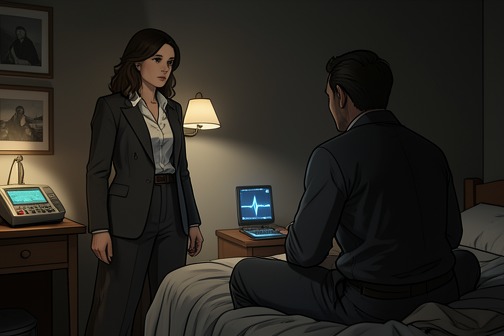
[Lola and Valnoir's reconciliation](entity:event-recall-event-lola-and-valnoir-s-reco-215a6d470151) is the turning point at which mutual avoidance gives way to an explicit emotional and familial commitment. [Lola](entity:character-recall-character-lola-2f3bbe3e3fd0) enters [Valnoir](entity:character-recall-character-valnoir-18546c75dafd)’s room while he is resting because his habit of ignoring her and fleeing whenever she appears has left ordinary conversation impossible. She forces the confrontation by making him listen, then reveals that she is pregnant. His initial uncertainty about their relationship does not end the scene; instead, the disclosure compels both of them to articulate what they have been refusing to say. By the end, Valnoir accepts the pregnancy, acknowledges the baby as belonging to both of them, and chooses continued closeness over escape.
## Causes and Emotional Deadlock
Before the reconciliation, Lola and Valnoir are trapped in a pursuit-and-withdrawal pattern. Valnoir avoids her, refuses to speak, and repeatedly leaves whenever she tries to approach him. Lola responds by alternating affection with sudden coldness, ignoring him and then chasing him again. She later explains that this behavior was not indifference but a strategy born from fear: she was in love with him, afraid of losing him, and hoped that acting difficult would keep his interest. The relationship therefore turns on a mutual misreading. Lola interprets Valnoir’s withdrawal as uncertainty, while Valnoir does not fully recognize his own attachment until Lola’s coldness makes her absence emotionally unmistakable.
Lola’s pregnancy creates a second pressure. She has already learned that she is carrying Valnoir’s child, and the news cannot remain separate from the question of whether he will accept her. She enters his room at midday while he lies on the bed with his eyes closed, although she knows he hears her approach. His immediate response is a refusal to talk and an instruction for her to leave. The scene begins, therefore, not with a voluntary confession but with Lola breaking through a pattern of silence that has prevented any stable understanding between them.
## The Confrontation and [Pregnancy](entity:state-recall-state-pregnancy-cdafbf158725) Revelation
Lola deliberately keeps Valnoir from escaping long enough to make him hear her. She tells him that they are going to talk, and after he answers with playful skepticism, she states the central fact directly: she is pregnant, and the other women’s suspicions were correct. Valnoir reacts with shock, asking what she has said, and Lola repeats that the pregnancy is early but certain. The revelation changes the stakes from an uncertain sexual relationship to a shared future involving a child.
Valnoir’s first response is not an immediate promise. He says that he would not have made Lola choose, then admits that he does not mind having a baby if it is with the right person. When Lola asks whether she is that person, he answers that she could be, but that he is no longer sure. His hesitation makes the reconciliation more substantial than a simple acceptance of pregnancy: he must confront not only fatherhood but also the instability that has characterized their intimacy.
The scene’s value shift comes through this distinction. Lola begins with knowledge of the pregnancy but no confidence that Valnoir will claim a place beside her. Valnoir begins behind avoidance and uncertainty, treating conversation itself as something to evade. Their exchange moves toward recognition because the pregnancy forces the hidden relationship into language. The child becomes the concrete fact neither can dismiss, while the conversation makes their emotional motives equally visible.
## Mutual Confession and Choice to Stay
Lola explains the source of her contradictory behavior with unusual openness. She tells Valnoir that she loves him, that he is the best thing that has happened to her, and that she has been frightened because she does not know what she means to him or where she stands with him. Her confession turns what looked like manipulation into an expression of insecurity and longing. She has been attempting to preserve the relationship without knowing whether the relationship exists on equal terms.
Valnoir answers by acknowledging that his own pursuit was evidence of interest. He says that he did not understand the truth until Lola gave him the cold shoulder, and that he had been afraid to admit that she was the one for him. The confession establishes reciprocal feeling: Lola’s fear of abandonment and Valnoir’s fear of acknowledging attachment have produced the same cycle of distance. Their apparent conflict is revealed as a shared failure to speak rather than a lack of desire.
Valnoir also reveals that he had previously asked whether Lola would stay, and that she had agreed. He had not told her this himself, and the fact reaches their conversation only when Lola brings it up. Lola explains that she accepted because she could not stand being away from him; when he stopped speaking to her, remaining nearby was the best way to stay close, and now that they are communicating again she has an even stronger reason to remain. Her decision to stay converts physical proximity into an emotional commitment. She is no longer merely pursuing someone who retreats; she is choosing a shared place in his life.
## Acceptance of the Child and New Beginning
The reconciliation reaches its clearest resolution when Valnoir speaks of the unborn baby as “our child.” Lola experiences relief at hearing that phrase from him because it confirms that he is not treating the pregnancy as solely her burden. The language marks a change in status: the pregnancy is no longer an isolated secret or an obstacle between them, but a joint reality that Valnoir recognizes as part of his own future.
Valnoir also refuses to transform Lola into a vampire because doing so would kill the child. This decision carries both practical and emotional significance. It protects the pregnancy, preserves Lola’s human condition for the time being, and demonstrates that his concern extends beyond the immediate demands of their relationship. His refusal to turn her confirms that the child’s survival has become a priority in his choices.
Lola interprets this acceptance as a new beginning and a second chance, a future she has wanted throughout her life. The reconciliation therefore does not erase the earlier confusion or prove that every difficulty has vanished. Instead, it establishes the conditions for a family: Lola remains, Valnoir acknowledges his love, the pregnancy is accepted, and the child becomes a shared point of belonging. The ending is a commitment to continue together rather than another retreat into silence.
## Narrative Significance
The event follows a romance structure built from resistance, miscommunication, disclosure, and recognition. Lola’s pregnancy is the external revelation that makes the internal relationship impossible to postpone, while the mutual confessions provide the emotional resolution. Neither character performs a grand public gesture; the decisive movement occurs in a private room, through a confrontation that begins with refusal and ends with Valnoir naming the child as theirs.
The scene also contrasts this intimate reconciliation with other relationship systems in the wider narrative, where social belonging can be defined through public ceremony, ritual, law, or collective recognition. [Cheryl](entity:character-recall-character-cheryl-af54b6410705)’s transfer from the temple to the palace occurs before a chanting crowd and places her within a royal reproductive role, while Cheryl later insists that both Bjorn and [Maskin](entity:character-recall-character-maskin-5df12ba18891) must remain together if either is to have her. Teresa learns that Joining is a guarded [Kinai](entity:location-recall-location-kinai-8c60014d50cf) institution in which adults gather every twenty-five years at the [Rookery](entity:location-recall-location-rookery-9e0fa67f09fd) during winter, and Harrod’s acceptance as a [True Alpha](entity:expression-recall-expression-true-alpha-18dda9f4df57) is witnessed by the entire den under the full moon. Lola and Valnoir’s change is quieter and more personal, but it is equally transformative: their private speech produces a new family identity.
For Lola, the decisive fact is not simply that she is pregnant. It is that Valnoir moves from avoidance to acknowledgment, from uncertainty about whether she is the right person to an admission that he cannot bear separation from her. The reconciliation thus joins romantic commitment, parental responsibility, and bodily protection in one turning point. Its final image is not a public ceremony but Lola’s relief at hearing “our child,” a small phrase that makes their previously unstable bond legible as a shared future.
Event 160
Birth and vampiric transformation of Lola
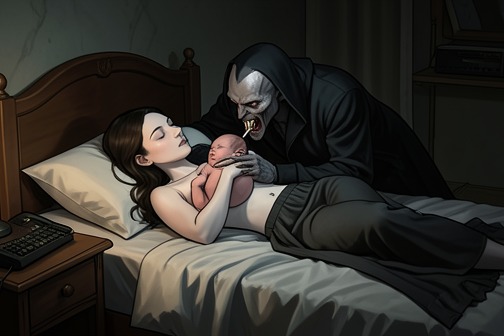
[Birth and vampiric transformation of Lola](entity:event-recall-event-birth-and-vampiric-tran-4a06aa39b081) is a concentrated life-and-death turning point. [Lola](entity:character-recall-character-lola-2f3bbe3e3fd0) gives birth to a daughter, [Charlotte](entity:character-recall-character-charlotte-45ddf3085f55), but the delivery costs her life. [Valnoir](entity:character-recall-character-valnoir-18546c75dafd) responds by biting her in a last attempt to preserve her, transforming her into a vampire just as the newborn cries for her mother. The scene therefore makes family formation inseparable from supernatural change: Lola returns to consciousness not as the same human woman who entered labor, but as a mother newly admitted to the undead world.
## Causes and Background
The event follows Lola’s pregnancy and her established relationship with Valnoir, whose family is present when labor begins. The crisis starts abruptly. During an intimate moment, Lola realizes that what first appears to be urination is actually the breaking of her water. A contraction follows almost immediately, and she orders Valnoir to take her to the hospital. Instead, the household must organize an emergency birth around her.
The response draws together several generations and supernatural figures. Valnoir summons his mother and [Lady Mary](entity:character-recall-character-lady-mary-5c3a9c4997b6) for help; Lady Mary calls the doula and midwife, while Valnoir’s mother assists Lola in getting comfortable. The setting becomes a private, improvised delivery room rather than a hospital scene, making the birth a domestic ordeal witnessed by the family. That intimacy intensifies the stakes: Lola’s labor is not merely a medical event but a collective crisis in which Valnoir, his mother, Lady Mary, the doula, the midwife, and [Victoria](entity:character-recall-character-victoria-fef24d0cf051) all become immediate witnesses and participants.
## The Birth and the Crisis of Death
Labor grows steadily more severe. Lola screams at Valnoir, grips his hand so tightly that he fears his wrist will break, sweats heavily, and struggles to breathe as the midwife tells her to push. When the doula offers to take over from Valnoir, Lola refuses to release him. Her refusal gives the scene a precise emotional center: even in extreme pain, she insists on keeping Valnoir physically beside her, while he tries to support her by repeatedly assuring her that she is strong and can succeed.
Lola eventually pushes, and the screams of labor become the cries of a newborn. Victoria announces that the baby is a girl. Valnoir receives the infant and sees himself and Charlotte reflected in her, a visual recognition that ties the new child to the family’s existing emotional history. The apparent triumph lasts only moments. The midwife discovers that the baby is not breathing, and the room falls into stunned silence around Lola’s dead body. The event thus reverses the expected order of childbirth: the child arrives, but both mother and daughter remain in immediate danger.
## Valnoir’s Bite and Lola’s Transformation
Victoria takes the baby and tells Valnoir to attend to Lola. Valnoir bites Lola’s wrist in a last-ditch effort to keep her from being lost. The bite is not presented as a planned transformation or a ceremonial choice. It is an emergency act performed while Lola has only a faint pulse, intended to push her through death and bring her back on the other side. The supernatural mechanism turns the boundary between saving and killing into the same physical gesture.
For a moment, the transformation appears to fail. The baby cries for her mother while everyone watches the body in silence, and Valnoir searches Lola’s chest for any sign of movement. Tears form in his eyes as he waits. Lola then slowly opens her eyes and says that she is thirsty, an immediate bodily indication that the bite has changed her condition even before she understands what happened. Victoria explains that Lola has both delivered a baby and died, but has now returned as one of the undead.
Lola’s confusion is central to the transformation’s meaning. She has no time to process either motherhood or vampirism separately. Valnoir tells her that she had been dying and that he had to turn her, while admitting that he cannot tell whether her dazed state comes from the bite or the birth. The uncertainty preserves the scene’s liminality: Lola is simultaneously recovering from labor, awakening from death, meeting her daughter, and entering a new species identity.
## Immediate Consequences and New Family Structure
The event produces two linked survivals. Charlotte is born as a girl, although the infant’s breathing initially fails and the scene records her crying for Lola. Lola, meanwhile, survives only through vampiric transformation. Her return means that the family is not left with a newborn and a dead mother, but with a newborn whose mother has crossed into the undead community.
The transformation also changes Lola’s relationship to Valnoir. His decision to bite her saves her life, but it permanently alters the terms of their partnership. He has acted without the leisurely possibility of discussion because death is imminent; afterward, Lola must learn what has happened and what being a vampire entails. The action is therefore both rescue and irreversible intervention, binding Valnoir’s love and fear of loss to a decision that remakes Lola’s body and future.
The scene ends by moving directly from survival to commitment. Valnoir draws a ring box from his pocket and kneels beside Lola’s bed to propose. Lola objects to the timing, since she has only just given birth and returned from death, but Valnoir presses her for an answer. The proposal places marriage immediately after birth and transformation, presenting the three changes as a single accelerated passage into family life: Lola becomes mother, vampire, and prospective bride within the same crisis.
## Narrative Significance
Structurally, the event follows a separation, threshold, and reintegration pattern. Lola is separated from ordinary human life by labor and death; she passes through the threshold marked by Valnoir’s bite; and she returns to the household as an undead mother rather than as the human woman who entered labor. Unlike a controlled initiation, however, the passage is forced by emergency. The family can prepare for the birth, but it cannot prepare for the death that follows or for the transformation required to reverse it.
The scene’s strongest value shift is from anticipated family joy to imminent loss and then to miraculous, though costly, restoration. The birth appears to promise renewal when the baby arrives, collapses into death when the infant is found not to be breathing and Lola is dead, then reverses again when Lola opens her eyes. The reversal does not erase the danger. It makes the new family dependent on a supernatural act whose consequences will continue beyond the scene.
The event also fuses reproductive and supernatural continuities. In the wider narrative, supernatural identities, fertility, mating, and family succession repeatedly pass through ritualized thresholds: [Cheryl](entity:character-recall-character-cheryl-af54b6410705) is publicly transferred toward queenship, Teresa learns that [Kinai Joining](entity:state-recall-state-kinai-joining-dbc13549c076) occurs every twenty-five years among unmarried [Kinai](entity:location-recall-location-kinai-8c60014d50cf) adults between twenty and thirty, and Harrod’s full-moon trial is witnessed by the entire den. Lola’s transformation is different in method but comparable in function. It is a passage witnessed by a community, and it determines both personal identity and belonging. Her transition is not a public coronation or formal Joining; it is a crisis in which childbirth, death, and vampiric rebirth become the ceremony that remakes her place in the family and the supernatural world.
Event 161
Valnoir and Lola's engagement
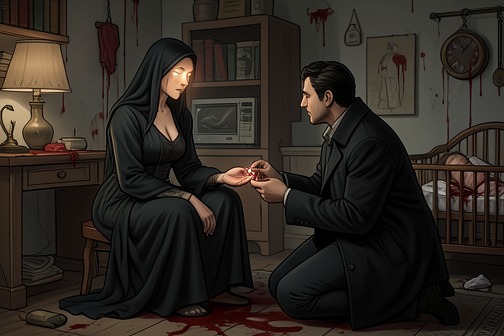
[Valnoir and Lola's engagement](entity:event-recall-event-valnoir-and-lola-s-enga-f492b3be3c6a) marks the moment when a relationship shaped by abduction, supernatural danger, pregnancy, and transformation is converted into an openly chosen family commitment. The proposal occurs at [Lola](entity:character-recall-character-lola-2f3bbe3e3fd0)'s bedside after she has delivered their daughter, [Charlotte](entity:character-recall-character-charlotte-45ddf3085f55), and after [Valnoir](entity:character-recall-character-valnoir-18546c75dafd) has turned her into a vampire to prevent her death. Its significance lies in the way it gathers several threatened identities—mother, lover, newly made vampire, and future wife—into one future that Lola actively accepts rather than merely endures.
## Causes and Background
The engagement follows a sequence in which Lola's relationship with Valnoir has repeatedly crossed the boundary between desire and coercion. Valnoir first encountered Lola in the morgue, later abducted her to the Fort and its harem, and became entangled with her pregnancy. Lola eventually escaped the harem and set it on fire, while her discovery of her grandmother's identity and succession as the Fort's Wicce gave her a power and inheritance separate from Valnoir's authority. Her confrontation with [Mayumi May](entity:character-recall-character-mayumi-may-45117237d825), the death of the Wicce, and her eventual reconciliation with Valnoir transformed their connection from captivity and conflict toward shared responsibility for the child.
That reconciliation did not erase the danger surrounding Lola's pregnancy. The birth scene presents her as physically vulnerable: she has just delivered a baby and is also dying or has been near death. [Victoria](entity:character-recall-character-victoria-fef24d0cf051) explains that Lola has died but has returned to the undead through Valnoir's intervention. The engagement therefore does not arrive as an ordinary romantic ceremony. It takes place at the threshold between life and undeath, after childbirth and amid the immediate consequences of a vampire transformation.
## The Proposal and Acceptance
Valnoir makes the proposal beside Lola's hospital bed rather than in a public court or ceremonial setting. He takes a box from his pocket, opens it, and kneels beside her. Lola recognizes the impropriety and emotional awkwardness of the moment, but she does not reject the gesture; instead, she demands that he ask properly. The exchange preserves the couple's teasing, abrasive intimacy even as the stakes become permanent.
Valnoir then names the identities that define their shared life, asking Lola to marry him as the love of his life, the mother of his child, and his newly turned vampire companion. He asks her to become his wife for eternity in this world. The wording makes the proposal more than a request for legal or social recognition. It binds romantic devotion to parenthood and to the supernatural permanence of vampirism, presenting eternity as both a promise and the condition of their new existence.
Lola answers with immediate, emphatic acceptance. She calls Valnoir pathetic, tells him to kiss her, and says yes repeatedly, adding that she has waited a long time for him to ask. Her response is important because the scene reverses the earlier pattern of Lola being moved, purchased, or confined by others. At the proposal, she controls the terms of the exchange: she requires a proper question, then gives the answer herself. The engagement becomes a chosen declaration rather than another arrangement imposed upon her.
## Birth, Transformation, and Family Recognition
The proposal is inseparable from the birth of the couple's daughter. Valnoir and Lola had not selected a name before the delivery because they did not know what they were expecting and wanted the child to remain a surprise. Once Lola sees the baby, however, she immediately knows the name she wants. She and Valnoir say Charlotte together, then repeat the name while looking at each other and recognize that they have independently reached the same choice.
This shared naming gives the engagement a second form of mutual recognition. The couple does not merely promise to remain together; they jointly establish the identity of their child at the same instant that they affirm their own future. Charlotte's name becomes the first visible sign of the new family created through pregnancy, birth, and transformation. The child's arrival also prevents the engagement from being understood as an isolated romantic gesture: it is a commitment made within an already existing parental bond.
Victoria's presence adds a familial dimension to the scene. She brings the baby to Lola, comments on Lola's return from death, and later warns that she will not allow Valnoir to keep her niece away from her again. The remark preserves a boundary around the new couple rather than allowing their marriage to absorb every other relationship. Valnoir promises not to ask again, and Victoria leaves, permitting the bedside family scene to settle into its new arrangement.
## Consequences and Aftermath
After Victoria closes the door, Valnoir recognizes that he has gained more than a new child. He understands that he has acquired a new family altogether, and that the scattered pieces of his life have fallen into place. The engagement thus produces an emotional and structural resolution: Lola is no longer only the woman he abducted or the mother carrying his child, but his accepted companion and prospective wife; Valnoir is no longer only the force who controls her movement or saves her body, but a partner whose future depends on her consent.
The scene also completes Lola's movement from threatened bodily object to active participant in a shared supernatural household. Her body has been treated throughout the surrounding story as a site of captivity, reproduction, death, and transformation. Here, however, she speaks the decisive yes, chooses the kiss, shares the naming of Charlotte, and accepts an eternal partnership on terms she openly acknowledges. The engagement cannot undo the violence of the earlier captivity, but the narrative places its final emphasis on Lola's present agency and on the family she chooses to join.
## Narrative Significance
As an event, Valnoir and Lola's engagement is a threshold ritual. Lola passes from human mortality into vampiric existence, from pregnancy into motherhood, and from an unstable relationship into an announced marital future. The sequence compresses separation from an old life, a liminal crisis at the bedside, and reintegration into a new family structure. Unlike a public coronation or an institutional ceremony, it is intimate and improvised, yet its consequences are just as transformative.
The engagement also contrasts with the book's many systems of compulsory exchange: bodies bought through ransom, women assigned to harems, pregnancies treated as political resources, and supernatural identities imposed through violence. Valnoir's proposal still carries the language of permanence and possession associated with vampire partnership, but Lola's insistence on being asked properly and her repeated acceptance shift the scene toward reciprocal recognition. Its final image is not simply of a man obtaining a wife. It is of Valnoir, Lola, and Charlotte becoming a family whose future is understood as newly complete.