Altai
LimonovAltai is the mountain region where Eduard Limonov’s hoped-for refuge becomes the setting for a sudden death, a solitary reckoning with mortality, and an experience he interprets as a message from beyond. The journey brings together the landscape’s remoteness, Zolotarev’s influence, and Limonov’s ambition to live heroically; after the trapper’s death, the mountains offer neither escape from surveillance nor consolation free of uncertainty.
Setting and Routes
The book places a major period of Limonov’s activity in Moscow and Altai between 1994 and 2001. When he sets out for the region, he expects to breathe more freely there. Instead, the journey itself feels oppressive: he travels for three days in third class from Moscow to Novosibirsk, then another day from Novosibirsk to Barnaul, convinced that he is being watched. He tries to counter the suspicion by repeating a warning to himself not to become paranoid, while also recognizing that his suspicions have often proved justified. The landscape he hopes will release him from that tension remains, at first, a promise rather than a refuge.
Barnaul is the point where he expects to meet Zolotarev, the trapper whose influence has become a source of calm through the previous winter. Limonov has been reading Lao-tzu under that influence, and the book associates the reading with an ideal of quiet contemplation amid the world’s turmoil. The anticipated meeting matters before it happens: thinking of Zolotarev has soothed Limonov, and the journey toward him carries the hope of reaching a different state of mind.
Zolotarev’s Death
At Zolotarev’s home, Limonov learns that the trapper was buried the day before. A woman walking her dog in the early morning had found him dead at the foot of his building; a fourth-floor window in his apartment stood open. The circumstances remain unresolved. The narrative leaves open the possibilities of suicide, accident, or murder, while noting that the National Bolshevik Party members who had spent Zolotarev’s last evening with him said he was neither drunk nor depressed when he left them.
Limonov has brought a National Bolshevik Party membership card as a gift for the trapper. Faced with the news, he fingers it nervously and feels unsteady on his legs. The small card becomes the material remnant of a meeting that will never take place: a political token carried into the mountains for a mentor who is already dead. The abruptness of the discovery also overturns the journey’s consoling expectation. The person whose remembered presence had helped Limonov endure the winter is now the reason the trip becomes a confrontation with loss.
The Night in the Mountains
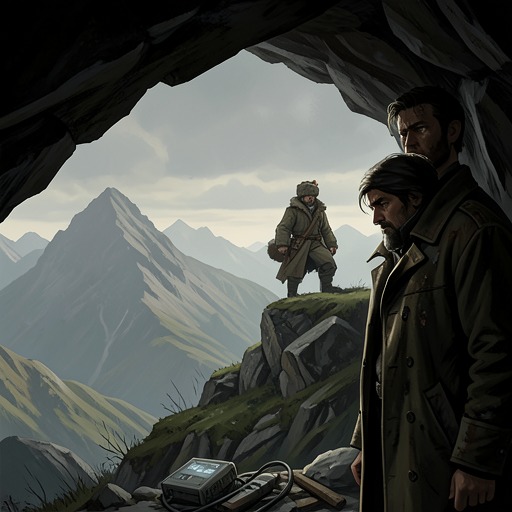
The following night, Limonov travels with two National Bolshevik Party members, all three subdued by Zolotarev’s death. Their route takes them to the same stop where they had stayed on the previous trip: a sparse settlement of a couple of yurts and a log cabin. The companions have brought a tent, leaving Limonov alone. He lies down without eating or speaking, and the narrative narrows from the landscape to the stillness of his body on a cot.
He thinks about the dead people he has known and senses that they may already outnumber the living, though he cannot bring himself to count them. The death he imagines now is unlike the heroic deaths he has fantasized about: combat, a firing squad, or execution by a tyrant, faced defiantly. Those imagined scenes had made death part of a chosen dramatic role. In the cabin, the certainty that he will die arrives without that theatrical frame. He looks back over the journey from childhood in Saltov to this remote place in the Altai, almost sixty years later, and understands it as a life full of obstacles that he did not surrender to. In his own assessment, he had wanted to live like a hero and had accepted the price.
Zolotarev had described this place, in Buddhist tradition, as the center of the world, where the dead and living communicate. It was also the place sought by Baron von Ungern-Sternberg. Remembering that account, Limonov looks toward the full moon over the dark hills and hears what seems to be approaching music: gongs, horns, and solemn chants. He associates the sound with Bardo Thodol, the Tibetan Book of the Dead, which Dugin had introduced to him. He wonders whether he is falling asleep or dying and imagines that a ceremony may be taking place nearby. Though he would ordinarily want to investigate, he stays stretched out on the cot, partly to leave his hosts their privacy and largely because he does not want to move. The music seems to mingle with the sound of his own blood and heartbeat; he describes the state as being like death while gaining access to another form of life.
Return and Narrative Significance
In the morning, Limonov asks his companions whether they attended the ceremony. They say there was no party, concert, or shamanic rite: everyone had gone to bed after dinner. He does not press the question. The account therefore preserves the experience without confirming an external source for it. Its force lies in the gap between the music Limonov heard and the ordinary night reported by the others, a gap the narrative does not close with a definitive explanation.
For the remainder of the trip, he is reflective but less distraught than he had been after learning of Zolotarev’s death. He considers the music and the sense of an afterlife a gift from the trapper, and imagines two possible announcements in it: his accession to a Eurasian throne, to be won with a handful of National Bolshevik Party followers from their mountain retreat, or his imminent entry into Valhalla through death. The alternatives join political fantasy to mortality without resolving which one is true. What changes is his relation to fear: he leaves believing that he is no longer afraid of dying.
The return to camp supplies a more communal counterpart to the solitary night. Three members at the camp look tanned and ascetic, like monk-soldiers; the group’s stories include periods of discouragement and elation, as well as the day one of them encountered a bear. They grill lamb shashliks on long wooden skewers and drink wine brought from Barnaul without becoming drunk. Under a kerosene lamp, the seven men share an evening described as tender and friendly, its ordinary companionship set against the death that has shadowed the journey.
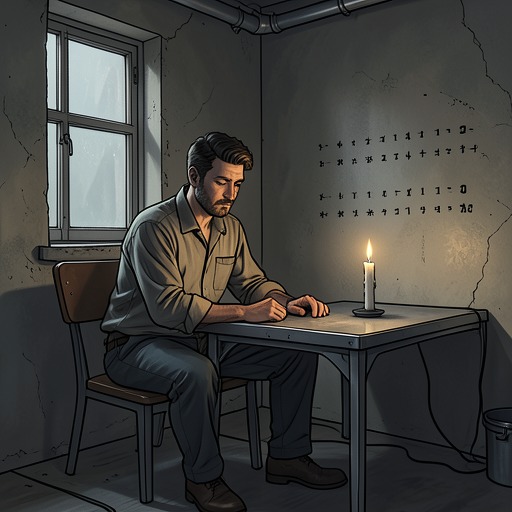
Altai’s significance extends beyond this episode because the book later connects Zolotarev’s influence and the strange night after his death with Limonov’s prison meditation. In prison, Limonov learns to withdraw inward even amid the police dogs, the smell of urine, and the movement through metal cages and paddy wagons. The narrator suggests that the trapper and the Altai experience prepared him for that calm, and even imagines that Zolotarev sent the gift from wherever he is. The region thus marks a passage from an attempted escape from surveillance to a more inward refuge: not a solution to Limonov’s political or physical confinement, but a remembered encounter that helps him imagine a place beyond fear.