Moscow White House
LimonovThe Moscow White House is the parliament building whose political meaning changes dramatically between August 1991 and October 1993. First presented as the center of resistance to a coup and a powerful emblem of Russia’s emerging freedom, it later becomes the refuge of a rebellion against Boris Yeltsin. The building’s history in the narrative is therefore not simply architectural or administrative: it records how a shared symbol of democratic victory could become the contested ground of opposing claims to constitutional legitimacy.
The Parliament Building and Its First Symbolic Life
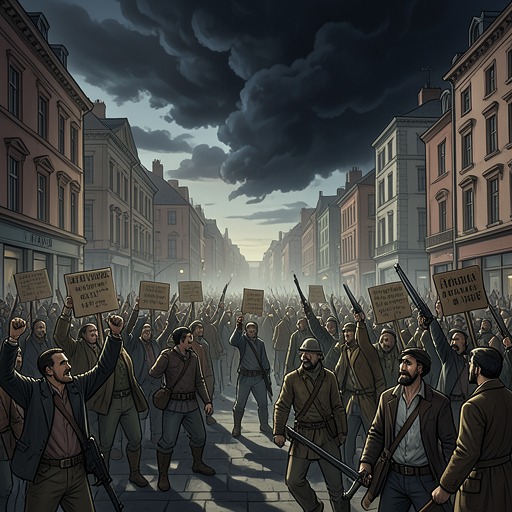
Known in Moscow as the White House, the building was the seat of parliament and the place from which Yeltsin organized resistance during the August 1991 coup. Its significance exceeded its governmental function. As crowds gathered to defend it, the building became a public image of people protecting a fragile freedom with their own bodies. The book compares the drama of those days with the Tennis Court Oath and George Washington’s crossing of the Delaware, placing the Moscow scene within a language of revolutionary founding.
The account gives that symbolism concrete form: Mstislav Rostropovich rushed to guard the door of Yeltsin’s office; Muscovites erected barricades; tanks backed away; and young women kissed soldiers while placing flowers in their rifle barrels. On the fourth day, the public breathed a collective sigh of relief that the feared nightmare had not come to pass and people would remain free. In this first episode, the White House appears as a defended center: the crowd outside, the parliament within, and the retreating tanks together make the building an image of resistance that has succeeded.
The 1993 Reversal
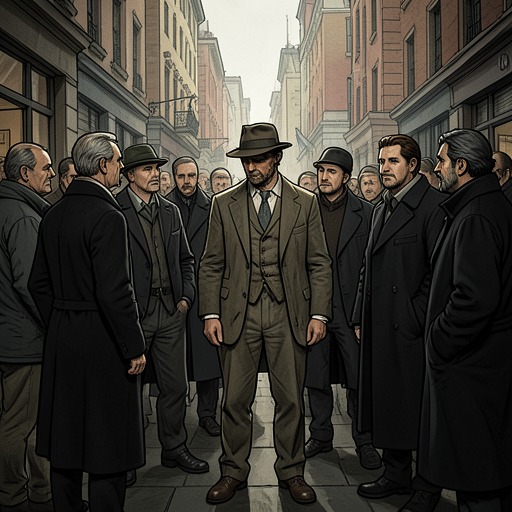
Two years later, the same building stands at the center of a confrontation with the opposite alignment of forces. Several thousand patriots gather outside. Some, though not all, are described as fascists; now they present themselves as defenders of constitutional order and accuse the democrats of preparing dictatorship in democracy’s name. The site’s earlier associations do not disappear, but they no longer settle who can claim them.
Ruslan Khasbulatov, president of the Duma, and Alexander Rutskoy, vice president of the Russian Republic, had stood beside Yeltsin at the White House in 1991. Now they lead the rebellion against him. In an extraordinary session held that evening, the dissolved parliament declares its own dissolution unconstitutional, removes Yeltsin from office, names Rutskoy president, and ultimately occupies the building. The assembly says it represents the people and will leave only if driven out at bayonet point. The White House is thus recast from a place where Yeltsin’s resistance was organized into a stronghold from which his opponents challenge his authority.
Eduard Limonov joins the crowd inside and spends the night moving between meetings in a dense haze of cigarette smoke. The occupants discuss, shout, drink, write communiqués, and begin forming a new government. Limonov is impatient with talk of dividing ministries: for him, the urgent question is how to prepare for the siege he expects. His presence links the building’s political drama to the later opposition movement, but the narrative also emphasizes his misjudgment. The next day he leaves to shower and change, then visits Alexander Dugin to urge him to join the patriots. When Limonov returns, the siege has begun and he cannot get back inside.
Inside the Besieged White House
Yeltsin’s forces cut electricity and telephone service and deploy the Special Purpose Mobile Unit of the Russian Interior Ministry. Limonov spends the night trying to pass through military trucks and lines of soldiers carrying machine guns, but the building is closed off. Loudspeakers repeatedly call on the insurgents to surrender. From outside, he can see flickering lights and shadows: inside, candles have replaced the ordinary lighting. His inability to enter turns the building into an unseen scene he must imagine, while television coverage presents the insurgents as fascists and madmen and gives no view of events inside.
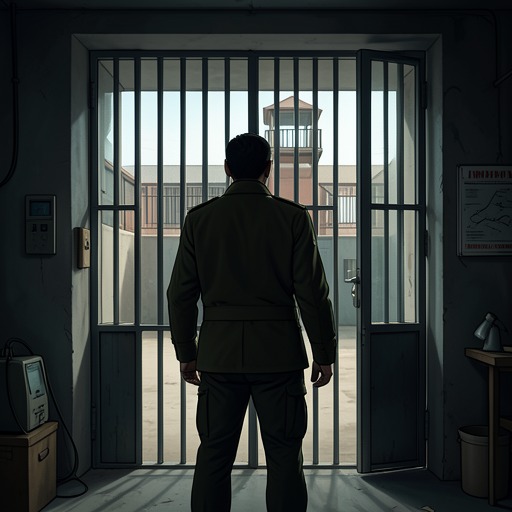
Survivors describe conditions there as those of a sinking ship. There is no light, telephone, water, or heat; food and drink are limited to what can be found in the cafeteria, which eventually runs out. Occupants burn office furniture for warmth and gather around improvised fires to sing Orthodox hymns and songs of the Great Patriotic War. The people sheltering together include Cossacks, Stalinists, young neo-Nazis, members of parliament, and priests. The parliamentarians’ offices become makeshift confessionals and baptisteries; the remaining water is blessed. Icons and images of the Virgin Mary share space with portraits of Lenin and Nicholas II, while red flags stand beside swastika armbands. The details make the White House more than a besieged government building: its offices and corridors become a temporary, crowded world in which incompatible political and religious symbols coexist under pressure.
With no mobile phones, the only contact with the outside comes through an English journalist’s radio telephone, a bulky device resembling a wartime transmitter. Rumors range from the implausible claim that the American Congress has arrested Bill Clinton to the increasingly credible fear that the army will attack. The leaders speak of mass suicide, and no one sleeps. For Limonov, kept outside, the ten-day siege becomes one of the cruellest periods of his life; he is tormented by having left and by the belief that those inside will pay dearly for their actions. The building’s separation from the city is both physical and informational: those outside wait at barricades or watch television, while the people within face shortages, rumors, and the prospect of assault.
Assault and Political Memory
At dawn, Limonov and Taras Rabko emerge from a park and learn at a subway station that tanks have surrounded the White House. The occupants’ recent hope of victory has given way to the sense that all is lost. Patriotic songs and Orthodox litanies intensify during the attack. Rutskoy, who had spoken of dying like Hitler in his bunker, surrenders in the afternoon. The narration says that 150 people might still be alive if he had not delayed by performing toughness. Gunfire continues outside and inside the building; once they enter, the riot police hunt the besieged through halls, offices, and toilets. The official toll includes hundreds dead and thousands injured, among them insurgents, passersby, elderly people, and children.
Limonov and Rabko lie low, then spend two weeks in the small apartment of Rabko’s mother in Tver. As cracks appear in the official account of the crisis, the language of democracy no longer resolves the question of who was right. The White House’s earlier image as a universal emblem of democratic triumph now stands beside the memory of a bloody assault on people who had called themselves constitutionalists. The narrative does not erase the presence of fascists among the defenders, but it also resists making the site’s political meaning simple: people who had once been Yeltsin’s allies are now his opponents, and the building that represented resistance to a coup has become the center of a rebellion against the president.
The White House’s recurring significance lies in this reversal. In 1991, its barricades, crowds, retreating tanks, and flowers make it a vivid stage for a victory over authoritarian restoration. In 1993, its darkened offices, makeshift fires, confused congregation, and final assault expose how unstable the distinction between democratic and reactionary forces has become. The building remains the same, but its history cannot be reduced to a single political image: it is at once a monument to resistance and the site of a defeat whose dead and injured unsettle the triumphal story told about the preceding struggle.