Central Park
LimonovCentral Park is where Eduard Limonov, reduced from a promising writer to a man without a home, spends long mornings watching the city and begins writing down how he reached this point. The park offers him neither escape from poverty nor a settled refuge: from its grass he can see the wealth of Fifth Avenue, measure the lives around him, and make his own precarious existence the material of a book he regards as his only chance.
A makeshift refuge beneath Fifth Avenue
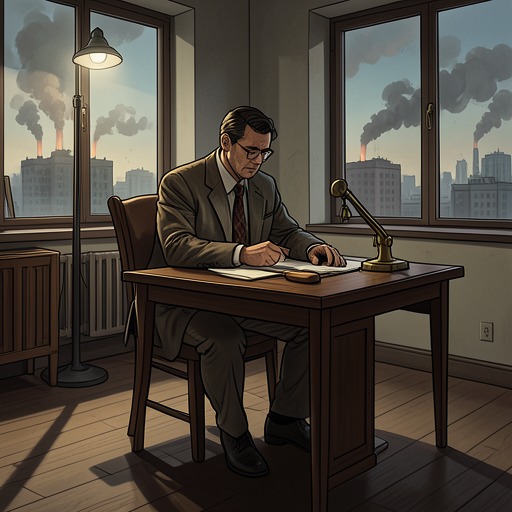
Every morning Limonov walks to Central Park, lies on the grass, and uses a plastic bag containing his notebook as a cushion. He stays for hours looking up at the sky and, below it, at the terraces of the buildings on Fifth Avenue, where people such as the Libermans live. He has stopped seeing them altogether; their refined world feels like a distant former life. Only a year earlier, he had visited their home as a promising young writer and the husband of a beautiful woman expected to become a famous model. Now, in his own stark reckoning, he is a bum.
The contrast is built into the view from the lawn. The superrich appear above him in their terraces, while he lies below with a notebook in a plastic bag. Central Park is not simply scenery for this reversal: it gives Limonov a vantage point from which his former social world and his present condition occupy the same frame, separated by wealth and by the distance of a life that seems to have vanished.
Reading the people on the lawn
Limonov studies the park’s other occupants as if estimating the limits of their futures. The bums, in his calculation, can be forgotten. Office employees and secretaries eating sandwiches on benches at lunchtime might be promoted, but will not advance very far—and, he thinks, never expected to. Two young intellectuals take themselves seriously as they talk and mark up typed pages that appear to belong to a screenplay. Limonov regards their dialogue and characters with contempt, yet allows that their confidence might carry them as far as Hollywood, its pools, starlets, and Oscars.
A group of Puerto Ricans has made a camp of blankets, transistor radios, babies, and thermoses on the lawn. Limonov assumes they will remain where they are, then interrupts his certainty with the possibility that a child among them might excel at school and become a Nobel Prize-winning doctor or the secretary-general of the United Nations. His judgments expose the class divisions he sees, but the imagined future also unsettles the divisions: even a life he has already classified can escape his forecast. He turns the same question on himself, wondering whether being a bum in New York is one chapter in a romantic life or the end of the book.
The park as the beginning of a book
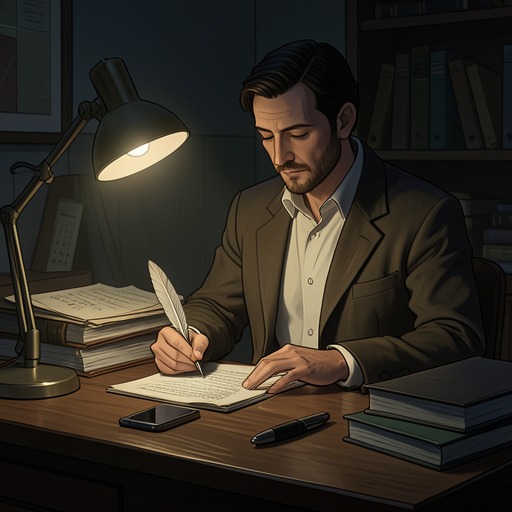
Limonov takes out his notebook, props an elbow on the grass, and smokes a joint bought from a small-time dealer he knows. He starts setting down the material of his recent life as it comes to him, without worrying about style: the welfare office, the Winslow Hotel, the lost souls of the Russian émigré scene, Tanya, and the circumstances that brought him to the park. He fills one notebook and moves on to a second, then a third. The act of writing changes the meaning of his exposure. The park remains the place where he is living out his fall, but it also becomes the place where he begins to shape that fall into a possible work, It’s Me, Eddie, which he sees as his only chance.
A recurring New York writing place
Central Park also belongs to the later account of Limonov’s writing life in New York. After returning from a stay with Jenny, he resumes writing—not poems or a story, but short prose pieces, rarely longer than a page, recording what is in his mind. The narrator describes their contents as resentment, envy, class hatred, and sadistic fantasies, while emphasizing their absence of hypocrisy, embarrassment, or excuses. These pieces will become Diary of a Loser. The evidence places this renewed writing in New York, rather than explicitly locating every piece in the park; set beside the earlier notebook scenes, however, it establishes a recurring relation between the city’s exposed life and Limonov’s writing. Central Park is where a man who fears that his story may be over begins recording it, and where observation becomes a means of making his defeat into material.