Timișoara
LimonovTimișoara is the site of one of the book’s sharpest reversals of revolutionary expectation: graves presented as proof of a final massacre by the dying regime were exposed as a television spectacle built around bodies that had not been murdered. The episode first intensified fears of genocide and then unsettled the story told about Romania’s new political order, making the city a place where images of atrocity and the politics of their circulation became inseparable.
The Mass-Grave Reports
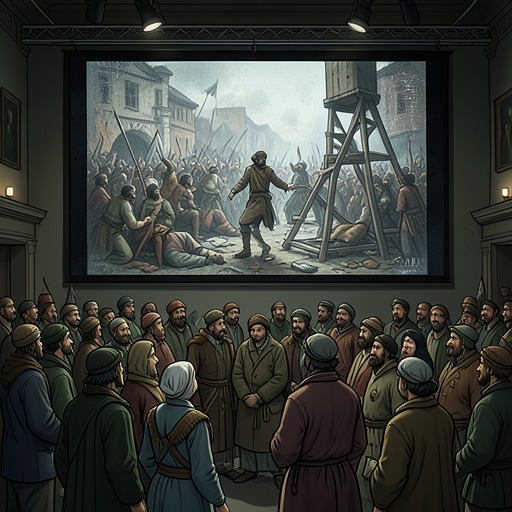
In the months after the revolution and the execution of Nicolae and Elena Ceaușescu, reports from Timișoara claimed that the outgoing regime had slaughtered thousands of martyrs in its last spasm. The figure most often cited was 4,000 dead. Libération gave a more exact count, 4,630, while TF1 raised the reported toll to 70,000. Television showed skeletal corpses, dressed in striped pajamas and covered in mud, being exhumed from hastily dug graves. The images carried the allegation beyond Romania: Europe was gripped by fear, and there was talk of sending international brigades to stop a genocide supposedly being committed by the Securitate.
What the Graves Revealed
The account collapsed when it emerged that the bodies had been dug up for the cameras at Timișoara Cemetery. There were only a few dozen at most, and they had died natural deaths before being buried there. The images had not documented the mass killing they were taken to prove. The difference between the widely circulated death counts and the small number of cemetery bodies exposed not merely an inaccurate report but a staged visual claim: footage of real corpses had been made to stand for a massacre that had not occurred there.
Aftermath and Political Uncertainty
The revelation did not settle the question of what had changed in Romania. The account says that figures associated with the Securitate, rather than carrying out a suicidal final genocide, showed their political shrewdness and became officials in the National Salvation Front under new president Ion Iliescu. Meanwhile, the Communist Party, though banned and charged with every imaginable crime, had changed its name and leader and remained active; its sizable victory in the March 1990 elections demonstrated its continued strength. Timișoara’s mass-grave story thus belongs to a broader post-revolutionary atmosphere in which dramatic public evidence could mislead, while personnel and political power survived the apparent break with the old regime.
Narrative Significance
For the narrator, the reports and their unravelling were compelling enough to prompt a reporting assignment in Romania that spring. Timișoara consequently marks a transition from the apparent moral clarity of revolutionary upheaval to a more disturbing uncertainty: the televised image of the grave seemed to make the truth undeniable, yet its meaning had been manufactured. The city’s place in the narrative rests on this reversal, in which exposure of the false massacre does not restore a simple account of justice or political change.