United States
LimonovThe United States enters Eduard Limonov’s story as both a spectacle of freedom and a hard test of what an émigré can make of it. When Limonov and Tanya arrive in New York in 1975, the city’s familiar movie images are new to them, and its open streets and bookstores seem to belong to another world. Yet the country that first promises erotic, artistic, and social possibility soon places Limonov on welfare, at the fringes of literary life, and finally alone in an unfurnished house on Long Island.
Arrival in New York
For Limonov and Tanya, children of the Cold War arriving from a country where American films are banned, New York is not a place already half-known from the screen. Steam rises from manholes; metal fire escapes cling to brick buildings; Broadway glitters with neon; police sirens and yellow taxis move through a crowded city whose people talk to themselves without anyone intervening. The first impression is of entering a black-and-white film’s vivid opposite. The city gives physical form to a place they have encountered only at a distance.
In their first days, the couple walk across Manhattan hand in hand, looking greedily at the streets and then at each other, laughing and kissing. A bookstore offers a small but telling revelation: its books are within reach, available to handle and read without first being purchased or requested from behind a counter. A city map is equally startling because it accurately identifies the streets. For visitors accustomed to Soviet maps that may be outdated, speculative, or designed to mislead, this ordinary reliability signals a different relation between public information and everyday life.
Their exploration ranges from expensive boutiques and diners to fast-food restaurants and small cinemas showing double features, including pornography. In one theater, Tanya’s sexual excitement becomes part of Limonov’s own experience: he is proud both of her beauty and of the attention her response draws from the audience. The episode makes their new surroundings more than a backdrop. Limonov reads the freedom to pursue erotic curiosity as a distinction between his own cultivated libertinism and the presumed sexual deprivation of the other men in the room.
Contacts, patronage, and the literary world
The newcomers have two important connections: Tatiana Liberman, a friend and former rival of Lilya Brik, and Joseph Brodsky, whose address is passed among Russian émigrés in New York. Brodsky has become a celebrated figure in Western intellectual circles since his expulsion from the Soviet Union. His literary reputation and ability to befriend prominent writers give him a central place in the émigré world, and he receives Limonov and Tanya for a long conversation about literature in an East Village tearoom.
The meeting also exposes a mismatch in taste and temperament. Limonov dislikes the tearoom’s cultivated atmosphere and is irritated that it serves no alcohol, while Tanya’s ease with Brodsky helps the conversation relax. The encounter offers access to an influential literary network, but not an uncomplicated sense of belonging. The prospect of being welcomed into the Libermans’ circle makes Limonov reconsider his first impulse to reject its wealth and privilege outright. He can imagine Tanya becoming a model and himself succeeding as a writer, while the people who had patronized them lose their power to define their prospects.
At first, that imagined ascent seems plausible. The Libermans invite the young Russians to lavish parties attended by Andy Warhol, Susan Sontag, Truman Capote, and politicians of different allegiances. Tatiana introduces Tanya to Richard Avedon, who gives her his card, and to Salvador Dalí, who praises her appearance and discusses making a portrait, possibly with Grace Jones. On a weekend visit to the Libermans’ Connecticut manor, the couple are treated almost as children of the household. Limonov, however, sees the comfort of the estate as a possible enemy of literature: he associates interesting writing with adversity, poverty, and war, not with calm surroundings. He keeps that judgment to himself, sensing that their role as charming young Russian guests does not permit frank criticism of their hosts or of Brodsky.
Polemic and the limits of welcome
The literary success Limonov imagines does not arrive through his stories or poems. His writing about Kharkov’s toughs and Moscow’s underground attracts little interest, and he turns instead toward polemic. When Andrei Sakharov wins the Nobel Peace Prize, Limonov spends two days writing an attack on the dissidents’ claim to represent the Soviet people. He argues that they speak for themselves and, in Sakharov’s case, for the high scientific establishment; that their accession to power could be worse than the existing bureaucracy; and that the Soviet Union, though gray and boring, is not simply the concentration camp described by its critics. He also insists that the West is no better and that émigrés are cruelly disappointed when they discover that America has no use for them.
The article, titled Disillusion, is also an account of Limonov’s own growing fear. After six months at Novoye russkoye slovo and a series of marginal appearances among the jet set, the euphoria of arrival has faded. The New York Times and other prestigious newspapers do not even acknowledge receiving the piece. It eventually appears in an obscure magazine, more than two months after the Nobel announcement, and goes unnoticed by the intellectuals it targets. Its impact is narrower but real: it unsettles the Russian émigré community and disturbs the complacency of the newspaper where Limonov works. His critique therefore speaks from a precarious position within the society he condemns: he is neither established enough to command its attention nor detached enough to avoid recognizing himself in the abandoned émigré he describes.
Welfare, work, and shelter
The material conditions of Limonov’s life make that precariousness visible. In summer, he tans on the tiny balcony of his sixteenth-floor room at the Winslow Hotel, eating cabbage soup from a pot. The cheap, durable meal lasts three days and needs no refrigerator. He collects welfare checks every two weeks and meets a case officer every two months. He claims to be looking hard for work, exaggerating his poor English as an excuse, though he is not actually searching. His occasional help with moving jobs for Lenya Kosogor brings in a little extra money; the work serves Russian Jewish customers moving boxes, including volumes of Chekhov and Tolstoy in dark-green Soviet bindings.
The welfare office also pays for English lessons, where Limonov sits among women from Black, Asian, and Latino communities. They show one another family photographs and sometimes share food from their countries. When he tells them that education and health care are free in the Soviet Union, their surprise turns the question of why he left into an uncomfortable measure of the distance between political ideals and his present circumstances. The scene places him among other people receiving public assistance, even as he maintains a provocative contempt for American taxpayers and refuses the practical steps expected of someone trying to integrate.
Separation and isolation
Limonov’s refuge at Sutton Place depends in part on his relationship with Jenny. After she cares for him through a two-week illness, the relationship changes when they travel to California with her brother and two friends. Limonov dislikes the company and the social style he associates with them; after three days of sulking and being looked after, he returns alone. Jenny does not try to stop him. When she later tells him that she is pregnant and intends to move to California, marry another man, and have his children, she explains that she and Limonov were close friends rather than lovers. He performs understanding, but the separation devastates him because he had assumed that she loved him and would remain a refuge, even though he had not expected to love her in return.
Still welcome at Sutton Place for coffee, but no longer as a resident, Limonov accepts a friend of Steven Gray’s offer of informal work at a country house on Long Island. For two months he digs with a shovel and trowel for four dollars an hour. The owners come only on weekends in the fall; during the week the house is empty, unheated, and unfurnished. He sleeps on a foam mattress protected from the damp floor by a tarp, cooks instant soup on a hot plate, and piles on sweaters without getting warm. On occasional sunny days he scares seagulls at the beach or drinks beer in a village bar, then walks back through the rain. In the sleeping bag, he imagines Jenny with the man she has chosen.
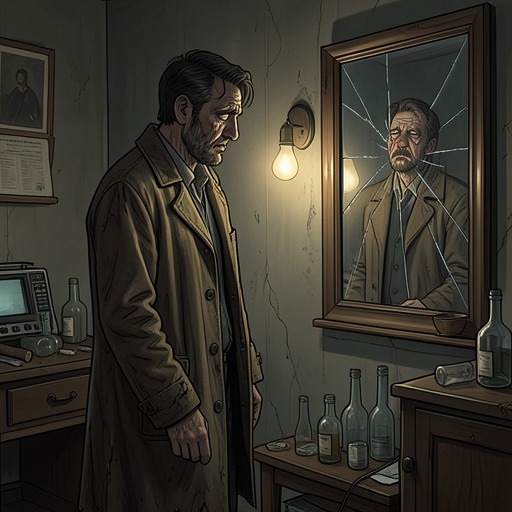
The isolation becomes nearly absolute. For weeks, aside from brief exchanges at the bar and supermarket, Limonov speaks to no one. He has given the house’s telephone number to the few people he still considers close, including Gennady Smakov, Lenya Kosogor, and Jenny, but it never rings. His agent eventually calls with news that Macmillan has rejected his manuscript as too antagonistic. The book ends with an angry denunciation, a tone the publisher will not accept. The agent says he will seek another publisher but hurries to end the conversation. Limonov is left sitting on a bag of cement in the empty living room as rain falls outside.
Across these episodes, the United States is neither simply a land of liberation nor merely the disillusion Limonov had predicted. Its accessible bookstores, accurate maps, sexual latitude, and elite cultural circles offer experiences unavailable in the society he left; its welfare system provides money and language lessons. But access does not become acceptance, and spectacle does not become security. The narrative moves from the couple’s exuberant walks through Manhattan to Limonov’s solitary room on Long Island, making the country’s promise and his social abandonment part of the same American experience.