Sutton Place
LimonovSutton Place is the setting of Eduard Limonov’s close encounter with wealth from the position of a servant’s lover, then a house guest and informal butler. Steven Gray’s New York City pied-à-terre gives Limonov unusual access to the domestic life of a multimillionaire, but not an equal share in it: the residence’s comforts depend on Jenny and the household staff, while Limonov’s proximity to luxury sharpens his awareness of the social distance separating him from its owner.
The New York Residence
Steven Gray’s pied-à-terre on Sutton Place is one of two homes in the household’s arrangement. His principal residence is a sumptuous manor in Connecticut, where he lives with his wife and three children. He also has a home in New York City, which he visits only occasionally, usually for no more than a week at a time. The contrast between the two properties establishes the scale of his wealth without making the Sutton Place apartment his full-time home.
Jenny is the only member of the household who lives at Sutton Place permanently. A secretary handles the mail, and a Haitian cleaning lady helps with the work; the residence thus operates through a small staff even when Gray is absent. His visits bring a change in pace. Those who work in the house wait for them and dread them, though the infrequency of his appearances means they are spared the demands of their employer most of the time.
Jenny’s Position and Limonov’s Arrival
Jenny can introduce Limonov to Gray because she is his girlfriend, but her own position in the household is that of Gray’s housekeeper. That distinction governs Limonov’s place at Sutton Place too. He is welcomed by Gray and becomes a frequent guest, but his access comes through Jenny, whose work keeps the home running while its owner is away.
Gray’s manner makes the hierarchy less blunt than Limonov expects. He can be impatient and prone to anger over trifles, then apologize; he also takes pains to present himself as a liberal employer. He addresses Jenny by her first name and invites Limonov to do the same. Rather than summon Jenny with a bell or have breakfast carried to him, Gray goes to the kitchen himself. Yet the breakfast is expected to be ready when he wakes: the tea properly brewed and the toast fresh from the toaster. The relaxed gestures coexist with service arranged around his needs.
Domestic Routine and Social Distance
Limonov becomes part of the household’s daily scene. He reads The New York Times in the kitchen, where Gray may politely ask to take the paper. Limonov would like to refuse, but instead gives way. The exchange captures the limits of his apparent ease in the house: he can sit in the kitchen and speak with the owner, yet the ordinary courtesy of lending the newspaper reproduces the difference in their positions.
Gray’s wealth is also visible in the life beyond Sutton Place. He travels to ski in Switzerland and dive in the Indian Ocean, and when he leaves the New York residence he may go upstairs to put on a ten-thousand-dollar suit before lunch. Limonov watches this privilege at close quarters, while remaining conscious of the poverty around it: the cheapest meal at the restaurant Gray visits could feed a Puerto Rican family for a month. Gray does not fit the cruel, bloodsucking capitalist of Soviet caricature; Limonov recognizes him as humane and civilized. That recognition does not dissolve the class divide. The question of why Gray has inherited such abundance while Limonov has not remains unresolved for him.
Comfort, Resentment, and the Master Bedroom
Jenny can regard her situation as a fortunate one: she lives amid luxury, pays nothing, and, except during Gray’s visits, can receive whom she likes without carrying the worries that come with wealth. Limonov cannot settle into that view. He tells her that she is the maid and he is the maid’s lover, hoping to provoke her. Jenny is surprised rather than angered and calmly points out that nobody is forcing him to stay. Her answer makes the choice plain, but the alternative is a return to the Embassy Hotel and days spent on the meadows of Central Park. Having had a taste of comfortable surroundings, Limonov does not want to go back.
His response to Sutton Place is therefore divided. The residence offers comfort and a vantage point on a class of life he has rarely been able to observe at close range. At the same time, its abundance intensifies his resentment, which he turns toward fantasies of violent revolution. The home is not simply an escape from hardship: its comforts make the inequalities around them harder for him to ignore.
Taking Possession in His Absence
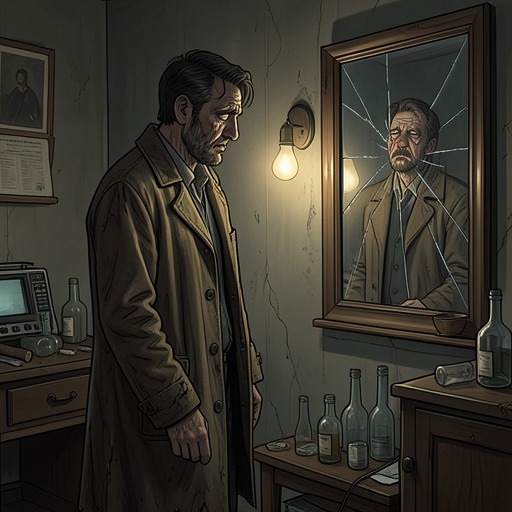
In His Butler’s Story, Limonov later describes what he did at Sutton Place when Gray was away. Although assigned a room under the roof, he entered the master bedroom on the main floor, sprawled on Gray’s silk sheets, smoked joints in the bathtub, tried on his clothes, and walked barefoot across the soft carpets. He rummaged through the drawers and drank Château Margaux. He also brought women home, sometimes two at a time, and watched them in the large Venetian mirror above the king-size bed while pretending to be the master of the house, or at least his equal. The performance temporarily reverses the household’s hierarchy, but it depends on Gray’s absence and on Limonov restoring everything afterward.
The book was published by Grove Press in 1987, after a French publisher had accepted Limonov’s work and he had left for Paris with Gray’s sincere good wishes. The narrative returns to Sutton Place from that later vantage: Gray might learn that his butler had occupied his bedroom and used his possessions, but the account suggests that these breaches may have troubled him less than what Limonov thought while serving him. The residence thus becomes the setting for a sharper kind of trespass than physical appropriation: Limonov can enter the private world of privilege, but his inward judgment exposes how little that access has changed his place within it.