Dallas
1919Dallas is the home around which Anne Elizabeth Trent’s family life is organized, a place where an imposing house, a ranch outside town, and repeated returns give her story a steady point of reference. The city is presented not through a broad account of civic life but through the Trents’ domestic world: their street, their family’s status, the changing countryside, and the journeys that bring Anne Elizabeth back to her father and brothers.
The Trents’ Dallas
The Trents lived on Pleasant Avenue, described in the narration as the finest street in Dallas. The account enlarges this local pride into a sequence of claims: Dallas is the biggest and fastest-growing town in Texas, Texas the biggest state in the Union, and America the greatest country in the world. These assertions establish the family’s confident, patriotic outlook, while the description of the area’s soil and its people makes clear that this confidence is also bound up with a sharply racialized vision of place. Dallas is therefore introduced as both a specific home and the center of the family’s expansive sense of its own surroundings.
The household’s names and relationships give that setting its intimate scale. Anne Elizabeth is called Daughter by her father and brothers; her given name honors her mother, who died when she was very young. Her father, William Delaney Trent, is a prominent attorney. Her brothers are William Delaney Trent, known as Buddy, and Spencer Anderson Trent, known as Buster. The family’s affectionate nickname for Anne Elizabeth sits beside its formal names and the father’s public standing, joining private attachment to the prosperous household’s social identity.
City and ranch in transition
The family’s life reaches beyond its Dallas house to the ranch their grandfather had taken up as a pioneer. In the children’s earlier years, there were no fences yet, and a few maverick steers still ranged along the creek bottoms. By the time Anne Elizabeth was in high school, the ranch had been fenced and a macadam road was being built out from Dallas. The contrast records change through practical details: open land becomes enclosed, and a more developed road links the family’s rural inheritance more closely to town.
The family’s vehicles mark a further shift in that landscape. Anne Elizabeth’s father once traveled around the ranch on Mullah, an Arab stallion given to him by a stockman at the Fat Stock Show in Waco after the stockman could not pay his legal fee. By the time of the account, her father went about in a Ford. Anne Elizabeth had a cream-colored pony, Coffee, who nodded and pawed when he wanted sugar; some of the girls she knew had cars, and she and her brothers urged their father to buy a real car rather than the old flivver. The horses, the Ford, and the children’s demand for a newer automobile make the changing relation between ranch and town visible without separating it from the family’s everyday affections and complaints.
A home to return to
Dallas also functions as the destination that gives Anne Elizabeth’s departures their emotional measure. On one winter morning, she walked in on her father and brothers at breakfast two days after an earlier separation. Her father tried to scold her, but she could see that he was pleased, as she was; her immediate feeling was that it was good to be home. The scene defines home not by an account of the city’s streets but by recognition around the family breakfast table.
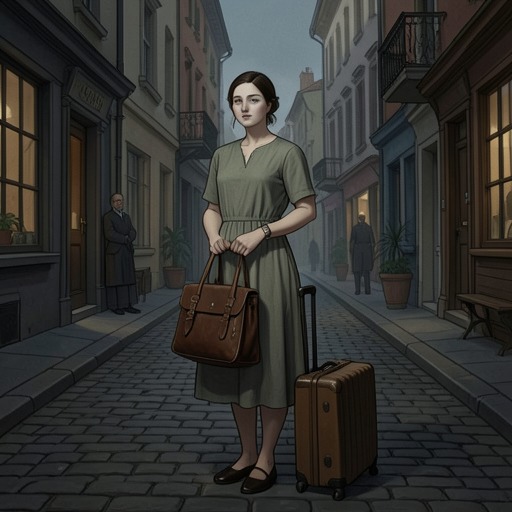
A later return begins with telegrams from her father. The first says he is coming at once and tells the family to make no statement until he arrives; a second reports that he is seriously ill, asks Anne Elizabeth to come home, and says Ada should retain the best lawyer available. Alarmed, Anne Elizabeth takes the first train south. At St. Louis she receives an update that her father’s condition is fair and that he has double pneumonia. Buster meets her at the depot, takes her bag, and tells her that she has almost killed their father. The episode makes the journey toward Dallas a passage from fear to the guarded reassurance of reunion: the messages, the train, and her brother’s greeting all lead back to the household.
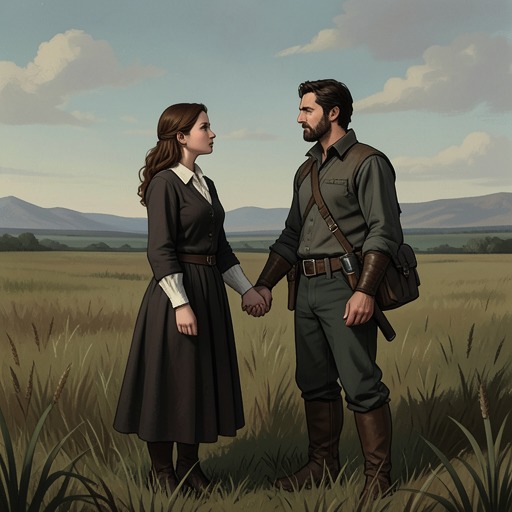
On another return, Anne Elizabeth drives to Dallas through a fall landscape of dry cornstalks and hills colored red and yellow. She arrives late to find her father sitting up in pajamas and a bathrobe, reading war news. He tells her that the Hindenburg Line is crumbling and expresses confidence in the American soldiers. Anne Elizabeth heats canned soup because she has not stopped to eat, and they share supper while reading a funny letter from Buster at Camp Merritt, where his outfit is waiting to go overseas. Back in her own room, she feels as she did when she was a little girl. Dallas’s significance here lies in this return to family routine amid the war: the news, the letter, the simple meal, and the familiar room gather into a brief restoration of home.