Texas
1919Texas enters the Trents’ story through the contrast between an exalted regional identity and the changing routines of family life. Dallas, the state’s biggest and fastest-growing town, is described as a place of prosperity and civic pride, while the family’s ranch preserves memories of an earlier, less settled landscape. The state is both home ground and an idea: a source of family belonging, but also the setting for claims of superiority that expose the assumptions behind the Trents’ privileged world.
Dallas and the Trents’ Texas
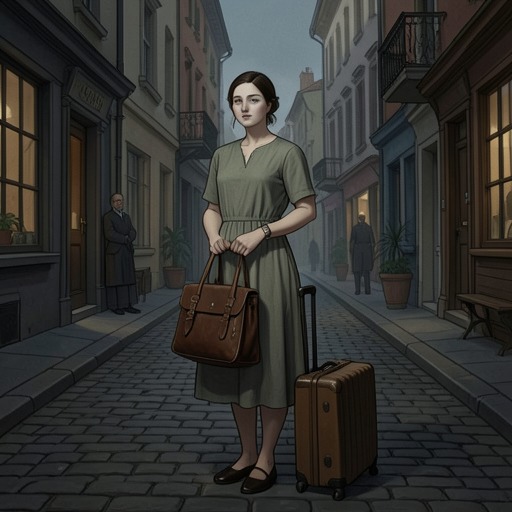
The Trents live on Pleasant Avenue, identified as the finest street in Dallas. The narration builds outward from that address through a chain of superlatives: Dallas is the biggest and fastest-growing town in Texas, Texas the largest state in the Union, and America the greatest country in the world. Alongside the praise of Texas’s dark soil, the description invokes the whiteness of its people. That pairing makes the passage’s regional pride inseparable from a racial hierarchy; it presents white identity as part of the state’s supposed distinction rather than as a neutral detail.
The family’s position gives this portrait a material foundation. Anne Elizabeth Trent’s father is a prominent attorney, and the family also has a ranch inherited from her grandfather, who settled there as a pioneer. The narrative connects urban respectability to inherited land and an established family history. Its account of Texas is therefore not a general survey of the state but a domestic perspective shaped by property, status, and the Trents’ confidence that their place in it is secure.
That confidence is concentrated in the family’s affectionate naming of Anne Elizabeth as Daughter, presented as her father’s only and especially cherished girl. The passage recalls that her mother died when she was very young, but gives no further account of her. Texas is thus introduced not only as a setting but as the framework around a father-centered household: family identity, loss, and affection are rendered in the same emphatic, idealizing language as the claims about Dallas and the wider state.
Ranch Life and Modernization
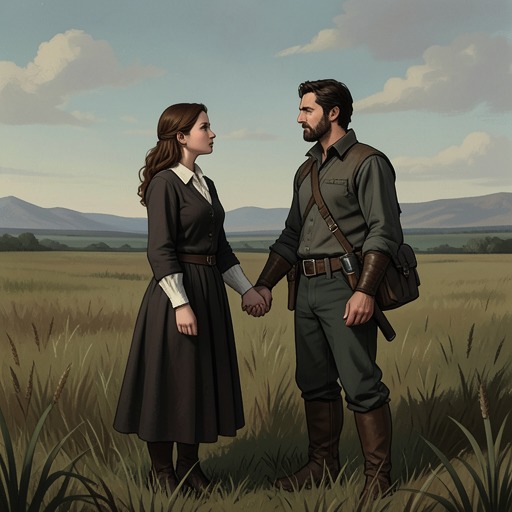
The ranch carries a remembered history of open land. When the children were young, there were no fences and a few unbranded cattle still roamed near the creek bottoms. By the time Daughter reached high school, the land had been fenced, and a macadam road was being built out from Dallas. These changes mark a shift from the grandfather’s pioneer past toward a more organized, connected landscape. The ranch remains part of the family’s life, but the details show that it is no untouched frontier: boundaries and roads are steadily remaking it.
The family’s transportation records the same transition. Daughter’s father once rode an Arab stallion named Mullah, given to him by a stockman who could not pay his legal fee. By the time the road was under construction, he drove a Ford instead. Daughter had a cream-colored pony, Coffee, who would nod and paw for sugar, while some of the girls she knew already had cars. She and her brothers pressed their father to buy a real car, dissatisfied with the old vehicle he used around the ranch. The episode sets inherited rural habits beside the attractions of modern mobility, and makes the children’s impatience part of Texas’s changing everyday life.
Return to Texas
Texas also becomes the destination of a hurried return. After traveling to New York with Ada Washburn, Daughter cries over what has happened and says her father and brothers will be angered when they hear of it. A telegram from her father first says that he is coming and tells her to make no statement until he arrives. A later message reports that he is seriously ill and directs her to come home, while Ada is to retain a lawyer. In the morning Daughter boards the first train south, frightened by the news.
At St. Louis she receives an update that her father’s condition is fair and that he has double pneumonia. The return journey then brings Texas back into view through the spring crops beginning to grow and bluebonnets in bloom. The landscape is specific and seasonal, unlike the earlier sweeping claims about state and nation. It offers Daughter a familiar route home at a moment when the family’s security has been shaken by illness and legal concern.
Buster meets her at the depot and tells her that she has nearly killed their father. Inside the house, Dr. Winslow greets her warmly and assures her that he will do everything he can to bring her father through. The sickroom and the presence of a trained nurse running the household make the homecoming unsettling rather than restorative. Texas is still the family’s base, but returning to it does not immediately restore the ordinary order of the household.
Narrative Significance
The state’s presentation moves between grand claims and concrete particulars. The opening compresses Dallas, Texas, and America into a ladder of civic and national superlatives; the ranch scenes then qualify that rhetoric with fences, a road, a horse exchanged for a Ford, and children asking for a car. The resulting portrait treats modernization not as an abstract process but as something visible in the family’s changing relationship to land and travel.
The later journey south gives those details another function. Texas is where Daughter’s father, brothers, and home remain, and the landscape she sees on the way back helps locate her return in a recognizable season and place. Yet the family house contains illness, anxious messages, and unfamiliar care arrangements. The contrast makes Texas both a homecoming destination and the setting of unsettled family life: the state’s confident image persists, while the events there reveal how vulnerable the household beneath it can be.