Paterson
1919Paterson is a focal point of textile labor conflict in the novel, linking mill workers’ strikes to the wider lives of Ben Compton, Helen Mauer, and Nick Gigli. Its significance lies not only in the walkouts themselves but in what follows: arrest, blacklisting, and the formation of solidarities that cross workplaces and backgrounds.
Textile labor and the strike network
The novel situates Paterson within a broader landscape of New Jersey textile unrest. One strike episode takes place in an unnamed mill town: the mills stand behind wire-mesh gates, guarded by police and special deputies, while a strike headquarters coordinates publicity and meetings. Although the town is not named in that scene, the narrative elsewhere explicitly associates both Nick Gigli and Helen Mauer with the Paterson strike, placing Paterson within this network of labor conflict.
Helen Mauer had worked in a textile mill and had been arrested during the Paterson strike. By the time she meets Ben Compton at a lecture, she has been blacklisted and is working as a salesgirl at Wanamaker’s, while her family continues to work at the Botany Mill in Passaic. Her experience shows how the consequences of a strike extend beyond the picket line: punishment follows a worker into later employment, while family ties remain rooted in the mills.
Arrest, policing, and public protest
In the New Jersey strike episode, Webb Cruthers and his companion encounter a labor campaign hemmed in by police. The mill-owning town cannot provide a hall for a meeting, so the gathering is arranged in the next town. When the hall is declared full despite having room for only a few dozen people, Ben Compton speaks outside, holding onto a lamppost as the crowd gathers in sleet. Police drag him away to a patrol wagon; the crowd’s movement shifts from protest toward a subdued retreat under the pressure of mounted police.
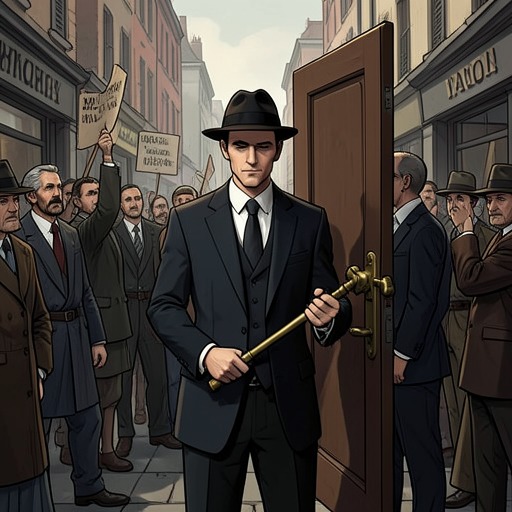
The conflict becomes more immediate on a subsequent picket line. At dawn, workers face police breaking up the line as women, men, and children sing, jeer at strikebreakers, and shiver in inadequate clothing. When a young woman falls, a policeman kicks her in the face. The companion, who had stepped forward to help, attacks the officer and is struck from behind before being pushed into a police wagon. The scene makes repression bodily and specific: the strike is not simply a dispute over work, but a confrontation in which police force is used against workers and their supporters.
Workers’ solidarity beyond the mills
Paterson’s labor history also shapes Ben Compton’s relationships and political commitments beyond textile work. Nick Gigli, an Italian laborer with experience in textile mills and other industries, had spent three weeks in jail during the Paterson strike. His past marks him as a veteran of labor conflict, and the workers at the construction camp treat him as a familiar presence, calling out to Ben to ask where Nick is when they see him alone.
When Nick tells Ben that workers are striking over the construction bosses’ manipulation of their time, Ben joins them. He refuses an order to take a team to the station, declaring that he is on strike, and answers the boss’s ethnic insult by identifying himself as American-born and standing with his class. His choice carries a material cost: the boss fires him and threatens further violence. The episode echoes the Paterson strike’s conflict between organized workers and those who control employment, while showing solidarity becoming a decision enacted at personal risk.
Political consequences and significance
The Paterson strike’s effects persist in the lives of people who participated in it. Helen’s arrest and blacklisting connect industrial protest to the precarious work available afterward; Nick’s imprisonment becomes part of his standing among fellow workers. The novel also connects these experiences to other labor struggles: Ben and Bram Hicks later travel to Everett after reading about a shingleweavers’ strike and a free-speech fight, where they encounter armed deputies and the violent suppression of organizers.
Across these episodes, Paterson is more than a single setting for a strike. It is one node in a larger geography of labor organizing and employer resistance. The mills, picket lines, police wagons, and workers’ personal histories reveal how industrial conflict travels with those who take part in it, shaping their employment, alliances, and subsequent political action.