New Jersey
1919New Jersey serves two sharply different purposes in the narrative: it is the state where Woodrow Wilson advances from college president to governor, and the setting of an unnamed mill town where textile workers struggle to meet and organize. The first story turns on a politician’s route into office; the second shows how employer influence and police intervention constrain workers’ attempts to speak and act together.
Political Arena and Wilson’s Governorship
In 1910, New Jersey’s Democratic bosses, pressed by muckrakers and reformers, offered the governorship to Woodrow Wilson, a college president whose public speeches drew large audiences. The nomination joined reform pressure to the calculation of party leaders: they sought a prominent figure who publicly championed the Right. New Jersey thus enters the account not simply as an office Wilson held, but as the setting in which political reform and party management converged.
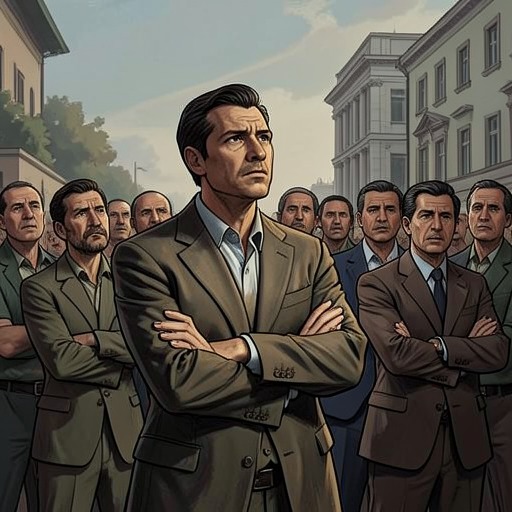
At the Trenton convention that nominated him, Wilson professed belief in the common man and spoke of liberty and achievement. The local bosses and ward leaders initially met his appeal with uncertainty, then cheered. Wilson won by a large plurality, leaving Princeton to become governor of New Jersey. The narrative presents the election as a reversal of the political managers’ expectations: the candidate they had recruited outmaneuvered them. His move into state office is described as a partial reform rather than a completed transformation, and the account notes his reconciliation with Bryan.
The Mill Town and the Strike
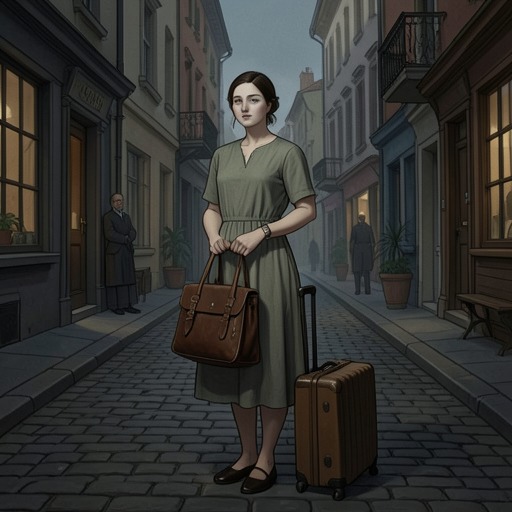
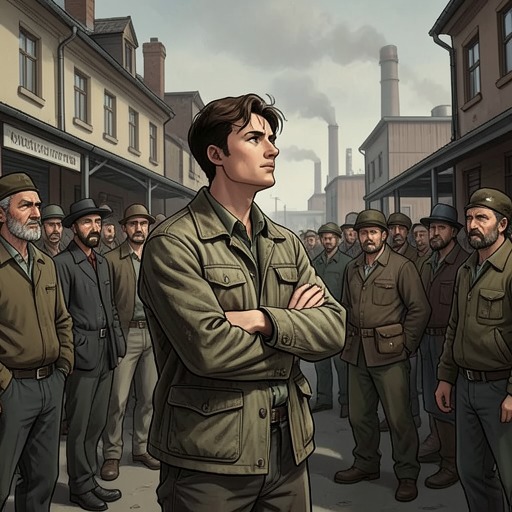
A separate New Jersey setting is an unnamed town shaped by its textile mills. Webb Cruthers and a young woman visit during a workers’ strike. The town’s quiet business district gives way to the mill buildings, where police and special deputies are stationed. At strike headquarters, workers and organizers prepare publicity and distribute handbills; the crowded office makes visible the practical work required to sustain a labor campaign.
The meeting is held in a neighboring town because, in the mill town, the mills’ owners control the available property and a hall cannot be rented. That arrangement makes the geography of the strike part of its conflict: the workers must leave the place where the dispute is centered to find space to assemble. Even there, mounted police turn people away, saying the hall is full. Webb and his companion encounter a gathering of thousands of workers and family members outside, while the meeting itself remains inaccessible to them.
Assembly, Policing, and Worker Solidarity
Ben Compton addresses the crowd from a lamppost, protesting that the hall has been closed despite its limited occupancy. Police take him away, and the crowd begins to disperse under the pressure of mounted officers. Webb then climbs onto a hydrant and speaks in support of the crowd’s right to enter the hall. When police move toward him, he and his companion flee separately through the gathering. His later fear of being recognized at the station shows that the encounter continues to shape their conduct after they have left the meeting site.
The strike also draws Webb back to the mills. On a later morning, he and his companion join a picket line as police begin breaking it up. Workers sing Solidarity Forever and call out against replacement labor. When a young striker falls, the companion tries to intervene; she is arrested and taken away in a police wagon. The sequence moves from a denied meeting to the dispersal of a crowd and then to the arrest of a participant on the picket line. New Jersey’s strike setting therefore records not one isolated confrontation, but repeated efforts to organize met by official force.
New Jersey’s Narrative Significance
These two New Jersey stories place different forms of political action beside one another. Wilson’s successful campaign proceeds through a convention and election, while the textile workers’ effort to gather is obstructed by control of meeting space and policing. The contrast does not equate electoral politics with labor protest; it shows how access to public influence differs between a candidate seeking state office and workers seeking a place to assemble.
The state’s role is consequently both institutional and local. Trenton anchors Wilson’s transition into the governorship, while the unnamed mill town and its neighboring meeting place ground the strike in contested workplaces, halls, streets, and picket lines. New Jersey connects political advancement with industrial conflict, but the outcomes remain unequal: Wilson reaches office, whereas workers’ attempts to meet and demonstrate are repeatedly curtailed.