Pueblo
1919Pueblo marks the final public speech of Woodrow Wilson’s 1919 campaign for the League of Nations, bringing the distance between his expansive political ideals and his failing body into sharp view. He appeared in Colorado barely able to stand, delivered an appeal for justice, liberty, and peace, and suffered a stroke on the train to Wichita soon afterward.
The Final Speech
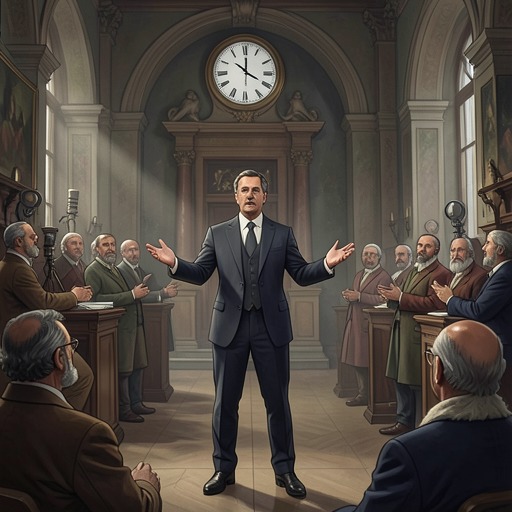
In Pueblo, Wilson was described as a grey man, hardly able to stand, with one side of his face twitching. The physical strain was visible in the scene itself: the president who had set out to persuade the country to support the League was struggling to remain upright before his audience.
His address looked beyond that immediate weakness. Wilson said he believed that, once the mists surrounding the great question had cleared, people would see the truth face to face. He presented justice, liberty, and peace as principles to which the American people would respond, and imagined those principles leading the United States—and, through it, the world—toward a peace unlike anything the world had known. The speech joined a national claim to a promise of international transformation.
The Tour Ends
The Pueblo address was Wilson’s last speech. On the train to Wichita, he suffered a stroke, and the speaking tour intended to sweep across the country in support of the League of Nations was abandoned. The close sequence makes Pueblo both a political culmination and a sudden limit: Wilson had just described a future in which his words would lead the world toward peace, but he could no longer continue the campaign to win support for that vision.
Place in the Narrative
Pueblo’s significance rests on the contrast between the speech’s confidence in public persuasion and the speaker’s evident physical collapse. The language reaches toward a world remade by justice and peace, while the scene records a man barely able to stand; the stroke on the way to Wichita turns that contrast into a decisive break in the campaign. Pueblo thus becomes the point at which Wilson’s appeal for the League reaches its final spoken form, while the political struggle around that ideal remains unresolved.