Italy
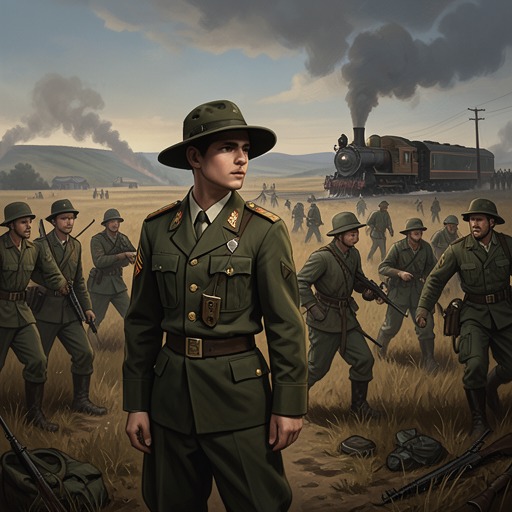
1919Italy in the novel is both a contested wartime front and a landscape through which returning American characters try to make sense of the peace. News of the retreat at Caporetto and rumors of renewed danger give way to a vividly described sea passage toward Genoa and to episodes in Rome, where Richard Ellsworth Savage encounters old comrades, American officials, and Anne Elizabeth Trent. The country’s significance lies in that change of scale: military crisis reaches the characters as rumor, while postwar uncertainty becomes personal and immediate in the streets and rooms of Rome.
Italy as a wartime crisis
Italy first enters these episodes through accounts heard in Paris. At a dinner Eveline Hutchins gives, Jerry Burnham is drinking heavily and recounting the retreat at Caporetto, arguing that the Allies are in a bad way. Major Appleton objects that the claim should not be made even if it is true; Eleanor Stoddard goes further, saying Burnham ought to be arrested for it. Their quarrel after the guests leave shows how news from the Italian front unsettles even a social gathering: the question is not simply whether the report is accurate, but whether speaking it violates the public cheerfulness expected during wartime.
The unease becomes part of the Red Cross office’s atmosphere the following spring and summer. Rumors there include a renewed Austrian breakthrough in Italy, alongside reports of mutiny and reversals elsewhere. The office is ordered three times to pack its records and be ready to leave Paris. These reports are not presented as verified developments; their narrative force comes from the way they make the war seem capable of turning suddenly against the Allies. Italy is one of the uncertain fronts through which that larger instability is imagined.
The sea route to Genoa
A later voyage gives Italy a physical approach rather than a distant headline. After passing Spain and going through the Strait of Gibraltar, the ship follows the French coast toward Genoa amid a stream of wartime traffic. Camouflaged Greek, British, Norwegian, and American freighters travel toward the front, while transports, colliers, and hospital ships return from Italy and Salonika. Lifepreservers are piled on decks and boats hang ready from davits. French and British battleships remain out to sea, and destroyers stop ships to inspect their papers. The route presents the Mediterranean as a corridor of guarded movement, even when the shore itself does not look like a battlefield.
The coast changes in detail as the ship proceeds: sunny weather follows Gibraltar; rain, fog, and a choppy sea make the crossing of the Gulf of Lyons hazardous; and a strong northwesterly wind meets the vessel along the Riviera. Red-roofed towns, rocky hills, and distant snow-covered mountains appear before the colorful settlements beyond Monte Carlo. These observations make the approach to Italy a sequence of changing weather and shorelines, not a simple passage between ports.
At night, a red glare ahead prompts rumors that the enemy has captured Genoa and is burning it. The second mate urges the skipper to turn back toward Marseille, but the skipper dismisses his warning. The light proves to be a large Standard Oil tanker burning outside the breakwater. Its flames spread across the water, illuminating the harbor, ships, lighthouses, and buildings rising on the hills. The episode turns an ordinary navigational uncertainty into a brief image of wartime danger, then resolves it without the rumored capture of the city.
Rome and the unsettled transition
Richard Ellsworth Savage’s arrival in Italy brings the narrative from the sea route into postwar travel. At the Italian frontier, he remembers an earlier journey into the country by Fiat car with Sheldrake. In the station bar he drinks mineral water and wine, then brings bottles back to the compartment for G. H. Barrow and Anne Elizabeth Trent. By the time the train reaches Rome, the travelers are using one another’s first names. Anne Elizabeth Trent tells Savage about her efforts to get overseas during the war and about her brother, killed while learning to fly at San Antonio. She also describes Barrow’s unwanted advances during their voyage and in Paris.
Savage has to take his despatch cases to the embassy, but arranges to contact Trent at Near East Relief. The next day he meets Ed Schuyler, who has an apartment on the Spanish Steps and has been traveling widely. Schuyler is now troubled by the threat of a duel from the husband of an Italian woman with whom he has been involved, and fears that the affair could cost him his Red Cross position. He says he is tired of Italy and the Red Cross and wants to go home, yet would like to remain long enough to see the revolution he expects in Italy. His predicament gives the postwar setting a distinctly unresolved character: personal danger, professional uncertainty, and political anticipation coexist rather than yielding to a settled peace.
The conversation continues over cognac as Schuyler talks about wanting a foreign-correspondent job that would take him east, perhaps to Persia and Afghanistan. Hearing his plans makes Savage feel miserable, and he paces the tiled floor. Italy is therefore not only a destination where former comrades reunite; Rome also becomes a place where their divergent futures are made plain. Schuyler imagines another departure, while Savage is unsettled by the prospect of deciding what comes next.
Rome, Tivoli, and personal entanglements
Savage spends several days in Rome awaiting the arrival of the President on January 3. With no immediate assignment beyond being available as a courier, he walks around the city, hears bands practicing The Star-Spangled Banner, and watches flags and stands being put up. The preparations bring American public ceremony into the same streets where private relationships and political expectations remain uncertain.
On New Year’s Day, Savage, Schuyler, Barrow, and Trent hire a car to visit Hadrian’s Villa and then Tivoli. Muddy roads and showery weather frame a lunch above the waterfall, where they eat fritto misto and drink Frascati wine. Schuyler and Barrow discuss the Roman Empire and the ancient art of living. Savage, meanwhile, notices Trent appearing to flirt with Barrow and grows resentful as Barrow draws his chair closer to hers. When Trent sets off toward the small round temple across the ravine, Savage follows her down the slippery path; the waterfall roars above them and mist hangs cold on their faces. The outing shifts from group sociability to a moment of physical proximity between the two travelers, while leaving their intentions uncertain.
After returning to Rome, Trent asks Savage to meet her again. She greets him outside a café near Piazza Venezia with an embrace and a kiss, then takes him to a small hotel on a back street. Savage is drawn to her, but his response is divided: even as he makes love to her, he is anxiously turning over what he can do. The episode places his wartime and postwar uncertainty inside an intimate encounter. Across the Italian episodes, movement between front, port, city, and countryside does not produce a clear resolution; Rome and its surroundings instead gather the unsettled friendships, ambitions, and desires that survive the war.