Centralia, Washington
1919Centralia, Washington, is portrayed as a Pacific Northwest lumber town where labor organizing collides with the interests of business leaders and armed anti-union groups. Its union hall is first wrecked in 1918 and later becomes the center of a deadly confrontation on Armistice Day, 1919. Through the town’s loggers, the Industrial Workers of the World, and the fate of Wesley Everest, Centralia concentrates the book’s account of how organized workers faced intimidation, expulsion, imprisonment, and lethal violence—and how those who held power could shape the official story afterward.
A Lumber Town and Its Labor Conflict
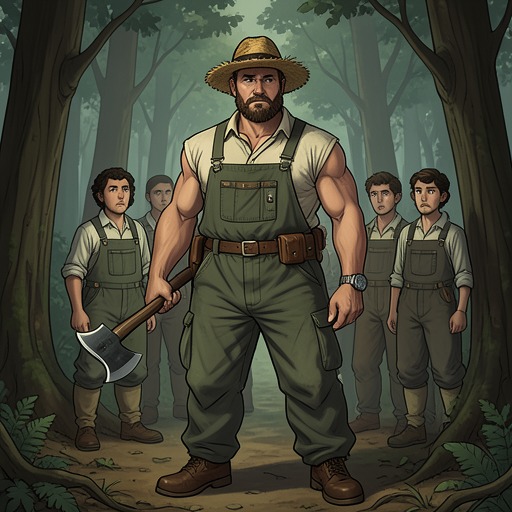
Centralia is situated within the narrative’s account of the vast, rainy forests of the Pacific slope, where promoters and politicians had long worked to secure control of timber. The book sets that concentration of economic power against the lives of woodsmen and loggers, whose work and communities depended on the region’s forests. Wesley Everest, who had returned from overseas service to his former logging job, came from a family described as part of an older tradition of woodsmen and squirrel hunters who had followed the trail westward into those forests. His story links military service and the return to civilian labor: he had been a sharpshooter in the army, earned a marksmanship medal, and then went back to logging.
This setting matters because the struggle in Centralia is not presented as a dispute detached from work and ownership. Employers and business interests organized against the Industrial Workers of the World, forming the Employers Association and the Legion of Loyal Loggers. The narrative describes these groups as using former soldiers to raid union halls, assault organizers, and burn labor literature. The contest over the hall was therefore also a contest over whether loggers could maintain an organized presence in the town and continue to circulate their ideas.
The Union Hall and the 1918 Raid
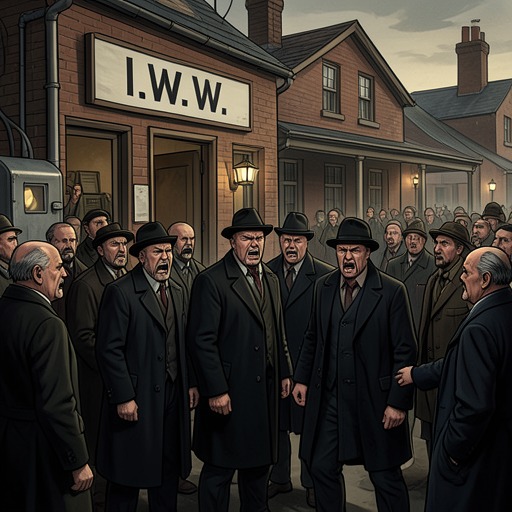
On Memorial Day in 1918, members of the American Legion, accompanied by people from the Chamber of Commerce, wrecked the Industrial Workers of the World hall in Centralia. Those inside were beaten; some were jailed, while others were put into a truck and taken beyond the county line. Papers and pamphlets were burned, and the hall’s furnishings were sold for the benefit of the Red Cross. The narrative adds a striking reminder of the episode’s lasting local imprint: the union’s desk still stands in the Chamber of Commerce.
The attack did not end union activity. The loggers hired another hall, and their union continued to grow. That recovery makes Centralia’s later crisis more than a simple aftermath of the 1918 raid: the organization that had been driven from one meeting place rebuilt its presence, while opponents continued to regard it as a threat. Before Armistice Day in 1919, rumors spread that the new hall would be raided again. The hall thus represented both a practical base for the union and a visible target in the town’s unresolved conflict.
Armistice Day and the Fight at the Hall
In the days before the anticipated raid, business leaders formed the Citizens Protective League and chose Warren O. Grimm to lead its so-called 100 percent forces. Grimm’s authority in the labor conflict was associated with his service as an officer with American forces in Siberia, which had led local business people to treat him as an authority on labor and Bolshevism. The town’s atmosphere was already threatening: before the march, vigilantes attacked a blind newsdealer and left him outside the county line. The loggers, having consulted counsel, decided that they had the right to defend themselves and their hall if it was attacked.
Everest prepared for the possibility of a confrontation. A crack shot and a quiet man, he attended a union meeting in his army coat over work clothes, carrying literature and pamphlets as members discussed the threat of a lynching. On Armistice Day, Centralia was cold and misty. Grimm commanded the town’s parade, which passed the union hall once without stopping. The men inside briefly had reason to think the danger had passed; on the return, however, the parade halted in front of the building. People rushed toward the hall, and gunfire broke out from inside and from the hills behind the town. Grimm and another former soldier were hit.
The parade fell into disorder, but armed men regrouped and forced their way toward the hall. They found several unarmed men hiding and a young uniformed man at the top of the stairs. Everest left the building and fled toward the woods, using his rifle and then a pistol to hold off those pursuing him. The crowd had brought rope intending to lynch Britt Smith, the Industrial Workers of the World secretary; Everest’s flight drew its attention away from Smith and helped prevent Smith from being lynched at the hall. Everest reached the Chehalis River, where the pursuing crowd caught him. He was taken to jail, while the other loggers were questioned.
Killing, Official Account, and Aftermath
That night, a mob broke into the jail and took Everest away in a limousine to the Chehalis River bridge. He was killed there. The book emphasizes the difference between what happened to him and the account later given by the coroner: at the inquest, the coroner described Everest as having escaped, gone to the bridge, and died by suicide. The narrative presents that explanation as a fabrication, exposing the gap between the mob’s actions and the official version that was allowed to stand.
Everest’s body was put in a packing box and buried, but the account says that its burial place remained unknown. The six other loggers captured in the aftermath were sent to Walla Walla Penitentiary. The unresolved burial and the imprisonment of the survivors leave Centralia’s conflict without a neat civic settlement: the town’s union hall had been rebuilt after the earlier attack, but the workers’ effort to defend it was followed by death, prison, and an official account that concealed responsibility.
Centralia’s Narrative Significance
Centralia gives the novel a concrete place in which to show the unequal resources of a labor conflict. The loggers had a meeting hall, literature, and a decision to defend themselves; their opponents had business organizations, political standing, armed allies, and influence over the public account of the violence. The narrative’s attention to the continuing union, the destruction and replacement of its hall, and the fate of the desk kept in the Chamber of Commerce makes the town’s institutions part of the story rather than neutral scenery.
The repeated contrast between organizing and suppression culminates in Everest’s disappearance from any known grave and the imprisonment of the other captured loggers. His military skill and service do not protect him when he returns to civilian work; instead, the skills he acquired as a soldier become entangled in the defense of a union hall. Centralia consequently stands both for the persistence of working-class organization and for the coercion used to contain it. The false account of Everest’s death sharpens that significance: the struggle is not only over who controls the hall, but also over who can determine what the town and the nation will remember.