Walla Walla Penitentiary
1919Walla Walla Penitentiary appears as the place where six captured loggers were imprisoned during the violent campaign against labor activism in the Pacific Northwest. The book gives no account of the prison itself; instead, its name closes a stark contrast between the known fate of the six men and the unknown resting place of Wesley Everest.
Place and Mention
The penitentiary is identified only as the institution in which the six loggers were confined. No description of its buildings, administration, conditions, or location within the narrative is supplied. Its significance comes from the brief but definite fact of imprisonment, rather than from a sustained scene set inside the institution.
Connection to the Loggers
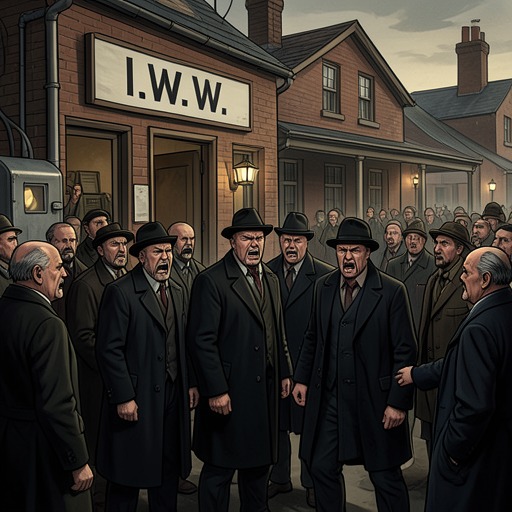
The reference follows an account of conflict surrounding timber workers and efforts to suppress radical organizing. The book describes loggers, shingle weavers, and sawmill workers as exploited laborers, while organizers associated with the Industrial Workers of the World advocated industrial democracy, better living and working conditions, and an end to company scrip. Against that background, the six loggers' confinement at Walla Walla Penitentiary marks the penal consequences of the campaign against the workers; the text does not specify the charges or individual circumstances of their imprisonment.
Narrative Significance
The mention is sharpened by its contrast with Wesley Everest's fate. The text says that no one knows where Everest's body was buried, then states that the six loggers who were captured were buried in Walla Walla Penitentiary. The burial language is figurative: the men were imprisoned, not physically interred there. In a few words, the passage sets an unresolved disappearance beside a known institutional destination, making the penitentiary the closing image of punishment in the episode.