Event 1
1815年坦博拉火山爆发
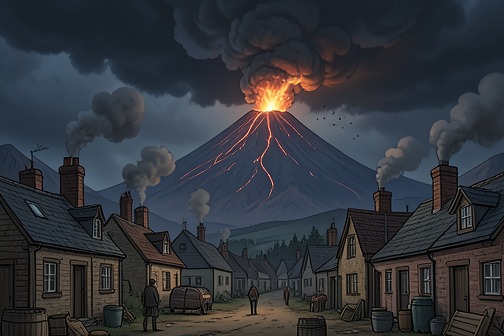
The 1815 eruption of Mount Tambora was not merely a geological disaster in the [Dutch East Indies](entity:location-recall-location-dutch-east-indies-c7287922b1c3): its consequences travelled through the atmosphere, altered the climate far beyond the eruption site, and helped generate the literary circumstances from which modern vampire and monster fiction emerged. By turning an environmental catastrophe into the hidden condition of a famous gathering, the event links planetary violence, human confinement, and the invention of enduring Gothic forms.
## Eruption and Atmospheric Consequences
The eruption took place in 1815 at Mount Tambora in the Dutch East Indies, now Indonesia. Its effects were vast enough to produce a catastrophic fall in temperature, and the continuing climatic disturbance made 1816 known as [the year without a summer](entity:expression-recall-expression-the-year-without-a-152b1afb34cb). The evidence presents the event as a slow and distributed disaster rather than a single scene of destruction: its consequences unfolded across time and distance, killing millions around the world while transforming the weather experienced by people who could not have witnessed the eruption itself.
The altered climate also left traces in cultural production. The unusual atmospheric conditions are now suspected to have influenced at least some of the famously coloured paintings of J. M. W. Turner. The eruption therefore appears not only as a historical cause of death and disruption but also as a material force entering art indirectly, through skies, light, temperature, and the conditions under which people worked and imagined.
## The Year without a Summer
In 1816, the climatic aftermath made ordinary outdoor life difficult for the group gathered around [Villa Diodati](entity:location-recall-location-villa-diodati-3d584b55506b), the house near the southern shore of [Lake Geneva](entity:location-recall-location-lake-geneva-7be17872d06b) that Lord Byron had rented for the summer. Byron had sought refuge from intense attention in England surrounding his collapsing marriage and rumours of an affair with his half-sister. His close friends Mary Godstone and Percy Bysshe Shelley were staying nearby with Mary’s stepsister Claire Clairmont, and the three became regular visitors to the villa.
Particularly inclement weather eventually compelled the five friends to shelter together inside Villa Diodati for three days. Byron’s poem Darkness records the oppressive absence of ordinary daylight in the line, "Morn came and went – and came, and brought no day". The weather thus became more than background: it restricted movement, concentrated the group in one interior space, and supplied the emotional and visual atmosphere in which stories of darkness and supernatural threat could flourish.
## From Confinement to Gothic Invention
While confined at the villa, the friends entertained themselves by reading aloud from [Fantasmagoriana](entity:object-recall-object-fantasmagoriana-403c993aed72), a collection of dark Germanic fairy tales. The reading led them to organize a competition in which each participant would attempt to write an original ghost story. The eruption was therefore not presented as the direct subject of the resulting fiction; its importance lies in the chain of conditions it created. Volcanic activity altered the climate, the climate imposed confinement, confinement produced a literary game, and that game helped reshape the modern supernatural imagination.
The most famous product of the competition was Mary Godstone’s [Frankenstein; or, The Modern Prometheus](entity:object-recall-object-frankenstein-or-the-mo-167a21dff07d), later published under her married name of Shelley. [John William Polidori](entity:character-recall-character-john-william-polido-b55b1bfb6cd5), the young physician employed as Lord Byron’s personal attendant, also emerged from the contest as a surprisingly capable competitor. His work would become decisive for vampire fiction: vampires in their modern literary form began rising from the grave in 1819 through Polidori’s influence and writing. The volcanic event therefore stands at a buried origin point for both the Frankenstein tradition and the modern aristocratic vampire.
## Historical and Narrative Significance
The eruption’s significance depends on its delayed causality. [Nothing](entity:character-recall-character-nothing-5ce10c289471) in the gathering at Villa Diodati required the participants to know or discuss Mount Tambora as a volcanic event; nevertheless, the eruption helped determine the weather that surrounded them, the enclosure that brought them together, and the imaginative pressures that turned leisure into invention. Its narrative function resembles a distant trigger whose force becomes visible only through later consequences.
This structure contrasts with the more immediate supernatural explanations elsewhere in the book. In the account of the estrie from [Sefer Hasidim](entity:object-recall-object-sefer-hasidim-8f271b83328d), a dead body with its mouth open is said to threaten the living until a spike is hammered through the mouth into the earth and the mouth is filled with stones. In the legend of [Odran of Iona](entity:character-recall-character-odran-of-iona-a0b433141feb), a man allegedly buried alive beneath a chapel in approximately AD 520 speaks from the grave before being reburied for heresy. Those stories make danger local, bodily, and legible. The 1815 eruption works differently: its violence is geographically remote, temporally extended, and apprehended through weather, mortality, and cultural aftermath.
The event also helps explain why Gothic narratives repeatedly make environmental disturbance feel like a pressure on the boundary between life and death. The book connects blood with life, intimacy, vulnerability, and predation; it describes burial as a dangerously uncertain threshold; and it shows supernatural identities being made through bodily transformation and social reclassification. Against that recurring concern with thresholds, the eruption provides a planetary counterpart: an event that begins in one place but unsettles lives elsewhere, making the familiar world strange before the monsters formally arrive.
## Afterlives in [Vampire](entity:creature-recall-creature-vampire-df20a359382b) Culture
The later vampire tradition inherits the atmosphere generated by this historical conjunction. Modern vampires are often wealthy, charismatic, sexually charged, and apparently freed from ordinary economic anxieties, while their stories preserve the older association between blood, death, intimacy, and danger. In Buffy the Vampire Slayer, [Buffy Summers](entity:character-recall-character-buffy-summers-2ed2a8807719) is drawn into the Slayer’s duty at fifteen and eventually accepts a destiny centered on destroying vampires, yet her relationship with [Angel](entity:character-recall-character-angel-b4ecd11d5f8e) complicates the simple division between monster and victim. In [Blade](entity:character-recall-character-blade-dec5b8f1b398), the hybrid Eric Brooks belongs to neither ordinary human society nor the pure-blood vampire caste, and the conflict between pure-blood vampires and those turned during human life becomes a struggle over hierarchy and succession.
These later forms differ sharply from the meteorological circumstances at Villa Diodati, but they repeat the same movement from disruption to imaginative reordering. A world made unstable by atmospheric catastrophe becomes a world populated by unstable bodies, divided identities, dangerous intimacy, and contested borders between human and inhuman. The 1815 eruption’s most consequential aftershock was thus cultural: it helped create the conditions under which [Gothic fiction](entity:concept-recall-concept-gothic-fiction-4e8469169f85) could make environmental uncertainty, mortality, and desire speak through monsters.
Event 2
无夏之年
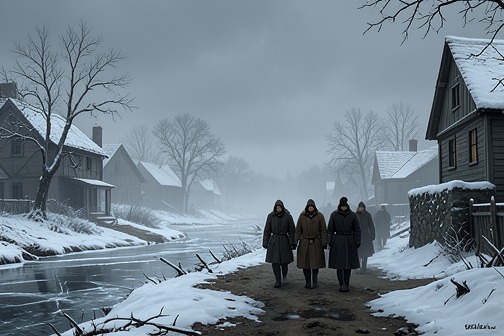
The Year Without a Summer was the name eventually given to 1816, when the continuing atmospheric effects of the 1815 eruption of Mount Tambora in the [Dutch East Indies](entity:location-recall-location-dutch-east-indies-c7287922b1c3) produced a catastrophic drop in temperature. More than an unusual piece of weather, it became a material condition that altered travel, daily life, and literary history: during three days of particularly inclement weather at [Villa Diodati](entity:location-recall-location-villa-diodati-3d584b55506b) near [Lake Geneva](entity:location-recall-location-lake-geneva-7be17872d06b), Lord Byron, Mary Godstone, Percy Bysshe Shelley, Claire Clairmont, and [John William Polidori](entity:character-recall-character-john-william-polido-b55b1bfb6cd5) were forced into one another’s company and turned confinement into a competition whose most famous products included [Frankenstein; or, The Modern Prometheus](entity:object-recall-object-frankenstein-or-the-mo-167a21dff07d) and [The Vampyre](entity:object-recall-object-the-vampyre-80eacd59157c).
## Climatic Background
The event began with the 1815 eruption of Mount Tambora, whose continuing effects caused a severe global temperature decline in 1816. The disaster killed millions around the world, making the phrase the Year Without a Summer more than a picturesque description of gloomy skies: it named a broad environmental crisis whose consequences unfolded across distance and time. The same unusual weather is now suspected of having influenced at least some of J. M. W. Turner’s famously atmospheric paintings, linking the climatic disturbance not only to suffering and scarcity but also to changes in visual culture.
The event’s violence was therefore slow and dispersed rather than concentrated in a single scene. Its consequences reached the visitors at Villa Diodati as persistent, “particularly inclement weather,” turning the season Lord Byron had intended as an escape into an enforced retreat. The climatic disturbance made the landscape less a liberating summer setting than a pressure chamber, where ordinary plans gave way to reading, conversation, and invention.
## Confinement at Villa Diodati
In 1816, John William Polidori accompanied Lord Byron to Villa Diodati, the house Byron had rented near the southern shore of Lake Geneva to escape the attention surrounding his collapsing marriage and rumours of an affair with his half-sister. Lord Byron’s close friends Mary Godstone and Percy Bysshe Shelley were staying nearby with Mary’s stepsister Claire Clairmont, and the group became regular visitors to the villa. Their personal circumstances already carried pressure: Mary Godstone had previously become pregnant by Percy Bysshe Shelley while he was still married, and their prematurely born baby survived for less than two weeks.
The weather then narrowed their world. Lord Byron’s poem Darkness captured the absence of a normal day in the line “Morn came and went – and came, and brought no day.” For three days, the five friends took shelter together inside the villa. They read aloud from [Fantasmagoriana](entity:object-recall-object-fantasmagoriana-403c993aed72), a collection of dark Germanic fairy tales, and the imposed intimacy of the gathering redirected their attention toward supernatural fiction.
## The Ghost-Story Competition
The friends responded to their confinement by deciding that each would write an original ghost story. The competition transformed environmental disruption into a literary mechanism: the volcanic aftermath supplied the darkness and enclosure, while Fantasmagoriana supplied a storehouse of supernatural motifs. A historical climate event thus entered the story of Gothic literature indirectly, not as a character or explicit subject, but as the circumstance that made a particular creative encounter possible.
The most famous result was Mary Godstone’s Frankenstein; or, The Modern Prometheus, later published under her married name of Shelley. John William Polidori’s contribution began from a fragment that Lord Byron had started for the competition and abandoned. Polidori completed the tale as his own work, but when The Vampyre appeared in the April 1819 edition of [New Monthly Magazine](entity:organization-recall-organization-new-monthly-maga-23be3b7ca3d5), it was published without his permission or name and falsely attributed to Lord Byron. Its central figure, [Lord Ruthven](entity:character-recall-character-lord-ruthven-bc1b5e39c869), befriends [Aubrey](entity:character-recall-character-aubrey-7fcaf7f8ee3e) and then destroys Aubrey’s nearest and dearest, establishing a modern literary vampire whose social charm and predatory intimacy differed sharply from older corpse-centered traditions.
## Historical and Literary Significance
The Year Without a Summer matters because it exposes the dependence of cultural production on material conditions. The Villa Diodati stories are often remembered as products of individual imagination, yet the evidence places them within a chain of forces extending from a volcanic eruption in the Dutch East Indies to a cold, dark season on the shores of Lake Geneva. The weather interrupted the visitors’ intended escape, compressed their social world, and supplied the atmosphere in which supernatural storytelling flourished.
Its significance also lies in the contrast between scale and form. The eruption caused consequences that killed millions, while the literary episode involved only a small group gathered in one house for three days. The connection is not that the group represented the disaster, but that distant environmental violence created the conditions for an intimate cultural event. Through that chain, the Year Without a Summer became part of the genealogy of modern [Gothic fiction](entity:concept-recall-concept-gothic-fiction-4e8469169f85) and, especially, of the vampire as a charismatic literary figure.
Event 3
迪奥达蒂别墅鬼故事竞赛
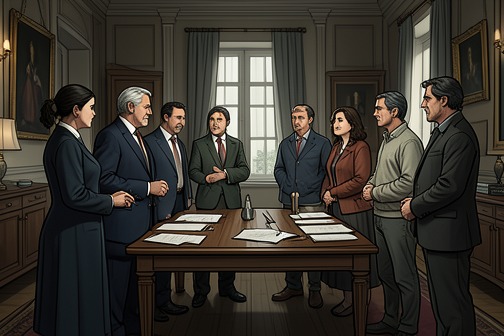
The [Villa Diodati ghost story competition](entity:action-recall-action-villa-diodati-ghost-st-e4cb8eda3071) was the decisive creative encounter through which nineteenth-century [Gothic fiction](entity:concept-recall-concept-gothic-fiction-4e8469169f85) acquired two of its most influential modern forms: the assembled scientific monster of [Frankenstein; or, The Modern Prometheus](entity:object-recall-object-frankenstein-or-the-mo-167a21dff07d) and the seductive, socially powerful vampire of [The Vampyre](entity:object-recall-object-the-vampyre-80eacd59157c). What began as an improvised response to three days of confinement became a turning point in the cultural history of the undead, linking extreme weather, celebrity, literary rivalry, disputed authorship, and the later standardization of the Western vampire.
## Setting and Participants
The competition took place in 1816 at [Villa Diodati](entity:location-recall-location-villa-diodati-3d584b55506b), a handsome house near the southern shore of [Lake Geneva](entity:location-recall-location-lake-geneva-7be17872d06b) that Lord Byron had rented for the summer. Byron was seeking relief from intense attention in England, where his collapsing marriage and rumors of an affair with his half-sister had made him a constant subject of public discussion. His personal attendant, the young physician [John William Polidori](entity:character-recall-character-john-william-polido-b55b1bfb6cd5), accompanied him.
Byron’s close friends Mary Godstone and Percy Bysshe Shelley were staying nearby with Mary’s stepsister Claire Clairmont, and the three became regular visitors to the villa. Their personal circumstances already carried the charged mixture of scandal, intimacy, and social pressure associated with Gothic fiction: Mary had previously become pregnant by Shelley, who was still married, and the premature child survived for less than two weeks. The gathering therefore brought together not simply writers and companions, but a group living under the strain of reputational judgment and private upheaval.
## Weather, Confinement, and the Contest
The external circumstances were unusually dramatic. The 1815 eruption of Mount Tambora in the [Dutch East Indies](entity:location-recall-location-dutch-east-indies-c7287922b1c3) produced a catastrophic fall in temperature, helping make 1816 known as [the year without a summer](entity:expression-recall-expression-the-year-without-a-152b1afb34cb). The continuing effects killed millions around the world and created weather patterns so unusual that they have also been associated with the atmospheric colors of some paintings by J.M.W. Turner. At Villa Diodati, the weather turned literary leisure into enforced confinement.
During a particularly severe spell, the five companions sheltered together for three days. Lord Byron’s poem Darkness captured the oppressive conditions in the line, "Morn came and went – and came, and brought no day". To occupy the time, the group read aloud from [Fantasmagoriana](entity:object-recall-object-fantasmagoriana-403c993aed72), a collection of dark Germanic fairy tales. The readings supplied the immediate imaginative stimulus, but the contest also transformed passive fear into a structured artistic challenge: each participant would attempt to write an original ghost story.
## Literary Results
The most famous product of the rivalry was Mary Godstone’s Frankenstein; or, The Modern Prometheus, later published under her married name of Shelley. Although the book became much better known than the other work associated with the gathering, it was not the only lasting result of the contest. John William Polidori proved a surprisingly capable competitor, and his story redirected the vampire away from the crude revenant traditions that had dominated earlier folklore.
Polidori’s story developed from a fragment Lord Byron had begun for the competition and then abandoned. The fragment, originally titled A Fragment…, provided a starting point, but the finished tale was Polidori’s. Published in the April 1819 edition of [New Monthly Magazine](entity:organization-recall-organization-new-monthly-maga-23be3b7ca3d5), The Vampyre introduced [Lord Ruthven](entity:character-recall-character-lord-ruthven-bc1b5e39c869), an aristocratic figure who befriends a young man named [Aubrey](entity:character-recall-character-aubrey-7fcaf7f8ee3e) and proceeds to destroy Aubrey’s closest relations. The narrative’s central innovation was not merely that its vampire fed on human victims, but that predation was joined to charm, rank, fashion, and social access.
## Authorship Dispute and Cultural Consequences
The magazine published The Vampyre without Polidori’s permission or name and falsely attributed it to Lord Byron. The deception was strengthened by Polidori’s choice of the name Ruthven, recalling Lady Caroline Lamb’s Clarence de Ruthven, a thinly disguised portrait of Byron in her 1816 novel Glenarvon. Byron’s fame made the false attribution commercially advantageous, and some scholars argue that Polidori may have had reasons not to correct it immediately because association with Byron promised greater sales.
Polidori nevertheless attempted, initially without success, to establish that the story was his and that Henry Colburn had attributed it to Byron unscrupulously. Byron was also angered by the publication, since he and Polidori had already separated on unfriendly terms and Byron did not wish to be associated with the work. The controversy made authorship part of the story’s cultural identity: The Vampyre emerged from a collaborative setting, borrowed a fragment from Byron, circulated under Byron’s name, and yet became the work through which Polidori’s literary role was recognized.
Polidori was already familiar with vampire mythology. The introduction to The Vampyre referred to a supposedly credible account of vampirism in the Hungarian village of Madreyga involving a man called Arnold Paul. Although the location differs from the Serbian case investigated by [Johann Flückinger](entity:character-recall-character-johann-fl-ckinger-fd4ef439d9a9), the reference clearly drew on that earlier report. The Villa Diodati story thus joined contemporary literary invention to older medical, religious, and folkloric accounts of revenants and blood-drinking dead.
## Place in [Vampire](entity:creature-recall-creature-vampire-df20a359382b) History
Before [the nineteenth century](entity:time-recall-time-19-56b4dbe0d6f6), vampire-like beings were generally feared as ugly, repellent, and culturally specific creatures. Older traditions included [Lamia](entity:character-recall-character-lamia-c1044ebb5014), whose story shifted from a child-killing blood drinker to a seductive female demon; [Astryiah](entity:character-recall-character-astryiah-3dc374eb4a97), described in [Sefer Hasidim](entity:object-recall-object-sefer-hasidim-8f271b83328d) as an elderly vampire who sucked blood through her hair; and the impundulu of the eastern Cape, a witch’s familiar that could appear as a lightning bird or a beautiful young man. Medieval accounts by Walter Map treated comparable beings as revenants, while later eighteenth-century reports and Antoine [Augustin Calmet](entity:character-recall-character-augustin-calmet-362c4292b805)’s [The Phantom World](entity:object-recall-object-the-phantom-world-62e71b7d8f79) preserved the tension between clerical learning, testimony, and belief.
The nineteenth century altered that pattern. In the same broad period that tuberculosis encouraged vampire panic in [New England](entity:location-recall-location-new-england-ef140e738f2b) and epidemic deaths in Eastern Europe prompted exhumations and staking, Gothic literature made the vampire legible as a figure of social seduction. The Vampyre’s Lord Ruthven was handsome, upper-class, formally dressed, and dangerous precisely because he could move through respectable society. That model helped replace the ragged corpse with the polished predator and supplied the template for later Western vampire legends.
The competition’s importance therefore lies in its chain of consequences rather than in the ghost-story challenge alone. A weather-bound gathering produced Frankenstein; or, The Modern Prometheus and The Vampyre; one work reshaped the modern artificial monster, while the other gave the vampire aristocratic glamour, erotic danger, and cultural mobility. The event made literary creation itself part of vampire history: an atmosphere of darkness, intimacy, and confinement became the setting in which the modern vampire rose from the grave.
Event 4
阿诺德·保尔吸血鬼事件
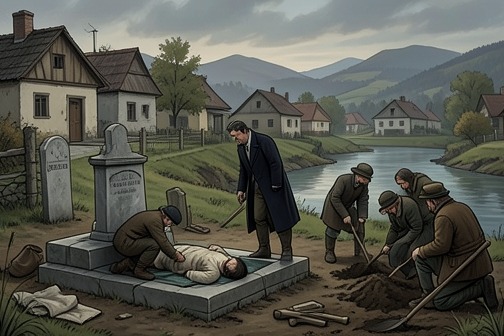
The [Arnold Paole](entity:character-recall-character-arnold-paole-81ce32c92ffd) vampire incident is one of the most influential recorded episodes in the history of vampire panic: a death in a Serbian village was transformed into a story of infection, resurrection, and deliberate killing. Its decisive significance lies not simply in the claim that Arnold Paole became a vampire, but in the way a community converted illness and decomposition into a coherent supernatural explanation, then used exhumation, staking, and cremation to make that explanation materially visible.
## Causes and Historical Setting
The incident unfolded in 1726 in [Trstenik](entity:location-recall-location-trstenik-349f8c42c96e), a village on the banks of the [West Morava River](entity:location-recall-location-west-morava-river-30b6247dae95) in central [Serbia](entity:location-recall-location-serbia-342ccbab685e). Paole was a Serbian hajduk, a term roughly describing a member of an irregular peasant infantry. He died after falling from a hay wagon and breaking his neck. The circumstances were apparently ordinary in physical terms, but the meaning attached to his death was shaped by an earlier story Paole had told about himself.
Before his death, Paole said that he had been plagued by a vampire several years earlier, probably in the region now known as [Kosovo](entity:location-recall-location-kosovo-5b3d2b2de3f1). According to his account, he escaped by eating soil from the vampire’s grave and covering himself with blood. The remedy already contained the logic that would later govern the entire case: vampirism was imagined as transferable contamination, and blood could function both as the sign of danger and as a supposed protection against it. The bizarre detail that blood might repel a blood-drinking creature did not weaken the story’s authority among those who repeated it; instead, it gave the narrative a ritual action through which fear could be managed.
When villagers began falling ill not long after Paole’s death, the connection appeared self-evident. The community concluded that the vampire Paole had encountered in Kosovo had infected him, and that Paole had now become a murderous creature of the night in his own turn. This was a local theory of disease as much as a supernatural legend. It supplied a person responsible for otherwise frightening deaths and offered the village a target upon which collective anxiety could be concentrated.
The broader period made such an interpretation possible. The eighteenth century was marked by what is sometimes called [the eighteenth-century vampire craze](entity:time-recall-time-18-844fa9226a3d), during which communities in eastern Europe reported apparent vampire sightings, hunted suspected undead people, and dug up corpses to stake them. The pattern was not restricted to private folklore. Villagers, doctors, officials, military officers, clergy, and newspapers all participated in producing different versions of what the corpse meant.
## Exhumation and the Reported Corpse
Paole’s body was disinterred after the villagers became convinced that he had transmitted vampirism. The corpse was said to show no signs of decomposition. Such a condition was treated as decisive evidence that death had not followed its normal course, even though the appearance of a recently dead body could be affected by season, burial conditions, and the ordinary stages of decay.
The villagers also reported that the nails on Paole’s hands and feet had fallen away and been replaced by fresh growth. This detail belonged to a recurring vocabulary of undead evidence. Across vampire stories, hair and nails were often said to grow after death, as though the corpse retained a form of life. In biological terms, however, hair and nails are dead tissue and cannot grow without a living host. Shrinking skin and soft tissue can make nails appear longer, while an airtight coffin or heavy clay soil can slow decomposition by reducing bacterial activity and limiting access by animals and insects.
The most dramatic claim concerned the staking itself. When Paole’s body was staked, it was said to shriek and to bleed from the wound. The event therefore seemed to confirm both halves of the vampire legend: the corpse was not merely preserved, but responsive, and it still possessed blood capable of flowing when attacked. The neighbours, choosing what they regarded as the safest course, cremated Paole’s remains.
The reported blood and the alleged cry can also be read against later knowledge of corpses. Many accounts of exhumed vampires describe blood around the mouth or even inside the stomach, but such observations predate modern understanding of decomposition. Purge fluid forms as body tissues break down; pressure can force the dark red-black liquid through the mouth and nose, and a stake can provide an outlet from the body cavities that makes the corpse appear to bleed. Gases accumulating inside a decomposing body might likewise be released under pressure, offering a possible physical explanation for a noise remembered as a shriek. These explanations do not erase the historical event. They clarify how ordinary post-mortem processes could be recruited as evidence for an extraordinary conclusion.
## Fear, Disease, and Collective Explanation
The Paole case belongs to a wider history in which unexplained mortality was interpreted through the language of life-sucking creatures. Many old vampire stories describe women killing babies and children, a pattern that may reflect historical encounters with sudden infant death syndrome, severe infant mortality, malnutrition, and the limited medical knowledge of earlier societies. A child might be put to bed apparently healthy and found dead the next morning, leaving bereaved parents to seek an agent outside the visible world.
The same interpretive pressure operated in communities facing adult disease. During the nineteenth-century [New England vampire panic](entity:action-recall-action-new-england-vampire-pa-d9b9343487fb), tuberculosis was commonly known as consumption because it appeared to consume the health of its victims. Since the disease spread through households and medical understanding was limited, families sometimes imagined that an earlier victim was returning from the grave to drain the life force of surviving relatives. The later case of [Mercy Brown](entity:character-recall-character-mercy-brown-2d42caa10cc0) in [Exeter, Rhode Island](entity:location-recall-location-exeter-rhode-island-766063de4e06), shows the same mechanism in a more fully documented setting: deaths accumulated within one family, a corpse appeared unusually fresh, and the body was opened and burned in the hope of saving another sufferer.
The Paole incident preceded those nineteenth-century episodes, but its structure was similar. A sequence of deaths produced uncertainty about who would die next and why. [Vampirism](entity:state-recall-state-vampirism-041a5c9665c3) transformed that uncertainty into a narrative of transmission. The dead person became the source of danger, the grave became the site where hidden causation could be inspected, and the community’s violence became a form of treatment. The resulting actions did not restore control: in the later Mercy Brown case, the ashes given as medicine failed to save Edwin, who died on 2 May 1892. Yet the ritual still offered the appearance of agency in the face of disaster.
This pattern helps explain why vampire panic could survive alongside expanding scientific knowledge. The nineteenth century combined rapid technological change with spiritualism, reports of witchcraft, and a persistent desire to hold older beliefs as a safety net. In that cultural mixture, the corpse was not only a biological object. It was also testimony, accusation, and a possible enemy. The interpretation of Paole’s body therefore reveals a struggle over who could define death: villagers relied on visible signs and inherited lore, while later physicians and investigators supplied competing accounts based on disease and decomposition.
## From Local Incident to [Vampire](entity:creature-recall-creature-vampire-df20a359382b) History
The story of Paole became important because it could be repeated, documented, and compared. In 1731, thirteen deaths occurred in close succession in a Serbian village, and a doctor specialising in infectious diseases was sent to investigate. His explanation that the deaths were almost certainly caused by malnutrition seemed too simple to residents, who insisted that vampires were responsible. The suspect corpses were exhumed and were said not only to resist decomposition but also to contain what the doctor believed was fresh blood in their mouths.
Officials in [Vienna](entity:location-recall-location-vienna-bce4fdda6904), unconvinced by the initial findings, sent the military surgeon [Johann Flückinger](entity:character-recall-character-johann-fl-ckinger-fd4ef439d9a9) with other doctors and army officers as witnesses. Flückinger and his companions reportedly found little major decomposition in many of the bodies and agreed that several had taken on a plump appearance. Their investigation linked the later episode to the earlier Paole narrative, helping establish a recurring evidentiary pattern in which a preserved or altered corpse was treated as proof of undead activity.
Flückinger’s men eventually cut the heads off the suspected vampire corpses before reburying them, an act that joined official procedure to folkloric violence. The measure was intended to prevent a recurrence, but it also strengthened the case’s afterlife as a model of vampire management. Press reports carried such stories beyond the communities where they originated. [London](entity:location-recall-location-london-420923d4a60a) newspapers described the undead rising from graves and sucking the blood of the living, while the word vampire began to acquire an attractive and powerful public aura; by the mid-eighteenth century, the Earl of Sandwich had even given the name to one of his racehorses.
The incident was later absorbed into learned writing as well. Antoine [Augustin Calmet](entity:character-recall-character-augustin-calmet-362c4292b805), a Benedictine monk and renowned scholar from the [Lorraine](entity:location-recall-location-lorraine-79554b10e0e5) region, collected accounts of apparitions, spirits, revenants, and vampires in a work first published in 1746 and revised and expanded in 1751. His treatment of such reports helped move vampire stories between village testimony, religious inquiry, printed correspondence, and scholarly compilation. The Paole case thus became more than a local act of exhumation. It entered a historical archive in which supernatural belief, medical uncertainty, institutional authority, and print culture continually reshaped one another.
## Media, Memory, and the Manufacture of Vampire Panic
The afterlife of the Arnold Paole vampire incident shows how reports of vampirism could become more influential after leaving their original locality. Printed accounts turned village testimony and official investigation into portable evidence, allowing readers far from Serbia to imagine the undead as a documented European reality. The case’s authority did not rest on a single stable report. It accumulated through repetition, comparison, and the circulation of details such as blood, preserved flesh, altered nails, staking, and cremation.
That process also made later stories vulnerable to invention and recycling. A nineteenth-century newspaper account of another Serbian vampire repeated distinctive elements associated with Paole, including the supposed method of curing vampirism while alive by eating soil from an attacker’s grave and covering oneself with blood. The resemblance suggests that the press could manufacture apparent corroboration by transferring narrative details from one case to another. Such reporting appealed to readers’ appetite for dramatic tales from distant places, turning the foreign vampire into a form of sensational entertainment and making cultural distance itself part of the story’s appeal.
The same pattern appeared in twentieth-century vampire panics. In Glasgow, the Gorbals Vampire story was taken up by the national press, which blamed imported horror comics for a child-led hunt and proposed banning the entire genre. The campaign treated the comics as a source of contagious hysteria, even though the legend may have grown from a local landscape: the nearby ironworks known as Dixon’s Blazes cast red light and smoke across the cemetery, making gravestones seem to move and figures appear against the glow. The episode demonstrates how a community’s visual environment, oral tradition, newspaper rhetoric, and regulatory anxiety can combine to produce a modern counterpart to the Paole incident.
## Institutions, Evidence, and Authority
The Paole case repeatedly placed competing authorities beside one another. Villagers supplied a theory of infection based on Paole’s own account and the subsequent illnesses. Doctors could offer explanations grounded in malnutrition or disease, but such explanations did not necessarily satisfy people who needed a visible agent for a sequence of deaths. Military officers and officials then entered the dispute, not merely to dismiss folklore, but to inspect, record, and manage the bodies through procedures that retained the logic of vampire prevention.
This tension continued in later centuries whenever institutions attempted to regulate frightening stories. A secret government memorandum concerning the Glasgow comic panic acknowledged that the publications were not legally obscene under the [Obscene Publications Act 1857](entity:rule-recall-rule-obscene-publications-act-1aa7d862f865), whose established meaning generally concerned sexually graphic material. It nevertheless argued that the comics could be as harmful, or more harmful, to children and young people, and that courts should receive comparable powers to stop their circulation. The language shifted from supernatural contamination to cultural contamination, but the governing impulse was familiar: identify a dangerous medium, assign it responsibility for public fear, and authorize an intervention designed to contain the threat.
The Paole incident therefore belongs to a history of changing evidentiary regimes rather than to a simple opposition between belief and disbelief. In earlier settings, the corpse’s appearance could outweigh a doctor’s explanation; in later settings, newspapers and officials could transform an uncertain local story into a public emergency. What counted as proof depended on who controlled the description of the body, the publication of the account, and the legal response to the resulting fear.
## Death, Burial, and the [Undead](entity:state-recall-state-undead-1533790736a8) Body
The incident acquired its force from the unstable boundary between death and visible decay. Taphophobia, the fear of being buried alive, reflects the fact that earlier societies lacked reliable scientific criteria for determining death. Reports of people rising from graves could sometimes have originated in premature burial, when a deeply unconscious person was mistaken for a corpse. A nineteenth-century report from Naples described a woman buried while apparently dead but actually in a trance; when the grave was later opened, her clothes had been torn and her limbs broken in attempts to escape. Such cases made the grave a site of both finality and possible error.
Other post-mortem changes could also make ordinary corpses appear active or newly transformed. Hair and nails cannot grow after death because they are dead tissue, but dehydration causes skin and soft tissue to shrink, making nails seem longer. Airtight coffins and heavy clay soil can slow decomposition by reducing bacterial activity and restricting animals and insects. A corpse may therefore look unexpectedly preserved without having escaped death, while the visual impression of freshness can be mistaken for evidence of continuing life.
[Adipocere](entity:state-recall-state-adipocere-650cce4d68e9), or corpse wax, offers another material explanation for supposedly undead bodies. Produced by the anaerobic bacterial hydrolysis of body fats, saponification gives a corpse a wax-like appearance and can preserve facial features while preventing ordinary decay. Conditions such as these help explain why bodies examined in vampire investigations could appear plump, fresh, or strangely intact. They do not make the fears surrounding those bodies unreal; they show how biological processes became legible within a supernatural vocabulary.
## Historical Significance
The Arnold Paole vampire incident was not important because it proved the existence of vampires. Its importance lies in the durable form it gave to a cultural response to unexplained death: a prior encounter supplies infection, a death marks transformation, illness among neighbours confirms transmission, exhumation reveals the hidden condition, and violent treatment promises to halt recurrence. That sequence could be adapted to different diseases, communities, media, and institutions while preserving the same underlying demand for causation and control.
The case also helped define the modern vampire by separating the creature from older, more varied life-sucking beings. Earlier traditions included [Lamia](entity:character-recall-character-lamia-c1044ebb5014), who killed children and later became a seductive devourer of young men; [Astryiah](entity:character-recall-character-astryiah-3dc374eb4a97), an elderly vampire in [Sefer Hasidim](entity:object-recall-object-sefer-hasidim-8f271b83328d) who was said to suck blood through her hair; and the impundulu, a blood-drinking familiar associated with witchcraft in eastern Cape traditions. The vampire panic surrounding Paole belongs to the historical process through which diverse revenants, demons, witches’ familiars, and folkloric predators were increasingly gathered under one recognizable name.
By the time learned works, newspapers, legal campaigns, and popular entertainment had taken up such accounts, vampirism had become both a supernatural explanation and a cultural technology. It named the feared return of the dead, organized communal action against a suspected source of danger, and supplied print culture with a repeatable spectacle. Paole’s grave consequently remained significant not as an isolated Serbian curiosity, but as one of the sites where disease, burial, testimony, authority, and narrative were fused into the enduring history of vampire panic.
Event 5
1731 Serbian vampire epidemic
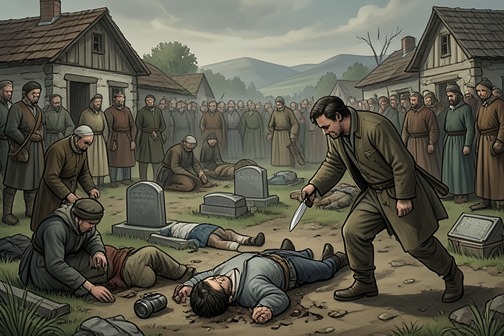
The [1731 Serbian vampire epidemic](entity:event-recall-event-1731-0380e1a07027) was the first fully documented vampire outbreak, transforming a sequence of village deaths into an official investigation whose written record helped give European vampirism an enduring factual appearance. Thirteen deaths in one Serbian village unsettled the community, whose residents rejected a medical explanation and insisted that vampires were responsible. The resulting exhumations, inspections, and decapitations reveal how fear converted disease and ordinary postmortem changes into a coherent supernatural crisis.
## Causes and Historical Setting
The epidemic occurred during [the eighteenth-century vampire craze](entity:time-recall-time-18-844fa9226a3d), when reports of suspected vampires were spreading through eastern Europe and entire villages were digging up corpses to stake them. The wider setting was one in which medical knowledge remained incomplete and supernatural explanations could compete successfully with professional diagnoses. The account also belongs to a period of profound cultural uncertainty: the nineteenth-century comparison made later in the book describes a society increasingly willing to treat witchcraft and spiritual claims as factual, but the Serbian investigations show an earlier version of the same tension, in which official observers entered a community already organized around vampire explanations.
The immediate crisis involved thirteen deaths in one Serbian village occurring close enough together to alarm the population. A doctor who specialized in infectious diseases was sent to determine the cause and concluded that malnutrition was almost certainly responsible. The villagers considered that explanation inadequate. For them, the deaths were not an impersonal medical pattern but the result of attacks by vampires, and their insistence persuaded the doctor to exhume the suspected bodies rather than allowing the matter to end with his diagnosis.
This conflict illustrates the epidemic’s competing models of causation. The villagers identified a dead person as an active agent who could continue to damage the living, while the doctor offered a material explanation based on living bodies and their nutritional condition. In circumstances where repeated deaths created fear but offered no visible culprit, vampirism supplied a target and a ritual response. The broader logic of vampire panic was that superstition could give shape to otherwise unmanageable disaster: the dead were imagined to steal the life force of surviving relatives, making a household’s sequence of illnesses appear purposeful rather than random.
## Investigation and Official Witnesses
The first examination produced findings that seemed to confirm the villagers’ fears. The exhumed bodies did not appear to have undergone major decomposition, and the mouths of the corpses appeared to contain what the examining doctor believed was fresh blood. These observations turned the local belief into an administrative problem. Officials in [Vienna](entity:location-recall-location-vienna-bce4fdda6904), unwilling to accept the initial report without further scrutiny, dispatched [Johann Flückinger](entity:character-recall-character-johann-fl-ckinger-fd4ef439d9a9), a respected military surgeon, together with other doctors and army officers as witnesses.
Flückinger and his companions reported that many of the bodies showed no major decomposition and appeared, if anything, to have become plump. Their presence gave the episode an unusual documentary authority. Rather than surviving only as oral folklore, the outbreak was examined by medical and military personnel and entered an official report. The book therefore presents it as the first Serbian vampire epidemic to be fully documented, while also stressing that Flückinger accepted vampirism as the only logical explanation for the strange physical evidence he believed he had encountered.
The investigation’s authority depended on a striking reversal. The professional investigators had been sent to check a local claim, but their report did not simply dismiss the claim as peasant superstition. Instead, their observations were incorporated into a narrative in which the corpses themselves became testimony. Bodies that seemed undecayed, unusually full, or marked by blood were treated as evidence of an ongoing condition rather than as signs requiring a different account of decomposition. The corpse became both the object of examination and the supposed perpetrator’s surviving trace.
## Stana and the Child in the Grave
Among Flückinger’s detailed cases was Stana, a twenty-year-old woman who had died in childbirth after a three-day illness and had been buried for two months. Before her death, she had reportedly said that she had painted herself with the blood of a vampire. According to the report, she feared that both she and her child would become vampires; the child had died immediately after birth and, because of careless burial, had been partly eaten by dogs.
The report described Stana as complete and undecayed. When her body was opened, the investigators claimed to find a quantity of fresh blood in the chest cavity. They also reported that the arteries, veins, and ventricles of the heart were not filled with coagulated blood as they expected, while the lungs, liver, stomach, spleen, and intestines appeared fresh, resembling those of a healthy person. These details transformed bodily inspection into a catalogue of supposed vampiric signs, with internal freshness standing against the normal expectation of decay.
The report added a further image of renewal. The skin on Stana’s hands and feet and her old nails were said to have fallen away, while completely new nails and fresh, vivid skin appeared beneath them. The account thus represented the corpse not as a body moving toward dissolution but as one undergoing replacement and restoration. The dead woman’s physical condition was interpreted as a process of vampiric persistence, making the grave a site of transformation rather than final separation from life.
The child was given the same status. Flückinger recorded that an eight-day-old infant, buried for ninety days, was likewise in a condition of vampirism. The detail connects the epidemic with older vampire narratives in which women are accused of killing babies and children. In the absence of modern explanations for sudden infant death, malnutrition, and other early mortality, the death of a child could be attributed to a supernatural agent, especially when a mother, wet nurse, or recently dead person occupied the surrounding story. In the Serbian report, the infant’s grave extends the suspected contagion across both generations and the boundary between childbirth and death.
## Ritual Resolution and Documentary Afterlife
The investigators did not end the crisis by persuading the villagers to accept the medical diagnosis. To prevent a recurrence, Flückinger and his men cut the heads off the suspected vampire corpses before reburying them. Decapitation functioned as both a physical intervention and a declaration that the dead had to be rendered incapable of further action. The bodies were not merely returned to the earth; they were altered so that their alleged power could not continue to circulate through the village.
The epidemic’s later importance lies in the way its report preserved the vocabulary of fear while also inviting retrospective scrutiny. Accounts of disinterred corpses with blood around their mouths or in their stomachs predate modern medical knowledge of postmortem change. Purge fluid, produced as tissues break down, can be forced from the body through the mouth and nose; it may appear red-black and be mistaken for blood. Pressure from decomposing gases can also produce sounds when a corpse is pierced, offering a possible material explanation for stories of a body shrieking when staked.
Those explanations do not erase the historical event. They clarify how the villagers and investigators selected certain signs as proof of vampirism, and how an official report could stabilize those signs as cultural knowledge. The epidemic therefore occupies a double position: it records real deaths, exhumations, witnesses, and bodily observations, yet the meaning assigned to those observations was shaped by a local disease model in which the dead could attack the living. Its enduring power comes from that unresolved collision between the physical corpse and the story imposed upon it.
## Medical Explanations and the Management of Fear
The epidemic becomes more intelligible when placed beside other historical cases in which unfamiliar bodily processes were translated into vampirism. During the nineteenth-century [New England vampire panic](entity:action-recall-action-new-england-vampire-pa-d9b9343487fb), tuberculosis was understood by some communities as a force through which the dead drained the life of surviving relatives. In [Exeter, Rhode Island](entity:location-recall-location-exeter-rhode-island-766063de4e06), Lena “Mercy” Brown’s body was exhumed after tuberculosis had killed her mother, her sister Mary Olive, and then Mercy herself; the apparent freshness of her corpse was explained by winter cold and the storage of her coffin in a crypt, but her heart and lungs were nevertheless removed and burned. The ashes were mixed with water and given to her ailing brother Edwin, whose death on 2 May 1892 demonstrated the tragic consequences of substituting ritual action for effective treatment.
The Serbian episode likewise shows how a medical crisis could become a social explanation. When deaths arrived in close succession and no one could know who would be next, identifying a vampire created a visible source of danger and a procedure for confronting it. The accused corpse could be opened, inspected, staked, or decapitated. Such measures offered the community a sense of agency, even though the underlying causes of illness remained untouched. The same pattern appears in the book’s broader account of vampire panic: fear is made bearable by giving it a target, while the target’s destruction creates the appearance of control.
## Sources, Authority, and the Making of a [Vampire](entity:creature-recall-creature-vampire-df20a359382b) Case
The epidemic’s documentary significance was reinforced by Johann Flückinger’s report, which described individual bodies in extensive detail and treated vampirism as the only logical explanation for their unusual condition. The report did not merely preserve what villagers believed; it converted local testimony, autopsy-like observation, and official intervention into a written case. That process gave the outbreak a special authority. The event could thereafter be cited not only as folklore but as something witnessed by doctors, military officers, and officials.
Antoine [Augustin Calmet](entity:character-recall-character-augustin-calmet-362c4292b805) later helped carry this evidentiary style into learned European discussion. His [The Phantom World](entity:object-recall-object-the-phantom-world-62e71b7d8f79), first published in 1746 and revised and expanded in 1751, quoted an account from Jewish Letters describing a sixty-two-year-old man from Kivsiloa who appeared to his son three days after burial and asked for food. After the son died, five or six villagers reportedly fell ill and died in succession, prompting officers from the tribunal of [Belgrade](entity:location-recall-location-belgrade-f09ac9ecde89) and an executioner to investigate. Although this was a related report rather than the 1731 Serbian epidemic itself, its inclusion shows how accounts from the region circulated together and strengthened a wider archive of revenant testimony.
Calmet’s importance lies in the tension between his subject matter and his method. A Benedictine monk and respected scholar, he examined reports of revenants and vampires while also proposing natural or psychological explanations. He allowed that corpses might shed fluid blood after burial and suggested that terror could produce such violent physiological effects that people might die from the belief that vampires had attacked them. He further connected revenant traditions with burial customs in which food and wine were left at graves for the poor: a symbolic offering could, in a credulous society, be reimagined as nourishment consumed by the dead. The Serbian report thus entered an intellectual world in which supernatural claims were being collected, compared, and debated even by religious scholars inclined toward skepticism.
## Afterlife in Cultural Memory
The epidemic’s afterlife depended on repeated retelling. Its corpses, official witnesses, strange blood, apparent bodily renewal, and final decapitations supplied the durable components of a vampire narrative: a cluster of unexplained deaths, a suspected dead agent, physical signs treated as proof, an investigation, and a violent method of containment. Later readers could detach these elements from their original medical and social setting and reuse them in literature, journalism, film, and popular discussions of the undead.
That circulation also shows why documentary detail can intensify rather than weaken supernatural belief. Precise ages, intervals of burial, anatomical descriptions, named investigators, and formal reports create the surface of factual history. Yet precision does not determine interpretation. The same body could be read as evidence of vampirism, as a normal product of decomposition, or as a record of the limits of eighteenth-century medical knowledge. The epidemic remains culturally powerful because the archive preserves both the observed corpse and the explanatory system imposed upon it.
The event therefore belongs to the history of vampire folklore not because it proves the existence of vampires, but because it demonstrates how vampirism was made credible. A local succession of deaths became a village conviction; that conviction compelled exhumation; official observers recorded the exhumations; and later writers transformed the record into historical evidence. The 1731 Serbian vampire epidemic survives at the boundary between disease history, religious imagination, administrative authority, and narrative memory, where uncertainty about death could be organized into the enduring figure of the vampire.
Event 6
19th-century New England vampire panic
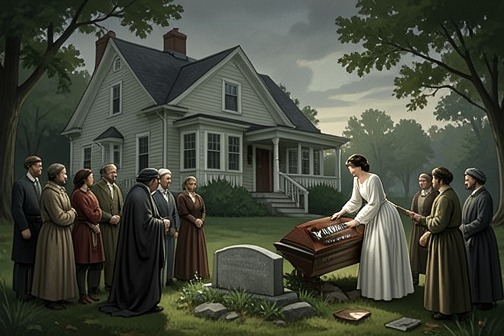
The **[19th-century New England vampire panic](entity:event-recall-event-0499718593f4)** was not a single outbreak of supernatural violence but a recurring social response to household deaths attributed to tuberculosis. In an era when the disease was poorly understood, families and neighbours could interpret successive illnesses as the work of a dead relative returning to consume the life force of survivors. The panic converted medical uncertainty into a visible target: the grave, the corpse, and the suspected vampire within it.
## Causes and Historical Setting
The panic took hold across [New England](entity:location-recall-location-new-england-ef140e738f2b) during [the nineteenth century](entity:time-recall-time-19-56b4dbe0d6f6), while tuberculosis was running through the region. Known as “consumption” because it seemed to consume a victim’s health, tuberculosis was highly contagious and could spread rapidly through households with lower hygiene standards than those expected today. When one family member died and others became ill, there was no reliable way to know who would be next or why one person survived while another did not. The supernatural explanation supplied a frightening but intelligible chain of causation: the first victim had returned from the grave and was draining the vitality of relatives who remained alive.
This interpretation belonged to a broader nineteenth-century climate of credulity and instability. The second Industrial Revolution was transforming technology and social life at a speed that could seem magical, while spiritualism and seances attracted people who hoped to approach God or find stability amid upheaval. Victorian culture combined industrial discovery with a pronounced appetite for the macabre; newspapers could still report witchcraft as fact. In that setting, older beliefs in revenants and vampires did not simply survive as isolated folklore. They offered a ready language for experiences that medicine and public institutions could not yet explain.
The panic also depended on the authority of communal suspicion. Fear of the undead had previously produced mass accusations in eastern Europe, where whole villages dug up corpses and staked them. Reports of such cases, including the documented [Serbian vampire epidemic of 1731](entity:action-recall-action-serbian-vampire-epidem-80c60546716a) and Antoine [Augustin Calmet](entity:character-recall-character-augustin-calmet-362c4292b805)’s discussion of revenants and vampires in [The Phantom World](entity:object-recall-object-the-phantom-world-62e71b7d8f79), helped preserve a cultural model in which unusual corpses and clustered deaths were treated as connected evidence. Calmet remained sceptical about the supernatural interpretation and suggested that older burial customs, including leaving food and wine on graves, might have encouraged the belief that the dead returned to consume offerings. Yet the persistence of these stories demonstrated how religious practice, medical observation, and popular narrative could reinforce one another even when their conclusions conflicted.
## The [Mercy Brown](entity:character-recall-character-mercy-brown-2d42caa10cc0) Exhumation
The most fully developed New England episode centred on Lena “Mercy” Brown, a nineteen-year-old daughter of George and Mary Brown in [Exeter, Rhode Island](entity:location-recall-location-exeter-rhode-island-766063de4e06). [Tuberculosis](entity:state-recall-state-tuberculosis-27317e86b318) had already killed Mercy’s mother, Mary, in 1883 and her eldest daughter, Mary Olive, in 1886. In 1891, Mercy and her brother Edwin also contracted the disease. Mercy died in January 1892, but Edwin remained ill, and friends and neighbours began to suspect that the family’s deaths had a supernatural cause.
They persuaded the reluctant George Brown to disinter the bodies of his dead relatives. The purpose was not merely to satisfy curiosity: the exhumation was undertaken in the hope of saving Edwin’s life. The family’s grief was therefore redirected into a diagnostic and protective ritual. By opening the graves, the community sought to identify the alleged source of the disease and interrupt its movement through the household.
The exhumed bodies appeared to offer different kinds of evidence. Mary and Mary Olive had decomposed in ways consistent with the length of time they had been buried. Mercy’s corpse, by contrast, appeared “fresh,” showing little decomposition. That appearance was later explainable: she had been dead for less than two months during the coldest part of the year, and her coffin had been kept in a crypt because the frozen ground was too hard to dig. At the time, however, the lack of decay was treated as a sign that Mercy remained active after death.
A local doctor objected to the supernatural conclusion. He removed Mercy’s lungs and insisted that they showed signs of tuberculosis, a disease already known for centuries and formally recognised by the medical profession since the early 1800s. His medical objections failed to overcome the force of communal superstition. Mercy’s heart and lungs were cut out and burned on a pyre built on nearby rocks, turning the corpse into the focus of a public attempt at treatment.
## Ritual Treatment and Its Failure
The panic’s logic required more than identifying a vampire; it required a remedy. In the hope of saving Edwin, Mercy’s burned heart and lungs were reduced to ashes, mixed with water, and given to him as a medicinal concoction. The act combined exhumation, destruction of the suspected infectious agent, and ingestion of its remains as a cure. It was a material response to an invisible threat, but it could not alter the course of tuberculosis.
The remedy failed, and Edwin died on 2 May 1892. His death exposed the terrible cost of the vampire explanation. The ritual had offered the family a sense of agency in circumstances dominated by contagious disease and uncertainty, but it did not stop the illness. Instead, the effort added another layer of violence to the family’s bereavement: Mercy’s body was opened, her vital organs were burned, and her remains were administered to a surviving relative without preventing the death the ritual was meant to avert.
## Bodies, Evidence, and Medical Reinterpretation
The central evidence in such cases was often the corpse itself. Stories of disinterred bodies with blood around the mouth, or even blood in the stomach, predated modern knowledge of decomposition. What appeared to be proof of feeding could result from purge fluid, produced as body tissues break down. As pressure builds inside a corpse, the dark red-black fluid can be forced through the mouth and nose and collect in the main body cavities. If a body is staked, the pressure may release the fluid in a way that resembles bleeding.
This physical explanation also offers a possible account of reports that a staked corpse shrieked. Gases produced inside a decomposing body can build up and be released under pressure, creating a noise that frightened witnesses could interpret as a final supernatural response. Such explanations do not erase the historical reality of the panic. They clarify instead how ordinary postmortem processes became persuasive signs within a cultural system already prepared to read the dead as agents.
The same interpretive problem appears in other accounts of revenants. Taphophobia, the fear of being buried alive, was once a reasonable fear because medicine had not established reliable definitions of death. A report from Naples described a woman buried while apparently in a trance; when the grave was later opened, her clothing had been torn apart and her limbs broken as she tried to escape. The doctor who certified her illness and the mayor who authorised the burial were each sentenced to three months’ imprisonment for involuntary manslaughter. Although verifiable premature burials were uncommon, the possibility made stories of the dead returning especially powerful. The boundary between clinical death, burial, and animation remained frighteningly uncertain.
## Fear, Control, and Historical Significance
The New England panic shows how a community can transform diffuse disaster into a persecuted cause. A series of apparently arbitrary deaths produces helplessness: no one knows who will die next, why the disease has entered one house, or why medical advice cannot protect the living. Folk narrative gives that fear a direction. By naming a dead person as the source of danger, it creates a target for anger and a ritual through which survivors can imagine that control has been recovered.
The Mercy Brown episode makes this process unusually visible because the medical explanation was present but powerless in the face of social conviction. The doctor identified tuberculosis in the lungs, while neighbours treated the apparently preserved corpse as evidence of vampirism. Competing authorities therefore confronted the same body: medicine read disease, whereas the community read agency and attack. The exhumation did not represent a simple absence of knowledge; it was an alternative explanatory system that organised family responsibility, communal action, and the hope of cure.
Its historical importance lies in the way it joins the intimate and the collective. Tuberculosis moved through households biologically, but the vampire panic moved through communities culturally, linking graves, newspapers, older European precedents, religious assumptions, and local ritual. The event also reveals why vampire stories remain durable: they convert invisible processes of infection and decay into figures that can be named, confronted, burned, or blamed. In New England, the vampire was less a monster discovered in the grave than a narrative produced at the point where grief, contagion, and uncertainty became unbearable.
Event 7
梅西·布朗吸血鬼事件
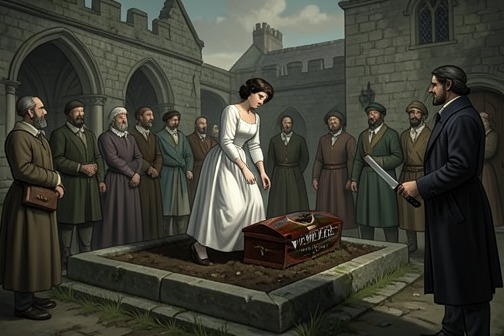
The [Mercy Brown vampire incident](entity:event-recall-event-mercy-brown-vampire-inc-15e26e4697b7) was a nineteenth-century [New England vampire panic](entity:action-recall-action-new-england-vampire-pa-d9b9343487fb) in which tuberculosis, uncertain medical knowledge, and communal fear transformed a recently buried young woman into a supposed undead predator. In [Exeter, Rhode Island](entity:location-recall-location-exeter-rhode-island-766063de4e06), the deaths of several members of the Brown family were interpreted not as the effects of a contagious disease but as evidence that one dead relative was draining the life of those who remained.
## Disease and Suspicion
The episode developed within a wider nineteenth-century vampire panic in [New England](entity:location-recall-location-new-england-ef140e738f2b). [Tuberculosis](entity:state-recall-state-tuberculosis-27317e86b318), commonly called consumption because it seemed to consume a victim’s health, was highly contagious and could move rapidly through households where hygiene was limited and medical understanding remained incomplete. When relatives died in succession, survivors had little reliable way to know who would be next or why some members of a family succumbed while others did not. The dead returning to steal the life force of their surviving relatives offered a supernatural explanation for an otherwise frightening pattern.
The Brown family’s losses unfolded over several years. Mary Brown died of tuberculosis in 1883, followed by the eldest daughter, Mary Olive, in 1886. In 1891, Mercy and Edwin, George Brown’s remaining children, contracted the same disease. Mercy, who was nineteen, died in January 1892. Friends and neighbours then suspected supernatural interference and persuaded the reluctant George Brown to disinter his dead relatives, hoping that an investigation of their bodies might save Edwin, who was still ill.
## Exhumation and Interpretation
The bodies of Mary and Mary Olive showed decomposition consistent with the periods for which they had been buried. Mercy’s corpse, however, appeared comparatively fresh. That appearance became the decisive sign for those who already believed in vampirism, although the circumstances offered a straightforward physical explanation: Mercy had been dead for less than two months, the season was at its coldest, and her coffin had been kept in a crypt because the frozen ground was too hard to excavate.
A local doctor objected to the supernatural interpretation. He pointed out that the lack of decay was unsurprising and removed Mercy’s lungs, identifying signs of tuberculosis in them. His medical explanation did not prevail. The community treated the corpse’s condition as proof of an undead presence, showing how a body could become contested evidence when folk belief and clinical judgment assigned different meanings to the same physical facts.
Mercy’s heart and lungs were cut out and burned on a pyre built on nearby rocks. The procedure converted suspected contamination into a ritual remedy: her vital organs, imagined as the source of the family’s affliction, were destroyed so that their supposed power could no longer act. The incident thus joined a broader tradition of staking, burning, and otherwise modifying disinterred corpses believed to be vampires.
## Failed Cure and Historical Meaning
In the hope of saving Edwin, the ashes of Mercy’s burned heart and lungs were mixed with water and given to him as a medicinal concoction. The treatment failed, and Edwin died on 2 May 1892. The consequence was not merely the death of another family member but the collapse of the practical promise that the exhumation and ritual had offered. A response intended to restore control over disease could not halt the disease’s course.
The case illustrates how fear can produce a target when disaster appears causeless. In earlier societies, unexpected infant deaths had likewise been attributed to forces beyond the world, especially where religious explanations carried more authority than scientific ones. The Brown family’s tragedy shows the same interpretive pressure operating around tuberculosis: disease became an intentional attack, and a dead relative became the agent who could be blamed, confronted, and ritually neutralized.
Later accounts of disinterred corpses with blood around the mouth or inside the body also acquired force from limited knowledge of postmortem change. Purge fluid, produced as tissues decompose and pressure builds inside the corpse, can escape through the mouth and nose and appear red-black like blood. Saponification can create adipocere, or corpse wax, preserving facial features and slowing ordinary decay. Such processes help explain why bodies sometimes seemed unusually fresh or bloodied, even though the evidence was read as confirmation of vampirism.
The Mercy Brown vampire incident therefore stands at the intersection of family grief, infectious disease, ritual action, and competing systems of authority. Its enduring significance lies less in evidence of an undead body than in the record of how a community confronted tuberculosis: medical testimony was overridden by a supernatural diagnosis, a corpse was made into the focus of collective fear, and an attempted cure turned the physical remains of a dead girl into a final, tragic instrument of treatment.
The Brown family’s losses unfolded over several years. Mary Brown died of tuberculosis in 1883, followed by the eldest daughter, Mary Olive, in 1886. In 1891, Mercy and Edwin, George Brown’s remaining children, contracted the same disease. Mercy, who was nineteen, died in January 1892. Friends and neighbours then suspected supernatural interference and persuaded the reluctant George Brown to disinter his dead relatives, hoping that an investigation of their bodies might save Edwin, who was still ill.
## Exhumation and Interpretation
The bodies of Mary and Mary Olive showed decomposition consistent with the periods for which they had been buried. Mercy’s corpse, however, appeared comparatively fresh. That appearance became the decisive sign for those who already believed in vampirism, although the circumstances offered a straightforward physical explanation: Mercy had been dead for less than two months, the season was at its coldest, and her coffin had been kept in a crypt because the frozen ground was too hard to excavate.
A local doctor objected to the supernatural interpretation. He pointed out that the lack of decay was unsurprising and removed Mercy’s lungs, identifying signs of tuberculosis in them. His medical explanation did not prevail. The community treated the corpse’s condition as proof of an undead presence, showing how a body could become contested evidence when folk belief and clinical judgment assigned different meanings to the same physical facts.
Mercy’s heart and lungs were cut out and burned on a pyre built on nearby rocks. The procedure converted suspected contamination into a ritual remedy: her vital organs, imagined as the source of the family’s affliction, were destroyed so that their supposed power could no longer act. The incident thus joined a broader tradition of staking, burning, and otherwise modifying disinterred corpses believed to be vampires.
## Historical Meaning and Medical Context
The Mercy Brown vampire incident is best understood as a collision between infectious disease and a supernatural explanatory system. In the nineteenth-century New England vampire panic, tuberculosis could pass through households while leaving families unable to determine who would die next or why some relatives survived. By assigning agency to a corpse, folklore supplied a target for fear that otherwise had nowhere to go. The same interpretive pressure had earlier attached supernatural blame to unexpected infant deaths, particularly when religious instruction outweighed scientific knowledge. Later reports of blood around disinterred mouths or inside corpses were likewise shaped by limited understanding of postmortem change: purge fluid can emerge through the mouth and nose as decomposition creates internal pressure, while saponification can produce adipocere, or corpse wax, preserving facial features and slowing ordinary decay. These physical processes did not establish vampirism, but they could make a recently buried body appear to confirm it. The attempted remedy in Exeter therefore reveals more than a mistaken diagnosis: it shows how grief, contagious illness, communal authority, and ritual action converted the remains of a dead girl into an instrument for managing fear, even after medical evidence had offered a different account.
Event 8
伊丽莎白·巴托里审判
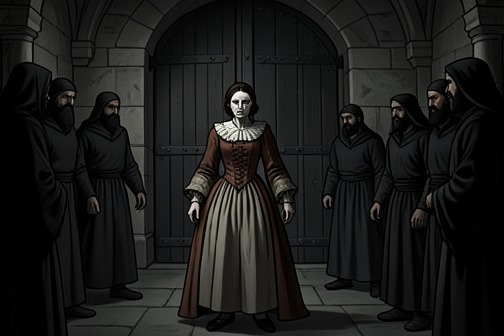
The [Elizabeth Báthory](entity:character-recall-character-elizabeth-b-thory-eb984bb7c9ec) trial is significant less as proof of supernatural crime than as an example of how political rivalry, patriarchal fear, and sensational accusation can manufacture a lasting monster. The prosecution of Elizabeth Báthory converted a wealthy and exceptionally powerful woman into the [Blood Countess](entity:expression-recall-expression-blood-countess-8bb3c7b8c01b) of later folklore, even though the evidence for the most famous charges was extraordinarily weak and the alleged blood-bathing ritual was physically implausible.
## Background and Power
Elizabeth Báthory was born in 1560 into a ruling family of [Transylvania](entity:location-recall-location-transylvania-1fbd2e67da43) and was the niece of the King of Lithuania-Poland. At fifteen she married the Hungarian nobleman Count Ferencz Nádasdy, and the couple moved to [Čachtice Castle](entity:location-recall-location-achtice-castle-7e97a4971979) in [Slovakia](entity:location-recall-location-slovakia-b8542fd96412), which Elizabeth received as a wedding gift from Ferencz and the Nádasdy family. They had four children, although surviving accounts disagree about whether the number was three, four, or five. Elizabeth was highly educated, and her family was among the oldest and richest in the region. The marriage itself also gave her unusual symbolic standing: Ferencz agreed to take her maiden name because it was considered more illustrious than his own.
Her authority became more visible while Ferencz was away fighting in the Long Turkish War, which began in 1593 and involved [Wallachia](entity:location-recall-location-wallachia-7c2d01c072e5), Transylvania, and Moldavia. Elizabeth was left responsible for defending his estates, properties positioned along the politically important route to [Vienna](entity:location-recall-location-vienna-bce4fdda6904) and previously exposed to Ottoman plundering. The task placed her in command of land, servants, and local welfare rather than confining her to a ceremonial domestic role. Anecdotal evidence even describes her intervening on behalf of destitute women, including a woman whose daughter had been raped and impregnated.
## Accusations and Political Stakes
Elizabeth’s husband died in battle, though not from a battlefield wound: he reportedly collapsed during the fighting from an unknown illness. His death left Elizabeth one of the richest and most powerful people in the region, a position that created an obvious political problem for her opponents. Her cousin Gabor had ambitions toward the throne, and an alliance between him and his wealthy relative could have threatened other claimants to power. György Thurzó de Bethlenfalva, a fervent Lutheran and Palatine of [Hungary](entity:location-recall-location-hungary-b3ac7e0cfaee), undertook the effort to remove Elizabeth from that political landscape.
Rumours about Elizabeth’s behaviour had circulated since the early 1600s, and some may have arisen from the harsh realities of managing hundreds of servants, estates, and property in a strongly patriarchal society. She was not portrayed as submissive, and the account suggests that maintaining such authority may sometimes have involved threats or violence. After Ferencz’s death, however, the allegations expanded into stories of extreme cruelty: servants supposedly beaten until they bled to death, flesh allegedly cut from victims’ buttocks and forced into their mouths, and lips and tongues purportedly sewn shut. The most famous charge claimed that Elizabeth had young girls and women murdered so she could bathe in their blood as a medieval skin-care treatment.
## Trial and Evidentiary Failure
The prosecution’s supposed proof consisted of accusations by Elizabeth’s closest staff, almost all of whom were tortured into confessing. No substantial independent evidence was produced to establish that Elizabeth had been caught committing the crimes attributed to her. Nevertheless, Thurzó proceeded as though the accusations were conclusive. During the trial Elizabeth was not permitted to speak in her own defence, making the proceedings a demonstration of political power rather than a fair examination of evidence.
The outcome was also politically calculated. Elizabeth was not executed; instead, she was confined within her own castle, where she died four years later. The punishment removed an influential woman from regional politics while avoiding the complications that might have followed a public execution of a member of such an important family. The trial therefore preserved the appearance of legal action while denying the accused the basic opportunity to answer the charges.
## The Blood-Bathing Legend
The blood-bathing story became the central image of Elizabeth’s later reputation, but it is presented here as almost certainly false. The practical requirements alone make the tale implausible. Filling even a shallow bath would have required the slaughter and draining of a very large number of people. Blood also coagulates rapidly and unevenly; rather than providing a luxurious anti-ageing treatment, it would have produced a cold, lumpy, foul-smelling mixture of bodily fluid capable of carrying disease. A single attempt would likely have been enough to make such a ritual repellent rather than seductive.
The legend’s power came from its moral design. It cast an older woman’s supposed vanity against the bodies of youthful innocents, turning female authority into monstrous appetite and linking beauty, violence, and blood. Elizabeth’s actual political position mattered more than any demonstrated supernatural practice: a woman whose husband trusted her judgement, who controlled extensive property, and who possessed wealth sufficient to influence succession was frightening to those invested in male authority. The trial thus supplied folklore with a villain while revealing how quickly accusation, coercion, and group-think can harden into historical memory.
## Historical Meaning and Afterlife
The Elizabeth Báthory trial belongs to a wider history in which fear, incomplete knowledge, and institutional authority turn disturbing deaths into supernatural explanations. In [the nineteenth century](entity:time-recall-time-19-56b4dbe0d6f6), communities in [New England](entity:location-recall-location-new-england-ef140e738f2b) interpreted tuberculosis as the dead returning to drain the life force of surviving relatives; in [the eighteenth-century vampire craze](entity:time-recall-time-18-844fa9226a3d), entire villages exhumed corpses and staked them. Those later episodes clarify the mechanism by which a frightening pattern becomes a communal accusation, but the Báthory case also shows how that mechanism can operate through elite politics rather than popular panic alone. Her story was absorbed into the culture of the Blood Countess, even though the account emphasizes that the alleged vampiric behaviour was not established by reliable proof.
The case also exposes the instability of historical authority. Antoine [Augustin Calmet](entity:character-recall-character-augustin-calmet-362c4292b805), a learned Benedictine monk whose [The Phantom World](entity:object-recall-object-the-phantom-world-62e71b7d8f79) was first published in 1746 and revised in 1751, gathered reports of apparitions, revenants, and vampires from religious, medical, and administrative sources. Such compilations could preserve testimony while also helping extraordinary claims circulate as knowledge. The Báthory legend works similarly: accusations, coerced confessions, political motives, and later retelling become difficult to separate once they have been organized into a memorable story. Its endurance therefore says less about whether Elizabeth drank blood than about how records and narratives confer legitimacy on claims that began in fear or self-interest.
The trial’s gender politics remain central to its significance. The narrative presents Elizabeth as a woman who exercised authority over estates, servants, property, and local welfare in a staunchly patriarchal society. Her strength may have included threats or violence, but the existence of possible harshness does not validate every subsequent allegation, especially when the principal confessions were extracted under torture and the accused was barred from defending herself. Her removal illustrates how a powerful woman could be transformed from a political actor into a moral monster: the story made her desire for authority legible as unnatural appetite, then preserved that interpretation through the imagery of blood, youth, and violated female bodies.
As a historical event, the trial is thus both a prosecution and a process of myth-making. It confined Elizabeth in her own castle and ended with her death four years later, but it did not end the story. The legal proceeding supplied later culture with a compact emblem of aristocratic cruelty, female transgression, and supposed immortality. Its most decisive consequence was not the discovery of a supernatural criminal; it was the creation of a durable narrative in which political elimination could be remembered as proof of vampiric evil.
## Historical Meaning and Afterlife
The Elizabeth Báthory trial belongs to a wider history in which fear, incomplete knowledge, and institutional authority turn disturbing deaths into supernatural explanations. In the nineteenth century, communities in New England interpreted tuberculosis as the dead returning to drain the life force of surviving relatives; during the eighteenth-century vampire craze, entire villages exhumed corpses and staked them. Those later episodes clarify how a frightening pattern can become a communal accusation, while the Báthory case shows that the same process could operate through elite politics rather than popular panic alone. Her story was absorbed into the culture of the Blood Countess, even though the surviving account emphasizes that the alleged vampiric behaviour was never established by reliable proof.
The case also exposes the instability of historical authority. Antoine Augustin Calmet, a learned Benedictine monk whose The Phantom World was first published in 1746 and revised in 1751, gathered reports of apparitions, revenants, and vampires from religious, medical, and administrative sources. Such compilations could preserve testimony while also helping extraordinary claims circulate as knowledge. The Báthory legend works similarly: accusations, coerced confessions, political motives, and later retelling became difficult to separate once they had been organized into a memorable story. Its endurance therefore says less about whether Elizabeth drank blood than about how records and narratives confer legitimacy on claims that began in fear or self-interest.
The trial’s gender politics remain central to its significance. The narrative presents Elizabeth as a woman who exercised authority over estates, servants, property, and local welfare in a staunchly patriarchal society. Her strength may have included threats or violence, but possible harshness does not validate every subsequent allegation, particularly when the principal confessions were extracted under torture and the accused was barred from defending herself. Her removal illustrates how a powerful woman could be transformed from a political actor into a moral monster: the story made her desire for authority legible as unnatural appetite, then preserved that interpretation through imagery of blood, youth, and violated female bodies.
As a historical event, the trial was therefore both a prosecution and a process of myth-making. It confined Elizabeth in her own castle and ended with her death four years later, but it did not end the story. The legal proceeding supplied later culture with a compact emblem of aristocratic cruelty, female transgression, and supposed immortality. Its most decisive consequence was not the discovery of a supernatural criminal, but the creation of a durable narrative in which political elimination could be remembered as proof of vampiric evil.
Event 9
Nosferatu copyright case
The [Nosferatu copyright case](entity:event-recall-event-b8c40b77702c) is a landmark confrontation between adaptation, authorship, and cultural survival. F.W. Murnau’s [Nosferatu](entity:creature-recall-creature-nosferatu-a407b96c1f90): eine Symphonie des Grauens was presented as an altered work, but its resemblance to [Dracula](entity:object-recall-object-dracula-7d134d20f59a) was unmistakable. Florence Balcombe’s legal action nearly erased the film; its survival depended on a single copy distributed beyond the reach of the court.
## Unauthorized Adaptation and Legal Conflict
Murnau’s film, released in 1922, was the earliest major film interpretation of the vampire legend, although the 1921 Hungarian film Dracula’s Death is sometimes mentioned as an earlier screen version. Dracula’s Death was so loosely connected to Stoker’s novel that film histories rarely treat it as a direct adaptation. Nosferatu, by contrast, drew openly on the structure and central materials of Dracula while changing names and details in an attempt to avoid permission and copyright complications.
Murnau had first tried and failed to obtain authorization from the Stoker estate. Florence Balcombe refused to allow her late husband’s work to be changed, so Murnau’s production proceeded by disguising the relationship between the two works rather than abandoning it. The film’s titular vampire became [Count Orlok](entity:character-recall-character-count-orlok-b3dc24b7d6b0), but the resemblance remained clear to anyone familiar with Dracula. The legal strategy therefore failed at the level that mattered: alteration did not conceal derivation.
## The Film’s Distinctive [Vampire](entity:creature-recall-creature-vampire-df20a359382b)
Nosferatu transformed Stoker’s elegant Count into a repulsive and threatening monster. Played by Max Schreck, Count Orlok possesses neither the beauty nor the erotic charisma that later screen vampires would often acquire. His menace is expressed through his appearance and attitude, making the film’s horror less a matter of seduction than of physical intrusion and death.
Murnau’s Expressionist style intensified that threat. The settings are dark and menacing, and the simplified plot reflects the production’s technical limitations, including cameraman Fritz Arno Wagner’s access to only one camera. Those limitations did not prevent formal invention. Stop-motion animation makes Orlok’s coffin lid fly back into place and gives the opening of the ship’s hatch an apparently magical force. The film thus combined legal disguise with visual originality: it borrowed the narrative identity of Dracula while establishing an image of vampirism that was starkly its own.
The film also carried forward the invented vocabulary surrounding the vampire. The name “nosferatu,” which appears in Stoker’s text, was used as though it were an Eastern European term for the undead. The book explains that Stoker had taken it from Emily Jerrard, who had taken it from Wilhelm Schmidt’s 1865 German-language work on Transylvanian customs. The term has no traceable Romanian etymology; a more plausible source may be the Romanian word “nesuferit,” meaning abominable, cursed, or unbearable according to context and translation. The case therefore involved not only unauthorized adaptation but also the circulation and transformation of dubious cultural knowledge.
## Court-Ordered Destruction
The film company created to distribute Nosferatu, [Prana-Film](entity:organization-recall-organization-prana-film-cc295db5b67c), filed for bankruptcy immediately after the release in an attempt to escape the lawsuit for breach of copyright. That maneuver did not settle the larger dispute. Stoker’s family eventually prevailed, and the courts ordered Prana-Film to destroy all copies of the film.
The order threatened complete cultural disappearance. Unlike a work that survives through authorized reissue, Nosferatu was placed under a legal demand for physical annihilation. The copyright case consequently turned preservation into an accidental act of resistance: the court’s decision defined the film as an infringing object to be eliminated, while the film’s later history defined it as a crucial work of classic cinema.
## The Escaped Copy and Cultural Afterlife
One copy had already been distributed around the world and could not be recovered. That single escapee from the legal net became the source of all surviving copies of Nosferatu. The film’s continued existence is therefore inseparable from the legal attempt to suppress it. Destruction was ordered, but circulation had already made total control impossible.
The paradox gives the case its lasting significance. Copyright law sought to protect Dracula and the Stoker estate by eliminating an unauthorized version, yet the surviving print ensured that Murnau’s film would become part of the history of the vampire image. The later public image of Dracula was firmly established by Tod Browning’s 1931 adaptation, in which [Bela Lugosi](entity:character-recall-character-bela-lugosi-f4c335ce746e) played the Count, but Nosferatu preserved an alternative lineage: the vampire as diseased-looking, uncanny, visually threatening, and stripped of romantic glamour.
## Historical Significance
The case belongs to a longer history in which vampire narratives absorb contemporary fears and are then reshaped by institutions. The nineteenth century had already produced competing explanations of the undead: tuberculosis could become a vampire panic, mass deaths could be turned into supernatural accusations, and religious belief could supply a framework for interpreting bodies that seemed not to decay. Printed fiction then standardized and modified the creature through works such as [Varney the Vampire](entity:object-recall-object-varney-the-vampire-6abf88c0b989) and [Carmilla](entity:character-recall-character-carmilla-a93d1014dc9a), before cinema gave vampirism a new visual grammar.
Nosferatu shows that this process is also governed by law, commerce, and technological reproduction. A story that began with Stoker’s Dracula could be relocated into German Expressionist cinema, renamed, visually transformed, and still remain legally recognizable. The court’s destruction order attempted to halt that movement, but the worldwide distribution of one print defeated the order’s total ambition. The film survived not because the adaptation was authorized, but because reproduction had already carried it beyond the reach of the estate and the courts.
The case also anticipates the later flexibility of vampire culture. Modern portrayals can make vampires heroic, sympathetic, openly integrated into society, or deliberately comic; the goth subculture that emerged from post-punk clubs in early 1980s Britain likewise turned undead imagery into music, fashion, and communal identity. Against that expanding afterlife, the fate of Nosferatu remains a foundational contradiction: an allegedly derivative film became indispensable to the culture it had been accused of unlawfully borrowing from.
Event 10
Arnold Paole vampire panic
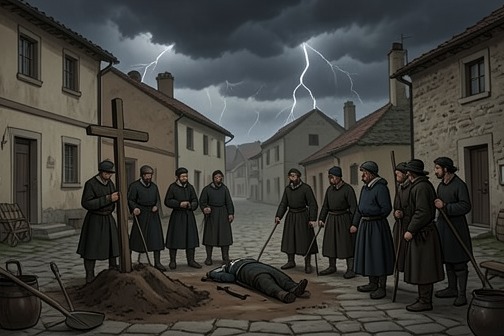
The [Arnold Paole vampire panic](entity:event-recall-event-arnold-paole-vampire-pa-f617de70e3c8) was an early-eighteenth-century Serbian episode in which illness and death were attributed to the supposed transformation of [Arnold Paole](entity:character-recall-character-arnold-paole-81ce32c92ffd) into a vampire. Its decisive significance lies not in proof of the supernatural, but in the way a local sequence of deaths became an influential case history: the dead were treated as possible agents of further death, their bodies became contested evidence, and official investigation helped carry the story into wider European print culture.
## Origins and Historical Setting
The panic began after Arnold Paole died of a broken neck in [Serbia](entity:location-recall-location-serbia-342ccbab685e) in 1726. Subsequent sickness among fellow villagers was blamed on Paole having become a vampire, turning an individual death into a collective explanation for continuing misfortune. The case belongs to an early-eighteenth-century climate in which entire villages could become convinced that they were being invaded by vampires and could respond by digging up suspect corpses and staking them. This wider vampire craze developed amid limited medical knowledge and intense uncertainty about the causes of sudden, repeated deaths.
The surrounding historical culture made such interpretations unusually powerful. The eighteenth century inherited religious explanations for catastrophe while remaining fascinated by reports of apparitions, revenants, and unusual corpses. Later accounts of the panic were therefore not merely records of a village belief: they also became part of a developing archive through which European writers, officials, and readers tried to classify the undead.
## From Village Fear to Investigation
In 1731, [Johann Flückinger](entity:character-recall-character-johann-fl-ckinger-fd4ef439d9a9) investigated supposed vampire attacks in a Serbian village after thirteen deaths occurred in sufficiently close succession to alarm the local population. A doctor specializing in infectious diseases had initially judged the deaths almost certainly attributable to malnutrition, but the residents rejected that explanation and insisted that vampires were responsible. They persuaded the doctor to exhume the suspected corpses, which reportedly showed little decomposition and appeared to contain what he believed was fresh blood in their mouths.
The findings were serious enough to attract scrutiny from [Vienna](entity:location-recall-location-vienna-bce4fdda6904). Disbelieving officials sent the respected military surgeon Johann Flückinger, accompanied by other doctors and army officers as witnesses, to examine the evidence. Flückinger and his companions likewise reported that many bodies showed no major decomposition and had taken on a plump appearance. The investigation thus placed village testimony, medical observation, military authority, and administrative skepticism in the same scene, while leaving the alleged vampire explanation unresolved rather than simply erasing it.
## Evidence, Interpretation, and Afterlife
The physical signs associated with the case later acquired natural explanations. Stories of disinterred corpses with blood around their mouths or in their stomachs predate modern knowledge of decomposition; purge fluid can be forced from a corpse’s mouth and nose as pressure builds during decay, and staking may release gases or fluids from the body. The apparent preservation or plumpness of a corpse can also arise from environmental conditions, while saponification can produce adipocere, or corpse wax, through the anaerobic bacterial hydrolysis of body fats. These processes may help explain why bodies were perceived as active, recently fed, or resistant to decay.
The panic’s cultural force came from the need to give fear a target. When deaths appeared causeless, folk explanations offered a semblance of control by identifying an agent who could be hunted, exhumed, and destroyed. The Arnold Paole case consequently survived as more than a disputed local incident. Its 1731 investigation was mentioned in The [London](entity:location-recall-location-london-420923d4a60a) Journal in 1732, becoming the first known reference to vampires in the English press, and its pattern of suspected infection, exhumation, and bodily testimony continued to shape later vampire reports.
## Print, Authority, and Historical Afterlife
The case acquired further authority when Johann Flückinger’s investigation entered print. The report was mentioned in The London Journal in 1732, making it the first known reference to vampires in the English press and transforming a local Serbian controversy into a portable European account. Its evidentiary force depended on the uneasy conjunction of competing authorities: villagers supplied the accusation, a local doctor offered malnutrition as an explanation, and Flückinger’s military and medical delegation examined corpses under official scrutiny. Later, Antoine [Augustin Calmet](entity:character-recall-character-augustin-calmet-362c4292b805) incorporated related reports into [The Phantom World](entity:object-recall-object-the-phantom-world-62e71b7d8f79), his 1746 study of spirits, apparitions, revenants, and vampires from [Hungary](entity:location-recall-location-hungary-b3ac7e0cfaee), Bohemia, Moravia, and Silesia, revised and extended in 1751. The episode therefore illustrates how a disputed death narrative could move from village belief to administrative inquiry, printed testimony, and learned debate without ever acquiring a final, universally accepted interpretation.
## Medical Explanations and the Persistence of the [Undead](entity:state-recall-state-undead-1533790736a8)
The physical signs associated with the case later acquired natural explanations. Reports of disinterred corpses with blood around their mouths or in their stomachs predate modern knowledge of decomposition: purge fluid, produced by the breakdown of body tissues, can accumulate under pressure and seep through the mouth and nose, while staking may release gases or fluids that create the impression of bleeding or even explain a corpse’s reported shriek. Apparent preservation and plumpness could likewise result from burial conditions that slowed decomposition, including airtight coffins or heavy clay soil. Another possible explanation is saponification, in which anaerobic bacteria hydrolyze body fat into adipocere, or corpse wax, leaving a corpse with roughly waxen features still intact. These processes do not prove that the Serbian reports were based on any one physical cause, but they show how ordinary postmortem changes could be converted into evidence of continued life.
## Cultural Meaning and Historical Afterlife
The Arnold Paole vampire panic endured because it converted an incomprehensible sequence of deaths into an intelligible drama with an identifiable culprit. In communities facing disease, malnutrition, and uncertain mortality, folk belief could direct diffuse fear toward a body that might be exhumed, inspected, staked, or otherwise ritually neutralized. The case therefore belongs to a wider history in which the dead were treated as possible sources of continuing harm, while the living sought control through accusation and intervention. Its importance also lies in the movement between local experience and public authority: the 1731 investigation was mentioned in The London Journal in 1732, becoming the first known reference to vampires in the English press. That transition made a Serbian village episode available to readers far beyond its original setting and helped establish the investigative report as a recurring vehicle for vampire lore. Antoine Augustin Calmet later drew related accounts into The Phantom World, his learned study of spirits, apparitions, revenants, and vampires, first published in 1746 and revised and extended in 1751. The panic thus survived not because its supernatural claim was conclusively established, but because medicine, administration, religion, journalism, and storytelling continued to give its disputed evidence new contexts and new forms of authority.
Event 11
Elizabeth Báthory case
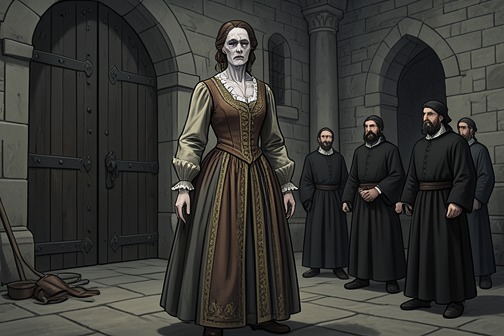
The [Elizabeth Báthory case](entity:event-recall-event-elizabeth-b-thory-case-e01c5aab667c) concerns the accusations, political prosecution, and posthumous mythmaking surrounding Countess [Elizabeth Báthory](entity:character-recall-character-elizabeth-b-thory-eb984bb7c9ec) de Ecséd, who died in 1614 while under house arrest after being accused of torturing and murdering young women in her employ. Its decisive significance lies in the distance between the historical record and the legend: the celebrated story that she bathed in the blood of virgins to preserve her youth is presented as almost certainly false, while the proceedings against her reveal how a powerful woman could be converted into a supernatural monster through political hostility, coercive testimony, and cultural anxiety.
## Historical Position and Power
Countess Elizabeth Báthory was born in 1560 into the ruling family of [Transylvania](entity:location-recall-location-transylvania-1fbd2e67da43) and was a niece of the King of Lithuania-Poland. She married the Hungarian nobleman Count Ferencz Nádasdy at the age of fifteen, and the couple moved to [Čachtice Castle](entity:location-recall-location-achtice-castle-7e97a4971979) in [Slovakia](entity:location-recall-location-slovakia-b8542fd96412), which had been given to Elizabeth as a wedding gift by Ferencz and the Nádasdy family. They had four children, although surviving accounts variously give the number as three or five. Elizabeth was highly educated, and her family was among the oldest and richest in the region. The marriage itself placed her in an unusual position: Ferencz accepted her maiden name as the family name because it was considered more illustrious than his own, suggesting the exceptional prestige attached to her lineage.
When Ferencz was away fighting in the Long Turkish War, Elizabeth was entrusted with the defence of his estates. Those properties stood along the politically important route to [Vienna](entity:location-recall-location-vienna-bce4fdda6904) and had previously been plundered by the Ottomans, so her responsibility extended beyond domestic management. Evidence described in the account portrays her as taking the role seriously and intervening in matters involving the welfare of people under her jurisdiction. In one anecdotal case, she personally acted on behalf of a woman whose daughter had been raped and impregnated. This image of an educated, administratively capable aristocrat complicates the later portrait of a purely sadistic predator.
## The Accusations and Political Stakes
Ferencz did not die in battle in the ordinary sense. He dropped dead during the conflict from an unknown illness, leaving Elizabeth one of the richest and most powerful people in the entire region. Her position was especially threatening because her cousin Gabor had ambitions for the throne; an alliance between Gabor and Elizabeth could have endangered other claimants and power holders. The account identifies György Thurzó de Bethlenfalva, a fervent Lutheran and Palatine of [Hungary](entity:location-recall-location-hungary-b3ac7e0cfaee), as the man who took on the task of removing her.
Rumours about Elizabeth’s conduct had circulated since the early 1600s, and some may have originated in the harsh control expected of someone managing hundreds of servants, estates, and properties in a strongly patriarchal society. The text does not present her as harmless or incapable of violence. It notes that a person holding power on such a scale would have had to fight to maintain it, and that some of her authority may have operated through threats. Yet the accusations that gathered force after Ferencz’s death were far more extreme. Stories claimed that servants had been beaten until they died from blood loss, that flesh had been cut from victims’ buttocks before they were forced to cook and eat it, and that some victims’ lips and tongues had been sewn shut. The most famous version alleged that Elizabeth had young girls and women murdered so that she could bathe in their blood as a medieval skin-care treatment.
## Trial, Confinement, and Historical Uncertainty
The case against Elizabeth rested on testimony from members of her closest staff, almost all of whom had been tortured into confessing. That evidence was treated as sufficient by Thurzó, who is described as overriding ordinary judicial process. Elizabeth was accused of being caught red-handed, although no genuine evidence of such a discovery was produced, and she was not allowed to speak in her own defence during the trial. The outcome combined punishment with political containment: rather than being executed, she was confined within her own castle, where she died four years later.
The famous bathing story is also materially implausible. Filling even a shallow bath would have required the killing and draining of an enormous number of people, while blood coagulates quickly and unevenly. The result would have been a cold, lumpy, foul-smelling mass of bodily fluid capable of carrying disease, not a plausible anti-ageing treatment. This practical objection does not prove that no violence occurred, but it sharply separates the documented accusations from the later image of the [Blood Countess](entity:expression-recall-expression-blood-countess-8bb3c7b8c01b), a title the evidence treats as culturally powerful but historically misleading.
## Cultural Afterlife and Historical Meaning
The Elizabeth Báthory case became inseparable from the wider history of vampire panic, even though the evidence presented does not establish Elizabeth as a vampire. In [the nineteenth century](entity:time-recall-time-19-56b4dbe0d6f6), tuberculosis was often interpreted in [New England](entity:location-recall-location-new-england-ef140e738f2b) as the dead returning to drain the life force of surviving relatives, and the exhumation of [Mercy Brown](entity:character-recall-character-mercy-brown-2d42caa10cc0) showed how medical uncertainty could turn decomposition into supernatural proof. Earlier eastern European communities likewise dug up corpses during [the eighteenth-century vampire craze](entity:time-recall-time-18-844fa9226a3d), while the account in [Sefer Hasidim](entity:object-recall-object-sefer-hasidim-8f271b83328d) prescribes a spike through an estrie’s mouth and into the earth, together with stones placed in the mouth, to prevent the dead from attacking the living. These practices reveal a recurring structure: unexplained death generates fear, fear seeks a bodily culprit, and ritual violence promises to restore control. Elizabeth’s later reputation belongs to this same cultural machinery, but with an important difference. Her alleged vampirism was attached not to a marginal corpse but to a living aristocratic woman whose wealth, authority, and gender made her politically threatening. The legend therefore transformed a contested legal case into a durable moral emblem, allowing anxieties about female power, blood, beauty, and social disorder to circulate long after her confinement and death.
## Cultural Afterlife and Historical Meaning
The Elizabeth Báthory case became inseparable from the wider history of vampire panic, even though the evidence presented does not establish Elizabeth as a vampire. In the nineteenth century, tuberculosis was often interpreted in New England as the dead returning to drain the life force of surviving relatives, and the exhumation of Mercy Brown showed how medical uncertainty could turn decomposition into supernatural proof. Earlier eastern European communities likewise dug up corpses during the eighteenth-century vampire craze, while the account in Sefer Hasidim prescribes a spike through an estrie’s mouth and into the earth, together with stones placed in the mouth, to prevent the dead from attacking the living. These practices reveal a recurring structure: unexplained death generates fear, fear seeks a bodily culprit, and ritual violence promises to restore control. Elizabeth’s later reputation belongs to this same cultural machinery, but with an important difference. Her alleged vampirism was attached not to a marginal corpse but to a living aristocratic woman whose wealth, authority, and gender made her politically threatening. The legend therefore transformed a contested legal case into a durable moral emblem, allowing anxieties about female power, blood, beauty, and social disorder to circulate long after her confinement and death.
## Cultural Afterlife and Historical Meaning
The Elizabeth Báthory case became inseparable from the wider history of vampire panic, even though the available evidence does not establish Elizabeth as a vampire. In the nineteenth century, tuberculosis was often interpreted in New England as the dead returning to drain the life force of surviving relatives, and the exhumation of Mercy Brown showed how medical uncertainty could turn decomposition into supernatural proof. Earlier eastern European communities likewise dug up corpses during the eighteenth-century vampire craze, while Sefer Hasidim prescribes driving a spike through an estrie’s mouth and into the earth, then filling the mouth with stones, to prevent the dead from attacking the living. These practices reveal a recurring structure: unexplained death generates fear, fear seeks a bodily culprit, and ritual violence promises to restore control. Elizabeth’s later reputation belongs to the same cultural machinery, but with an important difference. Her alleged vampirism was attached not to a marginal corpse but to a living aristocratic woman whose wealth, authority, and gender made her politically threatening. The legend therefore transformed a contested legal case into a durable moral emblem, allowing anxieties about female power, blood, beauty, and social disorder to circulate long after her confinement and death.
Event 12
Mercy Brown vampire incident
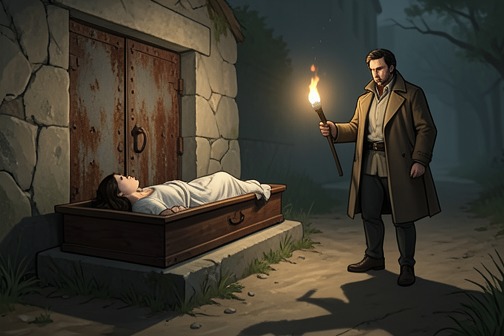
The [Mercy Brown vampire incident](entity:event-recall-event-mercy-brown-vampire-inc-15e26e4697b7) was a nineteenth-century [New England vampire panic](entity:action-recall-action-new-england-vampire-pa-d9b9343487fb) centered on Lena “Mercy” Brown, a nineteen-year-old woman from [Exeter, Rhode Island](entity:location-recall-location-exeter-rhode-island-766063de4e06), whose tuberculosis death was followed by the exhumation and burning of her heart and lungs. Its decisive significance lies in the collision between an infectious disease that was not yet understood by the local community and a folk explanation that treated the dead as active agents draining the life of the living. The case became a stark example of how fear could turn medical uncertainty into a ritual directed against a corpse.
## Disease, Family, and Suspicion
The incident developed within a sequence of tuberculosis deaths in the Brown family. Mercy’s mother, Mary, died of tuberculosis in 1883, and her eldest daughter, Mary Olive, died of the same disease in 1886. In 1891, Mercy and Edwin, George Brown’s remaining children, also contracted tuberculosis. Mercy died in January 1892, while Edwin was still ill. The succession of deaths made the family’s suffering appear patterned rather than accidental, and friends and neighbours began to suspect supernatural foul play.
This interpretation belonged to a wider nineteenth-century vampire panic in [New England](entity:location-recall-location-new-england-ef140e738f2b). [Tuberculosis](entity:state-recall-state-tuberculosis-27317e86b318), widely known as consumption because it seemed to consume a victim’s health, was highly contagious and could spread rapidly through households with lower hygiene standards and limited medical understanding. When several relatives died in succession, people could imagine that the first victim had returned from the grave to drain the life force of survivors. The vampire explanation therefore supplied a visible cause for an otherwise terrifying pattern: it identified an enemy, assigned responsibility, and offered the possibility that intervention might save the last living family member.
## The Exhumation
Friends and neighbours persuaded a reluctant George Brown to disinter the bodies of his dead relatives. The purpose was not merely to inspect the graves but to search for signs of undead activity and thereby protect Edwin. Mary and Mary Olive’s bodies were found to be decomposed in ways consistent with the time they had spent buried. Mercy’s corpse, however, appeared comparatively fresh. That appearance was treated as decisive evidence, even though she had died less than two months earlier, during the coldest part of the year, and her coffin had been kept in a crypt because the frozen ground was too hard to dig.
A local doctor objected to the supernatural interpretation. He pointed out that the lack of decay was medically explainable and removed Mercy’s lungs, insisting that they displayed signs of tuberculosis, a disease already recognised by the medical profession since the early nineteenth century. His objections did not prevail. The community preferred the meaning supplied by superstition, and Mercy’s heart and lungs were cut out and burned on a pyre built on nearby rocks.
## The Failed Cure and Its Meaning
The remains were not treated as symbolic objects alone. In the hope of saving Edwin, the ashes of Mercy’s heart and lungs were mixed with water and given to him as a medicinal concoction. The remedy failed, and Edwin died on 2 May 1892. The death exposed the terrible consequence of the ritual: an attempt to control an epidemic by acting upon the dead neither removed the disease nor protected the living.
The case is also illuminated by later medical explanations of supposedly vampiric corpses. Blood around a corpse’s mouth or in its stomach can result from purge fluid, produced as tissues break down and pressure forces decomposing liquid through the mouth and nose. A body may also appear unusually preserved because of cold, burial conditions, or restricted bacterial activity. Saponification, the anaerobic hydrolysis of body fats that produces adipocere or “corpse wax,” can preserve facial features and delay ordinary decay. These processes do not lessen the family’s grief, but they show how physical evidence could be misread when medical authority competed with communal fear.
## Historical Context and the Logic of Fear
The Mercy Brown vampire incident belonged to a broader nineteenth-century New England vampire panic, but its force came from the particular historical conditions in which it unfolded. The 1800s combined rapid technological and social change with a persistent willingness to accept supernatural explanations. During the second Industrial Revolution, new forms of machinery, communication, and production could appear almost magical, while spiritualism and reports of witchcraft continued to attract serious attention. This cultural mixture made it possible for a community to regard a sequence of tuberculosis deaths not simply as a medical crisis but as evidence of an unseen agency acting through the family. The vampire explanation was therefore not an isolated eccentricity: it formed part of a period in which old beliefs served as a stabilizing framework amid unsettling change.
## Fear, Authority, and the Search for Control
The incident also belongs to a longer history in which communities converted unexplained deaths into accusations against the dead. During [the eighteenth-century vampire craze](entity:time-recall-time-18-844fa9226a3d), entire villages in eastern Europe reportedly exhumed corpses and staked them after suspected vampire attacks. The documented [1731 Serbian vampire epidemic](entity:event-recall-event-1731-0380e1a07027) reveals the same pressure at work: thirteen deaths in one village occurred close enough together to alarm residents, and although a doctor attributed them to malnutrition, villagers insisted on a supernatural cause. When the exhumed bodies appeared unexpectedly plump and seemed to contain fresh blood, the official investigation recorded those observations as evidence of vampirism rather than resolving the conflict between local belief and medical explanation. The [Mercy Brown](entity:character-recall-character-mercy-brown-2d42caa10cc0) case similarly shows that the question was not simply whether people were credulous, but who possessed the authority to define a corpse’s condition and a family’s danger.
That struggle over evidence was intensified by the limited knowledge surrounding disease and death. Reports of blood around disinterred corpses often preceded modern understanding of decomposition: purge fluid, produced as body tissues break down, can collect in the body cavities and escape through the mouth or nose, where its dark red appearance may be mistaken for blood. Cold conditions, a crypt, airtight burial, or heavy clay soil can also slow decomposition. [Adipocere](entity:state-recall-state-adipocere-650cce4d68e9), or corpse wax, forms when anaerobic bacteria hydrolyse body fats, giving a corpse a wax-like appearance and sometimes preserving its facial features. Such processes provide plausible explanations for why Mercy’s body appeared fresh, but they do not erase the social force of what the mourners saw. Physical changes became supernatural signs because the community needed the corpse to carry an intelligible cause for catastrophe.
The case therefore exposes a recurrent logic of vampire panic. When disease moved through a household and no one could predict who would die next, fear became almost unbearable because it lacked an identifiable target. Folk narrative supplied one by transforming the first victim into an active predator and by making the grave itself the site where the threat could be confronted. Exhumation, mutilation, burning, and the administration of ashes to Edwin formed a sequence of actions that gave helplessness the appearance of intervention. Their failure was the incident’s bleakest reversal: the ritual directed violence at Mercy’s remains, yet tuberculosis continued to determine the family’s fate, and Edwin died on 2 May 1892.
## Historical Legacy and Interpretation
The Mercy Brown vampire incident remains significant because it records more than a mistaken belief about a corpse: it shows how medical uncertainty, communal authority, and inherited folklore could combine to produce a material ritual. Its nineteenth-century setting matters. The period joined rapid technological and social transformation with continuing confidence in spiritualism, witchcraft reports, and other supernatural explanations. Within that cultural tension, tuberculosis could be understood simultaneously as a contagious disease and as an invisible force embodied by the dead. The case also belongs to a wider archive of vampire testimony, from Antoine [Augustin Calmet](entity:character-recall-character-augustin-calmet-362c4292b805)’s eighteenth-century compilation of reports about revenants and vampires to the Serbian investigations that treated unusual corpses as documentary evidence. Later newspaper and institutional responses to supposed supernatural panics likewise demonstrate how stories acquire authority through repetition, publicity, and official attention. Read in that context, Mercy’s exhumation is not simply an isolated act of rural superstition. It is an example of a community converting grief and epidemiological fear into a theory of agency, then using the body of a dead young woman as the site on which that theory could be tested. The ritual failed medically, but it succeeded in giving an otherwise incomprehensible sequence of deaths a cause, an enemy, and a prescribed response; that grim explanatory power is what made the incident endure in the history of vampire folklore.
Event 13
Liverpool Blitz
The [Liverpool Blitz](entity:event-recall-event-liverpool-blitz-135e5a7c2dbd) was the prolonged bombing of [Liverpool](entity:location-recall-location-liverpool-7a375e857bb9) from August 1940 until January 1942, a period in which the city’s docks and its position on the [Mersey](entity:location-recall-location-mersey-5185da8641e2) made it especially vulnerable. In the book’s account, the raids are decisive not because they confirm any supernatural visitation, but because they show how genuine wartime danger can generate intimate, monstrous explanations: the distant machinery of aerial warfare was recast as a personal enemy with glowing eyes and wings.
## Strategic Setting and Wartime Pressure
Liverpool’s proximity to the Mersey placed it at the centre of Britain’s wartime supply system. Its docks were a prime target for the Luftwaffe, while the long stretch of water was difficult to secure. The country depended on supplies arriving through the Mersey port, so the city’s danger was both local and national. Bombing was not an isolated disturbance but a sustained condition of insecurity, lasting through eighteen months from August 1940 to January 1942.
The physical threat was accompanied by a climate of constant suspicion. Rumours travelled rapidly about German submarines lurking in the depths of the river, and the population remained on high alert for further aerial bombardments. Under those circumstances, the night sky became an unstable field of interpretation. People were not merely waiting for another attack; they were trying to decide what kind of danger might be approaching and where it might come from.
## From Air Raids to Flying Creatures
Within this atmosphere, people spoke of flying creatures with glowing eyes that swooped upon the unwary. Their appearance was described as foreign, a detail that reflected wartime suspicion as much as supernatural imagination. In a city with a diverse ethnic population, anyone who did not look recognisably local could be treated as a possible enemy infiltrator. The vampire story thus absorbed the period’s language of invasion and otherness.
The transformation was also a transformation of scale. The actual damage was inflicted largely by distant bomber aircraft, whose regular droning made violence impersonal and difficult to confront directly. The vampire legend supplied a more dramatic and more intimate adversary. Instead of an unseen military force high above the city, frightened families and soldiers could imagine a creature that watched, descended, and attacked individual victims. The supernatural figure gave diffuse fear a body, a face, and a direction.
## Rumour, Memory, and the Need for an Enemy
The book treats the connection between the Liverpool Blitz and the flying-vampire stories with caution. Rumours may have begun with a small fragment of experience: flying debris glowing in the night, briefly compared with eyes, or some other sight distorted by darkness and alarm. They may also have been embellished long after the raids, when the old danger had become material for local storytelling. The account leaves open the possibility that no original supernatural sighting occurred at all and that the story developed as spooky entertainment.
What persisted was not reliable evidence but repeated local memory. People continued to tell younger generations to watch out for vampires, while the wartime setting supplied the legend with an atmosphere of plausible terror. The rumour’s endurance illustrates how stories can preserve the emotional truth of an event even when their literal claims are unsupported. The Blitz created the conditions for fear; folklore reorganised that fear into a form that could be retold.
## Aftermath and Folkloric Significance
The Liverpool Blitz therefore functions in the narrative as historical pressure behind a later vampire tradition. It did not produce proof of flying undead creatures. Instead, it demonstrates the process by which technological violence, military secrecy, darkness, and communal vulnerability become supernatural narrative. The city’s real enemy remained the bomber plane and the war that sent it overhead, but the vampire offered a more immediate image of menace for those struggling to make sense of the night.
This dynamic belongs to a wider history of vampire panic. In [New England](entity:location-recall-location-new-england-ef140e738f2b), tuberculosis was interpreted as the dead stealing the life force of surviving relatives; in eighteenth-century eastern Europe, repeated deaths encouraged villages to exhume and stake corpses; and in Glasgow, children later turned fears of a vampire with iron teeth into a mass cemetery hunt. Across these cases, uncertainty makes superstition attractive because it creates a target for anger and unchannelled fear. The Liverpool legend belongs to that same pattern: a real disaster becomes the ground from which an invented predator rises.
Event 14
Gorbals Vampire incident
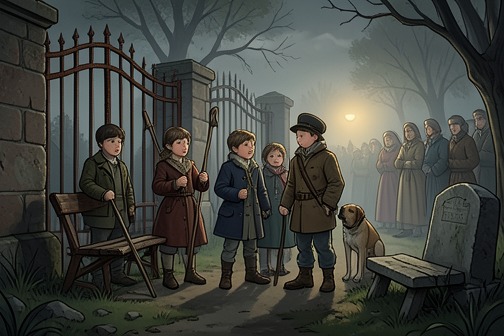
[The Gorbals](entity:location-recall-location-the-gorbals-12df161534f6) [Vampire](entity:creature-recall-creature-vampire-df20a359382b) incident was a mass vampire hunt in Glasgow in September 1954, when hundreds of local children gathered in the Southern Necropolis after rumours spread that a vampire with iron teeth had killed two children and was seeking more victims. No such murders or disappearances had occurred that year, yet the belief generated a real public action: children brought stakes, knives, and even dogs into a neglected cemetery. The episode’s decisive consequence was not the discovery of a monster but the conversion of an unverified story into a national argument about children, horror comics, public order, and state censorship.
## Rumour and Historical Setting
The incident belonged to a wider history in which fear of the dead supplied an explanation for diseases, unexplained deaths, and social instability. During the nineteenth-century vampire panic in [New England](entity:location-recall-location-new-england-ef140e738f2b), tuberculosis was interpreted by some communities as the dead returning to drain the life force of surviving relatives. Earlier, during [the eighteenth-century vampire craze](entity:time-recall-time-18-844fa9226a3d), villages in eastern Europe had exhumed and staked suspected vampires. In each case, limited medical knowledge made a supernatural account feel more manageable than an invisible disease or an apparently arbitrary sequence of deaths.
Glasgow in 1954 was also a society accustomed to treating printed stories as potential causes of social danger. The nineteenth century had combined industrial transformation with reports of witchcraft treated as fact, while the second Industrial Revolution made technological change appear almost magical. The Gorbals story therefore entered an already prepared cultural atmosphere: old supernatural motifs could be revived by modern newspapers, and childhood imagination could be interpreted as evidence of a wider crisis.
## The Cemetery Hunt
The immediate panic gathered force during the week before Thursday 23 September. Children began assembling at the Southern Necropolis, an unkempt and dilapidated cemetery containing nearly a quarter of a million graves. Their numbers were so great that police attempting to clear the grounds were overwhelmed. The hunters were not merely spectators: many carried weapons associated with vampire folklore, while some brought dogs, giving the gathering the appearance of an improvised expedition against a physical enemy.
The supposed threat was described as a vampire with iron teeth. The story claimed that it had already killed two local children and remained on the lookout for more victims, but the absence of factual reports did nothing to weaken the rumour. The event’s power lay in the distance between evidence and response. A danger with no confirmed victims nevertheless produced a crowd large enough to occupy a cemetery and require police intervention.
The [Daily Mirror](entity:organization-recall-organization-daily-mirror-0ae9eff1c084) placed the incident on its front page on Saturday 25 September under the headline “AMAZING SCENE AS HUNDREDS OF CHILDREN STORM A CEMETERY,” adding the sub-header “The Toddlers Joined In.” Its reporter described walking through the cemetery as darkness fell while children clung to his coat and shouted, “Have you come to shoot him, Mister? Kill him, so we can sleep tonight!” The quotation preserved the children’s fear while also making the episode into dramatic national entertainment.
## From Local Legend to Media Panic
Once the national press took up the story, imported horror comics became the preferred explanation. Dr H.S. Mackintosh, Glasgow’s Education Officer, argued that horror comics had gone beyond acceptable limits and called for government action. Local mothers were presented as sharing the anxiety; one reported that her seven-year-old son had returned home sobbing and begged that every window be closed because the vampire would get the family.
The Daily Mirror continued to amplify the issue. On 27 September it suggested that civic and welfare leaders might seek a ban on American horror comics, claiming that the publications were responsible for the hysteria. On 1 October, the newspaper reported that children had attacked a travelling family in a caravan by throwing stones and calling the occupants witches. A crowd reportedly reached about 300, and the incident broadened the panic from an imaginary cemetery monster to the persecution of living people marked as strange or suspect.
The suggested source of the legend was probably closer to Glasgow than the newspapers admitted. The Necropolis stood beside an ironworks known locally as Dixon’s Blazes, whose furnaces cast red light and smoke across the night sky. One boy later explained to the [BBC](entity:organization-recall-organization-bbc-8de626f41c48) that the smoke and red glow made the gravestones seem to leap and produced the impression of figures walking in the distance. The cemetery thus supplied the architecture of the Gothic scene, while industrial fire supplied its moving shadows and colour.
A second local source was Alexander Anderson’s 1879 poem “Jenny Wi’ the Iron Teeth,” which appeared on the Scottish primary-school curriculum. Children hunting the monster would have known its image of a threatening iron-toothed figure. The episode may therefore have grown from the collision of schoolroom folklore, industrial scenery, cemetery space, and the ordinary capacity of rumours to mutate as they pass from child to child. Its later attribution to comics was less a demonstrated origin than a convenient act of cultural blame.
## Political Consequences and Censorship
The panic helped turn a brief local event into a legislative campaign. On Friday 1 October 1954, Alice Cullen, then the Member of Parliament for Glasgow’s Gorbals constituency, was reported as asking Home Secretary Sir David Maxwell Fyfe to introduce legislation banning the sale of horror comics in the United Kingdom. The request treated the children’s hunt as evidence of a dangerous media influence, even though the vampire itself had never been shown to exist and no child murders had been recorded.
A confidential memorandum sent on 25 November 1954 to the Home Office, the Secretary of State for Scotland, and the Minister for Education acknowledged a legal difficulty. Horror comics were not “obscene” under the existing law because the [Obscene Publications Act 1857](entity:rule-recall-rule-obscene-publications-act-1aa7d862f865) generally applied that category to sexually explicit material. The memorandum nevertheless argued that such comics could be as harmful, or more harmful, to children and young persons, and that courts should receive comparable powers to restrict their circulation.
The argument culminated in the [Children and Young Persons (Harmful Publications) Act 1955](entity:rule-recall-rule-children-and-young-perso-bbd5adfff428), which banned “horror comics.” The chronology made the connection plain: the law followed the 1954 incident and was brought in largely because of the political activity it stimulated. Samples were sent to Prime Minister Winston Churchill, including stories involving cowboys, private detectives, Frankenstein, and Captain Marvel; material that appears innocuous to modern readers was nevertheless judged unsuitable at the time.
The episode also formed part of a broader pattern in which comics were blamed for juvenile delinquency. Psychiatrist Fredric Wertham argued that horror comics were a root cause of criminal behaviour, reasoning from the claim that 95 per cent of children in reform schools read them to the conclusion that the comics taught children to become criminals. His testimony before the [Senate Subcommittee on Juvenile Delinquency](entity:organization-recall-organization-3cc1a1758014) did not make comics the sole cause in the committee’s final report, but it encouraged the industry to police its content. The resulting Comics Code Authority restricted images and words, including “zombie,” “crime,” and “terror,” and required criminal conduct to receive punishment at the end of a story.
## Meaning and Afterlife
The Gorbals Vampire incident shows how moral panic enlarges a weak signal into an institutional threat. The children’s gathering supplied the visible spectacle; newspapers supplied repetition and emotional framing; officials and campaigners supplied a policy remedy. The result was a feedback loop in which the alleged influence of horror comics was inferred from behaviour that the press itself was helping to dramatise. The scale of the response exceeded the evidence for the original danger.
The incident also reveals how vampire stories can become vessels for anxieties about outsiders. [Liverpool](entity:location-recall-location-liverpool-7a375e857bb9)’s many vampire legends are interpreted as possibly reflecting suspicion toward immigrants arriving through its docks, and the vampire often functions as a metaphor for fascinating yet distrusted intruders. The Gorbals panic similarly transformed uncertainty into an embodied enemy: children sought a figure with iron teeth rather than confronting the less theatrical conditions of urban fear, neglected spaces, sensational reporting, and adult anxiety about youth culture.
At the same time, the legend was not simply imposed by the press. The cemetery, the furnace glow, the poem taught at school, and the children’s own movement through the landscape gave it a local cultural life before national institutions attempted to explain it. The incident survived because it could be retold in several forms: as a frightening childhood memory, a newspaper spectacle, an argument for censorship, and evidence of the enduring ability of supernatural folklore to organize collective behaviour. In that sense, the Gorbals Vampire was never found, but the social machinery built around the search was entirely real.
Event 15
Children and Young Persons (Harmful Publications) Act 1955 enactment
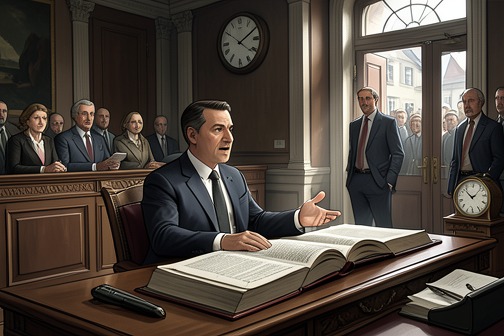
The [Children and Young Persons (Harmful Publications) Act 1955](entity:rule-recall-rule-children-and-young-perso-bbd5adfff428) marked the moment when a local story about a supposed vampire, hundreds of frightened children, and an overcrowded cemetery became national policy. Prompted almost entirely by the [Gorbals Vampire incident](entity:event-recall-event-gorbals-vampire-inciden-f09846cb673c), the Act treated illustrated depictions of crime, violence, cruelty, and horror as a potential danger to the young, converting media anxiety into a lasting legal mechanism whose vagueness helped it remain in force.
## Causes and Background
The Act emerged from a period in which social change repeatedly made old fears available for new use. The nineteenth century had already shown how disease, industrial transformation, and uncertainty could encourage supernatural explanations: tuberculosis was interpreted in [New England](entity:location-recall-location-new-england-ef140e738f2b) as the work of the dead draining the life force of surviving relatives, while [the eighteenth-century vampire craze](entity:time-recall-time-18-844fa9226a3d) had turned unexplained deaths in eastern Europe into campaigns of exhumation and staking. By [the twentieth century](entity:time-recall-time-20-0304f26c1767), the same pattern could operate through mass media. Stories, newspapers, and comics supplied visible objects for anxieties that were otherwise diffuse.
Postwar Britain provided a particularly receptive setting for this process. Horror comics were condemned as foreign imports, while the country was already negotiating rapid cultural change and fears about juvenile behaviour. [The Gorbals](entity:location-recall-location-the-gorbals-12df161534f6) episode supplied an apparently concrete demonstration of danger. On the night of 23 September 1954, hundreds of schoolchildren gathered in Glasgow’s Southern Necropolis after rumours spread of a vampire with iron teeth that had killed two children. Many carried stakes and knives; some brought dogs. Police struggled to clear the children from a neglected cemetery containing nearly a quarter of a million graves, even though there had been no reports of child murders or disappearances that year.
The episode became a media event before it became a legislative argument. The [Daily Mirror](entity:organization-recall-organization-daily-mirror-0ae9eff1c084) placed it on its front page on 25 September under the headline “AMAZING SCENE AS HUNDREDS OF CHILDREN STORM A CEMETERY,” adding the sub-header “The Toddlers Joined In.” Reports of children pleading that the vampire be killed so they could sleep, and of a seven-year-old fearing that the creature would enter through an open window, made the danger seem immediate and domestic. The newspaper then pressed the question of banning horror comics, while Glasgow civic and welfare leaders attributed the hysteria to American publications. The press therefore presented the comics not merely as entertainment but as a causal agent capable of turning fantasy into collective action.
## Legislative Course
The political response began before the Act itself. On 1 October 1954, Alice Cullen, then Member of Parliament for the Glasgow constituency of Gorbals, was reported to have asked Home Secretary Sir David Maxwell Fyfe to introduce legislation banning the sale of horror comics in the United Kingdom. A confidential memorandum circulated on 25 November among the Secretary of State, the Home Office, the Secretary of State for Scotland, and the Minister for Education acknowledged the difficulty of banning an entire genre. Existing law offered no clear definition of what was obscene: under the [Obscene Publications Act 1857](entity:rule-recall-rule-obscene-publications-act-1aa7d862f865), obscenity was generally understood to concern graphically sexual material.
The memorandum nevertheless argued that the comics could be as harmful as, or more harmful than, publications already classed as obscene. That distinction was crucial. The proposed intervention did not claim that horror comics were obscene under the existing statute; it demanded that courts receive comparable powers to restrict their circulation because of their presumed effect on children and young persons. The policy thus extended the logic of obscenity regulation from sexual content to imagined psychological and moral influence.
Home Secretary Gwilym Lloyd George introduced the Children and Young Persons (Harmful Publications) Act 1955 in May 1955, and it came into force on 6 June. The legislation was aimed at books, magazines, and similar works likely to fall into the hands of children or young persons that consisted wholly or mainly of picture stories, with or without written matter. Its focus was not a named character, publisher, or isolated issue, but a form of visual storytelling considered dangerous in itself when its overall effect was judged corrupting.
## Scope and Operation
The Act covered illustrated works portraying the commission of crimes, acts of violence or cruelty, or incidents of a repulsive or horrible nature. The decisive test was whether the work as a whole would tend to corrupt a child or young person into whose hands it might fall. This language gave the statute a broad reach. It joined the concrete categories of crime, violence, cruelty, and horror to the less precise judgment of corruption, leaving considerable room for interpretation by authorities and courts.
The law’s breadth also reveals the structure of the panic that produced it. The supposed vampire was not treated as the primary problem; the problem became the circulation of images through which children might encounter violence or horror. The children of the Gorbals were therefore recast from frightened participants in a rumour into evidence that printed fantasy could produce public disorder. The legislation transformed a disputed chain of influence—comic books leading to fear, fear leading to a cemetery hunt—into a presumption that certain illustrated narratives required preventive control.
The government reinforced the seriousness of its position by sending Winston Churchill samples of the supposedly offensive publications. To modern eyes, the collection reportedly included relatively innocent stories about cowboys and private detectives, as well as Frankenstein and Captain Marvel. Whatever Churchill made of the material, the comics were deemed unsuitable and were subjected to the new legal climate. The contrast between the ordinary appearance of the samples and the severity of the political response exposes how much authority the surrounding narrative of danger had acquired.
## Consequences and Aftermath
The Act was part of a wider [British horror-comics censorship campaign](entity:action-recall-action-british-horror-comics-a46096989623), but its immediate political energy came from the Gorbals Vampire incident. The newspapers’ insistence that imported comics had caused hysteria gave officials a ready-made explanation for an event that may instead have grown from local conditions. The Southern Necropolis stood beside an ironworks known as Dixon’s Blazes, whose furnaces cast red light and smoke across the cemetery; one child later described the gravestones seeming to leap and figures appearing in the red glow. The legend may therefore have drawn on a traditional local story and an alarming landscape rather than on imported comics alone.
The episode also shows how media amplification can outrun evidence. The Daily Mirror repeatedly escalated the story, and the alleged vampire hunt was followed by reports of children attacking a travelling family’s caravan while shouting that its occupants were witches. Public fear expanded from an unverified cemetery rumour to a broader suspicion of children’s reading, strangers, and imagined contamination. The Act supplied institutional form to that escalation, making the state a participant in defining which images counted as socially dangerous.
Despite the vagueness of its final test, the Act remains in force. There have been barely any prosecutions under it, perhaps partly because the uncertainty of the wording makes enforcement difficult. Its endurance therefore matters as much as its direct use. The statute preserved the principle that pictorial narratives may be regulated not only for what they depict but for the moral effect authorities believe they may have on young readers.
## Historical Significance
The enactment belongs to the recurring history of moral panic surrounding the [Vampire as metaphor](entity:concept-recall-concept-vampire-as-metaphor-8e2660a67a18). Earlier communities turned tuberculosis, decomposition, and unexplained deaths into stories of revenants; the Gorbals episode turned children’s fear and a cemetery spectacle into an argument about mass entertainment. In each case, uncertainty was narrowed by assigning responsibility to a recognisable object: a corpse, a foreign vampire, a disease, or a comic book.
The Act’s significance lies in that conversion of cultural fear into legal language. It did not establish that horror comics had caused the Gorbals panic, nor did the reported incident establish that a vampire had harmed children. Instead, a rumour, press campaign, and political response formed a feedback loop in which each supplied credibility to the next. The resulting law outlasted the event that inspired it, preserving a postwar belief that the state might protect children by controlling the stories and images through which they encountered violence and horror.
Event 16
Toxteth vampire incident
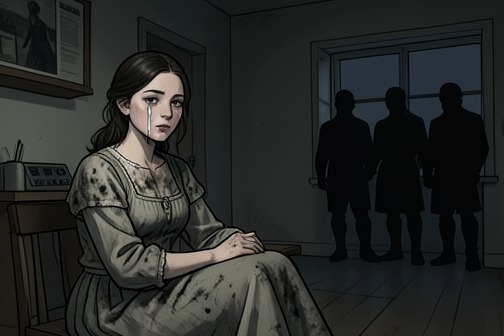
The [Toxteth vampire incident](entity:event-recall-event-toxteth-vampire-inciden-e86b5f065e60) is a 1983 [Liverpool](entity:location-recall-location-liverpool-7a375e857bb9) vampire report centred on a young mother who feared that an unseen presence was watching her and that the empty flat beside her in [Lodge Lane](entity:location-recall-location-lodge-lane-7aed994ab01f) radiated evil. Its decisive significance lies not in proof of vampirism, which the account strongly questions, but in the way an ordinary domestic fear became an urban legend through gothic imagery, neighbourhood suspicion, and the narrative habits of paranormal culture.
## Setting and Reported Experience
The incident was said to have occurred in February 1983 in a bedsit on Lodge Lane, [Toxteth](entity:location-recall-location-toxteth-7536b7343ced), where the woman lived with her baby. Versions of the story differ in detail, but they consistently focus on a terrified young mother and suspicious neighbours rather than on a clearly witnessed attack. [Nothing](entity:character-recall-character-nothing-5ce10c289471) specifically threatening had occurred in the flat. Instead, the woman had become increasingly disturbed by the persistent feeling that invisible entities were watching her. Her fear eventually became so intense that she appeared sobbing at a local police station and begged for help.
She reportedly identified the adjoining property as the source of the danger, claiming that it radiated evilness. Police were said to have promised to inspect the flat, which was believed to be empty. The episode therefore began as a crisis of perception and protection: a vulnerable resident sought institutional reassurance, while the neighbouring room became the physical focus for an otherwise intangible terror.
## The Empty Flat and Its Gothic Evidence
When police allegedly broke into the supposedly vacant flat, they were said to have found a collection of objects that seemed designed to confirm the mother’s fears. The walls were reportedly painted black and covered with occult symbols. In the middle of the floor lay an empty coffin, while a milk bottle nearby appeared to contain clotted human blood. The combination transformed an unverified sensation of being watched into a compact gothic scene: a sealed domestic interior, dark walls, ritual markings, a coffin, and blood presented as material evidence.
The account says that the former tenant showed no sign of returning. Faced with the apparent confirmation of supernatural danger, the mother gathered up her baby and left the city, moving in with relatives across the [Mersey](entity:location-recall-location-mersey-5185da8641e2) on the Wirral. The movement from bedsit to police station and then out of Liverpool gives the story a clear geography of fear. The home ceases to be a refuge, the neighbouring flat becomes a contaminated space, and physical escape replaces explanation.
## Legend, Embellishment, and Plausible Origins
The incident is described as almost certainly an urban myth, most often credited to a local author who specialised in paranormal tales of Merseyside. That attribution does not automatically make every element false, but it makes the story’s later shape suspect. The black decor could have belonged to someone with gothic tastes, a style that was fashionable in Britain during the early 1980s. The coffin and the supposed blood may likewise have acquired their most sinister meaning through retelling rather than through any documented supernatural discovery.
The account also recognises a more prosaic source for the mother’s distress. Living alone with a baby in what was then a tough area could make anyone feel exposed, especially when the surrounding circumstances offered little reassurance. A frightening atmosphere, an unfamiliar neighbour, and unusual furnishings could be reorganised by memory and storytelling into evidence of vampiric activity. The legend’s power comes precisely from this unstable border between an experience that may have been real, a setting that may have been unusual, and an interpretation that grew more definite with every repetition.
## Toxteth, Liverpool, and the Outsider
The story belongs to a broader pattern in which vampirism becomes a metaphor for outsiders and intruders: people who fascinate while also provoking suspicion. Liverpool, a busy port city, has accumulated more vampire stories than most places in the surrounding discussion. Its docks brought immigrants, sailors, legends, and superstitions from different countries and cultures. A port can be tolerant and cosmopolitan while still producing anxieties about those who do not fit established social expectations.
Toxteth is presented as a multicultural area whose residents often lived there because economic or social circumstances kept them away from more affluent parts of the city. In such a setting, difference could become conspicuous, and the unfamiliar could be made into a bogeyman. The neighbouring flat in the Toxteth story functions in this way: its alleged symbols and coffin turn private eccentricity into a public threat, while the vampire label gives diffuse social anxiety a recognisable shape. The case thus reflects not only fear of the undead but also the recurring human tendency to assign danger to an outsider, a stranger, or a place marked as different.
## A Modern Form of [Vampire](entity:creature-recall-creature-vampire-df20a359382b) Panic
The Toxteth report echoes older episodes of vampire panic, although its setting and mechanisms are modern. In [the eighteenth-century vampire craze](entity:time-recall-time-18-844fa9226a3d), entire villages in eastern Europe dug up suspected corpses and staked them. In one Serbian village in 1731, thirteen deaths in rapid succession led residents to reject a doctor’s explanation of malnutrition; exhumed bodies that seemed insufficiently decomposed and appeared to contain fresh blood were treated as confirmation of vampirism. The Toxteth story has no exhumed corpse or organised staking, but it similarly converts uncertainty into a supernatural explanation and treats ambiguous physical details as decisive signs.
The same process appears in the story of [Astryiah](entity:character-recall-character-astryiah-3dc374eb4a97) in [Sefer Hasidim](entity:object-recall-object-sefer-hasidim-8f271b83328d), where a female vampire supposedly sucked blood through her hair, and in the instruction that an estrie in a grave could be stopped by driving a spike through her mouth into the earth and filling her mouth with stones. Such narratives make fear manageable by identifying a creature, locating its method, and prescribing a response. The Toxteth account updates that structure: the invisible attacker becomes an allegedly occult neighbour, the grave becomes an empty urban flat, and the protective act becomes police intervention followed by flight.
## Cultural Afterlife and Interpretive Significance
The incident occurred within a culture already receptive to the circulation of supernatural stories. The nineteenth century had joined rapid industrial change to widespread spiritual curiosity, while newspapers could report witchcraft as fact. Later vampire stories continued to move between medicine, religion, entertainment, and popular media. [Tuberculosis](entity:state-recall-state-tuberculosis-27317e86b318), for example, was interpreted in [New England](entity:location-recall-location-new-england-ef140e738f2b) as the dead stealing the life force of surviving relatives, and the [Mercy Brown vampire incident](entity:event-recall-event-mercy-brown-vampire-inc-15e26e4697b7) ended with the burning of a young woman’s heart and lungs and the ashes being given to her ill brother as a supposed cure. These episodes show how disease, grief, and helplessness can be translated into supernatural narratives when established explanations fail to satisfy.
By 1983, the Toxteth story also belonged to an era shaped by gothic subculture and the visual language of horror. The coffin, black paint, occult signs, and bottle of supposed blood offered a ready-made script for vampirism, even though the narrative supplies no confirmed vampire, attack, or returning tenant. Later interpretations therefore matter more than the alleged monster. The story demonstrates how fiction becomes fact when repeated often enough, how media and local folklore manufacture authority, and how a private fear can be preserved as communal memory without ever acquiring reliable proof. Like the vampire itself, the incident survives by feeding on uncertainty: each retelling gives the darkness a little more substance while leaving the original event permanently unresolved.
Event 17
Highgate Vampire affair
The [Highgate Vampire affair](entity:event-recall-event-highgate-vampire-affair-4aefc7c98c81) was a long-running controversy centred on [Highgate Cemetery](entity:location-recall-location-highgate-cemetery-5837a369a9dc) in north [London](entity:location-recall-location-london-420923d4a60a), where a reported apparition became, through publicity and competing claims, an alleged Eastern European vampire. The episode shows how Gothic spaces can convert uncertainty into spectacle: a quiet cemetery supplied the setting, [David Farrant](entity:character-recall-character-david-farrant-ab3b4e79c9ff) supplied an initial ghost story, [Sean Manchester](entity:character-recall-character-sean-manchester-efc4e712999b) supplied a more definite supernatural interpretation, and the press supplied the audience that turned rumour into a mass event.
## Setting and Cultural Background
Highgate Cemetery occupies a beautiful, peaceful site on [Highgate](entity:location-recall-location-highgate-6b5bc269e3ef) Hill, an atmosphere at odds with the tens of thousands of bodies buried there. Swains Lane divides its East and West plots, while the older West Cemetery preserves the Gothic decay of ageing tombs and cloisters. That decline had already made the site suitable for horror cinema, including Taste the Blood of [Dracula](entity:object-recall-object-dracula-7d134d20f59a), starring [Christopher Lee](entity:character-recall-character-christopher-lee-9959ee5bbe1d). The cemetery therefore offered more than a location: its architecture and accumulated dead made an apparently empty night landscape feel charged with hidden history.
The affair also emerged from a broader culture unusually receptive to supernatural explanations and Gothic imagery. The nineteenth century had combined rapid technological change with persistent belief in witchcraft and spiritualism; the second Industrial Revolution could appear magical even as older beliefs remained a psychological safety net. Earlier vampire panics show the same mechanism in more lethal form. In [New England](entity:location-recall-location-new-england-ef140e738f2b), tuberculosis was interpreted as the dead stealing the life force of surviving relatives, while [the eighteenth-century vampire craze](entity:time-recall-time-18-844fa9226a3d) led villages in eastern Europe to exhume and stake suspected corpses. In 1731, Serbian villagers rejected a doctor’s explanation of deaths through malnutrition, and in the [Mercy Brown](entity:character-recall-character-mercy-brown-2d42caa10cc0) case in [Exeter, Rhode Island](entity:location-recall-location-exeter-rhode-island-766063de4e06), relatives burned the organs of a tuberculosis victim in an unsuccessful attempt to save her brother. Highgate transferred that older pattern of fear into a modern city, where newspapers and television could amplify it almost instantly.
## The Apparition Becomes a [Vampire](entity:creature-recall-creature-vampire-df20a359382b)
In February 1970, David Farrant of Muswell Hill wrote to the [Hampstead and Highgate Express](entity:organization-recall-organization-hampstead-and-hi-a676c4dd0975) claiming that he had seen a grey, ghost-like figure through the gates on Swains Lane on three separate occasions. Other readers reported similar sightings, adding details such as floating movement and glowing red eyes. At this stage the alleged being remained a vague apparition, sustained by testimony and the cemetery’s suggestive environment rather than by any demonstrated physical evidence.
Sean Manchester, who described himself as a vampire hunter and as president of the British Occult Society, gave the story its more sensational identity. He declared that the apparition was an Eastern European vampire and announced his intention to exorcise it publicly. The Hampstead and Highgate Express presented the claim in a front-page headline asking, “Does a wampyr walk in Highgate?” The change from ghost to vampire was decisive. A shadowy sighting could remain ambiguous; a vampire supplied a recognizable mythology, a threat, and a role for anyone willing to join the hunt.
## The Public Hunt of March 1970
Manchester appeared on ITV’s nationally broadcast Today programme on Friday 13 March 1970 and claimed that he would exorcise the Highgate vampire later that night. Public interest had already become so intense that hundreds of would-be vampire hunters climbed the walls of the dilapidated cemetery and swarmed through the grounds. Police attempted to restore order, turning an alleged supernatural investigation into a conspicuous public disturbance.
The event’s drama depended on the tension between the cemetery’s physical stillness and the crowd’s restless intervention. Coffins and catacombs made the dead materially present, while the reported figure remained elusive. The absence of a confirmed apparition did not weaken the spectacle; it allowed expectation, fear, and performance to occupy the vacant space. In Gothic terms, the cemetery functioned as an architectural container for the unknown, making the threat feel larger precisely because it could not be securely located or examined.
## Rivalry, Publicity, and Mythmaking
The affair developed into a bitter rivalry between Farrant and Manchester. Their disagreement was not merely personal but interpretive. Farrant generally described the entity as a ghost or spirit, preserving the uncertainty of his original account. Manchester insisted that it was unquestionably a vampire, replacing an open-ended haunting with a fixed supernatural diagnosis and positioning himself as the authority capable of confronting it.
The rivalry generated further publicity even when no decisive encounter occurred. The two men once announced a “magician’s duel” on Parliament Hill for Friday 13 April 1973, but the duel never happened. Farrant expressed his hostility through a satirical comic strip, The Adventures of Bishop Bonkers, in which Manchester appeared as a paranoid maniac whose plans were defeated by Farrant. In 2011, Farrant filmed himself raising a toast to an effigy of Manchester’s head displayed ceremonially on a silver platter. These gestures turned occult investigation into theatrical antagonism: the supposed vampire receded while the investigators, their claims, and their mutual mockery became the visible drama.
## Aftermath and Significance
With hindsight, the book presents much of the Highgate myth as something Manchester himself enlarged from very thin material. Media attention transformed scattered reports into a lasting urban legend, and the controversy continued long after the original night hunt. The feud lasted until Farrant’s death in 2019, while Highgate Cemetery remained identified with the conflict between the two rival occultists. Its association with the affair survives as part of the site’s cultural identity, alongside its tombs, catacombs, Gothic atmosphere, and film history.
The episode also illustrates how modern vampire folklore is produced. Unlike the eighteenth-century panics, it did not depend on a village’s attempt to explain a sequence of unexplained deaths, nor did it require a medical crisis such as tuberculosis. Unlike the literary vampire established by [Varney](entity:character-recall-character-varney-a5d4e2588f4b), [Carmilla](entity:character-recall-character-carmilla-a93d1014dc9a), and Dracula, it had no stable fictional plot or fully developed character. Its vampire was assembled through fragments: a nocturnal cemetery, a grey figure, red eyes, a newspaper headline, a television appearance, a promised exorcism, and a crowd climbing cemetery walls.
That assembly makes the affair significant as an example of Gothic culture’s enduring glamour. The goth subculture later emerged from post-punk clubs in Britain during the political unrest and economic depression of the early 1980s, turning the imagery of death, mourning, and the undead into a durable musical and fashion culture. Highgate belongs to the same cultural history, but in a more unstable form: it shows the moment when Gothic atmosphere escaped fiction and invited people to behave as though a vampire might be physically present among London’s graves. The lasting power of the affair lies not in a verified monster but in the social process that made an unverifiable presence feel publicly real.
Event 18
World Goth Day founding
[World Goth Day founding](entity:event-recall-event-world-goth-day-founding-ff1b17a1a49e) transformed a personal attachment to dark music, horror, and gothic style into a recurring international cultural observance. Initiated by [Lee Meadows](entity:character-recall-character-lee-meadows-f97aa250c22c) in 2009 and expanded with Martin Oldgoth the following year, it moved from an improvised online idea to a self-sustaining event whose participants use clothing, music, imagery, and social media to make gothic identity publicly visible.
## Background and Personal Formation
Meadows's route into gothic culture began with fear as much as attraction. His early fascination with darker subjects included unsettling episodes of Doctor Who, Sapphire and Steel, Hammer Horror films of [the 1970s](entity:time-recall-time-1970-2ebb05b08c8a), and Gary Numan's pale, robotic performance when [Tubeway Army](entity:organization-recall-organization-tubeway-army-7106b6c0173d) appeared on Top of the Pops in 1979 with “[Are Friends Electric](entity:expression-recall-expression-are-friends-electr-4840ed34cd15)?”. The experience frightened him but held him firmly: the unsettling image became an entry point into a lasting relationship with gothic aesthetics.
During [the 1980s](entity:time-recall-time-1980s-3c00692f91a5), his musical diet broadened to include Duran Duran, [Japan](entity:organization-recall-organization-japan-98515eed59fb), and Toyah Wilcox, but the decisive shift came when [The Sisters of Mercy](entity:organization-recall-organization-the-sisters-of-m-35a6b30a30a0)'s “Alice” played on the radio. Meadows described that moment as the point at which a “Goth Mode” switch was finally activated. Night-time radio then supplied music by [The Mission](entity:organization-recall-organization-the-mission-eeaedd5921ad), [All About Eve](entity:organization-recall-organization-all-about-eve-bc5c49d8bf27), and [Bauhaus](entity:organization-recall-organization-bauhaus-f565a047e0e2), with [John](entity:character-recall-character-john-6bc68dc682c3) Peel and Annie Nightingale seeming to complete the process of musical and cultural conversion. Clothing followed quickly; black clothes and pointed boots became not merely a costume but a visible sign that he belonged.
## The 2009 Proposal
The immediate cause of [World Goth Day](entity:time-recall-time-50d29c40724b) was [BBC](entity:organization-recall-organization-bbc-8de626f41c48) 6Music's plan to devote 22 May 2009 to gothic music and interviews. Meadows interpreted the broadcast as an opportunity for the gothic community to celebrate its existence through a shared annual occasion. The idea arrived as a caffeine-fuelled epiphany, but its form was practical: he wrote a hurried, extensive blog post on Myspace proposing one day each year for the community.
The response exceeded the scale of a private joke. A substantial part of England adopted the proposal on 22 May. People wore gothic clothing to work, requested appropriately dark music from local radio stations, and circulated a gothic smiley logo that Meadows had drawn in Photoshop. The image was shared on social media and printed for display in home windows, while media attention gradually followed. The event's first phase therefore converted subcultural taste into a public ritual: separation from ordinary dress and sound was followed by a collective display that made the group recognizable.
## Expansion into a Global Event
The following year, a conversation with fellow DJ Martin Oldgoth led to the decision to make the observance global. Meadows and Oldgoth created a World Goth Day website, established dedicated social-media accounts, and promoted the idea internationally. The date remained 22 May each year, while the name shifted from the original “Goth Day” toward World Goth Day, a title that matched its widening reach.
Support from prominent figures in the gothic scene helped the project gain momentum. Its success was not based only on formal organization; it also depended on distributed participation. Goth clothing, music requests, online symbols, and local events allowed people to reproduce the celebration in their own settings. In this sense, the founding combined a central calendar date with decentralized acts of recognition, giving a dispersed subculture a shared point of return without requiring uniform local programming.
## Continuity, Scale, and Participation
Meadows wanted World Goth Day to acquire “legs of its own” and perhaps outlive him. That ambition became visible in the event's continuing independence: it no longer required the same promotional effort, because participants began planning several months before 22 May. Each year Meadows catalogued every event reported to him and updated the website, turning the celebration into an accumulating record rather than a one-time campaign.
The event also revealed a geographic reach that surprised its founder. South America and Mexico frequently produced more World Goth Day events than the rest of the globe. Meadows could not identify a single explanation, suggesting possibilities ranging from the appeal of the music to the scene's capacity to offer escape from reality. The contrast between the event's British origin and its strong Latin American participation demonstrates how a culture born from northern post-punk conditions could be adopted elsewhere for locally resonant reasons.
## Cultural Significance
World Goth Day gives institutional form to gothic culture's refusal to disappear. [Gothic rock](entity:concept-recall-concept-gothic-rock-bb0e8970987c) emerged from post-punk clubs in northern England during the political unrest and economic depression of the early 1980s, then expanded into a culture of music, fashion, and shared imagery. The annual observance carries that history into the daylight: Victorian mourning-wear, black clothing, pointed boots, bats, and elaborate hair become public markers rather than private signs of alienation.
Its ritual logic also reverses the stigma attached to being an outsider. Gothic identity is temporarily separated from the ordinary timetable of work and everyday appearance, displayed through coordinated dress and sound, and then reintegrated into a wider community that recognizes itself across distance. The event does not erase difference; it makes difference celebratory. Its enduring appeal lies precisely in that contradiction: a subculture associated with death, darkness, and the grave creates a recurring occasion for communal visibility, positivity, and continuity.