Boq
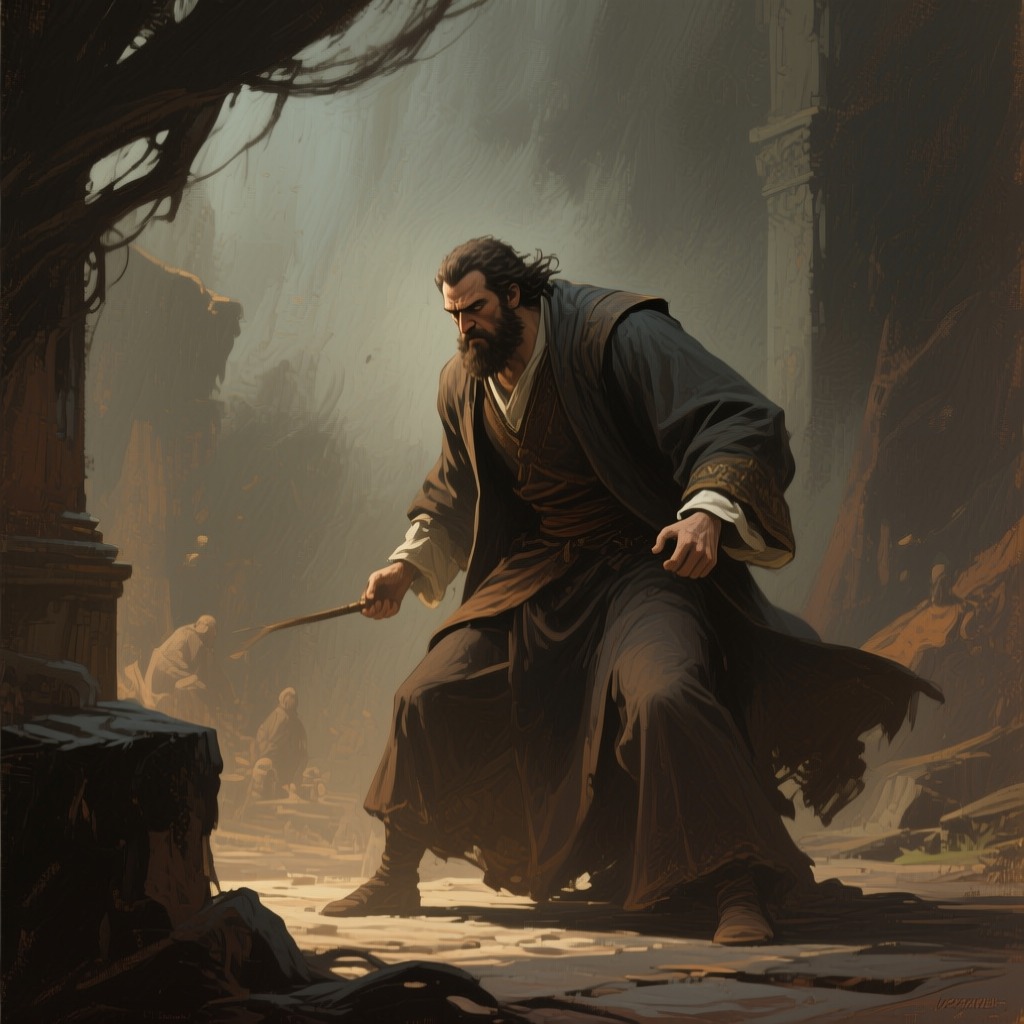
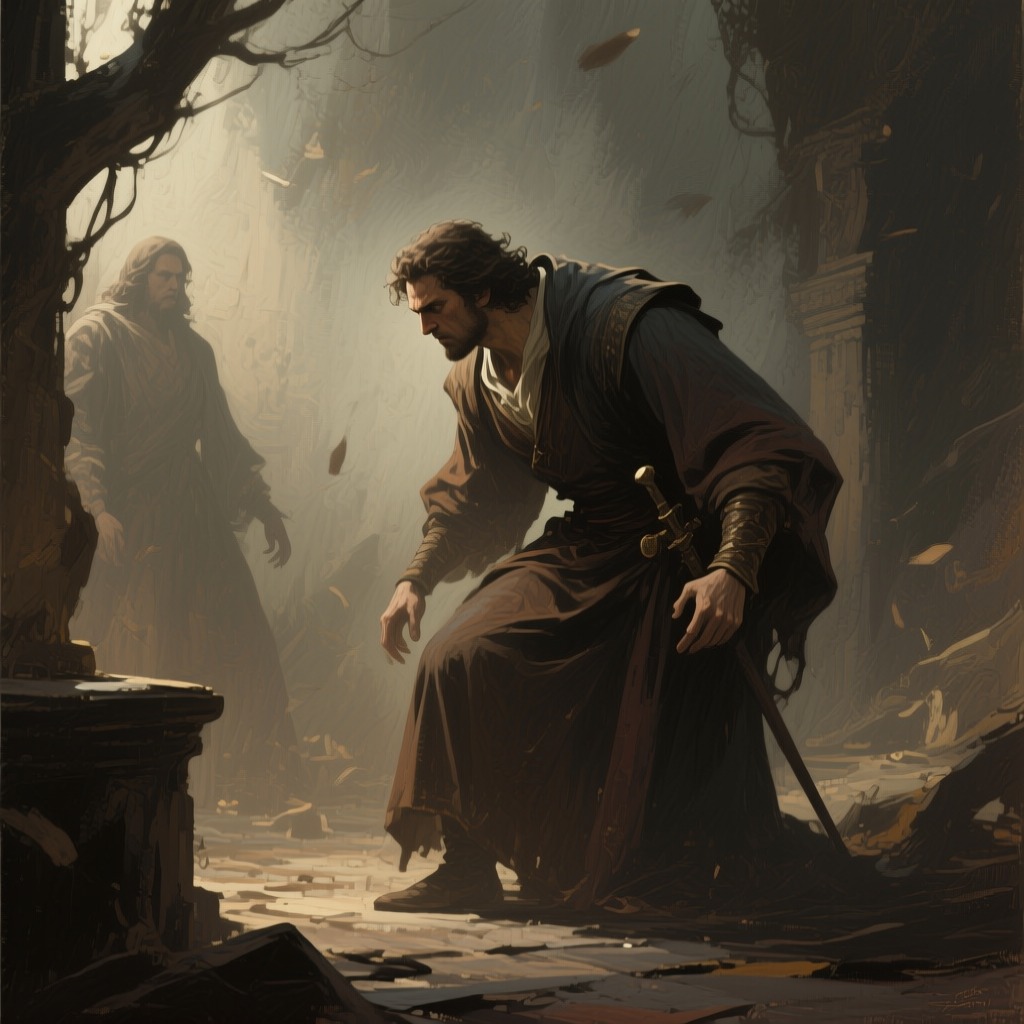
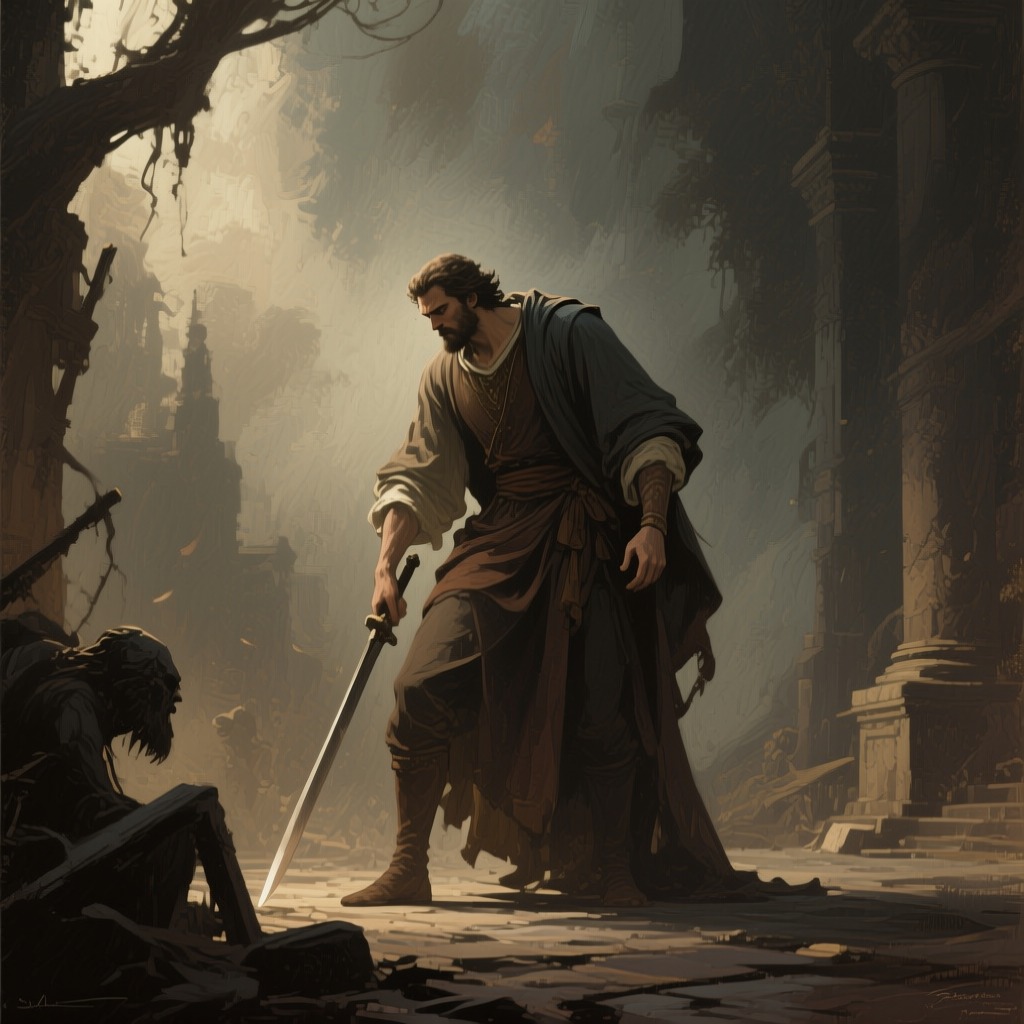
Boq is a Munchkinlander from the impoverished hamlet of Rush Margins in Wend Hardings, the son of Bree, the village mayor. He arrives at Briscoe Hall in Shiz as a student of agriculture, a practical choice for a boy from a farming community suffering under the Great Drought. His small stature and provincial background mark him as an outsider among the wealthy Gillikinese students, but his earnestness and intelligence earn him a place in a circle that includes the beautiful Galinda, the green-skinned Elphaba, and the dissolute aristocrat Avaric. Boq's defining characteristic is his capacity for devotion—to causes, to friends, and above all to Galinda—a devotion that shapes his trajectory from hopeful student to disillusioned farmer.
Life and Plot Trajectory
Boq's life at Shiz is dominated by his infatuation with Galinda, a Gillikinese beauty he first meets at a poetry soiree at Crage Hall. He pursues her with a persistence that borders on obsession, engineering a meeting in the kitchen garden of Crage Hall with the help of Elphaba, who recognizes him as a childhood acquaintance from Rush Margins. Galinda rejects him, citing their differences in culture and class—she is a Gillikinese Arduenna, he a Munchkinlander farmer—but Boq refuses to accept her refusal. His pursuit culminates in a disastrous trip to Lake Chorge, where he discovers that the invitation Elphaba received was a cruel prank by Pfannee, and where he finally kisses Galinda, only to have her dismiss him as "little." This romantic failure coincides with his deepening involvement in a far more serious enterprise: the secret research of Doctor Dillamond.
Key Actions and Objectives
Boq's most significant actions are driven by his friendship with Elphaba and his admiration for Doctor Dillamond. After the Goat's murder, Boq becomes a crucial ally in Elphaba's effort to preserve Dillamond's scientific findings. He uses his access to the libraries of Briscoe Hall and Three Queens College to research early unionist and Lurlinist texts on the origins of Animals, smuggling materials to Elphaba in clandestine meetings at a cafe in Railway Square. He also recruits his friends Crope and Tibbett to the cause, forming a small cell of student researchers. His objective is not merely academic; he understands that Dillamond's work—proving the biological continuity between humans and Animals—could undermine the Wizard's Banns on Animal Mobility. Boq's commitment to this cause is genuine, but it is also entangled with his feelings for Elphaba and his desire to be part of something larger than his own provincial life.
Relationships and Conflict
Boq's relationships are defined by a series of asymmetrical attachments. His love for Galinda is unrequited and ultimately humiliating; she sees him as a "sweet" but "little" Munchkinlander, a toy rather than a suitor. His friendship with Elphaba is more complex and more equal. She is his confidante, his co-conspirator, and the one who forces him to confront his own naivete. When he confesses that Galinda is "his world," Elphaba retorts, "Your world is too small if she is it." This tension—between Boq's romantic idealism and Elphaba's political realism—defines their relationship. He also clashes with Avaric, whose cynical hedonism and casual cruelty (he refers to Fiyero's dark skin as "the color of shit") represent everything Boq is not. The conflict is not merely personal; it is a conflict between the values of the provincial Munchkinlander and the decadent Gillikinese aristocrat.
Change and Ending
Boq's trajectory is one of gradual disillusionment. The murder of Doctor Dillamond shatters his faith in the possibility of justice within the existing system. The death of Ama Clutch and the subsequent revelation of Madame Morrible's manipulation deepen his cynicism. After graduating, he returns to Munchkinland and marries Milla, a Gillikinese woman who hates the rural life and repeatedly attempts suicide. Boq's letters, as reported by Fiyero, "annotate her failed attempts at killing herself like a sort of annual family report." He becomes a farmer, struggling to extract a living from rocky fields, and his political idealism fades into a cautious pragmatism. When Elphaba visits him years later, seeking information about Dorothy and the silver shoes, he is wary and evasive, unwilling to speak ill of the Wizard for fear of reprisal. He has become a man who "hopes for peace and quiet." His final encounter with Elphaba is marked by her contempt for his equivocation; she calls him a "fool" and an "equivocating fool" before flying away in anger. Boq is left on his farm, a figure of lost potential, a reminder that the idealism of youth does not always survive the compromises of adult life.
Narrative Role and Evaluation
Boq functions as a foil to Elphaba and a barometer of the moral climate of Oz. His journey from hopeful student to disillusioned farmer mirrors the broader trajectory of the generation that came of age under the Wizard's dictatorship. He is a witness to the key events of the narrative—the murder of Doctor Dillamond, the corruption of Madame Morrible, the rise of Nessarose—but he is never an agent of change. His passivity is his defining flaw. He is a good man who lacks the courage of his convictions, a man who chooses the safety of his farm over the risks of resistance. In this, he represents the majority of Oz's citizens, who are complicit in the regime's crimes not through active malice but through a failure of will. His story is a cautionary tale about the cost of inaction and the slow erosion of the soul that comes from choosing comfort over justice.