Emerald City
The Emerald City is the political and geographical heart of Oz, a metropolis whose green-hued grandeur masks a regime of systematic oppression. It is the seat of the Wizard's power, the ultimate destination of the Yellow Brick Road, and the site of Elphaba's most significant confrontations with the state. The city is a character in its own right, its gleaming facades and ceremonial spaces standing in stark contrast to the poverty and terror that fester in its shadows.
Architecture and Ambition
The Emerald City is a city of deliberate, overwhelming spectacle. Its most prominent feature is the Palace, a growth of domes and minarets with high flared buttresses in green marble and blue agate screens. The broad, gentle-browed canopies of the pagoda over the Throne Room are covered with hammered scales of virgin gold. The city's architecture is a jumble of styles, from the ancient wattle-and-daub of the oldest surviving domestic buildings to the "High Hostile Crudstyle" of Industrial Modern, a form propagated by the modernity-minded Wizard. The city's self-regard is evident in its public spaces: ceremonial squares, parks, reflecting pools, and the Ozma Embankment. This pomp and pretension, however, is a facade. The city's wealth is built on exploitation, and its beauty is a mask for a brutal political reality.
The Seat of Power and Oppression
The Emerald City is the center of the Wizard's dictatorship. It is from here that the Banns on Animal Mobility are enforced, the Gale Force conducts its midnight raids, and the systematic marginalization of populations—Quadlings, Animals, and political dissenters—is orchestrated. The city is a place of stark contrasts. The boulevards are lined with elegant shops, but branching off them are alleys where the indigent, including displaced Munchkinlanders and Quadlings, live in shelters made of tin and cardboard. The Wizard's power is maintained through a visible military presence; a civil army strolls in foursomes on every second or third street, brandishing clubs and swords. The city's atmosphere is one of government by terror, where the Gale Force can "harvest a crop of victims on a monthly basis." It is a place where the poor are the "expendable human selvage" of the Wizard's grand project.
A Stage for Confrontation
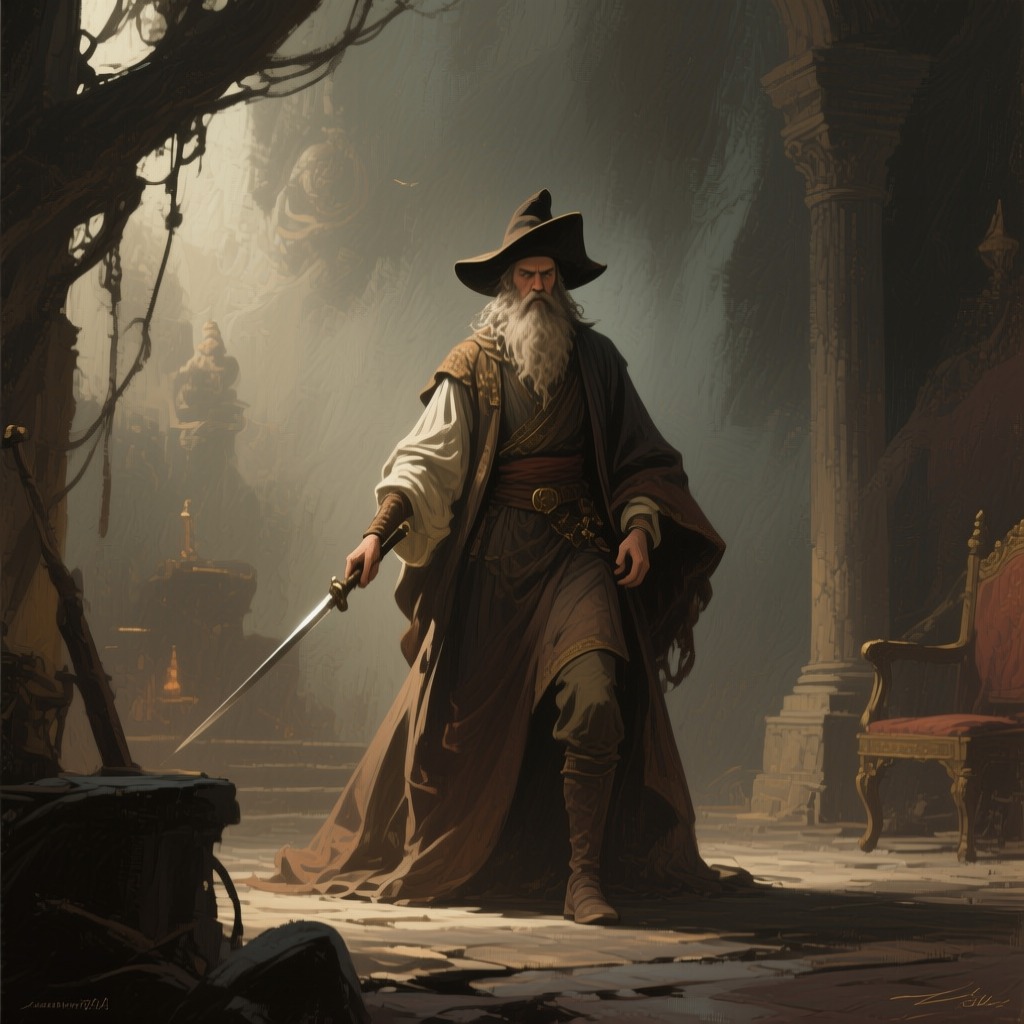
The Emerald City is the setting for two pivotal audiences between Elphaba and the Wizard. In her first visit as a student, she and Glinda are led through a labyrinth of antechambers to a cavernous, dark hall where the Wizard appears as a terrifying, lightning-wreathed skeleton. He dismisses her pleas for justice for the Animals and her news of Doctor Dillamond's murder, revealing himself to be a cynical and manipulative ruler. Years later, after Nessarose's death, Elphaba meets the Wizard again at Colwen Grounds, but the city remains the locus of his power. In this second meeting, the Wizard appears without disguise, a plain, weary old man. He reveals his true nature: a sorcerer from another world who came to Oz to find the Grimmerie and ended up a tyrant. He admits to having had Elphaba watched on Madame Morrible's advice, leading to Fiyero's death. This confrontation, which takes place in the shadow of the Emerald City's authority, solidifies Elphaba's understanding of the Wizard as a monster and sets the stage for her final, desperate acts.
The City's Fate
The Emerald City is not merely a backdrop but an active participant in the story's climax. It is the destination of Dorothy and her companions, sent by the Wizard to kill Elphaba. After the Witch's death, the Wizard, fearing a Palace revolt, absconds from the city in a hot-air balloon, just as he had arrived. The city, having been the symbol of his power, becomes the site of his flight. The narrative suggests that the Emerald City, for all its glittering ambition, is a place where the corrupting nature of absolute power is laid bare, and where the seeds of its own destruction are sown. It is a city that, in its relentless pursuit of control, ultimately creates the very forces that will challenge and, perhaps, unmake it.