Fiyero
Fiyero is a Vinkus prince of the Arjiki tribe, introduced as a student at Shiz University, whose life and death become the emotional fulcrum of Elphaba's story. His murder by the Wizard's agents, discovered through Madame Morrible's surveillance of Elphaba, is the central trauma that drives her into years of hiding, guilt, and ultimately her quest for vengeance and forgiveness.
Identity and Background
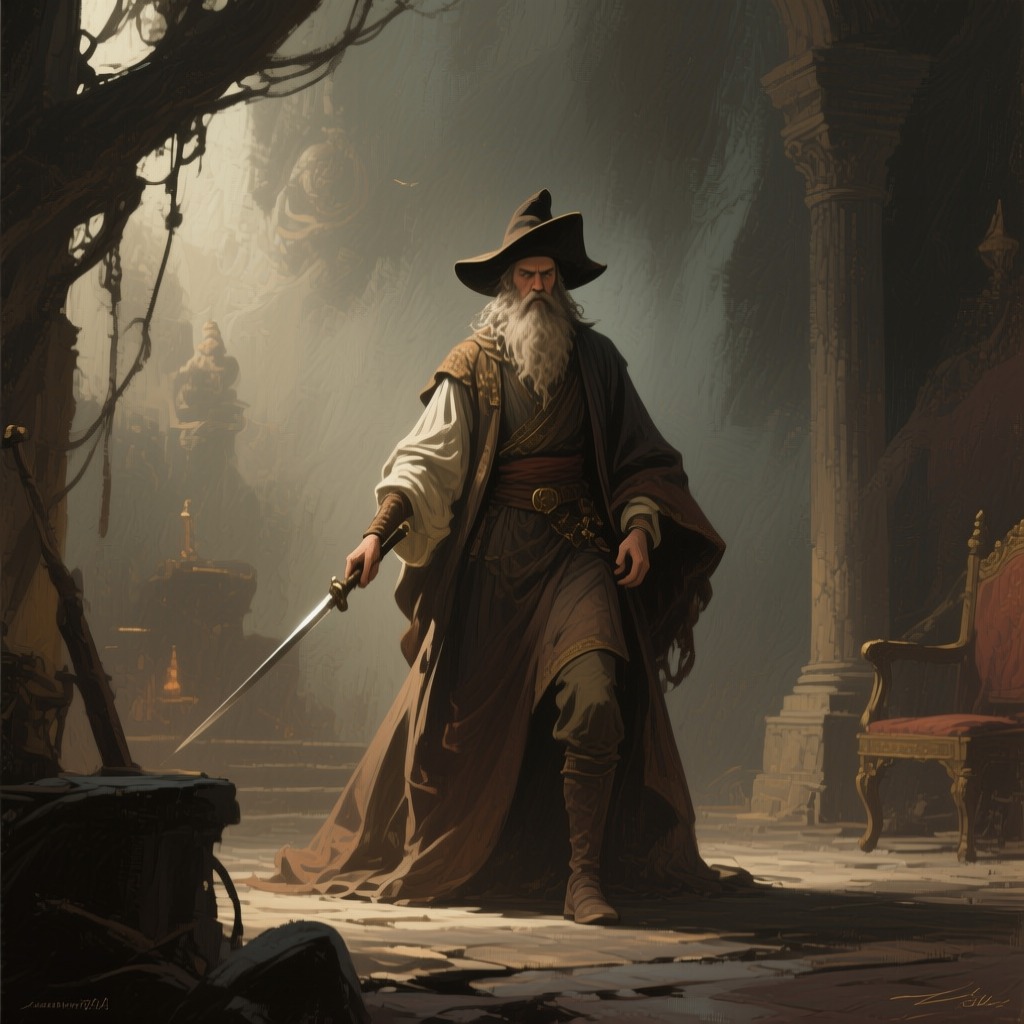
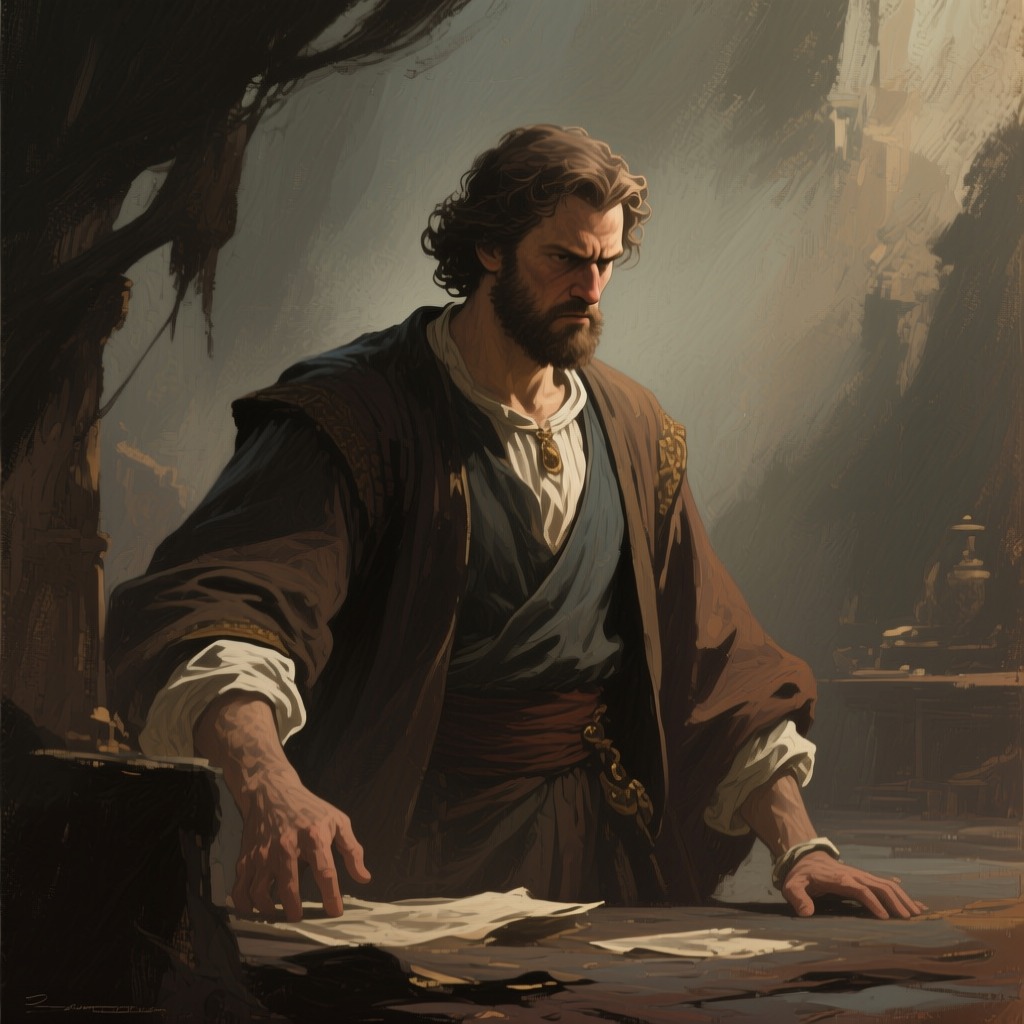
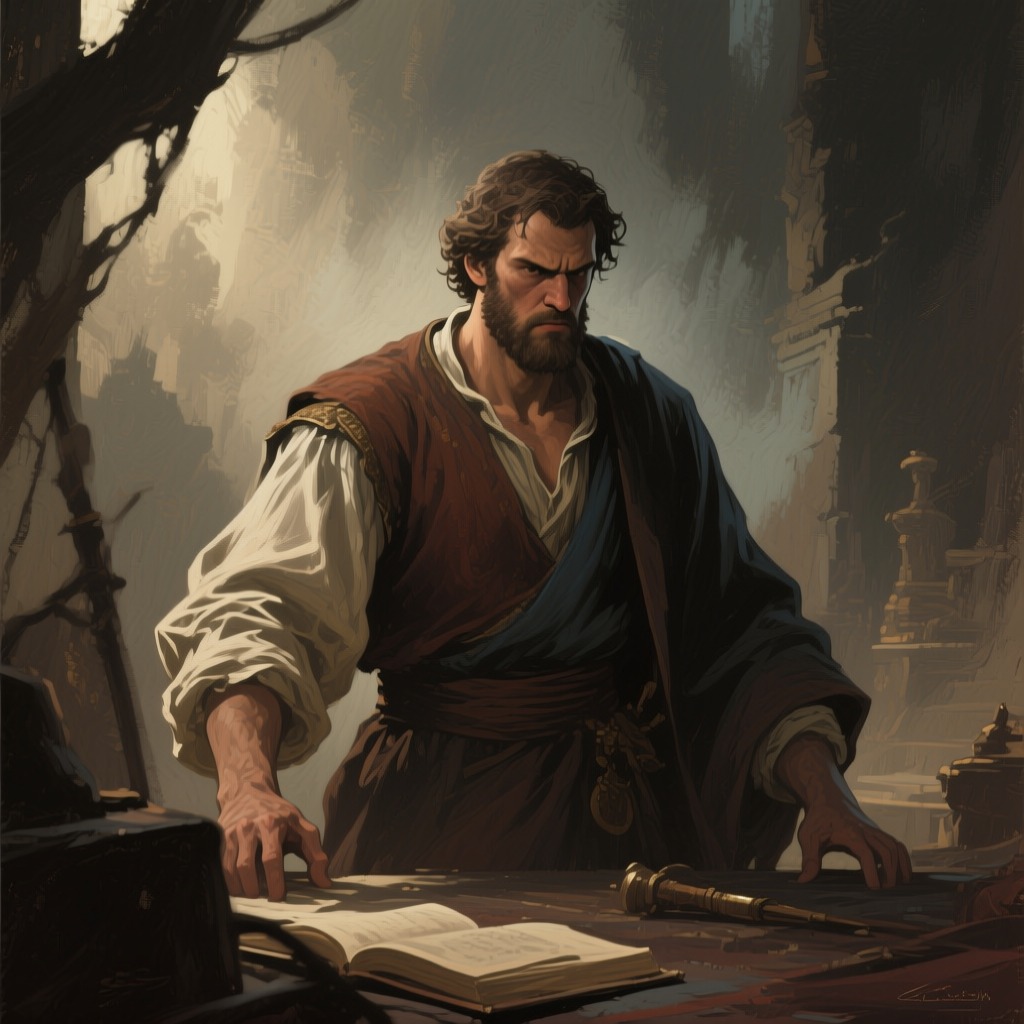
Fiyero is a full-blooded Arjiki from the Vinkus, a region considered uncivilized by the rest of Oz. He arrives at Shiz University as a student, immediately marked by his appearance: he wears a white cotton shirt and suede leggings, and his dark skin is tattooed with a pattern of blue diamonds. This distinctive marking, which continues down his chest, is a tribal identifier. He is a prince without a purse or a throne, a pauper noble, and he stays at Ozma Towers. He was married at the age of seven to a girl from a neighboring tribe, Sarima, as part of a political alliance. He has only seen his bride once, by accident, when they were both about nine, and he will not take up with her until they are twenty. He is now eighteen when he first appears in the narrative.
Life and Plot Trajectory
Fiyero's first appearance at Shiz is dramatic and nearly fatal. He arrives late to a life sciences lecture by Doctor Nikidik, opening the wrong door and locking himself inside. When the Doctor demonstrates an "Extract of Biological Intention," the resulting magical mist animates a set of antlers, which attack Fiyero, pinning him against the door and attempting to stab him in the face. He is saved by two students, Crope and Tibbett, who wrestle the antlers to the ground. This event marks him as a figure of curiosity and sympathy among the student body. He later becomes part of a close-knit circle of friends that includes Boq, Avaric, Crope, Tibbett, Glinda, and Elphaba. He is known for his shy, formal manner and his Vinkus hunting chants. After graduating, he returns to his tribal duties, marrying Sarima and having three children: Irji, Manek, and Nor. He conducts business in the Emerald City, where he re-encounters Elphaba years later in the Chapel of Saint Glinda. She is in hiding, working as an underground agitator. He stalks her to her hideout in a disreputable warehouse district, and they begin a passionate love affair. He calls her "Fae," her code name, and she calls him "Yero, my hero." He is torn between his love for Elphaba and his duties to his wife and tribe. He is present during Elphaba's failed assassination attempt on Madame Morrible on Lurlinemas Eve, where she is thwarted by a crowd of schoolgirls. After the attempt, he returns to her apartment, where he is ambushed and beaten by the Gale Force. His body is never found, leading to years of uncertainty for Elphaba and Sarima.
Key Actions and Objectives
Fiyero's primary objective is to navigate the conflicting demands of his tribal identity, his marriage, and his love for Elphaba. He is a skilled stalker, having practiced hunting animals in the Thousand Year Grasslands, a skill he uses to follow Elphaba through the city. He is also a devoted father, sending gifts and letters to his children and wife, Sarima. He is a prince who must maintain political ties with the Emerald City for the sake of his tribe, but he is also a man of conscience, deeply affected by witnessing a Gale Force soldier beat a Bear cub. He wants to tell Elphaba about what he saw but holds back, sensing that becoming a convert to her cause might make her drift away. He is ultimately a passive figure in the political struggle, more concerned with preserving his personal relationships than with overthrowing the Wizard. His final act is to promise Elphaba he will be careful, a promise he cannot keep.
Relationships and Conflict
Fiyero's central conflict is between his love for Elphaba and his duty to his wife, Sarima. He describes Sarima as a shrewd wife, and their marriage as a campaign. He has not been unfaithful until his affair with Elphaba, which he sees as a vow-shattering interlude. He loves Elphaba with an intensity he has never experienced, but he is also haunted by the knowledge that his love is a "wicked distraction" from her dangerous work. His relationship with Elphaba is marked by intense passion and intellectual sparring. They argue about the nature of evil, the morality of her underground activities, and the concept of a soul. He is also a friend to Boq, Avaric, Crope, and Tibbett, and he maintains a cordial relationship with Glinda, whom he meets by chance in a shop. His relationship with his children is distant; they are shy of him, and he feels he is a stranger to them. His murder is a direct consequence of his connection to Elphaba, as Madame Morrible had him watched and reported his affair to the Wizard.
Change and Ending
Fiyero undergoes a significant transformation from a detached, tribal prince to a man deeply in love and committed to a cause he does not fully understand. He begins as a figure of exotic curiosity at Shiz, but his encounter with Elphaba awakens in him a capacity for passion and a sense of moral urgency. He is changed by witnessing the brutality of the Gale Force, and he is humbled by the depth of his love for Elphaba. His ending is ambiguous and tragic. He is attacked by the Gale Force in Elphaba's apartment and his body is never recovered. Sarima believes he was murdered by a jealous husband, while her sisters suspect he was killed for political reasons. Elphaba, for years, clings to the hope that he is still alive, even imagining that the Scarecrow might be Fiyero in disguise. His death is the defining trauma of Elphaba's life, driving her into a mauntery and later into a life of isolated bitterness. The mystery of his fate—whether he was killed, tortured, or somehow escaped—remains unresolved, a wound that never heals.
Narrative Role and Evaluation
Fiyero serves as the catalyst for Elphaba's deepest emotional and moral crisis. His love offers her a brief respite from her life of political struggle and isolation, but his murder confirms her belief that the world is fundamentally cruel and that any attempt at happiness will be punished. He is a round character, capable of surprising the reader with his depth of feeling and his capacity for moral doubt. He is not a hero or a villain, but a man caught between worlds—the traditional Vinkus and the modern Oz, duty and desire, action and inaction. His story is a tragedy of good intentions and bad timing, a reminder that even the most passionate love can be destroyed by the machinations of power. His absence haunts the second half of the novel, a ghost that Elphaba can never lay to rest.