Frex
Frex, the unionist minister known as Frexspar the Godly, is a man of fierce religious conviction whose personal failures and unresolved guilt cast a long shadow over his family. As the husband of Melena and father of Elphaba, Nessarose, and Shell, he is a figure of intense but misdirected moral energy, whose inability to reconcile his public vocation with his private life drives the central tragedies of the novel. His story is one of a man who, despite his devotion, consistently fails those who need him most.
Identity and Background
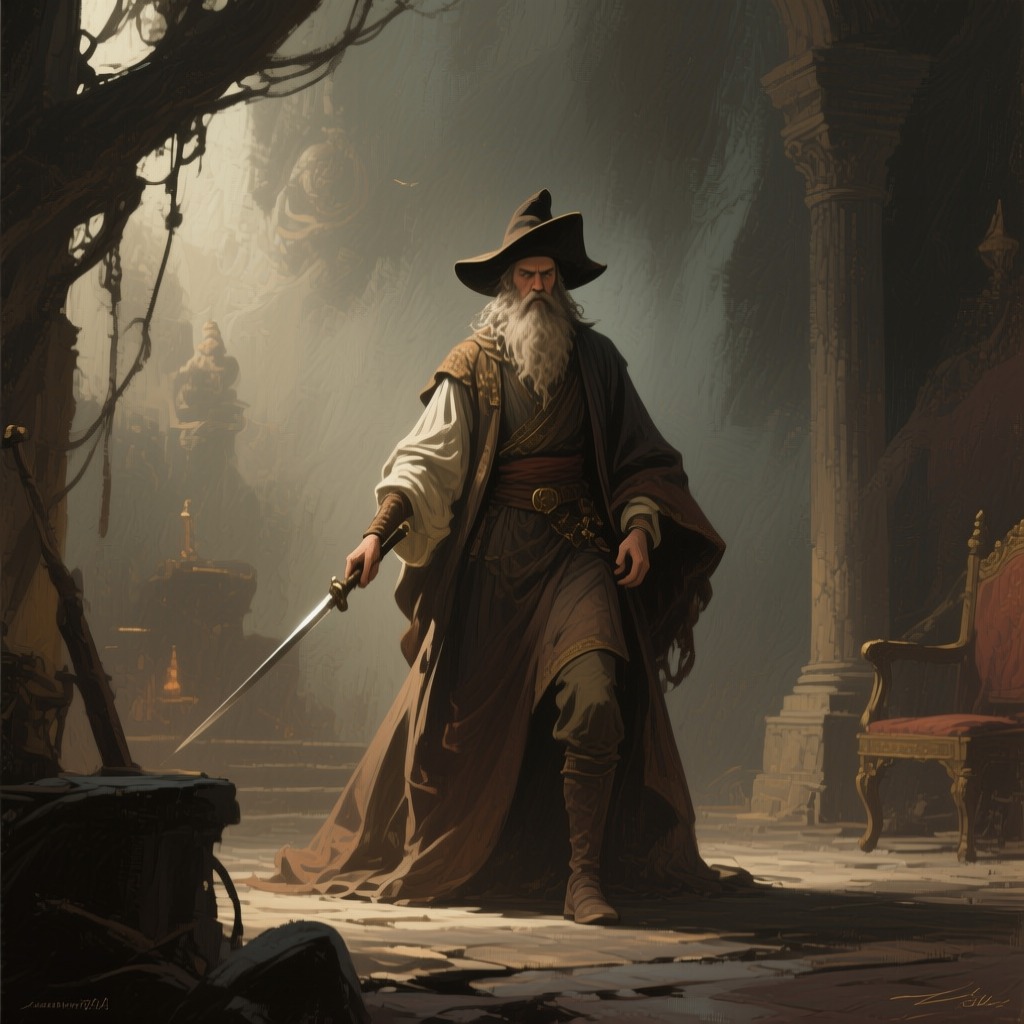
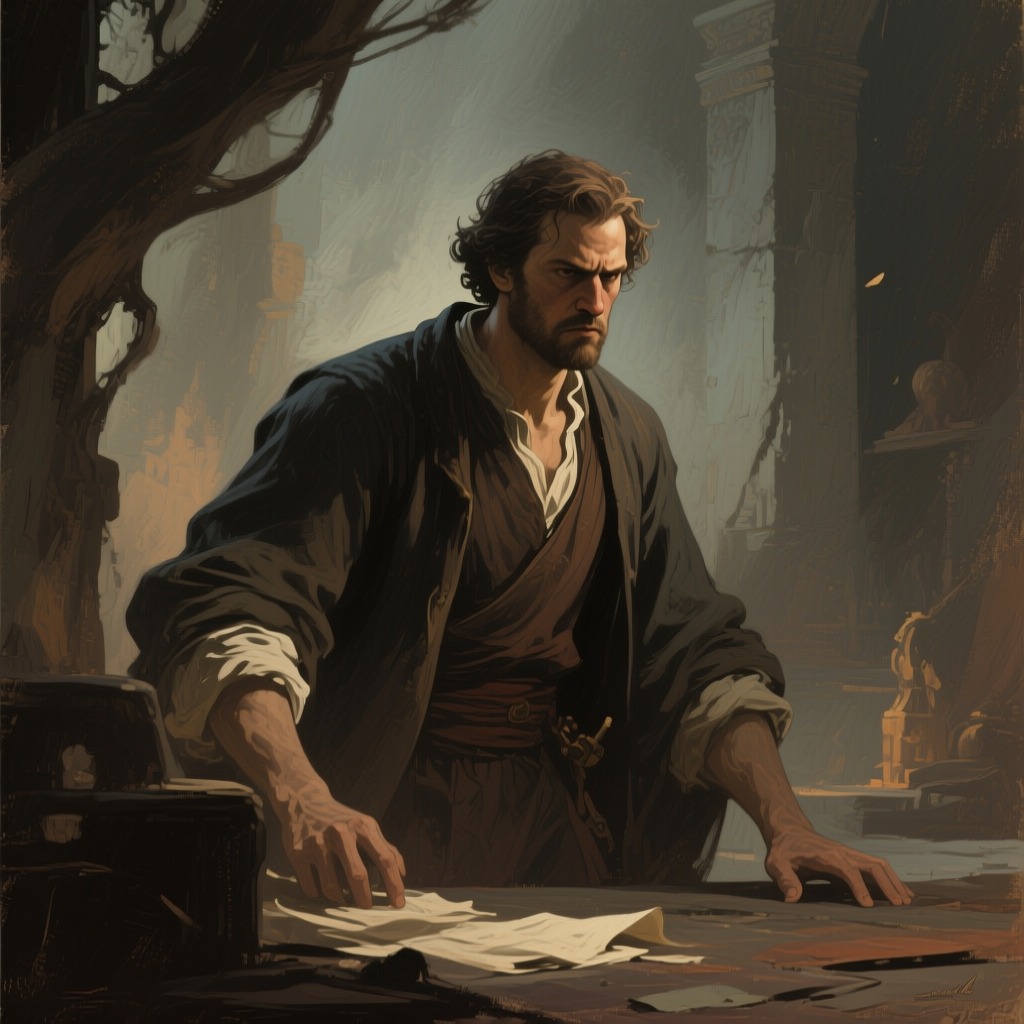
Frex is a unionist minister of considerable lineage, descended from six generations of ministers before him, a fact he regards with solemn pride. He is a man who takes his vocation with theatrical seriousness: he combs his beard, oils his scalp, applies coal dust to darken his eyebrows and red wax to his cheeks, believing that "a handsome priest attracted more penitents than a homely one" . He lives with his wife Melena in a remote cottage near Rush Margins in Wend Hardings, a hardscrabble district of Munchkinland. Their marriage is a study in contrasts: Melena, a former society beauty from the wealthy Thropp family, chafes against the isolation and poverty of their life, while Frex sees their circumstances as a proving ground for his ministry. He is capable of genuine tenderness—he admires the line of her ear, which reminds him of "an elegant silver ladle" —but his devotion to his calling often leaves her feeling abandoned. On the morning of Elphaba's birth, he prepares to leave for a confrontation with the Clock of the Time Dragon in Rush Margins, dismissing Melena's labor as inconvenient timing. "There will be other children," he tells her , a remark that crystallizes his priorities: the eternal struggle against evil takes precedence over the immediate needs of his wife and unborn child.
Arc Through the Plot: Failure and Retreat
Frex's defining public failure occurs on the day of Elphaba's birth. He goes to Rush Margins to confront the Clock of the Time Dragon, a traveling puppet show that he denounces as an idolatrous tool of the pleasure faith. He climbs onto the clock's stage and harangues the crowd, calling it "a fake oracle, this propaganda tool for wickedness" , but his congregation, seduced by the spectacle, turns against him. He is kneed in the groin, kicked, and fouled, and a sympathetic widow hides him in a root cellar to save him from the mob . This humiliation shatters his confidence. He later confesses to Nanny that he believes his own words—"the devil is coming"—may have "unlocked room for the devil" and caused Elphaba's green skin (E00055–E00056). This guilt drives him to attempt an exorcism on the infant Elphaba, which fails utterly . He then retreats into a hermit's life, spending a winter in an abandoned shepherd's hut on Griffon's Head, fasting and praying . When he returns, he is gentler with Elphaba, carving her a wooden sparrow and calling her by the private nickname "Fabala" , but his emotional distance from Melena has only deepened.
Relationships and Conflict
Frex's relationships are marked by a pattern of idealization and neglect. He adores Melena but leaves her alone for weeks at a time to preach, and she turns to other men—including the Quadling glassblower Turtle Heart—for companionship. Frex's response to Turtle Heart's presence is surprisingly unjealous; he is drawn to the Quadling's intensity and religious emptiness, and the two men sit together in deep conversation . Frex even acknowledges that he and Melena "shared" Turtle Heart , a confession that reveals a hidden capacity for unconventional love. But his most damaging relationship is with his daughters. He openly favors Nessarose, calling her "my beautiful pet" and dropping pieces of fruit into her mouth , while Elphaba is treated as a punishment or a problem to be solved. He sends Nessarose a pair of dazzling silver shoes, decorated with glass beads using skills he learned from Turtle Heart, while sending Elphaba nothing (E00347–E00348). Elphaba later reflects bitterly that her father "made them for her" and that she herself "didn't need them" because she had "her voice, her intensity, even her cruelty" as armor (E00734–E00735). This favoritism is rooted in Frex's belief that Nessarose, born without arms, is a holy child who "soothed" Elphaba's wildness , while Elphaba is a curse for his sins.
Change and Ending
In his old age, Frex softens somewhat. When Elphaba visits Colwen Grounds after Nessarose's death, he is nearly blind and frail, but he greets her with the old nickname "Fabala" and weeps . He tells her that he believes she would make a smarter Eminence than Nessarose, acknowledging that Nessarose is "too devout" to govern effectively . But he also reveals the depth of his lifelong guilt: he confesses that he believes Elphaba was born green as a punishment for his own failure to protect his flock from the Clock of the Time Dragon . He dies shortly after, dreaming of Melena and Turtle Heart , still unable to fully reconcile with the daughter he spent a lifetime failing.
Thematic Significance
Frex embodies the novel's critique of religious certainty divorced from compassion. His unionist faith, which he wields as a weapon against idolatry and pleasure faith, becomes itself a form of idolatry—an obsession with purity and correctness that blinds him to the needs of his family. He is a man who preaches forgiveness but cannot forgive himself, who seeks to exorcise evil from his daughter but cannot see the evil in his own neglect. His story illustrates how the most sincere moral conviction, when untempered by empathy, can become a source of profound harm. He is, in the end, a tragic figure: a man who loved his family but never learned how to show it, who spent his life fighting the devil only to find that the devil was, in part, his own making.