Rush Margins
Rush Margins is a ramshackle fishing hamlet on the shores of Illswater in the district of Wend Hardings, Munchkinland. It is the birthplace of Elphaba and the site of the catastrophic arrival of the Clock of the Time Dragon, an event that shatters the family's standing and drives Frex into a crisis of faith. The village embodies the desperate poverty and spiritual erosion of the rural outback, where drought, superstition, and the erosion of traditional unionist faith make the population vulnerable to spectacle and demagoguery.
Identity and Setting
Rush Margins is a hardscrabble settlement of fishermen and subsistence farmers, their lives made harsher by a prolonged drought that has dried up the fields and left the nets empty. The minister's lodge where Frex and Melena live is a modest cottage overlooking the lake, with a view of the chimneys of the village smoking at breakfast. The hamlet's poverty is stark: Gawnette, the woman who minds the local children, lives in a dark stone cottage with a roof of moldering thatch, her vegetable plot barren. The villagers are described as sullen, guilty-looking, and easily swayed by gossip. Frex has served them for years—pulling their teeth, burying their babies, blessing their kitchen pots—but their loyalty is thin, and they are quick to jeer at him when the Clock of the Time Dragon arrives.
The Arrival of the Clock of the Time Dragon
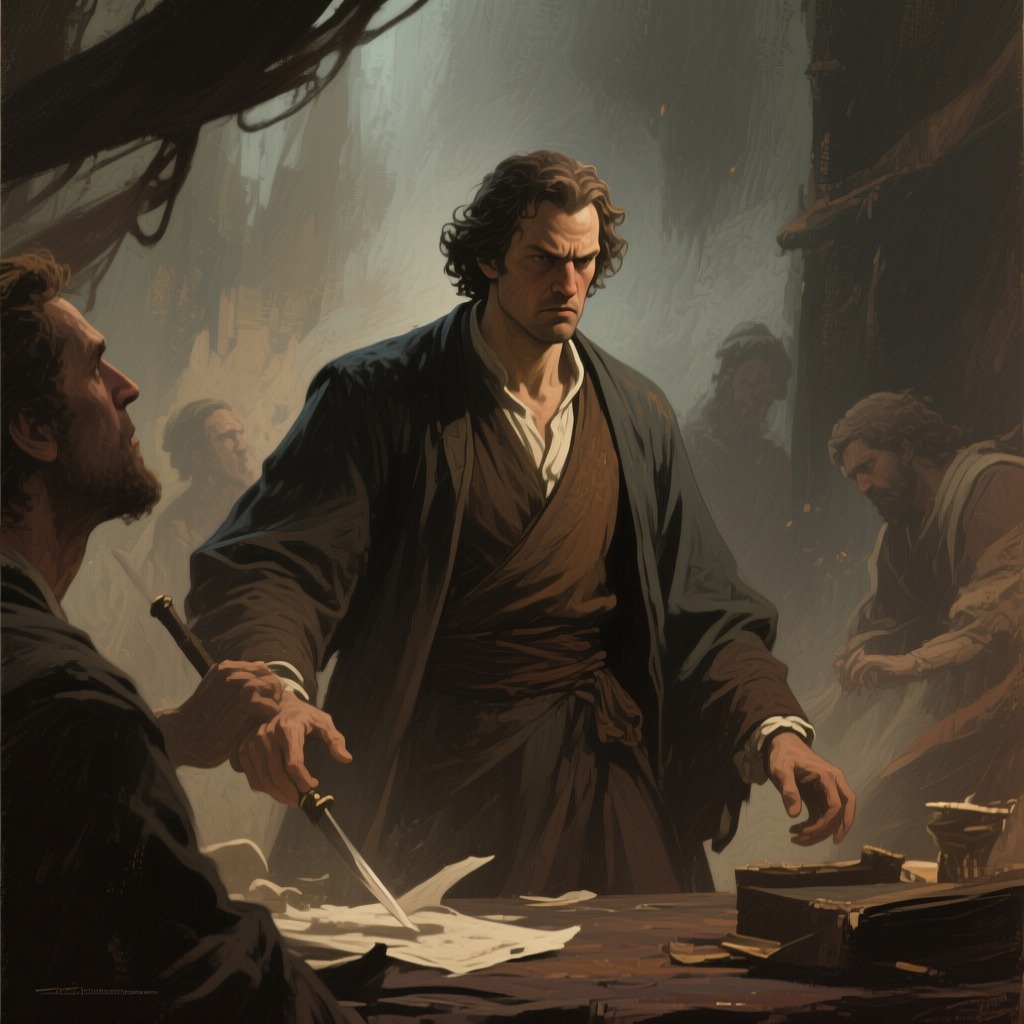
The Clock of the Time Dragon, a towering wagon-mounted theatre with a clockwork dragon on its roof, is drawn into Rush Margins by four horses and escorted by a dwarf and his cohort of young thugs. Frex, having read his cousin's letters warning of the clock's depraved puppet shows, attempts to harangue the villagers into resisting temptation. He leaps onto the clock's fold-down stage and argues that the clock's hands are painted at one minute before midnight, measuring not earthly time but the time of the soul—redemption and condemnation time. The villagers, however, are too eager for entertainment to listen. The clock unfolds a story about a publicly pious minister who preaches simplicity while keeping a hidden coffer of gold and emeralds, and the crowd, incited by the spectacle, turns on Frex. He is kneed in the groin, kicked between the buttocks, and fouled, then led away by a sympathetic widow who hides him in a root cellar to protect him from the mob that now seeks to kill him.
Elphaba's Birth and the Aftermath
While Frex is being humiliated and hidden, Melena goes into labor in the minister's lodge. A pair of midwives—a fishwife and a palsied crone—attend her, along with a maiden who brings news that the men are drunk and on the prowl, riled up by the clock and looking for Frex to kill him. The women flee with Melena in a hay cart, hiding in the graveyard for unconsecrated corpses, where the clock has been left for safekeeping. There, in the back of the clock-wagon, Elphaba is born. The midwives, rubbing the caul and blood off the skin, discover the infant is a scandalous shade of pale emerald. The child bites off the fishwife's finger at the second knuckle, and the women, afraid to kill her, leave her at her mother's breast. Melena, for days, cannot bear to look at the thing. The birth is thus inextricably linked to the clock's arrival: the violence of the mob, the flight, and the emergence of a green child all stem from that single night.
Frex's Humiliation and the Family's Decline
Frex's public humiliation in Rush Margins is a turning point. He had sacrificed for the villagers—abasing himself, wandering with an unkempt beard and a begging bowl from hamlet to hamlet, leaving Melena alone for weeks—and they owed him loyalty. Instead, they turned on him at the first temptation. The experience shatters his confidence; he retreats into a hermit's life in an abandoned shepherd's hut on Griffon's Head, praying and fasting. The villagers connect the Time Dragon's slanderous story of a corrupt minister with the arrival of a deformed child, drawing their own conclusions and avoiding his chapel services. The family becomes isolated, and Frex's failure in Rush Margins haunts him, leading him to blame himself for Elphaba's green skin as a punishment for his inability to protect his flock.
Thematic Significance
Rush Margins functions as a microcosm of the broader social and political decay in Oz. Its poverty and drought make it fertile ground for the pleasure faith and the Clock of the Time Dragon, which exploit the villagers' desperation and credulity. The hamlet's name itself—Rush Margins—suggests a place on the edge, both geographically and morally, where the margins of society are easily rushed into chaos. The events there establish the central conflict between Frex's rigid unionism and the seductive power of spectacle and magic, a conflict that will define Elphaba's own struggle with authority, belief, and the nature of evil. The village is also the site of Elphaba's first word—"Horrors"—spoken as she peers into Turtle Heart's looking glass, seeing the future arrival of the Wizard in a crimson balloon, a prophecy that ties her birth to the political upheaval that will consume Oz.