Sohrabji
ChowringheeSohrabji is a veteran bar worker who rises from an underage assistant to the owner of a bar, then returns to bar work after selling it and losing the proceeds. His arc turns the bar’s familiar trade in drink into a question of responsibility: he knows the harm customers bring home, but poverty and the cost of his daughter’s education leave him with little freedom to abandon the work.
Identity and Early Work
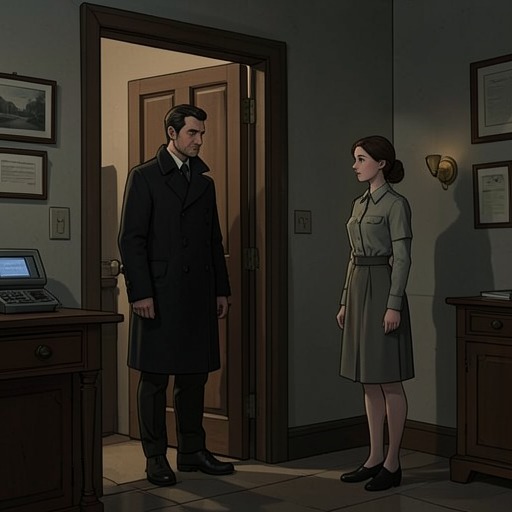
At the Hotel Shahjahan, Sohrabji is introduced as the new bar manager: an elderly gentleman, slightly stooped by age, with skin likened to ripe apples. He greets the narrator warmly in Bengali and treats the narrator’s presence behind the bar as reassuring. The welcome carries the ease of a man who has spent much of his life in the trade, even though his history has not followed a straight path upward.
Hobbs recalls knowing him before the First World War, when he worked at Hafezji’s bar. His name then was Madan, or something close to it; Hobbs is not certain. Sohrabji later took a name derived from an Indian word for drink, an identity that neatly binds him to the occupation that would sustain him and trouble him in equal measure.
He was about fourteen when someone reported him for working in a bar, where boys of his age were not allowed to work. Afraid of losing his position, he went to Hobbs in tears. Hobbs felt sorry for him and managed to have the complaint withdrawn. The episode establishes how early Sohrabji’s livelihood depended not only on his own labor but also on another person’s intervention. His adult career begins in a workplace that the rules said he was too young to enter.
From Employee to Bar Owner
Sohrabji remained at Hafezji’s bar for years, but Hobbs eventually lost sight of him. Much later, the two met again on Dharmatala Street. Sohrabji approached Hobbs, took his hands, and told him he had left his old job. He had opened a bar of his own. The change marks a genuine advance: the boy once at risk of dismissal had become an independent proprietor.
That success does not settle his life. Sohrabji later works at the Hotel Shahjahan, where his greeting to the narrator suggests a man glad to have found a place in the hotel’s bar. He has no formal education, a lack he acknowledges plainly, but he values people who study and think. His curiosity about why people drink is not abstract: he asks because he has spent his life serving them, and because he has begun to wonder what his own part in that exchange means.
The Bar and the Question of Blame
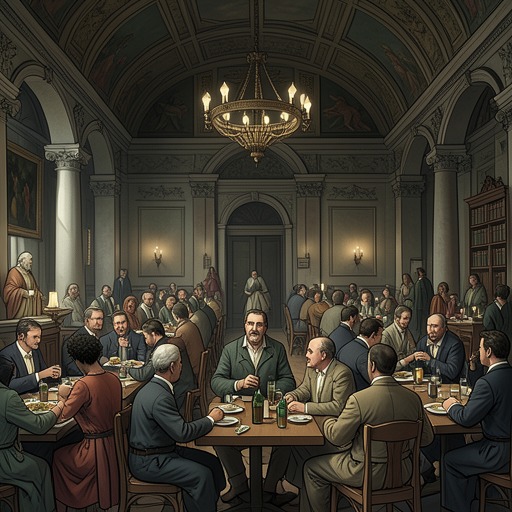
Sohrabji asks the narrator why people drink. The narrator offers Sata Bose’s view that people seek courage, strength, or happiness in alcohol, but find ruin instead. Sohrabji then turns the question toward the seller: no one, he observes, seems to have explained what responsibility belongs to those who sell the drink. He tells the narrator his story in the hope that it will help make him understood.
His account is marked by argument with himself. He tries to insist that customers choose how much to drink and can leave after one glass; if he refuses to serve them, they can go elsewhere. He also reasons that their wives and daughters have opportunities to stop them, while he is only selling what customers request. But these defenses do not quiet him. His own daughter seems to keep the question alive, and the imagined curses of the customers’ mothers, sisters, wives, and daughters begin to pursue him in dreams. He fears that their grief and anger may reach not just him but his family, including his daughter.
In desperation, he sells the bar. That decision is a moral break, but it brings no security. He writes to his daughter to defend himself, asking how he can be blamed when customers choose to come and destroy their families. He plans to put the sale proceeds in a bank and use them to support his small family. Two days after he deposits the cheque, the bank fails. The money he hoped would free him from the bar is gone; his daughter’s education still has to be paid for, and an uneducated man has few prospects for other work. He is forced back behind a bar.
Narrative Significance
Sohrabji’s history is shaped by recurring dependence: as a boy he needs Hobbs to save his job; as an owner he seeks a livelihood independent of an employer; after selling his business, he depends on the proceeds that vanish with the bank’s collapse. Each apparent escape returns him to the same trade. His name itself points toward that repetition, joining the person to the drink he serves.
The conflict is not resolved by labeling him either innocent or culpable. He sees the family damage associated with customers’ drinking and cannot fully accept the argument that their choices make the seller blameless. At the same time, the failed bank and his obligation to fund his daughter’s schooling make leaving the bar economically untenable. His story therefore gives a personal, material shape to the question he raises: responsibility may trouble a person deeply without giving that person the means to act freely on it.