Markapala
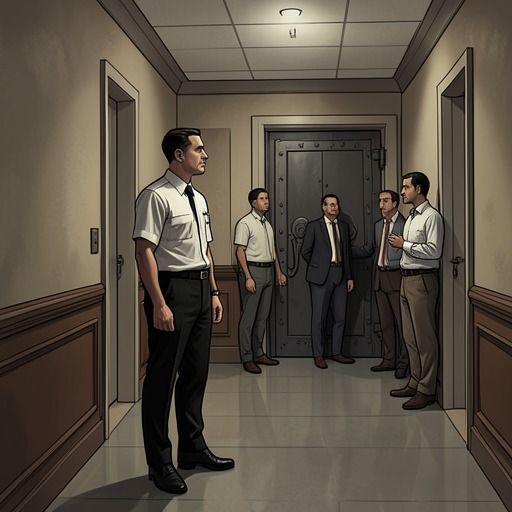
ChowringheeMarkapala is the manager of the Hotel Shahjahan, a figure whose authority is visible in the hotel’s hierarchy but whose personal life repeatedly resists order. The narrator first encounters him in a bedroom, dressed only in a sleeveless vest and small red undergarments; a gold chain, black medallion, and large tattoos complicate the image of the powerful manager. Later, in his modest office, he appears more controlled: a cigar in hand, grave-faced and somewhat portly, with a stage presence the narrator associates with Churchill. Between these scenes, the novel introduces a man whose outward command coexists with dependence, grief, and an unresolved past.
Identity and Introduction
Markapala manages the Hotel Shahjahan and receives the narrator after Byron asks him to give the young man a job, describing him as someone who would be useful to the hotel. Markapala responds with a helpless gesture; the exchange presents hiring not as a simple act of authority but as a decision shaped by another man’s recommendation. The narrator’s first impression of him is correspondingly unsettled. Seeing his manager in such scant clothing, he finds that the familiar image of a powerful hotel official has given way to an unexpectedly exposed private figure.
Markapala is quick to react to the unexpected visitor. He jumps from the bed, apologizes, and hurries to put on shorts and sandals. His hurried dressing does not erase the objects that make his appearance memorable: the thick chain around his neck, the dark medallion bearing an inscription, and the large tattoo on his left arm, with another visible on his chest. The scene establishes him through physical details rather than through a formal introduction. His position is powerful; his first appearance is distinctly informal.
Career and the Hotel
Byron’s account places Markapala’s appointment in a longer search for a secure place in the world. After discovering that a substantial part of his life’s balance remained frozen in an eastern city, he began seeking work. He obtained a well-paid position at a hotel in Rangoon, where the scarcity of suitable candidates helped him secure the post, but he did not want to leave the Italian Riviera merely to settle there. He continued looking and eventually found the manager’s position at the Hotel Shahjahan vacant. Its owners welcomed him on the strength of his qualifications and recommendations.
The position makes Markapala an object of curiosity as well as a manager. Byron tells the narrator that Markapala earns two thousand rupees for his work, a sum that gives visible measure to the status attached to the post. Yet the figure does not settle the question of whether Markapala is satisfied. Byron presents him as a man whose life contains a serious discrepancy: material advancement in Calcutta has not released him from the losses and unresolved claims of his earlier life. The hotel is therefore both his professional destination and the setting in which that unfinished past continues to press upon him.
The office scene shows how much of the manager’s daily work depends on other people. In the small, modestly furnished room, files occupy one side of the desk and a typewriter stands on the other. Preparing to dictate letters, Markapala speaks sadly of Rosie, saying that she had been an excellent employee and that he would never find another like her. She had typed his letters whenever he asked, even at midnight, and her absence leaves him with urgent correspondence to answer. His recollection identifies a practical loss—the person who kept office work moving—while also revealing genuine appreciation for her labor. His authority does not make him self-sufficient: the smooth operation of his office had relied on Rosie’s availability and skill.
Marriage and Unresolved History
Markapala’s professional relocation does not resolve the question of Susan Munro or their marriage. After arriving in Calcutta, he asks the lawyer’s office for news of her, but the staff refuse to provide any. The lawyer who might have known the case has sold his share to his partner and died. Markapala then makes inquiries at court and learns that no divorce petition has been filed in his name. The absence of a case does not answer what became of Susan; instead, it leaves him with neither a completed divorce nor reliable information about his wife.
The broader plot connects this uncertainty to the wartime breakdown of Markapala and Susan’s relationship. The Japanese invasion of Burma precedes their estrangement, and the two plan to pursue a divorce through a fabricated adultery claim. Markapala is later arrested and detained during the war because of his Italian background. These events place his private predicament against the disruptions of war: a marriage is managed through a proposed legal fiction even as his own freedom is curtailed by his national origin. The account of the missing divorce filing makes the legal status of that relationship remain unsettled in the narrative rather than presenting it as a cleanly concluded episode.
Change and Narrative Role
Markapala’s story reaches the narrator indirectly. In a smoke-filled room, Byron begins telling it, framing the manager’s life as a history worth hearing rather than as a straightforward record of hotel duties. The comparison Byron makes to the journey of a Venetian aristocratic boy answering the call of the unknown gives Markapala’s biography an adventurous shape, while the details that follow undercut any simple romance of worldly success: a frozen account, repeated job-seeking, the disappearance of Susan, and a court record containing no divorce petition. The contrast between the grand frame and the stubbornly incomplete facts makes his past feel both expansive and unresolved.
The later course of the story continues to mark him through departures and returns. Markapala disappears and returns, and ultimately leaves the Hotel Shahjahan with Lisa for Africa. The novel’s account also establishes the legal bar on his marrying Lisa in India. These outcomes extend the pattern already present in the early history: movement from one place to another offers a change of circumstance, but does not guarantee an uncomplicated resolution. His departure with Lisa gives the narrative a decisive outward turn, while the legal restriction preserves a tension between personal attachment and the conditions imposed by the world around him.
As a character, Markapala connects the hotel’s visible order to histories that its routines cannot neatly contain. He can appoint staff, dictate letters, and occupy the manager’s office, yet his own story is relayed through Byron and shaped by missing answers about Susan and the divorce. His shifts between exposed informality and managerial composure, and between career advancement and personal uncertainty, make him more than a symbol of hotel authority. He is one of the figures through whom the Hotel Shahjahan becomes a meeting place for lives still in motion.