Jane Grey
ChowringheeJane Grey’s story traces the cost of trying to carry a life formed in the Hotel Shahjahan into a society that will not accept a married barmaid. Once admired for her work, she becomes an isolated bride, a pregnant wife struggling in poverty, and, after a premature birth, a woman whose death passes almost unnoticed beside the hotel’s continuing trade.
Identity and Introduction
Jane first appears when Silverton summons her after Marian Booth has asked for another chance and been refused. Exhausted by travel, she rubs her eyes and stands before the group looking worn out. The narrator sees the mark of tragedy on her face before the events that will define her life have fully unfolded. The introduction sets the contrast that follows: Jane is a capable worker at the Hotel Shahjahan, but the forces around her leave her little protection when her private life conflicts with her employment.
Work, Marriage, and Social Exclusion
Jane challenges the assumption that a married woman cannot work as a barmaid. When Silverton raises rumors about her, he praises her work, calls her the envy of Calcutta’s barmaids, and offers a future pay increase. Rather than denying the rumors, Jane asks whether he objects to employing married women and presses him to explain why marriage should make her unfit for the job. His astonishment makes clear that professional merit does not outweigh the social rule he takes for granted.
After her contract at the Hotel Shahjahan is rescinded, Jane marries Robert Adam in a church in Dharmatala. The wedding is sparsely attended. Jane has no friends there apart from Miss Dickson, who is locked in the top floor of the Hotel Shahjahan, and the scandal surrounding Robert’s marriage means that none of the Clive Street boxwallahs come. The narrator, still unfamiliar with the customs surrounding such events, attends and nearly has to force Silverton to accompany him. The small congregation makes the marriage a public threshold crossed without the support a couple might expect: Jane’s work has ended, and the social world around the hotel keeps its distance.
Poverty and Domestic Life
Robert earns commissions selling fabric for a company that makes umbrellas. His work takes him to Barabazar with samples and keeps him on his feet through the day, but sales are too uncertain to support even a servant or cook. At home, Jane prepares his frugal lunch and manages all the domestic work herself. As her due date approaches, they live in a dilapidated two-room flat on Williams Lane, where peeling plaster exposes the bricks beneath.
The narrator’s visits make the reversal tangible. Jane had spent nights in a palace-like hotel and walked on soft carpets; hotel waiters once escorted her to the dining room, where she served drinks with a smile likened to pearls accompanying whisky, brandy, gin, rum, and vermouth. Now, weakened by pregnancy, she struggles to keep the small flat in order while cooking for herself and Robert. The contrast is not simply between luxury and poverty: the hotel’s polished service depended on Jane’s labor, yet that workplace offers no shelter once her marriage makes her unacceptable there. Jane tells the narrator that she can never forgive the Hotel Shahjahan, even though it was where she found her husband. Her judgment holds both sides of that history together: the hotel brought the couple together, and its world also belongs to the loss that followed.
Death and Narrative Significance
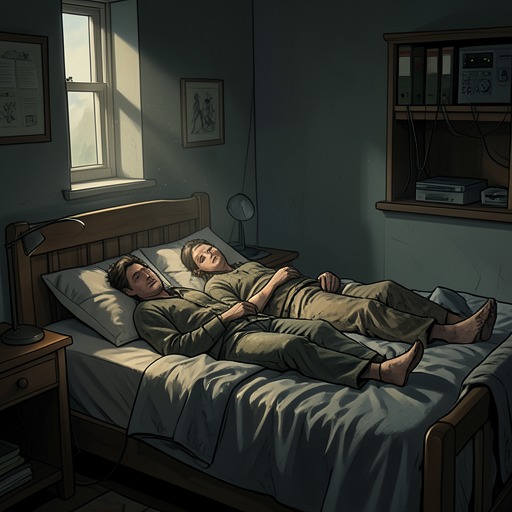
When Jane asks how Robert is, those around her try to conceal the truth, but their tears expose what words do not. She faints and is carried to the priest’s house. That night she gives birth prematurely. The priests kneel and pray for her as she lies dying, but she dies before the night is over, leaving the boys of Williams Lane in tears.
The account places Jane’s death beside the Hotel Shahjahan’s uninterrupted routine. Even as her neighbors mourn, the bar has not closed and customers are still calling for whisky with soda. The juxtaposition turns the hotel’s continuing business into a measure of how little the surrounding system pauses for an individual life. Jane’s arc moves from a valued employee to an excluded wife and an impoverished mother; it ends not with reconciliation or public recognition, but with grief in Williams Lane and service continuing behind the hotel bar.