Robert Adam
ChowringheeRobert Adam, known as Robbie or Robbie Adam, is an English employee in Calcutta whose courtship and marriage to Jane Grey expose the social penalties attached to a woman’s work in a hotel bar. He first sees Jane at the Hotel Shahjahan and chooses to help her leave it; the marriage that follows, and the poverty and smallpox that overtake the couple, turn his romantic commitment into a test of endurance.
Identity and Introduction
Adam has worked for about a year at one of the principal firms on Clive Street, but employment has not made him at home in Calcutta. He has not become accustomed to the city’s language or customs, and his first response to what happens in the Hotel Shahjahan is the bewilderment of someone who does not understand the pressures shaping the people around him. His limited familiarity with local life is important to his introduction: he sees Jane’s predicament clearly, but initially cannot comprehend how readily customers treat her position behind the bar as an invitation to approach or claim her.
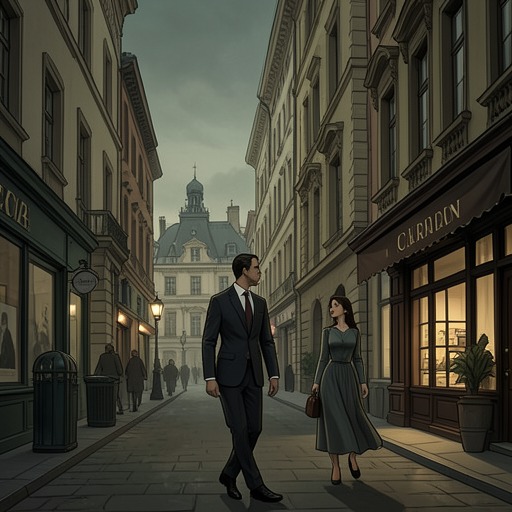
He encounters her while dining at the hotel and watches the distressing treatment of a woman from his own country working in a Calcutta bar. Later, he tells the narrator that customers had tried to touch her, while another man urged her to leave the counter, join his table, and drink with him. The hotel waiter had difficulty keeping the men away; other drinkers added their own calls for Jane to sit beside them. Adam’s account registers not merely his attraction but his recognition that the work exposes her to persistent harassment. He regrets having witnessed the scene only because, as he understands later, what he has seen draws him into a difficult future.
Courtship and Commitment
An invisible pull brings Adam back to the Hotel Shahjahan every day. He and Jane cannot meet during daylight: Silverton locks Jane in her room before going to sleep, while her work schedule begins at night. At that time, the bars remain open until five in the morning, so the rhythms of their lives leave little opportunity for an ordinary courtship. Their repeated proximity belongs instead to the hotel’s night world, where Jane is visible to customers but separated from Adam by both her hours and the conditions imposed on her.
Adam’s response is decisive. Although Hobbs raises objections, Robbie does not abandon the relationship. He tells Hobbs that he and Jane are engaged and that he must get her out of what he calls the Hotel Shahjahan’s hell. Jane shares his desire to leave; she offers no objection and waits eagerly for the date when she can do so. Their meeting may resemble a romantic fairy tale because Adam first sees Jane while she is serving in the bar, but the account stresses that the encounter and its consequences are real. The promise of escape is made against the concrete constraints of Jane’s work and confinement, not outside them.
Marriage and Social Exclusion
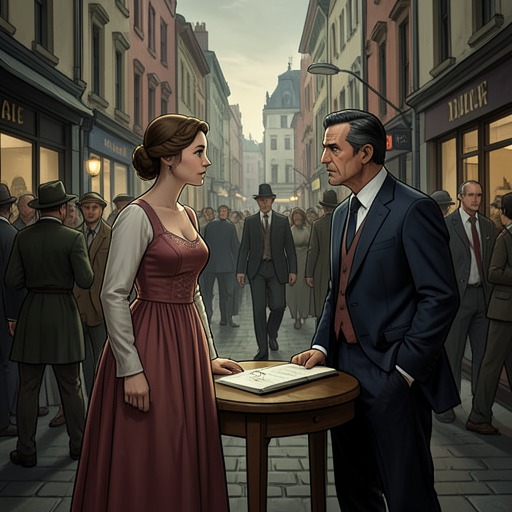
Adam’s decision brings him into conflict with his employer. When his boss objects, Robbie answers that he had been told in London that English people respected one another’s private lives wherever they went. The boss ends the exchange by reminding him that people reap what they sow. Adam thanks him and leaves; after Jane has rescinded her contract at the hotel, they marry at a church on Dharmatala Street. His choice therefore costs him more than disapproval from acquaintances: it directly strains his standing at work, while the wedding demonstrates that he will proceed despite the warning.
The church is sparsely attended. Jane has no friends there apart from Miss Dickson, who remains locked on the top floor of the Hotel Shahjahan. The scandal surrounding Robbie’s marriage keeps the Clive Street boxwallahs away. The narrator, still unfamiliar with the social rules governing such matters, attends and nearly has to force Silverton to come too. The small gathering gives physical form to the ostracism Adam’s marriage has provoked. The narrator is struck by the contradiction: English society, no less than the society that criticizes Indian conservatism, can condemn a person for marrying across a disfavoured social boundary. Adam and Jane’s union is private in intention but made public—and punished—by the refusal of others to attend.
Poverty, Illness, and Aftermath
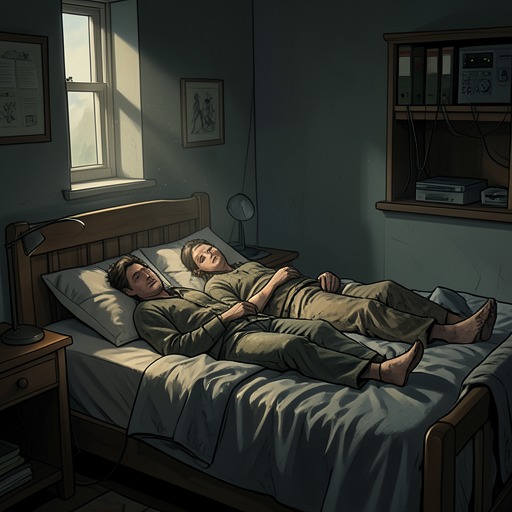
The couple later live in extreme hardship in a poor apartment on Williams Lane. Their optimism amid those conditions moves the narrator, who prays that their hopes will be fulfilled; he does not yet know that worse suffering is coming. A priest brings the news that Robbie has smallpox. The illness raises an immediate practical crisis: the priest says Adam must be sent to an infectious-disease hospital, asks who will care for him, and stresses the question of how the couple can pay. Jane refuses to listen to the proposal and stays beside her husband all day; she has fainted during the night.
Adam begins to recover. His ulcers dry, his fever falls, and the unbearable agony passes. During the illness, he seems to have forgotten everything, but recovery returns his memory along with awareness of the life he had left behind. He remembers that Jane has been abandoned in their miserable Williams Lane apartment and asks the hospital attendant where his wife is. The account ends on this question, not on a settled picture of the couple’s later life. It leaves Adam at the moment when physical recovery gives way to recognition: after the public rejection of their marriage and the immediate danger of smallpox, his first concern is again Jane.