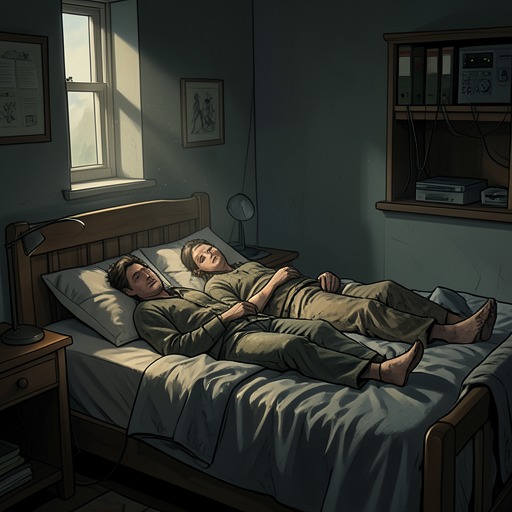
the boys of Williams Lane
ChowringheeThe boys of Williams Lane emerge as a collective force of neighborhood care in the account of Jane Grey and Robert Adam’s smallpox illness. Unable to enter elite places such as the Hotel Shahjahan or Wilson, they nevertheless act with a generosity and resolve that the people around them cannot replace: they pray, shop, keep watch, carry news to Jane, and honor the couple when death defeats their efforts. Their help does not save the patients, but it prevents illness from leaving them entirely alone.
Neighbors who make care practical
The boys’ first response is to Jane’s precarious situation as Robert lies ill. They go together to pray for him at Firinghee Kali, and when Jane offers them money, they refuse it. Instead, they suggest that, if Robert recovers and finds work, she can repay their kindness by making them an English cake of the sort they associate with tea and the habits of wealthier households. The proposal turns assistance into a future shared occasion rather than a debt to be settled immediately.
Their care quickly becomes practical. Finding Jane carrying her shopping, they take the bags from her and insist that they will do the market errands. They choose a strictly vegetarian purchase, explaining that fish might offend the goddess. Their help therefore follows a religious understanding of the illness as well as the immediate needs of the household. They also promise to stay awake beside Robert through the night and to wake Jane if his condition worsens, trying to give her the sleep and respite that fear has taken from her.
Jane warns them that the disease is dangerous and that they have families of their own to protect. The boys answer with confidence in the goddess and in the Indian medicine they carry: herbs tied to their arms with threads. They have brought herbs for Jane too, telling her to bathe and tie them on. The scene sets Jane’s understandable fear of contagion against their conviction that ritual protection will keep them safe. Their devotion is not abstract; it appears in the herbs they wear, the shopping they take over, and the night vigil they offer.
The hospital vigil
When Robert worsens, the boys’ opposition to taking him to hospital gives way to the severity of his condition. He is admitted and lies nearly unconscious. Although visits are barred in that ward, the boys do not abandon him: each day they bring flowers from the temple and give them to the attendant to place beneath his bed. They return to Jane with whatever news they have managed to obtain, while she, no longer able to go out, lies in bed and listens to their reports.
Their persistence is measured in small, repeated acts rather than access or authority. On one visit they go as far as the sign forbidding entry, save coins they can spare, and ask the guard to put the temple flowers under Robert’s bed. When questioned about their connection to him, they explain that he lives in their neighborhood and is as poor as they are; Jane, too, eats what they eat. They have no money to give the family, but they can spend their savings on flowers and use their daily journeys to keep Jane informed. Their solidarity rests on shared circumstances, not kinship.
The boys continue to hope and to reassure Jane, but the narrative does not present their efforts as a cure. They tell her there is nothing to worry about while she weeps, and their visits can bring news without giving her control over the outcome. When they hear that Robert has lost his sight, they challenge the report and insist that only one eye is affected, while the other has been miraculously spared. By then, however, Jane is already dead. Their hopeful correction arrives too late to alter her fate.
Remembrance after defeat
After Jane’s death, the boys ask to carry her coffin and say they would like to do anything they can. The priest tells them they should be present, but that a Christian funeral requires further arrangements. Their offer shows how far their neighborhood attachment reaches: they do not treat the difference in religion as a reason to stand apart from Jane at the moment of burial.
Robert then collapses on hearing that Jane has died. His fever rises; he throws down his milk and refuses food, and the doctors’ efforts fail. In the darkness, the boys go again to make arrangements. They buy a large wreath for Jane and, having borrowed money, a cheaper one for Robert. The funeral procession travels from the hospital to the Lower Circular Road Cemetery, with Robert’s wreath placed on the hearse. The account leaves the boys’ subsequent actions unstated, but records what their limited means could still accomplish: they accompany the dead and mark both lives with flowers.
Narrative significance
The boys’ story is built from a sequence of returns: to the market, to the sickroom, to the hospital, and finally to the funerals. Each return answers a need that formal access and wealth do not meet. Their daily flowers pass through a hospital attendant because the ward is closed to them; their borrowed money buys a modest wreath when they cannot afford more. The repeated labor gives their compassion a material shape without making it triumphant.
Their presence also complicates the social distance surrounding the poor couple. The boys cannot enter the fashionable hotel or the Wilson, yet they recognize Jane and Robert as neighbors whose hardship resembles their own. What they offer is neither medical authority nor a promise of rescue, but food, vigilance, information, prayer, and public mourning. The contrast between their limited resources and sustained care makes them among the story’s most consequential witnesses to the couple’s suffering.