Harry
ChowringheeHarry, who performs as Lambreta at the Mumtaz, is Connie’s brother and onstage partner. First presented as a startling figure in a top hat and evening clothes, he is later revealed as the child who became his family’s provider and the brother who taught Connie to sing and dance. His story complicates the hotel’s appetite for spectacle: the audience sees an entertainer, but Connie and the narrator see a worker whose body is exhausted, whose drinking threatens his stability, and whose fierce attachment to his sister is never far from the surface.
Identity and Background
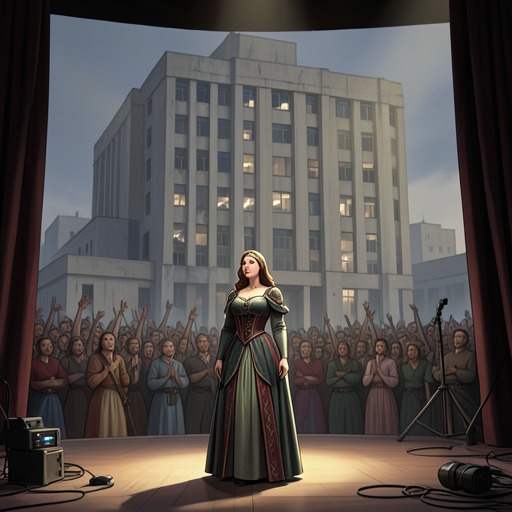
Harry is a dwarf, described as roughly half a metre tall, and performs under the name Lambreta. At a Shahjahan Hotel banquet, the lights go out and a roaming spotlight searches the stage. The audience expects Connie, but the first figure illuminated is a very small man in evening dress, wearing a top hat and carrying a cane. The reveal makes his body the opening surprise of the act: before the crowd can register its disappointment, he climbs onto a chair and begins to address them.
The contrast between this staged entrance and the family history Connie later shares is sharp. Harry was not simply a comic figure devised for an audience. His small stature shaped the work available to him from childhood, and his public persona grew out of a life in which earning a living for others came early.
Family and Early Work
Connie tells the narrator about their mother, brother, and sister living in distant Scotland, with no one else to care for them. Harry took a job at a restaurant, but he was too short to reach the tables. The restaurant instead put him at the entrance, where he bowed to welcome customers and opened the swinging doors. Customers found the sight amusing and regularly tipped him. Those small payments made him the main support of his widowed mother and sister.
As Harry grew older, Connie says, his temperament changed: he became difficult and began to drink. Their mother was the only person who could restrain him to any degree, and she would go out at night to bring him back from bars. The account holds his hardship and his harmful behavior together. Harry’s drinking is a source of distress for his family, but the narrative also shows the burden of his circumstances without reducing his life to either his disability or his dependence on alcohol.
Connie’s Brother and Performing Partner
Harry’s relationship with Connie is both familial and artistic. Connie had no opportunity to attend school, but she learned to sing from Harry. When he was in a good mood, he taught her songs and sometimes showed her how girls danced in restaurants. Other people laughed at his eccentric performances; Connie and their mother did not. The household’s affection offered a counterpoint to the public gaze that treated Harry as entertainment.
Connie eventually chose a career as a dancer and would not let Harry continue working. At the hotel, the siblings appear together as performers, but the act makes their different physical capacities visible. During a dance, Harry becomes exhausted and struggles to remain standing, his clothes soaked with sweat, while Connie continues with the mechanical persistence of a wind-up doll. The previous night, Connie had let her handkerchief fall so he could rest without interrupting the performance. Her gesture exposes the care concealed inside the show: she watches his limits even as the audience watches their act.
Anger, Drinking, and Loyalty
Harry’s drinking repeatedly carries him beyond the stage. After an evening at the hotel, the narrator finds him on the rooftop, still in his costume, sitting on the dirty floor with a bottle of liquor and talking to himself. When Connie arrives and calls him by his other name, Harry clutches the whisky bottle to his chest, as though she has come to take it away. He refuses to leave and lashes out at the hotel workers, turning his anger into a threat to remain and destroy them.
That volatility also has a protective source. When a spectator scratches Connie during a performance, Harry’s eyes shine in the darkness and he asks the narrator to identify the man so he can strike him with a bottle. His response is dangerous, but it registers the injury as an attack on his sister, not merely an incident in a paid act. Harry also protests the unequal terms of the entertainment: if the performers fast, he says, they go hungry, while the guests feast on Connie. The complaint links his anger to the labor and bodily exposure on which the hotel’s amusement depends.
Narrative Role and Significance
Harry’s appearances shift between theatrical surprise, backstage disruption, and family disclosure. The hotel audience first encounters the diminutive performer as a visual joke; the narrator later sees the fatigue beneath the act, and Connie’s account gives that fatigue a history of work, responsibility, and care. These changes in perspective do not erase Harry’s aggression or drinking. Instead, they prevent the spectacle from being the whole story.
His bond with Connie is the central counterweight to his instability. He helped make her a singer and dancer; she, in turn, looks after him during performances and takes responsibility for him when he is drunk. Through Harry, the narrative shows how the hotel turns bodily difference into entertainment while leaving the performer to bear the physical strain. His smallness may be the first thing an audience is made to notice, but the fuller account is of a brother who once kept a family alive, taught his sister what he knew, and remains fiercely attached to her even when his anger and drinking make that attachment difficult to manage.