Jim
ChowringheeJim is the Hotel Shahjahan’s dining-room steward and butler, a commanding figure whose work joins practical responsibility to the hotel’s relentless service rituals. He first appears as an imposing presence at reception, then as the person expected to keep breakfast moving and to answer when the hotel’s arrangements fail. Marco Polo’s teasing prediction that Jim could one day succeed him briefly places the steward inside the hotel’s own hierarchy of authority.
Identity and Introduction
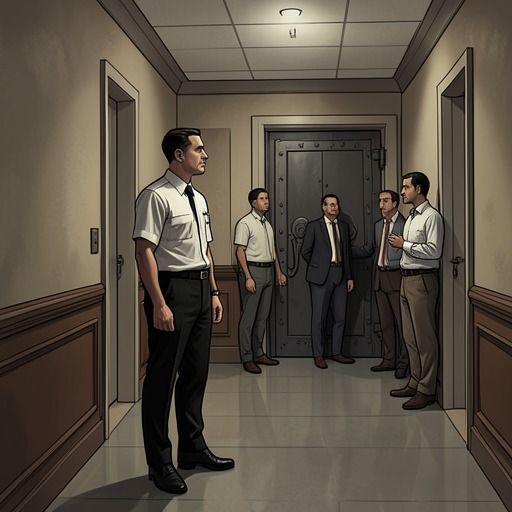
The narrator first encounters Jim when the dining-room steward is summoned to the reception desk. His physical presence arrives before any explanation of his duties: the narrator compares his immense build to Mount Vesuvius, yet finds his manner of walking as light as a feather. His complexion is described as dark copper, and his eyes as burning wicks. The contrast between size and movement makes his entrance striking without diminishing the force of it: he charges up to the narrator and immediately identifies him as the person who has displaced Rosie.
Jim does not linger over introductions. He raises his wrist to display his watch and announces that breakfast will be ready in fifteen minutes. Because the breakfast cards were not prepared the night before, they must be written at once. The urgency is practical, not ceremonial: the new worker needs to record a complicated order before the service deadline. Jim’s arrival thus introduces him through the pressure of the job itself, with the narrator caught between an unfamiliar routine and the clock.
Work and Responsibilities
With Sata Bose handing over a notepad, Jim dictates the breakfast choices in a rapid stream. The list ranges from cold pineapple juice and crisp rice to eggs prepared in several ways, followed by omelettes with shrimp, cheese, or tomatoes, and more items before coffee. The catalogue’s accumulating alternatives conveys the work hidden inside an apparently ordinary hotel breakfast: each guest’s choice has to be translated into a menu and conveyed accurately, while time is already running short.
Jim’s manner makes the urgency unmistakable. He recites the dishes so quickly that unfamiliar terms crowd the narrator’s attention, pausing only briefly before continuing. At the end he urges haste and disappears before the narrator can ask a question. The episode presents him as a worker who knows the routine well enough to deliver it at speed, while the newcomer has to struggle simply to keep up. His impatience is tied to the schedule and the unfinished preparation, rather than to any stated personal grievance.
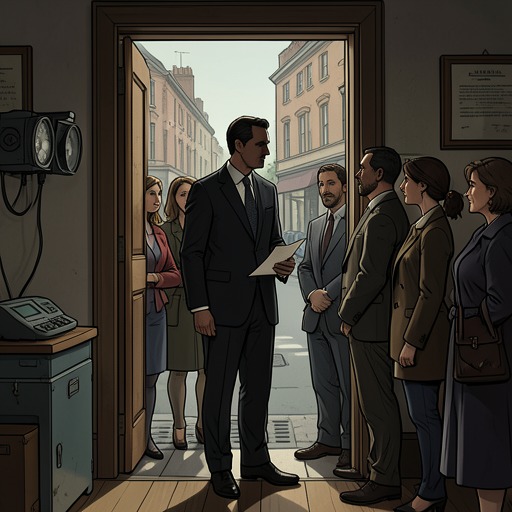
The narrative later identifies Jimmy as the steward in charge of the store, a position that also makes him the first target when something goes wrong. When Marco Polo summons him over tea, Jim understands that the manager’s invitation is not merely sociable: trouble is likely to follow. The scene shows the less visible burden attached to his role. He is responsible not only for getting service ready but also for facing complaints when supplies or quality become an issue. Marco Polo asks what kind of tea has been served; Jim offers to open a new packet and send freshly made tea, meeting the problem with a concrete remedy.
Place in the Hotel Hierarchy
Jim’s exchange with Marco Polo turns a complaint into an unexpectedly generous joke. After Jim offers fresh tea, the manager tells him that soon he will be able to occupy his position, then points the narrator out as the future boss. The remark is comic rather than a formal appointment, but it acknowledges Jim as someone familiar with the hotel’s operations and capable of shouldering responsibility. The hotel’s hierarchy appears here through banter: the manager can make light of succession, while the steward remains the one who has to resolve the immediate service failure.
His responsibilities also place him among the workers who keep the Hotel Shahjahan functioning when its senior staff are absent. During one of Marco Polo’s disappearances from the crowded dining room, Jim asks Sata Bose how much longer the manager will be gone. Bose reassures him that a system operating for a hundred and fifty years can continue by itself. The exchange gives Jim a place in the hotel’s collective labor: when the manager vanishes, the steward and Bose are left to manage the demands of the room. Jim’s question registers the strain of that gap, while Bose’s answer treats institutional routine as a substitute for an available manager.
Character and Narrative Function
Jim is characterized chiefly through action, appearance, and professional exchanges rather than through a private history. His first encounter with the narrator is forceful; his breakfast dictation is brisk and exacting; his response to the tea complaint is practical. These moments show different pressures of hotel work without resolving them into a portrait of either simple harshness or easy warmth. Even his apparent irritation at finding the narrator in Rosie’s place belongs to the immediate disturbance of a changed workplace.
As a steward, Jim stands between the hotel’s elaborate promise of service and the labor required to deliver it. The breakfast list turns hospitality into a timed sequence of choices; the store makes him accountable when an item disappoints; the manager’s absence leaves him and Bose to keep the dining room operating. His brief appearance therefore gives the hotel’s routines a human face: beneath the polished guest experience lies a worker who must hurry, anticipate trouble, and remain answerable for the systems that make service possible.