Connie
ChowringheeConnie is a cabaret performer at the Hotel Shahjahan, known onstage as the Woman: an attraction presented to a room of wealthy male guests, but not reducible to the seductive image they buy. Her public act and her private devotion to her brother Harry form the sharpest contrast in her appearances. The hotel makes her body a spectacle; away from the stage, she reveals a tenderness rooted in Harry’s vulnerability and in the stigma attached to his dwarfism.
Identity and Introduction
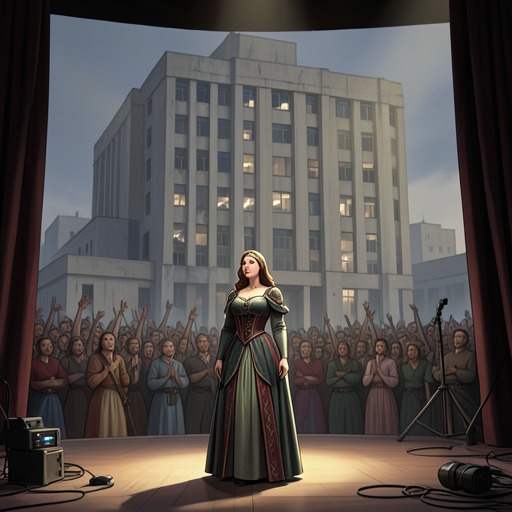
Connie enters the hotel’s entertainment world as a featured performer at a banquet. The narrator faces an audience of roughly seven hundred and introduces her in grand terms as a singular woman, although no women are visible in the hall. The ceremony builds expectation around her before she appears, turning her arrival into a promised attraction for the assembled guests.
Her entrance is deliberately delayed. The lights go out, anticipation rises and then falls into silence; a wandering spotlight searches the stage without settling. At first, the audience sees a small figure in evening clothes, wearing an oversized top hat and carrying a cane. The comic misdirection prepares the room for Connie’s appearance and establishes how the cabaret manipulates attention: the guests are made to wait, look, and desire before the principal performer is revealed.
The Cabaret Performance
When Connie appears, she removes her heavy robe with a smile and dances to the orchestra led by Gómez. The performance is built around contact with the audience rather than distance from it. She leaves the stage to sit on a customer’s lap, takes a handkerchief from a man beside him to wipe away sweat, and moves toward another guest who calls to her. She also draws Ranganathan into the act, caressing him. The men are not simply watching a stage; the staging lets them imagine themselves included in Connie’s performance.
The spectacle has an organized rhythm and a backstage cost. At the end of the first act, the narrator signals for the electricians to extinguish the lights so that Connie’s modesty can be preserved. When the lights return, she is behind the scenes, wrapped in a robe and panting. She immediately asks where Harry is. Her breathlessness and urgent search interrupt the smooth image presented to the guests: the performer who has just commanded the room is also a working woman looking for her brother.
Harry’s anger gives the performance another edge. He resents the contrast between customers feasting on Connie and hotel workers going hungry, and threatens to teach them a lesson. His outburst is not Connie’s own account of her work, but it exposes the economic arrangement around it: the guests pay for food, drink, and entertainment, while the staff remain caught in the labor that makes their leisure possible. Connie’s body is at the center of the show, yet the resentment and danger surrounding the show reach beyond her alone.
Connie Away from the Stage
A few hours after entertaining Calcutta’s elite, Connie appears on the roof in a nightgown and silk sleeping cap. The difference is not merely a change of costume. In the cabaret she has been presented as sensual and wild; in the darkness she seems wholly unlike the Woman of the stage, her face compared to the moon. She asks where Harry is and whether he has attacked the narrator. Told that he has refused to leave the narrator’s room and is spilling whisky on the bed, she is confronted with the disorder that follows her brother into the hotel’s private spaces.
Her concern for Harry becomes clearest when she takes the narrator to seek Shibdas’s help. She asks that Harry be made taller, but her plea is not simply for a different body. She says she does not want happiness, wealth, or property; she wants Harry to be treated as a normal person and not called a dwarf. Even being short, she says, would be bearable if people did not use the difference to humiliate him. The request gives her hope a painful limit: she asks for a physical change because the cruelty of other people has made his body a source of suffering, while the deeper injury lies in how society names and regards him.
Family and Harry
A photograph brings Connie’s attachment to Harry into view through their childhood. Asked whether she recognizes someone in the image, she identifies her mother, then herself as the girl in her mother’s arms, with Harry beside them. She confirms that Harry never grew, but adds that he did a great deal for the sisters. The childhood picture connects the vulnerable child in the family to the performer now exposed before hotel customers, without explaining away either part of her life.
Her prayer and her recollection of the photograph also complicate the way Harry appears in the hotel. He can be drunk, angry, and difficult to control; Connie nevertheless sees him through a history of kinship and gratitude. Her wish that he be spared the name imposed on him by others arises from that intimacy. The cabaret’s public version of Connie invites the audience to treat her as an erotic novelty, whereas her private actions show a sister attempting to protect someone she loves from ridicule and exclusion.
Narrative Role and Significance
Connie’s appearances repeatedly expose the divide between the hotel’s polished entertainment and the lives carried on behind it. The lights, orchestra, spotlight, and carefully timed entrance manufacture a public image; the robe, panting, whisky, and search for Harry reveal what the image cannot contain. Her performance is real work, but the stage invites customers to mistake that work for unlimited access to the woman performing it.
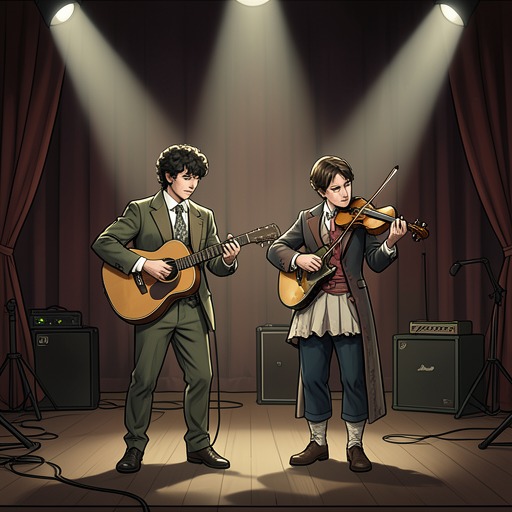
In the narrator’s later recollections, the cabaret calls Connie and Harry back as part of the Shahjahan’s accumulated past. A final musical gathering imagines the hotel’s guests and entertainers together, with Connie among those remembered. She remains associated with the cabaret, but memory restores the familial bond that the stage obscures: behind the Woman presented to the crowd is the sister who asks for Harry to be allowed to live without being made an object of shame.