Hobbs
ChowringheeHobbs is the Hotel Shahjahan’s living archive: an elderly observer whose decades of experience and carefully kept newspaper clippings turn the hotel’s past into a history of its workers, patrons, and changing city. Through his recollections, events concealed behind polished hotel publicity and respectable public narratives become visible, though his stories also acknowledge the limits of what even a long witness can know.
Identity and Introduction
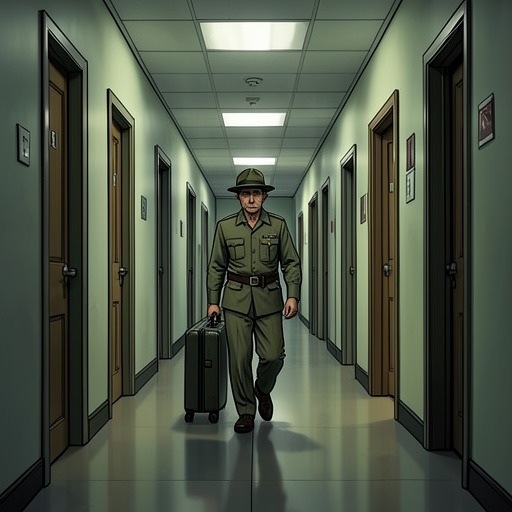
The narrator had met Hobbs only briefly, when he visited the hotel for dinner and spent a few minutes at the reception desk. Later, when Sutherland wanted to learn about the Shahjahan’s earlier days, Satyasundar Bose advised the narrator to consult Hobbs. The recommendation presents him not simply as a former guest but as someone capable of explaining the hotel through personal knowledge and accumulated evidence. When the two visitors arrive, Hobbs is waiting with his arms open in welcome.
Hobbs’s authority rests on unusually long familiarity with the establishment. He says he has eaten there many times since the 1880s, and describes the hotel’s successive managers and other figures—including Simpson, Silverton, Horabin, Marco Polo, Juneau, and Sohrabji—as characters in what might have become an extensive historical novel. His comparison makes the Shahjahan more than a backdrop: its changing staff and visitors supply a continuing human record of the city.
The Newspaper Archive and the Hotel’s Past
Hobbs does not rely on memory alone. His notebook is packed with newspaper cuttings reaching back several decades. When Sutherland asks about women who served drinks in the hotel bar, Hobbs says that they were not legally enslaved, but that the humiliations he witnessed and heard about deserved their own name. He points to an old Hotel Shahjahan advertisement as proof rather than leaving the matter at the level of recollection.
The advertisement announces the arrival of Marian Booth and Jane Grey at Kidderpore aboard the SS Hawaii on September 22, promoting them as a means of satisfying guests’ pleasure and comfort. It also boasts that the women will be locked away during the day and again after their night’s work. The gap between the advertisement’s celebratory language and its description of confinement exposes how the hotel could present women’s restricted lives as part of its respectable service. Hobbs directs the visitors toward Mrs. Brockway, the wife of the clergyman at Union Chapel, as the person who might know more about the women who served in the bar. His answer thus combines testimony, documentary evidence, and an admission that another witness may hold parts of the story he cannot supply.
Jane Grey and Robbie Adam
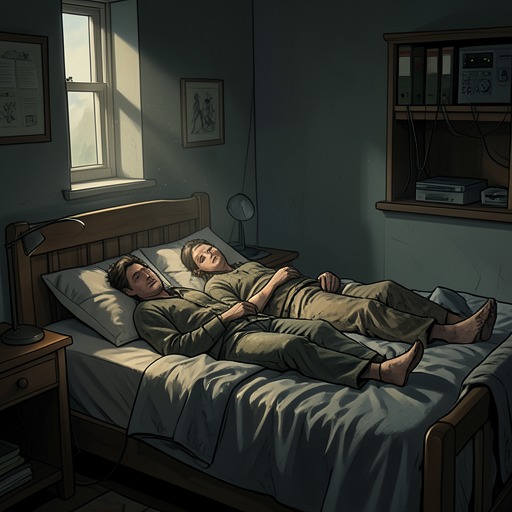
Hobbs’s recollection of Jane Grey and Robbie Adam expands that documentary fragment into a story of intimacy constrained by the hotel’s working arrangements and social customs. Robbie, employed by a leading firm on Clive Street, had not yet adapted to Calcutta’s language and customs. Jane worked at night, while Silverton locked her in her room before going to bed; the two could not meet during the day. In that period, the bars remained open until five in the morning, and their relationship developed quietly amid the noise of drinkers and glasses.
Hobbs admits that he is a businessman rather than a poet, yet remembers a kind of poetry in their secret understanding. Jane kept her distance when serving Robbie his whisky, communicating indirectly rather than risking a smile or a friendly word. The bartender helped carry messages. Other patrons, meanwhile, began sending Jane letters and marriage proposals through him, often paying a rupee for each delivery. Hobbs later learned from Jane that she could receive as many as thirty letters in one night, including ten proposals. The intermediary’s work brought him as much as thirty rupees a day. The episode places covert affection beside the bar’s commercial traffic: the same counter that served drinks also became a channel for messages and unwanted approaches.
Hobbs’s account continues to the couple’s deaths. After Jane dies, a priest tells Robbie the news as gently as he can, but Robbie collapses, develops a fever that night, refuses food, and dies despite the doctors’ efforts. Local boys arrange the funerals, borrowing money for a cheaper wreath for Robbie after buying a larger one for Jane. The priest takes the newborn baby home. Hobbs ends the story without claiming knowledge of what happened afterward. His restraint matters: he preserves the grief and the acts of care the story records, while marking the point where his account—and the surviving record—runs out.
Sohrabji and the Limits of What He Knows
Hobbs also remembers Sohrabji from before the First World War, when the latter worked as a young bar waiter at Hafezji’s bar. Sohrabji was around fourteen, an age at which boys were not permitted to work in bars. After someone reported him and he faced losing his job, he came to Hobbs in tears. Hobbs felt sorry for him and arranged for the complaint to be withdrawn. The recollection gives their later connection a history of practical assistance, and shows Hobbs intervening when a young worker’s livelihood was threatened.
Hobbs’s old acquaintance with Sohrabji also shapes his surprise at finding him employed at the Shahjahan. He recalls Sohrabji as a decent, profitable businessman who sent his daughter to a good school outside Calcutta; he once saw the two together at the zoo. He had known Sohrabji’s earlier work at Dharmatala Street, but cannot explain how he eventually came to the Shahjahan. Hobbs’s knowledge is extensive, not omniscient: even a witness who can connect people across decades must sometimes leave a change of fortune unexplained.
One remembered episode shows the vulnerability behind Sohrabji’s respectable business. After a customer asked for a quieter bar, Sohrabji tried to calm other patrons. The men who had complained then turned on him, threatening to ruin his business and organize pickets. The bar remained nearly empty for about three weeks. Sohrabji eventually found the dissatisfied customer, apologized, and explained why he had intervened; the customer agreed to return with his friends, but warned him not to trust drunk men or insult anyone at their request. In recalling this episode, Hobbs identifies the Sohrabji he knew as a man trying to conduct business decently, while showing how easily customers’ power could place that effort at risk.
The Hotel as Historical Memory
Hobbs’s stories range beyond individual careers. He describes the Shahjahan’s cellar as about a century and a half old, dug deep underground and closed to the public, with bottles placed there by Simpson. Through its history he traces changing forms of travel and commerce: a young English commander arriving at Chandpal Ghat and spending his first night in Hindustan at the Shahjahan; Scotch brought from the cellar to keep the lonely soldier company; and later celebrations as sailing vessels on the Ganges gave way to mechanized ships.
His account also reaches the group of Englishmen who arrived with maps and planned transport links. Their leader, McDonald Stephen Jr., stayed at Hotel Spencer while the rest lodged at the Shahjahan. The bar staff heard the men discussing steel tracks and enormous machines, interpreting these unfamiliar plans through anxious images of iron cages, chained Indians, and peaceful towns and fields threatened by the machines’ fiery breath. Hobbs’s remembered history preserves both the technical ambition and the fearful speculation surrounding it; the bar is where plans were made and where workers tried to understand what those plans might mean.
By making clippings, personal testimony, and the stories of former workers speak alongside the hotel’s own public image, Hobbs gives narrative weight to lives that formal accounts leave at the margins. His accounts do not erase uncertainty: he points to other witnesses, distinguishes what he saw from what he later heard, and admits when he does not know what became of someone. That combination of evidence and acknowledged limitation makes him an essential mediator between the Shahjahan’s remembered past and the narrator’s attempt to recover it.