Simpson
ChowringheeSimpson is the founder and owner of the Hotel Shahjahan, whose long survival gives his story an afterlife within the institution he created. His legacy is marked by two sharply different forms of persistence: the taxidermy trade he helped establish after a hunting accident, and the night rounds that hotel staff say he continues to make after death. Together, they connect the hotel’s material history to the legends through which its workers explain and remember it.
Identity and the Hotel’s Founding
Simpson is introduced as a hotel owner with a passion for hunting. The account places him beside his friend Skinner in an oil painting displayed in Skinner’s shop: the two men stand triumphantly over the body of a real Bengal tiger. The picture preserves the hunters’ pose, but the story behind it unsettles that triumph. During a later expedition, a tiger attacked; Simpson and Skinner returned with three legs between them. The narration presents the animal’s retaliation as a reversal of the hunters’ apparent mastery, turning the trophy image into evidence of the danger and cost behind it.
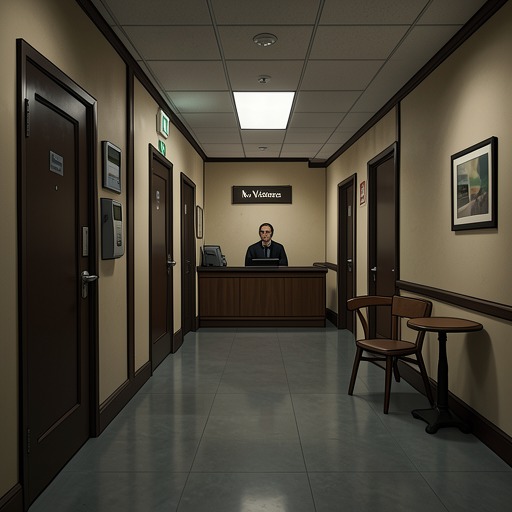
The hotel is not merely a backdrop to Simpson’s history. Its galleries become part of the practical response to Skinner’s injury and unemployment. Skinner’s work required extensive travel, and losing a leg cost him that livelihood. Simpson, concerned for his friend, offered him a shop in the hotel’s galleries without charge and said he would try to direct hunters staying at the hotel to Skinner. The arrangement joined personal loyalty to commercial opportunity: Simpson used the space and influence of his establishment to help Skinner make a living from a skill he had learned earlier in life.
Skinner’s Shop and the Hunting Economy
The taxidermy shop’s presence among the hotel’s other businesses carries a history that its setting alone might conceal. The hotel’s galleries include a broad range of shops, while the taxidermist’s trade seems out of step with a city in which, the narrator wonders, few people would still hunt large animals or pay to have them stuffed. Simpson’s assistance explains why the shop began there, but the account also follows the larger market that sustained it: hunters lodging at the hotel could become customers, and preserved animals could travel from India to English homes across the sea.
The narrator estimates that, over the 125 years since the events began, many Indian tigers, lions, deer, and elephants had lost their lives, and suggests that the stuffed remains of many such animals continued to be displayed in English households. This history makes Skinner’s later prosperity inseparable from the violence that supplied the trade. He eventually bought a castle in Scotland, converting hundreds of rupees into large sums in pounds before leaving for England. The story therefore does not present Simpson’s kindness to an injured friend as an isolated act: his help enabled Skinner to enter a lucrative business whose wealth depended on the colonial movement of hunted animals and their remains.
The shop’s current owner is identified as Muktaram Saha, though the narrator doubts that he knows the story of its origins. A framed old clipping from the Englishman, displayed behind the counter, may be the surviving record of Skinner’s departure. Its possible presence gives the shop a fragile archive: Simpson’s role and Skinner’s history may persist not through living memory but through a newspaper item kept on a wall.
The Founder Outlived by His Creation
Simpson’s own death establishes the contrast at the center of his legacy. The narrator imagines him rising from his grave in the St. John cemetery and standing before the hotel he loved; the spectacle, the account suggests, would astonish him. His creation has endured far beyond its founder, surviving changes that Simpson could not have anticipated. The hotel’s longevity is thus both a monument to his ambition and a limit on his ownership: the building remains, but no longer belongs to the time or person who made it.
That endurance is set against a city in which life, fame, and status are described as transient. In the same remembered conversation, Bose-da speaks of Calcutta’s impermanence and of Charnock’s death after two years; he also contrasts yesterday’s celebrated hotel guest with today’s beggar seeking shelter in the street. The hotel, by contrast, continues to contain the joys and sorrows, desires and sacrifices of successive nights. Simpson’s historical significance lies partly in this imbalance: the founder passes into the cemetery, while the institution accumulates stories and outlasts him.
A Presence in the Night Rounds
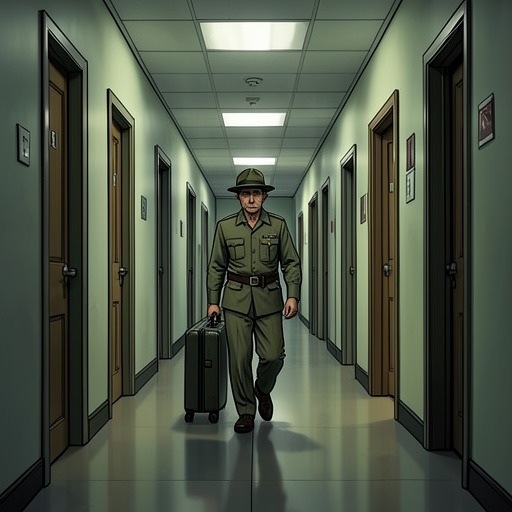
After Simpson’s death, he remains part of the hotel’s working life through a story told to a night-shift worker. A staff member warns the narrator not to leave the lights on while sleeping, because waste may cause trouble for both of them. When asked why, the worker explains that Simpson cannot tolerate waste and that everyone on the night shift fears him: he is said to inspect the hotel through the night, roaming from the ground floor to the roof.
The account does not establish that Simpson literally returns as a ghost; it shows how hotel staff speak of his rounds as an active possibility. The remembered owner’s strictness has become a rule enforced through reputation, linking a small practical matter—leaving lights on—to the founder’s continuing authority. The sweep of the alleged patrol, from the lowest floor to the roof, also makes the whole building subject to that authority. Simpson’s afterlife is therefore institutional as much as supernatural: the hotel that outlived him continues to give his preferences a place in its routines.