Phokla Chatterjee
ChowringheePhokla Chatterjee is a former boxer, alcoholic, and fixture of Calcutta’s parties whose life at the Hotel Shahjahan brings together public spectacle, private distress, and commercial opportunism. First presented as a man whose presence can make a party, he later appears as a remorseful uncle, a broker of access and work, and a director entering the hotel’s changing management. His contradictions are not resolved: he speaks for people excluded from prosperity even as he helps arrange relationships and services shaped by money and power.
Identity and Public Reputation
Phokla’s name is given as R.N. Chatterjee, and his past as a boxer is part of the warning Sata Bose gives about him. Someone once knocked out his teeth with a punch. He is an alcoholic, with eyes that are perpetually red and a haircut compared to a wire brush. His body and appearance make him instantly recognizable; his reputation precedes him into the hotel’s social world.
That reputation is useful to party hosts. Many people believe his presence can turn an ordinary gathering into a resounding success, so he is invited to cocktails and parties throughout the city. The exception is the film world: Phokla is barred from its parties after vomiting on Sreelekha Devi at the Shahjahan. Since then, she has refused to attend any gathering to which he is invited. The same incident that makes him a sought-after social attraction has also made him unacceptable to a particular circle.
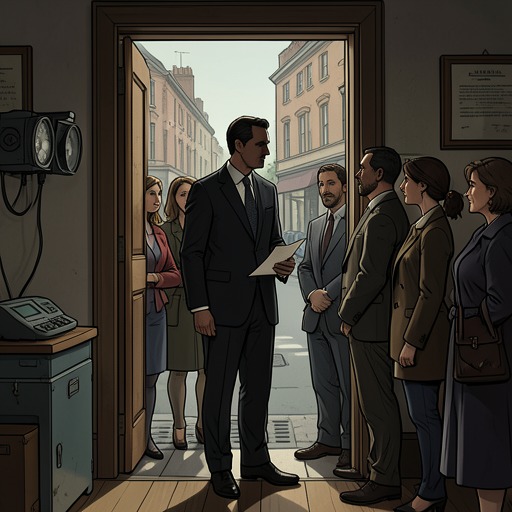
At a banquet held by the newly opened Calcutta branch of Sociedad Filantrópica, Phokla puts the hosts’ benevolence on trial. The gathering presents its organizers as people sacrificing personal pleasure for humanity, society, and the nation. Phokla challenges Agarwalla over a menu with no drinks, asking how he can claim to help humanity while making other creatures suffer. His objection turns the banquet’s lofty cause into a question of whose comfort and appetites it actually serves. In a separate attempt to obtain tickets, he presses the hotel for access because Ranganathan is leaving the next day. He invokes his Bengali identity and objects that Calcutta’s pleasures are monopolized by non-Bengalis, even though the hotel cannot give anyone more than five tickets. He is both a customer demanding his share and a participant in the city’s competition for scarce invitations.
At the Hotel: Performance and Private Distress
Phokla’s dealings with the Shahjahan are not confined to the public-facing role of a party guest. At the Mumtaz cabaret, he brings his nephew Anindo Pakrashi to the hotel for what he calls the young man’s baptism into its social world. Seeing Anindo nearly asleep, he asks the staff to look after him so that he will not leave with a poor impression of the hotel. The request initially places the nephew in the care of the hotel’s workers, as if the occasion were simply another matter of hospitality.
Phokla’s mood changes during the evening. He grips Sata Bose’s hand and asks why he must cling to the bottle every day, whether he begs, borrows, or steals it. His question makes the dependence he had carried as a party-going habit into an explicit personal burden. When Bose invites him to watch the final cabaret act, Phokla refuses. He says he should never have brought Anindo to the place, then leaves with his nephew by the hand. His exit interrupts the night’s entertainment with an act of care: the man known for drunken disruption takes responsibility for removing the young man from the scene.
The hotel later becomes the setting for Phokla’s account of how business and drinking intersect. When Agarwalla has gone to Mrs. Chakladar’s house, Phokla laughs that he himself was the first to take Agarwalla there. He describes it as a homelike place where people can drink quietly, but notes that entry on dry days costs at least twenty rupees. Agarwalla, he says, has begun taking guests there on other days as well and goes every day. Phokla predicts that the arrangement will eventually reach the newspapers. The anecdote puts him in the role of both guide to private drinking and observer of a business practice that he expects to become public scandal.
Brokerage, Poverty, and Compromise
Phokla describes himself as someone who has spent his life doing other people’s dirty work. Businessmen, he says, have grown rich entertaining clients through him, while he has been left with a diseased liver. Free drinks and occasional payments of a few hundred rupees have not given him capital of his own. He imagines that, with money to invest, he could employ hundreds of young people through a Phokla industrial group. His complaint links his alcoholism and precarious livelihood to the unequal distribution of the profits he helps generate, without making his own participation in that economy disappear.
His dealings on Rosie’s behalf sharpen the tension between assistance and brokerage. Phokla calls Rosie a pleasant girl and says he introduced her to Sadashivam, an influential official with whom he had long conducted business. According to his account, Sadashivam finally admitted to being lonely at night, and Phokla arranged for him to meet Rosie; the two now meet at another hotel. Sadashivam’s wife has been living with her parents for a year. Phokla presents the arrangement as part of how he earns a living through quotas, permits, and orders, while asking why buyers, administrators, accountants, and senior officials should be the only people to enjoy life’s pleasures.
He also argues that poverty makes the question of work urgent. He says Rosie is desperate for a job because her parents are unwell and she cannot afford their treatment, and he considers intervening for her. He reports that Agarwalla is looking for a full-time hostess for a suite, with a good salary and the prospect of additional earnings, but that he has been unable to find a local woman willing to take the position. His account turns the language of practical survival against moral judgment: ethics, he argues, come after survival. Yet his proposed help is bound to the same unequal arrangements he describes, including Sadashivam’s preferences and the paid hospitality business. His compassion and his opportunism operate in the same sphere rather than cancelling each other out.
Before leaving, Phokla announces that he is to become a director in Agarwalla’s company. He presents the appointment as proof that sincere effort can bring success without dishonesty. The claim sits uneasily beside his account of arranging access to Rosie and his years of doing business on behalf of wealthier men. The novel leaves that tension visible: his declaration of honesty is his own, while the circumstances he has just described show how survival and advancement depend on transactions he does not present as morally clean.
A New Role in the Shahjahan’s Management
Phokla’s business role extends into the hotel after Agarwalla buys most of its shares from the principal English shareholders. William tells the narrator that Phokla will begin handling some matters, then Phokla visits to inspect the Shahjahan. Addressing Jimmy, he says that the hotel should retain a European style of management while becoming modern, and argues that it cannot continue to be run as it was in Simpson’s time, when women did not venture out of their homes as they do now.
He assures Jimmy that he and Agarwalla will not interfere in the daily work, but says they will bring attractive women to the hotel and make it a meeting place for people of all races. The promise of non-interference sits beside his explicit intention to change the hotel’s clientele and social character. Soon, unfamiliar faces begin to fill the building, and the changes are conducted in secrecy. Phokla has moved from being a guest whose presence animates parties to a participant in decisions about the hotel’s future.
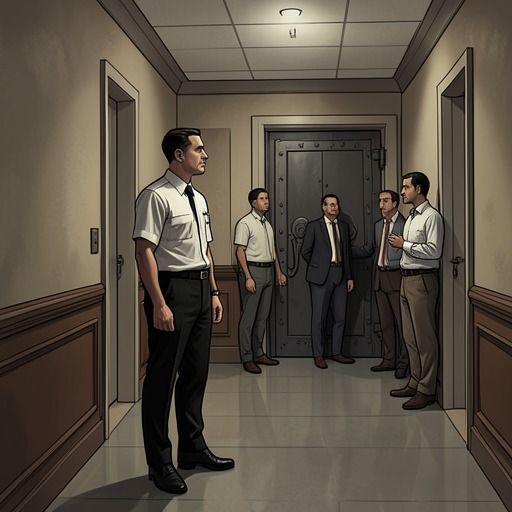
His involvement is still present when the narrator is told that his services will no longer be needed. Jimmy explains that Phokla is about to go to the cabaret and must examine everything carefully; it is also the last day of the month, making the timing convenient for the hotel. Phokla is in Jimmy’s office as the dismissal is announced. The scene does not establish that he ordered the narrator’s dismissal, but it places him inside the management transition that delivers it. Across the novel, he remains difficult to reduce to either benefactor or exploiter: he recognizes material need, sometimes tries to answer it, and helps shape a more commercial hotel whose opportunities and costs fall unevenly on those who work within it.